

안녕하세요! 매일한글 에디터입니다.
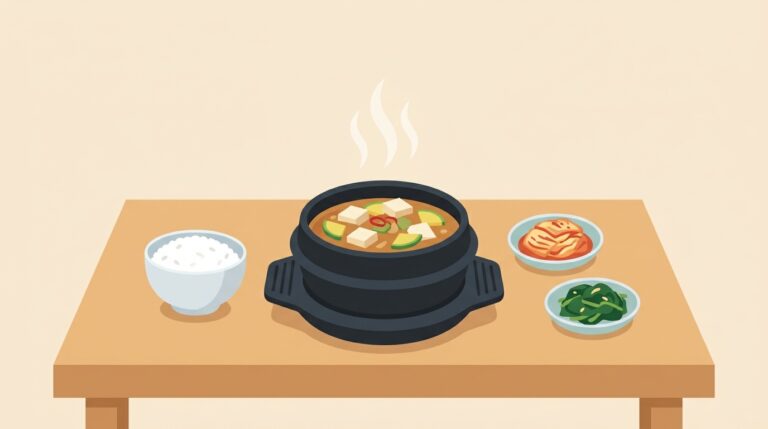
Have you ever stepped into a bustling, homey Korean restaurant—the kind with steam fogging up the front windows and a lively buzz of conversation—only to freeze when handed a menu completely in Korean? Your eyes land on a bubbling, earthy stew delivered to the table next to you. It’s served in a rustic black earthenware pot, sizzling fiercely, giving off a rich, deeply savory aroma of fermented soybean paste, garlic, tofu, and scallions. That iconic dish is 된장찌개 (Doenjang-jjigae), Korea’s ultimate comfort food.
For many beginner learners, trying to order this stew feels intimidating. What if the server asks rapid-fire questions? What if it’s too spicy? Is it polite to eat straight from the bubbling pot? Many of our Daily Hangul students have shared this exact anxiety: “I love K-dramas where characters slurp warm stew after a tough day, but in real life, I got so nervous I just pointed at random pictures!”
Don’t worry! You don’t need hundreds of vocabulary words to enjoy Korea’s beloved soul stew. With just three foundational A1 phrases and the real-world cultural insights below, you will order your stew smoothly, adjust your spices, and savor every bite like a true Seoulite.
Phase 2: Core Expressions Deep Dive
1. 된장찌개 하나 주세요 (Doenjang-jjigae hana juseyo)
- Pronunciation: [Doen-jang-jji-gae ha-na ju-se-yo] (Sounds like: dwen-jahng-jee-geh hah-nah joo-seh-yoh)
- Meaning: Literal: “Doenjang stew one, please give.” / Real Nuance: “I’d like one order of soybean paste stew, please.”
- K-Culture Moment: You’ll see this in nearly every slice-of-life K-Drama (like Hospital Playlist), where busy doctors or students sit down at a neighborhood eatery and effortlessly shout their order to the kitchen auntie.
- Editor’s Insight: In Korean, you don’t need complicated grammatical articles. Just combine the dish name + the native Korean number for one (하나, hana) + the magical polite request 주세요 (juseyo).
- Situation Spectrum: Casual ⚠️ | Semi-formal ✅ | Formal ✅
- 🤔 Think About It: In English, we often say “Could I possibly get…?” to sound polite. In Korean, adding 주세요 (juseyo) to any noun instantly makes it completely courteous and natural. Why do you think Korean favors such concise politeness?
2. 공깃밥 추가해 주세요 (Gonggitbap chugahae juseyo)
- Pronunciation: [Gong-git-bap chu-ga-hae ju-se-yo] (Sounds like: gohng-geet-bahp choo-gah-heh joo-seh-yoh)
- Meaning: Literal: “Bowl of rice, please add.” / Real Nuance: “Could I get an extra bowl of steamed rice, please?”
- K-Culture Moment: Seen in mukbang shows and variety programs like 2 Days & 1 Night when someone finishes their stew broth and needs more rice because the stew is a notorious “rice thief” (밥도둑).
- Editor’s Insight: Most stews come with one complimentary bowl of rice (공깃밥), but 된장찌개 is rich and savory. When you run out of rice halfway through, simply use the word 추가 (chuga, addition) with 해 주세요 (hae juseyo).
- Situation Spectrum: Casual ⚠️ | Semi-formal ✅ | Formal ✅
- 🤔 Think About It: Rice is the centerpiece of a Korean meal; stews and banchan (side dishes) are accompaniments designed to make rice delicious. How does this contrast with meals centered around bread or pasta?
3. 안 맵게 해 주세요 (An maepge hae juseyo)
- Pronunciation: [An maep-ge hae ju-se-yo] (Sounds like: ahn mehp-geh heh joo-seh-yoh)
- Meaning: Literal: “Not spicily, please make it.” / Real Nuance: “Could you please make it mild / not spicy?”
- K-Culture Moment: Often heard when foreign guests or children order at traditional restaurants, or when characters who can’t handle spicy food (맵찔이, maepjjiri) order stew without chopped Cheongyang chili peppers.
- Editor’s Insight: 된장찌개 is fundamentally savory and fermented, but local spots love tossing in hot green peppers for a spicy kick. Putting 안 (an, not) before 맵게 (maepge, spicily) protects your tastebuds instantly!
- Situation Spectrum: Casual ⚠️ | Semi-formal ✅ | Formal ✅
- 🤔 Think About It: In Korea, customized orders are generally kept simple. Saying “not spicy” is totally welcomed, but asking to remove 5 different ingredients might confuse the kitchen. Simplicity is key!
Phase 3: Textbook Korean vs. Real Korean
Situation 1: Ordering your stew
- 📖 교과서 한국어 (Textbook): 된장찌개를 주문하고 싶습니다. (Doenjang-jjigaereul jumunhago sipseumnida.) — “I would like to order soybean paste stew.”
- 🗣️ 진짜 한국어 (Real-life): 이모님, 된장찌개 하나요! (Imo-nim, doenjang-jjigae hanayo!) — “Auntie, one doenjang stew please!”
- 💡 왜 다를까? (Why the difference?): Real Korean diners prioritize brevity and warmth. Skipping clunky verbs like “to order” and addressing the restaurant owner affectionately as 이모님 (imonim, auntie) creates immediate friendly rapport.
Situation 2: Asking if the stew is spicy
- 📖 교과서 한국어 (Textbook): 이 찌개는 대단히 맵습니까? (I jjigaeneun daedanhi maepseumnikka?) — “Is this stew exceedingly spicy?”
- 🗣️ 진짜 한국어 (Real-life): 이거 많이 매워요? (Igeo mani maewoyo?) — “Is this very spicy?”
- 💡 왜 다를까? (Why the difference?): Formal interrogative endings like
-습니까sound like an official military inspection. In everyday eateries, casual polite speech (-아요/어요) is standard and much friendlier.
Phase 4: K-Culture Deep Dive & Non-Verbal Manners
4-1. 눈치 (Nunchi) & Table Manners for Ttukbaegi
- Beware the Sizzle: 된장찌개 arrives in a blistering earthenware pot called 뚝배기 (ttukbaegi). It retains heat for up to 15 minutes! Never touch the black ceramic bowl directly with your bare hands. Use the stainless steel spoon provided.
- Receiving with Both Hands: When the server sets down the piping-hot pot or your rice bowl, gently place two hands near the table or support your right wrist with your left hand as a polite gesture of gratitude.
- Sharing vs. Solo: If you’re eating alone at a 백반 (baekban, home-style meal) spot, feel free to spoon broth directly from the bowl. If sharing a communal pot with colleagues or new acquaintances, use the ladle provided to transfer broth into your personal small dish (앞접시, ap-jeopsi).
4-2. Culture Code: The Ultimate Soul Food
In K-dramas, whenever an estranged son returns home or a daughter feels heartbroken, their mother always places a steaming pot of 된장찌개 on the table. Why? While Japanese Miso soup is light, strained, and served as a gentle side broth, Korean 된장찌개 is robust, hearty, and cooked with aged fermented soybean paste, anchovy kelp stock, zucchini, clams or beef, and thick chunks of tofu. It represents unconditional love, maternal care, and the warmth of home (집밥, jipbap).
Phase 5: Real-Life Roleplay Scenario
Setting: You walk into Halmeoni Baekban, a cozy, fragrant restaurant in Seoul. The warm owner, Imo (Auntie), welcomes you with a big smile.
- 이모 (Imo): 어서 오세요! 몇 분이세요? (Eoseo oseyo! Myeot bun-iseyo?)
🎭 Smiling warmly while wiping down a wooden table.
(Welcome! How many people?) - 학습자 (You): 한 명이요. (Han myeong-iyo.)
🎭 Holding up one index finger politely.
(Just one person.) - 이모 (Imo): 편한 데 앉아요. 뭐 줄까? (Pyeonhan de anjayo. Mwo julkka?)
🎭 Handing you a cold bottle of roasted barley tea and a cup.
(Sit wherever you like. What can I get you?) - 학습자 (You): 된장찌개 하나 주세요. (Doenjang-jjigae hana juseyo.)
🎭 Pointing gently at the menu board on the wall.
(One doenjang-jjigae, please.) - 이모 (Imo): 고추 넣어서 칼칼하게 해줄까? (Gochu neoeoseo kalkal-hage hae-julkka?)
🎭 Pen ready, checking your spice preference.
(Shall I put chili peppers in to make it a bit spicy?) - 학습자 (You): 아, 안 맵게 해 주세요! (A, an maepge hae juseyo!)
🎭 Shaking both hands lightly with a gentle smile.
(Ah, please make it not spicy!) - 이모 (Imo): 그래, 안 맵고 구수하게 끓여줄게! (Geurae, an maepgo gusu-hage kkeulyeo-julge!)
🎭 Nodding briskly and heading straight to the kitchen.
(Alright, I will boil it mild and savory for you!) - 학습자 (You): 감사합니다! (Gamsahamnida!)
🎭 Bowing head slightly with genuine appreciation.
(Thank you!)
🔀 Interactive Choice Point
You finish your first bowl of rice, but half of the delicious stew remains! What do you say?
* Option A: “저기요, 밥 더 있어요?” (Jeogiyo, bap deo isseoyo? — Excuse me, is there more rice?)
* Option B: “이모님, 공깃밥 하나 추가해 주세요!” (Imo-nim, gonggitbap hana chugahae juseyo! — Auntie, please add one bowl of rice!)
* Option C: “밥을 가져오십시오.” (Babeul gajyeo-osipsio. — Bring rice.)
Feedback:
* Option A (Risk): Understandable, but sounds like you are questioning the restaurant’s inventory rather than ordering a new bowl.
* Option B (Best ✅): Perfect! Calling her 이모님 (imonim) is culturally sweet, and specifying 공깃밥 하나 추가 clearly requests one chargeable extra bowl.
* Option C (Bad 🚫): Extremely bossy and grammatically commanding. You will startle the sweet owner!
Phase 6: 10-Second Emotion Shadowing Drill
Practice reading these out loud with rhythm and authentic emotional inflection!
[😊 Cheerful & Clear]
이모님! / 된장찌개 하나 / 주세요!
(Imo-nim! / Doenjang-jjigae hana / juseyo!)-
[🥺 Polite & Modest]
조금만 / 덜 맵게 / 해 주세요.
(Jogeum-man / deol maepge / hae juseyo.) — “Please make it a little less spicy.” -
[😋 Satisfied & Hungry]
여기 / 공깃밥 하나 / 추가해 주세요!
(Yeogi / gonggitbap hana / chugahae juseyo!)
Phase 7: K-Culture Mini Dictionary
- 뚝배기 (Ttukbaegi): Traditional unglazed or glazed earthenware bowl that withstands direct open flame and retains heat until your very last spoonful.
- 밥도둑 (Bap-doduk): Literally “rice thief.” Refers to savory, flavorful side dishes and stews so delicious that your rice vanishes magically fast.
- 집밥 (Jipbap): Home-cooked food. Often used as the gold standard of comfort, nutrition, and love in Korean dining.
- 백반 (Baekban): A classic Korean meal set consisting of rice, soup/stew (often Doenjang-jjigae), and a generous spread of seasonal side dishes.
Phase 8: Traveler’s Survival Kit
Top 3 Survival Expressions
- 물은 셀프인가요? (Mureun selpeu-ingayo?)
Pro Tip: At many casual diner spots, water is self-service. If you see a water dispenser with metal cups nearby, feel free to serve yourself! - 앞접시 주세요. (Ap-jeopsi juseyo.)
Pro Tip: Use this phrase to ask for a small sharing saucer if the stew is too piping hot to eat straight from the stone pot. - 계산해 주세요. (Gyesanhae juseyo.)
Pro Tip: When you’re full and happy, walk up to the counter near the exit and use this phrase to settle the bill.
Editor’s Travel Note
- When hunting for authentic Doenjang-jjigae, skip tourist traps and look for places crowded with elderly locals or office workers at 12:15 PM. Use the Naver Map App download to search for 된장찌개 맛집 (Doenjang-jjigae matjib) rather than generic search engines. Tipping is non-existent in Korea, so a cheerful “잘 먹었습니다! (I ate well!)” when leaving is the best tip you can offer!
Phase 9: 한 발 더 깊이 (One Step Deeper)
In Western dining, everyone usually receives their own individual plate. But in traditional Korean dining, a boiling pot of stew sits right in the center of the table. Sharing a pot—dipping spoons into the same broth alongside close friends or family—reflects the Korean cultural concept of 정 (Jeong), a deep emotional bond formed through shared warmth and life experience. While modern hygiene awareness has made individual bowls popular, the central stew remains an enduring symbol of togetherness.
💬 Your Turn: Does your culture have a signature comfort dish that brings family and friends around the same table? Let us know in the comments below!
Phase 10: FAQ & Common Mistakes
Q: Is Doenjang-jjigae vegetarian or vegan?
A: Not always! Even if there are no visible meat slices, the base broth is traditionally made from dried anchovies (멸치, myeolchi) and kelp. If you are strictly vegan, ask: 고기나 멸치 육수 들어가요? (Gogina myeolchi yuksu deureogayo? – Does this have meat or anchovy broth?).
Q: Can I ask for more side dishes (banchan)?
A: Yes, absolutely! Side dishes in Korea are almost always refillable for free. Simply take your small side dish to the refill station or politely say: 반찬 좀 더 주세요 (Banchan jom deo juseyo).
Q: What is the difference between Doenjang-guk and Doenjang-jjigae?
A: 국 (Guk) is a lighter soup with more broth, meant to accompany rice. 찌개 (Jjigae) is a denser, thicker stew packed with solid ingredients (tofu, mushrooms, squash) and bolder seasoning.
🚨 흔한 실수 (Common Mistakes)
- Mistake 1: Grabbing the metal bowl of rice with your bare hand immediately when served. (Correction: The metal gets boiling hot! Touch the rim or wait a moment for it to cool.)
- Mistake 2: Sticking your metal chopsticks upright in the rice bowl. (Correction: This resembles ancestral memorial incense rituals and brings bad luck! Rest chopsticks horizontally across the side plate or spoon rest.)
- Mistake 3: Saying “Give me this” loudly with English grammar. (Correction: Always attach 주세요 (juseyo) to sound courteous and respectful).
Phase 11: Action Mission & Engagement
- 🥉 Bronze Mission: Stand in front of your mirror and practice saying: “된장찌개 하나 주세요!” with clear pronunciation 3 times in 10 seconds.
- 🥈 Silver Mission: Visit a local Korean restaurant or grocery store, snap a picture of Doenjang (soybean paste) or a stew, and share it on Instagram with the tag #DailyHangul.
- 🥇 Gold Mission: Walk into a real Korean restaurant and order your entire meal in Korean without switching to English!
- 🎮 K-Culture Mission: Watch an episode of a comforting drama like Reply 1988 and spot the scene where the family sits around the dinner table eating stew together.
Phase 12: Interactive Quiz Challenge
Question 1: Situational Judgment
You want to order one Doenjang-jjigae, but you can’t eat spicy food at all. What is the most natural sentence to say?
1. 된장찌개 하나 주세요. 안 맵게 해 주세요.
2. 매운 것을 먹지 마십시오.
3. 찌개가 아주 맵습니까?
👉 Click to reveal answer & explanation
Correct Answer: 1
Explanation: Number 1 politely places the order and requests the kitchen not to make it spicy using the natural phrase 안 맵게 해 주세요. Number 2 is an awkward command telling the server not to eat spicy food!
Question 2: Fill in the Blank
Complete the sentence to ask for an additional bowl of rice:
“이모님, 공깃밥 하나 ________ 해 주세요!”
👉 Click to reveal answer & explanation
Correct Answer: 추가 (chuga)
Explanation: 추가 means addition or extra. Combined with 해 주세요, it creates the essential survival phrase “Please add one extra!”
Question 3: True or False (Culture Check)
True or False: In Korea, it is considered polite to lift your rice bowl up to your mouth with your hand while eating stew.
👉 Click to reveal answer & explanation
Correct Answer: False!
Explanation: Unlike in Japan or China, lifting your rice or soup bowl off the table is traditionally considered bad table manners in Korea. Keep the bowl resting on the table and use your spoon to scoop up the rice and broth!







