

Phase 1: Empathy (Story-immersive Opening)
안녕하세요! 매일한글 에디터입니다.
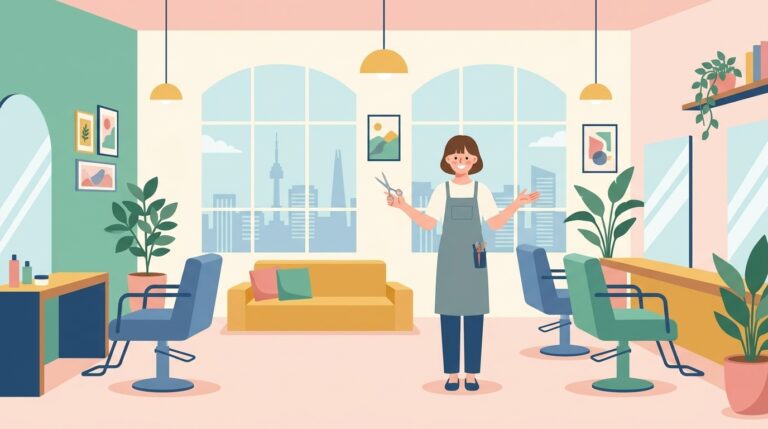
Imagine walking into a sleek, minimalist hair salon nestled in a trendy alleyway of Hongdae or Seongsu. Modern K-pop melodies hum softly in the background, and the air carries a gentle scent of premium hair serums. You are ready for that dreamy K-drama makeover or those effortless Korean curtain bangs you saved on Instagram. But the second you open the glass door, a stylish hairdresser bows gracefully and asks: “예약하셨나요?” (Yeyakhasyeonnayo?)
Suddenly, your mind freezes. Did they ask if you have an appointment? Are they telling you they are fully booked? In Korea, nearly 90% of popular salons operate strictly by reservation. Missing this single question can lead to awkward staring or leaving empty-handed. But don’t worry! Drawing from over a decade of guiding expats and travelers through real-life Korean moments, I’m here to ensure you walk in with total confidence and walk out looking like an idol.
Phase 2: Core Expressions Deep Dive
1. 예약하셨나요? (한글)
- Pronunciation: Yeyakhasyeonnayo? (Sounds like: “Yeah-yahk ha-she-on-nah-yo”)
- Meaning: Literal: “Did you do a reservation?” | Actual Nuance: “Welcome! Do you have an appointment booked today?”
- K-Culture Moment: In K-dramas like Record of Youth (청춘기록), whenever top actors or regular clients enter a high-end salon in Cheongdam-dong, the smiling receptionist always greets them with this signature line.
- Editor’s Insight: Notice the polite honorific infix -셨- (-syeot-). The staff is elevating your action to show courteous respect the moment you step through the door.
- Situation Spectrum: Casual 🚫 | Semi-formal ✅ | Formal ✅
- 🤔 Think About It: In English, we often ask “Do you have an appointment?” (focusing on possession). Korean asks “Did you make a reservation?” (focusing on the action). How does this reflect Korea’s proactive booking culture?
2. 네, 2시에 예약했어요. (한글)
- Pronunciation: Ne, dusi-e yeyakhaesseoyo. (Sounds like: “Neh, doo-shee-eh yeah-yahk-hae-ssuh-yo”)
- Meaning: Literal: “Yes, at 2 o’clock I reserved.” | Actual Nuance: “Yes, I have an appointment booked for 2:00 PM.”
- K-Culture Moment: Whenever travel vloggers visit Seoul for a viral scalp spa treatment, this is the magic phrase they utter before handing over their coats.
- Editor’s Insight: You can replace 2시 (dusi – 2 o’clock) with any time, or simply state: “네, 예약했어요” (Ne, yeyakhaesseoyo – Yes, I booked) while showing your phone screen.
- Situation Spectrum: Casual 🚫 | Semi-formal ✅ | Formal ✅
- 🤔 Think About It: Ending your sentence with -요 (-yo) establishes warm, mutual politeness. Dropping it at a front counter can sound surprisingly blunt!
3. 예약 안 했는데, 지금 가능한가요? (한글)
- Pronunciation: Yeyak an haenneunde, jigeum ganeunghangayo? (Sounds like: “Yeah-yahk ahn hen-deu, jee-geum gah-neung-hahn-gah-yo?”)
- Meaning: Literal: “I did not book, but is it possible now?” | Actual Nuance: “I don’t have an appointment, but do you take walk-ins right now?”
- K-Culture Moment: In romantic K-dramas, whenever a heartbroken lead impulsively walks into a neighborhood hair salon to get a fresh breakup bob, this tentative question kicks off the transformation scene.
- Editor’s Insight: The connector -는데 (-neunde) adds a polite hesitation, softening your request so you don’t sound demanding.
- Situation Spectrum: Casual 🚫 | Semi-formal ✅ | Formal ⚠️
- 🤔 Think About It: How does starting a request with polite hesitation build better rapport than directly asking “Can you cut my hair right now?”
Phase 3: Textbook Korean vs. Real Korean
Situation 1: Explaining why you are visiting the salon
- 📖 교과서 한국어 (Textbook Korean):
“저는 오늘 머리를 자르러 왔습니다.”
(Jeoneun oneul meorireul jareureo watseumnida. / “I have arrived today for the purpose of cutting my hair.”) - 🗣️ 진짜 한국어 (Real Korean):
“예약하고 왔어요. 컷 하러 왔어요!”
(Yeyakhago wasseoyo. Keot hareo wasseoyo! / “I booked ahead. I’m here for a cut!”) - 💡 왜 다를까? Textbook Korean sounds like an official speech in a boardroom. Real Koreans use the loanword 컷 (keot – cut) and casual, warm conversational grammar.
Situation 2: Asking if a quick walk-in is possible
- 📖 교과서 한국어 (Textbook Korean):
“지금 미용 서비스를 받을 수 있습니까?”
(Jigeum miyong seobiseureul badeul su itsseumnikka? / “Is it permissible for me to receive cosmetology services at this time?”) - 🗣️ 진짜 한국어 (Real Korean):
“혹시 지금 바로 되나요?”
(Hoksi jigeum baro doenayo? / “By any chance, is it possible right now?”) - 💡 왜 다를까? Koreans almost always introduce unexpected inquiries with 혹시 (hoksi – by any chance) to soften the impact on busy salon staff.
Phase 4: K-Culture Deep Dive & Non-Verbal Manners
4-1. 눈치 (Nunchi) & Gestures
When entering a Korean salon, do not immediately walk over to an empty swivel chair! Pause near the front reception counter. Give a light 15-degree bow of acknowledgment. The staff will immediately offer to take your bag and coat to place in a locker (사물함). They will give you a locker key and hand you a thin robe (가운). Accept the robe with both hands or a slight nod of appreciation. This seamless flow shows high 눈치 (Nunchi – situational awareness).
4-2. Cultural Code: The Salon Beverage & Head Spa Experience
Korean hair salons treat styling as a luxury hospitality ritual. Once seated, you will often be handed a customized beverage menu offering iced Americanos, yuzu tea, or hot green tea alongside complimentary Lotus cookies or mini-yakgwa. Furthermore, hair washes in Korea are legendary: they almost always include a 5-minute pressure-point scalp massage (head spa) designed to melt away urban stress.
Phase 5: Real-Life Roleplay Scenario
Setting: ‘Salon de Seoul’ in Yeonnam-dong. Aesthetic wood and cream interior with soft lo-fi music.
Characters:
* 민지 (Min-ji): A trendy, friendly hair designer wearing a sleek apron.
* You: A stylish traveler ready for a K-beauty refresh.
Dialogue:
1. 민지 (Min-ji): “어서 오세요! 예약하셨나요?”
(Eoseo oseyo! Yeyakhasyeonnayo? / “Welcome! Did you make a reservation?”)
🎭 Bows warmly with welcoming eye contact
2. You: “네, 2시에 예약했어요.”
(Ne, dusi-e yeyakhaesseoyo. / “Yes, I booked for 2 o’clock.”)
🎭 Smiles and holds up phone screen displaying booking details
3. 민지 (Min-ji): “성함이 어떻게 되세요?”
(Seonghami eotteoke doeseyo? / “May I have your name, please?”)
🎭 Taps on her tablet to check the appointment roster
4. You: “사라예요.”
(Sara-yeyo. / “I am Sarah.”)
🎭 Speaks clearly with a friendly nod
5. 민지 (Min-ji): “네, 사라 님! 외투 보관해 드릴게요. 가운 입어주시겠어요?”
(Ne, Sara nim! Oetu bogwanhae deurilgeyo. Ga-un ibeojusigesseoyo? / “Yes, Sarah-nim! I’ll store your coat. Would you slip on this robe?”)
🎭 Holds out a clean salon robe
6. You: “네, 감사합니다.”
(Ne, gamsahamnida. / “Yes, thank you.”)
🎭 Receives the robe with both hands
7. 민지 (Min-ji): “이쪽 대기석에 편하게 앉아 계시면 곧 모실게요!”
(Ijjok daegiseoge pyeonhage anja gyesimyeon got mosilgeyo! / “Please relax in this waiting area, and we will escort you shortly!”)
🎭 Points gracefully toward comfortable plush armchairs
8. You: “네, 알겠습니다!”
(Ne, algetseumnida! / “Yes, understood!”)
🎭 Follows stylist happily
🔀 Interactive Decision Branch
What if you didn’t book ahead and walked into a salon on a busy Saturday? The designer asks: “예약하셨나요?” How do you reply?
- Option A: “아니요, 예약 안 했는데 혹시 지금 되나요?”
👉 [Best]: Natural, respectful, and perfectly polite. Staff will check their schedule to see if there is an opening. - Option B: “예약 없어요. 빨리 잘라줘요.”
👉 [Bad]: Demanding and uses informal grammar (banmal). Staff will feel uncomfortable or immediately turn you away. - Option C: “그냥 구경하러 들어왔어요.”
👉 [Risk]: Salons are service spaces, not apparel boutiques. Wandering around looking at hair scissors will confuse everyone!
Phase 6: 10-Second Emotion Shadowing Drill
Practice these intonation cues out loud. The slash (/) indicates a natural micro-pause!
[😊 Polite & Confident]
“네, / 2시에 / 예약했어요!”
(Ne, / dusi-e / yeyakhaesseoyo!)-
[🥺 Slightly apologetic & hopeful]
“예약은 안 했는데… / 혹시 / 지금 되나요?”
(Yeyageun an haenneunde… / hoksi / jigeum doenayo?) -
[✨ Bright & ready]
“안녕하세요! / 컷 하러 / 왔어요.”
(Annyeonghaseyo! / Keot hareo / wasseoyo.)
Phase 7: K-Culture Mini Dictionary (4 Key Terms)
- 예약 (Yeyak) | Reservation / Booking
Crucial across modern Korea, not just for hair salons, but for nail bars, skin clinics, and viral pop-up stores. - 컷 (Keot) | Haircut
Direct loanword from English “Cut”. You will see it listed on price boards as 여성 컷 (Women’s Cut) or 남성 컷 (Men’s Cut). - 가운 (Ga-un) | Salon Robe
From “Gown”. The protective garment provided to protect your everyday clothing from stray hairs, dye, and water. - 샴푸실 (Syampu-sil) | Shampoo Room
The dedicated, dimly lit washing sanctuary where head massages and conditioning treatments happen.
Phase 8: Survival Kit for Travelers
Top 3 Survival Expressions
- “예약자 이름은 [Name]이에요.” (Yeyakja ireumeun [Name]-ieyo. / “The reservation name is [Name].”)
Pro Tip: Show the English spelling on your passport or booking confirmation screen if your name is hard to pronounce in Korean. - “얼마나 기다려야 해요?” (Eolmana gidaryeoya haeyo? / “How long do I need to wait?”)
Pro Tip: Great for walk-ins to decide whether to wait or find another salon down the road. - “이 사진처럼 해주세요.” (I sajin-cheoreom hae-juseyo. / “Please do it like this photo.”)
Pro Tip: Visual examples bridge all language barriers! Keep 2–3 photos saved on your phone.
Editor’s Travel Note
- Download App: Most trending Korean salons handle their bookings through Naver. Make sure to complete your 네이버 지도 (Naver Map) 앱 다운로드 before your trip to browse stylists, check portfolio photos, and reserve slots with foreign-friendly options.
- Cashless Korea: Tipping is virtually non-existent in Korea, and almost all hair salons operate cashless. Keep an international card or WOWPASS ready.
Phase 9: “A Step Deeper” (Reflective Thought)
In Korean society, the subtle inflection in “-셨나요?” (-syeonnayo?) reveals the beauty of everyday honorifics (Jondaenmal). Even though the stylist is providing an artistic service, their language actively honors your agency as an esteemed guest. When you respond with an equally warm “네, 감사합니다” (Ne, gamsahamnida), you turn a standard commercial transaction into a moment of genuine mutual respect (정, Jeong).
💬 Your Turn: Have you ever experienced a salon abroad, or what K-pop hairstyle are you eager to try in Seoul? Share your thoughts in the comments below!
Phase 10: FAQ & Common Mistakes (FAQ Schema)
Q: Can I walk into a Korean salon without making an appointment beforehand?
A: While smaller neighborhood shops may occasionally take walk-ins, trendy salons in Seoul (Gangnam, Hongdae, Seongsu) are almost 100% reservation-based. Walk-ins often face rejection or long wait times.
Q: Should I tip my hairstylist after the service is finished?
A: No! Tipping is not part of Korean salon etiquette and can cause confusion. Tax and service fees are already included in the final bill. A polite bow and a sincere “감사합니다” (Gamsahamnida) is the highest compliment.
Q: What should I do if I am running 10 minutes late for my appointment?
A: Korean salons run on tight schedules. Being 10 to 15 minutes late may cause automatic cancellation. If you are delayed, send a message through the booking app or call to ask: “조금 늦을 것 같아요” (I think I’ll be a little late).
🚨 Common Mistakes Warning Board
- Mistake: Sitting down in the styling chair with your heavy winter coat and backpack on.
Correct Action: Stop at the counter, let the staff store your coat in a locker, and put on the provided salon gown first. - Mistake: Responding to the stylist with informal Korean (e.g., saying “응” instead of “네”).
Correct Action: Always maintain the polite polite level with “네!” (Ne!) and sentence endings in “-요” (-yo). - Mistake: Explaining a complex hairstyle purely in spoken beginner Korean.
Correct Action: Always show high-resolution photos of front, side, and back views alongside your verbal request.
Phase 11: Action Missions
- 🥉 Bronze Mission (Solo Practice): Stand in front of your mirror, smile, and say: “네, 2시에 예약했어요!” out loud 3 times until it flows without hesitation.
- 🥈 Silver Mission (Social Share): Post your favorite K-drama actor or K-pop idol hair inspiration on social media and tag it with
#DailyHangul #미용실예약! - 🥇 Gold Mission (Real-World Application): Visit a Korean-owned salon in your city or book an appointment on your next trip to Seoul and complete the entire check-in in Korean without English!
- 🎮 K-Culture Mission: Watch the opening episodes of Record of Youth (청춘기록). Listen closely for the characters greeting clients with “예약하셨나요?” at the makeup and styling counter!
Phase 12: Interactive Quiz Challenge
Test your salon check-in skills below!
1. [Situational Question]
You booked a cut for 3:00 PM. The front desk asks: “예약하셨나요?” What is your best response?
a) 머리 자르지 마세요.
b) 네, 3시에 예약했어요.
c) 아니요, 지금 돼요?
2. [Fill in the Blank]
Complete the sentence to say “I’m here for a haircut”:
“예약하고 왔어요. [ ] 하러 왔어요!”
3. [True or False Cultural Quiz]
True or False: In Korea, it is polite to give a 15% cash tip directly to the stylist after they dry your hair.
👉 Click here for Answers & Explanations
- Answer: b) 네, 3시에 예약했어요. (Yes, I booked for 3 o’clock.)
Feedback: Option (a) means “Don’t cut my hair!”, and (c) asks for a walk-in appointment. - Answer: 컷 (Keot)
Explanation: “컷 하러 왔어요” is the most natural way to say you are here for a haircut. - Answer: False.
Explanation: Tipping is not customary in Korea. Everything is covered in the bill!







