

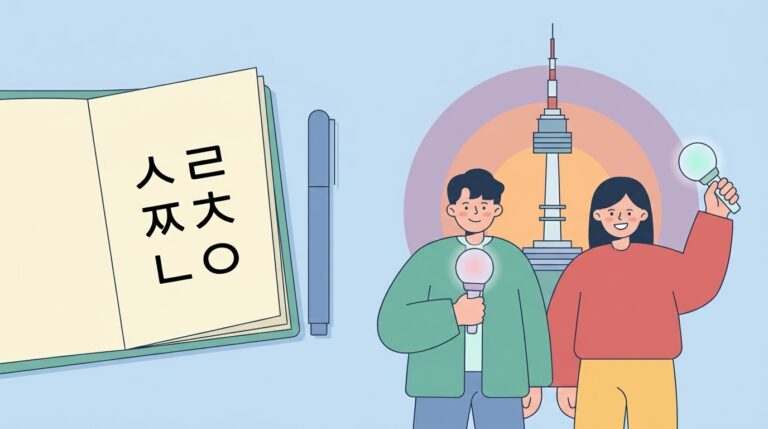
Master the Thrill: How to Express Excitement in Korean Like a True Insider
Phase 1: Empathy (Real-Life Opening)
안녕하세요! 매일한글 에디터입니다. (Hello! I’m your Daily Hangul editor.)
Picture this: you are sitting at your desk, furiously refreshing your browser at 7:59 PM. The clock strikes 8:00 PM, your hands tremble, and against all odds—you snag floor-standing tickets to see your favorite K-pop group at the KSPO Dome in Seoul. Your heart is hammering against your ribs. You immediately open your group chat with your Korean friends to announce the victory. You want to scream, “I am so ridiculously excited right now!”
So you turn to a standard dictionary app, look up “excited,” and text: “저는 매우 흥분되어 있습니다 (Jeoneun maeu heungbundoeeo itseumnida).”
A sudden cold silence falls over the chat room. Why? Because to a native Korean speaker, that textbook sentence sounds either like a rigid sci-fi cyborg reporting internal temperature readings, or worse—awkwardly sensual! Real native speakers almost never say “흥분되다” to describe happy anticipation.
Over the past decade of coaching global learners at Daily Hangul, this exact mistake is one of the most common stumbles we see. Expressing joy is the fastest way to connect with people, but translating English emotion words directly into Korean often leads to awkward misunderstandings. This guide is crafted directly from real learner feedback to give you the exact, culturally authentic phrases you need to share your excitement—naturally, smoothly, and without the robot vibes.
Phase 2: Top 3 Core Expressions for Excitement
Here are the three vital phrases every beginner must know to express excitement accurately.
1. 신나요! (Sinnayo!)
- Pronunciation: [Sin-na-yo] (Think of a bright sheen of light, then say nah-yo with a cheerful upward bounce!)
- Meaning: Literal: “Spirits are rising!” | Real Nuance: “I’m having such a blast! / This is so fun and thrilling!”
- K-Culture Moment: You will hear this constantly on Korean variety shows like Running Man whenever the cast members step onto a carnival ride or hear an upbeat dance track drop.
- Editor’s Insight: Use “신나요!” when you are actively experiencing the fun event or when high-tempo energy is already unfolding around you. Add “너무 (neomu – so/very)” to make it “너무 신나요! (Neomu sinnayo!)” for extra punch.
- Situation Spectrum: Casual (신나!): ✅ | Semi-formal (신나요!): ✅ | Formal/Polite (신납니다!): ⚠️
- 🤔 Think About It: In English, we say “I am excited,” making the self the subject. But in Korean, “신나다” focuses on the joyful spirit (shin) activating in the atmosphere. How does focusing on the mood rather than just “me” change how you share happiness?
2. 기대돼요! (Gidaedwaeyo!)
- Pronunciation: [Gi-dae-dwae-yo] (Sounds like “Key-day–dway-yo”—crisp and snappy.)
- Meaning: Literal: “Expectations are forming.” | Real Nuance: “I can’t wait! / I’m looking forward to it so much!”
- K-Culture Moment: The signature comment K-drama stars post on Instagram right before their brand-new drama premiere: “첫 방송 기대돼요! (Cheot bangsong gidaedwaeyo! – Looking forward to the first episode!)”
- Editor’s Insight: This is your golden replacement for “I’m excited about tomorrow.” Whenever an event is in the future—a weekend trip to Busan, a concert, or a dinner date—use 기대돼요, never “흥분돼요”.
- Situation Spectrum: Casual (기대돼!): ✅ | Semi-formal (기대돼요!): ✅ | Formal (기대됩니다!): ✅
- 🤔 Think About It: Why do you think Korean society values verbalizing positive anticipation (기대) over raw physical excitement when talking about future plans?
3. 설레요! (Seolleyo!)
- Pronunciation: [Seol-le-yo] (Soft like “Soul-leh-yo” with a gentle, floating l-sound.)
- Meaning: Literal: “My heart is fluttering.” | Real Nuance: “I have pleasant butterflies in my stomach / I’m thrilled with anticipation!”
- K-Culture Moment: The classic K-romance trope where the leads walk side-by-side beneath falling cherry blossoms along the Han River, hearts pounding before holding hands.
- Editor’s Insight: While “신나요” is energetic and loud, “설레요” is warm, emotional, and fluttering. It is perfect for the night before traveling overseas, seeing someone you have a crush on, or holding a fan-meeting ticket.
- Situation Spectrum: Casual (설레!): ✅ | Semi-formal (설레요!): ✅ | Formal (설렙니다!): ⚠️
- 🤔 Think About It: English often groups romance and adrenaline into the single word “excited.” Korean separates emotional fluttering (설렘) from lively party thrills (신남). Which nuance feels more poetic to you?
Phase 3: Textbook Korean vs. Real Native Korean
Let’s break down the rigid phrases found in old learning manuals versus what you’ll actually hear in the streets of Seoul.
Situation 1: Waiting for a K-Pop concert tomorrow
- 📖 교과서 한국어 (Textbook): 저는 내일 콘서트 때문에 매우 흥분됩니다. (Jeoneun naeil konseoteu ttaemune maeu heungbundoemnida.)
- 🗣️ 진짜 한국어 (Real-life): 내일 콘서트 진짜 기대돼요! (Naeil konseoteu jinjja gidaedwaeyo!)
- 💡 왜 다를까? (Why the difference?): In daily conversational Korean, “흥분되다” sounds overly clinical, agitated, or even sexually charged. Native speakers instantly reach for 기대돼요 (I can’t wait) for upcoming events.
Situation 2: Stepping into a buzzing Hongdae street festival
- 📖 교과서 한국어 (Textbook): 이곳의 분위기는 대단히 유쾌합니다. (Igosui bunwigineun daedanhi yukwaehamnida.)
- 🗣️ 진짜 한국어 (Real-life): 와, 분위기 대박! 너무 신나요! (Wa, bunwigi daebak! Neomu sinnayo!)
- 💡 왜 다를까? (Why the difference?): “유쾌하다 (pleasant/cheerful)” is formal vocabulary used in news reports or written essays. Young locals express excitement with 대박 (daebak – awesome) paired with 너무 신나요 (so exciting).
Phase 4: K-Culture Deep Dive & Non-Verbal Manners
4-1. 눈치 (Nunchi) & Gestures: How to Show Excitement
In Korea, emotions are communal. When you express excitement, your body language should radiate warmth without invading personal space:
* The “Seal Clap” (물개박수 – Mulgae-baksu): When a Korean gets genuinely excited—like when a sizzling plate of samgyeopsal arrives—they rarely jump around yelling. Instead, they bounce slightly on their heels and rapidly clap both hands in front of their chest. It signals pure delight and appreciation!
* Two-Hand Heart Clench: When saying “설레요!”, gently placing one or both hands over your heart with a bright smile visually communicates that sweet fluttering sensation.
* The Nunchi Check: Watch your volume! While high excitement is embraced at sports bars, baseball stadiums, and noraebangs (karaoke rooms), loud shouting inside quiet boutique cafes or on the Seoul subway is considered inconsiderate. Keep the sparkling enthusiasm in your eyes and voice pitch rather than extreme volume.
4-2. Cultural Code: The Spirit of “흥 (Heung)”
You cannot understand Korean excitement without the concept of 흥 (Heung). Historically described as an innate cultural wellspring of joy, rhythm, and resilience, Heung is the reason why Koreans are world-famous for synchronized concert cheering (떼창 – ttechang) and lively after-work dinners (회식 – hoesik). When you say “신나요!”, you aren’t just stating a personal mood; you are inviting the people around you to tap into mutual Heung!
Phase 5: Real-Life Roleplay Scenario
Setting: A vibrant pojangmacha (orange-tented street food stall) in Euljiro, Seoul. Neon signs reflect in rain puddles outside.
Characters:
* Minji (민지): Your Korean college buddy who loves indie concerts and spicy tteokbokki.
* You: An enthusiastic visitor eager to explore Seoul nightlife.
- Turn 1 (Minji): 드디어 오늘 우리 콘서트 티켓팅 날이야! 준비됐어?
(Deudieo oneul uri konseoteu tiketting nariya! Junbidaesseo?)
“Today is finally ticket day for the concert! Are you ready?”
🎭 (Tapping her phone screen nervously with wide eyes) -
Turn 2 (You): 네! 저 아침부터 너무 설레요!
(Ne! Jeo achimbuteo neomu seolleyo!)
“Yes! I’ve had butterflies in my stomach since this morning!”
🎭 (Putting your hands over your heart and grinning) -
Turn 3 (Minji): 3, 2, 1… 헐! 대박! 우리 앞자리 성공했어!
(Sam, i, il… heol! Daebak! Uri apjari seonggonghaesseo!)
“3, 2, 1… OMG! No way! We got front-row seats!”
🎭 (Screaming silently, doing the rapid seal clap) -
Turn 4 (You): 와, 진짜요?! 너무 신나요!
(Wa, jinjjayo?! Neomu sinnayo!)
“Whoa, really?! This is so exciting!”
🎭 (High-fiving Minji across the metal table) -
Turn 5 (Minji): 다음 주 금요일인데, 그날 뭐 입고 갈까?
(Daeum ju geumyoirinde, geunal mwo ipgo galkka?)
“It’s next Friday—what should we wear that day?”
🎭 (Already searching outfits on her shopping app) -
Turn 6 (You): 우리 응원봉 색깔로 맞춰 입어요! 벌써 기대돼요!
(Uri eungwonbong saekkkallo matchwo ibeoyo! Beolsse gidaedwaeyo!)
“Let’s match our clothes to our lightstick color! I already can’t wait!”
🎭 (Bouncing lightly on your stool with anticipation) -
Turn 7 (Minji): 너무 좋다! 콘서트 끝나고 맛있는 치킨도 먹자!
(Neomu jota! Konseoteu kkeutnago masinneun chikindo meokja!)
“Sounds awesome! Let’s get delicious fried chicken after the show too!”
🎭 (Smiling warmly, raising her water glass for a toast) -
Turn 8 (You): 좋아요! 오늘 밤은 잠 못 잘 것 같아요!
(Joayo! Oneul bameun jam mot jal geot gatayo!)
“Sounds great! I don’t think I can sleep tonight!”
🎭 (Clinking glasses with a big laugh)
🔀 Interactive Decision Point: What do you say next?
Minji looks at you and asks: “콘서트 날까지 우리 어떻게 기다리지? (How are we going to wait until concert day?)”
- Choice A: “매일 플레이리스트 들으면서 기다려요! 너무 기대돼요! (Maeil peulleiriseuteu deureumyeonseo gidaryeoyo! Neomu gidaedwaeyo!)”
- Choice B: “저는 지금 너무 흥분되어 미치겠습니다! (Jeoneun jigeum neomu heungbundoeeo michigesseumnida!)”
- Choice C: “그냥 재미있어요. (Geunyang jaemiisseoyo.)”
Feedback:
* Option A (BEST): Perfect 10/10! You naturally combined “기대돼요” with a shared fun action. Minji will smile and send you her favorite playlist right away.
* Option B (RISK): Too dramatic and stiff! “흥분되어 미치겠습니다” sounds like an exaggerated movie villain or clinical adrenaline surge. It might make Minji chuckle in confusion.
* Option C (BAD): Buzzkill! “재미있어요” means “it’s interesting/fun,” which sounds completely flat when someone asks about your passionate excitement.
Phase 6: 10-Second Emotion Shadowing Drill
Speak these out loud! Focus on the melody and speed breaks marked by /.
- [😊 Bouncy & High-Energy]
와, / 진짜 / 너무 신나요!
(Wa, / jinjja / neomu sinnayo!)
(Pause right after ‘와’ to let the surprise peak, then jump up on ‘신나요!’) -
[💓 Fluttery & Warm-Hearted]
생각만 해도 / 가슴이 / 설레요.
(Saenggangman haedo / gaseumi / seolleyo.)
(Soften your pitch at the end, letting ‘설레요’ glide gently like a sigh.) -
[🤩 Eager & Impatient Anticipation]
다음 주 여행 / 진짜 / 기대돼요!
(Daeum ju yeohaeng / jinjja / gidaedwaeyo!)
(Emphasize ‘진짜’ with crisp energy, then finish ‘기대돼요’ with a confident tone.)
Phase 7: K-Culture Mini Dictionary
-
흥 (Heung)
Meaning: Inherent joy, exuberant energy, rhythm.
Practical Use: Used to describe someone who loves dancing and singing: “민지는 진짜 흥이 많아요 (Minji really has a lot of heung)!” -
불금 (Bulgeum)
Meaning: “Fire Friday” (TGIF).
Practical Use: The ultimate trigger phrase for excitement at work or school: “오늘 불금인데 신나게 놀아요! (It’s Fire Friday, let’s have blast!)” -
심쿵 (Simkung)
Meaning: Heart-throb / Heart skipping a beat (심장이 쿵쾅쿵쾅).
Practical Use: Used when an actor does something sweet or an idol smiles directly into the camera: “그 미소 보고 심쿵했어요! (My heart stopped when I saw that smile!)” -
텐션 (Tension)
Meaning: Vibe / Energy level (Konglish).
Practical Use: Unlike English “tension” (which means stress), in Korea, high tension means peak excitement! “오늘 텐션 너무 좋다! (Your energy vibe is amazing today!)”
Phase 8: Traveler’s Survival Kit
Top 3 On-the-Go Phrases for Tourists
- “여기 분위기 너무 좋아요!” (Yeogi bunwigi neomu joayo!)
Translation: “The atmosphere here is so great!”
Pro Tip: Say this to the owner of a hip cafe in Seongsu-dong or a tent bar in Busan. They will often give you free treats (서비스 – service)! - “한국 여행 진짜 기대돼요!” (Hanguk yeohaeng jinjja gidaedwaeyo!)
Translation: “I’m looking forward to my Korea trip so much!”
Pro Tip: Use this when chatting with your Korean guest house host or tour guide. - “오늘 너무 신났어요!” (Oneul neomu sinnasseoyo!)
Translation: “I had so much fun today!” (Past tense of 신나요).
Pro Tip: Drop this when parting ways with your travel companions after an unforgettable day.
Editor’s Travel Note
Before heading out to experience night markets or music festivals, make sure you download the Naver Map application on your smartphone—Google Maps has limited walking directions in South Korea! Also, be sure to grab a physical T-Money transit card at any convenience store for smooth subway transfers when running between exciting sights.
Phase 9: “One Step Deeper” (Cultural Reflection)
In Western cultures, excitement is frequently expressed as an individual achievement or self-contained state (“I’m pumped!”). In Korea, emotional expressions are deeply tied to the collective space. The Korean language prioritizes words like 신나다 (spirit arising in the room) and 기대되다 (anticipation unfolding) because feelings are considered shared currents that flow between people. When you tell a Korean friend that you are excited using their native phrasing, you aren’t just reporting your mood—you are inviting them into your joy. Emotion in Korea is never a solo performance; it is a shared celebration of human connection.
💬 Your Turn: What is one upcoming event in your life that makes your heart flutter? Try writing: “[Event] 진짜 기대돼요!” in the comments below, and I will personally check your sentence!
Phase 10: FAQ & Avoiding Misunderstandings
Q: Can I use “행복해요 (Haengbokaeyo)” when I am excited?
A: “행복해요” means “I am happy” in a deep, peaceful, or content sense (like having a loving family or achieving inner peace). While you might feel happy when excited, “행복해요” lacks the energetic kick or heart-flutter of “신나요!” or “기대돼요!”.
Q: Is “대박 (Daebak)” polite enough to use with older people or managers?
A: No! “대박” is strictly casual slang. With professors, older relatives, or your boss, express excitement politely using “정말 기대됩니다 (Jeongmal gidaedoemnida – I am genuinely looking forward to it)”.
Q: What is the difference between “재미있어요” and “신나요”?
A: 재미있어요 means “it is interesting / fun” (evaluating the quality of a movie, book, or board game). 신나요 means you feel lively, energized, and thrilled inside. A quiet puzzle can be 재미있어요, but a dance club or roller coaster is 신나요!
🚨 Common Mistakes Alert Board
- Mistake: Saying “저는 매우 흥분돼요 (Jeoneun maeu heungbundaeyo)” for an upcoming concert.
Correct Action: Say “콘서트 너무 기대돼요! (Konseoteu neomu gidaedwaeyo!)”. - Mistake: Dropping the “-요 (-yo)” when talking to store clerks or new acquaintances (e.g., shouting “신나!”).
Correct Action: Always keep the polite ending: “신나요! (Sinnayo!)”. - Mistake: Using “설레요” for eating a hamburger alone.
Correct Action: “설레요” is for special, heart-fluttering moments. For food excitement, say “완전 기대돼요! (Wanjeon gidaedwaeyo! – I can’t wait!)”.
Phase 11: Action Mission
- 🥉 Bronze Mission (Solo Practice): Stand in front of your mirror, do the 2-hand seal clap, and say: “와, 너무 신나요! (Wa, neomu sinnayo!)” with a huge smile 3 times.
- 🥈 Silver Mission (Social Media): Post a photo of your favorite K-pop bias, delicious Korean food, or a travel bucket list spot with the caption: “진짜 기대돼요! #DailyHangul”.
- 🥇 Gold Mission (Real Life): The next time you order Korean food at a restaurant or meet a Korean friend, tell them: “오늘 너무 기대돼요!” and watch their face light up!
- 🎮 K-Culture Mission: Watch the first 10 minutes of any K-variety show (like Running Man or Going Seventeen) and see if you can spot someone yelling “신난다!” or “대박!”.
Phase 12: Interactive Quiz Challenge
Test your instincts below! Try answering before checking the solution.
1. Situation Challenge: You just booked your flight to Seoul for autumn vacation. You want to message your Korean host. Which phrase is the most natural?
* (A) 저는 매우 흥분된 상태입니다.
* (B) 한국 여행 너무 기대돼요!
* (C) 그냥 재미있어요.
2. Fill-in-the-Blank: You step into a concert stadium filled with lightsticks and roaring cheers.
“와! 음악 들으니까 진짜 [ ]!” (Wow! Listening to this music makes me feel so lively and hyped!)
* (A) 신나요
* (B) 유쾌합니다
* (C) 조용해요
3. True or False (Culture Check):
In Korean culture, “텐션이 높다 (high tension)” means someone is very stressed out and anxious.
* (True / False)
👉 Click here to reveal the Answers & Explanations!
1. Answer: (B) 한국 여행 너무 기대돼요!
Explanation: For anticipated future events, “기대돼요 (I can’t wait!)” is the natural, warm expression. (A) sounds like an artificial robot, and (C) sounds completely indifferent!
2. Answer: (A) 신나요
Explanation: High-energy, heart-pumping fun that makes you want to dance is described as “신나요”. “유쾌합니다” is too formal/old-fashioned, and “조용해요” means quiet.
3. Answer: False
Explanation: In Korean slang/Konglish, “텐션 (tension)” refers to someone’s energy and hype level. If someone says “텐션 높다!”, it means you are full of vibrant excitement and life of the party!







