

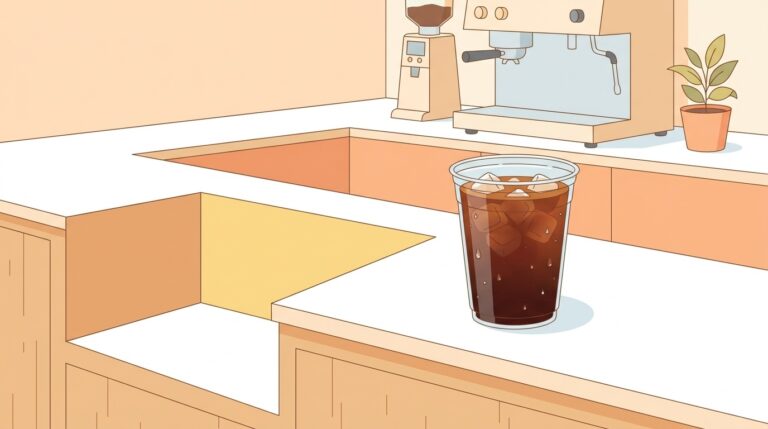
The Ultimate Guide to Korean Cafe Slang: Master ‘Ah-Ah’ Like a Local
Phase 1: Empathy & Story Immersion
안녕하세요! 매일한글 에디터입니다. (Hello from your Daily Hangul editor!)
Picture this: You step into a trendy cafe in the bustling heart of Seongsu-dong, Seoul. The aroma of freshly roasted beans fills the room, indie K-R&B plays softly, and the barista is moving at lightning speed. You spent weeks memorizing your textbook sentence: “Iced Americano hana juseyo.” You step up to the register, take a deep breath, and suddenly overhear the busy office worker in front of you simply chirp: “Sajangnim, Ah-Ah han-jan take-out-yo!”
Wait… did they just say Ah-Ah? Are they baby-talking to the barista?
Not at all! You have just witnessed the pinnacle of modern Korean cafe lingo: 줄임말 (jul-im-mal, abbreviations). In South Korea, where daily life runs on high-octane efficiency and caffeine, whole syllables get shaved off to keep conversations snappy. Many of our intermediate learners tell us they feel paralyzed at Korean cafes, worried they will sound like an outdated textbook or hold up the line during the fierce morning rush.
Don’t worry! By the end of this guide, you won’t just understand why Koreans drink iced coffee in sub-zero winters; you will confidently order like someone who has lived in Seoul for a decade. Let’s dive into the fascinating, fast-paced world of Korean coffee culture!
Phase 2: Core Expressions Deep Dive
Here are the top three cafe abbreviations that every Korean speaker uses daily.
1. 아아 (Ah-ah)
- Pronunciation: A-a (Sounds like saying the musical note “Ah!” twice in a crisp, sharp beat: Ah-Ah)
- Meaning: Literal abbreviation of 아이스 아메리카노 (A-i-seu A-me-ri-ka-no / Iced Americano). Nuance: The undisputed national drink of South Korea—fast, refreshing, and practical.
- K-Culture Moment: Seen in nearly every slice-of-life K-drama or workplace series (like Misaeng or Work Later, Drink Now), where exhausted professionals clutch a sweating plastic cup to survive the workday.
- Editor’s Insight: 아아 is so ubiquitous that baristas will instantly recognize it. However, because it is an informal abbreviation, pair it with polite particles like “한 잔 주세요” (han jan ju-se-yo / please give me one glass) when speaking to staff.
- Situation Spectrum: Casual ✅ | Semi-formal ✅ | Strict Formal (Job Interview/Executive Boardroom) ⚠️
- 🤔 Think About It: How does reducing a seven-syllable word (A-i-seu A-me-ri-ka-no) down to two syllables reflect modern society’s obsession with speed and convenience?
2. 뜨아 (Tteu-ah)
- Pronunciation: Tteu-a (Combines a tense, tight “Tteu” like the start of “tsunami” or “steam”, followed by “ah”)
- Meaning: Abbreviation of 뜨거운 아메리카노 (Tteu-geo-un A-me-ri-ka-no / Hot Americano). Literal: “Hot-Ah”.
- K-Culture Moment: Often used playfully in contrast to Ah-Ah, especially by dramatic drama characters debating who among their friends has betrayed the “iced-only” lifestyle during winter.
- Editor’s Insight: Notice the phonetic symmetry! Koreans love pairing rhyming opposites: 아아 (cold) vs. 뜨아 (hot). It rolls off the tongue effortlessly once you master that tensed double consonant ㄸ (tt).
- Situation Spectrum: Casual ✅ | Semi-formal ✅ | Strict Formal ⚠️
- 🤔 Think About It: Does your native language create catchy rhyming pairs for everyday food and beverage items?
3. 얼죽아 (Eol-juk-ah)
- Pronunciation: Eol-ju-ga (Sounds like Earl-jook-ah)
- Meaning: Short for 얼어 죽어도 아이스 아메리카노 (Eol-eo jug-eo-do A-i-seu A-me-ri-ka-no). Literal: “Even if I freeze to death, Iced Americano!”
- K-Culture Moment: Every December and January, K-pop idols post selfies on Instagram bundled up in oversized down parkas, shivering while stubbornly holding a cup of Ah-Ah with ice cubes rattling.
- Editor’s Insight: This is more than a word; it is an identity. It humorously captures the stubborn Korean preference for chilled, thirst-quenching coffee regardless of blizzards or sub-zero Siberian winds blowing through Seoul.
- Situation Spectrum: Casual ✅ | Semi-formal (Social talk with colleagues) ✅ | Strict Formal 🚫
- 🤔 Think About It: Why do you think cold coffee remains popular even during freezing weather? Is it the heated indoor culture, or the fast-paced lifestyle?
Phase 3: Textbook Korean vs. Real Korean
Situation 1: Ordering your coffee at the counter
- 📖 교과서 한국어 (Textbook):
저에게 차가운 아메리카노 한 잔을 주시겠습니까?
(Jeo-e-ge cha-ga-un a-me-ri-ka-no han jan-eul ju-si-get-seum-ni-kka?)
“Would you be so kind as to give me one cold Americano?” - 🗣️ 진짜 한국어 (Real-World Spoken):
아아 한 잔 테이크아웃이요!
(A-a han jan te-i-keu-a-ut-i-yo!)
“One Iced Americano to go, please!” - 💡 왜 다를까? (Why is it different?): Textbook Korean overuses passive honorific questions and lengthy adjectives like 차가운 (cold). Real cafe interactions prioritize clarity and brevity. Adding ~요 (-yo) provides all the necessary respect without slowing down the queue.
Situation 2: Expressing your beverage preference during a freezing winter day
- 📖 교과서 한국어 (Textbook):
날씨가 매우 춥지만 저는 여전히 차가운 커피를 선호합니다.
(Nal-ssi-ga mae-u chup-ji-man jeo-neun yeo-jeon-hi cha-ga-un keo-pi-reul seon-ho-ham-ni-da.)
“Although the weather is extremely cold, I still prefer cold coffee.” - 🗣️ 진짜 한국어 (Real-World Spoken):
전 완전 얼죽아예요!
(Jeon wan-jeon eol-jug-a-ye-yo!)
“I’m totally an Eol-juk-ah person!” - 💡 왜 다를까? (Why is it different?): Slang labels like 얼죽아 turn a long preference explanation into a fun cultural badge of honor, instantly building rapport with native speakers.
Phase 4: K-Culture Deep Dive & Non-Verbal Manners
4-1. 눈치 (Nunchi) & Counter Etiquette
Korean cafes operate under the subtle art of Nunchi (tactful social awareness). Here are non-verbal cues you need to know:
1. The Ready Card: Notice how people in line hold their physical card or smartphone (with Samsung Pay / Apple Pay ready) in their hand before reaching the register. Taking two minutes to dig through your backpack at the counter violates the shared communal rhythm.
2. The Two-Handed Handover: Even though the exchange is quick, hand over your credit card with both hands, or with your right hand supported lightly at the wrist by your left hand. It conveys instant courtesy to the staff.
3. Kiosk Mastery: Many busy urban cafes now use self-service touchscreen kiosks. If you see a kiosk, look for buttons labeled 아메리카노(ICE)—and remember that you will almost always be asked to choose between 매장 (For Here) or 포장/테이크아웃 (To Go) before paying.
4-2. The Cultural Fuel: Why “Ah-Ah” Rules Korea
Why is the Iced Americano the undisputed king of Korean beverages? In Korea’s intense Ppal-li Ppal-li (빨리빨리, “hurry-hurry”) culture, hot drinks require you to blow on them and wait. An Ah-Ah, however, provides instantaneous hydration, an immediate caffeine boost, and a crisp, clean finish after savory, garlic-rich meals like Kimchi Jjigae or Samgyeopsal. Koreans often refer to their daily morning Ah-Ah as 생명수 (saeng-myeong-su / “the water of life”).
Phase 5: Real-World Roleplay Scenario
Setting: A minimalist concrete-and-glass cafe in Seongsu-dong. Barista Min-woo stands behind an espresso machine, flashing a quick professional smile.
- Turn 1 (Min-woo): 어서 오세요! 주문 도와드릴까요?
(Eo-seo o-se-yo! Ju-mun do-wa-deu-ril-kka-yo?)
“Welcome! May I take your order?”
🎭 Barista taps the register screen and looks up warmly. -
Turn 2 (Learner): 안녕하세요! 저 아아 한 잔 테이크아웃으로 부탁드려요.
(An-nyeong-ha-se-yo! Jeo a-a han jan te-i-keu-a-ut-eu-ro bu-tak-deu-ryeo-yo.)
“Hello! One Ah-Ah to go, please.”
🎭 Learner smiles, holding credit card ready. -
Turn 3 (Min-woo): 네, 원두는 산미 있는 거랑 고소한 거 중에 어떤 걸로 하시겠어요?
(Ne, won-du-neun san-mi it-neun geo-rang go-so-han geo jung-e eo-tteon geol-lo ha-si-get-seo-yo?)
“Sure, between fruity/acidic and nutty/rich beans, which would you prefer?”
🎭 Points toward two small cards explaining bean origins. -
Turn 4 (Learner): 고소한 원두로 해주세요. 샷 하나 추가할 수 있나요?
(Go-so-han won-du-ro hae-ju-se-yo. Syat ha-na chu-ga-hal su it-na-yo?)
“Nutty beans, please. Can I add an extra shot?”
🎭 Learner gestures with a gentle nod. -
Turn 5 (Min-woo): 그럼요. 진하게 해드릴게요. 영수증 필요하세요?
(Geu-reom-yo. Jin-ha-ge hae-deu-ril-ge-yo. Yeong-su-jeung pir-yo-ha-se-yo?)
“Of course. I’ll make it rich for you. Do you need a receipt?”
🎭 Barista taps confirmation on the card terminal. -
Turn 6 (Learner): 아니요, 버려주세요!
(A-ni-yo, beo-ryeo-ju-se-yo!)
“No thanks, you can throw it away!”
🎭 Shakes hand gently in polite decline. -
Turn 7 (Min-woo): 결제 완료되셨고요, 진동벨 울리면 픽업대로 와주세요!
(Gyeol-je wan-ryo-doe-syeot-go-yo, jin-dong-bel ul-li-myeon pik-eop-dae-ro wa-ju-se-yo!)
“Payment is complete. When the buzzer vibrates, please pick it up at the counter!”
🎭 Hands over the buzzer using both hands. -
Turn 8 (Learner): 감사합니다! 수고하세요!
(Gam-sa-ham-ni-da! Su-go-ha-se-yo!)
“Thank you! Keep up the good work!”
🎭 Receives buzzer with both hands and bows slightly.
🔀 Interactive Decision Point
The barista hands you your drink, but you realize you forgot to grab a cup sleeve (홀더 / hol-deo) and straw (빨대 / ppal-dae). What do you say?
- Option A: 저기요, 빨대랑 컵홀더 어디 있어요? (Jeo-gi-yo, ppal-dae-rang keop-hol-deo eo-di it-seo-yo? / “Excuse me, where are the straws and sleeves?”)
- Option B: 야! 빨대 내놔! (Ya! Ppal-dae nae-nwa! / “Hey! Hand over the straw!”)
- Option C: 사장님, 차가워서 손이 얼어버릴 것 같은데 도와주실 수 있으십니까? (Sa-jang-nim, cha-ga-wo-seo son-i eol-eo-beo-ril geot gat-eun-de do-wa-ju-sil su it-seu-ni-kka? / “Boss, my hand is about to freeze because it’s cold, could you assist me?”)
Feedback:
* Option A (BEST): Natural, polite, and spot-on! Most Korean cafes have a self-service pickup bar (서비스 테이블) right next to the counter where you can grab them freely.
* Option B (BAD): Extremely rude! 야 and 내놔 are informal demands used only with very close, teasing childhood friends.
* Option C (RISK): Far too dramatic and theatrical! While grammatically correct, it sounds like a line from a period K-drama and will leave the barista utterly confused.
Phase 6: 10-Second Emotional Shadowing Drill
Practice these lines out loud with the rhythm markers (/ = brief pause) and match the emotional cues!
[😊 Crisp and upbeat]
아아 한 잔 / 테이크아웃으로 / 부탁드려요!
(A-a han jan / te-i-keu-a-ut-eu-ro / bu-tak-deu-ryeo-yo!)
“One Ah-Ah / to go / please!”-
[🥶 Shivering but stubborn]
영하 십 도여도… / 난 무조건 / 얼죽아야!
(Yeong-ha sip do-yeo-do… / nan mu-jo-geon / eol-jug-a-ya!)
“Even if it’s minus ten degrees… / I’m unconditionally / an Ah-Ah drinker!” -
[☕ Relaxed and warm]
오늘은 너무 추우니까 / 따뜻한 뜨아 / 마실래.
(O-neul-eun neo-mu chu-u-ni-kka / tta-tteut-han tteu-a / ma-sil-lae.)
“Since it’s so chilly today / I’ll drink / a warm Hot-Ah.”
Phase 7: K-Culture Mini Dictionary
Expand your cafe lexicon with these four vital portmanteaus:
- 아바라 (Ah-ba-ra) | Iced Vanilla Latte
Usage: Short for 아이스 바닐라 라떼 (A-i-seu Ba-nil-la Ra-tte). Perfect when you need a creamy, sugary energy boost in the afternoon. - 샷추가 (Syat-chu-ga) | Add an Extra Espresso Shot
Usage: Vital for students during midterm exams or busy professionals struggling through a post-lunch slump. - 테이크아웃 (Te-i-keu-a-ut) / 포장 (Po-jang) | Takeout / To-Go
Usage: Korean law strictly prohibits single-use plastic cups for customers seated inside cafes. You must state clearly if your drink is 테이크아웃. - 카공족 (Ka-gong-jok) | Cafe Study Tribe
Usage: A blend of 카페 (ka-pe / cafe) + 공부 (gong-bu / study) + 족 (jok / tribe). Refers to people who set up laptops and textbooks in cafes for hours.
Phase 8: Traveler’s Survival Kit
TOP 3 Survival Phrases
- 디카페인 되나요? (Di-ka-pe-in doe-na-yo?)
Meaning: “Do you have decaf?”
Pro Tip: Not all independent Korean cafes offer decaf beans, so asking this upfront saves time. - 연하게 해주세요. (Yeon-ha-ge hae-ju-se-yo.)
Meaning: “Please make it light / dilute it slightly.”
Pro Tip: Korean espresso shots tend to be quite bold and dark. If you are sensitive to caffeine, this phrase is a lifesaver. - 화장실 비밀번호가 뭐예요? (Hwa-jang-sil bi-mil-beon-ho-ga mwo-ye-yo?)
Meaning: “What is the restroom door code?”
Pro Tip: Most Seoul cafes keep their restrooms locked with digital keypads. The four-digit passcode is almost always printed at the very bottom of your paper receipt!
Editor’s Travel Note
- Navigation: Google Maps often lags in Korea for pedestrian routes. Ensure you utilize the official Naver Map app download to locate hidden boutique cafes tucked into residential alleys in Yeonnam-dong and Ikseon-dong.
- Ordering without Cash: Almost all cafes in Korea are strictly cashless. Keep an international credit card or travel card handy.
Phase 9: Going Deeper (Cultural Reflection)
Language is a mirror of society’s collective tempo. Korean abbreviations like 아아 (Ah-Ah) and 얼죽아 (Eol-juk-ah) are not mere lazy speech; they are playful, efficient linguistic tools born out of Korea’s rapid modernization and dense communal lifestyle. Condensing complex phrases into punchy acronyms fosters an immediate sense of shared identity and in-group humor among speakers.
💬 Your Turn: Does your native culture have an everyday beverage that doubles as an emotional lifeline? Share your thoughts in the comments below!
Phase 10: Structured FAQ & Common Mistakes
Q: Can I use “아아” (Ah-Ah) when ordering at luxury hotel lounges or formal restaurants?
A: It is better to use the full name, 아이스 아메리카노 (A-i-seu A-me-ri-ka-no), in high-end, formal establishments. While staff will still understand 아아, using the unabbreviated term matches the upscale atmosphere.
Q: Why did the barista look annoyed when I sat down at a table with my plastic takeout cup?
A: Under Korean environmental regulations, cafes are legally fined if customers consume drinks from single-use disposable plastic cups while seated inside. If you plan to sit down, always specify 매장 (mae-jang / dine-in) so they serve it in a reusable glass cup!
Q: What if I prefer iced tea or something sweet instead of coffee?
A: Try 아샷추 (Ah-syat-chu)! This trending portmanteau stands for 아이스티에 샷 추가 (Iced Peach Tea with an added espresso shot). It sounds unusual, but the sweet and bitter combo is wildly popular across Korea.
🚨 Common Mistakes Warning Board
- Calling it just “아메리카노” and expecting it iced: In Korea, if you only say “Americano 주세요”, the default is often warm, or the barista will pause to ask: “따뜻한 거요, 차가운 거요?” Always lead with 아아 or 아이스!
- Forgetting to check the receipt for the bathroom code: Don’t walk all the way to the building staircase without glancing at your receipt—you will likely find a 4-digit code and a star key (
*) listed at the bottom. - Leaving empty cups on the table when leaving: Korean cafes almost never have busboys. Always return your tray and empty tumbler directly to the counter drop-off station labeled 반납대 (Return) or Pick-up.
Phase 11: Action Missions & Engagement
- 🥉 Bronze Mission (Solo Practice): Stand in front of your mirror and practice saying: “사장님, 아아 한 잔 테이크아웃이요!” smoothly in under 3 seconds.
- 🥈 Silver Mission (Social Media): Take a photo of your iced coffee today, post it on social media, and caption it with your new badge: #얼죽아 (Eol-juk-ah)!
- 🥇 Gold Mission (Real Life): Visit a Korean-run cafe or travel to Seoul, order using 아아, and add an extra shot (샷추가) without looking at notes.
- 🎮 K-Culture Spotting Mission: Watch an episode of a contemporary K-drama and count how many times characters are holding plastic clear cups of Ah-Ah. (Hint: Check morning office scenes!)
Phase 12: Interactive Quiz Challenge
Test your cafe fluency! Try answering before checking the answers below.
- Situational Judgment: You enter a cafe during a minus-five-degree winter freeze in Seoul, and your friend laughs while holding an iced drink. Which phrase best describes them?
- (A) 카공족 (Ka-gong-jok)
- (B) 얼죽아 (Eol-juk-ah)
- (C) 아바라 (Ah-ba-ra)
- Fill-in-the-Blank: Complete the order naturally:
- “사장님, 시원한 _____ 한 잔 포장해 주세요!”
- True or False: You can freely sit at a cafe table for two hours using a disposable plastic takeout cup as long as you ordered 테이크아웃.
- (True / False)
👉 Click to view answers and explanations!
- Answer: (B) 얼죽아 (Eol-juk-ah) — This term specifically honors anyone devoted to iced coffee even in sub-zero winter temperatures.
- Answer: 아아 (Ah-ah) — Fits smoothly into spoken cafe conversation!
- Answer: False — South Korean environmental laws strictly forbid single-use plastic cups for dine-in patrons. If you change your mind and decide to stay, let the barista know so they can transfer it to a reusable mug or glass!







