

Phase 1: Empathy (Story-Immersive Opening)
안녕하세요! 매일한글 에디터입니다.
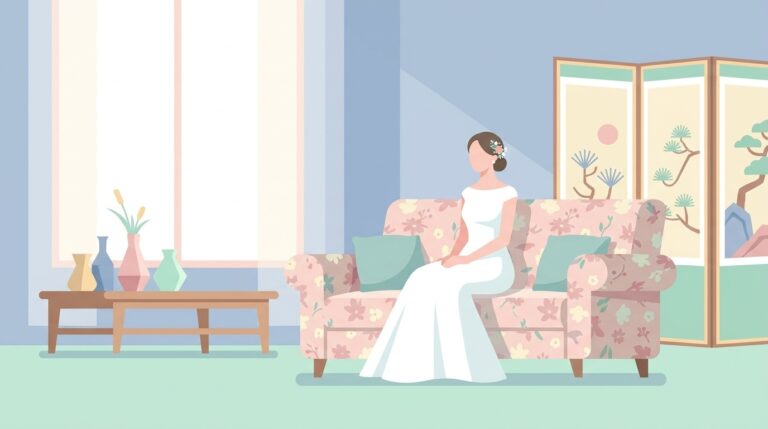
Imagine this: You step through the grand frosted glass doors of a bustling Seoul wedding hall. The foyer is filled with towering flower wreaths, relatives bowing in tailored suits and silk hanboks, and upbeat acoustic pop playing in the background. Your friend—the bride—is tucked away in a dreamy, perfumed sanctuary known as the 신부 대기실 (sinbu daegisil, bridal waiting room). As you peek inside, you see a glamorous sofa crowned with pastel blossoms, a professional photographer with a heavy DSLR firing flashes every two seconds, and a line of stylish guests waiting their turn. Your turn arrives. The bride turns to you, eyes sparkling behind her veil, and beams. Suddenly, your mind freezes. What do you say beyond a frantic, awkward “Congratulations”? Do you bow? Hug? Where do you put your bag? How do you ask for that iconic selfie without holding up the line?
Don’t worry—you are definitely not alone! This is easily one of the most nerve-wracking social moments for international guests in Korea. Korean weddings move at lightning speed (most halls run on tight 60-to-80-minute schedules!), and the bridal room is the heart of pre-ceremony warmth. In this guide, backed by hundreds of real learner experiences and my decade of navigating Seoul’s wedding circuits, you will master the exact polite, affectionate, and natural Korean expressions to compliment the bride, snap flawless photos, and blend in like a thoughtful local bestie.
Phase 2: Core 3 Expressions In-Depth
1. 오늘 너무 예뻐요! 진짜 공주님 같아요! (Oneul neomu yeppeoyo! Jinjja gongjunim gat-ayo!)
- Pronunciation: [Oh-neul noh-moo yeh-pbuh-yoh! Jin-jja gong-joo-neem gah-tah-yoh!] (Think of “neomu” like “no-moo” milk, and “gongju” like a gong chiming for a princess).
- Meaning: “You look so pretty today! You truly look like a princess!”
- K-Culture Moment: Seen in almost every rom-com K-drama (Crash Landing on You, Queen of Tears) where the best friends enter the bridal suite and gasp in awe.
- Editor’s Insight: While calling someone a “princess” in casual English might sound a bit cheesy or dramatic, in a Korean bridal suite it is the ultimate, universally cherished compliment. Korean wedding dresses tend to be lavish and sparkling, so acknowledging her fairytale moment shows peak affection and enthusiasm.
- Situation Spectrum: Casual ✅ | Semi-formal ✅ | Formal ⚠️
- 🤔 Think About It: In your culture, would comparing an adult friend to a fairytale character feel childish or sweet? Why do you think Korean celebrations embrace overt aesthetic praise so warmly?
2. 결혼 진심으로 축하해요! (Gyeolhon jinsim-euro chukahaeyo!)
- Pronunciation: [Gyuhl-hon jeen-sheem-eu-roh choo-kah-heh-yoh!] (Blend “chuk-ha” into “choo-kah”, softening the ‘k’ sound with an airy breath).
- Meaning: “I sincerely congratulate you on your marriage!”
- K-Culture Moment: The heartfelt exchange between close colleagues and university friends right as they hand over words of blessings before the photo snap.
- Editor’s Insight: Notice the word 진심으로 (jinsim-euro, sincerely/from the bottom of my heart). Simply saying “축하해요” (chukahaeyo) works, but adding jinsim-euro elevates your sentiment from a casual nod to a deep, resonant blessing. If the bride is older or a senior colleague, swap the ending to the formal 축하드려요 (chukadeuryeoyo).
- Situation Spectrum: Casual ✅ | Semi-formal ✅ | Formal ✅
- 🤔 Think About It: How does your native language convey the depth of “sincerity” without sounding overly stiff or academic?
3. 사진 한 장 같이 찍어도 될까요? (Sajin han jang gachi jjigeodo doelkkayo?)
- Pronunciation: [Sah-jeen hahn jahng gah-chee jjee-gaw-doh dwel-kkah-yoh?] (“Gachi” sounds like “got-chee”, and “jjigeo” has that sharp, pop-of-the-tongue double-j sound).
- Meaning: “Could we take a photo together?”
- K-Culture Moment: The cue that signals the room’s assistant and photographer to position you next to the bride on the plush velvet sofa.
- Editor’s Insight: Using the phrase 한 장 (han jang, one sheet/single photo) is a polite Korean conversational buffer. Even if the photographer ends up taking five continuous burst shots, asking for “one sheet” shows considerate manners by acknowledging the tight schedule and waiting guests.
- Situation Spectrum: Casual ✅ | Semi-formal ✅ | Formal ✅
- 🤔 Think About It: Why do many cultures use diminutive terms like “just one second” or “just one photo” to display social courtesy?
Phase 3: Textbook Korean vs. Real-Life Korean
Scenario 1: Complimenting the Bride’s Dress
- 📖 교과서 한국어 (Textbook): 신부님의 웨딩드레스가 대단히 아름답습니다. (Sinbunim-ui wedingdeureseuga daedanhi areumdapseumnida. / The bride’s wedding dress is extremely beautiful.)
- 🗣️ 진짜 한국어 (Real-Life): 드레스 진짜 찰떡이에요! 너무 잘 어울려요! (Deureseu jinjja chaltteogieyo! Neomu jal eoullyeoyo! / The dress is totally your match made in heaven! It suits you so well!)
- 💡 왜 다를까? Textbook Korean teaches stiff, archaic honorific adjectives like daedanhi areumdapseumnida. Real Koreans love using trendy, vivid idioms like 찰떡 (chaltteok, sticky rice cake), which colloquially means something fits someone flawlessly like a second skin!
Scenario 2: Asking for a Quick Phone Selfie After the Official Shot
- 📖 교과서 한국어 (Textbook): 제 휴대전화로 저와 사진을 촬영해 주시겠습니까? (Je hyudajeonhwaro jeowa sajin-eul chwaryeonghae jusigesseumnikka? / Would you take a photograph with me using my mobile phone?)
- 🗣️ 진짜 한국어 (Real-Life): 우리 셀카도 딱 한 장만 찍어요! (Uri selkado ttak han jangman jjigeoyo! / Let’s take just one quick selfie together too!)
- 💡 왜 다를까? Chwaryeonghada (to film/photograph) sounds like an official movie production briefing. In relaxed, friendly situations, native speakers rely on the loanword 셀카 (selka, selfie) paired with 딱 (ttak, just/exactly) to create an affectionate, spontaneous vibe.
Phase 4: K-Culture Deep Dive & Non-Verbal Etiquette
4-1. 눈치 (Nunchi) & Bridal Room Body Language
- Bag & Coat Management: Never place your purse, bulky winter coat, or drink on the bridal sofa. Hand them over to a friend, or set them down gently on a designated side chair. The sofa area must remain pristine for the photographer’s wide lens.
- Avoid Sitting on the Gown: Korean wedding gowns are rented luxury couture. When you sit beside the bride, take care not to step on or sit on the delicate tulle or silk train. Look down, leave a palm’s width of space, and let the attendant (헬퍼 이모님, helper imonim) adjust the fabric.
- Post-Shot Quick Exit: Once the photographer yells “하나, 둘, 셋!” (Hana, dul, set!) and you wrap up your selfie, do not linger on the sofa chatting about college days for ten minutes. Share a warm hand squeeze, say a final encouraging word, and vacate the spotlight for the next guest waiting in line.
4-2. Cultural Code Analysis: The Fast-Paced Korean “Wedding Hall Matrix”
Unlike Western weddings where cocktail hours stretch lazily across an afternoon, Korean commercial wedding halls (웨딩홀) operate with clockwork precision. Ceremonies run every 60 to 90 minutes. Because of this, the 신부 대기실 serves as an intensive micro-reception. It is the bride’s only chance to personally greet friends before walking down the aisle. Knowing this context helps you understand why bridal room interactions are sweet, energetic, yet brisk. Also, remember the supreme guest rule: 하객룩 (hagaengnuk, guest look) must never be pure white or ivory—that color belongs exclusively to the bride!
Phase 5: Real-Life Roleplay Scenario
Setting: You arrive 30 minutes before the ceremony at a modern wedding venue in Gangnam. Soft violin music plays, and the bridal room smells of fresh white lilies. Minji, your former Korean language exchange partner, is sitting on the elevated sofa looking breathtaking. Her bridal assistant (이모님) stands nearby adjusting her veil.
[Turn 1] Learner:
민지 씨! 저 왔어요!
(Minji ssi! Jeo wasseoyo!)
"Minji! I'm here!"
🎭 [Waves gently with both hands and walks forward with a beaming smile]

[Turn 2] Minji (Bride):
어머, 앤디 씨! 와줘서 진짜 고마워요! 바빴을 텐데!
(Eomeo, Aendi ssi! Wajwoseo jinjja gomawoyo! Bappasseul tende!)
"Oh my goodness, Andy! Thank you so much for coming! You must have been busy!"
🎭 [Claps both hands together joyfully]

[Turn 3] Learner:
바쁘긴요! 오늘 너무 예뻐요! 진짜 공주님 같아요.
(Bappeugin-yo! Oneul neomu yeppeoyo! Jinjja gongjunim gat-ayo.)
"Busy, not at all! You look so gorgeous today! You truly look like a princess."
🎭 [Places right hand gently over heart to express authentic admiration]

[Turn 4] Minji (Bride):
아이 참, 쑥스럽게! 드레스 고르느라 힘들었는데, 잘 어울려요?
(Ai cham, ssukseureopge! Deureseu goreuneura himdeureonneunde, jal eoullyeoyo?)
"Oh stop, you're making me blush! It was so hard picking this dress—does it really look good on me?"
🎭 [Laughs shyly, gently touching her tiara]

[Turn 5] Learner:
네, 완전 찰떡이에요! 결혼 진심으로 축하해요!
(Ne, wanjeon chaltteogieyo! Gyeolhon jinsim-euro chukahaeyo!)
"Yes, it's an absolute match made in heaven! I congratulate you on your marriage from the bottom of my heart!"
🎭 [Nods warmly with gentle eye contact]

[Turn 6] Minji (Bride):
고마워요, 앤디 씨. 우리 같이 사진 찍어요! 이모님, 저희 사진 한 장 부탁드려요.
(Gomawoyo, Aendi ssi. Uri gachi sajin jjigeoyo! Imonim, jeohui sajin han jang butakdeuryeoyo.)
"Thank you, Andy. Let's take a picture together! Imonim, could you take a photo for us?"
🎭 [Gently gestures toward the sofa space beside her]

[Turn 7] Learner:
네, 좋아요! 드레스 조심해서 앉을게요.
(Ne, joayo! Deureseu josimhaeseo anjeulgeyo.)
"Yes, I'd love to! I'll be careful not to sit on the dress."
🎭 [Tucks personal bag under arm and sits down softly, maintaining a neat posture]

[Turn 8] Minji (Bride):
자, 하나, 둘, 셋! 스마일~
(Ja, hana, dul, set! Seumail~)
"Now, one, two, three! Smile~"
🎭 [Both smile radiantly at the photographer's lens]
🔀 Interactive Choice Point: After taking the official photo, what do you do?
- Option A: Pull out your phone and ask, “우리 셀카도 딱 한 장만 찍어도 될까요?” (Could we take just one quick selfie too?), snap it within 10 seconds, then step aside with a blessing.
- Option B: Sit on the sofa armrest, take out your phone, and start scrolling through your gallery to show Minji vacation photos from last month.
- Option C: Leave immediately without saying goodbye because another guest just entered the room.
Feedback:
* Option A (BEST): Perfect cultural nunchi! Asking for one quick personal selfie is standard and beloved, and wrapping up quickly respects the waiting queue.
* Option B (BAD): Social catastrophe! You are blocking the photographer, trapping the bride, and disregarding the 10 other guests waiting in line.
* Option C (RISK): A bit cold and awkward. While exiting promptly is good, leaving abruptly without eye contact or a parting blessing (“밖에서 기다릴게요!”) feels dismissive.
Phase 6: 10-Second Emotion Shadowing Drill
Practice these lines out loud with the designated pauses (/) and dynamic feelings:
[😊 Genuinely amazed & bright]- 오늘 / 너무 예뻐요! / 진짜 / 공주님 같아요!
- (Oneul / neomu yeppeoyo! / Jinjja / gongjunim gat-ayo!)
[💖 Warm, deep, and sincere]- 결혼 / 진심으로 / 축하드려요! / 두 분 / 정말 잘 어울려요.
- (Gyeolhon / jinsim-euro / chukadeuryeoyo! / Du bun / jeongmal jal eoullyeoyo.)
[📸 Playful, polite, and brisk]- 우리 / 사진 한 장 / 같이 찍어도 될까요? / 셀카도 찍어요!
- (Uri / sajin han jang / gachi jjigeodo doelkkayo? / Selkado jjigeoyo!)
Phase 7: K-Culture Mini Dictionary (4 Key Terms)
- 신부 대기실 (Sinbu Daegisil) | Bridal Waiting Room
- The dedicated lounge where the bride rests, welcomes guests, and takes pre-ceremony portraits before walking the aisle.
- 축의금 (Chug-uigeum) | Congratulatory Cash Gift
- Monetary gift given in a crisp white envelope at the reception desk before entering the hall, symbolizing shared community support.
- 하객룩 (Hagaengnuk) | Wedding Guest Outfit
- Neat, respectful formal wear. The cardinal fashion rule in Korea is avoiding bright white/cream tones so the bride stands out.
- 원판 사진 (Wonpan Sajin) | Formal Group Photo Session
- The staged group portraits taken right after the ceremony ends, categorized into family, relatives, and workplace friends/acquaintances.
Phase 8: Survival Kit for Travelers & Attendees
TOP 3 Survival Phrases
- 신부 대기실이 어디예요? (Sinbu daegisiri eodiyeyo?)
- Meaning: “Where is the bridal waiting room?”
- Pro Tip: Wedding halls often have multiple floors and multiple brides. Show your wedding invitation at the front desk to avoid wandering into the wrong hall!
- 축의금 봉투 어디 있어요? (Chug-uigeum bongtu eodi isseoyo?)
- Meaning: “Where are the congratulatory cash envelopes?”
- Pro Tip: Don’t worry if you forgot an envelope; every reception desk has free envelopes and black pens neatly set out on side tables.
- 식권은 어디서 받아요? (Sikkwoeneun eodiseo badayo?)
- Meaning: “Where do I receive the meal coupon?”
- Pro Tip: Hand over your money envelope at the desk first, and they will immediately issue your banquet buffet meal coupon (식권).
Editor’s Travel Note
Navigating Korean wedding halls on weekends can be hectic. If you are traveling in Seoul, download the Naver Map app for public transport navigation to calculate exact subway transfer times. Parking near wedding venues is notoriously congested, so subways are almost always faster. Also, Korean ATMs at subway stations can be temperamental with international cards, so withdraw crisp Korean Won bills a day ahead at a major bank branch.
Phase 9: “One Step Deeper” (Cultural Reflection)
Korean weddings are a fascinating crossroads between centuries-old communal traditions and hyper-efficient modern consumer culture. Historically, weddings were village-wide festivals rooted in 품앗이 (pumasi, communal reciprocity)—the idea that today I build your roof or finance your daughter’s feast, and tomorrow you do the same for mine. The modern envelope of chug-uigeum and the quick, structured photo sessions in the sinbu daegisil are the contemporary descendants of this communal solidarity. When you enter the room, you are not just an audience member; your presence validates the bride’s social tapestry and honors the lifelong efforts of her family.
💬 Your Turn: In your home country, what is the etiquette surrounding the bride right before the ceremony? Is she hidden away, or does she mingle freely with guests? Share your cultural traditions in the comments below!
Phase 10: FAQ & Common Mistakes
Q: Can male friends enter the bridal waiting room to take pictures?
A: Absolutely, yes! In Korean wedding culture, close male colleagues, university alumni, and hometown friends regularly visit the sinbu daegisil to congratulate the bride and snap photos. Just wait politely in the room’s line.
Q: How much cash should I put in the wedding envelope?
A: For casual acquaintances or coworkers, the standard minimum is 50,000 KRW (if not dining) or 70,000 to 100,000 KRW (if enjoying the banquet buffet). For close friends, 100,000 to 200,000+ KRW is customary. Always use odd numbers or round milestone sums (5, 7, 10, 15, 20).
Q: What pose should I do while taking a photo on the sofa?
A: Keep it elegant and respectful! A gentle hand clasp on your lap, a warm smile, or a small finger heart (K-heart) is classic. Avoid overly exaggerated poses that block the bride or step onto the delicate lace dress.
🚨 Common Mistakes Board (외국인 학습자 흔한 실수 TOP 3)
- Wearing All-White or Light Ivory Attire:
- Risk: Major etiquette faux pas. White is reserved exclusively for the bride.
- Correct Action: Choose navy, beige, muted pastel, charcoal, or dark green tailored looks.
- Hugging the Bride Too Vigorously:
- Risk: Ruining the delicate hair styling, bumping the tiara, or staining the gown with foundation/lipstick.
- Correct Action: Opt for a gentle hand clasp or a light, careful shoulder hug while keeping your face slightly turned.
- Monopolizing the Sofa for Too Long:
- Risk: Creates a backlog of impatient guests and disrupts the wedding planner’s tight minute-by-minute timeline.
- Correct Action: Keep your interaction under 2 to 3 minutes: compliment, photo, blessing, and exit gracefully.
Phase 11: Action Mission & Engagement
- 🥉 Bronze Mission (Solo Practice): Stand in front of your mirror and practice the emotion shadowing drill: “오늘 너무 예뻐요! 진짜 공주님 같아요!” with natural eye contact and a gentle smile three times.
- 🥈 Silver Mission (Community Connect): Leave a comment below introducing yourself and writing one Korean sentence you would say to your closest friend on their wedding day.
- 🥇 Gold Mission (Real-Life Mastery): When you next attend a Korean wedding or watch a K-drama bridal scene, spot the assistant (이모님) in action and identify the exact phrase the guest uses to greet the bride!
🎮 K-Culture Mission: Watch Episode 1 of any romantic K-drama involving a wedding scene (such as Queen of Tears or Love Next Door). Listen closely for the terms 축하해 (chukahae) and 예뻐요 (yeppeoyo)—notice how the actors modulate their tone of voice depending on how close they are!
Phase 12: Interactive Quiz Challenge
1. Situation Decision Quiz
You just walked into the sinbu daegisil. The bride is wearing a stunning ballgown with a long, spreading tulle train. Where should you place your backpack and how should you approach the sofa?
* A) Toss your backpack next to the bride on the sofa so you can reach your phone easily.
* B) Hand your bag to a friend or place it on a side table, approach the sofa carefully without stepping on the hem, and sit slightly beside her.
* C) Stand behind the sofa and lean your body heavily over her shoulder for an edgy selfie angle.
👉 Click to reveal Answer & Explanation
Correct Answer: B
Explanation: The bridal sofa must remain clear of personal items for the professional photographer. Always protect the luxury gown by stepping carefully around the hem!
2. Fill-in-the-Blank
Complete the natural Korean phrase used to compliment the bride:
“드레스 진짜 ________이에요! 너무 잘 어울려요!” (Your dress is a match made in heaven!)
* A) 떡볶이 (tteokbokki)
* B) 찰떡 (chaltteok)
* C) 주먹밥 (jumeokbap)
👉 Click to reveal Answer & Explanation
Correct Answer: B (찰떡)
Explanation: 찰떡 (sticky rice cake) is the beloved colloquial expression meaning a perfect, flawless match.
3. True or False Cultural Quiz
Statement: It is perfectly acceptable and fashionable for wedding guests to wear a bright white lace dress to take pictures in the bridal room.
* [ ] True
* [ ] False
👉 Click to reveal Answer & Explanation
Correct Answer: False
Explanation: Wearing white is considered the ultimate fashion taboo for wedding guests in Korea, as only the bride should shine in white on her special day!







