

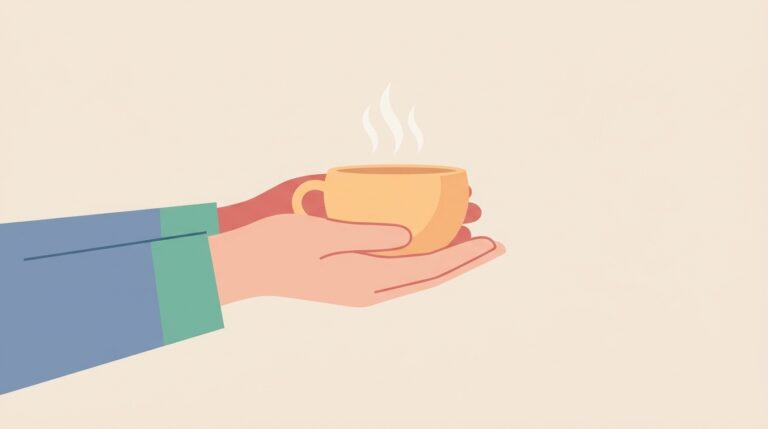
Phase 1: Empathy (Story Immersion Opening)
안녕하세요! 매일한글 에디터입니다. (Annyeonghaseyo! It’s your Daily Hangul editor.)
Picture this: You are standing in a sleek, sunlit café in Hongdae. The jazz plays softly, the aroma of freshly ground espresso beans fills the room, and the barista smiles warmly as they hand over your iced americano. Instinctively, you extend your right hand, grab the cup with one hand, and with the other hand casually flick through your phone. Suddenly, you catch the barista using both hands to pass the cup, their head tilted in a polite, subtle bow. For a fleeting split-second, a strange wave of awkwardness fills the counter space. Did you just commit an accidental social faux pas?
If you have ever watched a K-drama workplace scene, you have probably noticed junior employees handing documents to directors while lightly supporting their right forearm with their left hand. Or at Korean family dinners, younger siblings pouring drinks with both hands clamped securely around the bottle. In Korea, hands speak just as loudly as words. Giving and receiving items with two hands is not just an empty ritual—it is the physical manifestation of Jondaetmal (존댓말, honorific language).
Over the past ten years coaching international learners living in Seoul, I have seen brilliant B1-level speakers nail complex grammar while unintentionally coming across as abrupt or distant simply because their hands did not match their words. Mastering this simple physical etiquette, paired with natural spoken Korean phrases, will instantly transform how locals treat you. You will move from being treated as a casual tourist to a deeply respected guest who truly “gets” the culture.
Phase 2: Top 3 Core Expressions In-depth
1. 여기 있습니다 (Yeogi isseumnida)
- Pronunciation: Yeo-gi it-seum-ni-da (Sounds like “Yaw-gee ees-soom-nee-da”, with a crisp, polite drop at the end like saying “Yes, ma’am”).
- Meaning: Literally translates to “It exists here,” but culturally functions as the gold standard of “Here you go” or “Here it is.”
- K-Culture Moment: In the drama Misaeng (Incomplete Life), you constantly hear new office recruits say this phrase while presenting reports to their managers with both hands firmly gripping the edges of the folder.
- Editor’s Insight: At B1 level, you likely know “여기 있어요” (Yeogi isseoyo). However, when physically offering an object—such as your credit card, passport, or a business document—elevating to the formal
-습니다(-seumnida) ending creates an aura of professional polish and deep respect. - Situation Spectrum:
- Casual (with close friends): 🚫
- Semi-formal (colleagues, friendly café staff): ⚠️
- Formal (elders, store owners, business partners): ✅
- 🤔 Think About It: In English, “Here you go” feels warm regardless of hand posture. Why does Korean grammar demand a stiffer, formal verb when physical objects cross personal space?
2. 드리겠습니다 (Deurigesseumnida)
- Pronunciation: Deu-ri-get-seum-ni-da (Sounds like “Doo-ree-get-soom-nee-da”, where “deu” rhymes with the first syllable of “durian”).
- Meaning: The humble verb form of juda (to give) combined with intention: “I will humbly present this to you.”
- K-Culture Moment: When a luxury department store clerk in Gangnam hands you your wrapped purchase or your returned payment card, they say this while lowering their gaze.
- Editor’s Insight: Notice that this uses deurida (드리다), the humble counterpart of juda (주다). In Korean honorific philosophy, you do not just raise the listener up; you intentionally lower yourself to show genuine deference.
- Situation Spectrum:
- Casual: 🚫
- Semi-formal: ⚠️
- Formal: ✅
- 🤔 Think About It: How does lowering your own action (humble verbs) change the dynamic between customer and server compared to Western customer service standards?
3. 이거 받으세요 (Igeo badeuseyo)
- Pronunciation: Ee-geo ba-deu-se-yo (Sounds like “Ee-guh bah-doo-seh-yo”, smooth and lyrical, ending with a warm lilt).
- Meaning: “Please take this” or “Here, accept this, please.”
- K-Culture Moment: Picture an elderly neighbor or a colleague offering you a warm canned coffee or vitamin drink on a freezing winter morning in Seoul.
- Editor’s Insight: This phrase shifts the spotlight from your act of giving to the recipient’s act of receiving. It is softer and warmer than formal business phrases, making it the perfect phrase when offering gifts, souvenirs, or treats to friends or colleagues.
- Situation Spectrum:
- Casual: ⚠️ (Use “이거 받아” igeo bada for peers)
- Semi-formal: ✅ (Perfect for coworkers and neighbors)
- Formal: ⚠️ (Use “받으십시오” badeusipsio or “드리겠습니다” deurigesseumnida for high superiors)
- 🤔 Think About It: Why does asking someone to “receive” feel warmer than saying “I am giving you this”?
Phase 3: Textbook Korean vs. Real-World Korean
Scenario 1: Paying with a card at a convenience store or restaurant
- 📖 Textbook Korean: “카드를 받으세요.” (Kadeureul badeuseyo. — “Please take the card.”)
- 🗣️ Real-World Korean: “카드로 결제해 드릴게요.” (Kadeuro gyeoljehae deurilgeyo. — “I will pay by card.” / “Here is my card for payment.”)
- 💡 Why is it different?: Telling a cashier “take the card” sounds commanding and unnatural in daily life. Native speakers frame the act around the payment method itself while extending the card with both hands.
Scenario 2: Handing over a gift or souvenir (seonmul)
- 📖 Textbook Korean: “이 선물을 당신에게 주겠습니다.” (I seonmureul dangsinege jugesseumnida. — “I will give this present to you.”)
- 🗣️ Real-World Korean: “약소하지만, 오다가 생각나서 샀어요.” (Yaksokhajiman, odaga saenggangnaseo sasseoyo. — “It’s just a small token, but I thought of you on the way.”)
- 💡 Why is it different?: Koreans rarely use the pronoun dangsin (당신) in direct speech, and explicitly declaring “I am giving you a gift” feels self-congratulatory. Modesty is paramount; downplaying the gift shows deeper humility.
Phase 4: K-Culture Deep Dive & Non-Verbal Manners
4-1. 눈치 (Nunchi) & The Body Language of Giving
In Korean non-verbal communication, hands represent care, focus, and hierarchy. When you pass an item using one hand, it subconsciously implies that the recipient only deserves half your attention.
There are two proper ways to hand over items:
1. The Classic Two-Hand Hold (두 손으로 잡기): For large, medium, or flat items (a cup, a book, a bag, or a business card), hold the corners with both hands. Keep your elbows tucked in close to your torso. Tilt your head forward 15 degrees.
2. The Forearm Support (팔 받치기): When an item is small—like a credit card, subway pass, or house key—holding it with both hands can look clumsy. Instead, hold the item in your dominant right hand, and gently place your left fingertips under your right wrist or inside your right elbow crook. This historical gesture stems from holding back traditional wide Hanbok sleeves so they would not drag across dining tables or touch the recipient!
4-2. Cultural Code: The K-Pop Award Ceremony Bow
Watch any major K-Pop awards broadcast like MAMA or the Golden Disc Awards. When a global superstar group wins “Artist of the Year,” watch what happens when the presenter hands over the heavy trophy. Even mega-celebrities do not simply snatch it with one hand. They clasp the base with both hands, bow 90 degrees repeatedly, and back away slowly. This physical humility signals to millions of fans and seniors in the industry: “I do not place myself above this honor or the people granting it.”
Phase 5: Real-Life Roleplay Scenario
Setting: A trendy boutique bookstore café in Yeonnam-dong. You are purchasing a vintage postcard set and settling the bill with the friendly barista-owner, Min-jun.
Characters:
– Min-jun (민준): The warm, observant barista in his late 20s.
– You (당신): A thoughtful intermediate Korean learner eager to practice respectful etiquette.
- Min-jun: “엽서 세트 한 개 맞으실까요? 오천 원입니다.”
(Yeopseo seteuhan gae majeusilkkayo? Ocheon wonimnida.)
“Is it one postcard set? That will be 5,000 won.”
🎭 Rings up the register with a friendly smile. -
You: “네, 맞아요. 카드로 결제할게요.”
(Ne, majayo. Kadeuro gyeoljehalgeyo.)
“Yes, that’s right. I’ll pay by card.”
🎭 Reaches into your wallet to pull out your bank card. -
Min-jun: “네, 편하신 쪽에 꽂아주시거나 건네주시면 됩니다.”
(Ne, pyeonhasin jjoge kkojajusigeona geonnejusimyeon doemnida.)
“Sure, you can insert it into the reader or hand it over.”
🎭 Points open-palmed toward the card terminal. -
You: “여기 있습니다!”
(Yeogi isseumnida!)
“Here you go!”
🎭 Holds the card with the right hand while supporting the right wrist with the left hand, making steady, gentle eye contact. -
Min-jun: “아, 감사합니다! 바로 결제 도와드릴게요.”
(A, gamsahamnida! Baro gyeolje dowadeurilgeyo.)
“Ah, thank you! I’ll process that right away.”
🎭 Receives the card with both hands and slightly dips his head in appreciation. -
Min-jun: “영수증 필요하세요? 카드 여기 다시 드릴게요.”
(Yeongsujeung piryohaseyo? Kadeu yeogi dasi deurilgeyo.)
“Do you need a receipt? Here is your card back.”
🎭 Hands back the card using both hands horizontally. -
You: “영수증은 괜찮아요. 감사합니다!”
(Yeongsujeungeun gwaenchanhayo. Gamsahamnida!)
“Receipt is okay (no thanks). Thank you!”
🎭 Accepts the card with both hands, nodding politely. -
Min-jun: “좋은 하루 보내세요, 또 오세요!”
(Joeun haru bonaeseyo, tto oseyo!)
“Have a wonderful day, please come again!”
🎭 Waves gently with both hands at waist height.
🔀 Interactive Choice Point
When Min-jun returns your credit card, how do you take it back?
- Choice A: Grab it quickly with your left hand while turning your body toward the exit door.
Feedback: Bad. 🚫 Grabbing an item single-handedly while turning away signals impatience and dismissiveness. It instantly erases the rapport you just built! - Choice B: Extend both hands, receive the card by its edges, offer a soft head nod, and say, “감사합니다” (Gamsahamnida).
Feedback: Best! ✅ Flawless execution. Receiving with two hands completes the reciprocal cycle of respect. - Choice C: Take it with your right hand only, but bow your head down 90 degrees all the way to your knees.
Feedback: Risk. ⚠️ While the deep bow shows good intent, a 90-degree bow for a 5,000 won café purchase feels overly dramatic and theatrical, creating unnecessary social pressure (budam).
Phase 6: 10-Second Emotion Shadowing Drill
Practice reading these aloud! Mimic the pauses (/) and embody the emotion tag:
[😊 Polite and Confident]
“여기 / 카드 / 드리겠습니다.”
(Yeogi / kadeu / deurigesseumnida.)
— “Here / is my card / for you.”-
[🤝 Sincere and Warm]
“작은 선물이니까 / 부담 없이 / 받으세요.”
(Jageun seonmurinikka / budam eopsi / badeuseyo.)
— “It is just a small gift, / so without pressure, / please take it.” -
[🙏 Modest and Courteous]
“두 손으로 / 전달해 드립니다.”
(Du soneuro / jeondalhae deurimnida.)
— “With both hands, / I deliver this to you.”
Phase 7: K-Culture Mini Dictionary
- 존댓말 (Jondaetmal): Polite/Honorific speech. In Korean society, it extends beyond verb endings to encompass physical posture, gaze, and hand placement.
- 예의 (Yeeui): Etiquette, manners, and propriety. Demonstrating yeeui proves that you recognize social harmony and value others’ comfort.
- 정 (Jeong): The unique Korean concept of unspoken warmth, bonding, and emotional attachment that grows through mutual kindness and repeated small courtesies.
- 두 손 (Du son): Literally “two hands.” Used in phrases like “두 손으로 건네다” (to pass with both hands), which represents sincerity (seong-ui).
Phase 8: Survival Kit for Travelers
Top 3 Survival Expressions
- “여기 있어요.” (Yeogi isseoyo.)
Pro Tip: The standard semi-formal “Here you go.” Perfect for taxis, street food stalls, and bustling markets. - “제가 드릴게요.” (Jega deurilgeyo.)
Pro Tip: “I will give it to you.” Use this when stepping forward to hand payment, tickets, or passports to station attendants. - “감사히 받겠습니다.” (Gamsahi batgetseumnida.)
Pro Tip: “I will receive this with gratitude.” Say this with two hands extended when a local elder or teacher hands you a gift or business card.
Editor’s Travel Note
When navigating Korea’s bustling cities, smooth transactions make all the difference. Make sure you complete your Naver Map application download guide before your trip so you can pinpoint independent cafés and artisan shops where these etiquette touches shine brightest. Remember: at automated convenience store self-checkouts or subway turnstiles, tap as you like—but whenever a human hand meets yours across a counter, summon your second hand!
Phase 9: “Going One Step Deeper”
In Western individualist cultures, personal space is a protective bubble. Reaching into someone’s space with both hands can feel unusually intimate or overly formal. But in Korea’s collectivist heritage, physical interactions are relational bridges. Passing an object with both hands symbolizes that your full attention is committed to this exact human connection, bridging the space between you and the other person with undivided care.
💬 Your Turn: Have you ever felt that split-second shock when receiving something with two hands in Korea or watching it in a drama? Share your stories and questions in the comments below!
Phase 10: FAQ & Avoiding Misunderstandings
Q: Do I always have to use both hands, even when drinking water or coffee with friends?
A: No! With close friends of the same age or younger, casual one-handed drinking and passing is completely normal. However, if an older person or senior colleague pours you a drink, you should hold your glass with both hands while receiving it, and turn slightly away when sipping.
Q: What if my left hand is holding heavy shopping bags? How can I use two hands?
A: Don’t panic! Koreans are sensible and practical. If your other hand is occupied, slightly bow your head and say “감사합니다” (Gamsahamnida) with extra warmth. You can also touch your right forearm with your left wrist or elbow to signal the two-hand intention.
Q: Does handing cash or a card with two hands make me look overly submissive?
A: Not at all. In Korean culture, polite body language is seen as a sign of inner confidence, emotional maturity, and high social intelligence—never weakness.
🚨 Common Mistakes Warning Board
- The Fling: Tossing or sliding your credit card onto the counter.
Correct Action: Place it down gently or hand it directly over the counter with both hands or wrist support. - The Left-Hand Only Pass: Handing an item exclusively with the left hand. Historically, using only the left hand was considered disrespectful.
Correct Action: Always lead with your right hand, using the left hand as support. - The Eye-Lock: Staring intensely into the elder’s eyes while handing an item.
Correct Action: Soften your gaze toward their chest or the object itself rather than engaging in an unblinking stare.
Phase 11: Action Missions
- 🥉 Bronze Mission (Solo Practice): Take your transit card or phone right now. Stand before a mirror and practice saying “여기 있습니다” (Yeogi isseumnida) while holding the card in your right hand and supporting your right wrist with your left fingertips.
- 🥈 Silver Mission (Social Share): Next time you visit a local Korean grocery or boba shop in your city, pay using the two-handed gesture. Notice how the staff’s facial expression changes!
- 🥇 Gold Mission (Real World): During your next trip to Korea, complete three consecutive retail transactions using both hands and “감사합니다, 좋은 하루 되세요” (Thank you, have a nice day).
- 🎮 K-Culture Mission: Watch an episode of Extraordinary Attorney Woo or Hospital Playlist. Count how many times characters use forearm support when handing over medical charts or legal files!
Phase 12: Interactive Quiz Challenge
Test your knowledge before you hit the streets of Seoul!
- Situational Judgment: You are at a company dinner (hoesik) and your Korean team manager hands you a freshly grilled piece of meat or a drink. What is the most culturally adept response?
- A) Pick it up with your chopsticks using one hand while checking your phone.
- B) Receive the dish/glass with both hands, offer a brief nod, and say “감사합니다” (Gamsahamnida).
- C) Refuse it politely twice to show modesty.
- Fill in the Blank: When offering an item humbly to an elder or customer, you use the humble verb root: “제가 선물 ____________.” (Hint: Future polite form of deurida)
-
True or False: Holding your right wrist with your left hand originated as a way to manage long Hanbok sleeves.
👉 Click to reveal answers & explanations!
- Answer: B — Always receive items from seniors or managers with both hands! Refusing repeatedly (C) causes embarrassment, and one-handed retrieval (A) appears rude.
- Answer: 드리겠습니다 (deurigesseumnida) — The humble verb deurida pairs with -getseumnida to convey sincere intention.
- Answer: TRUE — Traditional Hanbok had flowing, voluminous sleeves (durumagi or jeogori). Holding the sleeve back prevented it from touching food or brushing against the other person!







