

How to Reschedule Plans in Korean Without Feeling Awkward or Rude
Phase 1: 공감 (Story-Immersive Opening)
안녕하세요! 매일한글 에디터입니다. (Hello! I’m your Daily Hangul editor.)
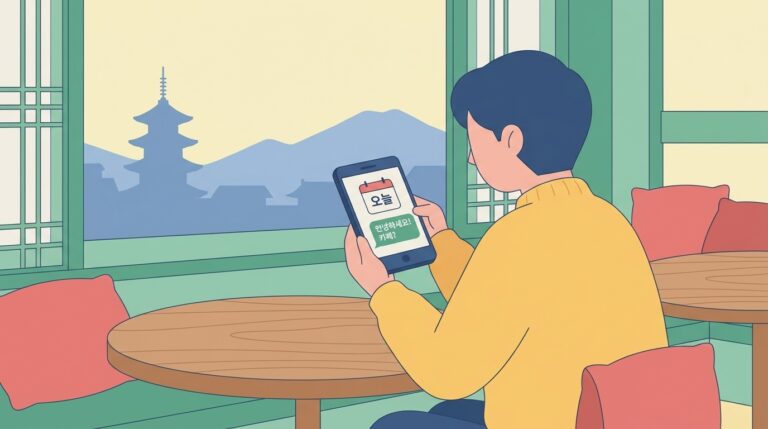
Picture this: You finally secured Friday evening dinner plans with your Korean language exchange partner at a buzzing dakgalbi spot in Hongdae. But on Thursday afternoon, your boss assigns an urgent deadline, or your midterms get reshuffled. You stare at your phone, KakaoTalk open, watching the blinking cursor in pure panic. Your mind starts racing: “If I cancel, will they think I’m ghosting them? How do I say ‘Can we change the date?’ without sounding like an irresponsible flake?”
In K-dramas, we often see characters frantically clutching their phones, bowing profusely into the receiver while yelling apologies because sudden overtime (야근, ya-geun) ruined their date night. That hesitation you feel is completely natural! When you’re learning Korean at an A2 level, dealing with delicate social moments can feel intimidating because politeness in Korean is deeply tied to how you phrase your requests.
Over the last decade coaching hundreds of beginner learners, I have watched so many students freeze up and either say nothing until the last minute or send a stiff textbook phrase that sounded like a formal business resignation. Don’t worry! Changing an appointment is an everyday part of life in Korea. By mastering just a few warm, polite phrasing formulas, you will not only save your appointment but actually deepen your friendship by showing real consideration. Let’s jump right in!
Phase 2: 핵심 표현 3선 심층 분석 (3 Core Expressions)
1. 날짜를 바꿀 수 있을까요? (Naljja-reul bakkul su isseulkkayo?)
- Pronunciation: [Nal-jja-reul bah-kkul soo ee-sseul-kka-yo?] (Think of nal like the English word ‘null’, and bakkul like ‘bah’ + ‘cool’ with a crisp double-k pop).
- Meaning: Literal: “Is changing the date possible?” / Real Nuance: “Could we possibly move our meeting to another date?”
- K-Culture Moment: Think of Business Proposal or Crash Landing on You where a sudden mission interrupts everyday life, and a character politely asks their counterpart if they can adjust their schedule without causing trouble.
- Editor’s Insight: Using the ending
-(으)ㄹ 수 있을까요?softens your request by asking about possibility rather than demanding an action. It gives the listener comfortable room to answer without feeling pressured. - Situation Spectrum: Casual: ⚠️ (Use
날짜 바꿔도 돼?with close peers) | Semi-formal: ✅ | Formal: ✅ - 🤔 Think About It: In English, we often ask “Can we reschedule?” which focuses on what we want to do. Why do you think Korean often frames requests through passive possibility (“Could it be possible?”) instead of personal intent?
2. 갑자기 급한 일이 생겼어요. (Gapjagi geupan iri saenggyeosseoyo.)
- Pronunciation: [Gahp-jah-gi geup-hahn ee-ree saeng-gyeo-sseo-yo?] (The geup sounds like ‘gupp’ with a short puff of air; saeng rhymes with ‘bang’).
- Meaning: Literal: “Suddenly, urgent work has appeared.” / Real Nuance: “Something unexpected and urgent came up.”
- K-Culture Moment: The quintessential excuse heard in almost every workplace K-drama when a team dinner is suddenly hijacked by an emergency executive meeting.
- Editor’s Insight: You do not always have to over-explain personal details in Korean culture. Saying
급한 일(urgent business/matter) politely signals that your cancellation is due to an unavoidable circumstance, preserving mutual respect. - Situation Spectrum: Casual: ⚠️ (To close friends:
급한 일 생겼어) | Semi-formal: ✅ | Formal: ✅ - 🤔 Think About It: In many Western cultures, giving specific reasons (e.g., “My plumber is coming”) shows honesty. In Korea, why might a polite, concise general reason like
급한 일be considered cleaner and less burdensome?
3. 다음으로 미룰 수 있을까요? (Daeumeuro mirul su isseulkkayo?)
- Pronunciation: [Dah-eum-eu-ro mee-rool soo ee-sseul-kka-yo?] (Daeum sounds like ‘dah-oom’, and mirul sounds like ‘me’ + ‘rule’).
- Meaning: Literal: “Can we push this back to next time?” / Real Nuance: “Could we postpone our meetup to later?”
- K-Culture Moment: When two university students in a romance drama study late for exams and realize they need to delay their weekend cafe date.
- Editor’s Insight: The verb
미루다(to postpone/delay) paired with다음으로(to next time) highlights your continued desire to meet. It proves you aren’t canceling the friendship—just delaying the event! - Situation Spectrum: Casual: ⚠️ (Use
다음으로 미뤄도 돼?) | Semi-formal: ✅ | Formal: ✅ - 🤔 Think About It: Notice the difference between “canceling” (취소) and “postponing” (미루기). How does choosing the word for ‘postpone’ protect the feeling of connection in social settings?
Phase 3: 교과서 한국어 vs 진짜 한국어 (Textbook vs. Real Korean)
Situation 1: Letting someone know you cannot make it today
- 📖 교과서 한국어 (Textbook): 저는 오늘 약속을 취소하겠습니다. (Jeoneun oneul yaksogeul chwisohagessseumnida. – I will cancel today’s appointment.)
- 🗣️ 진짜 한국어 (Real Native): 오늘 혹시 다음으로 미뤄도 될까요? (Oneul hoksi daeumeuro mirwodo doelkkayo? – By any chance, could we push today’s meetup to next time?)
- 💡 왜 다를까? Saying
취소하겠습니다sounds robotic, cold, and final—like an airline canceling a flight. Native speakers soften the blow using혹시(by any chance) and ask for permission to delay rather than unilaterally stating a cancellation.
Situation 2: Asking when they are free next week
- 📖 교과서 한국어 (Textbook): 다음 주에 시간이 있습니까? (Daeum jue sigani itsseumnikka? – Do you have time next week?)
- 🗣️ 진짜 한국어 (Real Native): 다음 주에 언제 시간 괜찮으세요? (Daeum jue eonje sigan gwaenchaneuseyo? – When works best for you next week?)
- 💡 왜 다를까? A yes/no question like “Do you have time?” puts the other person on the spot. Asking “When is time convenient for you?” (
언제 시간 괜찮으세요?) is warmer and gives the other person control over their schedule.
Phase 4: K-Culture 딥다이브 & 비언어적 매너 (Culture & Non-Verbal Manners)
4-1. 눈치 (Nunchi) & Mobile Etiquette
When rescheduling via KakaoTalk or text message in Korea, timing and tone are everything:
* The Golden 24-Hour Rule: Never wait until two hours before a meetup unless it is a genuine medical emergency. Canceling the day before shows strong 눈치 (nunchi – social situational awareness).
* Emoticon Apologies (이모티콘): In Korean chat culture, sending plain text when apologizing can look cold or annoyed. Accompany your message with an apologetic Kakao Friends emoticon (like Ryan bowing or Neo looking tearful) to visually soften your message.
* The Sincerity Add-on: Always offer to treat them next time! Saying "다음번에 제가 맛있는 거 살게요!" (Next time, the delicious food is on me!) completely dispels any awkward lingering disappointment.
4-2. Cultural Code: The Meaning of “밥 한 번 먹자”
In Korea, sharing a meal is the cornerstone of building social intimacy (정, jeong). Rescheduling a dinner date isn’t just swapping calendar slots; it’s delaying a bonding ritual. That’s why simply canceling without providing an alternative date can make a Korean friend wonder if you are pulling away. Proposing an alternate day right away signals that your bond remains strong.
Phase 5: 실전 롤플레이 시나리오 (Real-Life Roleplay Scenario)
- Background: It’s Thursday evening. You were supposed to meet your Korean language buddy, Min-ji (민지), at a cute bakery cafe in Yeonnam-dong on Friday. However, you caught a nasty head cold and your voice is completely gone.
- Characters: You (유저) & Min-ji (민지 – bright, friendly college junior).
- 민지 (Min-ji): 내일 연남동 카페 가기로 한 거 기억하죠? 몇 시에 볼까요? (Naeil Yeonnam-dong kape gagiro han geo gieokhajyo? Myeot sie bolkkayo?)
- “You remember we’re going to the Yeonnam-dong cafe tomorrow, right? What time shall we meet?”
- 🎭 Action: Sends a cute bread emoji on KakaoTalk with an excited sticker.
- You: 민지 씨, 정말 죄송한데 오늘 몸살감기가 심하게 걸렸어요. (Minji ssi, jeongmal joesonghande oneul momsal-gamgiga simhage geollyeosseoyo.)
- “Min-ji, I’m so sorry, but I caught a severe body ache and cold today.”
- 🎭 Action: Types with an apologetic tone, sniffling while holding the phone.
- 민지 (Min-ji): 헐, 진짜요? 약은 먹었어요? 많이 아파요? (Heol, jinjjayo? Yageun meogeosseoyo? Mani apayo?)
- “OMG, really? Did you take medicine? Are you hurting a lot?”
- 🎭 Action: Responds instantly with worried, crying emojis.
- You: 네, 약 먹고 쉬고 있어요. 혹시 우리 약속 다음 주말로 미룰 수 있을까요? (Ne, yak meokgo swigo isseoyo. Hoksi uri yaksok daeum jumallo mirul su isseulkkayo?)
- “Yes, I took medicine and I’m resting. By any chance, could we postpone our plans to next weekend?”
- 🎭 Action: Sends a small bowing sticker.
- 민지 (Min-ji): 당연하죠! 약속은 전혀 걱정하지 마요. 몸이 먼저예요! (Dang-yeonhajyo! Yaksogeun jeonhyeo geokjeonghaji mayo. Momi meonjeoyeyo!)
- “Of course! Don’t worry about our plans at all. Health comes first!”
- 🎭 Action: Sends a warm hot-tea icon.
- You: 이해해 줘서 정말 고마워요. 다음 주 토요일에 시간 괜찮으세요? (Ihaehae jwoseo jeongmal gomawoyo. Daeum ju toyoire sigan gwaenchaneuseyo?)
- “Thank you so much for understanding. Are you free next Saturday?”
- 🎭 Action: Checks calendar carefully to avoid conflicting schedules.
- 민지 (Min-ji): 다음 주 토요일 오후 2시 어때요? 저 그날 완전 괜찮아요! (Daeum ju toyoir ohu dusi eottaeyo? Jeo geunal wanjeon gwaenchannayo!)
- “How about next Saturday at 2 PM? I’m totally free that day!”
- 🎭 Action: Sends an energetic thumbs-up.
- You: 좋아요! 다음 주에 제가 맛있는 디저트 꼭 살게요! (Johayo! Daeum jue jega masinneun dijeoteu kkok salgeyo!)
- “Sounds great! I will definitely buy you delicious dessert next week!”
- 🎭 Action: Puts phone down with relief, smiling.
🔀 인터랙티브 분기점 (Interactive Choice)
Imagine Min-ji just asked when you want to meet next. What should you text?
* Option A: “그냥 나중에 시간 날 때 연락할게요.” (I’ll just contact you whenever I have time later.)
* ❌ Bad: Extremely vague! In Korea, this sounds like a polite brush-off, hinting that you might never meet.
* Option B: “내일 당장은 힘들어서 다음 주 화요일이나 목요일 저녁 어때요?” (Tomorrow is tough, so how about next Tuesday or Thursday evening?)
* 🏆 Best: Direct, polite, and offers concrete options. Shows high respect for Min-ji’s schedule.
* Option C: “그럼 약속 취소해요.” (Then let’s cancel the appointment.)
* ⚠️ Risk: Blunt and abrupt. It sounds like you are irritated with the conversation.
Phase 6: 10초 감정 섀도잉 드릴 (10-Second Emotion Shadowing Drill)
Practice reading these out loud, pausing at the slashes / and matching the emotional cues!
[🥺 아쉽고 미안하게 - Apologetic & Regretful]- 한국어: 죄송해요… / 갑자기 급한 일이 생겨서 / 오늘 못 갈 것 같아요.
- Romanization: Joesonghaeyo… / gapjagi geupan iri saenggyeoseo / oneul mot gal geot gatayo.
- Meaning: I’m sorry… / something urgent came up suddenly / so I don’t think I can make it today.
[🙏 정중하고 조심스럽게 - Polite & Considerate]- 한국어: 혹시 / 약속 날짜를 / 다음 주로 바꿀 수 있을까요?
- Romanization: Hoksi / yaksok naljjareul / daeum juro bakkul su isseulkkayo?
- Meaning: By any chance / the appointment date / could we change it to next week?
[😊 고맙고 훈훈하게 - Warm & Grateful]- 한국어: 배려해 주셔서 감사해요! / 다음번에 / 제가 밥 살게요!
- Romanization: Baeryeohae jusyeoseo gamsahaeyo! / daeumbeone / jega bap salgeyo!
- Meaning: Thank you for being so understanding! / Next time / the meal is on me!
Phase 7: K-Culture 미니 사전 (Mini Dictionary)
- 약속 (Yak-sok) | Appointment / Plans / Promise
- In Korean,
약속covers everything from romantic dates and doctor check-ups to casual Friday night beers with coworkers.
- In Korean,
- 미루다 (Mi-ru-da) | To postpone / To put off
- Essential verb for schedule changes. Used commonly as
다음으로 미루다(to push back to next time).
- Essential verb for schedule changes. Used commonly as
- 급한 일 (Geup-han il) | Urgent business / Sudden emergency
- The most socially acceptable way to explain an unexpected scheduling conflict without oversharing.
- 눈치 (Nun-chi) | Social intuition / Tact
- In rescheduling contexts, having good nunchi means giving advance notice and proposing alternative dates promptly.
Phase 8: 여행자를 위한 생존 키트 (Traveler’s Survival Kit)
서바이벌 표현 TOP 3 (Top 3 Survival Expressions)
- 예약 시간을 변경하고 싶어요. (Yeyak siganeul byeongyeonghago sipeoyo.)
- Translation: I would like to change my reservation time.
- Pro Tip: Use this at hair salons in Gangnam or fine dining restaurants in Hannam-dong.
- 혹시 30분만 늦게 가도 될까요? (Hoksi samsipbunman neutge gado doelkkayo?)
- Translation: By any chance, could I arrive just 30 minutes late?
- Pro Tip: Perfect when stuck in the Seoul subway transfer maze during rush hour.
- 다른 날로 예약할 수 있을까요? (Dareun nallo yeyakhalsu isseulkkayo?)
- Translation: Could I book for a different day instead?
- Pro Tip: Great for pop-up stores, themed cafes, or guided tour booths.
Editor’s Travel Note
- If you are traveling across Korea, keep your schedule flexible using the Naver Map app download for route navigation. Seoul traffic between 6:00 PM and 7:30 PM can easily double your bus transit times!
- For direct communication with local venues or Korean friends, install the KakaoTalk messenger app download prior to landing in Incheon, as 98% of appointments and restaurant bookings are coordinated through this app.
Phase 9: “한 발 더 깊이” (Cultural Reflection)
In Korean society, relationships are maintained through continuous mutual consideration. When you ask to reschedule, it’s not merely a transaction about time management; it touches upon respect for the other person’s effort and preparation. When someone makes time to see you, they might have planned their outfit, transport, or other chores around you. This is why native speakers always soften scheduling changes with phrases of appreciation like 배려해 주셔서 감사합니다 (Thank you for your consideration).
💬 Your Turn: In your home country, how do people usually react when plans get postponed at the last minute? Do you prefer a brutally honest reason or a polite, simple excuse? Let’s chat in the comments below!
Phase 10: FAQ & 오해 방지 (FAQ Schema)
Q: Is it rude to reschedule via text instead of calling?
A: Not at all! In modern Korea, a polite KakaoTalk message is actually preferred over a sudden phone call, as it allows the other person to check their calendar comfortably without feeling cornered.
Q: What if the other person says “괜찮아요” (It’s okay)? Are they really okay?
A: In 90% of casual friendships, yes! However, notice whether they suggest another date. If they say 괜찮아요 but do not follow up, step up and propose a specific alternate date to demonstrate that you still genuinely care about meeting them.
Q: Can I use the word 취소 (cancellation) when texting a friend?
A: It’s better to avoid it unless you truly never intend to meet up. Using 미루다 (postpone) or 날짜를 변경하다 (change date) keeps the social bond warm and open.
🚨 흔한 실수 (Common Mistakes) 경고판
- Mistake: Just texting “나 오늘 못 가” (I can’t go today) with no explanation.
- Correct Action: Add an apology and reason:
미안해, 오늘 갑자기 일이 생겨서 못 갈 것 같아.
- Correct Action: Add an apology and reason:
- Mistake: Forgetting the polite buffer word
혹시(by any chance).- Correct Action: Always place
혹시at the start of your request:혹시 시간 바꿀 수 있어요?
- Correct Action: Always place
- Mistake: Disappearing after canceling without picking a replacement day.
- Correct Action: Propose a specific timeline:
다음 주 주말은 어때요?
- Correct Action: Propose a specific timeline:
Phase 11: 액션 미션 & 참여 유도 (Action Missions)
- 🥉 Bronze Mission (Solo Practice): Read the Phase 6 Shadowing Drill out loud 3 times in front of the mirror, matching the three different emotional facial expressions.
- 🥈 Silver Mission (Community Share): Leave a comment below writing your own reschedule sentence using the pattern:
혹시 [Date/Time]로 미룰 수 있을까요? - 🥇 Gold Mission (Real Life): Next time you need to reschedule a study session or language exchange meetup, send a Korean KakaoTalk text using our Phase 5 roleplay script template!
- 🎮 K-Culture Mission: Watch an episode of a slice-of-life K-drama (like Hospital Playlist or Our Blues) and listen for the words
약속(yaksok) or미루다(miruda) during phone conversations.
Phase 12: 인터랙티브 퀴즈 챌린지 (Quiz Challenge)
1. Situation Decision: You need to delay your lunch meetup by one hour because your subway train was delayed. What is the most natural message to send to your Korean acquaintance?
* (A) 오늘 점심 약속을 전면 취소하겠습니다.
* (B) 죄송해요, 지하철이 늦어서 혹시 1시로 미룰 수 있을까요?
* (C) 왜 아직도 안 왔어요? 빨리 오세요.
2. Fill-in-the-blank: Complete the natural phrase:
“갑자기 급한 일이 ______ 오늘 못 갈 것 같아요.”
(Something urgent came up, so I don’t think I can go today.)
3. True or False: In Korea, offering to pay for food or dessert at the rescheduled meetup is considered a warm way to apologize for changing plans.
👉 Click here to reveal the answers and explanations!
- Answer: (B)
Explanation: (A) is overly stiff and cancels the entire meetup. (C) is rude and blames the other person! (B) politely states the reason and uses혹시 ~로 미룰 수 있을까요?to ask for a one-hour shift. - Answer: 생겨서 (saeng-gyeo-seo)
Explanation:생기다means “to arise/appear”. Combined with-어서/아서(because/so),생겨서naturally links the unexpected reason to the outcome. - Answer: True!
Explanation: Saying “다음번에 제가 맛있는 거 살게요!” (I’ll buy something tasty next time!) is a beloved Korean cultural etiquette rule that proves goodwill and restores social harmony.






