

Mastering Korean Pharmacy Talk: How to Decode Prescription Instructions Like a Local
Phase 1: Empathy (Story Immersion Opening)
안녕하세요! 매일한글 에디터입니다. (Hello! This is your Daily Hangul editor.)
Picture this: You are traveling or living in Seoul. The autumn chill sneaks up on you, and suddenly you are nursing a throbbing headache and a scratchy throat. You muster the courage to visit a local clinic (내과 – internal medicine), receive a piece of paper, and head downstairs into the bright green cross of a Korean pharmacy (약국).
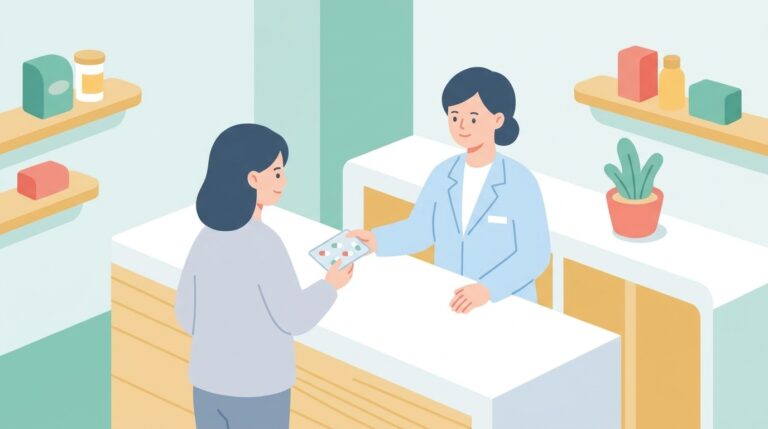
The bell chimes (딩동), the pharmacist takes your prescription, disappears behind the counter, and returns two minutes later sliding a white paper envelope toward you. Inside, you see tiny heat-sealed translucent packets filled with colorful pills. Then, like a friendly machine-gun, the pharmacist unleashes a rapid-fire sequence: “식후 삼십 분에 드시고요, 졸릴 수 있으니까 운전 조심하시고요, 항생제 있으니까 끝까지 다 드셔야 해요!” You freeze. Your brain is stuck translating “식후”, but before you can respond, they ask: “더 필요한 거 있으세요?” You smile awkwardly, nod, say “감사합니다”, and leave wondering whether you should take the blue pill before breakfast or after lunch.
If you have ever felt that sting of linguistic panic while holding prescription medicine in Korea, you are certainly not alone. Understanding medical and prescription instructions (복약지도) is one of the highest-stakes hurdles for intermediate Korean learners (CEFR B2). At this level, you already know basic greetings and restaurant ordering, but medical interactions require precision. Taking medicine incorrectly isn’t just a communication mishap—it affects your health! Based on years of feedback from our intermediate learners, this practical guide breaks down the rhythm, specialized terms, and cultural nuances of Korean pharmacy interactions so you never have to guess your dosage again.
Phase 2: Core Expressions Deep Dive
Here are the three foundational phrases pharmacists in Korea will say when handing over your medication.
1. 식후 30분에 드세요 (한글)
- Pronunciation: Sikhu samsib-bune deuseyo (Think: Seek-who sahm-ship-boo-neh deu-seh-yo)
- Meaning: Literal: “Please eat 30 minutes after a meal.” / Real Nuance: “Take this medicine after eating so it doesn’t upset your stomach.”
- K-Culture Moment: In medical K-dramas like Hospital Playlist (슬기로운 의사생활), doctors and pharmacists constantly remind hurried patients to eat first, reflecting Korea’s deep-rooted cultural belief that food protects the stomach lining (위벽) from harsh medicine.
- Editor’s Insight: In Korean pharmacies, 식후 (食後) comes from Sino-Korean roots (식 = meal, 후 = after). While textbooks emphasize the literal “30 minutes,” many modern pharmacists will casually add: “꼭 30분 안 지켜도 되고, 밥 먹고 바로 드셔도 돼요” (You don’t have to wait exactly 30 minutes; you can take it right after eating) to prevent stomach irritation.
- Situation Spectrum: Casual: ⚠️ (Only with close friends: 밥 먹고 먹어) | Semi-formal: ✅ (식후 30분에 드세요) | Formal: ✅ (식후 30분에 복용하십시오)
- 🤔 Think About It: In English, labels often say “take with food.” Why do Koreans specifically structure medicine around regular meal times (아침, 점심, 저녁) instead of hourly intervals (e.g., “every 8 hours”)?
2. 졸릴 수 있으니 운전은 피하세요 (한글)
- Pronunciation: Jollil su isseuni unjeoneun pihaseyo (Think: Jol-leel soo ee-ssoo-nee oon-jeon-eun pee-hah-seh-yo)
- Meaning: Literal: “Since it can be sleepy, avoid driving.” / Real Nuance: “This causes drowsiness, so don’t drive or do anything requiring sharp focus.”
- K-Culture Moment: You often see this warning in workplace slice-of-life dramas like Misaeng (미생), where exhausted office workers take cold medicine (감기약) and fight nodding off during intense presentations.
- Editor’s Insight: Notice the structure -[으]ㄹ 수 있으니 (Since there is a possibility that…). Pharmacists use this to soften the warning while keeping it authoritative. Often, rhinitis (비염) and cold medications contain antihistamines that cause heavy fatigue. If you must work or study, this is your cue to ask: “안 졸린 약으로 바꿔주실 수 있나요?” (Can you switch it to non-drowsy medicine?).
- Situation Spectrum: Casual: ⚠️ (졸리니까 운전하지 마) | Semi-formal: ✅ (졸릴 수 있으니 운전 조심하세요) | Formal: ✅ (졸음을 유발할 수 있으므로 운전은 삼가시기 바랍니다)
- 🤔 Think About It: Korean safety warnings often combine a cause (-으니) with an action recommendation (피하세요/조심하세요). How does this compare to blunt imperatives on Western pill bottles like “DO NOT OPERATE MACHINERY”?
3. 항생제는 증상이 호전되어도 끝까지 다 드셔야 해요 (한글)
- Pronunciation: Hangsaengjeneun jeungsangi hojeondoeeodo kkeutkkaji da deusyeoya haeyo (Phonetic: Hahng-saeng-jeh-neun jeung-sahng-ee ho-jeon-dweh-eo-do kkeut-kkah-jee dah deu-syeo-yah hae-yo)
- Meaning: Literal: “As for antibiotics, even if symptoms improve, you must take them all until the end.” / Real Nuance: “Finish the entire antibiotic course, no matter how much better you feel.”
- K-Culture Moment: A frequent scene in family dramas like Once Again (한 번 다녀왔습니다) features mothers nagging adult children who leave half-finished pill pouches scattered on the kitchen counter.
- Editor’s Insight: At the B2 level, words like 호전되다 (to improve/recover) and 항생제 (antibiotics) are crucial. Pharmacists emphasize this because patients frequently quit taking medicine once the fever drops, leading to antibiotic resistance (내성).
- Situation Spectrum: Casual: ⚠️ (항생제는 끝까지 다 먹어야 돼) | Semi-formal: ✅ (항생제는 끝까지 드셔야 해요) | Formal: ✅ (항생제는 처방된 일수를 모두 복용하셔야 합니다)
- 🤔 Think About It: Western medicine packaging relies heavily on written fine print, whereas Korean pharmacists deliver this instruction verbally, looking straight into your eyes. What does this reveal about personal duty in Korean customer service?
Phase 3: Textbook Korean vs. Real Korean
Situation 1: Asking if medication can be taken on an empty stomach
- 📖 교과서 한국어 (Textbook Korean):
- 이 약을 공복에 복용해도 무방합니까? (I yageul gongboge bogyonghaedo mubanghamnikka?)
- “Is it permissible to administer this medication on an empty stomach?”
- 🗣️ 진짜 한국어 (Real Korean):
- 이거 빈속에 먹어도 돼요? (Igeo binsoge meogeodo dwaeyo?)
- “Can I take this on an empty stomach?”
- 💡 왜 다를까? (Why is it different?):
- While 공복 (empty stomach) and 복용 (medication intake) are standard written medical terms, native speakers in spoken conversations naturally prefer native Korean terms like 빈속 (empty tummy) and 먹다 (to eat/take).
Situation 2: The pharmacist warning about extreme drowsiness
- 📖 교과서 한국어 (Textbook Korean):
- 본 의약품은 현기증 및 졸음을 유발할 가능성이 존재합니다. (Bon uiyakpumeun hyeongijeung mit joreumeul yubalhal ganeungseongi jonjaehamnida.)
- “This pharmaceutical product possesses the possibility of inducing dizziness and somnolence.”
- 🗣️ 진짜 한국어 (Real Korean):
- 이 약 드시면 꽤 나른하고 졸릴 거예요. (I yak deusimyeon kkwae nareunhago jollil geoyeyo.)
- “Taking this medicine will make you quite sluggish and sleepy.”
- 💡 왜 다를까? (Why is it different?):
- Spoken medical advice prioritizes immediate bodily sensation over legal disclaimers. The word 나른하다 captures that specific heavy, drowsy body feeling that intermediate learners should know.
Phase 4: K-Culture Deep Dive & Non-Verbal Manners
4-1. Nunchi & Physical Etiquette at the Counter
When you step up to a Korean pharmacy counter (조제실 카운터), dynamic non-verbal manners make communication smoother:
* Two-Handed Transaction (두 손 예절): When handing over your paper prescription (처방전) or receiving your medicine bag, always hold it with both hands or support your right forearm with your left hand. It shows respect to the medical professional.
* The Active Nod (고개 끄덕임): Korean pharmacists talk fast because neighborhood pharmacies in high-traffic clinic areas process hundreds of prescriptions daily. Maintain eye contact and nod rhythmically (“네, 네…”). If you don’t understand, do not just stay silent; tilt your head slightly and say, “죄송한데, 한 번만 다시 말씀해 주시겠어요?” (Excuse me, could you repeat that once more?).
* Checking the Envelope Layout: The pharmacist will point with their pen to the schedule printed directly on the packet: 아침 (Morning), 점심 (Lunch), 저녁 (Dinner), and 취침 전 (Before Bed). Watch their pen tip carefully!
4-2. The Culture of “Yakpoji” (약포지) & Complimentary Tonics
Unlike many Western countries where pharmacies dispense whole plastic amber bottles filled with 30 loose tablets, Korea uses the individual sachet system (약포지 or 약봉투). A dispensing machine automatically packages your exact combination of pills for every single dose into individual heat-sealed paper/plastic packets. You tear open one packet per meal.
Furthermore, if you buy over-the-counter flu medicine or cold tonics, the pharmacist might crack open a warm glass bottle of 쌍화탕 (herbal tonic) or hand you a small energy drink like 비타500 right at the register. Accepting it with both hands and drinking it there is completely normal and considered an affectionate sign of hospitality (정, Jeong).
Phase 5: Real-Life Roleplay Scenario
Setting: A busy pharmacy located right next to Hongdae Station Exit 9. Pharmacist Ms. Min (민 약사님) is reviewing a freshly printed prescription bag while Alex, an exchange student, waits anxiously.
- Turn 1 (민 약사): 알렉스 님, 들어오세요. 감기약 3일 치 나왔습니다.
- Romanization: Alex-nim, deureo-oseyo. Gamgiyak sami-il chi nawasseumnida.
- English: “Mr. Alex, please step over here. Here is your 3-day cold medication.”
🎭 행동 지문: 약 봉투에 적힌 복용법을 볼펜 끝으로 짚으며 Alex를 쳐다본다. (Points to the instructions on the medicine envelope with the tip of her pen and looks at Alex.)
- Turn 2 (Alex): 네, 약사님. 하루에 몇 번 먹어야 하나요?
- Romanization: Ne, yaksanim. Harue myeot beon meogeoya hanayo?
- English: “Yes, Pharmacist. How many times a day should I take this?”
🎭 행동 지문: 조심스러운 태도로 카운터 가까이 다가선다. (Steps closer to the counter with a tentative, respectful posture.)
- Turn 3 (민 약사): 하루 세 번, 아침, 점심, 저녁 식후 30분에 한 포씩 드시면 돼요.
- Romanization: Haru se beon, achim, jeomsim, jeonyeok sikhu samsib-bune han possik deusimyeon dwaeyo.
- English: “Three times a day, take one packet 30 minutes after breakfast, lunch, and dinner.”
🎭 행동 지문: 투명한 약포지 하나를 들어 올려 알약들을 보여준다. (Holds up one translucent pill packet to display the tablets inside.)
- Turn 4 (Alex): 혹시 밥을 안 먹었을 때는 어떻게 해요? 빈속에 먹어도 괜찮을까요?
- Romanization: Hoksi babeul an meogeosseul ttaeneun eotteoke haeyo? Binsoge meogeodo gwaenchaneulkkayo?
- English: “What if I don’t eat a meal? Is it okay to take it on an empty stomach?”
🎭 행동 지문: 걱정스러운 표정으로 자기 배를 살짝 만진다. (Lightly touches his stomach with a concerned facial expression.)
- Turn 5 (민 약사): 이 약에 소염진통제가 들어있어서 빈속에 드시면 속이 쓰릴 수 있어요. 바쁘시면 우유나 바나나라도 드시고 드세요.
- Romanization: I yage soyeomjintongjega deureoisseoseo binsoge deusimyeon sogi sseuril su isseoyo. Bappeusimyeon uyuna bananarado deusigo deuseyo.
- English: “This medication contains anti-inflammatory painkillers, so an empty stomach might give you heartburn. If you’re busy, eat at least some milk or a banana first.”
🎭 행동 지문: 강조하듯 고개를 끄덕이며 단호하게 설명한다. (Nods emphatically and explains with firm professional care.)
- Turn 6 (Alex): 아, 그렇군요. 그리고 오후에 수업이 있는데 약 먹으면 많이 졸릴까요?
- Romanization: A, geureokunyo. Geurigo ohue sueobi inneunde yak meogeumyeon mani jollilkkayo?
- English: “Ah, I see. Also, I have class in the afternoon. Will taking this make me very sleepy?”
🎭 행동 지문: 눈을 깜빡이며 다음 일정을 걱정한다. (Blinks thoughtfully, worried about his upcoming schedule.)
- Turn 7 (민 약사): 점심 약에는 졸음 유발 성분을 빼드렸으니까 괜찮아요. 대신 저녁 약에는 항히스타민제가 있으니 일찍 주무시고요.
- Romanization: Jeomsim yageneun joreum yubal seongbuneul ppaedeuryeosseumnikka gwaenchanayo. Daesin jeonyeok yageneun hang-hisitaminjega isseuni iljjik jumusigoyo.
- English: “We removed the drowsiness-inducing ingredient from the lunch dose, so that’s fine. However, the evening dose contains an antihistamine, so go to bed early.”
🎭 행동 지문: 저녁 약 봉투에 작게 동그라미를 쳐준다. (Draws a small circle on the evening medication sachet.)
- Turn 8 (Alex): 세심하게 챙겨주셔서 감사합니다. 물 많이 마시고 푹 쉴게요!
- Romanization: Sesimhage chaenggyeojusyeoseo gamsahamnida. Mul mani masigo puk swilgeyo!
- English: “Thank you for taking such detailed care of me. I’ll drink plenty of water and rest well!”
🎭 행동 지문: 약 봉투를 두 손으로 받아 들고 정중하게 허리를 숙여 인사한다. (Receives the medicine bag with both hands and bows politely.)
🔀 Interactive Branching Choice
Imagine the pharmacist asks you: “혹시 다른 약 드시고 계신 거 있으세요?” (Are you currently taking any other medication?) How do you respond?
- Choice A: “그냥 영양제만 먹고 있어요. 비타민 C요.” (Geunyang yeongyangjeman meokgo isseoyo. Bitamin C-yo.)
- Feedback (Best Choice ✅): Perfect! Clear, relevant, and grammatically natural. Mentioning daily supplements (영양제) helps the pharmacist double-check interactions.
- Choice B: “몰라요. 그냥 아무거나 주세요.” (Mollayo. Geunyang amugeona juseyo.)
- Feedback (Bad Choice ❌): Extremely rude and hazardous. Saying “I don’t know, just give me whatever” dismisses patient-safety protocol and uses inappropriate blunt language.
- Choice C: “네, 위장약 먹는데 같이 먹어도 되나요?” (Ne, wijang-yak meongneunde gachi meogeodo doenayo?)
- Feedback (Risk Assessment ⚠️): Excellent medical query! However, make sure you know the exact name of the stomach medicine (위장약) so the pharmacist can check cross-reactions (중복 복용).
Phase 6: 10-Second Emotional Shadowing Drill
Practice matching the cadence, pauses (/), and genuine emotions of each line.
[💊 똑부러지고 명쾌하게 / Clear & Professional Pharmacist Tone]- 식후 30분에 드시고요, / 증상이 가라앉아도 / 항생제는 끝까지 드셔야 해요.
- (Sikhu samsib-bune deusigoyo, / jeungsangi gara-anjado / hangsaengjeneun kkeutkkaji deusyeoya haeyo.)
[🥺 속 쓰릴까 봐 걱정스럽게 / Worried Patient Tone]- 제가 아침을 잘 안 먹는데, / 이거 빈속에 먹으면 / 속 많이 쓰릴까요?
- (Jega achimeul jal an meongneunde, / igeo binsoge meogeumyeon / sok mani sseurilkkayo?)
[🙏 안도하며 진심으로 감사하게 / Relieved & Polite Tone]- 아, 점심 약엔 / 졸린 성분이 없군요! / 설명해 주셔서 감사합니다.
- (A, jeomsim yagen / jollin seongbuni eopgunyo! / Seolmyeonghae jusyeoseo gamsahamnida.)
Phase 7: K-Culture Mini Dictionary
- 복약지도 (Bogyak-jido) | Medication Guidance / Consultation
- Usage: Legally required verbal counseling provided by a licensed pharmacist covering dosage, timing, and side effects. When paying, you may see 복약지도료 itemized on the receipt.
- 식전 / 식후 / 식간 (Sikjeon / Sikhu / Sikgan) | Before meals / After meals / Between meals
- Usage: 식전 30분 (30 min before eating—common for diabetes or stomach protectants), 식후 30분 (standard for most meds), and 식간 (literally between meals, meaning on an empty stomach ~2 hours after eating).
- 처방전 (Cheobangjeon) | Doctor’s Prescription
- Usage: Valid for a limited number of days (usually 3 to 7 days from issue date). You hand this sheet directly to the front desk of any pharmacy across South Korea.
- 졸음 유발 (Joreum yubal) | Drowsiness Inducement
- Usage: Frequently stamped or stickered onto the paper medicine bag in bright yellow or orange ink with a moon or sleeping icon.
Phase 8: Traveler’s Survival Kit
TOP 3 Emergency Pharmacy Phrases
- “하루에 몇 알, 몇 번 먹어요?” (Harue myeot al, myeot beon meogeoyo?)
- Meaning: “How many pills and how many times a day do I take this?”
- Pro Tip: Use this when buying over-the-counter boxes where instructions are only printed in Korean text.
- “졸리지 않은 감기약으로 주세요.” (Jollijeo aneun gamgiyageuro juseyo.)
- Meaning: “Please give me non-drowsy cold medicine.”
- Pro Tip: Life-saver if you are traveling, taking walking tours, or working remotely and cannot afford a midday nap.
- “가루약 말고 알약으로 바꿔주실 수 있나요?” (Garuyak malgo allyageuro bakkwojusil su innayo?)
- Meaning: “Can you swap powdered medicine for pill/tablet form?”
- Pro Tip: Some clinics prescribe powdered medicine (가루약) by default for sore throats. If you hate bitter powder, ask for tablets (알약) before dispensing begins.
Editor’s Travel Note
- Late-Night Pharmacies: If you fall sick late at night or on national holidays, search for 휴일지킴이약국 공식 웹사이트 or download the 굿닥(Goodoc) 병원·약국 실시간 검색 앱 to find pharmacies open 24/7 or on weekends.
- Convenience Store Basics: For emergencies after midnight when all pharmacies are closed, 24-hour convenience stores (CU, GS25, 7-Eleven) stock designated emergency OTC items (안전상비의약품) like basic Tylenol (타이레놀), digestive aids (베아제, 훼스탈), and pain relief patches (파스).
Phase 9: “한 발 더 깊이” (One Step Deeper)
In many Western cultures, medical healthcare is strictly clinical, transactional, and privatized. In South Korea, however, a trip to the local pharmacy reveals the unique interplay between fast service (빨리빨리 문화) and holistic communal concern (정, Jeong).
Notice how the pharmacist’s advice almost always anchors itself to food intake: “빈속엔 절대 드시지 말고, 밥맛 없어도 죽이라도 꼭 떠드세요” (Never take this empty; even if you have no appetite, eat at least some rice porridge). In Korean thought, medicine cannot work in isolation from nourishment—a worldview rooted in the ancient idiom 약식동원 (藥食同源: food and medicine share the same origin). When a pharmacist tells you to eat well before taking your pill, they are offering more than pharmacological advice; they are extending genuine communal care.
💬 Your Turn: Have you ever experienced a visit to a pharmacy or medical clinic abroad? What surprised you most about the instructions or the way medication was packaged? Share your experience in the comments below!
Phase 10: FAQ & Common Mistakes
Q: What should I do if the pharmacist says “식간에 드세요”? Does that mean during the meal?
A: No! 식간 (食間) literally means “between meals.” It indicates taking medicine when your stomach is empty—approximately 2 hours after finishing a meal or 1 to 2 hours before your next meal. Taking it during a meal is called 식사 중.
Q: Can I bring my prescription to any pharmacy in Korea?
A: Yes, but it is best to go to a pharmacy located right in the same building or immediately adjacent to the clinic where you saw the doctor. Those nearby pharmacies (문전약국) are guaranteed to have the exact brand-name medications and inventory written on that doctor’s prescription slip.
Q: Why do Korean pharmacists write dosage numbers on top of the packet instead of putting stickers on a bottle?
A: Because Korea’s personalized pouch system (약포지) packs each individualized dose together. Writing directly on the bag ensures you can quickly check “아침 1포” (one packet in the morning) without carrying bulky medicine bottles around your day.
🚨 Common Mistakes Alert
- Mistake: Tearing open all the packets and putting pills together in one container.
- Correct Action: Keep each sachet intact! The sachet protects individual pills from humidity and contamination, and reminds you whether it was intended for morning, noon, or night.
- Mistake: Stopping antibiotic treatment immediately when the fever breaks.
- Correct Action: Always listen for the word 항생제 (Hangsaengje). If included, finish every single packet prescribed to prevent bacterial recurrence.
- Mistake: Taking drowsy night cold medicine before an afternoon work meeting.
- Correct Action: Always inspect the small labels printed on the pouches. The evening dose (저녁/취침 전) almost always contains the sedative antihistamine compound.
Phase 11: Action Missions
- 🥉 Bronze Mission (Solo Drill): Practice reading the sachet instructions out loud 5 times using Phase 6 shadowing audio rhythm: “아침, 점심, 저녁 식후 30분!”
- 🥈 Silver Mission (SNS & Study Group): Take a photo of a Korean medicine packet (or write out your own mock version) and label the terms: 아침, 점심, 저녁, 식후, 항생제 on Instagram or your study blog using tag
#DailyHangul. - 🥇 Gold Mission (Real-Life Application): Next time you step into a Korean pharmacy, ask for your medicine without English: “이거 하루에 몇 번, 언제 먹어야 해요?” Listen carefully to their instructions!
- 🎮 K-Culture Mission: Watch an episode of a modern medical K-drama (like Doctor Slump or Hospital Playlist). Spot the scene where a character hands over a prescription envelope and identify at least two phrases learned today!
Phase 12: Interactive Quiz Challenge
Test your intermediate pharmacy Korean skills!
1. Contextual Decision
You bought cold medicine. The label says: “졸음을 유발할 수 있으니 복용 후 운전이나 기계 조작을 금합니다.” What should you do this afternoon?
* (A) Take the medicine and immediately drive down to Busan.
* (B) Take the medicine and refrain from driving or operating heavy equipment.
* (C) Dissolve the pills in boiling water to stop the drowsiness.
2. Fill in the Blank
Complete the pharmacist’s sentence:
* “위벽을 보호하기 위해 약은 꼭 ( ) 30분에 드세요. 빈속에 드시면 속이 쓰려요.”
* Options: (1) 식전 (2) 식후 (3) 취침전 (4) 복용
3. True / False Cultural Check
- Question: In Korea, you must always look for amber plastic bottles with child-safety twist caps when receiving prescription medicine from a hospital pharmacy. (True / False)
👉 Click here to reveal Answers & Explanations!
- Answer: (B)
- Explanation: The sentence warns that the drug may cause drowsiness (졸음을 유발할 수 있으니), prohibiting driving or operating machinery (운전이나 기계 조작을 금합니다).
- Answer: (2) 식후
- Explanation: The context explains protecting the stomach lining (위벽을 보호하기 위해) and warning against an empty stomach (빈속), making 식후 (after meals) the correct medical instruction.
- Answer: False
- Explanation: Korea primarily uses individually sealed dose sachets (약포지) customized per meal schedule, rather than large bulk pill bottles.
- Explanation: Korea primarily uses individually sealed dose sachets (약포지) customized per meal schedule, rather than large bulk pill bottles.







