

Phase 1: Empathy (Storytelling Opening)
안녕하세요! 매일한글 에디터입니다.
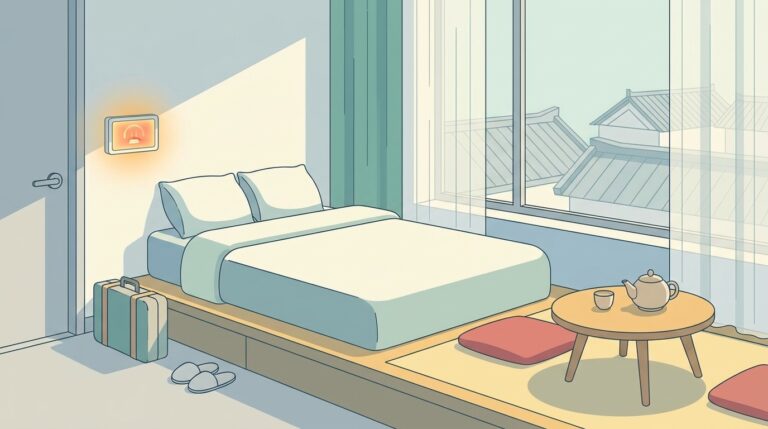
Imagine this: After an exhilarating 20,000-step trek through the neon-lit alleys of Hongdae and the scenic hilltops of Namsan, you finally crash into your chic boutique hotel room in Seoul. You kick off your sneakers, slip into comfortable loungewear, and dive into bed—only to wake up at 2:00 AM drenched in sweat. Or perhaps your teeth are chattering because a brisk autumn chill has crept through the room, and the thermostat on the wall looks like an alien control panel covered in mysterious Hangul buttons.
You stumble over to the wall. Buttons say things like “난방”, “냉방”, “외출”, and “온돌”. You press a few random buttons in desperation, but nothing changes. Calling the front desk feels intimidating because your Korean is still at an A2 level, and you worry you might say the wrong thing or seem rude.
Take a deep breath! You are definitely not alone. Adjusting the room temperature is consistently ranked by our Daily Hangul learners as one of the top three stressful moments during their stay in Korea. Korean hotels often combine state-of-the-art HVAC systems with traditional floor-heating concepts (ondol), making climate control a unique adventure. In this guide, you will master friendly, natural, and polite phrases to set your room to the exact temperature you crave. No more boiling under the sheets or shivering under three duvets—let’s make your stay completely cozy!
Phase 2: Core 3 Expressions Deep Dive
1. 방이 좀 추워요 / 방이 좀 더워요
- Pronunciation: [Bangi jom chuwoyo / Bangi jom deowoyo] (Sound guide: “bahng-ee johm choo-wah-yoh” / “bahng-ee johm duh-wah-yoh”)
- Meaning: Literal: “The room is a bit cold / The room is a bit hot.” | Nuance: A gentle, indirect way to state your discomfort without sounding demanding or accusatory.
- K-Culture Moment: Think of that classic K-Drama scene where a character checks into a countryside pension during a snowstorm, sits on the wooden floor, rubs their hands together, and says softly into the telephone, “저기요, 방이 좀 추워요…” (Excuse me, the room is a bit cold…).
- Editor’s Insight: Adding the magic word 좀 (jom – a little/a bit) is the ultimate politeness hack in Korean culture. Even if the room feels like an active sauna or the Arctic tundra, saying 좀 softens the statement, signaling that you are not blaming the staff.
- Situation Spectrum:
- Casual (Friends): 방이 너무 추워 / 더워 (🚫 Not for hotel staff)
- Semi-formal (Polite everyday): 방이 좀 추워요 / 더워요 (✅ Perfect for the front desk)
- Formal (Business/Official): 방이 다소 춥습니다 / 덥습니다 (⚠️ A bit overly stiff for tourists)
- 🤔 Think About It: In English, people often state problems directly (“My room is freezing”). Why do you think Korean uses softeners like “a little bit” (좀) even when something is a major issue?
2. 온도 좀 올려주실 수 있나요?
- Pronunciation: [Ondo jom ollyeojusil su innayo?] (Sound guide: “ohn-doh johm ohl-lyuh-joo-sheel soo een-nah-yoh?”)
- Meaning: Literal: “Could you raise the temperature a bit?” | Nuance: A respectful request asking the hotel staff to adjust central heating or guide you through it.
- K-Culture Moment: You see this when an international guest in an upscale Gangnam business hotel speaks to the concierge desk over the room phone, holding the remote control with a puzzled face.
- Editor’s Insight: The grammar pattern -(으)실 수 있나요? is the gold standard for polite customer inquiries. To ask for the opposite (lowering the temperature), simply swap 올려 (raise) with 내려 (lower): 온도 좀 내려주실 수 있나요? (Ondo jom naeryeojusil su innayo?).
- Situation Spectrum:
- Casual: 온도 좀 올려줘 (🚫 Never use with staff)
- Semi-formal: 온도 좀 올려주세요 (✅ Good, natural)
- High Polite: 온도 좀 올려주실 수 있나요? (✅ Best, extremely courteous)
- 🤔 Think About It: Does your native language differentiate between asking someone directly to do something versus asking about their ability to do it as a form of politeness?
3. 히터 / 에어컨 어떻게 켜요?
- Pronunciation: [Hiteo / Eeokeon eotteoke kyeoyo?] (Sound guide: “hee-tuh / eh-uh-kuhn uh-ttuh-keh kyuh-yoh?”)
- Meaning: Literal: “How do I turn on the heater / air conditioner?” | Nuance: A practical and direct question to ask how the system or remote works.
- K-Culture Moment: Picture a variety show travel special where an idol tries to decode a digital touch-screen controller in an eco-resort, pressing buttons until they laugh and call reception for help.
- Editor’s Insight: In Korea, people say 히터 (hiteo) or 난방 (nanbang – heating) in winter, and 에어컨 (eeokeon) or 냉방 (naengbang – cooling) in summer. The verb 켜다 (kyeoda) means “to turn on” (electronics/lights).
- Situation Spectrum:
- Casual: 이거 어떻게 켜? (🚫 Friends only)
- Semi-formal: 이거 어떻게 켜요? (✅ Great for everyday situations)
- Formal: 어떻게 작동하나요? (⚠️ Very formal, sounds like an appliance manual)
- 🤔 Think About It: Why do you think modern Korean incorporates loanwords like “에어컨 (air-con)” and “히터 (heater)” alongside traditional Hanja-based terms like “냉방” and “난방”?
Phase 3: Textbook Korean vs. Real Korean
Situation 1: Calling Front Desk About Room Temperature
- 📖 교과서 한국어 (Textbook Korean):
“실내 온도를 조절해 주십시오.”
(Silnae ondoreul jojeolhae jusipsio. / Please adjust the indoor temperature.) - 🗣️ 진짜 한국어 (Real Korean):
“저기요, 방이 좀 추워서 그런데 온도 좀 올려주세요.”
(Jeogiyo, bangi jom chuwo-seo geureonde ondo jom ollyeojuseyo. / Excuse me, the room is a bit cold, so could you please raise the temperature?) - 💡 왜 다를까? (Why is it different?):
Textbooks love imperative commands with formal endings like -십시오, but in real life, Koreans start with a background clause (-아서/어서 그런데, meaning “it’s because…”) to soften the request and explain the reason naturally.
Situation 2: Asking Front Desk How to Use the Wall Thermostat
- 📖 교과서 한국어 (Textbook Korean):
“온도 조절기 사용법을 가르쳐 주시겠습니까?”
(Ondo jojeolgi sayongbeobeul gareuchyeo jusigesseumnikka? / Would you teach me the method of using the temperature controller?) - 🗣️ 진짜 한국어 (Real Korean):
“이거 난방 어떻게 켜는지 모르겠어요.”
(Igeo nanbang eotteoke kyeoneunji moreugesseoyo. / I’m not sure how to turn on the heating with this.) - 💡 왜 다를까? (Why is it different?):
Native speakers state their immediate confusion (잘 모르겠어요 – I don’t really know/understand) rather than formally asking someone to “teach them the instructions.” It sounds far more humble and approachable!
Phase 4: K-Culture Deep Dive & Non-Verbal Manners
4-1. 눈치 (Nunchi) & Non-Verbal Gestures
When interacting with hotel staff in Korea—whether at the front desk or over the phone—non-verbal cues speak volumes:
* The Two-Handed Handover: If you take your digital keycard or a portable remote control down to the front desk to ask for assistance, always hold it with both hands (or support your right forearm with your left hand) as you present it. Handing something over with one casual flick of the wrist can feel dismissive.
* The Gentle Head Bow: Even while speaking over the phone from your room, practicing a slight nod of the head will subconsciously relax your vocal tone into a natural, respectful cadence.
* Eye Contact & Soft Voice: Maintain warm eye contact, but avoid intense staring. Pair it with an introductory greeting like “실례합니다” (Excuse me) before jumping into your problem.
4-2. Cultural Code: The Mystery of Ondol (온돌) and Central Control
Korea has a centuries-old floor heating culture known as 온돌 (Ondol). In traditional homes, smoke and heat traveled under stone floors; in modern hotels and apartments, heated water pipes run beneath your flooring.
* Why it matters: In winter, even if the air feels crisp, the floor might be delightfully toasty! Conversely, it takes 30 to 45 minutes for an ondol system to noticeably heat the room because stone and laminate take time to warm up. Don’t panic if it doesn’t get hot within 3 minutes of turning the dial.
* 중앙제어 (Central Control): In many older boutique hotels or business residences in Korea, temperature is managed centrally by season. From late October to November, hotels switch from AC to central heating. If you turn on the air conditioner in early spring or late autumn, only warm air might blow out! Knowing the word 중앙난방 (jung-ang nanbang – central heating) will save you tons of confusion.
Phase 5: Real-Life Roleplay Scenario
Setting: 11:30 PM. The stylish lobby of “Hotel Maru” in Insadong, Seoul. Sarah is shivering in her hoodie, holding the wall remote control she photographed on her phone. Front desk agent Minho looks up with a warm smile.
- Turn 1 (Minho):
안녕하세요, 고객님! 무엇을 도와드릴까요?
(Annyeonghaseyo, gogaeknim! Mueoseul dowadeurilkkayo?)
Hello, guest! How may I help you?
🎭 Standing straight, hands clasped politely in front. -
Turn 2 (Sarah):
저기요, 방이 좀 추워서 그런데요.
(Jeogiyo, bangi jom chuwo-seo geureondeyo.)
Excuse me, it’s because the room is a bit cold.
🎭 Clutching her hoodie collar with a slight, apologetic smile. -
Turn 3 (Minho):
아, 그러세요? 몇 호실이신가요?
(A, geureoseyo? Myeot hosilisilgayo?)
Oh, really? Which room number are you in?
🎭 Leaning forward attentively with pen ready. -
Turn 4 (Sarah):
704호예요. 히터를 켰는데 안 따뜻해요.
(Chil-baek-sa-hoyeoyo. Hiteoreul kyeonneunde an ttatteut-haeyo.)
It’s room 704. I turned on the heater, but it’s not warm.
🎭 Showing the photo of the wall controller on her phone screen. -
Turn 5 (Minho):
아, 사진 보여주셔서 감사합니다. 컨트롤러가 ‘외출’ 모드로 되어 있네요.
(A, sajin boyeojusyeoseo gamsahamnida. Keonteurolleoga ‘oechul’ modeuro doeeo inneyo.)
Ah, thank you for showing the photo. The controller is currently set to ‘Away’ mode.
🎭 Nodding with immediate understanding. -
Turn 6 (Sarah):
아, 그래요? 난방으로 어떻게 바꿔요?
(A, geuraeyo? Nanbangeuro eotteoke bakkwoyo?)
Oh, really? How do I change it to heating?
🎭 Pointing her finger at the screen curiously. -
Turn 7 (Minho):
‘운전/정지’ 버튼을 누르시고, 모드를 ‘난방’으로 맞추시면 됩니다. 10분 뒤에 따뜻해질 거예요!
(‘Unjeon/Jeongji’ beoteuneul nureusigo, modeureul ‘nanbang’euro matchusimyeon doemnida. Sip-bun dwie ttatteuthaejil geoyeyo!)
Press the ‘Power’ button and switch the mode to ‘Heating’. It will get warm in about 10 minutes!
🎭 Demonstrating the button press motion gently with two hands. -
Turn 8 (Sarah):
아, 이해했어요! 정말 감사합니다!
(A, ihaehaesseoyo! Jeongmal gamsahamnida!)
Ah, I understand! Thank you so much!
🎭 Giving a respectful 30-degree bow.
🔀 Interactive Branching Points (Sarah’s Turn 2)
What should Sarah say when the front desk asks how to help?
- Option A: “방이 너무 추워! 지금 온도 올려!” (Bangi neomu chuwo! Jigeum ondo ollyeo!)
- Feedback [Bad 🚫]: This uses informal banmal without honorifics. It sounds like an angry boss yelling at an employee! The front desk will still help, but it creates instant social awkwardness.
- Option B: “실내 기온 조절 장치의 가동 절차를 확인 요청합니다.” (Silnae gion jojeol jangchi-ui gadong jeolchareul hwagin yocheonghamnida.)
- Feedback [Risk ⚠️]: This sounds like a mechanical engineering manual written in 1985. Technically grammatical, but Minho will look startled by how overly robotic and unnatural it is.
- Option C: “저기요, 방이 좀 추워서 그런데 온도 좀 올려주실 수 있나요?” (Jeogiyo, bangi jom chuwo-seo geureonde ondo jom ollyeojusil su innayo?)
- Feedback [Best ✅]: Flawless A2 Korean! It contains the polite opener (저기요), the softener (좀), the background explanation (추워서 그런데), and a high-respect request ending. Minho will be delighted by your natural etiquette.
Phase 6: 10-Second Emotion Shadowing Drill
Practice reading these out loud, observing the intonation slash (/) and feeling the emotion prompt!
[🥶 Shivering & apologetic]
“저기요… / 방이 좀 추워서 그런데, / 온도 좀 올려주세요.”
(Jeogiyo… / bangi jom chuwo-seo geureonde, / ondo jom ollyeojuseyo.)-
[🥵 Wiping sweat & polite]
“실례지만, / 방이 너무 더워요. / 에어컨 어떻게 켜요?”
(Sillyejiman, / bangi neomu deowoyo. / eeokeon eotteoke kyeoyo?) -
[🙏 Relieved & warmly grateful]
“이제 따뜻해요! / 친절하게 도와주셔서 / 감사합니다!”
(Ije ttatteuthaeyo! / chinjeolhage dowajusyeoseo / gamsahamnida!)
Phase 7: K-Culture Mini Dictionary
| Korean Word (Hangul + Romanization) | English Meaning | Real-Life Usage Insight |
|---|---|---|
| 1. 난방 (Nanbang) | Heating / Warm air | Seen on wall dials and remotes in winter. Switch to this mode if your room is cold. |
| 2. 냉방 (Naengbang) | Air Conditioning / Cooling | Seen during humid Korean summers. Switch to this to activate cool air blowing. |
| 3. 외출 (Oechul) | Away / Eco Mode | Often mistoggled! This keeps the boiler at minimal baseline heat while you’re out touring to save energy. Don’t leave it on if you’re sleeping in the room! |
| 4. 중앙제어 (Jung-angjeeo) | Central Control | If you see this message blinking or the staff mentions it, you cannot control the temperature directly from your room; reception regulates it for the entire building. |
Phase 8: Traveler’s Survival Kit
Survival Expressions TOP 3
- 에어컨 리모컨이 없어요. (Eeokeon rimokeoni eopseoyo.)
- English: “There is no air conditioner remote control.”
- Pro Tip: In many boutique hotels, the TV remote actually has an integrated AC section at the bottom!
- 창문 열어도 돼요? (Changmun yeoreodo dwaeyo?)
- English: “May I open the window?”
- Pro Tip: High-rise hotels in Seoul often lock large windows for safety. Asking this saves you from forcing a locked latch.
- 여분의 이불 하나 더 주실 수 있나요? (Yeobun-ui ibul hana deo jusil su innayo?)
- English: “Could you give me one extra duvet/blanket?”
- Pro Tip: If the heating takes time to kick in, asking for an extra ibul (blanket) keeps you immediately warm.
Editor’s Travel Note
- Korean Boiler Moisture Hack: Korean ondol heating makes indoor hotel air remarkably dry overnight. Do what Korean travelers do: hang two damp bath towels on the hangers near your bed before going to sleep. It acts as an instant natural humidifier!
- Digital Tool Recommendation: Whenever you encounter a thermostat screen with complex Hanja or Korean terms, open the 네이버 파파고 번역 앱 다운로드 and use the live camera translation feature. It recognizes Korean appliance typography much better than standard search engines.
Phase 9: “한 발 더 깊이” (One Step Deeper)
In Western hospitality, a guest’s comfort is treated as an individual contractual right—you paid for the room, so demanding immediate fixes is expected. In Korea, however, language reflects an underlying web of mutual consideration (배려 – Baeryeo). When Koreans call the front desk at midnight, they instinctively start with “늦은 시간에 죄송하지만…” (I am sorry to bother you at this late hour, but…) or soften their discomfort with “방이 좀 추워서 그런데요” (It’s just that the room is a little cold). This isn’t weakness; it’s a social lubricant that invites the hotel staff to treat you like honored family rather than a demanding customer.
💬 Your Turn: What is the most confusing appliance controller you have ever encountered while traveling abroad? Have you ever experienced ondol floor heating before? Share your story in the comments below!
Phase 10: FAQ & Common Mistakes
Q: What should I do if my hotel room only has a Korean thermostat and pressing buttons does nothing?
A: Look closely for a button labeled 운전 (Run/Power) or 전원 (Power). The display must show a little fire or flame icon (🔥) for heating (난방), or a snowflake (❄️) for cooling (냉방). If the word 외출 (Away) is displayed, press the mode button (선택/모드) to get back to 난방.
Q: Can I ask the hotel staff to come up and look at the temperature panel for me?
A: Yes, absolutely! You can say: “방으로 와서 좀 봐주실 수 있나요?” (Bangeuro waseo jom bwajusil su innayo? / Could you please come to my room and take a look?). Hotel staff in Korea are universally attentive and happy to demonstrate in person.
Q: Why won’t my air conditioner turn on in April even though my room feels hot?
A: Most hotels in Korea operate on seasonal central scheduling (중앙 집중 관리). During transitional months (April or October), the building’s main chillers are turned off. If you feel warm, open the window slightly or ask the front desk for an electric fan (선풍기 – seonpunggi).
🚨 Common Mistakes (흔한 실수 TOP 3)
- Mistake: Shouting “온도 올려!” (Ondo ollyeo!) at the receptionist.
- Correct Action: Always add polite endings: “온도 좀 올려주세요” or “온도 좀 올려주실 수 있나요?”.
- Mistake: Confusing 난방 (Heating) and 냉방 (Cooling) on the remote control.
- Correct Action: Remember: 난 (Nan) = Warmth (Warm / Heater), 냉 (Naeng) = Cold (think of Naengmyeon / cold noodles!).
- Mistake: Setting the temperature to 35°C because you are freezing right now.
- Correct Action: Ondol floor heating traps heat. Setting it extremely high will turn your bedroom into an unbearable oven by 4:00 AM. Aim for 22°C–24°C (이십이 도에서 이십사 도).
Phase 11: Action Missions & Engagement
- 🥉 Bronze Mission (Solo Practice): Look at your home thermostat or remote control right now. Say out loud in Korean 3 times: “방이 좀 추워요. 난방 켜주세요!”
- 🥈 Silver Mission (Social Share): Snap a photo of a Korean thermostat button (or search one online) and label the terms 난방, 냉방, and 전원 on your Instagram story, tagging @DailyHangul!
- 🥇 Gold Mission (Real-Life Challenge): On your next trip to Korea, call front desk reception using only the phrase: “실례지만 방이 좀 더워서 그런데, 에어컨 어떻게 켜요?”
- 🎮 K-Culture Mission: Next time you watch an episode of a K-Drama where someone stays at a traditional Hanok or a hotel, listen carefully for the words 따뜻하다 (warm), 춥다 (cold), or 보일러 (boiler)!
Phase 12: Interactive Quiz Challenge
Test your knowledge before packing your bags for Seoul!
Question 1 (Situational): You wake up at 1:00 AM sweating because the room is too hot. You call the front desk. Which sentence is the most polite and natural?
– A) 야! 방이 너무 덥다!
– B) 저기요, 방이 좀 더워서 그런데 온도 좀 내려주실 수 있나요?
– C) 실내 온도를 즉시 냉각하도록 조작 바랍니다.
Question 2 (Fill in the blank): Winter is here! You want to turn on the heating mode on your remote. You need to look for the button labeled: [ ].
– A) 냉방
– B) 난방
– C) 취사
Question 3 (True or False): Modern Korean ondol floor heating instantly warms the ambient air in your room within 60 seconds of turning on the switch.
– True / False
👉 Click to reveal answers & explanations!
- Q1 Answer: B
Explanation: Option B uses softeners (저기요, 좀, -어서 그런데) and the ultra-polite request ending (-주실 수 있나요?). Option A is rude informal speech, and Option C sounds like an automated legal warning. - Q2 Answer: B (난방)
Explanation: 난방 (Nanbang) means heating. 냉방 is cooling, and 취사 is a button found on Korean electric rice cookers meaning “cook rice”! - Q3 Answer: False
Explanation: Ondol heats water pipes underneath the floorboards, which then radiates upward. It takes about 20 to 40 minutes to feel the full warmth. Patience is key!







