

Phase 1: Empathy (Story Immersion Opening)
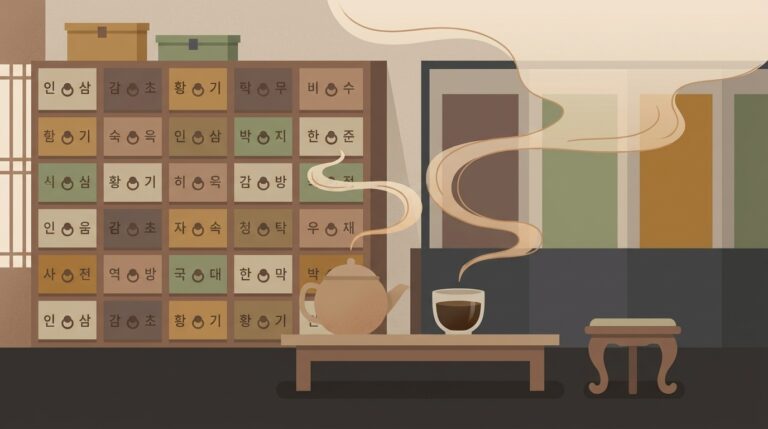
안녕하세요! 매일한글 에디터입니다. (Hello! This is your Daily Hangul editor.) Have you ever watched a K-drama where a character gets so frustrated, shocked, or exhausted that someone immediately rushes them to a local clinic to have their pulse taken or needles placed on their hands? Or perhaps you’ve strolled through a quaint neighborhood in Seoul and caught the rich, earthy, bitter-sweet aroma of herbal roots wafting from a wooden sliding door, marked with the sign 한의원 (Hanuiwon – Traditional Korean Medicine Clinic).
For many intermediate learners, stepping into a Hanuiwon feels like stepping into a different realm of healthcare. Western hospitals follow familiar clinical protocols, but Hanuiwon blends modern wellness with centuries-old holistic philosophy. You might wonder: How do I explain that weird, stiff knot in my shoulder without sounding like a toddler? What if the acupuncturist asks about my digestion or body heat? Don’t worry! Based on real classroom dilemmas and feedback from our intermediate learners who visited Hanuiwon clinics for everything from chronic posture pain to wellness tonics, this guide gives you the exact phrases, cultural etiquette, and confidence you need to heal your body the authentic Korean way.
Phase 2: Deep Dive into 3 Core Expressions
1. 목이랑 어깨 쪽에 담이 결렸어요
- Pronunciation: [Mog-i-rang eo-kkae jjog-e dam-i gyeol-lyeo-sseo-yo] (Sounds like: Mohk-ee-rang uh-kkae jjo-geh dahm-ee gyul-lyuh-ssuh-yo)
- Meaning: Literal: “Phlegm/energy has knotted in my neck and shoulder area.” / Real Nuance: “I have a painful, stiff muscle knot/spasm in my neck and shoulder.”
- K-Culture Moment: In K-dramas like Hospital Playlist or everyday variety shows, when someone sleeps awkwardly on a floor or sits at a computer too long, they grimace, touch their neck, and groan, “아이고, 담 결렸다!” (Aigo, dam gyeollyeotda!).
- Editor’s Insight: Traditional East Asian medicine views “담 (dam)” not merely as physical mucus, but as stagnant body fluids causing localized inflammation and muscle tightness. Using “담이 결리다” instead of simply “아파요” (it hurts) instantly marks you as someone who grasps natural Korean somatic vocabulary.
- Situation Spectrum:
- Casual: 목에 담 결렸어. (✅)
- Semi-formal: 목이랑 어깨 쪽에 담이 결렸어요. (✅ – Best at clinic reception)
- Formal: 경추 부위에 담이 심하게 결린 상태입니다. (⚠️ – Overly clinical for patients)
- 🤔 Think About It: In English, we say “I pulled a muscle” or “I have a knot.” Why do you think Korean conceptualizes stiffness as an internal fluid or energetic blockage (“담”) rather than purely mechanical fiber damage?
2. 침 맞을 때 많이 따끔한가요?
- Pronunciation: [Chim ma-jeul ttae ma-ni tta-kkeum-han-ga-yo?] (Sounds like: Cheem mah-jeul ttae mah-nee ttah-kkuem-hahn-gah-yoh?)
- Meaning: Literal: “When receiving needles, is it very stinging?” / Real Nuance: “Does the acupuncture sting/hurt a lot?”
- K-Culture Moment: In historical dramas (Sageuk), you often see dramatic scenes of grand royal physicians wielding giant gold needles, causing viewers to clench their teeth in vicarious terror. In modern clinics, nervous first-timers sheepishly whisper this to the doctor.
- Editor’s Insight: Notice the sensory adjective 따끔하다 (to prick, pinch, or sting lightly), paired with the verb 침을 맞다 (to receive/get acupuncture). Asking “많이 아파요?” sounds somewhat childish; asking “따끔한가요?” accurately frames the sensation as a quick prickle.
- Situation Spectrum:
- Casual: 침 맞으면 많이 따끔해? (✅ with close friends)
- Semi-formal: 침 맞을 때 많이 따끔한가요? (✅ – Ideal for the physician)
- Formal: 침 시술 시 통증이 어느 정도 수반됩니까? (🚫 – Sounds like a medical researcher)
- 🤔 Think About It: Korean has dozens of mimetic and sensory words for pain: 욱신욱신 (throbbing), 뻐근하다 (stiff/dull ache), 찌릿찌릿 (tingling/electric). How does specifying the exact sensation alter how deeply a doctor listens to you?
3. 제 체질에 맞는 보약을 짓고 싶어요
- Pronunciation: [Je che-ji-re man-neun bo-ya-geul jit-go si-peo-yo] (Sounds like: Jeh cheh-jee-reh mahn-neun boh-yah-geul jeet-goh sheep-uh-yoh)
- Meaning: Literal: “I want to build/concoct restorative medicine suited to my constitution.” / Real Nuance: “I’d like to get a personalized herbal tonic prescribed according to my body type.”
- K-Culture Moment: Think of moms in family K-dramas gifting expensive black herbal pouched drinks (한약) to their exhausted high-schoolers studying for the Suneung (college entrance exam), saying, “너 몸 허약해져서 보약 한 첩 지어왔다!”
- Editor’s Insight: The verb for making herbal medicine is 짓다 (to build, compose, or concoct), identical to building a house (집을 짓다) or cooking rice (밥을 짓다). It implies careful, bespoke craftsmanship rather than industrial pharmaceutical pill-dispensing.
- Situation Spectrum:
- Casual: 내 체질에 맞게 한약 짓고 싶어. (✅)
- Semi-formal: 제 체질에 맞는 보약을 짓고 싶어요. (✅ – Polite & precise)
- Formal: 저의 사상체질에 적합한 보약 조제를 희망합니다. (⚠️ – Unnecessarily stiff)
- 🤔 Think About It: Why does Korean society treat seasonal tonic medicine (보약) as an act of affectionate filial piety and caregiving, while Western culture often views medication solely as a response to active illness?
Phase 3: Textbook Korean vs. Real Korean
Situation 1: Describing persistent, heavy tension in your back
- 📖 교과서 한국어 (Textbook):
허리가 아픕니다. 약을 주세요. (Heo-ri-ga a-peum-ni-da. Ya-geul ju-se-yo.) — “My lower back hurts. Please give me medicine.” - 🗣️ 진짜 한국어 (Real-World B2):
허리 쪽이 뻐근하고 쑤셔서, 침 치료 좀 받으려고요. (Heo-ri jjog-i ppeo-geun-ha-go ssu-syeo-seo, chim chi-ryo jom ba-deu-ryeo-go-yo.) — “My lower back feels dull, stiff, and achy, so I came to get some acupuncture treatment.” - 💡 왜 다를까? (Cultural & Linguistic Context): Native speakers use nuanced tactile adjectives like 뻐근하다 (stiff/heavy from fatigue) and 쑤시다 (deep throbbing ache). Specifying the treatment type (침 치료) clarifies your intention to the desk staff right away.
Situation 2: Asking the doctor to insert needles gently
- 📖 교과서 한국어 (Textbook):
아프게 하지 말아 주세요. (A-peu-ge ha-ji ma-ra ju-se-yo.) — “Please do not make it hurt.” - 🗣️ 진짜 한국어 (Real-World B2):
제가 침을 처음 맞아봐서 그런데, 살살 놔 주실 수 있을까요? (Je-ga chi-meul cheo-eum ma-ja-bwa-seo geu-reon-de, sal-sal nwa ju-sil su i-sseul-kka-yo?) — *”It’s my very first time getting acupuncture, so could you please place them gently?” - 💡 왜 다를까? (Cultural & Linguistic Context): Simply commanding someone not to hurt you sounds blunt and uncooperative. Prefacing your fear with vulnerability (제가 처음이라서…) paired with the soft adverb 살살 (gently/lightly) instantly triggers the physician’s protective empathy.
Phase 4: K-Culture Deep Dive & Nonverbal Manners
4-1. 눈치 (Nunchi) & Clinic Etiquette
- 맥 짚기 (Pulse Diagnosis Posture): When the doctor places their fingers on your wrist to read your pulse (맥을 짚다), rest your forearm comfortably on the small cushion provided. Avoid speaking or tapping your foot during this silence. Breathe naturally through your nose.
- The Heated Bed (온열 베드) Protocol: Hanuiwon treatment rooms almost always feature heated treatment beds equipped with an infrared heat lamp (적외선 치료기). Once the needles are placed, do not move abruptly. If an itch or sudden cramp strikes, speak up politely: “선생님, 침 맞은 부위가 좀 뻐근해요” (Doctor, the needle spot feels a bit tight) instead of jerking your limbs.
- Attire Tip: Wear loose, comfortable clothing. If you have neck or back pain, the nurse will provide clinic treatment shorts/gowns (환자복). Don’t hesitate to change quickly without lingering.
4-2. Cultural Codes: The Philosophy of 보약 (Boyak) & 사상체질 (Sasang Constitution)
In Korea, traditional medicine isn’t seen as “alternative” or unscientific; it holds equal statutory medical prestige alongside Western medicine. Many Koreans consult a Hanuiwon during seasonal changes (환절기) or after child delivery/surgery to “balance” energy through 사상체질 (Sasang Typology)—classifying people into four bodily constitutions (Taeyang-in, Taeum-in, Soyang-in, Soeum-in). You’ll often see modern wellness lovers drink pouch-packaged herbal tonics at work desks right alongside cold brew coffee!
Phase 5: Real-World Roleplay Scenario
Setting: Warm, ambient Hanuiwon in Insadong. The soothing aroma of mugwort (쑥) fills the room. Dr. Park (박 원장님), an experienced and mild-mannered practitioner, sits across a polished wooden desk.
- 박 원장님 (Dr. Park): 어서 오세요. 어디가 제일 불편해서 오셨나요?
(Eoseo oseyo. Eodiga jeil bulpyeonhaeseo osyeonnayo?)
🎭 [Attentively leaning forward with hands resting gently on the pulse pad]
“Welcome. Where is feeling most uncomfortable that brought you here today?” -
학습자 (You): 며칠 전부터 컴퓨터를 오래 했더니 오른쪽 어깨에 담이 결린 것 같아요.
(Myeochil jeonbuteo keompyuteoreul orae haetdeoni oreunjjok eokkaee dami gyeollin geot gatayo.)
🎭 [Gently rubbing your right shoulder with a slightly strained smile]
“I’ve been on my computer for days, and I think I’ve got a bad knot in my right shoulder.” -
박 원장님 (Dr. Park): 그렇군요. 고개를 좌우로 돌릴 때 찌릿하거나 당기는 느낌이 있나요?
(Geureokunyo. Gogaereul jwauro dollil ttae jjirit-hageona dang-gineun neukkimi innayo?)
🎭 [Mimicking the rotational neck movement with his head]
“I see. When you turn your head side to side, do you feel an electric twinge or pulling sensation?” -
학습자 (You): 네, 오른쪽으로 돌리면 뒤쪽 근육이 심하게 당겨요.
(Ne, oreunjjog-euro dollimyeon dwijjok geunyug-i simhage dang-gyeoyo.)
🎭 [Slowly turning neck to demonstrate the exact point of restriction]
“Yes, when I turn right, the rear muscle pulls quite intensely.” -
박 원장님 (Dr. Park): 근육이 많이 뭉쳤네요. 오늘 침이랑 부항 치료를 같이 하시면 훨씬 가벼워지실 겁니다.
(Geunyug-i mani mungchyeonneyo. Oneul chim-irang buhang chiryoreul gachi hasimyeon hwolssin gabyeowojisil geomnida.)
🎭 [Nodding reassuringly while making clinical notes]
“Your muscles are quite knotted up. Doing acupuncture alongside cupping today will make it feel much lighter.” -
학습자 (You): 제가 침 치료는 처음이라 조금 긴장되는데, 많이 아플까요?
(Jega chim chiryoneun cheoeum-ira jogeum ginjangdoeneunde, mani apeulkkayo?)
🎭 [Looking slightly hesitant with a soft, nervous chuckle]
“It’s my first time receiving acupuncture so I’m a bit nervous. Does it hurt much?” -
박 원장님 (Dr. Park): 머리카락만큼 얇은 침이라 살짝 따끔한 정도예요. 긴장 푸시고 편하게 누우시면 됩니다.
(Meorikarakmankeum yalbeun chim-ira saljjak ttakkeumhan jeongdoyeyo. Ginjang pusigo pyeonhage nuusimyeon doemnida.)
🎭 [Smiling warmly and gesturing toward the treatment bed room]
“The needles are as fine as hair, so it’s just a slight pinch. Relax your shoulders and lie down comfortably.” -
학습자 (You): 네, 알겠습니다. 원장님, 살살 부탁드릴게요!
(Ne, algessumnida. Wonjangnim, salsal butakdeurilgeyo!)
🎭 [Bowing head gratefully as you head toward the treatment area]
“Understood, Doctor. Please be gentle with me!”
🔀 Interactive Branch Point: The Doctor says you look depleted and asks about herbal medicine:
Dr. Park asks: “평소에 소화가 잘 안 되거나 기운이 자주 빠지시나요? 한약 처방도 고려해 보실래요?”
- Option A: “네, 요즘 만성 피로가 심해서 제 몸에 맞는 보약 한 제 짓고 싶어요.”
- Outcome: [Best Choice 🌟] Perfectly polite and culturally authentic! You stated your chronic fatigue condition (만성 피로) and used the proper counter word for herbal courses (한 제 = one month batch).
- Option B: “한약 너무 써서 싫어요. 그냥 알약이나 주세요.”
- Outcome: [Bad Choice ❌] While honest, demanding Western pills (알약) in a traditional medicine clinic dismisses the physician’s expertise and sounds bluntly childish.
- Option C: “선생님 마음대로 아무거나 비싼 걸로 지어주세요.”
- Outcome: [Risk Choice ⚠️] “Make whatever is expensive” ignores your body’s personal constitution and risks an unnecessary financial burden without addressing specific health flags.
Phase 6: 10-Second Emotional Shadowing Drill
Practice these natural rhythm chunks aloud with the designated emotion marker and pause rhythm (/):
- [😣 뻐근한 고통을 호소하듯 / Expressing genuine stiff aches]
“선생님, / 며칠 전부터 / 날개뼈 안쪽이 / 쑤시고 결려요.”
(Seonsaengnim, / myeochil jeonbuteo / nalgaeppyeo anjjog-i / ssu-si-go gyeol-lyeo-yo.)
(Doctor, / since a few days ago / deep inside my shoulder blade / it aches and feels knotted.) -
[🥺 긴장한 목소리로 귀엽게 안심을 구하며 / Nervous yet endearing plea]
“침 맞을 때 / 많이 따끔한가요? / 살살 놔 주세요!”
(Chim majeul ttae / mani ttakkeumhangayo? / Salsal nwa juseyo!)
(When getting needles / does it sting a lot? / Please place them very gently!) -
[😌 치료 후 상쾌하고 가벼운 감탄 / Relieved and pleasantly surprised after treatment]
“와, / 뻐근했던 어깨가 / 거짓말처럼 / 시원해졌어요!”
(Wa, / ppeogeunhaetdeon eokkaega / geojinmalcheoreom / siwonhaejyeosseoyo!)
(Wow, / my stiff shoulder / like magic / feels so refreshed and light!)
Phase 7: K-Culture Mini Dictionary (4 Key Terms)
-
보약 (Boyak)
- Translation: Restorative herbal tonic / Invigorating medicine.
- Usage: Consumed twice a year during seasonal transitions or after periods of intense mental/physical labor to replenish depleted Gi (vital energy).
- 부항 (Buhang)
- Translation: Cupping therapy.
- Usage: In Hanuiwon, you’ll often be asked: “부항도 같이 뜨실래요?” (Would you also like cupping?). It leaves circular red marks (부항 자국) that Koreans wear proudly as badges of self-care.
- 체질 (Chejil)
- Translation: Physical constitution / Body predisposition.
- Usage: Used constantly in daily conversation, even outside medicine (e.g., “난 아침형 체질이 아니야” = I am not constituted for early mornings).
- 뜸 (Tteum)
- Translation: Moxibustion.
- Usage: Burning dried mugwort herb on or near acupoints to deliver therapeutic heat. Distinctive earthy aroma guaranteed!
Phase 8: Survival Kit for Travelers
Top 3 Survival Expressions
- “물리치료랑 찜질 먼저 받을게요.”
(Mul-li-chi-ryo-rang jjim-jil meon-jeo ba-deul-ge-yo.)
Pro Tip: Hanuiwon visits almost always start with physical therapy and hot packs on the bed before needles are inserted. - “부항 자국은 며칠 정도 가나요?”
(Bu-hang ja-gu-geun myeoc-hil jeong-do ga-na-yo?)
Pro Tip: Ask this if you plan on going swimming or wearing backless clothes soon; marks typically fade in 4 to 7 days. - “해외 배송으로 한약 받을 수 있을까요?”
(Hae-oe bae-song-eu-ro han-yak ba-deul su i-sseul-kka-yo?)
Pro Tip: Many prominent Seoul clinics offer vacuum-sealed, shelf-stable pouch shipping directly overseas.
Editor’s Travel Note
- Find clinics with positive reviews using descriptive searches like 네이버 지도 앱에서 한의원 찾기. Type “야간진료 한의원” if you need late-night visits after work.
- Payment & Insurance: While domestic Korean National Health Insurance covers acupuncture, cupping, and simple physical therapy (costing around 10,000–15,000 KRW for insured residents), uninsured foreign travelers can expect to pay around 25,000–45,000 KRW per session. Tailor-made 한약 tonics are private-pay and range between 150,000–400,000 KRW per month course.
Phase 9: One Step Deeper (Reflection)
In contemporary Western medicine, physical symptoms are frequently treated by eliminating pathogens or suppressing pain receptors mechanically. Korean traditional medicine, however, views the body as a delicate micro-ecosystem. When a Korean practitioner tells you that your shoulder pain originates from your cold stomach (복부 냉증) or stagnant emotional stress (화병 – Hwabyeong), it invites you to look inward. Health here is not an absence of disease, but a dynamic equilibrium between lifestyle, emotional balance, and physical harmony.
💬 Your Turn: Have you ever experienced alternative therapies like acupuncture or herbal tonics? How does your home culture approach chronic muscle fatigue compared to the Korean concept of 담 (Dam)? Leave a comment below!
Phase 10: FAQ & Avoiding Misunderstandings
Q: Does acupuncture at a Hanuiwon require taking off all clothes?
A: No! Hanuiwon clinics prioritize patient comfort and dignity. They provide dedicated treatment tops and shorts with discreet Velcro openings around the neck, spine, or shoulders. You only expose the specific limbs being treated.
Q: Can foreigners without a Korean Alien Registration Card (ARC) visit?
A: Absolutely. You do not need public insurance to receive care. Simply bring your passport to the reception counter and state that you are an uninsured foreign visitor (외국인 일반 진료).
Q: How bitter is Korean herbal medicine (한약)?
A: True to the proverb “좋은 약은 입에 쓰다” (Good medicine tastes bitter), classic boiled decoctions (탕약) are quite bitter and earthy. However, many modern clinics now offer concentrated pills (환약) or pleasant freeze-dried granules if you are sensitive to strong tastes.
🚨 Common Mistakes Alert (흔한 실수 TOP 3)
- Sudden Movement During Needle Retention: Flipping over or reaching for your phone can bend needles and bruise muscles. Stay still until the nurse removes them.
- Showering Immediately After Cupping (습식 부항): If the doctor performs wet cupping (involving tiny pricks to extract stale blood), refrain from hot baths or public saunas (찜질방) for at least 24 hours to avoid skin irritation.
- Assuming Hanuiwon Only Treats Elders: Many young gym-goers, runners, and office workers regularly visit Hanuiwon for sports rehabilitation and stress relief.
Phase 11: Action Missions
- 🥉 Bronze Mission (Self-Practice): Look into a mirror, touch your neck, and vocalize: “선생님, 어깨 쪽에 담이 결려서 뻐근해요.” three times with convincing facial emotion.
- 🥈 Silver Mission (Social Sharing): Screenshot Phase 6’s Shadowing Drill, tag @DailyHangul on Instagram or TikTok, and show us your best gentle-plea pronunciation!
- 🥇 Gold Mission (Real Application): Next time you suffer muscle tension or seasonal lethargy in Korea, walk into a local Hanuiwon, register at the desk, and get your very first acupuncture treatment!
- 🎮 K-Culture Mission: Watch an episode of a medical or slice-of-life K-drama (like Live Up to Your Name or Reply 1988). Spot a scene where someone mentions 침 or drinks a black pouch of 한약!
Phase 12: Interactive Quiz Challenge
Test your clinic intuition! Pick your answers, then toggle to reveal explanations.
- [Situation Judgment] You wake up with an excruciatingly stiff neck from sleeping awkwardly. What is the most natural sentence to say at the Hanuiwon desk?
- A) 목에 독감이 걸렸어요.
- B) 자고 일어났는데 목에 담이 심하게 결렸어요.
- C) 목에 수술이 필요한 것 같아요.
- [Fill-in-the-Blank] Fill in the blank with the correct verb for concocting personalized herbal medicine:
“기운이 없어서 보약을 한 제 (_____)-고 싶어요.”- A) 짓
- B) 만
- C) 사
- [True / False Culture Quiz] In Korea, receiving cupping therapy (부항) is considered illegal outside of Western university hospitals. (True / False?)
👉 Click here for answers and detailed explanations!
-
Answer: B
Explanation: Sleeping awkwardly and waking with a stiff neck is the quintessential definition of 담이 결리다. (A means throat flu, and C is an unnecessary extreme!) -
Answer: A (짓고 싶어요)
Explanation: The verb stem of 짓다 combines with -고 싶어요 to yield 짓고 싶어요 (to concoct/build herbal medicine). -
Answer: False
Explanation: Cupping (부항) is an officially licensed, fully standardized medical procedure routinely practiced across thousands of accredited Hanuiwon clinics all over Korea!







