

Phase 1: Empathy (Immersive Storytelling Opening)
안녕하세요! 매일한글 에디터입니다.
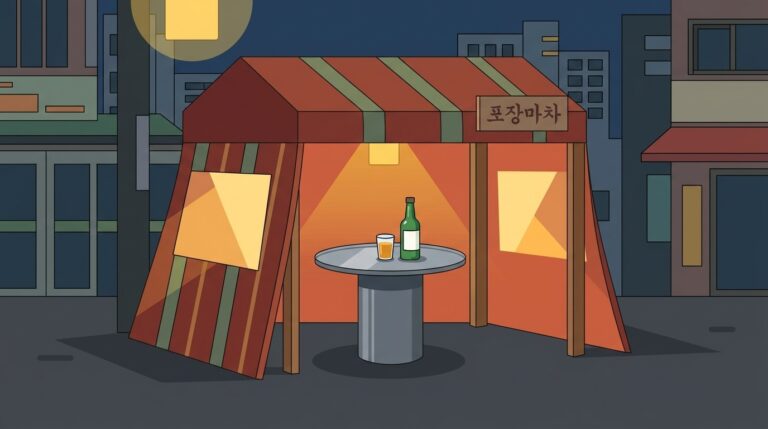
Picture this: It is a chilly Thursday evening in a bustling, smoke-filled grilled pork belly (samgyeopsal) joint in Euljiro, Seoul. The familiar metallic clatter of round tables and sizzling grease fills the air. A table of exhausted salarymen orders their go-to ritual: a green bottle of soju and two cold beers. But as the bill arrives, the table goes strangely silent. What used to be a humble 3,000 KRW soju bottle just a few years ago is now stamped at a staggering 6,000 to 7,000 KRW in downtown Seoul.
For decades, soju and beer have served as the undisputed emotional sponge of the Korean working class—an affordable catharsis after grueling 12-hour workdays. Today, soaring alcohol prices are triggering a profound psychological shift in local drinking culture, fracturing the unspoken social contract that cheap alcohol cushions tough economic realities. As advanced C2 learners, decoding this phenomenon is your gateway to understanding modern Korean socio-economics, corporate post-work culture (hoesik), and authentic colloquial nuance. This guide is crafted directly from field interviews with Seoulites and seasoned corporate veterans to help you articulate nuanced economic sentiments like a true local.
Phase 2: Deep Dive into 3 Core Expressions
1. 서민의 술이라는 말도 이제 옛말이네요
- Pronunciation: [Seo-min-ui sur-i-ra-neun mal-do i-je yenn-mar-i-ne-yo] (Think: Suh-meen-ee sool-ee-rah-noon mahl-doh ee-jeh yen-mahr-ee-neh-yo)
- Meaning: Literal: “Calling it the drink of commoners is an old phrase now.” / Nuanced: “It’s bittersweet and frustrating that soju is no longer an affordable comfort for ordinary working folks.”
- K-Culture Moment: Echoing the gritty resignation seen in workplace dramas like Misaeng or My Mister, where weary middle managers stare at the restaurant receipt with a bittersweet sigh.
- Editor’s Insight: The term 서민 (seomin) refers to the everyday working class. Coupling it with 옛말 (yennmal – old saying/bygone tale) expresses nostalgic disillusionment with runaway inflation.
- Situation Spectrum: Casual ✅ | Semi-formal ✅ | Formal ⚠️
- 🤔 Think About It: Does your native culture have a “benchmark commodity” (like a pint of lager or a cup of street coffee) whose price surge symbolizes a nationwide living crisis?
2. 소맥 한 잔 말아 마시기도 손이 떨리네요
- Pronunciation: [So-maek han jan ma-ra ma-si-gi-do son-i tteol-li-ne-yo] (Think: Soh-mahk hahn jahn mah-rah mah-see-gee-doh sohn-ee ttuhl-lee-neh-yo)
- Meaning: Literal: “My hands tremble even when rolling a cup of somaek.” / Nuanced: “Alcohol prices have gotten so crazy that even whipping up a basic soju-beer cocktail feels like an extravagant luxury.”
- K-Culture Moment: Seen in comedy-variety programs like Workman where people humorously exaggerate financial panic while mixing drinks.
- Editor’s Insight: The verb 말다 (malda) is a vibrant colloquial term meaning to mix beer and soju together. Pairing it with 손이 떨리다 (hands tremble) provides a hyper-natural metaphor for budgetary anxiety.
- Situation Spectrum: Casual ✅ | Semi-formal ✅ | Formal 🚫
- 🤔 Think About It: Notice how physical bodily sensations (trembling hands, aching bones) are frequently metaphorized in Korean to capture micro-economic dread.
3. 물가 인상률이 안주보다 술값에서 더 뼈아프게 체감돼요
- Pronunciation: [Mul-ga in-sang-nyu-ri an-ju-bo-da sul-gabb-e-seo deo ppyeo-a-peu-ge che-gam-dwae-yo] (Think: Mool-gah een-sahng-nyoo-ree ahn-joo-boh-dah sool-gahp-eh-suh duh ppyuh-ah-poo-geh cheh-gahm-dweh-yo)
- Meaning: Literal: “The inflation rate is felt more bone-deep in alcohol prices than in food dishes.” / Nuanced: “Food price hikes are bad, but surging alcohol tabs hit our psychological bottom line the hardest.”
- K-Culture Moment: Frequently featured on YouTube documentary channels analyzing the decline of vibrant pub culture among young Koreans.
- Editor’s Insight: 뼈아프게 (ppyeoapeuge – bone-painfully) elevates your Korean to native-level sophistication, describing an emotional sting that pierces down to the marrow.
- Situation Spectrum: Casual ✅ | Semi-formal ✅ | Formal ✅
- 🤔 Think About It: Why do societies often tolerate rising food costs more patiently than tax or price hikes on their leisure habits and comfort vices?
Phase 3: Textbook Korean vs Real Korean
Situation 1: Discussing High Liquor Prices at a Casual Tavern
- 📖 Textbook Korean: 소주 가격이 많이 인상되어 마시기 부담스럽습니다. (Soju gagyeogi mani insangdoeeo masigi budamseoreopseumnida.)
- 🗣️ Real Korean: 이제 밖에서 소주 한 병 까는 것도 은근히 눈치 보이네요. (Ije bakk-eseo soju han byeong kkanun geotdo eungeunhi nunchi boineyo.)
- 💡 Why the Difference? While textbook Korean uses sterile administrative terms like 인상되다 (to be raised), native speakers employ visceral slang such as 소주 한 병 까다 (to crack/pop open a bottle of soju) and 눈치 보이다 (to feel self-conscious/financially uneasy).
Situation 2: Suggesting an Alternative to an Expensive Second Round (2차)
- 📖 Textbook Korean: 2차는 비용이 덜 드는 곳으로 자리를 옮기는 것이 좋겠습니다. (Ichaneun biyong-i deol deuneun goseuro jarireul olmginun geosi jokkessseumnida.)
- 🗣️ Real Korean: 2차 술값 감당 안 되니까, 편의점 파라솔 깔고 캔맥주나 한잔하죠. (Icha sulgat gamdang an doenikka, pyeon-uijeom parasol kkalgo kaenmaekjuna hanjanhajyo.)
- 💡 Why the Difference? Expressions like 감당 안 되다 (can’t handle/afford the burden) coupled with the hyper-local lifestyle staple 편의점 파라솔 (drinking canned beer under convenience store outdoor umbrellas) immediately communicate native cultural fluency.
Phase 4: K-Culture Deep Dive & Non-verbal Etiquette
4-1. Nunchi & Physical Mannerisms
When alcohol prices surge, the subtle choreography around the dinner table shifts. Notice how Koreans now handle the bill (계산서): glance at the total with slightly widened eyes, pause before asking, “Should we order one more bottle?” (한 병 더 시킬까요?), and look around to read the room (눈치 살피기).
* The Hesitation Gesture: If you are pouring drinks for a senior colleague, pouring slowly while tilting the bottle slightly shows deferential respect, but pausing to ask before opening a fresh bottle signals economic mindfulness.
* Bill Placement: Never brandish the bill aggressively. Lay it face down near the center of the table; lifting it up abruptly can put unnecessary face-losing pressure on the person offering to pay.
4-2. Cultural Code Analysis: The Green Bottle as a Social Barometer
In South Korea, green-bottle soju has never been merely ethanol; it is the national anesthetic. In K-Dramas like Hospital Playlist or Business Proposal, social reconciliation and honest confessions always happen over a green bottle and sizzling meat. When the price of soju breaches 6,000 KRW, the working class interprets it as an infringement on their emotional outlet. This has triggered phenomena such as “Home-sul” (drinking at home), grabbing a bargain beer outside a local corner shop, and splitting bills meticulously via banking apps down to the exact hundred won.
Phase 5: Real-World Roleplay Scenario
- Setting: 10:30 PM. A retro outdoor beer and nogari pub alley in Euljiro (hipjiro). The wind is biting.
- Characters:
- Min-woo (35): Your exhausted Korean project team lead.
- You: A visiting foreign strategy specialist with advanced Korean proficiency.
Turn 1
* Min-woo: 🎭 Checks the receipt under the neon light, rubbing the back of his neck with a weary chuckle.
이야, 여기 노가리 골목도 소주 육천 원에 생맥 오천 원이 기본이네. 진짜 월급 빼고 다 오른다.
(Iya, yeogi nogari golmokdo soju yukcheon wone saengmaek ocheon woni gibonine. Jinjja wolgeup ppaego da oreunda.)
“Man, even in this nogari alley, soju is 6,000 won and draft beer is 5,000 won by default. Everything rises except my salary.”
Turn 2
* You: 🎭 Nods empathetically, letting out a soft sigh.
그러게요, 팀장님. 서민의 술이라는 말도 이제 옛말인 것 같아요. 한 잔 더 시키기도 손이 떨리네요.
(Geureogeyo, timjangnim. Seomin-ui sur-iraneun maldo ije yennmarin geot gatayo. Han jan deo sikigido son-i tteollineyo.)
“Seriously, Team Leader. Calling it the drink of commoners feels like an ancient tale now. My hands tremble to order another round.”
Turn 3
* Min-woo: 🎭 Taps his empty beer glass lightly on the table.
맞아. 옛날엔 회사 끝나고 소맥 한잔 털어 넣으며 스트레스 푸는 게 낙이었는데, 요즘은 술값 계산부터 먼저 하게 돼.
(Maja. Yennaren hoesa kkeunnago somaek hanjan teoreo neoeumyeo seuteureseu puneun ge nagieonneunde, yojeumeun sulgat gyesanbuteo meonjeo hage dwae.)
“Right. In the past, knocking back somaek after work to blow off steam was our small joy, but these days I calculate the booze tab first.”
Turn 4
* You: 🎭 Smiles warmly while holding the beer bottle with both hands.
물가 인상률이 안주보다 술값에서 더 뼈아프게 체감되더라고요. 회식 문화도 많이 바뀔 수밖에 없겠어요.
(Mulga insangnyuri anjuboda sulgabbeseo deo ppyeoapeuge chegamdoedeoragoyo. Hoesik munhwado mani bakkwil subakke eopgess-eoyo.)
“The inflation hits bone-deep through alcohol prices far more than side dishes. Team dinner culture will inevitably change too.”
Turn 5
* Min-woo: 🎭 Grins knowingly, checking the remaining side dishes.
그렇지. 요즘 젊은 직원들은 비싼 2차 가느니 일찍 들어가거나 편맥 하자고 하소연해. 오늘 2차는 어떡할까?
(Geureochi. Yojeum jeolmeun jigwondeureun bissan icha ganeuni iljjik deureogageona pyeonmaek hajago hasoyeonhae. Oneul ichaneun eotteokhalkka?)
“Exactly. Younger colleagues now complain they’d rather go home early or drink convenience store beer than go to an expensive second round. What should we do for round two tonight?”
Turn 6
* You: 🎭 Leans in with playful, conspiratorial tone.
주머니 사정도 생각할 겸, 근처 편의점 파라솔에서 캔맥주에 먹태나 한 캔 까시죠!
(Jumeoni sajeongdo saenggakhak gyeom, geuncheo pyeon-uijeom parasoreseo kaenmaekjue meoktaena han kaen kkasijyo!)
“Considering our wallet situations, how about we grab a table outside a convenience store and crack open a beer can with dried pollack!”
Turn 7
* Min-woo: 🎭 Bursts into genuine laughter and slaps his knee.
하하! 자네 완전 한국 사람 다 됐네! 편맥 감성을 제대로 아는구먼. 아주 탁월한 선택이야.
(Haha! Jane wanjeon hanguk saram da dwaenne! Pyeonmaek gamseongeul jedaero aneungumwon. Aju takworhan seontaegiya.)
“Haha! You are practically a full-blown Korean now! You truly understand the convenience-store beer aesthetic. Brilliant choice.”
Turn 8
* You: 🎭 Reaches smoothly for his empty glass to offer a polite top-off.
그럼 이 잔 깔끔하게 비우고 자리 정리하시죠, 팀장님! 제가 모시겠습니다.
(Geureom i jan kkalkkeumhage biugo jari jeongnihasijyo, timjangnim! Jega mosigessseumnida.)
“Let’s finish this glass cleanly and clear up, Team Leader! I’ll guide the way.”
🔀 Interactive Branching Point
When Min-woo asks: “오늘 2차는 어떡할까? (What should we do for round two tonight?)”, how would you respond?
- Option A: “제가 쏠 테니까 비싼 이자카야 가서 프리미엄 사케 마시죠!” (Jega ssol tenikka bissan izakaya gaseo peurimieom sake masijyo! – “Since I’ll treat, let’s head to a pricey izakaya and drink premium sake!”)
- Option B: “술값도 비싼데 각자 집에 가서 조용히 쉬는 게 제일 합리적일 것 같습니다.” (Sulgatdo bissande gakja jibe gaseo joyonghi swineun ge jeil hamnijeogil geot gatseumnida. – “Alcohol is expensive, so going home to rest separately seems most rational.”)
- Option C: “주머니 사정도 생각할 겸, 편의점 파라솔에서 가볍게 캔맥주 한잔하시죠!” (Jumeoni sajeongdo saenggakhak gyeom, pyeon-uijeom parasoreseo gabyeopge kaenmaekju hanjanhansijyo! – “Considering our wallet situations, let’s have a light canned beer by a convenience store parasol!”)
Detailed Branch Feedback:
- Option A (Risk): While generous, offering an extravagant treat breaks the shared mood of commiserating over high costs. It can embarrass a Korean senior who feels socially obligated to pay for juniors.
- Option B (Bad): While logically pragmatic, cutting social bonding short abruptly when the senior colleague visibly seeks casual after-work connection can come off cold or unenthusiastic.
- Option C (Best): Flawless cultural mastery. It shows financial sensitivity, embraces the beloved Korean Pyeonmaek subculture, and bonds through humble camaraderie without imposing burden on anyone.
Phase 6: 10-Second Emotional Shadowing Drill
Imitate the rhythm, pause marks (/), and emotional milestones to sound instantly native.
- Sentence 1:
[😮💨 씁쓸하고 한탄하듯이]
서민의 술이라는 말도 / 이제 옛말인 것 같아요. / 소주 한 병 까기도 / 손이 떨리네요.
(Seomin-ui sur-iraneun maldo / ije yennmarin geot gatayo. / Soju han byeong kkagido / son-i tteollineyo.)
(Calling it the drink of commoners / is an old saying now. / Even popping open a bottle of soju / makes my hands tremble.) -
Sentence 2:
[💸 혀를 내두르며 기가 차서]
월급 빼고 다 오르는데 / 안주보다 술값 인상이 / 훨씬 더 뼈아프게 다가오네요.
(Wolgeup ppaego da oreuneunde / anjuboda sulgat insang-i / hwolssin deo ppyeoapeuge daga-oneyo.)
(Everything rises except my salary, / but the hike in alcohol tabs / stings far more painfully to the bone.) -
Sentence 3:
[🍻 쾌활하고 소탈하게]
2차 술값 감당 안 되니까 / 우리 편의점 파라솔 깔고 / 가볍게 편맥이나 한잔하죠!
(Icha sulgat gamdang an doenikka / uri pyeon-uijeom parasol kkalgo / gabyeopge pyeonmaegina hanjanhajyo!)
(Since we can’t bear the price of round two, / let’s set up a convenience store parasol / and comfortably knock back a store beer!)
Phase 7: K-Culture Mini Dictionary
- 서민 물가 (Seomin Mulga): Working-class cost of living. Represents the basket of daily necessities—soju, ramen, public transit, gimbap—whose price fluctuations directly govern public morale.
- 소맥 (Somaek): Portmanteau of Soju + Maekju (Beer). The quintessential Korean cocktail mixed in precise ratios (often 3:7) to induce instant smoothness and jovial team unity.
- 편맥 (Pyeonmaek): Portmanteau of Convenience Store (Pyeon-ui-jeom) + Beer (Maekju). The romanticized urban lifestyle ritual of sipping budget-friendly canned beer on outdoor plastic patio chairs outside Korean 24/7 convenience stores.
- N빵 / 각자내기 (En-ppang / Gakjanaegi): Splitting the bill evenly among participants. Once culturally frowned upon under strict seniority hierarchy, N-ppang has exploded in popularity across millennial and Gen Z Korean dining due to mounting dining bills.
Phase 8: Survival Kit for Travelers
Survival Expressions TOP 3
- 혹시 소주 얼마예요? (Hoksi soju eolmayeyo?)
Pro Tip: Before sitting down at a trendy Pocha in Gangnam or Hongdae, ask casually to avoid receiving a 7,000 KRW bill shock. - 물과 컵은 셀프인가요? (Mulgwa keobeun selpeuingayo?)
Pro Tip: Korean budget eateries and pochas often save operational labor costs by setting cold water stations to self-service. - 각자 결제 가능한가요? (Gakja gyeolje ganeunghangayo?)
Pro Tip: If splitting the bill with local friends at the counter, use this phrase so the cashier can swipe individual cards seamlessly.
Editor’s Travel Note
- Navigation Essential: Install the Naver Map navigation mobile app to search for cozy, traditional golmok (back-alley) food zones where neighborhood diners still serve soju at 4,000~5,000 KRW rather than upscale franchise hubs.
- Late-Night Convenience Etiquette: Drinking at outdoor convenience tables (편맥) is legal if the tables are set within designated private shop boundaries, but be careful with late-night volume in residential zones to avoid neighborhood noise complaints (민원).
Phase 9: “A Step Deeper” (Reflective Humanities Essay)
In Western bar cultures, alcohol pricing is frequently associated with luxury, artisanal distillation, or ambient exclusivity. In Korea, however, the low price of soju was a deliberate structural compromise of rapid 20th-century industrialization. The state and mass distilleries kept diluted green-bottle soju extraordinarily inexpensive so that factory workers, drivers, and builders could rinse off grueling physical exhaustion for less than the cost of a full meal.
Consequently, raising the price of soju is never received as a mere commercial supply-chain adjustment. To everyday Koreans, it feels like an erosion of societal empathy and the quiet cancellation of their shared psychological refuge. When you lament the price of soju in Korean, you are not merely complaining about money; you are acknowledging the shared sweat and resilience of Korean modern society.
💬 Your Turn: How does alcohol or street food price inflation reflect the working-class sentiment in your home country? Leave a comment below with your personal experience!
Phase 10: FAQ & Avoiding Misunderstandings
Q: Why is soju priced at 1,800 KRW at the supermarket, but 6,000 KRW at restaurants?
A: Supermarket retail reflects bare wholesale and excise tax. Restaurant prices factor in commercial real estate lease rates, surging labor costs, dishwashing, electricity, and the unwritten Korean custom of providing unlimited free side dishes (banchan) and table water.
Q: Is it rude to order just one bottle of soju and take your time eating food?
A: Not inherently rude, but in compact, bustling dining places with high table turnover during peak dinner hours (7:00 PM – 9:00 PM), lingering for two hours over a single 5,000 KRW bottle without ordering extra dishes or drinks can generate quiet resentment from the restaurant owner (사모님/사장님).
Q: Can I bring my own cheap liquor into a casual Korean meat restaurant?
A: Absolutely not, unless the venue explicitly promotes itself as “Corkage Free” (콜키지 프리). Bringing convenience store soju into an ordinary Korean diner is considered a major cultural taboo and will result in immediate reprimand.
🚨 Common Mistakes TOP 3
- Mistake: Assuming all Korean alcohol is cheap because green-bottle soju used to cost 3,000 KRW.
Correct Action: Always verify the alcohol menu section in tourist areas, where craft makgeolli, premium distilled soju (Hwayo, Won Soju), and imported drafts easily hit 15,000 to 30,000 KRW. - Mistake: Offering to pay the entire bill carelessly in front of an elder or senior manager.
Correct Action: Allow the senior to make the initial gesture. If you wish to contribute, politely propose: “제가 2차는 모시겠습니다!” (I will cover round two!). - Mistake: Translating “My hands are shaking” literally as a medical condition when talking about price tags.
Correct Action: Use 손이 떨리다 in an exaggerated, semi-humorous colloquial sentence context so listeners recognize it as everyday financial slang.
Phase 11: Action Mission & Engagement
- 🥉 Bronze Mission (Solo Practice): Read the Phase 6 shadowing drill aloud 3 times, focusing on natural rhythm and pausing at the
/marks. - 🥈 Silver Mission (Social Connection): Share this phrase on your social media story or language exchange app: “소주 가격 인상, 서민 물가가 체감되네요!” and ask your Korean friends their thoughts.
- 🥇 Gold Mission (Real-world Execution): During your next visit to a Korean restaurant or pocha, casually use the phrase “소주 한 병 까기도 손이 떨리네요!” when looking at the drinks menu with local friends or tutors.
- 🎮 K-Culture Mission: Watch an episode of a modern K-drama (such as My Liberation Notes or Agency) and spot how often characters turn to soju when handling workplace stress.
Phase 12: Interactive Quiz Challenge
1. Situation Judgment Quiz
You are having dinner with your Korean colleagues. The bill is clearly high. Which phrase best demonstrates high-level socio-economic empathy without sounding overly stiff?
* A) 주류 소비세 인상으로 인한 거시경제적 부담이 상당합니다.
* B) 서민의 술이라는 말도 옛말이라더니, 술값에서 물가 인상이 확 체감되네요.
* C) 돈이 없으니까 이제 술을 아예 마시지 맙시다.
2. Fill-in-the-Blank
Complete the sentence using the authentic Korean term for enjoying canned beers outside a convenience store:
“2차 술값이 부담스러우니, 편의점 파라솔에서 ________이나 한잔하죠!”
3. True or False Cultural Insight
In modern Korean dining, suggesting N-ppang (splitting the bill evenly) is considered an unforgivable insult in all corporate situations regardless of age. (True / False)
👉 Click here for answers and explanations
1. Answer: B
Explanation: Option A is overly academic and robotic for a dinner table. Option C is bluntly tactless. Option B naturally blends empathetic cultural context with colloquial nuance.
2. Answer: 편맥 (Pyeonmaek)
Explanation: Short for 편의점 맥주, this term captures the quintessential informal drinking ritual.
3. Answer: False
Explanation: While traditional senior-led dinners (hoesik) are still frequently footed by the boss or company card, peer gatherings and younger casual outings overwhelmingly embrace N-ppang as a fair and welcome solution to rising living costs.







