

Phase 1: 공감 (Story-Driven Opening)
안녕하세요! 매일한글 에디터입니다.
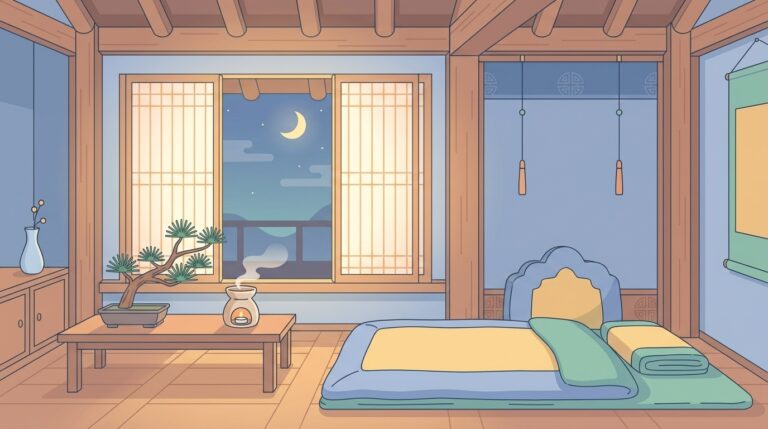
Imagine this scenario: It is 2:00 AM in a high-rise officetel overlooking the fluorescent neon glow of Gangnam. You have shut off your laptop after a relentless day of meetings, yet your nervous system is still firing on all cylinders. The clock ticks forward, but instead of drifting into restorative REM sleep, your mind replays snippets of conversations and tomorrow’s deadlines. In K-Dramas, we often see protagonists nursing an iced Americano to power through exhaustion, only to collapse onto their beds staring blankly at the ceiling, desperately seeking solace in a scented candle or a diffuser.
At the C2 level, expressing physical and psychological exhaustion goes far beyond saying “I am tired” (피곤해요). To truly connect with native speakers, navigate high-end wellness consultations in Seoul, or articulate the profound need for restorative rest, you need an enriched lexicon of psychosomatic awareness, sensory descriptors, and holistic mental care. Based on real feedback from advanced expatriates and long-term residents in Korea who struggled to express internal burnout, this guide offers an authentic linguistic roadmap to sleep hygiene, evening decompressing rituals, and the soothing realm of Korean aromatherapy.
Phase 2: 핵심 표현 3선 심층 분석 (Top 3 Expressions In-Depth)
1. 잡념을 비우고 숙면을 취하다 (Jabnyeom-eul biugo sungmyeon-eul chwihada)
- Pronunciation: [Jab-nyeom-eul bi-u-go sung-myeo-neul chwi-ha-da] (Sounds like “Jahm-nyum-eul bee-oo-go soong-myun-eul chwee-ha-da”)
- Meaning: Literal: “To empty stray thoughts and take deep sleep.” | Nuanced: To clear one’s cluttered mental bandwidth in order to attain genuine, restorative sleep.
- K-Culture Moment: Commonly heard in wellness documentaries, mindful YouTube vlogs, or reflective scenes where a character visits a quiet Hanok retreat after prolonged metropolitan burnout.
- Editor’s Insight: Unlike the elementary 푹 자다 (puk jada – to sleep well), 숙면을 취하다 belongs to the refined register of somatic wellbeing. Pairing it with 잡념을 비우다 demonstrates a sophisticated awareness of how mental chatter obstructs physical recuperation.
- Situation Spectrum: Casual ⚠️ | Semi-formal ✅ | Formal ✅
- 🤔 Think About It: In Korean thought, sleep is not merely an involuntary biological shutdown; it is an active state of restoration that one consciously “takes” (취하다 – to adopt/take), requiring the deliberate “emptying” (비우다) of lingering daily baggage. How does your native language conceptualize intentional relaxation?
2. 편백나무 향으로 심신을 달래다 (Pyeonbaengnamu hyang-euro simsin-eul dallaeda)
- Pronunciation: [Pyeon-baeng-na-mu hyang-eu-ro sim-si-neul dal-lae-da] (Sounds like “Pyun-baeng-nah-moo hyahng-oo-ro sheem-shee-neul dahl-lae-dah”)
- Meaning: Literal: “To soothe mind and body with the aroma of Hinoki cypress.” | Nuanced: To calm one’s overstimulated nervous system through natural phytoncide-rich cypress scents.
- K-Culture Moment: Used frequently in upscale Korean spa consultations, aesthetic clinics in Cheongdam-dong, or lifestyle shows focusing on eco-friendly healing spaces.
- Editor’s Insight: 달래다 (dallaeda) fundamentally means to comfort a crying child or appease an upset emotional state. By applying it to 심신 (mind and body), the speaker conveys a gentle, tender attitude toward their own exhausted self.
- Situation Spectrum: Casual ✅ | Semi-formal ✅ | Formal ✅
- 🤔 Think About It: Why does Korean frequently synthesize 심 (mind) and 신 (body) into a single holistic compound (심신) when discussing stress relief, whereas Western discourse often divides cognitive therapy from somatic physical therapy?
3. 수면 리듬이 완전히 무너지다 (Sumyeon rideum-i wanjeonhi muneojida)
- Pronunciation: [Su-myeon ri-deum-i wan-jeon-hi mu-neo-ji-da] (Sounds like “Soo-myun ree-deu-mee wahn-jun-hee moo-naw-jee-dah”)
- Meaning: Literal: “The sleep rhythm has completely collapsed.” | Nuanced: Severe disruption of one’s circadian rhythm due to chronic overwork, stress, or irregular lifestyle habits.
- K-Culture Moment: A frequent confession among university students during exam season, idol trainees discussing grueling schedules, or startup founders battling relentless deadlines.
- Editor’s Insight: Notice the verb 무너지다 (to collapse or crumble, like a stone wall). It illustrates a structural breakdown rather than a temporary night of poor rest, instantly alerting the listener that serious lifestyle recalibration is necessary.
- Situation Spectrum: Casual ✅ | Semi-formal ✅ | Formal ✅
- 🤔 Think About It: Notice how the structural failure of an internal biological clock is externalized through passive architectural verbs in Korean. Does your native tongue treat burnout as a personal failing or an objective breakdown?
Phase 3: 교과서 한국어 vs 진짜 한국어 (Textbook vs. Real-World Korean)
Situation 1: Describing tossing and turning all night due to insomnia
- 📖 교과서 한국어 (Textbook):
잠을 잘 자지 못해서 밤새도록 침대에서 뒤척였습니다.
(Jam-eul jal jaji mothaeseo bamsaedorok chimdae-eseo dwicheogyeossseumnida.)
“I could not sleep well, so I tossed and turned in bed all night.” - 🗣️ 진짜 한국어 (Real-World C2):
머릿속이 복잡해서 밤새 뜬눈으로 지새우다시피 했어요.
(Meorissog-i bokjaphaeseo bamsae tteunnuneuro jisae-udasipi haesseoyo.)
“My head was spinning with thoughts, so I practically spent the night wide awake.” - 💡 왜 다를까?: Native adults rarely describe physical bed movements mechanically. Instead, they use evocative idioms such as 뜬눈으로 밤을 지새우다 (to watch the night pass with wide-open eyes) coupled with the softening suffix -다시피 하다 to express emotional fatigue with poetic elegance.
Situation 2: Recommending a calming night-time pillow mist or diffuser
- 📖 교과서 한국어 (Textbook):
이 아로마 오일은 스트레스 해소에 매우 효과적입니다.
(I aroma oil-eun seuteureseu haesoe maeu hyogwajeog-imnida.)
“This aroma oil is very effective for stress relief.” - 🗣️ 진짜 한국어 (Real-World C2):
베개 맡에 한 방울 톡 떨어뜨리고 누우면 긴장이 사르르 풀려요.
(Begae mate han bang-ul tok tteoreotteurigo nu-umyeon ginjang-i sareureu pullyeoyo.)
“If you dab a single drop by your pillow before lying down, the tension just melts away gently.” - 💡 왜 다를까?: High-level Korean relies heavily on sensory onomatopoeia and mimetic adverbs (톡 for a gentle droplet, 사르르 for a slow, soothing dissolution of tension). This creates an immediate visceral experience rather than a clinical claim.
Phase 4: K-Culture 딥다이브 & 비언어적 매너 (Deep Dive & Non-Verbal Nuance)
4-1. 눈치 (Nunchi) & Sensory Non-Verbal Manners
When discussing mental health, insomnia, or personal rejuvenation in Korean society, the atmosphere requires quiet, considerate nunchi. Korean communicative norms value restraint; unloading extreme fatigue in a frantic, loud tone can impose an emotional burden (부담) on the listener.
* Vocal Cadence: Lower your pitch and slightly soften the terminal endings of your sentences (e.g., trailing off gently with ~더라고요 or ~풀리는 것 같아요).
* Breathing & Posture: When sitting in a specialized aroma studio or clinic, place your hands resting loosely on your lap, draw a slow breath, and allow your shoulders to visibly drop. Demonstrating physical grounding signals mindfulness and respect for the tranquility of the healing environment.
4-2. Cultural Code: The Rise of “Slow Recovery” and Phytoncide Culture
Korea’s modern metropolitan lifestyle has generated a counter-movement known as 슬리포노믹스 (Sleeponomics). From high-end department stores dedicating entire floors to curated sleep environments to traditional herbal medicine (한방) aroma blends, restorative care has become a refined art.
Rather than solely relying on Western lavender or chamomile, contemporary Koreans lean into deeply grounding scents indigenous to the Korean peninsula: 편백나무 (Hinoki cypress), 솔잎 (pine needles), and 쑥 (mugwort). These scents evoke memories of quiet mountain trails (산림욕) and ancient Hanok wooden rafters, tapping into a collective cultural nostalgia for unhurried, pastoral serenity.
Phase 5: 실전 롤플레이 시나리오 (Immersive Role-Play)
Setting: A serene, bespoke aromatherapy atelier nestled in an alleyway of Bukchon Hanok Village. The scent of warm cedarwood and warm dried herbs fills the gentle room.
Character: Master Aromatherapist ‘Hyewon’ (혜원), an intuitive consultant known for curating customized botanical sleep remedies.
- 혜원: 어서 오세요. 차 한잔 드시면서 숨 좀 고르세요. 안색을 보니 요즘 피로가 꽤 누적되신 것 같아요.
(Eoseo oseyo. Cha hanjan deusimyeonseo sum jom goreuseyo. Ansaeg-eul boni yojeum piroga kkwae nujeokdoesin geot gatayo.)
“Welcome. Please sip some tea and catch your breath. Looking at your complexion, it seems fatigue has accumulated quite heavily lately.”
🎭 행동 지문: 따뜻한 둥글레차 잔을 양손으로 건네며 부드럽게 미소 짓는다. -
Learner: 네, 맞아요. 최근 프로젝트 때문에 밤낮이 바뀌어서 수면 리듬이 완전히 무너졌거든요.
(Ne, majayo. Choegeun peurojekteu ttaemune bamnaj-i bakkwieoseo sumyeon rideum-i wanjeonhi muneojyeotgeodeunyo.)
“Yes, you’re right. Due to recent projects my days and nights got flipped, so my sleep rhythm has collapsed entirely.”
🎭 행동 지문: 차 잔을 조심스럽게 받아들고 가볍게 한숨을 내쉰다. -
혜원: 아, 그러셨군요. 밤에 자려고 누워도 잡념이 꼬리를 물고 이어지진 않나요?
(A, geureosyeotgunyo. Bame jaryeogo nuwodo jabnyeom-i kkorireul mulgo ieojijin annayo.)
“Ah, I see. When you lie down to sleep at night, don’t stray thoughts keep chasing each other in your mind?”
🎭 행동 지문: 가죽 노트에 고객의 생활 패턴을 차분하게 메모한다. -
Learner: 정확해요. 불을 꺼도 머릿속 스위치가 안 꺼져서 뜬눈으로 밤을 지새우다시피 해요.
(Jeonghwakhaeyo. Bureul kkeodo meorissok seuwichiga an kkeojyeoseo tteunnuneuro bameul jisae-udasipi haeyo.)
“Precisely. Even when I turn off the lights, the switch in my brain doesn’t turn off, so I practically stay wide awake all night.”
🎭 행동 지문: 관자놀이를 손가락으로 가볍게 누르며 답답한 표정을 짓는다. -
혜원: 각성 상태가 지속되면 교감신경이 과열되죠. 오늘은 뇌파를 안정시키고 심신을 달래줄 수 있는 천연 오일을 조합해 볼게요.
(Gakseong sangtaega jisokdoemyeon gyogamsingyeong-i gwayeoldoejo. Oneureun noepareul anjeongsikigo simsineul dallaejul su inneun cheonyeon oireul johaphae bolkeyo.)
“When a hyper-aroused state persists, the sympathetic nervous system overheats. Today, I’ll blend natural oils that stabilize brain waves and soothe your mind and body.”
🎭 행동 지문: 편백과 라벤더 베이스의 앰플 병을 열어 시향지에 조심스럽게 묻힌다. -
Learner: 너무 좋습니다. 인위적이지 않고 숲속에 온 듯 은은한 자연의 향이면 좋겠어요.
(Neomu joseumnida. Inwijeog-iji anko supsoge on deut euneunhan jayeon-ui hyang-imyeon jokesseoyo.)
“That would be wonderful. I’d love a subtle natural aroma that feels like standing in a deep forest, nothing artificial.”
🎭 행동 지문: 건네받은 시향지를 코끝에서 5센티미터 떼고 깊게 들이마신다. -
혜원: 이 편백 베이스 오일을 베개 맡에 한 방울 톡 떨어뜨리고 복식 호흡을 해보세요. 긴장이 사르르 풀리실 거예요.
(I pyeonbaek beiseu oireul begae mate han bang-ul tok tteoreotteurigo boksik hoheubeul haeboseyo. Ginjang-i sareureu pullisil geoyeyo.)
“Drop a single drop of this Hinoki base oil near your pillow and practice deep belly breathing. The tension will gently melt away.”
🎭 행동 지문: 손바닥을 천천히 펴 보이며 호흡의 리듬을 가이드한다. -
Learner: 향만 맡아도 뭉쳤던 신경이 가라앉는 기분이네요. 오늘 밤엔 잡념을 비우고 숙면을 취할 수 있을 것 같아요.
(Hyangman matado mungchyeotdeon singyeong-i gara-anneun gibunineyo. Oneul bamen jabnyeomeul biugo sungmyeoneul chwihal su isseul geot gatayo.)
“Just inhaling this scent makes my tense nerves settle down. I feel like I can finally clear stray thoughts and get deep sleep tonight.”
🎭 행동 지문: 어깨의 힘을 툭 빼고 편안한 눈빛으로 미소를 건넨다.
🔀 인터랙티브 분기점 (Interactive Branching Point)
During the consultation, Hyewon asks how strong you want the essential oil concentration to be. How do you respond?
- Option A: “잠이 너무 안 오니까 원액 그대로 가장 진하게 발라주세요!” (Since I can’t sleep at all, apply the pure undiluted oil as strong as possible!)
- Feedback [Bad ❌]: In aromatherapy etiquette and safety, applying undiluted essential oils directly onto pillowcases or skin can cause dermal irritation and olfactory sensory fatigue. It also sounds unrefined for a C2 speaker.
- Option B: “아무거나 상관없으니 제일 인기 있는 걸로 대충 주세요.” (Doesn’t matter, just give me whatever is most popular roughly.)
- Feedback [Risk ⚠️]: This sounds dismissive of the therapist’s bespoke effort and fails to communicate your personal somatic sensitivity or olfactory preferences.
- Option C: “향이 너무 자극적이면 오히려 각성될 수 있으니, 은은하게 잔향이 감돌 정도로 블렌딩해 주시겠어요?” (If the scent is too intense it might stimulate me further, so could you blend it so a subtle lingering aroma remains?)
- Feedback [Best ⭐]: Perfect nuance! Demonstrates deep understanding of sleep hygiene principles, polite tone, and exquisite sensory vocabulary (자극적, 각성, 은은하게, 잔향이 감돌다).
Phase 6: 10초 감정 섀도잉 드릴 (10-Second Emotional Shadowing Drill)
Read aloud along the pause markers / while projecting the indicated psychological state:
[😮💨 깊은 피로를 솔직하게 털어놓듯 - Exhausted & Confessional]
머릿속 스위치가 안 꺼져서 / 밤새 뜬눈으로 / 지새우다시피 했어요.
(Meorissok seuwichiga an kkeojyeoseo / bamsae tteunnuneuro / jisae-udasipi haesseoyo.)-
[🌿 차분하게 위안을 건네듯 - Gentle & Reassuring]
베개 맡에 한 방울 톡 떨어뜨리면 / 하루 동안 뭉친 긴장이 / 사르르 풀려요.
(Begae mate han bang-ul tok tteoreotteurimyeon / haru dong-an mungchin ginjang-i / sareureu pullyeoyo.) -
[🧘♂️ 고요하고 평화로운 다짐 - Grounded & Mindful]
오늘 밤만큼은 / 온갖 잡념을 비워내고 / 온전한 숙면을 취하고 싶어요.
(Oneul bammankeumeun / ongat jabnyeomeul biwonaego / onjeonhan sungmyeoneul chwihago sipeoyo.)
Phase 7: K-Culture 미니 사전 (Mini Dictionary)
- 수면 위생 (Sumyeon Wisaeng) | Sleep Hygiene
- Usage: Far beyond simple cleanliness, this refers to clinical and behavioral protocols designed to cultivate optimal conditions for rapid sleep onset and deep recovery (e.g., maintaining ambient room temperature, dimming warm lights, eliminating blue light exposure).
- 심신 안정 (Simsin Anjeong) | Stability of Mind and Body
- Usage: A ubiquitous concept in Korean mental healthcare, traditional teas, and meditation retreats, referring to the balanced state where neurochemical calm matches physical somatic ease.
- 꿀잠 (Kkuljam) | Sweet, Deep Sleep (Lit. “Honey Sleep”)
- Usage: High-frequency contemporary term used in daily conversation, wellness marketing, and media. Examples: “오늘 꿀잠 잤어!” (I slept like a baby / like a log!). It implies rich, uninterrupted rest.
- 잔향 (Janhang) | Lingering Base Notes / Sillage
- Usage: Essential when discussing fragrances or diffusers. High-class aroma discourse focuses not on the initial volatile top notes (탑노트), but on how the tranquil 잔향 (lingering scent) settles into textiles over several hours.
Phase 8: 여행자를 위한 생존 키트 (Traveler’s Survival Kit)
Top 3 Survival Expressions
- Expression 1: 숙면에 도움이 되는 디퓨저나 필로우 미스트 추천해 주시겠어요?
(Sungmyeone do-umi doeneun dipyujeona pillou miseuteu chucheonhae jusigesseoyo?)- Pro Tip: Use this at boutique cosmetics stores or lifestyle shops to immediately be guided to aromatherapy sleep collections.
- Expression 2: 향이 너무 인위적이거나 강하지 않고 은은한 걸로 찾고 있어요.
(Hyang-i neomu inwijeog-igeona ganghaji anko euneunhan geollo chatgo isseoyo.)- Pro Tip: Prevents sales reps from recommending overly sweet commercial perfumes when you need grounding botanical extracts.
- Expression 3: 카페인이 없어서 밤에 마셔도 부담 없는 전통차 있을까요?
(Kapein-i eopseoseo bame masyeodo budam eomneun jeontongcha isseulkkayo?)- Pro Tip: Perfect in traditional tea houses (찻집). They will likely recommend soothing jujube tea (대추차) or chamomile/buckwheat infusions.
Editor’s Travel Note
When seeking wellness sanctuaries in Korea, don’t limit yourself to modern shopping malls. Search for organic herbal stores and bespoke scent workshops in neighborhoods like Samcheong-dong, Ikseon-dong, or Seongsu-dong using 네이버 지도 앱 다운로드. If you wish to purchase immediate sleep aids such as self-heating steam eye masks (온열 안대) or Hinoki pillow sprays before tucking in at your hotel, search for the nearest store branch via 올리브영 공식 앱 다운로드. Most stores accept international credit cards and mobile simple payments effortlessly.
Phase 9: “한 발 더 깊이” (Deep Cultural Reflection)
For decades, South Korea’s miraculous economic ascent was fueled by the relentless socio-cultural ethos of 빨리빨리 (ppalli-ppalli; hurry, hurry) and sayings like 사당오락 (sleep four hours and pass, sleep five hours and fail). Historically, sleep was viewed as something to be rationed or overcome in pursuit of excellence. Today, however, a profound philosophical awakening is transforming Korean society. Urbanites are discovering that true sustainable productivity and mental clarity require profound psychological deceleration. In modern Korean holistic thinking, honoring sleep hygiene is not an act of surrender or laziness, but a sophisticated proclamation of self-worth and somatic mindfulness.
💬 Your Turn: How has your own perspective on rest evolved? Have you ever noticed your physical body refusing to rest because your thoughts were racing in a foreign language? Let’s discuss in the comments below!
Phase 10: FAQ & 오해 방지 (Structured FAQ)
Q: Can I use “꿀잠 자다” in formal or clinical wellness settings?
A: While 꿀잠 (honey sleep) is universally adored among friends and on social media, in formal consultations, clinical evaluations, or professional writing, use the elevated Sino-Korean counterpart 숙면을 취하다 (to attain sound sleep).
Q: What is the exact distinction between “피로” and “피곤”?
A: 피곤 (pigon) primarily describes the temporary subjective sensation of feeling tired (e.g., 오늘 좀 피곤해요 – I feel a bit tired today). 피로 (piro) refers to biological or chronic fatigue that accumulates somatically over time (e.g., 피로 누적 – accumulation of fatigue, 만성 피로 – chronic fatigue syndrome).
Q: What does “숲속의 피톤치드” mean on Korean wellness labels?
A: 피톤치드 (Phytoncide) refers to antimicrobial volatile organic compounds emitted by trees like cypress and pine. In Korea, it represents the gold standard of holistic calm, celebrated for reducing cortisol levels and soothing sympathetic arousal.
🚨 흔한 실수 (Common Mistakes Warning Board)
- Mistake: Saying “잠을 푹 하세요” (Literal translation of “Have a good sleep”).
- Correct Action: Use “숙면 취하세요” (semi-formal/formal) or “푹 주무세요” (honorific to elders).
- Mistake: Using 스트레스 풀다 exclusively when discussing intense mental burnout.
- Correct Action: Elevate to 심신을 달래다 or 긴장을 완화하다 to convey emotional tenderness and nuance.
- Mistake: Pronouncing 잡념 as [Jab-nyeom].
- Correct Action: Observe nasalization assimilation (비음화). The letter ㅂ before ㄴ phonetically mutates to ㅁ: pronounce it as [Jam-nyeom / 잠념].
Phase 11: 액션 미션 & 참여 유도 (Action Missions)
- 🥉 Bronze Mission (Solo Practice): Stand in front of your mirror before bedtime. Practice saying the Phase 6 Shadowing Drill sentences 3 times aloud, maintaining a calm, unhurried respiratory rhythm.
- 🥈 Silver Mission (Community & Social): Share a photo of your evening relaxation routine (herbal tea, candle, or diffuser) on Instagram or your study journal. Caption it: “오늘 밤은 잡념을 비우고 꿀잠 자기!”.
- 🥇 Gold Mission (Real-World Application): Visit an aesthetic boutique, tea room, or cosmetic counter in Korea (or online shop) and ask the attendant: “숙면에 좋은 은은한 향 추천해 주시겠어요?”.
- 🎮 K-Culture Mission: Watch an episode of a healing reality show (such as Three Meals a Day or Hyori’s Homestay) and identify how often speakers use sensory descriptors like 나른하다 (pleasantly drowsy) and 편안하다 (comfortable/peaceful) when night falls.
Phase 12: 인터랙티브 퀴즈 챌린지 (Interactive Quiz)
1. 상황 판단 퀴즈 (Situational Judgment)
After weeks of intense project deadlines, you consult an aromatherapist. Which of the following responses reflects the most natural, sophisticated C2 communicative register?
* A) 잠이 안 오니까 그냥 제일 싼 오일로 주세요.
* B) 수면 리듬이 완전히 무너져서 그런데, 심신을 달래줄 편백 베이스 향이 있을까요?
* C) 피곤하니까 빨리 잠자는 향수 뿌려주세요.
2. 빈칸 채우기 (Fill-in-the-Blank)
베개 맡에 라벤더 오일을 한 방울 ( ) 떨어뜨리면 하루 종일 뭉쳤던 긴장이 ( ) 풀린다.
(Choose the appropriate pair of mimetic/sensory adverbs: 톡 / 사르르 vs 쾅 / 바싹)
3. True / False 문화 퀴즈
In high-register Korean wellness discourse, 숙면을 취하다 implies an intentional holistic act of restoration rather than an accidental unconscious biological shutdown. (T / F)
👉 정답 및 해설 확인하기 (Click to reveal answers & explanations)
- 정답: B
- 해설: Option B elegantly conveys the structural severity of your insomnia (수면 리듬이 무너지다), your desire for mind-body balance (심신을 달래다), and specifies a classic botanical element (편백 베이스). Options A and C are blunt and linguistically elementary.
- 정답: 톡 / 사르르
- 해설: 톡 portrays the light, precise tap of a single essential oil droplet. 사르르 captures the gentle, delicate melting away of muscular and mental tension.
- 정답: True (참)
- 해설: 취하다 (to adopt, partake, take) frames sleep as an active, curated process of nurturing oneself, a hallmark of advanced somatic Korean expression.
- 해설: 취하다 (to adopt, partake, take) frames sleep as an active, curated process of nurturing oneself, a hallmark of advanced somatic Korean expression.







