

Phase 1: Empathy (Story Immersion Opening)
안녕하세요! 매일한글 에디터입니다.
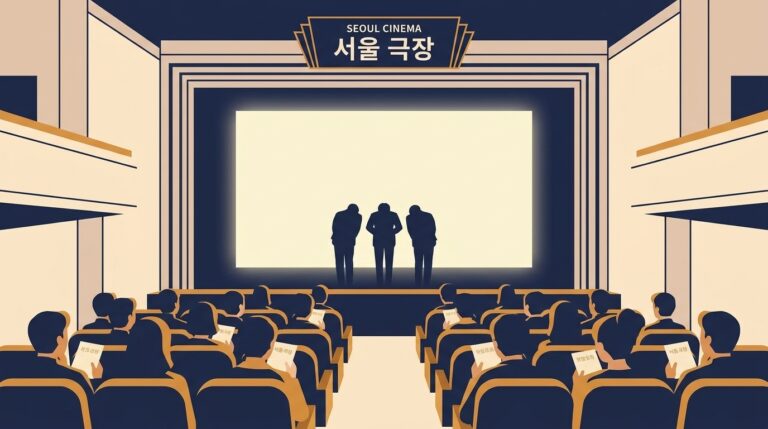
Picture this: You are standing inside the bustling foyer of CGV Yongsan I-Park Mall on a crisp Thursday evening. The air hums with a distinct electric tension unique to Korean cinema culture. Posters of the latest Chungmuro blockbuster line the walls, and a crowd of passionate cinephiles and devoted fans clutches meticulously crafted slogans, telephoto lenses, and pristine ticket stubs. In less than twenty minutes, the director and leading cast are scheduled to walk into Theater 4 for a live stage greeting—a mudae insa (무대인사). You spent the past two weeks scouring distributor Instagram pages, deciphering cryptic lottery announcements, and fighting the digital frenzy known as piketing (blood ticketing). Yet, as you step toward the usher, a wave of hesitation washes over you. What if you misread the entry terms? How do you ask whether this screening includes an interactive Q&A or merely a brief cast greeting? How do you navigate the unspoken auditorium etiquette so you don’t inadvertently block a fellow viewer or miss your chance to hand a small letter to an actor?
Navigating Korean movie premieres (sisahoe, 시사회) and stage greetings requires far more than basic survival vocabulary; it demands a nuanced command of socio-pragmatic phrasing, specialized industry jargon, and intuitive social tact (nunchi). Based on real feedback from advanced international learners who felt sidelined by rapid-fire ticketing releases and complex fandom customs, this masterclass is engineered to elevate your linguistic command to true C2 fluency. By mastering these expressions, you will transition from a passive spectator into an authoritative cultural insider who navigates the Korean cinema circuit with effortless poise.
Phase 2: In-Depth Analysis of 3 Core Expressions
1. 경쟁률을 뚫고 당첨되다 (Gyeongjaengnyuleul ttulko dangcheomdoeda)
- Pronunciation: [경쟁뉴를 뚤코 당첨되다 / Gyeong-jaeng-nyu-reul ttul-ko dang-cheom-dwae-da] (Think of the crisp consonant shift of gyeongjaeng-nyul, where the rhythm mirrors the swift snap of breaking through an obstacle).
- Meaning: Literally “to pierce through the competition rate and be selected in a raffle,” pragmatically conveying triumph over near-impossible odds in high-stakes lottery entries.
- K-Culture Moment: Used relentlessly across social media and fan communities when an applicant secures a seat at an exclusive press or audience preview hosted by major film distributors like CJ ENM or Lotte Entertainment.
- Editor’s Insight: The verb ttulkda (뚫다, to drill or pierce) elevates this from a sterile notification of selection to a hard-won victory. In C2 discourse, pairing ttulkda with statistical abstract nouns signifies active agency and perseverance against intense competitive pressure.
- Situation Spectrum: Casual ✅ | Semi-formal ✅ | Formal ✅
- 🤔 Think About It: How does your native language conceptualize winning a lottery? Is it viewed purely as random luck, or does your culture also invoke martial metaphors of “fighting” and “breaking through” systemic barriers?
2. 무대 인사를 실물 영접하다 (Mudae insareul silmul yeongjeophada)
- Pronunciation: [무대 인사를 실물 영접하다 / Mu-dae in-sa-reul sil-mul yeong-jeop-ha-da] (Pronounce yeong-jeop with resonant, respectful gravity, as if welcoming royalty).
- Meaning: Literally “to receive the real physical presence at a stage greeting,” pragmatically meaning to witness an admired actor or director in the flesh with deep, reverent awe.
- K-Culture Moment: Frequently exclaimed by film buffs and fans as the cast steps into the spotlight at the front of a megaplex theater, bridging the gap between cinematic screen and reality.
- Editor’s Insight: Yeongjeop하다 historically denotes the solemn reception of an exalted dignitary or divine figure. In contemporary Korean media discourse, applying it to seeing a public figure (silmul, 실물) introduces an ironic yet sincere hyperbole that captures sublime visual impact.
- Situation Spectrum: Casual ✅ | Semi-formal ⚠️ | Formal 🚫
- 🤔 Think About It: Why do modern Korean speakers adopt historic, reverential vocabulary to articulate aesthetic admiration in popular culture?
3. 명당 자리를 사수하다 (Myeongdang jarireul sasuhada)
- Pronunciation: [명당 자리를 사수하다 / Myeong-dang ja-ri-reul sa-su-ha-da] (Deliver sa-su with a crisp, resolute cadence that evokes defensive resolve).
- Meaning: Literally “to defend a geomantically auspicious site,” pragmatically meaning to strategically secure and protect the absolute optimal seat in the house.
- K-Culture Moment: Uttered when successfully booking aisle seats in rows C through E—prime territory where actors frequently walk past to hand out posters or shake hands during special premiere events.
- Editor’s Insight: Myeongdang originates from traditional Korean pungsu-jiri (feng shui), referencing terrain that gathers vibrant life force. Combining it with sasu하다 (to defend unto death) highlights how Korean cinephiles approach seat selection not as passive consumption, but as a deliberate tactical conquest.
- Situation Spectrum: Casual ✅ | Semi-formal ✅ | Formal ⚠️
- 🤔 Think About It: What does the metaphorical preservation of geomantic concepts tell us about how traditional cultural frameworks survive within hyper-modern Korean entertainment?
Phase 3: Textbook Korean vs. Real Korean
Situation 1: Describing the Fierce Competition of Premiere Ticket Drops
- 📖 교과서 한국어 (Textbook Korean):
- “시사회 예매 경쟁이 매우 치열해서 표를 구하지 못했습니다.”
- (Sisahoe yemae gyeongjaengi maeu chiyeolhaeseo pyoreul guhaji mothaesseumnida.)
- “Because the competition for preview ticketing was very fierce, I could not obtain a ticket.”
- 🗣️ 진짜 한국어 (Real Native Korean):
- “이번 시사회는 역대급 피켓팅이라 접속하자마자 광탈했어요.”
- (Ibeon sisahoeneun yeokdaegeup piketing-ira jeopsokhajamaja gwangtalhaesseoyo.)
- “This premiere was an unprecedented blood-ticketing war; the second I logged on, I was eliminated at lightning speed.”
- 💡 왜 다를까? (Why is it different?): Textbook phrasing describes the event clinically. Native speakers employ vivid portmanteaus like piketing (피 + 티켓팅, “blood ticketing”) and gwangtal (광속 탈락, “elimination at the speed of light”) to express visceral digital battles.
Situation 2: Praising an Actor’s Appearance During the Live Appearance
- 📖 교과서 한국어 (Textbook Korean):
- “배우의 실제 모습이 화면보다 훨씬 더 잘생기고 예쁩니다.”
- (Baeu-ui silje moseubi hwamyeonboda hwolssin deo jalsaenggigo yeppeumnida.)
- “The actor’s actual appearance is much handsomer and prettier than on the screen.”
- 🗣️ 진짜 한국어 (Real Native Korean):
- “실물 보니까 카메라 렌즈가 미모를 다 못 담아내네요. 아우라가 장난 아니에요.”
- (Silmul bonikka kamera renjeuga mimoreul da mot damanaeneyo. Auraga jangnan anieyo.)
- “Seeing them in person, the camera lens doesn’t even capture half their beauty. Their aura is unreal.”
- 💡 왜 다를까? (Why is it different?): Advanced natural Korean avoids basic adjectives (yeppuda, jalsaenggida) when marveling at presence. Instead, native speakers evaluate the medium’s technical limits (kamera renjeuga mimoreul mot damda) and invoke intangible presence (aura).
Phase 4: K-Culture Deep Dive & Nonverbal Etiquette
4-1. 눈치 (Nunchi) & Spatial Etiquette at Stage Greetings
Attending a Korean stage greeting requires an acute sensitivity to communal theater norms. While western premieres might encourage standing, vocal cheering, or rushing toward the barricade, Korean stage greetings inside cinema auditoriums follow strict structural decorum.
* The Line-of-Sight Rule: If you bring a handheld slogan banner (seullogeon) or fan sign, hold it strictly at chest height. Raising a sign above your shoulders immediately compromises the view of the person behind you, provoking sharp vocal protests or swift intervention from theater marshals.
* Camera Decorum: Heavy DSLR lenses (affectionately dubbed daepo, or “canons”) are prevalent, but using tripods that spill into the aisle is strictly prohibited as aisles serve as primary security routes for the actors.
* The Aisle Protocol: When actors step into the aisle during audience interaction segments, resist the urge to lunge forward from inner seats. Extending your arm respectfully across your designated row space while maintaining eye contact reflects proper nunchi.
4-2. The Anatomy of Chungmuro Marketing: “N-cha Gwanram” Culture
Stage greetings are not merely promotional bonuses; they form the bedrock of Korea’s box office longevity. Korea is renowned for N-cha gwanram (N차 관람), the phenomenon of watching the same film multiple times to analyze directorial subtext or support the production team. Distributors schedule stage greetings across release weekends to drive repeat box-office admissions, frequently offering unique merchandise—such as numbered original tickets (orijineol tiket) or signed posters—exclusive to specific theater chains. Understanding this ecosystem enables you to decipher promotional tiers, lottery mechanics, and social media hashtags with professional insight.
Phase 5: Real-World Roleplay Scenario
Setting: The lobby outside Theater 1 at Megabox COEX, thirty minutes before a highly anticipated director-cast stage greeting screening.
Characters:
* You: A discerning international film scholar and enthusiast.
* Min-ji (민지): An experienced Korean cinephile and stage-greeting regular holding an aisle seat stub.
Min-ji: 혹시 몇 열 잡으셨어요? 이번 회차 배우들 동선이 B열 쪽으로 먼저 돈다는 소문이 있더라고요.
(Hoksi myeot yeol jabeusyeosseoyo? Ibeon hoecha baeudeul dongseoni bi-yeol jjogeuro meonjeo dondaneun somuni itdeoragoyo.)
“By any chance, which row did you manage to grab? Word on the street is the actors’ walking route will head toward Row B first during this session.”
🎭 Checking her mobile ticketing app while casting an observant eye over the corridor security layout.
You: 저는 D열 통로 쪽을 겨우 사수했어요. 취켓팅 때 운 좋게 풀린 표를 잡았거든요.
(Jeoneun di-yeol tongno jjogeul gyeou sasuhaesseoyo. Chwiketing ttae un joke pullin pyoreul jabatgeodeunyo.)
“I barely managed to secure an aisle seat in Row D. I got lucky and snagged a released seat during the cancellation drop.”
🎭 Calmly displaying your digital confirmation with understated satisfaction.
Min-ji: 와, D열 통로석이면 완전 대박이네요! 거기가 실물 영접하기에는 최고의 명당자리잖아요.
(Wa, di-yeol tongnoseogimyeon wanjeon daebagineyo! Geogiga silmul yeongjeophagieneun choego-ui myeongdangjarijanayo.)
“Wow, Row D aisle? That’s an absolute jackpot! That is the ultimate prime spot for seeing them up close in person.”
You: 맞아요, 배우분들 퇴장할 때 편지라도 조심스럽게 전해볼까 하는데, 분위기가 괜찮을까요?
(Majayo, baeubundeul toejanghal ttae pyeonjirado josimseureopge jeonhaebolkka haneunde, bunwigiga gwaenchaneulkkayo?)
“Indeed. I was wondering if it would be appropriate to respectfully hand them a short letter when the cast exits—would the room dynamic allow for that?”
🎭 Inquiring politely while keeping your small, tasteful envelope securely tucked.
Min-ji: 경호팀 제지가 있을 순 있는데, 통로를 지나갈 때 정중하게 건네면 받아주는 경우가 많아요. 시야 가리지 않게 가슴 높이로만 내미세요!
(Gyeonghotim jejiga isseul sun inneunde, tongnoreul jinagal ttae jeongjunghage geonnemyeon badajuneun gyeong-uga manayo. Siya gariji anke gaseum nopiro-man naemiseyo!)
“Security might briefly intervene, but if you offer it politely as they pass along the aisle, they often accept it. Just make sure to hold it at chest height so you don’t obstruct anyone’s view!”
You: 귀한 팁 감사합니다. 관객들 시야에 방해되지 않도록 매너를 각별히 신경 써야겠네요.
(Gwihan tip gamsahamnida. Gwangwakdeul siyaye banghaedoeji antorok maeneoreul gakbyeolhi singyeong sseoyagetneyo.)
“Thank you for that invaluable tip. I’ll make sure to exercise strict etiquette so I don’t interfere with fellow moviegoers’ sightlines.”
🎭 Nodding with appreciative cultural awareness.
Min-ji: 시작 전 무대인사니까 상영 중에는 휴대폰 바로 집어넣는 거 아시죠? 엔딩 크레딧 올라갈 때까지 집중해 주는 게 이 바닥 예의니까요.
(Sijak jeon mudaeinsanikka sang-yeong jung-eneun hyudaepon baro jibeoneonneun geo asijyo? Ending keuredit ollagal ttaekkaji jipjunghae juneun ge i badak ye-uinikkayo.)
“Since this is a pre-screening greeting, you know to tuck the phone away right when the lights go down, right? Staying dialed in until the final credits roll is the golden rule around here.”
You: 당연하죠. 본편 상영에 온전히 몰입하는 것이야말로 창작진에 대한 기본 도리니까요.
(Dang-yeonhajyo. Bonpyeon sang-yeong-e onjeonhi moriphaneun geosiyamallo changjakjine daehan gibon dorinikkayo.)
“Naturally. Fully immersing oneself in the film itself is the foremost duty toward the creative team.”
🎭 Stowing your smartphone away deliberately as the auditorium chimes ring.
🔀 Interactive Decision Point
As the cast enters, the lead actor moves toward your section during a promotional poster giveaway. How do you respond?
- Option A: Stand up abruptly into the aisle and wave your hands high while shouting the actor’s character name.
- Feedback (Bad): Triggers an immediate warning from security and earns intense disapproval from surrounding patrons whose sightlines and camera frames you have ruined.
- Option B: Remain seated, maintain enthusiastic eye contact, and politely extend your hands toward the aisle while displaying your cleanly written envelope at chest level.
- Feedback (Best): Perfect execution of auditorium decorum. You respect the boundaries of fellow viewers while providing the actor a safe, non-intrusive opportunity to accept your note.
- Option C: Leave your seat entirely and attempt to walk down the stairs toward the podium to present a bouquet.
- Feedback (Risk): High probability of being intercepted by theater staff; creates a safety hazard and disrupts the tight chronological schedule of the stage tour.
Phase 6: 10-Second Emotional Shadowing Drill
Practice reading these sentences aloud, observing the pauses (/) and infusing the specified emotional register.
[🔥 비장하고 간절하게 / Solemnly and resolutely]
이번 시사회는 / 경쟁률이 워낙 치열해서 / 서버 열리자마자 / 명당 자리를 사수해야 해요.
(Ibeon sisahoeneun / gyeongjaengnyuri wonak chiyeolhaeseo / seobeo yeollijamaja / myeongdang jarireul sasuhaeya haeyo.)
“The competition for this premiere is exceptionally ruthless / so the moment the server opens / we must defend and secure prime seating.”-
[🤩 감격에 벅차올라 경외감을 담아 / Overwhelmed with awe]
스크린을 찢고 나온 것처럼 / 실물 아우라가 엄청나서 / 영접하는 내내 / 숨이 멎는 줄 알았어요.
(Seukeurineul jjitgo naon geotcheoreom / silmul auraga eomcheongnaseo / yeongjeophaneun naenae / sumi meonneun jul arasseoyo.)
“As if stepping straight through the silver screen / their live aura was so breathtaking / that while gazing upon them in the flesh / I could hardly breathe.” -
[🤝 정중하고 세련된 매너로 / Polished, sophisticated courtesy]
배우분들의 동선을 존중하면서 / 다른 관객들의 시야를 가리지 않도록 / 각별히 유의하겠습니다.
(Baeubundeul-ui dongseoneul jonjunghamyeonseo / dareun gwangwakdeul-ui siyareul gariji antorok / gakbyeolhi yu-uihagessumnida.)
“While respecting the movement paths of the cast / I will remain exceptionally mindful / not to obstruct the sightlines of other viewers.”
Phase 7: K-Culture Mini Dictionary (4 Essential Terms)
-
무대인사 (Mudae Insa / Stage Greeting)
Literal translation: Stage greeting.
Real-World Usage: A structured 10-to-15-minute promotional event held inside regular cinema auditoriums either directly before (si-jong, 시종) or right after (jong-si, 종시) a film’s screening, featuring brief remarks from the director and actors. -
취켓팅 (Chwiketing / Cancellation Ticketing)
Portmanteau: 취소 (Cancellation) + 티켓팅 (Ticketing).
Real-World Usage: The competitive art of monitoring ticketing platforms late at night—frequently around 2:00 AM to 4:00 AM when unpaid reservations are purged—to secure prime seats forfeited by others. -
단관 / 대관 (Dangwan / Daegwan / Group & Fandom Screenings)
Literal translation: Group screening / Theater buyout.
Real-World Usage: Coordinated events organized by fan associations (chongdae, the executive organizers) who rent out entire cinema auditoriums directly from multiplexes to screen films with custom commemorative merchandise, fan-chants, or specialized cast invitations. -
오리지널 티켓 (Orijineol Tiket / Original Ticket)
Literal translation: Original Ticket.
Real-World Usage: High-concept collectible ticket merchandise pioneered by Megabox (and adapted into similar formats across CGV and Lotte Cinema) distributed on a first-come, first-served basis upon presentation of a valid booking stub, driving explosive opening-week ticket demand among collectors.
Phase 8: Survival Kit for Travelers
Top 3 Survival Expressions
-
“이 회차 종영 후 무대인사가 맞나요?”
(I hoecha jong-yeong hu mudaeinsaga mannayo?)
Pro Tip: Crucial for clarity. Stage greetings are split into pre-screening (sang-yeong jeon) and post-screening (jong-yeong hu). If it is post-screening, cast greetings occur after the film ends. Arriving late can ruin your viewing experience. -
“시사회 티켓 교환 부스는 어디에 마련되어 있나요?”
(Sisahoe tiket gyohwan buseuneun eodie maryeondoe-eo innayo?)
Pro Tip: Preview tickets won via lotteries cannot be redeemed at automated kiosks; they require in-person identity verification at custom distributor tables set up in the cinema lobby. -
“실례지만 배우님께 서신이나 선물 전달이 가능한가요?”
(Sillyejiman baeunimkke seosin-ina seonmul jeondari ganeunghangayo?)
Pro Tip: A polished, hyper-polite way to ask security personnel whether letter/gift handoffs are permitted for a specific production.
Editor’s Travel Note: Essential Infrastructure & Strategy
- Essential Ticketing Apps: Install the CGV Official Mobile App and create a verified CJ ONE account well in advance. For specialized screenings, you will also need the Megabox Cinema App. Note that foreign credit cards may sometimes encounter security blocks on mobile checkout; setting up convenient authentication via Payco or local verified payment methods beforehand prevents checkout timeouts.
- Auditorium Logistics: The premier venue for major Chungmuro stage greetings is CGV Yongsan I-Park Mall (specifically the IMAX or Theater 4 halls) and Megabox COEX (Dolby Cinema). When booking, aisle seats in rows C through G offer the golden ratio between comfortable cinematic viewing angles and physical proximity to cast walkway paths.
Phase 9: “A Step Deeper” (Socio-Cultural Reflection)
The phenomenon of the Korean movie stage greeting reveals profound shifts in how intimacy and accessibility are negotiated in modern Korean entertainment. Unlike the exclusive, red-carpet barricade model prevalent in Hollywood, where physical interaction is reserved for press scrums and select VIPs, the Korean mudae insa democratizes proximity by bringing top-tier creative artists into regular auditorium aisles. This creates an unwritten social contract: the cast rewards the audience’s investment with direct emotional reciprocity, while the audience adheres to meticulous spatial self-restraint (nunchi) to preserve safety and collective viewing dignity. It is a striking microcosm of modern Korean public culture—hyper-organized, deeply relational, and sustained by mutual decorum.
💬 Your Turn: Have you ever attended a cinema stage greeting or fan event where physical proximity to artists was granted inside a shared room? How does the etiquette of your home country compare to Korea’s balance of unyielding enthusiasm and auditorium restraint? Share your thoughts in the comments below!
Phase 10: FAQ & Common Pitfalls
Q: Can foreigners without a Korean national registration number enter distributor preview lotteries on social media?
A: Yes, but with strategic planning. Social media lottery events hosted directly on Instagram or X (Twitter) by distributors typically require a valid Korean shipping address or phone number for SMS confirmation. If you lack a Korean phone number, focus on ticketed stage greetings sold directly through cinema websites (CGV, Megabox, Lotte Cinema) where verified foreign credit cards are increasingly accepted on international booking pages, or participate in screenings hosted by film festivals (e.g., BIFF, Jeonju IFF).
Q: What is the exact difference between a 시사회 (Sisahoe) and a 일반 무대인사 (Ilban Mudae Insa)?
A: A sisahoe (시사회) is an exclusive preview screening held prior to a film’s commercial release date, accessible almost entirely through press credentials, industry invites, or competitive lottery events. An ilban mudae insa (일반 무대인사) refers to regularly ticketed commercial screenings held during the opening weeks of a film’s general theatrical run where the cast appears for greetings; these can be booked through standard box office portals without lottery entry.
Q: Is flash photography permitted during the stage greeting portion of the screening?
A: In virtually all major theaters, flash photography is strictly banned. High-power flashes disrupt the cast, interfere with official documentation teams, and blind surrounding viewers. Boost your camera’s ISO settings or use high-aperture portrait glass instead.
🚨 Common Mistakes Board
| Mistake | Why It Happens | Correct Action (해결책) |
|---|---|---|
| 1. Standing up during stage greeting remarks | Over-excitement to capture clearer phone videos. | Remain seated throughout. Blocking the line of sight for the rows behind you violates cinema etiquette and will prompt security reprimands. |
| 2. Arriving precisely at screening time for a pre-screening stage greeting | Mistaking the greeting for an end-credits event. | Check your ticket confirmation: if marked 상영 전 (Pre-screening), the cast appears before the film. Arrive 15 minutes early. |
| 3. Leaving during the end credits to beat theater traffic | Assuming the experience is over once the story finishes. | For 종영 후 (Post-screening) sessions, the cast enters only after credits conclude. Leaving early forfeits your access entirely. |
Phase 11: Action Missions & Engagement
Action Mission: 3-Tier Execution
- 🥉 Bronze Level (Solo Practice): Practice the Phase 6 shadowing drill three times consecutively, focusing specifically on transitioning smoothly between the solemn, strategic cadence of sasuhada and the reverent awe of silmul yeongjeophada.
- 🥈 Silver Level (Community Connection): Head over to an official Korean distributor page (such as @cjenm.movie or @plusm_entertainment) on Instagram. Locate an active movie premiere notice and identify the terms: 응모 기간 (application period), 당첨자 발표 (announcement date), and 무대인사 참석자 (attending cast list).
- 🥇 Gold Level (Real Application): Log onto a major Korean cinema app during a scheduled ticket release window. Attempt to navigate directly to the 무대인사 filter category, select an auditorium, and evaluate aisle seat availability using the situational vocabulary learned today.
🎮 K-Culture Mission: Find a video clip of a recent Korean movie stage greeting on YouTube by searching [영화 제목] 무대인사 풀영상. Observe how fans interact with the actors as they walk the aisles. Can you spot the exact moment where the audience exercises nunchi to maintain order?
Phase 12: Interactive Quiz Challenge
Test your mastery of Korean premiere and stage greeting culture with these three advanced exercises:
Exercise 1: Situational Judgment
You are attending a post-screening stage greeting at CGV Yongsan. The screening has ended, the house lights come up, and the host introduces the lead actor. You are sitting in Row F, Seat 8 (the exact middle of the row). You have brought a hand-written letter. What is the most socially appropriate and effective action?
* A) Squeeze past the seven people to your right to reach the aisle and hand the letter to security.
* B) Stand up on your seat and wave the letter above your head while calling out.
* C) Remain seated, appreciate the presentation, and pass the letter to the aisle seat attendee only if the actor specifically pauses at your row and gestures for fan mail.
* D) Throw the letter toward the stage podium when the actor takes the microphone.
Exercise 2: Fill-in-the-Blank
Fill in the missing native expressions based on the context:
“이번 영화는 워낙 화제작이라 예매 창이 열리자마자 극심한 ( 1 )을/를 겪었지만, 새벽에 끈기 있게 ( 2 )을/를 시도한 끝에 결국 중앙 블록 통로 쪽 ( 3 )을/를 사수하는 데 성공했다.”
Exercise 3: True / False Cultural Check
- Statement: Unlike public music festival stages, standard Korean multiplex stage greetings allow audience members to use handheld banner slogans freely at any elevation, provided they do not produce electrical noise. (True / False)
👉 Click here to reveal the answers and detailed explanations
Answers & Explanations
- Exercise 1 Answer: C
Explanation: Disrupting an entire row to force an aisle position (A), standing on furniture (B), or throwing objects inside an enclosed theater (D) represent severe breaches of cinema decorum and safety protocols. Option C exemplifies seasoned nunchi—respecting collective space while seizing authentic, safe interaction opportunities. -
Exercise 2 Answer:
- (1) 피켓팅 (piketing – blood ticketing)
- (2) 취켓팅 (chwiketing – cancellation drop ticketing)
- (3) 명당자리 (myeongdangjari – prime optimal seat)
- Exercise 3 Answer: False
Explanation: Handheld slogans must be kept strictly at chest level. Raising any promotional materials above shoulder height obstructs the clear sightline of viewers sitting behind you and violates core auditorium etiquette.







