

Phase 1: 공감 (Story-Driven Opening)
안녕하세요! 매일한글 에디터입니다.
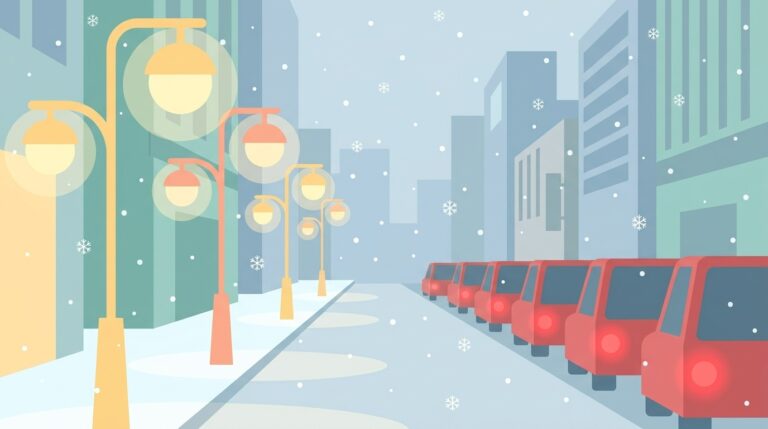
Picture this quintessential K-Drama scene: pristine, feather-light snowflakes begin drifting down onto the cobblestones of Samcheong-dong. Melodic piano chords swell, and two protagonists lock eyes under a single umbrella—experiencing the magical, fated promise of 첫눈 (the season’s first snow). Now, cut to reality in Gangnam at 6:45 PM on that exact same evening: the thermometer is hovering at -2°C, subway platforms are overflowing to hazard levels, Gangnam-daero has devolved into a multi-kilometer red sea of brake lights, and taxis have completely vanished into thin air.
As advanced learners navigating C2-level Korean, your goal is no longer just deciphering weather forecasts; it is mastering the nuanced linguistic duality between Seoul’s collective poetic nostalgia and its ruthless, pragmatic commute survival. When native speakers transition seamlessly from sighing over the delicate beauty of snowflakes to grumbling witty, hyper-idiomatic complaints about gridlock, you need the sophisticated lexicon to match. Based on years of mentoring senior professionals and long-term expats in Korea, this guide breaks down the precise cultural codes, sardonic humor, and high-register idiomatic expressions that will make you sound indistinguishable from a seasoned Seoulite.
Phase 2: 핵심 표현 3선 심층 분석 (Deep-Dive Core Expressions)
1. 첫눈의 설렘도 잠시, 완전 발이 묶였어요. (Cheotnuneui seollemdo jamsi, wanjeon bari mukkyeosseoyo.)
- Pronunciation: [Chut-noon-ui seol-lem-do jam-si, wan-jeon ba-ri mook-kyeoss-eo-yo] (Think of mook rhyming with a short ‘book’, followed by a sharp, crisp kyeoss).
- Meaning: Literal: “The excitement of the first snow was brief; my feet are completely tied.” | Nuanced: “The romantic thrill of the first snow vanished in an instant because I am now hopelessly stranded.”
- K-Culture Moment: Used relentlessly in office group chats (Kakaotalk) and Instagram stories when someone posts a gorgeous photo of falling snow captioned with a snapshot of an immovable bus line.
- Editor’s Insight: The somatic idiom 발이 묶이다 (to have one’s feet bound) is the gold standard for describing travel paralysis due to natural phenomena or transit strikes. Combining it with ~도 잠시 conveys cynical pragmatic transition.
- Situation Spectrum: Casual ✅ | Semi-formal ✅ | Formal ⚠️ (In formal corporate reporting, substitute with 폭설로 인해 이동이 제한된 상태입니다).
- 🤔 Think About It: Notice how Korean anchors physical mobility metaphors (발이 묶이다) to express external circumstantial helplessness compared to the English ‘I am stranded.’
2. 도로가 주차장으로 변해서 꼼짝달싹 못 하고 있어요. (Doroga juchajangeuro byeonhaeseo kkomjjakdallssak mot hago isseoyo.)
- Pronunciation: [Do-ro-ga joo-cha-jang-eu-ro byun-hae-seo kkom-jjak-dal-ssak mot ha-go iss-eo-yo] (Emphasize the tensed double consonants ㄲ and ㅆ with a punchy, staccato delivery).
- Meaning: Literal: “The road has turned into a parking lot, so I can’t budge even an inch.” | Nuanced: “Traffic is deadlocked into a total parking lot; we’re completely paralyzed.”
- K-Culture Moment: Frequently heard in late-night radio traffic broadcasts or exasperated phone calls between spouses negotiating who picks up the kids during sudden winter gridlock.
- Editor’s Insight: 꼼짝달싹 못 하다 is an expressive, emphatic mimetic construction. Using it immediately elevates your Korean fluency from functional textbook communication to vivid native-level storytelling.
- Situation Spectrum: Casual ✅ | Semi-formal ✅ | Formal 🚫
- 🤔 Think About It: English favors nouns like ‘gridlock’ or ‘standstill,’ whereas Korean leans heavily on dynamic mimetic adverbs (꼼짝달싹) that dramatize physical entrapment.
3. 낭만 챙기려다 지각하게 생겼네요. (Nangman chaenggiryeoda jigakhage saenggyeonneyo.)
- Pronunciation: [Nang-man chaeng-gi-ryeo-da ji-gak-ha-ge saeng-gyeon-ne-yo] (Smooth nasal assimilation: saeng-gyeot-ne-yo effortlessly becomes saeng-gyeon-ne-yo).
- Meaning: Literal: “While trying to secure romance, it looks like I am going to end up late.” | Nuanced: “I tried to bask in the romantic snowy mood, but now I’m on the verge of being terribly late.”
- K-Culture Moment: The quintessential self-deprecating remark shared with colleagues upon arriving flushed and out-of-breath at a morning meeting or client dinner.
- Editor’s Insight: The verb 챙기다 (to take care of / pack / claim) attached to abstract concepts like 낭만 (romance) or 감성 (vibe) adds an ironic, self-aware flavor that epitomizes modern Seoul conversational wit.
- Situation Spectrum: Casual ✅ | Semi-formal ✅ | Formal ⚠️
- 🤔 Think About It: How does your native language handle self-mockery when aesthetic appreciation collides with professional punctuality?
Phase 3: 교과서 한국어 vs 진짜 한국어 (Textbook vs. Real Native)
Situation 1: Describing catastrophic commute conditions on a snowy day
- 📖 교과서 한국어: 눈이 많이 와서 도로가 막히고 대중교통 이용이 어렵습니다. (Nuni mani waseo doroga makhigo daejunggyotong iyongi eoryeopseumnida.) — “Because it is snowing heavily, roads are blocked and using public transit is difficult.”
- 🗣️ 진짜 한국어: 눈 폭탄 맞아서 도로 마비되고, 지하철역은 그야말로 아비규환이에요. (Nun poktan majaseo doro mabidoego, jihacheollyeogeun geuyamallo abigyuhwanieyo.) — “We got hit by a snow bomb; the roads are paralyzed and the subway station is absolute pandemonium.”
- 💡 왜 다를까? C2-level speech leverages evocative four-character idioms (아비규환 – 阿鼻叫喚) and contemporary colloquial compounds (눈 폭탄) to paint visceral social reality.
Situation 2: Ironizing the clash between K-Drama fantasy and reality
- 📖 교과서 한국어: 첫눈을 보니 기분이 좋지만 운전하기에는 불편합니다. (Cheotnuneul boni gibuni jochiman unjeonhagieneun bulpyeonhamnida.) — “I feel happy seeing the first snow, but driving is inconvenient.”
- 🗣️ 진짜 한국어: 첫눈 로망이고 뭐고, 당장 퇴근길 생각하면 눈앞이 캄캄해요. (Cheotnun romangigo mwogo, dangjang toegeunggil saengghakhamyeon nunapi kamkamhaeyo.) — “First snow romance my foot—just thinking about the commute home makes my vision go completely dark with dread.”
- 💡 왜 다를까? Native speakers often dismiss sentimental tropes using the dismissive pattern [Noun]이고 뭐고 paired with the sensory distress idiom 눈앞이 캄캄하다.
Phase 4: K-Culture 딥다이브 & 비언어적 매너 (Cultural Nuances & Etiquette)
4-1. 눈치(Nunchi) & Sensory Manners on Gridlocked Snow Days
When the first heavy snow hits Seoul during evening rush hour, public spaces transform into a tense study of collective restraint.
* The Commuter Sigh & Gaze: Inside packed Line 9 or Line 2 trains, avoid direct eye contact. If delayed on the tracks, a subtle, collective, barely audible exhale (하…) combined with glancing down at transit tracking apps signals mutual solidarity without verbal intrusiveness.
* Digital Nunchi (Pre-emptive Texting): If you are running late due to snow, waiting until the scheduled time is a fatal etiquette breach. Send a KakaoTalk update at the first sign of delay: 폭설로 대중교통이 지연되어 15분 정도 늦어질 것 같습니다. 정말 죄송합니다. (Due to heavy snow delays, I expect to be about 15 minutes late. My sincere apologies.)
* Umbrella Decorum: Shake off excess snow and slip your umbrella into the provided vinyl sleeve (우산 비닐 커버) or automatic umbrella dryer before stepping into subway stations, cafes, or corporate lobbies.
4-2. Cultural Code Analysis: The Dual Mythos of 첫눈 (Cheotnun)
In Korean pop culture, 첫눈 carries sacred weight. From classic dramas like Guardian: The Lonely and Great God (도깨비) to chart-topping winter ballads by EXO, folklore dictates that confessions made during the first snow come true, and lies told are forgiven. However, in hyper-dense metropolitan Seoul, this collective sentimentality immediately clashes with the ruthless infrastructure of the 퇴근길 (the evening commute). Understanding this emotional dichotomy—loving the symbolic ideal of winter while mastering the practical sarcasm of transit survival—is the ultimate hallmark of cultural fluency.
Phase 5: 실전 롤플레이 시나리오 (Interactive Roleplay Scenario)
Setting: It is 6:30 PM on a Friday in Yeouido. Heavy, wet snow has blanketed the financial district. You are trying to meet your project partner, Min-woo (a pragmatic, witty senior strategist), for a year-end dinner in Hongdae.
- 민우 (Min-woo): [창밖을 내다보며 헛웃음을 짓는다] 와, 눈 제대로 쏟아지네요. 창밖 볼 때는 진짜 그림 같은데… 벌써부터 퇴근길 까마득하죠? (Wa, nun jedaero ssodajineyo. Changbak bol ttaeneun jinjja geurim gateunde… Beolsseobuteo toegeunggil kkamadeukhajyo?) — [Chuckling wryly while staring out the window] Wow, it’s really coming down out there. It looks like a painting from the window, but… are you dreading the commute home already?
- 나 (You): 낭만 즐길 틈도 없이 여의도 일대가 벌써 꽉 막혔더라고요. (Nangman jeulgil teumdo eopsi Yeouido ildaega beolsseo kkwak makhyeotdeoragoyo.) — 🎭 Checking live traffic map with a rueful smile: Without even a moment to enjoy the romance, the entire Yeouido area is already deadlocked.
- 민우 (Min-woo): 택시 부를 생각은 일찌감치 접는 게 나을 거예요. 지금 호출비 최고가로 올려도 한 대도 안 잡혀요. (Taeksi bureul saenggakeun iljjigamchi jeomneun ge naeul geoyeyo. Jigeum hochulbi choegogaro ollyeodo han daedo an japhyeoyo.) — 🎭 Shaking his head while tapping his phone screen: You’d better give up on calling a taxi early. Even if you max out the surge pricing right now, not a single one will accept.
- 나 (You): 지하철 9호선 타러 가야 할 텐데, 오늘 같은 날 급행은 지옥철 그 자체겠죠? (Jihacheol guhosen tareo gaya hal tende, oneul gateun nal geuphaengeun jiokcheol geu jachegetjyo?) — 🎭 Sighing gently while buttoning up winter coat: We’ll have to take Subway Line 9, but on a day like this, the express train will literally be ‘Hell-train’ personified, right?
- 민우 (Min-woo): 지옥철 정도가 아니라 탑승 불가 수준일 걸요. 우리 홍대 예약 시간 좀 미뤄야 할 것 같은데요? (Jiokcheol jeongdoga anira tapseung bulga sujunil geollyo. Uri Hongdae yeyak sigan jom mirwoya hal geot gateundeyo?) — 🎭 Raising eyebrows sympathetically: Not just Hell-train; it’ll probably be impossible to board. Don’t you think we should push back our Hongdae reservation?
- 나 (You): [선택지를 결정해 대답한다] (Decide your response below.)
🔀 인터랙티브 분기점 (Interactive Choice Branching)
- Choice A (Best – Pragmatic, culturally attuned & sophisticated C2 Korean):
네, 맞아요. 식당에 미리 전화해서 첫눈 폭설 때문에 30분만 늦추겠다고 양해를 구하는 게 상책일 것 같아요. (Ne, majayo. Sikdange miri jeonhwahaeseo cheotnun pokseol ttaemune samsipbunman neutchugetdago yanghaereul guhaneun ge sangchaekil geot gatayo.)
Feedback: 🌟 Outstanding! Using 양해를 구하다 (to seek understanding/pardon) and 상책이다 (to be the best policy/course of action) shows impeccable professional and social polish. - Choice B (Risk – A bit overly casual and blunt for a senior colleague):
그냥 오늘 약속 취소하고 각자 집으로 도망치는 게 어때요? (Geunyang oneul yaksok chwisohago gakja jibeuro domangchineun ge eottaeyo?)
Feedback: ⚠️ Caution! While relatable, suggesting immediate cancellation without attempting rescheduling (도망치다 – fleeing) can come off as slightly unprofessional unless you are close friends. - Choice C (Bad – Textbook-stiff and impractical):
아닙니다. 약속은 반드시 지켜야 하니 지금 당장 뛰어가서 택시를 잡겠습니다. (Animnida. Yaksogeun bandeusi jikyeoya hani jigeum dangjang ttwieogaseo taeksireul japgetseumnida.)
Feedback: 🚫 Unnatural! Rigidity in the face of natural disruption violates common-sense Nunchi. It sounds robotic and ignores the reality that taxis are nonexistent.
Phase 6: 10초 감정 섀도잉 드릴 (10-Second Emotional Shadowing Drill)
Practice these natural rhythm pauses (/) and emotive tones out loud:
[✨ 감성 젖은 목소리로 시작하다가 😫 자조적인 톤으로 전환]
창밖 볼 때는 / 첫눈 와서 로맨틱했는데, / 퇴근길 지하철 입구 보자마자 / 현실로 복귀했어요.
(Changbak bol ttaeneun / cheotnun waseo romaentikhaenneunde, / toegeunggil jihacheol ipgu bojamaja / hyeonsillo bokgwihanneyo.)
“Looking out the window, the first snow was so romantic, / but the second I saw the subway station entrance on the way home, / I crashed right back into reality.”-
[😤 기진맥진한 어조로]
평소에 20분 걸리던 거리가 / 폭설 때문에 / 꼼짝달싹 못 하고 / 1시간 넘게 갇혀 있었어요.
(Pyeongsoe isipbun geollideon georiga / pokseol ttaemune / kkomjjakdallssak mot hago / hansigan neomge gachyeo isseosseoyo.)
“A distance that usually takes 20 minutes / got completely gridlocked because of the heavy snow, / leaving me trapped for over an hour.”
Phase 7: K-Culture 미니 사전 (Mini Dictionary)
- 귀가전쟁 (Gwi-ga-jeon-jaeng)
- Meaning: The “Commute-Home Battle / Homecoming War.”
- Context: Used in media headlines and everyday conversation to describe extreme rush-hour struggles during blizzards, torrential rains, or holiday eves.
- 발이 묶이다 (Ba-ri muk-kki-da)
- Meaning: To be stranded or immobilized.
- Context: Applies when flights are grounded, roads are closed, or transit breaks down, completely stripping individuals of mobility.
- 첫눈 버프 (Cheot-nun beo-peu)
- Meaning: “The First Snow Buff” (Gamified slang).
- Context: The sudden psychological elevation of mood or heightened romantic charm attributed to the arrival of the first snowfall.
- 거북이걸음 (Geo-bu-gi-geol-eum)
- Meaning: “A turtle’s pace / crawling speed.”
- Context: The standard metaphor for bumper-to-bumper vehicle traffic inching forward on icy asphalt.
Phase 8: 여행자를 위한 생존 키트 (Traveler’s Survival Kit)
🚨 Survival Phrases TOP 3
- 여기서 광화문까지 지하철로 우회해서 가는 게 더 빠를까요?
(Yeogiseo Gwanghwamunkkaji jihacheollo uuhehaeseo ganeun ge deo ppareulkkayo?)
Pro Tip: Use 우회하다 (to bypass/detour) when consulting station staff or app maps about avoiding frozen surface roads. - 폭설 때문에 도로가 통제된 구간이 있나요?
(Pokseol ttaemune doroga tongjedoen gugani innayo?)
Pro Tip: Essential when driving a rental car or taking a highway express bus across provincial boundaries. - 눈길에 미끄러우니 조심해서 오세요.
(Nungire mikkeureouni josimhaeseo oseyo.)
Pro Tip: The ultimate polite closing phrase for winter text messages and emails to colleagues and clients.
🧭 Editor’s Travel Note
- Live Navigation Mastery: In sudden snowstorms, standard global map apps fail to reflect dynamic road blockages. Bookmark and utilize the [네이버 지도 실시간 교통정보 확인하기] feature to check real-time CCTV feeds and road congestion color codes.
- T-Money Emergency Strategy: Avoid taxis and buses entirely on central arteries (like Teheran-ro or Jongno). Heavy snow almost universally defaults to subway transit, specifically underground sections (underground Line 2/Line 5/Line 6 vs. above-ground Line 1 or Gyeongui-Jungang Line which suffer frequent switch freezing).
Phase 9: “한 발 더 깊이” (Cultural Essay & Reflection)
In contemporary Korean urban life, the romanticization of weather exists in constant creative friction with the imperative of hyper-punctuality (빨리빨리 culture). The reverence for 첫눈 reveals a deep-seated cultural longing for communal poetic pauses—a brief emotional truce amidst relentless productivity. Yet, when snow meets the gridiron of Seoul’s bustling metro system, society quickly recalibrates to collective resilience and shared, witty commiseration. Fluency at the highest level means holding both truths at once: marveling at the poetic snow while smoothly navigating the gridlock with good humor.
💬 Your Turn: How does your home city react when the first winter storm hits? Do people lean into romantic nostalgia or pure infrastructure chaos? Share your thoughts below using today’s Korean expressions!
Phase 10: FAQ & 흔한 실수 (FAQ & Common Mistakes)
Q: Is it rude to complain about the traffic when someone is excitedly talking about how pretty the first snow is?
A: Not at all, provided it is done with playful self-deprecation (자가풍자) rather than aggressive hostility. Using phrases like 낭만적인 건 좋은데, 퇴근할 생각 하니 살짝 아찔하네요! (It’s wonderfully romantic, but thinking about getting home makes me slightly dizzy!) bridges empathy and relatable realism perfectly.
Q: What is the difference between 폭설 (Pokseol) and 대설 (Daeseol)?
A: 폭설 (heavy snowfall / snow bomb) emphasizes the suddenness and destructive, violent volume of the snow, frequently used in informal and colloquial reporting. 대설 (heavy snow) is the formal meteorological and administrative term used for official warnings (대설주의보 – Heavy Snow Advisory, 대설경보 – Heavy Snow Warning).
Q: Can I use the word 지옥철 (Jiokcheol) in professional business meetings?
A: While widely understood, 지옥철 is informal slang. In a formal corporate context or client presentation, rephrase it as 출퇴근 시간대 대중교통 혼잡도가 극심하여… (Due to the extreme congestion of public transit during peak hours…).
🚨 흔한 실수 (Common Mistakes TOP 3)
- Mistake: Translating “traffic jam” literally as 교통 잼 (Gyotong jaem).
- Correct Action: Always use 교통 체증 (Gyotong chejeung), 교통 정체 (Gyotong jeongche), or colloquial 길/차가 막히다.
- Mistake: Saying 내 발이 묶였다 with the subjective possessive 내.
- Correct Action: Drop the pronoun: (완전) 발이 묶였어요. Natural Korean omits first-person possessives with body-part idioms.
- Mistake: Pronouncing 첫눈 as [Cheot-noon] with a hard ‘t’.
- Correct Action: Apply nasal assimilation: the final ᆺ before ㄴ transforms into ㄴ sound -> pronounce as [천눈 / Cheon-nun].
Phase 11: 액션 미션 (Action Missions)
- 🥉 Bronze Mission (Self-Practice): Record your voice doing the Phase 6 Shadowing Drill 3 times, perfecting the nasal assimilation of 첫눈 [천눈] and the dramatic emphasis on 꼼짝달싹 못 하고.
- 🥈 Silver Mission (Social Media): Post a rainy/snowy window view on Instagram or Threads captioned: 첫눈 낭만 챙기려다 발이 묶여버린 오늘 하루… ❄️🚗
- 🥇 Gold Mission (Real-life Execution): Next time weather disrupts plans with a Korean friend or colleague, send a message utilizing 양해를 구하다 or 도로가 주차장으로 변했어요.
- 🎮 K-Culture Mission: Watch a winter episode of a modern K-Drama (e.g., Crash Landing on You or Goblin) and note whether characters highlight the romantic myth of first snow or complain about the practical commute!
Phase 12: 인터랙티브 퀴즈 챌린지 (Interactive Quiz)
- Situational Judgment: You are texting a Korean client explaining that you will arrive 20 minutes late because the snow has frozen the highway and cars are not moving at all. Which expression is most natural and polite?
- A) 차가 꼼짝달싹 못 해서 늦어요. 미안해요.
- B) 갑작스러운 폭설로 도로 정체가 극심하여 20분가량 지연될 것 같습니다. 너른 양해 부탁드립니다.
- C) 눈이 와서 첫눈 낭만을 즐기다 지각했습니다.
- Fill in the Blank:
“눈이 너무 많이 와서 도로 위에서 1시간째 (_______) 못 하고 갇혀 있어요.”- A) 꼼짝달싹
- B) 갈팡질팡
- C) 안절부절
- True / False Culture Quiz: In Korean culture, it is considered taboo and bad luck to discuss traffic or realistic problems on the day of the first snow.
- True / False
🔍 정답 및 해설 확인하기 (Click to View Answers & Explanations)
- 정답: B
- 해설: In professional client interactions, 도로 정체가 극심하여 (severe road congestion) paired with the polished honorific phrase 너른 양해 부탁드립니다 (We kindly ask for your generous understanding) is the gold standard of business etiquette.
- 정답: A (꼼짝달싹)
- 해설: 꼼짝달싹 못 하다 means to be completely unable to budge or move physically. (갈팡질팡 = hesitating indecisively; 안절부절 = restless with anxiety).
- 정답: False
- 해설: While first snow (첫눈) carries romantic cultural weight, Koreans universally share pragmatic commiseration over transit woes. Witty, realistic complaining (현실 자각 타임) is an integral part of Korean conversational bonding!
- 해설: While first snow (첫눈) carries romantic cultural weight, Koreans universally share pragmatic commiseration over transit woes. Witty, realistic complaining (현실 자각 타임) is an integral part of Korean conversational bonding!







