

Phase 1: Empathy (Story-Immersive Opening)
안녕하세요! 매일한글 에디터입니다. (Hello! I’m your Daily Hangul editor.)
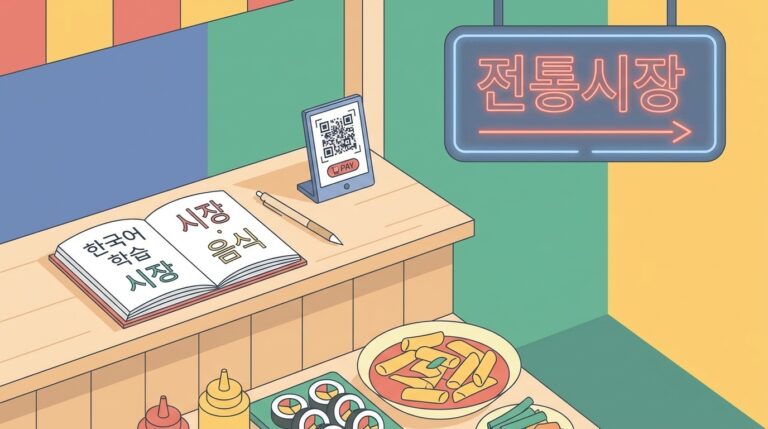
Picture this: You step into a traditional market in Seoul expecting the nostalgic, chaotic scenes straight out of a 1990s K-drama—vendors shouting over mountains of produce, cash changing hands in crumpled bills, and narrow, dimly lit alleyways. But as you walk deeper into Mangwon Market or Gwangdang Market today, your senses encounter a fascinating contrast. Sleek digital QR code stands sit right next to bubbling pots of tteokbokki, stylish “Youth Malls” (청년몰) serve artisanal hand-drip coffees alongside 50-year-old bindaetteok stalls, and locals tap their smartphones using digital Onnuri vouchers or ZeroPay.
Many advanced Korean learners hit an unexpected linguistic wall right here. You’ve mastered basic market vocabulary like “이거 얼마예요?” (How much is this?) and textbook bargaining, but how do you articulate complex observations about cultural preservation? How do you smoothly ask if a stall owner accepts modern mobile market vouchers without sounding like an outdated textbook robot? Navigating Korea’s modernized traditional markets requires C1-level fluency that effortlessly bridges deep heritage with cutting-edge urban tech. This guide is built on actual field feedback and linguistic insights to elevate your market conversations to true insider status.
Phase 2: Deep Dive into 3 Core Expressions
1. 온누리상품권 모바일 결제도 지원하나요? (Onnuri sangpumgwon mobail gyeoljedo jiwonhanayo?)
- Pronunciation: On-nu-ri sang-pum-gwon mo-ba-il gyeol-je-do ji-won-ha-na-yo? (Think of On-nu-ri like “On-new-ree”, and Gyeol-je like “Gyul-jeh”).
- Meaning: Literal: “Do you also support Onnuri gift certificate mobile payment?” / Actual Nuance: “Can I scan my digital Onnuri voucher/app here?”
- K-Culture Moment: You’ll hear savvy locals and food vloggers ask this at hip modernized stalls in Tongin or Mangwon Market to snag the government-subsidized 10% discount on street food.
- Editor’s Insight: Onnuri Sangpumgwon (온누리상품권) was traditionally a paper certificate to stimulate local markets. Today, it’s mostly digital. Using this phrasing signals that you not only speak fluent Korean, but you also understand Korea’s local economic initiatives.
- Situation Spectrum: Casual ⚠️ | Semi-formal ✅ | Formal ✅
- 🤔 Think About It: Why does Korean culture integrate high-tech fintech directly into historic markets rather than letting legacy payment systems fade naturally?
2. 전통의 멋과 현대적 감각이 조화롭게 어우러졌네요. (Jeontong-ui meotgwa hyeondaejeok gamgagi johwaropge eoureojyeonneyo.)
- Pronunciation: Jeon-tong-ui meot-gwa hyeon-dae-jeok gam-ga-gi jo-hwa-rop-ge eo-u-reo-jyeot-ne-yo. (Blend meot-gwa smoothly like “Mut-gwa”).
- Meaning: Literal: “Traditional style and modern sensibility are harmoniously blended.” / Actual Nuance: “What a stunning blend of vintage charm and trendy modern vibes!”
- K-Culture Moment: Frequently used on travel and lifestyle documentaries (like Live Info Show or Korean Food Table) when hosts tour revitalized historic alleys and creative youth spaces.
- Editor’s Insight: The verb phrase “조화롭게 어우러지다” (to blend harmoniously) is a hallmark of C1 sophistication. It transitions you from basic adjectives like “멋져요” (It’s cool) to articulate cultural appraisal.
- Situation Spectrum: Casual ⚠️ | Semi-formal ✅ | Formal ✅
- 🤔 Think About It: In your native culture, do modern renovations clash with tradition, or is there an active pursuit of “harmonious blending” (어우러짐)?
3. 청년몰 입점 덕분에 골목 상권이 훨씬 활기를 띠네요. (Cheongnyeonmol ipjeom deokbune golmok sanggwoni hwolssin hwalgireul ttineyo.)
- Pronunciation: Cheong-nyeon-mol ip-jeom deok-bu-ne gol-mok sang-gwon-i hwol-ssin hwal-gi-reul tti-ne-yo. (Hwal-gi sounds punchy with a slight aspiration on Hwal).
- Meaning: Literal: “Thanks to the entry of youth malls, the alley commercial district is showing much more vitality.” / Actual Nuance: “These new youth-led pop-ups are really bringing this old alley back to life!”
- K-Culture Moment: An exchange you might witness between local merchants and neighborhood urban planners featured on news specials covering generational business revitalization.
- Editor’s Insight: “활기를 띠다” (to take on vitality / become vibrant) is an idiomatic colocation that native speakers love when describing reviving atmospheres.
- Situation Spectrum: Casual ⚠️ | Semi-formal ✅ | Formal ✅
- 🤔 Think About It: How does language shift when discussing economic revitalization in your home country versus Korea’s focus on intergenerational solidarity?
Phase 3: Textbook Korean vs. Real Korean
Situation 1: Asking about mobile/app payment methods at a traditional food stand
- 📖 교과서 한국어 (Textbook): 신용카드 결제가 가능한가요? (Sinyongkadeu gyeoljega ganeunghangayo? – Is credit card payment possible?)
- 🗣️ 진짜 한국어 (Real-Life C1): 사장님, 제로페이나 모바일 온누리 바코드 찍어도 될까요? (Sajangnim, Jeropeina mobail Onnuri bakodeu jjigeodo doelkkayo? – Boss, can I scan the barcode for ZeroPay or Mobile Onnuri?)
- 💡 왜 다를까? (Why the difference?): Traditional market stalls now feature standardized QR/barcode acrylic stands. Mentioning specific digital payment platforms shows you are accustomed to Korea’s domestic fintech ecosystem.
Situation 2: Complimenting the modernized atmosphere of an old market
- 📖 교과서 한국어 (Textbook): 이 시장은 매우 현대화되고 깨끗합니다. (I sijangeun maeu hyeondaehwadoego kkaekkeuthamnida. – This market is very modernized and clean.)
- 🗣️ 진짜 한국어 (Real-Life C1): 레트로 감성은 그대로인데 시설이 깔끔해서 장보기 정말 쾌적하네요! (Reteuro gamseongeun geudaeroinde siseori kkalkkeumhaeseo jangbogi jeongmal kwoejeokhaneyo! – It keeps the retro vibe intact while the clean facilities make shopping so pleasant!)
- 💡 왜 다를까? (Why the difference?): Native speakers celebrate “뉴트로” (New-tro) aesthetics—preserving retro charm while enjoying modern hygiene, clean restrooms, and arcade roofs.
Phase 4: K-Culture Deep Dive & Non-Verbal Manners
4-1. 눈치 (Nunchi) & Market Etiquette in the Digital Era
Modernized traditional markets are hybrid spaces where two distinct social rhythms intersect: older generation merchants (상인 어르신들) and tech-savvy young entrepreneurs (청년 상인들).
* The Two-Handed Screen Tilt: When paying via QR or Mobile Onnuri, hold your phone with both hands and slightly tilt the bright screen toward the vendor so they can verify the green payment confirmation screen without having to put on reading glasses.
* Acknowledge the Transition: Some elderly vendors might take a few extra seconds to check payment SMS alerts on their POS systems. Never tap your fingers or rush them; offer a warm smile and a slight nod of patience.
4-2. Cultural Code: The “New-tro” (뉴트로) Renaissance & K-Food
Traditional markets in Korea are no longer just places for cheap groceries; they are epicenter destinations for young foodies and K-drama location scouts. From tvN’s Amazing Saturday showcasing signature regional market dishes to youth chefs fusing classic tteok (rice cakes) with western bakery concepts, the modernization project is about “상생” (win-win coexistence). Appreciating this cultural backdrop lets you engage in layered cultural conversations.
Phase 5: Real-Life Roleplay Scenario
Setting: Alex (a C1 Korean learner) visits a modernized craft snack stall in Mangwon Market run by Merchant Park (a veteran vendor who partnered with youth designers).
- Merchant Park: 어서 오세요! 우리 집 수제 약과, 오늘 아침에 갓 튀겨내서 바삭해요. (Eoseo oseyo! Uri jip suje yakgwa, oneul achime gat twigyeonaeseo basakhaeyo.)
- 🎭 Smiling proudly, gesturing toward beautifully packaged traditional honey cookies with minimalist labels.
- Alex: 안녕하세요, 사장님! 포장 디자인이 감각적이라 눈에 확 띄네요. (Annyeonghaseyo, sajangnim! Pojang dijaini gamgakjeorira nune hwak tti-neyo.)
- 🎭 Bowing slightly, admiring the modern aesthetic.
- Merchant Park: 고마워요! 우리 딸이랑 청년몰 팀이 디자인을 리뉴얼해 줬거든. 맛도 덜 달게 개량했어. (Gomawoyo! Uri ttarirang cheongnyeonmol timi dijaineul rinyueolhae jwotgeodeun. Matdo deol dalge gaeryanghaesseo.)
- 🎭 Waving a hand humbly while packing a sample box.
- Alex: 전통 간식인데도 요즘 트렌드에 맞게 세련되게 재해석하셨네요. (Jeontong gansigindedo yojeum teurende-e matge seryeondoege jaehae-seokhasyeonneyo.)
- 🎭 Taking a bite of the sample, nodding in genuine appreciation.
- Merchant Park: 그렇지! 요즘 젊은 분들도 많이 찾고 택배 주문도 꽤 들어와요. (Geureoji! Yojeum jeolmeun bundeuldo mani chatgo taekbae jumundo kkwae deureowayo.)
- 🎭 Pointing enthusiastically at a tablet displaying smart store delivery orders.
- Alex: 사장님, 혹시 온누리상품권 모바일 앱으로 바코드 결제해도 될까요? (Sajangnim, hoksi Onnuri sangpumgwon mobail aebeuro bakodeu gyeoljehaedo doelkkayo?)
- 🎭 Holding phone screen ready with the Onnuri Pay app opened.
- Merchant Park: 당연하죠! 여기 QR 코드 찍어주시면 돼요. 알림 바로 뜨니까 편해. (Dangyeonhajyo! Yeogi QR kodeu jjigeojusimyeon dwaeyo. Allim baro tteunikka pyeonhae.)
- 🎭 Pointing cheerfully to the clean acrylic QR stand on the counter.
- Alex: 전통 시장이 현대화되니까 결제도 간편하고 장보기가 훨씬 수월하네요. 번창하세요! (Jeontong sijangi hyeondaehwadoenikka gyeoljedo ganpyeonhago jangbogiga hwolssin suwolhaneyo. Beonchanghaseyo!)
- 🎭 Showing payment screen politely with both hands and receiving the eco-friendly paper bag.
🔀 Interactive Choice Point
The vendor asks if you need a paper receipt or a mobile push notification: “영수증 종이로 뽑아드릴까요, 아니면 모바일로 받으셨어요?”
- Choice A: “모바일 앱에 내역이 바로 떠서 종이 영수증은 안 주셔도 괜찮습니다!” (Mobail aebe naeyeogi baro tteoseo jong-i yeongsujeungeun an jusyeodo gwaenchanhseumnida!)
- 👉 Feedback [Best]: Natural, eco-conscious, and confirms you understand app-based payment verification. Perfect C1 response!
- Choice B: “영수증 필요 없어요. 돈 이미 나갔잖아요.” (Yeongsujeung piryo eopseoyo. Don imi nagatjanayo.)
- 👉 Feedback [Risk]: Grammatically correct, but sounds blunt and slightly confrontational in a market setting.
- Choice C: “저는 카드가 아니라서 영수증이 뭔지 잘 모릅니다.” (Jeoneun kadeuga aniraseo yeongsujeungi mwonji jal moreumnida.)
- 👉 Feedback [Bad]: Inaccurate and sounds beginner-level. Digital payments generate digital receipts.
Phase 6: 10-Second Emotional Shadowing Drill
Practice these natural intonation curves using pauses (/) and emotional cues:
[😊 감탄하며 세련되게]
전통의 멋은 살리고 / 현대적인 편의성을 더해서 / 장보기가 한결 편해졌어요.
(Jeontong-ui meoseun salligo / hyeondaejeogin pyeon-uiseong-eul deohaeseo / jangbogiga hangyeol pyeonhaejyeosseoyo.)-
[🤝 정중하고 밝게]
사장님, / 모바일 온누리상품권 QR 결제 / 지금 바로 찍어도 괜찮을까요?
(Sajangnim, / mobail Onnuri sangpumgwon QR gyeolje / jigeum baro jjigeodo gwaenchaneulkkayo?) -
[🤩 활기차고 격려하듯]
청년 상인들과 협업하시니까 / 시장 골목 분위기가 / 훨씬 생기 넘치네요!
(Cheongnyeon sang-indeulgwa hyeobeophasinikka / sijang golmok bunwigiga / hwolssin saenggi neomchineyo!)
Phase 7: K-Culture Mini Dictionary
- 온누리상품권 (Onnuri Sangpumgwon): Traditional Market Voucher. A government-backed dedicated currency for traditional markets available as paper, rechargeable card, or mobile QR app offering 5-10% purchase discounts.
- 청년몰 (Cheongnyeonmol): Youth Mall. Modern incubator zones inside traditional markets where young entrepreneurs open creative dining, craft, and digital retail spaces.
- 상생 (Sangsaeng): Mutual Prosperity / Win-Win Coexistence. The socio-economic philosophy behind pairing traditional veteran merchants with modern infrastructure and young designers.
- 골목 상권 (Golmok Sang-gwon): Alley Commercial District. Refers to the localized economic vitality of traditional neighborhood streets and hidden cultural nooks.
Phase 8: Traveler’s Survival Kit
Top 3 Market Modernization Expressions
- “혹시 모바일 결제 QR 코드 어디에 있나요?” (Hoksi mobail gyeolje QR kodeu eodie innayo?)
- Pro Tip: Look out for the orange “Onnuri” or green “ZeroPay” acrylic stands placed on the countertop.
- “스마트 주문이나 포장 픽업도 가능한가요?” (Seumateu jumun-ina pojang pigeopdo ganeunghangayo?)
- Pro Tip: Many traditional market food stalls now support Naver Smart Order or Baemin pick-up services.
- “주차 등록이나 할인권 적용받을 수 있을까요?” (Jucha deungnong-ina harinkwon jeokyongbadeul su isseulkkayo?)
- Pro Tip: Modernized markets feature public parking towers where purchases earn you free 1-hour parking vouchers.
Editor’s Travel Note
- Tech Prep: Download the 온누리페이 앱 다운로드 (Onnuri Pay App) or link your foreign debit card via local payment services before exploring.
- Navigation Tip: Search via 네이버 지도 앱 다운로드 (Naver Map App) to check which market stalls are designated as “Good Price Stores” (착한가격업소) or offer smart packaging.
Phase 9: “A Step Deeper” (Reflective Essay)
Korea’s modern market transformation reflects a profound cultural synthesis. While Western modernization often razes old districts for sterile shopping complexes, Korea actively pursues dynamic hybridization—infusing high-speed fiber optics, smart refrigeration, and chic brand identity into decades-old vendor culture. In this space, the ancient concept of Jeong (정, interpersonal affection) is not lost; it is simply upgraded with a barcode scan and an eco-friendly package.
💬 Your Turn: How does your hometown balance modern commercial convenience with historic neighborhood heritage? Share your thoughts below in Korean!
Phase 10: Structured FAQ & Misconceptions
Q: 전통 시장에서는 여전히 현금만 써야 하나요? (Do I still need only cash in traditional markets?)
A: No. Thanks to the Modernization Project (현대화 사업), over 90% of market vendors in metropolitan areas accept credit cards, ZeroPay, and Mobile Onnuri vouchers. Carrying a few small bills is helpful for micro-stalls, but digital payment is widely welcomed.
Q: ‘청년몰’은 일반 전통 시장 점포와 무엇이 다른가요? (How are ‘Youth Malls’ different from standard stalls?)
A: Youth Malls are dedicated youth entrepreneurship zones established within traditional market buildings. They blend hipster cafe culture, fusion street food, and indie design goods with traditional market ingredients.
Q: 모바일 온누리상품권은 외국인도 사용할 수 있나요? (Can foreigners use Mobile Onnuri Gift Certificates?)
A: Yes! Foreign residents with an Alien Registration Card (ARC) or verified Korean mobile number can register on the Onnuri Pay app and connect their Korean bank accounts to purchase discounted vouchers.
🚨 흔한 실수 (Common Mistakes)
- Mistake 1: Demanding massive discounts using outdated guidebook phrases like “비싸요, 깎아주세요” (It’s expensive, give me a discount).
- Correct Action: Modern markets use fixed price tags (정찰제). Instead, ask for extra portions politely: “사장님, 조금만 더 챙겨주실 수 있나요?” (Could you spare a tiny bit more?).
- Mistake 2: Handing over a credit card with one hand to elderly vendors.
- Correct Action: Always present your payment card or phone with both hands (두 손으로 건네기).
- Mistake 3: Assuming market food stands lack delivery or takeout tech.
- Correct Action: Look for food delivery app stickers (배달의민족, 쿠팡이츠); many will happily package dishes securely for long transit.
Phase 11: Action Mission & Engagement
- 🥉 Bronze Mission: Stand in front of a mirror and practice asking: “온누리상품권 모바일 결제도 지원하나요?” with natural intonation 5 times.
- 🥈 Silver Mission: Watch an episode of a Korean food show or YouTube market vlog and write down 2 modern terms you hear (e.g., 키오스크, 배달 알림).
- 🥇 Gold Mission: Visit a local market (or online K-food market) and use at least one C1 phrase from Phase 2 when interacting with the vendor!
🎮 K-Culture Mission: Watch clips of Amazing Saturday (놀라운 토요일) and identify the modernized market featured in the opening quiz segment.
Phase 12: Interactive Quiz Challenge
Question 1: Situation Judgment
Which phrase is most culturally appropriate and natural for a C1 speaker praising a historic market’s new interior and youth shops?
* A) 시장이 옛날보다 돈을 많이 벌 것 같아요. (Sijangi yennalboda doneul mani beol geot gatayo.)
* B) 전통의 멋과 트렌디한 감각이 조화롭게 어우러졌네요. (Jeontong-ui meotgwa teurendihan gamgagi johwaropge eoureojyeonneyo.)
* C) 옛날 시장은 너무 불편해서 다 뜯어고쳐야 해요. (Yennal sijangeun neomu bulpyeonhaeseo da tteudeogochyeoya haeyo.)
Question 2: Fill in the Blank
전통 시장 활성화를 위해 정부에서 발행하는 모바일 결제 상품권의 명칭은 [ ________ ] 상품권이다.
Question 3: True or False
Korean traditional markets undergoing modernization no longer value traditional interpersonal ‘Jeong’ and only conduct contactless automated orders. (T/F)
정답 및 해설 보기 (Click to view Answers & Explanations)
- 정답: B | Explanation: Option B showcases refined aesthetic judgment with “조화롭게 어우러지다” (harmoniously blend). Option A is too crude about money, and C is culturally insensitive.
- 정답: 온누리 (Onnuri) | Explanation: The Onnuri voucher is the official traditional market currency in Korea.
- 정답: False | Explanation: Modernization optimizes hygiene and payment tech while preserving personal connection, warm hospitality, and community spirit.







