

Phase 1: Empathy (Immersive Storytelling Opening)
안녕하세요! 매일한글 에디터입니다.
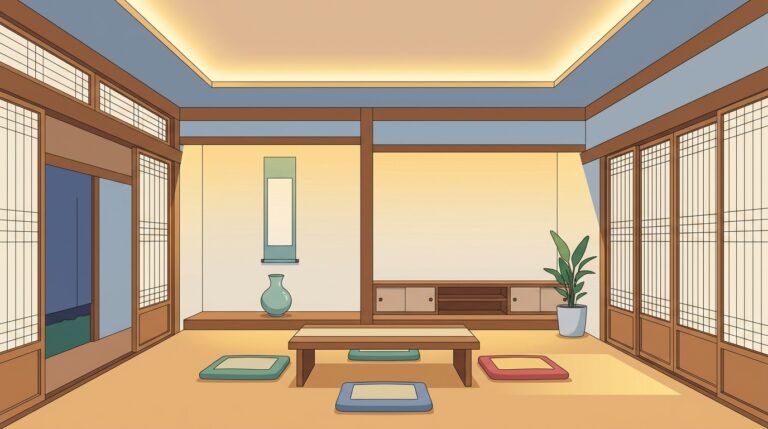
Have you ever walked into a brand-new Korean apartment or officetel at night, flipped the wall switch, and felt immediately blinded by a stark, icy, hospital-grade white ceiling glare? For decades in Korea, the default was ultra-bright 6500K fluorescent lighting (주광색), celebrated as a symbol of industriousness, hyper-efficiency, and spotless modernism. But step into any architectural showroom in Hannam-dong, a concept cafe in Seongsu-dong, or the set of an intimate K-drama romance, and you encounter an entirely different world: layered ambient shadows, recessed ceiling coves, and soothing 2700K warm tones (전구색) curated to calm the restless mind.
As a C2-level Korean learner, expressing physical discomfort or aesthetic appreciation requires more than simply saying “불이 너무 밝아요” (The light is too bright). You are now entering the realm of nuanced architectural discourse, spatial psychology, and sensory critique. Whether you are consulting with an interior designer, discussing lifestyle trends with Korean friends, or articulating the exact emotional ambiance of your living space, this guide offers native, high-register expressions grounded in real-world K-interior culture.
Phase 2: Core Expressions (Deep Dive 3-Set)
1. 공간의 조도를 낮추고 온기를 불어넣다 (Gonggan-ui jodoleul natchugo on-gireul bureoneota)
- Pronunciation: [공간의 조도를 낟추고 온기를 불어너타] (Sound analogy: Imagine saying ‘Gong-gahn-ui jo-do-reul naht-chu-go on-gi-reul bu-reo-neo-tah’ with an elegant, soothing flow)
- Meaning: Literal: “To lower the space’s illuminance and breathe warmth into it.” / Nuance: Deliberately dialing down harsh direct lighting to cultivate a cozier, emotionally restorative atmosphere.
- K-Culture Moment: Frequently heard on lifestyle YouTube channels like 오늘의집 (Ohouse) room tours or architectural makeover documentaries when transforming a sterile studio into a sanctuary.
- Editor’s Insight: 조도 (illuminance/lux) is an elevated technical term favored by design-conscious Koreans over the colloquial 밝기 (brightness). Pairing it with 온기를 불어넣다 creates an exquisite poetic and aesthetic balance.
- Situation Spectrum: Casual ⚠️ | Semi-formal ✅ | Formal ✅
- 🤔 Think About It: In your native culture, do you articulate lighting changes mathematically (lumens/kelvins) or emotionally (warmth/mood)? How does combining technical precision with emotive verbs alter the listener’s perception of your taste?
2. 백색소음처럼 공간에 스며드는 은은한 주백색 (Baeksaeksoeumcheoreom gonggan-e seomyedeoneun euneunhan jubaeksaek)
- Pronunciation: [백색소음처럼 공간에 스며드는 은은한 주백색] (Sound analogy: ‘Baek-saek-so-eum-cheo-reom gong-gan-e seu-myeo-deu-neun eun-eun-han ju-baek-saek’)
- Meaning: Literal: “Subtle neutral white that permeates the space like white noise.” / Nuance: Perfectly balanced 4000K natural white lighting that enhances focus without inducing visual strain or emotional coldness.
- K-Culture Moment: Used by creative directors and interior architects in Seoul coworking hubs (such as FastFive or Hyundai Card Design Library) when explaining optimal productivity lighting.
- Editor’s Insight: 주백색 (4000K Neutral White) is the sweet spot in modern Korean interior trends—neither too yellow (전구색) nor too clinical (주광색). Describing it as 은은하다 (delicate/subtle) reflects a refined aesthetic sensibility.
- Situation Spectrum: Casual ⚠️ | Semi-formal ✅ | Formal ✅
- 🤔 Think About It: Why has the Korean language developed such delicate descriptive adjectives like 은은하다, 자욱하다, and 아늑하다 to describe atmospheric diffusion?
3. 시각적 피로도를 덜어주고 심리적 안정감을 도모하다 (Sigakjeok pirodoreul deoreojugo simnijeok anjeonggam-eul domohada)
- Pronunciation: [시각쩍 피로도를 더러주고 심니적 안정감을 도모하다] (Sound analogy: ‘Si-gak-jeok pi-ro-do-reul deo-reo-ju-go sim-ni-jeok an-jeong-gam-eul do-mo-ha-da’)
- Meaning: Literal: “To alleviate visual fatigue and foster psychological stability.” / Nuance: An articulate, professional rationale explaining how indirect, low-color-temperature lighting facilitates mental unwinding.
- K-Culture Moment: Encountered in academic essays, high-end real estate brochures, and wellness interior design consultations in Gangnam.
- Editor’s Insight: Using Sino-Korean verbs like 덜어주다 (relieve/lessen) and 도모하다 (foster/seek to achieve) instantly positions your Korean at the professional C2 level.
- Situation Spectrum: Casual 🚫 | Semi-formal ✅ | Formal ✅
- 🤔 Think About It: How does utilizing formal Sino-Korean roots (심리, 안정감, 도모) frame lighting not merely as home decor, but as a deliberate mental health intervention?
Phase 3: Textbook Korean vs. Real Korean
Situation 1: Critiquing an overly harsh fluorescent room light
- 📖 Textbook Korean: 이 전등은 너무 밝아서 눈이 아픕니다. 다른 것으로 바꿉시다.
(I jeondeung-eun neomu balk-aseo nun-i apeumnida. Dareun geos-euro bakkupsida. / This lamp is too bright so my eyes hurt. Let’s change it to another.) - 🗣️ Real Native Korean (C2): 형광등 특유의 쨍한 주광색 때문에 공간이 지나치게 삭막하고 눈이 쉬질 못하네요. 간접 조명으로 무드를 한 톤 눌러주는 게 좋겠어요.
(Hyeonggwangdeung teug-yu-ui jjaenghan jugwangsaek ttaemune gonggan-i jinachige sangmakhago nun-i swijil mothaneyo. Ganjeop jomyeong-euro mudeu-reul han ton nulleojuneun ge jotgess-eoyo. / The glaring daylight tone typical of fluorescent lights makes the space feel exceedingly sterile and keeps the eyes on edge. It would be better to tone down the ambiance with indirect lighting.) - 💡 Why it differs: Advanced native speakers employ sensory ideophones like 쨍하다 (piercingly glaring) and design idioms like 무드를 한 톤 누르다 (subdue the mood by a tone) to deliver nuanced, polite, yet expert spatial critiques.
Situation 2: Explaining bedtime circadian lighting preferences
- 📖 Textbook Korean: 밤에는 불을 끄고 작은 램프를 켜는 것이 좋습니다. 잠이 잘 옵니다.
(Bam-eneun bul-eul kkeugo jageun raempeu-reul kyeoneun geos-i jotseumnida. Jam-i jal omnida. / At night, it is good to turn off the light and turn on a small lamp. Sleep comes well.) - 🗣️ Real Native Korean (C2): 취침 전에는 색온도를 2700K 내외의 전구색으로 세팅해야 멜라토닌 분비가 원활해지고 생체 리듬이 안정화돼요.
(Cwichim jeon-eneun saeg-ondo-reul icheonchilbaek-K naeoe-ui jeongbusaek-euro setinghaeya mellatonin bunbi-ga wonhwalhaejigo saengche rideum-i anjeonghwadwaeyo. / Prior to sleep, configuring the color temperature to around 2700K warm incandescent light facilitates melatonin secretion and stabilizes our circadian rhythm.) - 💡 Why it differs: Educated urban Koreans effortlessly weave scientific nomenclature (색온도, 원활해지다, 생체 리듬) into everyday lifestyle dialogues, showcasing high cultural literacy.
Phase 4: K-Culture Deep Dive & Non-Verbal Nuances
4-1. 눈치 (Nunchi) & Spatial Mannerisms
In traditional Korean living environments, shared ceiling lighting was standard. However, in contemporary shared offices, cafes, and modern homes, manipulating lighting requires acute social sensitivity (Nunchi). Before turning off an overhead light or turning on a warm ambient stand (스탠드 조명), observe the room’s prevailing task mode. When suggesting lighting adjustments, avoid abrupt commands. Instead, use softening modals such as “혹시 조도를 살짝 낮춰도 괜찮으실까요?” (Would it be alright if we softened the lighting level slightly?). Accompany this request with a slight head tilt and an open-palmed gesture toward the switch or dimmer dial.
4-2. Cultural Shift: From Hyper-Productivity to ‘Healing’ (힐링)
For decades during Korea’s rapid economic development, 6500K 주광색 was synonymous with diligent study, late-night cramming, and clinical cleanliness. In contrast, modern Korea has embraced the 힐링 (healing) and 공간 미학 (spatial aesthetics) revolution. Inspired by traditional Hanok 차경 (borrowing views) and natural diffused paper screen (창호지) lighting, younger generations prioritize 조명 맛집 (spaces renowned for atmospheric lighting). Lighting has transformed from a mere functional utility into an essential instrument for psychological recuperation after grueling workdays.
Phase 5: Real-Life Roleplay Scenario
Setting: A boutique interior design studio in Hannam-dong, Seoul.
Characters:
* 민서 실장님 (Designer Min-seo): A meticulous architectural lighting consultant.
* 학습자 (You): An aesthetic-minded client remodeling a residential workspace lounge.
Dialogue:
- 민서 실장님: 고객님, 서재 겸 라운지 공간은 주광색 메인등 대신 3단계 조도 조절이 가능한 간접 매립등을 제안해 드리고 싶은데, 어떠신가요?
(Gogaeknim, seojae gyeom raunji gonggan-eun jugwangsaek mein-deung daesin samdan-gye jodo jojeol-i ganeunghan ganjeop maeripdeung-eul jeanhae deurigo sipeunde, eotteosingayo?)
🎭 (태블릿 도면을 가리키며 부드러운 미소로 의견을 묻는다 / Pointing at tablet blueprints with a gentle smile to ask your opinion)
“Client, for your study-lounge area, rather than a daylight main ceiling light, I’d like to propose recessed indirect cove lights with 3-step dimming. What are your thoughts?” -
학습자: 탁월한 제안이세요. 재택근무를 할 때 주광색 형광등 아래 오래 머물다 보니 눈의 피로도 심하고 심리적으로 각성 상태가 지속되더라고요.
(Tagwolhan jean-iseyo. Jaetaekgeunmu-reul hal ttae jugwangsaek hyeonggwangdeung arae orae meomulda boni nun-ui pirodo simhago simnijeog-euro gakseong sangtae-ga jisokdoedeoragoyo.)
🎭 (고개를 끄덕이며 진지하게 공감을 표한다 / Nodding seriously while expressing mutual agreement)
“That’s an outstanding proposal. While working from home under daylight fluorescent lights for long hours, eye fatigue was severe and I found myself in a state of perpetual psychological hyper-arousal.” -
민서 실장님: 맞습니다. 색온도가 6000K를 넘어가면 업무 효율은 일시적으로 오를지 몰라도, 휴식 모드로 전환할 때 뇌가 쉽게 이완되지 않거든요.
(Matseumnida. Saeg-ondoga yukcheon-K-reul neomeogamyeon eommu hyoyur-eun ilsijeog-euro oreulji mollado, hyusik modeu-ro jeonhwanhal ttae noe-ga swipge iwandweji ankeodeunyo.)
🎭 (스마트 조명 샘플러를 직접 켜서 4000K 주백색을 시연해 보이며 / Turning on the smart light sampler to demonstrate 4000K neutral white)
“Precisely. When color temperature exceeds 6000K, work efficiency might temporarily spike, but when switching to rest mode, the brain simply cannot unwind easily.” -
학습자: 그렇다면 주간 집중 업무용으로는 4000K 주백색을 적용하고, 일몰 후에는 2700K 전구색 라인 조명으로 연출하는 씬(Scene) 세팅이 가능할까요?
(Geureotamyeon jugan jipjung eommuyong-euneun sabeakbaek-K jubaeksaek-eul jeok-yonghago, ilmol hu-eneun icheonchilbaek-K jeon-gusaek rain jomyeong-euro yeonculhaneun ssin seting-i ganeunghalkkayo?)
🎭 (손가락으로 공간의 코너를 가리키며 구체적인 무드를 상상하듯 묻는다 / Pointing at the corners of the space while imagining the specific ambiance)
“In that case, would it be possible to configure scenes using 4000K neutral white for daytime deep work, and transitioning to 2700K warm incandescent line lighting post-sunset?” -
민서 실장님: 완벽한 구상이십니다! 조도의 대비를 활용한 서카디언 리듬(Circadian Rhythm) 맞춤형 스마트 디밍 시스템을 적용하면 되겠네요.
(Wanbyeokhan gusang-isimnida! Jodo-ui daebi-reul hwaryonghan seokadieon rideum matchumhyeong seumateu diming siseutem-eul jeok-yonghamyeon doegetnaeyo.)
🎭 (만족스러운 표정으로 도면 패널에 체크 표시를 한다 / Checking off the blueprint panel with a satisfied expression)
“An impeccable concept! We can integrate a circadian rhythm smart dimming system that leverages illuminance contrasts.” -
학습자: 공간의 기능에 따라 색온도를 유연하게 변주할 수 있다면, 업무와 휴식의 경계가 한결 매끄러워질 것 같습니다.
(Gonggan-ui gineung-e ttara saeg-ondoreul yuyeonhage byeonjuhal su itdamyeon, eommuwa hyusik-ui gyeong-gye-ga han-gyeol maekkeureowojil geot gatseumnida.)
🎭 (편안한 미소를 지으며 기대감을 나타낸다 / Smiling comfortably with clear anticipation)
“If we can fluidly vary the color temperature according to the function of the space, the boundary between labor and leisure will feel significantly smoother.” -
민서 실장님: 게다가 벽면을 타고 흐르는 코브 조명(Cove Lighting)을 더하면 시각적 눈부심(Glare) 현상도 원천적으로 차단할 수 있습니다.
(Gedaga byeokmyeon-eul tago heureuneun kobeu jomyeong-eul deohamyeon sigakjeok nunbusim hyeonsang-do woncheonjeog-euro chadanhal su itseumnida.)
🎭 (벽면 렌더링 3D 이미지를 화면에 띄우며 / Bringing up 3D wall renderings onto the monitor)
“Furthermore, adding cove lighting that grazes down the walls will fundamentally eliminate visual glare.” -
학습자: 훌륭합니다. 심리적 안정감과 조형미를 동시에 잡을 수 있는 최적의 레이아웃이네요. 이 구성으로 진행해 주세요.
(Hullyunghamnida. Simnijeok anjeonggamgwa johyeongmi-reul dongsie jabeul su inneun choejeok-ui reiau-sin-neyo. I guseong-euro jin-haenghae juseyo.)
🎭 (고개를 끄덕이며 확신에 찬 어조로 계약 서류에 사인을 검토한다 / Nodding and reviewing contract paperwork with a confident tone)
“Brilliant. It is an optimal layout capturing both psychological serenity and sculptural beauty simultaneously. Let’s proceed with this configuration.”
🔀 Interactive Branching Point
Suppose Designer Min-seo asks if you also want a high-power cool daylight pendant directly over the dining table. How do you respond?
- Option A: “식사 공간만큼은 정서적 교감과 편안함이 우선이니, 채도가 부드러운 3000K 이하의 웜톤 펜던트로 아늑함을 살려주세요.” (Best: Demonstrates mastery of psychological spatial dining concepts in C2 Korean).
- Option B: “식탁이 너무 어두우면 밥 먹기 힘드니까 그냥 제일 밝은 하얀색 형광등으로 달아주세요.” (Bad: Regresses to rudimentary vocabulary and ignores modern interior design harmony).
- Option C: “조명은 상관없으니 알아서 싼 걸로 달아주세요.” (Risk: Dismissive, ignores the collaborative consulting culture, and yields undesirable living aesthetics).
Phase 6: 10-Second Emotional Shadowing Drill
Practice matching the cadence, breath, and emotional nuance of native architectural critiques.
- [✨ 차분하고 전문적인 어조로 / Calm and professional tone]
공간의 색온도를 / 전구색으로 전환함으로써 / 시각적 자극을 최소화하고 / 뇌에 휴식 신호를 / 보낼 수 있습니다.
(Gonggan-ui saeg-ondoreul / jeon-gusaeg-euro jeonhwanhamosseor / sigakjeok jageug-eul choesohwahago / noe-e hyusik sinho-reul / bonael su itseumnida.) -
[🛋️ 감각적이고 아늑함에 젖어들며 / Sensual, sinking into cozy comfort]
차가운 주광색을 덜어내고 / 은은한 간접 조명을 들이니 / 공간 전체에 / 따스한 온기가 / 깃드네요.
(Chagaun jugwangsaeg-eul deoreonaego / euneunhan ganjeop jomyeong-eul deurini / gonggan jeonche-e / ttaseuhan ongi-ga / gitdeunaeyo.) -
[🎯 명확하고 설득력 있게 / Clear and persuasive register]
작업 영역의 주백색과 / 휴식 영역의 전구색을 분리하여 / 공간의 기능적 독립성을 / 명확히 확립했습니다.
(Jageop yeong-yeog-ui jubaeksaekgwa / hyusik yeong-yeog-ui jeon-gusaeg-eul bullihayeo / gonggan-ui gineungjeok dongnipseong-eul / myeonghwakhi hwakrip-haetseumnida.)
Phase 7: K-Culture Mini Dictionary
-
주광색 (晝光色, Jugwangsaek)
- Translation: Daylight White (~6500K).
- Context: Despite its literal Chinese character name meaning “daylight color,” it refers to bluish-cool white light. Widely used in traditional Korean offices and classrooms for maximum alertness, but avoided in contemporary relaxation lounges.
- 전구색 (電球色, Jeon-gusaek)
- Translation: Warm Incandescent White (~2700K–3000K).
- Context: A cozy, yellowish-amber light. The definitive standard for hip 감성 카페 (aesthetic cafes), wine bars in Euljiro, and boutique bedroom setups across Korea.
- 주백색 (晝白色, Jubaeksaek)
- Translation: Natural Neutral White (~4000K–4500K).
- Context: An understated, ivory-toned neutral white. The most sought-after color temperature in modern Korean apartment renovations for kitchens, dressing rooms, and home offices.
- 간접 조명 / 코브 조명 (Ganjeop Jomyeong / Kobeu Jomyeong)
- Translation: Indirect Cove / Concealed Architectural Lighting.
- Context: Concealing the light source behind dropped ceilings or wall panels to allow only soft, reflected radiance to illuminate the room. A core status symbol of refined Korean interior design.
Phase 8: Traveler & Resident Survival Kit
Survival Phrases TOP 3
- “혹시 이 조명 디밍(조도 조절) 가능한가요?”
(Hoksi i jomyeong diming [jodo jojeol] ganeunghangayo? / Is this light dimmable by any chance?)- Pro Tip: In high-end Hanok boutique hotels in Bukchon or Jeonju, lighting is often subtly controlled via smart panels near the bedside.
- “주광색 전구 대신 따뜻한 전구색 전구로 교체할 수 있을까요?”
(Jugwangsaek jeon-gu daesin ttatteut-han jeon-gusaek jeon-guro gyochaehal su isseulkkayo? / Could we replace the cool daylight bulb with a warm incandescent bulb?)- Pro Tip: Use this when requesting room adjustments in extended-stay residences or Airbnbs.
- “공간 분위기가 너무 은은해서 마음이 한결 편안해지네요.”
(Gonggan bunwigiga neomu euneunhaeseo ma-eum-i han-gyeol pyeon-anhaejineyo. / The ambiance of this space is so soft and mellow that my mind feels deeply at ease.)- Pro Tip: The ultimate complimentary remark to share with Korean boutique cafe owners or hosts.
Editor’s Travel & Lifestyle Note
To explore cutting-edge lighting design in Seoul, download the 네이버 지도 앱 다운로드 and search for curated design showrooms around Nonhyeon-dong Furniture Street (논현동 가구거리) or Seongsu-dong concept stores. If you are decorating your own space in Korea, browse the 오늘의집 인테리어 플랫폼 탐색하기 to purchase wireless magnetic rechargeable ambient bars (무선 무드등) that let you toggle between 주광색, 주백색, and 전구색 with a single tap.
Phase 9: A Step Deeper (Reflective Thought Essay)
Lighting in South Korea is a mirror reflecting rapid sociological transformation. In the late 20th century, the relentless hum of high-Kelvin fluorescent tubes symbolized economic growth, unyielding stamina, and industrial precision. To turn down the lights was perceived as indolence. However, contemporary Korean society—having matured into an economic and cultural powerhouse—is experiencing a collective yearning for emotional sanctuary. The modern obsession with 색온도 (color temperature) and 간접등 (indirect luminescence) is not merely a transient decor fad; it represents a psychological reclamation of private peace against a high-pressure, hyper-connected world.
💬 Your Turn: In your home country, what color temperature dominates residential spaces, and what socio-cultural values does that lighting represent? Share your reflections in Korean below!
Phase 10: FAQ & Common Mistakes
Q: Why is 6500K called 주광색 (Daylight) when it looks cold and blue?
A: In scientific optical terminology, 6500K simulates peak direct midday sunlight on an overcast day. However, psychologically, human eyes perceive 6500K indoors as clinical and icy compared to the warm, comforting sunrise or sunset glow (~2700K–3000K).
Q: What is the difference between 밝기 (Brightness) and 조도 (Illuminance)?
A: 밝기 is a subjective, colloquial descriptor for how bright something feels. 조도 (Lux) is the objective, formal architectural metric of light falling upon a specific surface area. Using 조도 demonstrates advanced professional fluency.
Q: How do I tell an officetel landlord I want to install indirect lights without causing damage?
A: You can say: “벽에 타공(구멍)을 내지 않는 무타공 간접 라인 조명이나 스탠드를 활용하여 원상복구에 문제없도록 세팅하겠습니다.” (I will use no-drill indirect strip lights or floor stands so that restoring the room to its original state won’t be an issue).
🚨 Common Mistakes Warning Board
- Mistake: Calling yellow/warm light 노란 불 (yellow light) in professional or semi-formal design meetings.
- Correct Action: Use the sophisticated term 전구색 (Jeon-gusaek) or 웜톤 (Warm Tone).
- Mistake: Confusing 주광색 (Cool Daylight 6500K) with 주백색 (Neutral White 4000K) when ordering bulbs online.
- Correct Action: Double-check the middle character! 광 (Light) = Blue-White; 백 (White) = Natural Ivory-White.
- Mistake: Saying “불을 어둡게 만드세요” (Make the light dark) which sounds blunt and grammatically awkward.
- Correct Action: Say “조도를 살짝 낮춰주세요” (Please lower the illuminance slightly) or “조명을 은은하게 조절해 주세요” (Please adjust the lighting softly).
Phase 11: Action Missions & Cultural Challenge
- 🥉 Bronze Mission (Solo Practice): Look around your current room and record a 30-second voice memo in Korean describing the current 색온도 (주광색/주백색/전구색) and how it affects your psychological focus or fatigue.
- 🥈 Silver Mission (Social Engagement): Post a photo of your desk or bedside lighting setup on Instagram or Threads with the Korean caption: “오늘 밤은 전구색 간접 조명으로 심리적 안정감 충전 중 🛋️✨ #인테리어 #공간심리 #조명디자인”.
- 🥇 Gold Mission (Real-world Execution): Visit a local cafe or lighting store, ask the staff about their lighting temperature using “여기는 주백색과 전구색을 조화롭게 써서 분위기가 정말 아늑하네요”, and observe their delighted reaction!
- 🎮 K-Culture Mission: Watch an episode of a modern K-drama (e.g., 눈물의 여왕 or 나의 해방일지) and analyze the shift in lighting temperature between corporate office scenes (harsh 주광색) and intimate residential scenes (soft 전구색).
Phase 12: Interactive Quiz Challenge
1. Situation Judgment Quiz
You are designing a peaceful bedroom sanctuary meant for deep relaxation and pre-sleep meditation. Which lighting specification is most scientifically and linguistically appropriate to request?
* A) 6500K 주광색 직부등
* B) 2700K 전구색 간접 조명
* C) 8000K 고조도 형광등
2. Fill-in-the-Blank Quiz
형광등의 쨍한 불빛을 피하고 공간의 조도를 낮추면, 시각적 피로도를 덜어주고 심리적 ________을(를) 도모할 수 있습니다.
* (Choose from: 안정감 / 위기감 / 긴장감)
3. True or False Cultural Quiz
- (T/F) In modern Korean terminology, 주백색(Jubaeksaek) refers to 6500K cool blue-white light.
👉 정답 및 해설 보기 (Click to Reveal Answers)
1. Situation Judgment: B) 2700K 전구색 간접 조명
Explanation: 2700K warm incandescent indirect lighting minimizes melatonin suppression and induces psychological relaxation.
2. Fill-in-the-Blank: 안정감 (Psychological Serenity/Stability)
Full sentence: 형광등의 쨍한 불빛을 피하고 공간의 조도를 낮추면, 시각적 피로도를 덜어주고 심리적 안정감을 도모할 수 있습니다.
3. True or False: False
Explanation: 주광색(Daylight) is 6500K cool white, whereas 주백색(Neutral White) is the gentle 4000K natural ivory tone.







