

Phase 1: Empathy & Storytelling Opening
안녕하세요! (Hello!) I’m your Daily Hangul editor.
Picture this: You just landed in Seoul and headed straight to the National Museum of Korea in Yongsan or the MMCA (National Museum of Modern and Contemporary Art) in Samcheong-dong. Your backpack is packed with a water bottle, camera, umbrella, and souvenirs. As you step past the ticket counter, a friendly museum docent gently points at your large bag. In Korea, large bags and bulky backpacks are usually not permitted inside exhibition galleries to protect delicate artworks and artifacts.
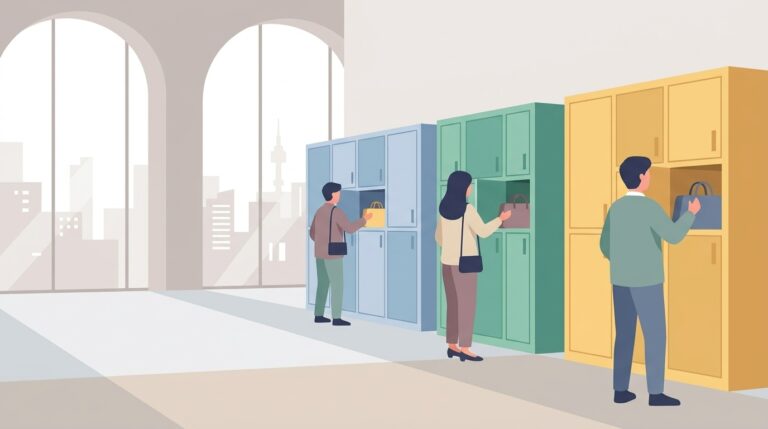
Your shoulders are aching, your hands are full, and you spot a line of sleek digital lockers down the hall. But how do you ask the staff for help without panicking? Don’t worry! Storing your bags at Korean cultural venues is fast, safe, and often completely free. Based on real questions from our community of over 5,000 learners, this guide will give you the exact A2-level Korean phrases to drop off your luggage effortlessly so you can enjoy your gallery stroll with free hands!
Phase 2: Core 3 Expressions Deep Dive
1. 짐 맡길 수 있어요? (Jim matgil su isseoyo?)
- Pronunciation: Jim mat-geel soo ee-ssuh-yo? (Sounds like “Jim” + “mud” with a crisp “t” + “geel” + “soo” + “ee-ssuh-yo”)
- Meaning: Literal: “Can [I] entrust luggage?” | Actual Nuance: “Can I leave my bags / luggage here?”
- K-Culture Moment: In the travel variety show Youth Over Flowers, the cast frequently walks into museum information booths after arriving in a new city and asks this exact polite question to drop their heavy gear.
- Editor’s Insight: The verb 맡기다 (matgida) means “to entrust” or “to leave in care of someone.” Adding ~ㄹ 수 있어요? (-l su isseoyo?) turns it into the most natural, polite request for beginners.
- Situation Spectrum:
- Casual (Friends): 짐 맡길 수 있어? (짐 맡길 수 있어?) ⚠️
- Semi-formal (Museum Staff / Info Desk): 짐 맡길 수 있어요? (짐 맡길 수 있어요?) ✅
- Formal (Official Announcements): 짐을 보관해 드립니다 (Jimeul bogwanhae deurimnida) 🚫
- 🤔 Think About It: In English, we say “Can I store my bag?”, focusing on the object and the self. In Korean, 맡기다 (matgida) emphasizes entrusting an item to another person’s care. How does this reflect the relational nature of Korean speech?
2. 보관함 어디에 있어요? (Bogwanham eodie isseoyo?)
- Pronunciation: Boh-gwan-hahm uh-dee-eh ee-ssuh-yo? (Rhymes with “Boh” + “gwan” + “hum” + “uh-dee-eh” + “ee-ssuh-yo”)
- Meaning: Literal: “Storage box, where is it located?” | Actual Nuance: “Where are the lockers / storage boxes?”
- K-Culture Moment: Seen in countless K-dramas where characters rush into a subway station or museum lobby looking around for the locker bank to pick up an item or hide a surprise gift.
- Editor’s Insight: 보관 (bogwan) means “storage” and 함 (ham) means “box/compartment.” You can also simply ask “락커 어디에 있어요?” (Rakkeo eodie isseoyo? / Where is the locker?), which works perfectly!
- Situation Spectrum:
- Casual: 보관함 어디 있어? (Bogwanham eodi isseo?) ⚠️
- Semi-formal: 보관함 어디에 있어요? (Bogwanham eodie isseoyo?) ✅
- Formal: 물품보관함 위치를 안내해 드리겠습니다 (Mulpumbogwanham wichireul annaehae deurigessseumnida) 🚫
- 🤔 Think About It: Many Korean nouns combine Sino-Korean roots (보관 + 함). Notice how easy it is to pinpoint locations just by attaching 어디에 있어요? (eodie isseoyo?).
3. 무료예요? (Muryo-yeyo?)
- Pronunciation: Moo-ryoh-yeh-yo? (“Moo” like a cow + “ryoh” + “yeh-yo”)
- Meaning: Literal: “Is it free of charge?” | Actual Nuance: “Is this free to use?”
- K-Culture Moment: Travel vloggers in Seoul always light up with joy when they discover that major national museums and palaces offer electronic lockers at zero cost.
- Editor’s Insight: In public cultural spaces across Korea (like the National Museum of Modern and Contemporary Art or Seoul Museum of Craft Art), most lockers are completely free (무료, muryo), though some require a returnable 100-won coin or a phone passcode.
- Situation Spectrum:
- Casual: 이거 공짜야? (Igeo gongjjaya?) ⚠️
- Semi-formal: 무료예요? (Muryo-yeyo?) ✅
- Formal: 무료로 이용 가능하십니까? (Muryoro iyong ganeunghasimnikka?) 🚫
- 🤔 Think About It: 공짜 (gongjja) is pure Korean and very casual (used with close friends), while 무료 (muryo) is polite and respectful to staff. Choosing the right register builds instant rapport!
Phase 3: Textbook Korean vs Real Korean
Situation 1: Asking staff to hold a large suitcase behind the desk
- 📖 Textbook Korean: 제 여행 가방을 여기에 보관해 주실 수 있습니까? (Je yeohaeng gabangeul yeogie bogwanhae jusil su itsseumnikka? – Could you please deposit my travel bag here?)
- 🗣️ Real Korean: 큰 가방인데, 여기 잠깐 맡겨도 돼요? (Keun gabang-inde, yeogi jamkkan matgyeodo dwaeyo? – It’s a big bag, can I leave it here for a moment?)
- 💡 Why is it different?: Textbook Korean often relies on stiff Honorific Inquirer endings (-습니까). Real native speakers use the friendly ~도 돼요? (-do dwaeyo? / “Is it okay if I…?”) pattern with 잠깐 (jamkkan / “for a bit”), which softens the request instantly.
Situation 2: Asking how to use an electronic screen locker
- 📖 Textbook Korean: 보관함의 작동 방법을 설명해 주시겠습니까? (Bogwanham-ui jakdong bangbeobeul seolmyeonghae jusigetsseumnikka? – Would you please explain the operation method of the locker?)
- 🗣️ Real Korean: 이거 어떻게 써요? (Igeo eotteoke sseoyo? – How do I use this?)
- 💡 Why is it different?: In real everyday life, short and functional language wins. 이거 어떻게 써요? is the universal A2 phrase for asking how to operate any kiosk, locker, or digital terminal in Korea.
Phase 4: K-Culture Deep Dive & Non-verbal Manners
4-1. 눈치 (Nunchi) & Polite Physical Etiquette
- Two Hands for Receipts & Keys: If the cloakroom staff hands you an acrylic locker key or a printed QR barcode receipt, always receive it with both hands (or touch your left hand to your right forearm). This tiny gesture shows immense respect.
- Backpack Etiquette (백팩 에티켓): Even if your bag is within size limits, gallery staff will gently motion for you to wear your backpack on your chest (앞으로 메기, apeuro megi) or carry it by hand to prevent bumping into other visitors or historic glass vitrines.
4-2. Cultural Code: The Digital Smart Locker Culture
Korea is one of the most automated and high-trust societies in the world. Most museum lockers in Seoul (such as MMCA Seoul or Dongdaemun Design Plaza) use touchscreen systems:
1. Choose 보관 (Store) or 찾기 (Retrieve) on the screen.
2. Enter your 4-to-6 digit PIN (비밀번호, bimilbeonho) twice.
3. The door pops open automatically! No coins needed in modern facilities, but always snap a smartphone photo of your locker number (보관함 번호) just in case.
Phase 5: Real-Life Roleplay Scenario
Setting: The bright information lobby of the National Museum of Korea in Ichon, Seoul.
Characters:
* You (A museum lover carrying a large tote bag and umbrella)
* Min-ji (A warm, helpful museum receptionist wearing a navy lanyard)
- You: 실례합니다, 짐 맡길 수 있어요? (Sillyehamnida, jim matgil su isseoyo?)
- 🎭 Politely approaching the info desk with a light head nod.
- (Excuse me, can I leave my bags?)
- Min-ji: 네, 저쪽에 물품보관함이 있어요. (Ne, jeojjoge mulpumbogwanhami isseoyo.)
- 🎭 Pointing warmly toward the hallway to the left of the exhibition entrance.
- (Yes, there are lockers right over that way.)
- You: 아, 저기요? 무료예요? (A, jeogiyo? Muryo-yeyo?)
- 🎭 Checking the direction and smiling with curiosity.
- (Ah, over there? Is it free?)
- Min-ji: 네, 무료로 이용하실 수 있어요. (Ne, muryoro iyonghasil su isseoyo.)
- 🎭 Nodding reassuringly with a pleasant smile.
- (Yes, you can use them free of charge.)
- You: 큰 가방도 들어가요? (Keun gabangdo deureogayo?)
- 🎭 Indicating the size of your bag with your hands.
- (Does a big bag fit in there too?)
- Min-ji: 네, 아래쪽에 큰 칸이 있어요. (Ne, araejjoge keun kani isseoyo.)
- 🎭 Making a wide gesture with hands toward the lower shelves.
- (Yes, there are large compartments on the lower section.)
- You: 비밀번호로 잠그는 거예요? (Bimilbeonhoro jamgeuneun geoyeyo?)
- 🎭 Pretending to tap digits with fingers.
- (Do I lock it with a passcode?)
- Min-ji: 네! 화면에서 ‘보관’ 누르고 번호 누르시면 돼요. (Ne! Hwamyeon-eseo ‘bogwan’ nureugo beonho nureusimyeon dwaeyo.)
- 🎭 Demonstrating a tapping motion in the air.
- (Yes! Just press ‘Store’ on the screen and enter your code.)
🔀 Interactive Branch: What do you say before heading to the locker?
- Choice A: 감사합니다! 잘 보고 올게요. (Gamsahamnida! Jal bogo olgeyo. / Thank you! I’ll enjoy the exhibition.)
- 🌟 Best Choice! Extremely natural, warm, and shows great cultural familiarity. The staff will smile ear to ear.
- Choice B: 안녕! (Annyeong! / Bye!)
- ❌ Bad Choice! Annyeong is casual talk (반말) for close friends and peers. Using it with staff sounds disrespectful.
- Choice C: 돈 어디에 내요? (Don eodie naeyo? / Where do I pay money?)
- ⚠️ Risk Choice! The staff already mentioned it was free (muryo). Asking about money again might cause confusion.
Phase 6: 10-Second Emotion Shadowing Drill
Read these sentences aloud matching the emotional tone and natural pause marks (/):
[😊 Polite & curious]
실례합니다, / 짐 맡길 수 있어요? (Sillyehamnida, / jim matgil su isseoyo?)[💡 Realizing & checking]
아, / 무료예요? / 정말 좋아요! (A, / muryo-yeyo? / Jeongmal joayo!)[🙏 Reassured & grateful]
감사합니다! / 가볍게 구경할게요. (Gamsahamnida! / Gabyeopge gugyeonghalgeyo. – Thank you! I will look around light-handed.)
Phase 7: K-Culture Mini Dictionary
- 물품보관소 / 보관함 (Mulpumbogwanso / Bogwanham): Cloakroom / Locker compartment. Found near the restrooms and ticket lobbies in virtually all Korean galleries, subway stops, and train terminals.
- 비밀번호 (Bimilbeonho): Password or PIN code. You will need a 4-to-6 digit code to lock and unlock modern digital storage boxes.
- 영수증 / 보관증 (Yeongsujeung / Bogwanjeung): Receipt / Claim voucher. Some staffed cloakrooms will hand you a small slip with a barcode. Keep it safe in your phone wallet!
- 우산꽂이 (Usankkoji): Umbrella stand. During rainy monsoon days, Korean museums require you to place wet long umbrellas in locked stands or vinyl sleeves (usan binil) at the entrance.
Phase 8: Traveler’s Survival Kit
Survival TOP 3 Phrases
- 비밀번호 잊어버렸어요. (Bimilbeonho ijeobeoryeosseoyo.)
Pronunciation: Bee-meel-buhn-ho ee-juh-buh-ryuh-ssuh-yo.
Pro Tip: “I forgot my passcode.” If you enter the wrong PIN 3 times, take this phrase straight to the security desk. - 몇 시까지 운영해요? (Myeot sikkaji unyeonghaeyo?)
Pronunciation: Myut shee-kkah-jee oon-young-hae-yo?
Pro Tip: “Until what time is it open/operational?” Lockers typically auto-lock when the museum closes (usually 18:00 on weekdays, 21:00 on culture Wednesdays). - 동전 필요해요? (Dongjeon pil-yohaeyo?)
Pronunciation: Dong-juhn peel-yoh-hae-yo?
Pro Tip: “Do I need a coin?” Traditional lockers use 100 KRW coins which are refunded upon unlocking.
Editor’s Travel Note
- Navigation Tip: Open your Naver Map app download and search for 물품보관소 (mulpumbogwanso) or T-Locker to see real-time available locker lockers inside metro stations directly connected to museums.
- Transit & T-Money: Keep at least one 100-won coin in your coin pouch when visiting regional historic sites in Gyeongju or Jeonju, as classic coin lockers are still popular there.
Phase 9: One Step Deeper (Reflection)
In South Korea, it is common to see people leave expensive laptops and bags unattended on cafe tables without fear of theft. This high level of social trust extends directly into public institutions, where free, self-service digital lockers operate seamlessly every day. Entrusting your belongings isn’t just about convenience; it reflects a communal expectation of mutual care and public order.
💬 Your Turn: Have you ever used a public locker in your home country or while traveling? Was it free or did you pay with coins? Tell us in the comments below!
Phase 10: FAQ & Avoiding Misunderstandings
Q: What if my oversized 28-inch suitcase doesn’t fit into the biggest locker box?
A: Head straight to the museum’s 안내 데스크 (annae deseukeu / Information Desk) and say: 큰 캐리어인데, 맡길 수 있어요? (Keun kaerieo-inde, matgil su isseoyo?). Most major national museums will happily store oversized luggage behind the counter for free!
Q: Can I store liquids, coffee cups, or snacks in the museum locker?
A: Dry snacks sealed in backpacks are totally fine. However, open takeout coffee cups or uncovered drinks are strictly forbidden inside both the locker areas and the museum halls. You will be asked to dispose of open cups at the lobby entrance.
Q: What happens if I forget my luggage after the museum closes?
A: Uncollected items are transferred to the security and lost & found office (유실물 센터, yusilmul senteo). You may have to wait until the next morning to retrieve it with your passport ID.
🚨 Common Mistakes Warning Board
- ❌ Mistake 1: Leaving without pressing the confirm button (
#orEnter) after entering your PIN.- 👉 Correct Action: Check that the locker LED turns RED and tug the handle to ensure it is locked.
- ❌ Mistake 2: Forgetting to memorize your locker number (Bogwanham beonho).
- 👉 Correct Action: Always take a quick photo of the locker box door with your smartphone.
- ❌ Mistake 3: Putting your exhibition ticket or gallery pass inside the locker with your coat.
- 👉 Correct Action: Keep your phone, admission ticket, and ID card in your pocket before shutting the door!
Phase 11: Action Missions
- 🥉 Bronze Mission (Solo Drill): Practice saying
짐 맡길 수 있어요?5 times in front of the mirror with a bright smile and a 15-degree head bow. - 🥈 Silver Mission (Social Share): Share your favorite Seoul museum on Instagram Stories and add the sticker caption:
짐 맡기고 관람 시작! (Luggage stored, ready to explore!). - 🥇 Gold Mission (Real Field Execution): Next time you visit a museum or subway station in Korea, find an information counter or locker kiosk and use
이거 어떻게 써요?without switching to English! - 🎮 K-Culture Mission: Watch an episode of a Korean travel show (like Battle Trip or Welcome, First Time in Korea?) and listen for the words 짐 (jim / luggage) and 보관함 (bogwanham / locker).
Phase 12: Interactive Quiz Challenge
1. Situation Judgment: You arrive at the Leeum Museum of Art with a bulky backpack. You want to ask the front desk if locker use is free of charge. Which phrase should you use?
* A) 얼마예요? (Eolmayeyo?)
* B) 무료예요? (Muryo-yeyo?)
* C) 안 돼요? (An dwaeyo?)
2. Fill-in-the-Blank: Complete the sentence to ask where the lockers are located:
“물품____ 어디에 있어요?”
* Hints: [ 보관함 / 비밀번호 / 영수증 ]
3. True or False: Modern touchscreen lockers in Seoul museums usually require your passport and a credit card deposit for every 30 minutes.
* [ True / False ]
👉 Click here for answers & explanations
- Answer: B) 무료예요?
Explanation: 무료예요? directly asks “Is it free?” in a polite, semi-formal way. Option A asks for the price, and Option C means “Is it not allowed?”. - Answer: 보관함 (Bogwanham)
Explanation: 물품보관함 means “luggage storage locker”. The full sentence is “물품보관함 어디에 있어요?”. - Answer: False
Explanation: Most national and municipal museum lockers in Korea are completely free self-service systems requiring only a simple PIN passcode set by yourself!







