

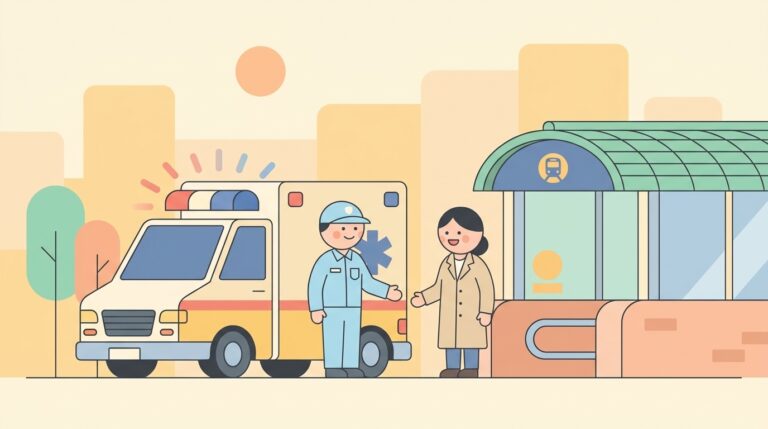
Stay Safe in Korea: How to Call 119 in an Emergency
Phase 1: Empathy (Story-Driven Opening)
안녕하세요! 매일한글 (Daily Hangul) editor here! Imagine this: you are walking through the vibrant alleys of Hongdae after enjoying delicious street food, or hiking up Bukhansan to catch the Seoul skyline, and suddenly someone trips, twists an ankle, or faints. Panic sets in, your heart beats fast, and you frantically pull out your phone. In Korea, do you dial 911? How do you say “Please help” without freezing up?
Many of our beginner learners tell us that their biggest fear while traveling or living in Korea isn’t ordering coffee—it’s dealing with a medical or fire emergency when language feels like an impossible barrier. Don’t worry! In Korea, emergency services are incredibly fast, helpful, and accessible. You do not need fluent Korean to save a life or get help; you only need a few powerful, life-saving core expressions. Today, we are breaking down the exact phrases you need to call 119 with confidence and clarity.
Phase 2: Core 3 Expressions Deep-Dive
1. 도와주세요! (Dowajuseyo!)
- Pronunciation: Do-wa-ju-se-yo (Think of saying “Door-watch-you-say-yo” quickly and clearly)
- Meaning: Literal: “Please give help!” | Actual Nuance: “Help me! / Please help!”
- K-Culture Moment: You hear this in almost every K-drama thriller when a hero rushes into a crowded subway station or hospital hallway looking for assistance.
- Editor’s Insight: This is the universal SOS phrase in Korean. It is polite yet urgent. Even if you forget everything else, shouting “도와주세요! (Dowajuseyo!)” will immediately turn heads and bring bystanders to your aid.
- Situation Spectrum: Casual: ⚠️ (Say 도와줘 (Dowajwo) to close friends) | Semi-formal: ✅ | Formal: ✅
- 🤔 Think About It: In English, “Help!” is a single syllable command, but in Korean, polite verb endings (-주세요) are naturally preserved even in urgent cries. Why do you think respect markers remain intact during emergencies in Korean culture?
2. 119 불러 주세요! (Il-il-gu bulleo juseyo!)
- Pronunciation: Il-il-gu bool-leo joo-seh-yo (Il sounds like “eel”, gu sounds like “goo”)
- Meaning: Literal: “Please call 1-1-9!” | Actual Nuance: “Please call an ambulance / fire truck!”
- K-Culture Moment: In medical dramas like Hospital Playlist or disaster movies, bystanders immediately yell this to the nearest shopkeeper or pedestrian.
- Editor’s Insight: In Korea, 119 handles both medical emergencies (ambulance) and fires. If you cannot speak Korean over the phone yourself, turning to any passerby and saying this sentence delegates the phone call to a local instantly.
- Situation Spectrum: Casual: ⚠️ | Semi-formal: ✅ | Formal: ✅
- 🤔 Think About It: In your home country, is the ambulance number different from the fire department? In Korea, 119 unifies both, simplifying your reaction time.
3. 다쳤어요 / 아파요 (Dachyeosseoyo / Apayo)
- Pronunciation: Da-chyeo-sseo-yo (Sounds like “Da-chuh-saw-yo”) / Ah-pa-yo
- Meaning: Literal: “Got hurt / In pain” | Actual Nuance: “I’m injured / It hurts”
- K-Culture Moment: When characters in reality travel shows get a scrape while camping, they point to their knee and say, “여기가 아파요 (Yeogiga apayo – It hurts here).”
- Editor’s Insight: Use 다쳤어요 (Dachyeosseoyo) for visible physical injuries (cuts, sprains, falls) and 아파요 (Apayo) to describe general pain, stomach cramps, or sudden chest distress.
- Situation Spectrum: Casual: ⚠️ (다쳤어 / 아파) | Semi-formal: ✅ | Formal: ✅
- 🤔 Think About It: Korean adjectives for feelings and sensations often function like verbs directly conjugated with politeness endings. Notice how short and direct 아파요 (Apayo) is!
Phase 3: Textbook Korean vs Real Korean
Situation 1: Asking someone to summon emergency services
- 📖 교과서 한국어 (Textbook): 구급차를 신속히 불러 주십시오. (Gugeupchareul sinsokhi bulleo jusipsio. – “Please promptly summon an ambulance.”)
- 🗣️ 진짜 한국어 (Real-Life): 119(일일구) 좀 불러 주세요! (Il-il-gu jom bulleo juseyo! – “Please call 119!”)
- 💡 왜 다를까?: Real emergencies require brevity. Koreans rarely say “summon an ambulance” in daily speech; they simply refer directly to the number 119 (일일구) with the softening particle 좀 (jom).
Situation 2: Stating your emergency condition
- 📖 교과서 한국어 (Textbook): 저는 신체적 부상을 입었습니다. (Jeoneun sinchejeok busangeul ibeotseumnida. – “I have sustained physical injuries.”)
- 🗣️ 진짜 한국어 (Real-Life): 사람이 다쳤어요! (Sarami dachyeosseoyo! – “Someone is hurt!”)
- 💡 왜 다를까?: Textbook phrases sound like an official police statement. In real life, clear subject-verb phrases like 사람이 다쳤어요 (Sarami dachyeosseoyo) convey the emergency instantly.
Phase 4: K-Culture Deep Dive & Non-Verbal Manners
4-1. 눈치 (Nunchi) & Emergency Body Language
When making an emergency call or asking for help on a Korean street:
* Point to specific visual landmarks: Street numbers, convenience store names (CU, GS25, 7-Eleven), or subway exit numbers are the gold standard for Korean emergency dispatchers.
* Designate one person: In psychology, the bystander effect is real. If you need help on a Korean street, make eye contact, point to one specific person, and say: “선생님, 119 불러 주세요! (Seonsaengnim, il-il-gu bulleo juseyo! – Sir/Ma’am, please call 119!).”
4-2. The 119 System & Tech Culture
Korea’s 119 dispatch system is world-renowned for its speed and integration. When you dial 119 from a smartphone with a SIM card in Korea, cell tower triangulation automatically identifies your approximate location. Furthermore, the 119 dispatch center supports real-time three-way interpretation services in over 20 languages. If you simply stay on the line and say “English, please,” the operator will connect a certified translator within seconds.
Phase 5: Real-Life Roleplay Scenario
Setting: You are near Exit 3 of Gangnam Station in Seoul. A friend has suddenly collapsed with severe dizziness. You dial 119.
- 119 Operator (민준): 119 상황실입니다. 어떤 일인가요? (Il-il-gu sanghwangsil-imnida. Eotteon iringayo? – “119 Emergency Center. What is the emergency?”)
- You: 🎭 [Calm but firm] 응급 환자가 있어요! (Eung-geup hwanjaga isseoyo! – “There is an emergency patient!”)
- 119 Operator (민준): 위치가 어디인가요? (Wichiga eodi-ingayo? – “Where is your location?”)
- You: 🎭 [Looking around at the exit sign] 강남역 3번 출구 앞이에요. (Gangnam-yeok sambeon chulgu api-eyo. – “In front of Gangnam Station Exit 3.”)
- 119 Operator (민준): 환자 상태가 어떤가요? (Hwanja sangtaega eotteon-gayo? – “What is the patient’s condition?”)
- You: 🎭 [Checking friend’s breathing] 의식이 없어요. 도와주세요! (Uisigi eopseoyo. Dowajuseyo! – “Unconscious. Please help!”)
- 119 Operator (민준): 구급차 지금 출발했습니다. 전화 끊지 마세요. (Gugeupcha jigeum chulbal-haesseumnida. Jeonhwa kkeunchi maseyo. – “Ambulance is on the way now. Do not hang up.”)
- You: 🎭 [Nodding in relief] 네, 알겠습니다. 감사합니다. (Ne, algetseumnida. Gamsahamnida. – “Yes, understood. Thank you.”)
🔀 Interactive Choice Point
The operator asks you a question in fast Korean that you don’t fully understand. What do you do?
* Option A: Say “영어 통역 부탁해요 (Yeongeo tong-yeok butakaeyo – English interpretation please)” and stay on the line.
* Option B: Hang up immediately and try searching on a translation app.
* Option C: Yell “No Korean!” loudly and run into a nearby store.
- Choice Feedback:
- Choice A (Best): Perfect! 119 will conference in a professional interpreter right away while keeping the ambulance moving.
- Choice B (Bad): Never hang up! Hanging up delays dispatch and forces the system to treat the call as an unverified drop.
- Choice C (Risk): Running away wastes critical minutes. Staying put next to the patient is crucial.
Phase 6: 10-Second Emotion Shadowing Drill
Practice these lines using the cadence markers (/ = brief pause):
[🚨 긴급하고 다급하게 - Urgent & Pressing]- 도와주세요! / 사람이 / 다쳤어요! (Dowajuseyo! / Sarami / dachyeosseoyo!)
[📍 차분하고 명확하게 - Calm & Clear]- 여기는 / 명동역 / 2번 출구예요. (Yeogineun / Myeongdong-yeok / ibeon chulguyeyo.)
[📞 간절하고 정중하게 - Earnest & Polite]- 119(일일구) / 빨리 / 불러 주세요! (Il-il-gu / ppalli / bulleo juseyo!)
Phase 7: K-Culture Mini Dictionary
- 119 (일일구 – Il-il-gu): The unified national emergency hotline in South Korea for fire, rescue, and ambulance services.
- 구급차 (Gugeupcha): Ambulance. You will see these white and red emergency vehicles with sirens flashing through major intersections.
- 응급실 (Eung-geup-sil): Emergency Room (ER). Open 24/7 at general hospitals across Korea.
- 약국 (Yakguk): Pharmacy. Recognizable by the giant red “약 (Yak)” sign, great for minor emergencies like cuts, headaches, or burns.
Phase 8: Traveler’s Survival Kit
Top 3 Survival Phrases
- 여기로 와 주세요! (Yeogiro wa juseyo!)
- Meaning: Please come here!
- Pro Tip: Use this when you are pinned to a specific location and need the crew to arrive at your exact spot.
- 숨을 안 쉬어요! (Sumeul an swieoyo!)
- Meaning: (They are) not breathing!
- Pro Tip: The highest medical priority phrase that alerts operators to guide CPR immediately.
- 영어 할 수 있는 분 계세요? (Yeongeo hal su inneun bun gyeseyo?)
- Meaning: Is there someone who can speak English?
- Pro Tip: Say this to crowds around you if you need a bilingual bystander to assist your call.
Editor’s Travel Note
- Bookmark the Official Korea Tourism Organization 1330 Helpline for 24-hour free travel and translation assistance.
- Install the Naver Map Navigation App to instantly copy-paste the exact Korean address of your current location to read out to emergency personnel.
Phase 9: One Step Deeper (Reflection)
In Korean society, the concept of Jeong (정) and collective civic responsibility means that strangers will readily step in to help if an emergency occurs in public spaces. Unlike many mega-cities where people might walk past someone in trouble, calling out clearly in Korean activates the community around you. When you learn how to ask for help in the local tongue, you aren’t just memorizing vocabulary—you are plugging into a social safety net built on mutual trust.
💬 Your Turn: Have you ever experienced an unexpected medical hiccup while traveling abroad? How did you navigate the language barrier? Share your story in the comments below!
Phase 10: FAQ & Misconceptions
Q: Is calling 119 free for foreigners in South Korea?
A: Yes! Calling 119 and receiving emergency ambulance transport is 100% free of charge for both Korean citizens and foreign visitors in South Korea. Hospital ER treatment fees will be billed separately upon admission.
Q: What is the difference between 112 and 119?
A: 112 is the emergency number for the Police (crime, theft, violence, traffic accidents without injuries). 119 is for Fire, Rescue, and Medical emergencies (ambulances).
Q: Can I text 119 if I cannot speak Korean well?
A: Yes! You can send an SMS or MMS (including photos of your surroundings or injuries) to 119. The system accepts English text and automatically translates it for the dispatch team.
🚨 Common Mistakes Warning Board
- Dialing 911 on a local landline: Korea’s emergency number is 119. (Dialing 911 on some mobile carriers redirects to 119, but do not rely on it—memorize 119!).
- Giving vague locations like “near the park”: Always look for building names, subway exits, or utility pole serial numbers.
- Hanging up before dispatchers finish: Keep the line open even if you are silent so dispatchers can track your audio and finalize the translation bridge.
Phase 11: Action Missions
- 🥉 Bronze Mission (Solo Practice): Practice saying “도와주세요! 119 불러 주세요!” out loud 5 times in under 10 seconds.
- 🥈 Silver Mission (Social Share): Share this guide with your travel buddy or study partner and quiz each other on 112 vs 119.
- 🥇 Gold Mission (Real-World Ready): Open your navigation app right now, find your nearest Korean hospital ER (응급실), and note down the street name in Korean.
- 🎮 K-Culture Mission: Watch an episode of a Korean medical or rescue drama (e.g., The First Responders) and spot the moment a character screams “119 불러요!”
Phase 12: Interactive Quiz Challenge
Question 1: Situational Judgement
You witness a small kitchen fire in a guesthouse in Seoul. What should you shout?
* A) 112 불러 주세요!
* B) 불이 났어요! 119 불러 주세요!
* C) 안녕히 계세요!
👉 Click to Reveal Answer & Explanation
Correct Answer: B
Explanation: 불이 났어요! (Buri nasseoyo! – There is a fire!) paired with 119 불러 주세요! is the exact response. 112 is for police emergencies, while Choice C means “Goodbye!”
Question 2: Fill-in-the-Blank
Fill in the missing word for “Help”:
“너무 아파요. 제발 __________!” (It hurts so much. Please help!)
👉 Click to Reveal Answer & Explanation
Correct Answer: 도와주세요 (Dowajuseyo)
Explanation: 도와주세요 completes the sentence politely and urgently.
Question 3: True or False
True or False: In Korea, calling an ambulance via 119 requires an upfront cash payment.
👉 Click to Reveal Answer & Explanation
Correct Answer: False
Explanation: 119 dispatch and ambulance transport in South Korea is a free public service provided by the National Fire Agency.







