

Mastering Karrot Market: The Unspoken Etiquette of Secondhand Shopping in Korea
Phase 1: Empathy (Story-Driven Opening)
안녕하세요! 매일한글 에디터입니다. (Hello! This is your Daily Hangul editor.)
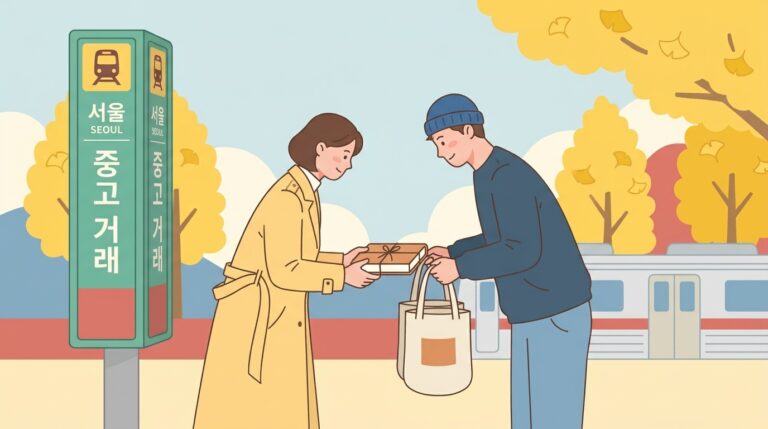
Picture this: You are standing under the freezing autumn breeze next to Exit 3 of Mangwon Station. Your phone screen glows, and suddenly that iconic high-pitched notification chimes: “Dang-geun!” (당근!). A person wearing an oversized padded coat scans the crowd, locks eyes with you, and hesitantly asks the magic phrase every resident in Korea knows: “혹시… 당근이세요?” (Hoksi… Danggeun-iseyo? / “Excuse me… are you Karrot?”).
For intermediate learners living in or visiting Korea, navigating secondhand platforms like Karrot Market (당근마켓) is the ultimate cultural rite of passage. It is not just about scoring a vintage K-Pop vinyl or a nearly new instant pot; it is a hyper-local masterclass in everyday politeness, swift negotiation, and situational awareness (nunchi). Many of our students confess that even with solid grammar, they freeze up when a seller asks for a “cool transaction” or suggests a contactless trade. Don’t worry! This comprehensive guide is built on real-world transaction data and insider tips from native speakers to ensure your next trade runs smoothly and boosts your Manner Temperature effortlessly.
Phase 2: Core Expressions Deep Dive
Here are the top three expressions you must master to sound like an experienced local buyer or seller.
1. 혹시 네고 가능한가요? (Hoksi nego ganeunghangayo?)
- Pronunciation: [Hok-si ne-go ga-neung-han-ga-yo?] (Think of “Hok-sea” + “Nego” as in negotiation + “Ga-neung-han-ga-yo”)
- Meaning: Literal: “By any chance, is negotiation possible?” | Nuance: A respectful, non-demanding way to ask for a slight discount without causing offense.
- K-Culture Moment: You’ll frequently hear this phrasing on Korean variety shows like Nego King when hosts politely initiate haggling with store owners.
- Editor’s Insight: Always prefix your request with 혹시 (by any chance). Bluntly asking “깎아주세요” (Discount this) in direct chat sounds aggressive to modern Koreans. 네고 (short for negotiation) softened by 혹시 signals that you respect their pricing while politely testing the waters.
- Situation Spectrum: Casual: ⚠️ | Semi-formal: ✅ | Formal: ✅
- 🤔 Think About It: In many Western flea markets, haggling starts with counter-offering a direct dollar amount right away. Why do you think Korean digital culture prefers asking permission to negotiate before naming a lower price?
2. 쿨거래 하시면 깎아드릴게요. (Kul-georae hasimyeon kkakka-deurilgeyo.)
- Pronunciation: [Kul-geo-rae ha-si-myeon kka-kka-deu-ril-ge-yo.] (Sounds like English “Cool” + “geo-rae” like ‘garage’ without ‘age’ + “ha-si-myeon”)
- Meaning: Literal: “If you do a cool deal, I will discount it for you.” | Nuance: “If you buy right away without endless questions or stalling, I’ll happily shave off some of the price.”
- K-Culture Moment: Often spotted as the bold banner line in community trade posts across Seoul when sellers want a swift, no-fuss handover before the weekend.
- Editor’s Insight: A 쿨거래 (Cool Transaction) is Korean secondhand slang for a deal completed without nitpicking, ghosting, or asking obvious questions already written in the post description. Demonstrating decisiveness is the quickest way to earn discounts.
- Situation Spectrum: Casual: ✅ | Semi-formal: ✅ | Formal: 🚫
- 🤔 Think About It: Notice how the loanword “Cool” has evolved in Korean into a synonym for “frictionless and considerate.” How does your culture express appreciation for quick business?
3. 문고리 거래로 부탁드려요. (Mungori georaero butakdeuryeoyo.)
- Pronunciation: [Mun-go-ri geo-rae-ro bu-tak-deu-ryeo-yo.] (“Mun” as in moon + “gori” as in goal-ring + “geo-rae-ro”)
- Meaning: Literal: “Please do a door-handle transaction.” | Nuance: “Let’s do a contactless trade: I’ll leave the item outside my door/gate, and you can transfer the money.”
- K-Culture Moment: Became the definitive urban trading habit during recent years and remains standard among busy professionals and introverted city dwellers.
- Editor’s Insight: 문고리 means door handle. When using this option, the seller leaves the item hanging on their apartment door handle or by the doorstep, and the buyer sends an instant bank transfer upon pickup. It showcases the astonishing level of public safety and communal trust in Korea.
- Situation Spectrum: Casual: ⚠️ | Semi-formal: ✅ | Formal: ✅
- 🤔 Think About It: Would a contactless transaction where goods are left outside private homes work in your hometown? What cultural and infrastructural factors make this standard in Korea?
Phase 3: Textbook Korean vs. Real-World Korean
Situation 1: Asking if an item is still available
- 📖 교과서 한국어 (Textbook): 이 물건은 아직 판매 중입니까? (I mulgeoneun ajik panmae jung-imnikka? / Is this item currently under sale?)
- 🗣️ 진짜 한국어 (Real-world): 안녕하세요! 혹시 아직 거래 가능할까요? (Annyeonghaseyo! Hoksi ajik georae ganeunghalkkayo? / Hi! By any chance, is this still available for trade?)
- 💡 왜 다를까? (Why the difference?): While the textbook phrase sounds like an automated catalog inquiry or business audit, real Karrot users use the softened question form -ㄹ까요? combined with 거래 (deal/trade) rather than 판매 (formal retail sale) to create an amicable neighbor-to-neighbor tone.
Situation 2: Declining an offer or passing on an item
- 📖 교과서 한국어 (Textbook): 가격이 너무 비싸서 사지 않겠습니다. (Gagyeogi neomu bissaseo saji anketseumnida. / Because the price is too expensive, I will not buy it.)
- 🗣️ 진짜 한국어 (Real-world): 죄송하지만 이번에는 패스할게요! 좋은 하루 보내세요. (Joesonghajiman ibeoneneun paeseuhalgeyo! Joeun haru bonaeseyo. / Sorry, but I’ll pass this time! Have a great day.)
- 💡 왜 다를까? (Why the difference?): In peer-to-peer apps, giving a harsh critique about price damages the conversational harmony. Koreans soften rejection with loanwords like 패스 (Pass) and immediately balance it with a cheerful warm closing greeting.
Phase 4: K-Culture Deep Dive & Non-Verbal Manners
4-1. Nunchi & Physical Gestures
When meeting a Karrot trader in person (직거래 – Direct Meetup):
1. The Subtle Two-Hand Handoff: Even in casual street trades, always hand over the payment or the item with both hands (or your right hand supported by your left forearm). Tossing an item or shoving cash single-handedly will plummet your unspoken manner review.
2. The 15-Degree Polite Nod: As soon as you confirm the identity of your trade partner with “당근이세요?”, offer a quick 15-degree bow with a smile. It instantly dissolves the awkwardness of meeting a stranger in public.
3. Manner Temperature (매너온도): Karrot starts every user at 36.5°C (human body temperature). Punctuality and polite language drive your score up towards 40°C+ (trustworthy veteran), while ghosting (잠수) drops it into cold territory.
4-2. Cultural Code Analysis: The Neighborhood Radius Revolution
Secondhand trading in Korea used to occur on national anonymous message boards. But Karrot Market localized transactions within a strict 3–6 km GPS radius. This revived the traditional Korean concept of 정 (Jeong – emotional community attachment). It is commonplace for sellers to throw in 덤 (free extra goodies, such as snacks, face masks, or batteries) along with the purchased item. If someone gives you a little extra, acknowledging it with a warm text review afterwards is standard etiquette!
Phase 5: Real-Life Roleplay Scenario
Setting: Hapjeong Station, Exit 2. Rain starts trickling down. Minji (Seller) is holding a paper bag containing an acoustic guitar tuner.
- Turn 1 (Buyer): 저기 혹시… 당근마켓 기타 튜너 판매자님 맞으실까요? 🎭 (Looking around attentively with an approachable smile)
(Jeogi hoksi… Danggeun-maket gita tyuneo panmaejanim majeusilkkayo? / Excuse me… by any chance, are you the Karrot Market guitar tuner seller?) - Turn 2 (Minji): 아, 네 맞아요! 반가워요. 비 오는데 오시느라 고생 많으셨어요. 🎭 (Nods warmly and steps under the awning)
(A, ne majayo! Bangawoyo. Bi oneunde osineura gosaeng maneusyeosseoyo. / Ah, yes that’s right! Nice to meet you. Thank you for making the trip in this rain.) - Turn 3 (Buyer): 아니에요, 역 바로 앞이라 찾기 편했어요! 🎭 (Hands over a warm canned beverage as a small courtesy)
(Anieyo, yeok baro ap-ira chatgi pyeonhaesseoyo! / Not at all, it was right outside the exit so it was easy to find!) - Turn 4 (Minji): 어머, 캔커피까지… 정말 감사해요! 물건 정상 작동하는지 한번 확인해 보시겠어요? 🎭 (Opens the bag carefully to display the item)
(Eomeo, kaenkeopikkaji… jeongmal gamsahaeyo! Mulgeon jeongsang jakdonghaneunji hanbeon hwaginhae bosigesseoyo? / Oh my, even a canned coffee… thank you so much! Would you like to check if the item works properly?) - Turn 5 (Buyer): 네, 사진이랑 상태 똑같이 깨끗하네요. 약속한 15,000원 계좌로 바로 보내드릴게요! 🎭 (Pulls up the banking app swiftly on their smartphone)
(Ne, sajin-irang sangtae ttokgachi kkaekkeuthaneyo. Yaksokhan man-ocheon-won gyejwaro baro bonaedeurilgeyo! / Yes, it’s just as clean as the photos. I’ll transfer the agreed 15,000 won to your bank account right now!) - Turn 6 (Minji): 네, 방금 입금 확인되었습니다. 빠른 거래 정말 감사드려요. 🎭 (Checks notification and gives a delighted nod)
(Ne, banggeum ipgeum hwagindoeeotseumnida. Ppaareun georae jeongmal gamsadeuryeoyo. / Yes, deposit confirmed just now. Thank you so much for the swift trade.) - Turn 7 (Buyer): 제가 더 감사하죠. 잘 쓸게요! 들어가서 바로 매너 후기 남겨드릴게요. 🎭 (Receives bag with both hands and bows slightly)
(Jega deo gamsahajo. Jal sseulgeyo! Deureogaseo baro maeneohugi namgyeodeurilgeyo. / I’m the one who should be grateful. I’ll make good use of it! I will leave a great manner review once I get home.) - Turn 8 (Minji): 저도 좋은 후기 남길게요. 조심히 들어가세요! 🎭 (Waves gently as she heads toward the train gate)
(Jeodo joeun hugi namgilgeyo. Josimhi deureogaseyo! / I’ll leave a great review too. Get home safely!)
🔀 Interactive Choice Point
The item you received turns out to be missing a small charging cable not mentioned in the post. What is your response in chat?
- Choice A: “사장님, 케이블 없는데 환불해 주세요. 사기 아닌가요?” (Boss, no cable, refund me. Isn’t this a scam?)
- Feedback [Bad]: High aggression. Accusing ordinary neighbors of fraud will get you reported and permanently restricted.
- Choice B: “안녕하세요 판매자님! 제품 잘 받았는데요, 혹시 구성품에 케이블은 원래 미포함이었을까요? 확인 부탁드려요!” (Hi seller! Got the item well. By any chance, was the cable originally not included? Please let me know!)
- Feedback [Best]: Polished, polite inquiry using B2 cushioning techniques. Allows the seller to check their mistake gracefully without confrontation.
- Choice C: [Say nothing, say it’s fine, but leave a 1-star negative rating on their profile without messaging.]
- Feedback [Risk]: Passive-aggressive. It triggers counter-reporting and prevents resolving an honest oversight.
Phase 6: 10-Second Emotion Shadowing Drill
Practice reading these rhythmically with natural intonation. Pay attention to pause markers (/) and emotional tone cues!
[😊 상냥하고 조심스럽게 / Friendly and tactful]- 안녕하세요! / 혹시 등록하신 물건 / 아직 거래 가능할까요? / (Annyeonghaseyo! / Hoksi deungnokhansin mulgeon / ajik georae ganeunghalkkayo?)
[🤝 쿨하고 명쾌하게 / Decisive and clear]- 제가 지금 바로 갈 수 있는데 / 혹시 쿨거래로 만 원에 가능할까요? / (Jega jigeum baro gal su inneunde / hoksi kulgeoraero man wone ganeunghalkkayo?)
[🙏 감사하고 깔끔하게 / Grateful and neat]- 물건 잘 받았습니다! / 예쁘게 잘 쓸게요, / 좋은 하루 보내세요! / (Mulgeon jal badatseumnida! / Yeppeuge jal sseulgeyo, / joeun haru bonaeseyo!)
Phase 7: K-Culture Mini Dictionary
- 당근러 (Danggeun-reo): An avid user of Karrot Market who frequently buys, sells, and engages in neighborhood community chats.
- 매너온도 (Maeneoon-do – Manner Temperature): A user rating metric based on community feedback. 36.5°C is base level; scores above 50°C denote exceptional, trustworthy traders.
- 네고왕 (Nego-wang – Negotiation King): A playful nickname for someone exceptionally skilled at negotiating prices without making others uncomfortable.
- 택포 (Taek-po / 택배비 포함): “Shipping fee included.” If a post says 15,000원 (택포), you do not need to pay extra courier delivery fees.
Phase 8: Traveler’s Survival Kit
Survival Expressions TOP 3
- 혹시 예약 중인가요? (Hoksi yeyak jung-in-gayo? / Is this currently reserved by someone else?)
- Pro Tip: If a listing says 예약중 (Reserved), use this to ask if you can be next in line if the first buyer cancels.
- 역 2번 출구 앞에서 봬요! (Yeok ibeon chulgu ap-eseo bwaeyo! / See you in front of Station Exit 2!)
- Pro Tip: Always designate specific numbered subway exits to avoid wandering around busy Korean transit hubs.
- 계좌번호 남겨주시면 바로 입금할게요. (Gyejwabeonho namgyeojusimyeon baro ipgeumhalgeyo. / Please share your bank account number and I’ll transfer immediately.)
- Pro Tip: Most direct deals are paid electronically via apps rather than physical cash notes.
Editor’s Travel Note
Before diving into peer deals in Korea, ensure you have set up a localized navigation app via the Naver Map application setup guide to locate exact apartment complex gates (동/호수) or station exits accurately. If you don’t hold a domestic Korean bank account, prepare exact cash bills in a clean envelope in advance, and inform the seller beforehand by saying: “현금으로 드려도 괜찮을까요?” (Is it okay if I pay in cash?).
Phase 9: Think Deeper (Cultural Perspective)
In Korean society, peer-to-peer marketplaces represent much more than transactional capitalism; they reflect the cultural dynamics of high-context, collectivist neighborhood solidarity (이웃사촌 – neighbors as close as cousins). The willingness to leave valuable electronics hanging on a front door handle (문고리 거래) highlights a level of mutual trust and collective social contract rare in global megacities. When you communicate politely on Korean secondhand platforms, you aren’t just buying an object—you are participating in a living network of communal respect.
💬 Your Turn: Have you ever experienced secondhand trade in another country? How does the etiquette in your community compare to Korea’s Manner Temperature system? Share your stories below!
Phase 10: FAQ & Common Mistakes
Q: Can foreign tourists without a Korean phone number use Karrot Market?
A: Karrot requires GPS verification and domestic SMS authentication. However, travelers staying in guesthouses or long-term Airbnbs can use alternative platforms like Bunjang (번개장터) or ask local host friends for help while using these exact phrases in direct chats.
Q: What should I do if a seller does not reply after an hour?
A: Do not spam question marks. People often check notifications after work hours. Wait patiently; sending “저기요?” (Excuse me?) repeatedly will get you blocked.
Q: Is it rude to check the condition of an electronic item on the spot during a direct trade?
A: Not at all! In fact, sellers prefer you inspect it in front of them so there are no disputes later. Just say politely: “잠깐 상태만 확인해 봐도 될까요?” (May I quickly check the condition?).
🚨 Common Mistakes Alert (외국인 학습자의 흔한 실수)
- Mistake: Offering half the asking price immediately without greeting.
- Correct Action: Keep offers within 5-10% of the price and always lead with: “안녕하세요! 혹시 조금 네고 가능할까요?”
- Mistake: Showing up 10 minutes late without notification.
- Correct Action: Korean time etiquette is strict. If delayed, message at least 15 minutes prior: “차가 막혀서 5분 정도 늦을 것 같습니다. 정말 죄송합니다!”
- Mistake: Forgetting to close the transaction with a review (후기).
- Correct Action: Always submit the automated positive tags within 24 hours to keep both your manner temperatures healthy!
Phase 11: Action Mission & Engagement
- 🥉 Bronze Mission: Read the 3 core expressions out loud three times while matching the emotion cues in the shadowing drill.
- 🥈 Silver Mission: Write a sample inquiry message for a fictional winter coat in the comments section below using 혹시 and -ㄹ까요?.
- 🥇 Gold Mission: Look up a real listing on a Korean platform and identify the acronyms used (e.g., 택포, 직거래, 네고불가).
🎮 K-Culture Mission: Watch a contemporary slice-of-life K-Drama episode (e.g., One Day Off or variety vlog) and spot characters asking “당근이세요?” or handling door-to-door packages!
Phase 12: Interactive Quiz Challenge
1. [Situational Judgment] You want to purchase a microwave listed for 30,000 KRW and want to pick it up immediately. Which text is the most culturally natural?
* (A) 3만 원 너무 비싸요. 1만 원에 줘요.
* (B) 안녕하세요! 지금 바로 갈 수 있는데 혹시 2만 5천 원에 쿨거래 가능할까요?
* (C) 물건 파세요 당장.
2. [Fill-in-the-Blank] Complete the phrase for contactless doorstep delivery:
“집 앞에 계시면 (_____) 거래로 부탁드려도 될까요?”
3. [True / False Cultural Check] In Korea, leaving a trade item unattended on your apartment door handle for the buyer to collect is considered dangerous and heavily forbidden.
* (True / False)
👉 Click to reveal answers & explanations!
- Answer: (B)
- Explanation: Option B contains a warm greeting, provides an incentive (immediate pickup), politely suggests a reasonable discount (쿨거래), and ends with the softening ending -ㄹ까요?.
- Answer: 문고리 (Door-handle)
- Explanation: 문고리 거래 denotes the common contactless trade method in residential Korea.
- Answer: False
- Explanation: 문고리 거래 is a standard, highly trusted, and frequent trading practice across Korean apartment communities due to strong neighborhood safety and CCTV systems.
- Explanation: 문고리 거래 is a standard, highly trusted, and frequent trading practice across Korean apartment communities due to strong neighborhood safety and CCTV systems.







