

안녕하세요! 매일한글 에디터입니다.
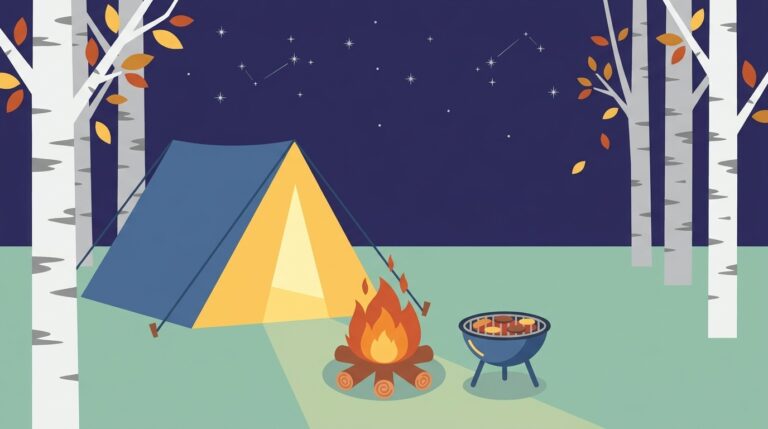
Imagine this: You are nestled beside the tranquil Bukhangang River in Gapyeong on a brisk autumn evening. The intoxicating aroma of sizzling samgyeopsal fills the air, birch firewood crackles in the fire pit, and your Korean friends are gathered around the glowing embers in collective silence. Someone leans back, sighs deeply, and whispers a phrase that encapsulates the entire vibe. Do you know what to say beyond the standard textbook phrase, “불이 참 예쁘네요” (The fire is very pretty)?
For advanced learners, the true barrier in outdoor Korean isn’t grammar—it is catching the subtle shift between boisterous gourmet cooking banter and the serene, shared quietude of bulmung (staring into the campfire to zone out). Many C1 learners tell us they understand every word in variety shows like Camping Club or Wheel on Wheels, yet freeze when it comes to expressing sensory depth and emotional resonance in real campfire conversations. This guide is crafted from authentic campsite field notes to help you bridge the gap between classroom fluency and native emotional intimacy.
Phase 2: Core 3 Expressions Deep Dive
1. 불멍 때리다 (Bulmeong ttaerida)
- Pronunciation: [Bul-meong ttae-ri-da] (Sounds like ‘bull’ + ‘mung’ [as in mung bean] + ‘tte-ri-da’)
- Meaning: Literal: “To hit fire-daze” | Actual: To space out peacefully while watching a campfire, entering a meditative trance.
- K-Culture Moment: Seen constantly across K-variety shows and YouTube vlogs where bustling city celebrities drop all conversation and gaze quietly into glowing logs after a hearty meal.
- Editor’s Insight: The noun bulmung (불 + 멍하니 있다) pairs naturally with the slang verb 때리다 (literally to hit, but colloquially used for indulging in an effortless state, like 잠 때리다 or 멍 때리다). It represents the quintessential Korean cure for burnout.
- Situation Spectrum: Casual ✅ | Semi-formal ⚠️ (Use 불멍을 즐기다) | Formal 🚫
- 🤔 Think About It: In many Western cultures, prolonged silence among friends can feel awkward. Why do you think Korean culture embraces shared zoning out (멍때리기) as an active form of bonding and healing?
2. 겉바속촉으로 굽다 (Geotbasokchog-euro gupda)
- Pronunciation: [Geot-ba-sok-cho-geu-ro gup-da] (Sounds like ‘gut-bah-sok-choke’)
- Meaning: Literal: “To grill crispy-outside, moist-inside” | Actual: Grilling meat, sweet potatoes, or marshmallows to culinary perfection with a crunchy exterior and juicy, tender interior.
- K-Culture Moment: The holy grail metric used by Korean food creators and camp cooks when flipping thick pork belly or slicing open foil-wrapped roasted sweet potatoes from the charcoal.
- Editor’s Insight: This famous four-character abbreviation (겉은 바삭하고 속은 촉촉하게) is an essential food descriptor. Using this casually around the grill immediately proves your cultural fluency.
- Situation Spectrum: Casual ✅ | Semi-formal ✅ | Formal ⚠️
- 🤔 Think About It: How does the Korean habit of creating four-character sensory neologisms reflect the fast-paced, vivid culinary discourse in contemporary Korea?
3. 속이 확 풀리다 (Sogi hwak pullida)
- Pronunciation: [So-gi hwak pul-li-da] (‘Sogi’ as in inside + ‘hwak’ [a sudden burst sound] + ‘pul-li-da’)
- Meaning: Literal: “The inside completely untangles” | Actual: The deeply comforting, restorative sensation in your stomach and soul after sipping hot, spicy stew or ramen in the cold night air.
- K-Culture Moment: Uttered with a satisfied groan right after tasting late-night camp ramen or morning kimchi-jjigae cooked over a portable stove.
- Editor’s Insight: Koreans describe internal relief—both physical digestion and emotional stress release—using the verb 풀리다 (to unravel/untangle). The adverb 확 emphasizes an instantaneous sensation of warm comfort.
- Situation Spectrum: Casual ✅ | Semi-formal ✅ | Formal ⚠️
- 🤔 Think About It: Notice how Korean connects physical temperature, spiciness, and emotional catharsis into one expression. Does your native language have a physical metaphor for psychological relief through food?
Phase 3: Textbook Korean vs. Real Korean
Situation 1: Suggesting that everyone relax by the campfire
- 📖 교과서 한국어: 장작불을 보면서 휴식을 취합시다. (Let us take a rest while watching the firewood flame.)
- 🗣️ 진짜 한국어: 우리 장작 좀 더 넣고 슬슬 불멍이나 때릴까? (Shall we throw in some more logs and ease into some bulmung?)
- 💡 왜 다를까? Textbook Korean uses stiff Sino-Korean verbs like 휴식을 취하다. Native speakers prefer dynamic conversational markers like 슬슬 (gently/leisurely) and the relaxed nominalizer (이)나 to propose laid-back activities without sounding rigid.
Situation 2: Praising the grilled barbecue
- 📖 교과서 한국어: 고기가 타지 않고 아주 알맞게 잘 익었습니다. (The meat is not burnt and is cooked very appropriately.)
- 🗣️ 진짜 한국어: 와, 숯불 향 제대로 배었다! 겉바속촉 그 자체네. (Wow, the charcoal aroma soaked in perfectly! This is the absolute definition of crispy outside, juicy inside.)
- 💡 왜 다를까? Native camp food critique revolves around 불맛 (smoky charcoal flavor) and mouthfeel. Using ~그 자체네 (is the very embodiment of…) elevates your compliment from bland praise to gourmet appreciation.
Phase 4: K-Culture Deep Dive & Non-Verbal Etiquette
4-1. 눈치 (Nunchi) & Non-Verbal Camp Etiquette
- The Tongs Protocol (집게 매너): In Korean camping culture, the person holding the tongs (집게) and shears (가위) is the designated grill captain. Do not abruptly snatch the tongs from them; instead, practice nunchi by holding a clean plate ready to receive meat, wrapping lettuce wraps (ssam), or managing the side dishes.
- The Sacred Silence of Bulmung: When the conversation naturally dies down and people stare into the fire pit, avoid the urge to fill the silence with loud chatter or music. Quietly tending the fire or gazing into the flames together is considered the highest form of companionable intimacy.
4-2. Cultural Code: The Infinite Camping Food Relay & 힐링 (Healing)
Korean camping is rarely about minimalist survival; it is an orchestrated culinary marathon. The sequence follows an unwritten rule: Thick Grilled Pork Belly (삼겹살) → Fried Rice on the Grill Pan (볶음밥 국룰) → Spicy Ramyeon Broth (라면/얼큰한 찌개) → Roasted Sweet Potatoes in Embers (군고구마). This ritualistic feasting acts as a communal decompression chamber from high-stress urban life.
Phase 5: Real-Life Roleplay Scenario
Setting: A lakeside campsite in Chuncheon. The clock strikes 9:30 PM. Min-jun is flipping pork belly over glowing charcoal, while the crackling fire pit warms the chill night air.
- 민준: 불 세기 딱 좋다. 고기 거의 다 익었으니까 한 점 먹어봐. (Bul segi ttak jota. Gogi geoui da标准的 익었으니까 han jeom meogeobwa.)
🎭 Hands over a freshly grilled piece of pork on a metal plate, blowing gently on the coals.
Translation: The heat is just right. The meat is almost done, try a piece. -
나 (Learner): 와, 숯불 향 대박이다… 겉바속촉 제대로 구우셨네요! (Wa, sutbul hyang daebagida… Geotbasokchok jedaero guusyeonneyo!)
🎭 Tasting the meat with widened eyes and giving an enthusiastic nod.
Translation: Wow, the charcoal aroma is incredible… You grilled this to absolute crispy-on-the-outside, juicy-inside perfection! -
민준: 입에 맞아서 다행이네. 이제 슬슬 고기 다 먹어가는데 다음 코스 갈까? (Ibe majaseo dahaeng-ine. Ije seulseul gogi da meog-eoganeunde da-eum koseu galkka?)
🎭 Wiping down the edge of the grill and glancing at the ingredients bin.
Translation: Glad you like it. We’re finishing up the meat, ready for the next round? -
나 (Learner): 당연하죠! 고기 기름에 볶음밥 볶는 건 국룰이잖아요. (Dang-yeonhajyo! Gogi gireume bokkeumbap bongneun geon gungnurijanayo.)
🎭 Grabbing the cooked rice and seaweed flakes from the camp table.
Translation: Of course! Stir-frying rice in pork drippings is the golden rule, isn’t it? -
민준: 역시 맛잘알이네! 밥 볶고 나서 남은 숯에는 고구마 넣어두자. (Yeoksi matjararine! Bap bokko naseo nameun sute-neun goguma neoeoduja.)
🎭 Skillfully mixing the rice on the grill plate with a spatula.
Translation: You truly know your food! After the rice, let’s toss sweet potatoes into the remaining charcoal. -
나 (Learner): 좋아요. 다 먹고 장작 피워서 불멍 때리면 딱이겠어요. (Joayo. Da meokgo jangjak piwoseo bulmeong ttaerimyeon ttagigesseoyo.)
🎭 Arranging the dry birch logs neatly beside the fire pit.
Translation: Sounds great. Finishing the food and lighting the logs for some bulmung will be perfect. -
민준: 그러자. 오늘 밤공기도 맑아서 불 보면서 멍때리기 최고다. (Geureoja. Oneul bamgonggido malgaseo bul bomyeonseo meongttaerigi choegoda.)
🎭 Leaning back into his foldable camp chair with a relaxed sigh.
Translation: Let’s do that. The night air is crisp, making it ideal to just gaze at the fire and space out. -
나 (Learner): 진짜 힐링 그 자체네요. 복잡한 생각 싹 다 날아가는 것 같아요. (Jinjja hilling geu jacheneyo. Bokjapan saenggak ssak da naraganeun geot gatayo.)
🎭 Sipping warm tea while staring peacefully into the initial sparks of the bonfire.
Translation: This is truly the definition of healing. All my complicated thoughts feel like they’re flying away.
🔀 Interactive Branching Point
Min-jun sets down the tongs and hands you the fire poker as the flames flicker down. What do you say?
- Option A: “제가 장작 몇 개 더 넣을게요. 이제 아무 생각 없이 불멍 때려요.” (I’ll add a few more logs. Let’s just zone out by the fire without any thoughts.)
- Option B: “왜 조용히 계세요? 재미있는 이야기 좀 해보세요.” (Why are you being so quiet? Tell a funny story.)
- Option C: “불이 꺼질 것 같으니까 가스를 켜서 요리를 더 할까요?” (Looks like the fire is dying, should we turn on the gas stove and cook more?)
Selection Feedback:
- Option A (Best): 🌟 Perfect C1 mastery! You respect the unspoken rhythm of the camp, contribute helpfully to the fire, and seamlessly initiate a restorative bulmung session.
- Option B (Bad): ❌ Culturally awkward. Breaking a companionable campfire silence by demanding entertainment disrupts the cherished healing atmosphere.
- Option C (Risk): ⚠️ Misunderstanding the moment. The meal is transitioning from dining to campfire contemplation; turning on a noisy gas stove spoils the serene ambiance.
Phase 6: 10-Second Emotion Shadowing Drill
Master the intonation and pauses that make advanced speech sound effortless:
- [🤤 침 꼴깍 삼키며 감탄하듯 – Mouth-watering appreciation]
“와, / 숯불 향 제대로 배어서 / 진짜 겉바속촉이다!”
(Wa, / sutbul hyang jedaero baeeoseo / jinjja geotbasokchok-ida!) -
[😌 깊은 숨을 내쉬며 나른하게 – Serene & Meditative]
“타닥타닥 소리 들으면서 / 불멍 때리니까 / 속이 다 풀리네.”
(Tadaktadak sori deureumyeonseo / bulmeong ttaerinikka / sogi da pulline.) -
[😋 눈을 반짝이며 제안하듯 – Playful excitement]
“여기 남은 국물에 / 라면사리 넣는 거, / 완전 국룰인 거 알지?”
(Yeogi nameun gungmure / ramyeonsari neonneun geo, / wanjeon gungnurin geo alji?)
Phase 7: K-Culture Mini Dictionary
- 불멍 (Bulmeong) | Noun | Contraction of 불 (fire) + 멍하니 있다 (to space out). The act of staring into a campfire to achieve mental clarity and stress relief.
- 감성 캠핑 (Gamseong Kaemping) | Noun | “Aesthetic/Vibe Camping.” Prioritizing cozy lighting, vintage cookware, mood lanterns, and stylish setups over pure survivalist gear.
- 볶음밥 국룰 (Bokkeumbap Gungnul) | Noun phrase | The “unwritten national law” that any grilled meat, hotpot, or spicy braised dish must conclude with fried rice prepared on the same grill.
- 차박 (Chabak) | Noun | Car-camping / car-sleeping culture where travelers convert their SUV trunks into cozy sleeping nooks with fairy lights and scenic views.
Phase 8: Traveler’s Survival Kit
Survival Expressions TOP 3
- “장작 한 망 추가해 주세요.” (Jangjak han mang chugahae juseyo.)
- Pro Tip: Firewood at Korean campsites is sold by the bundle, counted with the unit noun 망 (net bag).
- “여기 매너 타임 몇 시부터예요?” (Yeogi maeneo taim myeot sibuteoyeyo.)
- Pro Tip: Manner Time refers to the mandatory quiet hours (usually starting at 10:00 PM or 11:00 PM) enforced strictly at registered Korean campgrounds.
- “종량제 봉투는 어디서 받나요?” (Jongnyangje bongtuneun eodiseo bannayo?)
- Pro Tip: Campsites require strict waste separation; you will need the designated regional prepaid garbage bag (종량제 봉투) for general trash.
Editor’s Travel Note
- Reservations & Navigation: Download the 네이버 지도 앱 다운로드 to search for verified camping spots (캠핑장, 글램핑) and check real-time camper reviews and fire-safety ratings.
- Supplies On-The-Go: Most convenience stores (CU, GS25) near outdoor camping hubs like Gapyeong or Yangpyeong stock high-grade dried firewood, marshmallow skewers, and instant grill grates.
Phase 9: “한 발 더 깊이” (One Step Deeper)
Korean society is renowned for its relentless, hyper-connected palli-palli (hurry-hurry) pace. Why, then, has an activity dedicated to sitting completely motionless before a fire (불멍) become a national obsession? In a culture where even leisure is often performance-driven, bulmung provides a rare, culturally sanctioned exemption from productivity. It is a shared quietude where you are connected to others without the burden of conversation, finding profound emotional restoration in the warmth of community and nature.
💬 Your Turn: Have you ever experienced a moment of comfortable silence with friends from another culture? Share your thoughts in the comments below!
Phase 10: FAQ & Misconception Prevention
Q: Is 불멍 때리다 considered rude slang because of the word 때리다?
A: While 때리다 literally means “to hit,” in casual modern Korean it is extremely common colloquial slang for indulging in an activity (라면 한 그릇 때리다, 낮잠 때리다). It is ideal for friends and peers. However, in formal settings or with elders, refine it to “불멍을 즐기다” (to enjoy bulmung) or “모닥불을 보며 힐링하다”.
Q: Can I use 멍 때리다 for other elements besides fire?
A: Absolutely! Korean outdoor lovers have expanded the ~멍 suffix into a versatile vocabulary: 물멍 (gazing at rivers/oceans), 숲멍 (gazing at green forests), 바람멍 (spacing out in the breeze), and even 비멍 (staring at falling rain).
Q: What is the difference between 얼큰하다 and 맵다 when describing camping soup?
A: 맵다 simply indicates spicy, capsaicin heat that stings the tongue. 얼큰하다, on the other hand, describes a deep, hearty, refreshing spiciness that warms your throat and stomach from the inside out—the exact sensation you crave in chilly outdoor weather.
🚨 흔한 실수 (Common Mistakes) 경고판
- Mistake: Calling campfire dazing “불을 구경하다” (Watching the fire as an exhibit).
- Correct Action: Use “불멍하다” or “불멍 때리다” to convey emotional trance rather than detached observation.
- Mistake: Declining the post-barbecue fried rice because you are “full from meat.”
- Correct Action: Even if you can only take one bite, share in “볶음밥 국룰” (the sacred fried rice ritual) to experience the communal joy of Korean dining culture.
- Mistake: Speaking at full volume during campsite quiet hours.
- Correct Action: Respect 매너 타임 (Manner Time) by lowering your voice to a whisper or letting the fire do the talking after 10 PM.
Phase 11: Action Mission & Engagement
- 🥉 Bronze Mission: Record yourself shadow-speaking the phrase: “타닥타닥 소리 들으면서 불멍 때리니까 속이 다 풀리네.”
- 🥈 Silver Mission: Leave a comment below describing your ultimate camp comfort food using either 겉바속촉 or 얼큰하다.
- 🥇 Gold Mission: On your next camping trip or outdoor barbecue, use 불멍 때리다 and 국룰 naturally in conversation with Korean friends!
🎮 K-Culture Mission: Watch an episode of a Korean outdoor variety show (like House on Wheels or Camping Club) and note down how many variations of ~멍 (불멍, 물멍, 숲멍) the cast members use!
Phase 12: Interactive Quiz Challenge
Test your real-world camping Korean intuition!
- [Situational Judgement] You are grilling pork belly over charcoal, and the exterior has a crunchy crust while the interior is exceptionally juicy. How do you describe this in authentic slang?
- A) 고기가 너무 딱딱해요.
- B) 겉바속촉 제대로네요!
- C) 불맛이 하나도 안 나요.
- [Fill-in-the-Blank] Complete the sentence with the natural colloquial verb:
“우리 복잡한 생각하지 말고 장작 보면서 _______ 때리자.”- (Hint: The Korean word for campfire dazing)
- [True / False Cultural Check] In Korean camping culture, asking for Manner Time (매너 타임) means asking the camp manager for extra table manners lessons. (True / False)
🔍 Click here to reveal answers & explanations!
- Answer: B) 겉바속촉 제대로네요!
- Explanation: 겉바속촉 describes the ideal crispy-outside, tender-inside texture.
- Answer: 불멍 (Bulmeong)
- Explanation: 불멍 때리다 is the natural, idiomatic pairing for zoning out by the fire.
- Answer: False
- Explanation: 매너 타임 (Manner Time) refers strictly to official quiet hours at Korean campgrounds to prevent nighttime noise disturbances.
- Explanation: 매너 타임 (Manner Time) refers strictly to official quiet hours at Korean campgrounds to prevent nighttime noise disturbances.







