

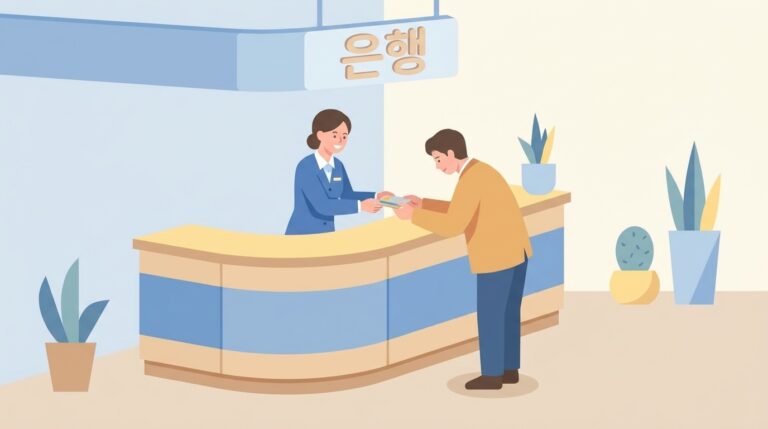
Master Korean Bank Transfers: How to Send Money Without Breaking a Sweat
Phase 1: Empathy (Real-Life Story Opening)
안녕하세요! (Annyeonghaseyo!) It is your Daily Hangul editor and local cultural navigator here.
Imagine this classic K-Drama scene: You are hanging out with new Korean friends at a cozy Pocha (street tent) in Hongdae. The Kimchi pancake is sizzling, the vibe is perfect, and someone shouts, “Let’s split the bill! Just send me your share via bank transfer (계좌이체 – gyejwa-iche)!” Suddenly, a cold sweat breaks out. Your heart beats faster than a K-Pop drumroll. How do you ask for their account number? What do you say when you step into a local bank teller booth or use a Korean ATM?
Sending money in Korea is an everyday superpower. Whether you are paying your share of Korean BBQ, booking an Airbnb, buying handmade crafts at an Insadong flea market, or visiting a bank branch in Seoul, bank transfers are woven into daily life. If you have ever felt nervous about banking terms, take a deep breath. With just a few friendly, foolproof sentences, you will send money like a confident Seoulite. This guide is built directly from real beginner questions and feedback from thousands of Daily Hangul learners—so let’s get you transferring with total confidence!
Phase 2: Core Expressions Deep Dive
Here are the top 3 essential phrases you need to send money in Korea smoothly.
1. 돈 보내고 싶어요. (Don bonaego sipeoyo.)
- Pronunciation: Don bo-nae-go shi-peo-yo (Sounds like: “Don” as in dawn, “nae” like net without the t, “shi-peo-yo” like ship-oh-yo).
- Meaning: Literal: “I want to send money.” | Nuance: A polite, direct way to state your purpose at a bank counter or ask a friend how to pay.
- K-Culture Moment: You will hear this frequently when characters in slice-of-life K-Dramas visit a local bank branch or customer service desk to handle bills.
- Editor’s Insight: The verb root 보내다 (bonaeda) means “to send.” Adding -고 싶어요 (-go sipeoyo) makes it a gentle, polite expression of your wish. It’s the ultimate icebreaker for beginners.
- Situation Spectrum: Casual (⚠️ with close friends, use 돈 보낼게), Semi-formal (✅), Formal (✅)
- 🤔 Think About It: In English, we often say “I need to do a wire transfer.” Korean speakers simply prefer “I want to send money (돈 보내고 싶어요).” Notice how Korean verbs focus directly on the action rather than the technical banking method!
2. 계좌번호 알려주세요. (Gyejwabeonho allyeojuseyo.)
- Pronunciation: Gye-jwa-beon-ho al-lyeo-ju-se-yo (“Gye-jwa” sounds like gay-jwah, “beon-ho” sounds like bun-ho, “al-lyeo-ju-se-yo” sounds like ahl-leo-joo-say-yo).
- Meaning: Literal: “Please let me know the account number.” | Nuance: “Could you give me your bank account details, please?”
- K-Culture Moment: After a group dinner with coworkers or friends, the person who paid the total bill will hear everyone asking, “계좌번호 알려주세요!” so they can send their split portion immediately.
- Editor’s Insight: 계좌 (gyejwa) = account, 번호 (beonho) = number, and 알려주세요 (allyeojuseyo) = please inform/tell me. You can use [Noun] + 알려주세요 for anything you need to know (e.g., 전화번호 알려주세요 = Please give me your phone number).
- Situation Spectrum: Casual (⚠️ use 계좌번호 알려줘 for peers), Semi-formal (✅), Formal (✅)
- 🤔 Think About It: In many Western countries, asking for someone’s bank account directly might feel intrusive. In Korea, sharing account numbers among friends for quick splits (N-bbang) is standard, safe, and expected daily etiquette.
3. 송금 완료했어요. (Songgeum wanryohaesseoyo.)
- Pronunciation: Song-geum wal-lyo-haet-seo-yo (Note: wan-ryo flows naturally as wal-lyo in Korean pronunciation).
- Meaning: Literal: “Remittance completed.” | Nuance: “I just sent the money! / Done!”
- K-Culture Moment: Sent as a quick KakaoTalk confirmation text right after tapping “Send” on KakaoPay or Toss with a cute thumbs-up sticker.
- Editor’s Insight: 송금 (songgeum) is the formal term for transferring funds. Pair it with 완료했어요 (wanryohaesseoyo) to confirm that the transaction is done. If that feels too formal, you can also say 보냈어요! (Bonaesseoyo! – I sent it!).
- Situation Spectrum: Casual (✅ as 보냈어!), Semi-formal (✅), Formal (✅)
- 🤔 Think About It: Koreans love the Palli-Palli (빨리빨리 – quick, prompt) culture. Letting the other person know immediately that you sent the money shows great respect and reassurance.
Phase 3: Textbook Korean vs. Real Korean
Let’s compare robotic textbook lines with the actual phrases Koreans use daily:
Situation 1: Telling the bank teller you want to make a transfer
- 📖 교과서 한국어 (Textbook): “저는 타인의 은행 계좌로 금전을 이체하고자 합니다.” (Jeoneun tainui eunhaeng gyejwaro geumjeoneul ichehagoja hamnida. – I intend to transfer monetary funds into another person’s bank account.)
- 🗣️ 진짜 한국어 (Real-Life A1): “돈 보내려고요.” (Don bonaeryeogoyo. – I’m here to send money.) or “계좌이체 하려고요.” (Gyejwa-iche haryeogoyo. – I’d like to do an account transfer.)
- 💡 왜 다를까? (Why is it different?): Native speakers use -(으)려고요 (-(eu)ryeogoyo) to state their immediate intention simply and casually at service counters without ultra-formal vocabulary.
Situation 2: Asking a friend for their account details
- 📖 교과서 한국어 (Textbook): “귀하의 금융 계좌 정보를 저에게 전달해 주시겠습니까?” (Gwihaui geumyung gyejwa jeongboreul jeoege jeondalhae jusigesseumnikka? – Would you convey your financial account information to me?)
- 🗣️ 진짜 한국어 (Real-Life A1): “계좌번호 카톡으로 보내줘!” (Gyejwabeonho katogeuro bonaejwo! – Send me your account number on KakaoTalk!)
- 💡 왜 다를까? (Why is it different?): In modern Korea, nobody recites legal-sounding requests. Account numbers are usually copied and pasted directly through messaging apps.
Phase 4: K-Culture Deep Dive & Non-Verbal Manners
4-1. 눈치 (Nunchi) & Two-Hand Etiquette
When dealing with money or banking documents in Korea, your non-verbal cues speak louder than words:
* The Two-Hand Rule (두 손 예절): Whenever you hand your ID card, cash, or bankbook (통장) to a bank clerk, always hold it with both hands, or support your right wrist/forearm with your left hand. It conveys utmost politeness and respect.
* Eye Contact & Slight Bow: When the teller finishes your transfer and hands you the receipt (영수증), take it with both hands, make brief polite eye contact, and nod gently saying, “감사합니다 (Gamsahamnida – Thank you).”
4-2. The “N-bbang (N빵)” Culture
In K-dramas or variety shows, you will frequently hear the slang term N빵 (N-bbang). This means dividing the bill evenly by N number of people (Dutch pay). One person pays with their card first, and everyone transfers their exact portion within minutes using simple mobile banking. Knowing how to say “계좌번호 알려주세요” turns you into an instant insider during dinner gatherings!
Phase 5: Real-World Roleplay Scenario
Setting: Inside a clean, bright Seoul bank branch. You took a waiting number ticket (대기표) and your number just dinged on the screen. Teller Min-ji greets you with a warm smile.
- 은행원 민지 (Teller Min-ji): 안녕하세요! 무엇을 도와드릴까요? (Annyeonghaseyo! Mueoseul dowadeurilkkayo?)
🎭With a welcoming smile and slight bow
(Hello! How may I help you?) - 나 (You): 안녕하세요. 돈 보내고 싶어요. (Annyeonghaseyo. Don bonaego sipeoyo.)
🎭Holding your ID card with both hands
(Hello. I want to send money.) - 은행원 민지 (Teller Min-ji): 네, 계좌번호 있으세요? (Ne, gyejwabeonho isseuseyo?)
🎭Ready to type on the keyboard
(Yes, do you have the account number?) - 나 (You): 네, 여기 있어요. (Ne, yeogi isseoyo.)
🎭Showing your phone screen with both hands
(Yes, here it is.) - 은행원 민지 (Teller Min-ji): 얼마 보내시겠어요? (Eolma bonaesigesseoyo?)
🎭Looking at the transfer form
(How much would you like to send?) - 나 (You): 오만 원이요. (O-man woniyo.)
🎭Speaking clearly and calmly
(50,000 won, please.) - 은행원 민지 (Teller Min-ji): 네, 송금 완료되었습니다. 영수증 여기 있습니다. (Ne, songgeum wanryodoeeosseumnida. Yeongsujeung yeogi isseumnida.)
🎭Handing over the receipt with both hands
(Yes, the transfer is complete. Here is your receipt.) - 나 (You): 감사합니다! (Gamsahamnida!)
🎭Receiving receipt with two hands and nodding
(Thank you!)
🔀 Interactive Choice Point
The teller hands you a document and says: “여기에 서명해 주세요.” (Please sign here.) What do you do?
- Option A: Put your signature with the pen provided, hand it back with two hands, and say “여기요!” (Yeogiyo!)
- 👉 Feedback (Best!): Perfect! Signing and returning it with two hands shows impeccable Korean etiquette.
- Option B: Wave your hands, shake your head, and run away thinking something is wrong.
- 👉 Feedback (Bad): Don’t worry! “서명 (Seomyeong)” just means “signature” to confirm your transfer authorization.
- Option C: Drop the pen on the counter and throw your passport onto the desk.
- 👉 Feedback (Risk): Using one hand carelessly or tossing items can seem rude. Always use both hands when passing items to tellers.
Phase 6: 10-Second Emotion Shadowing Drill
Practice these rhythms with feeling! Pay attention to the pauses (/) and emotions.
[😊 Politeness & Clarity]
돈 / 보내고 / 싶어요.
(Don / bonaego / sipeoyo.)
Rhythm: Upbeat start, smooth pause, gentle lowering at the end.-
[🤝 Friendly Request]
계좌번호 / 알려주세요.
(Gyejwabeonho / allyeojuseyo.)
Rhythm: Crisp pronunciation on ‘Gyejwabeonho’, softening on ‘allyeojuseyo’. -
[✨ Bright Confirmation]
송금 / 완료했어요!
(Songgeum / wanryohaesseoyo!)
Rhythm: Confident and cheerful tone! Pop the ‘wanryohaesseoyo’!
Phase 7: K-Culture Mini Dictionary
- 계좌번호 (Gyejwabeonho) | Account Number | Essential for any transfer. Korean account numbers usually consist of 11 to 14 digits.
- 송금 (Songgeum) | Remittance / Wire Transfer | Found on ATM screens, banking apps, and bank forms for sending money.
- 영수증 (Yeongsujeung) | Receipt | Tellers will always offer one; ATMs will ask on-screen: 영수증을 출력하시겠습니까? (Print receipt?)
- 수수료 (Susuryo) | Transaction / Service Fee | ATMs or bank transfers between different banks may deduct a small fee (usually 500–1,000 KRW).
Phase 8: Survival Kit for Travelers
Top 3 Survival Phrases
- 이체 수수료 얼마예요? (Iche susuryo eolmayeyo?)
(How much is the transfer fee?)
Pro Tip: Handy if you are transferring money from an international card or across different domestic banks. - ATM 어디에 있어요? (ATM eodie isseoyo?)
(Where is the ATM?)
Pro Tip: Look for the green/blue signs in convenience stores (CU, GS25, 7-Eleven) for 24/7 access. - 영수증 필요 없어요. (Yeongsujeung piryo eopseoyo.)
(I don’t need a receipt.)
Pro Tip: Perfect when you want to save paper at the register or ATM.
Editor’s Travel Note
- If you are living or staying long-term in Korea, explore setting up digital financial apps. Check out official app portals for tools like the KakaoPay Service Guide or download the Toss App Platform for effortless split-bill payments without needing physical cash.
- At convenience store ATMs, look for the “English” button in the top right corner of the screen for an instant language switch.
Phase 9: “One Step Deeper” (Cultural Reflection)
In Korea, transferring money via smartphone or local bank accounts is not just a financial transaction—it is an expression of social harmony. When friends gather for meals, one person volunteering to pay the lump sum demonstrates trust, while everyone instantly transferring their exact share back shows prompt respect and mutual consideration. The system thrives because honesty, transparency, and communal speed are central pillars of modern Korean society.
💬 Your Turn: How does splitting bills or sending money to friends work in your home country? Do you use bank transfers or cash? Share your experience in the comments below!
Phase 10: FAQ & Common Mistakes
Q: Can I send money at a Korean ATM using a foreign credit card?
A: Most Korean ATMs allow cash withdrawals with foreign cards (look for the “Global ATM” logo). However, direct local account-to-account domestic transfers typically require a domestic Korean bank card or account.
Q: What information do I need to send money to someone in Korea?
A: You only need three things: 1. Bank Name (은행 이름), 2. Account Number (계좌번호), and 3. Recipient’s Name (받는 사람 이름).
Q: Is there a fee for transferring money between different banks?
A: Yes, transferring money from Bank A to Bank B at an ATM or counter may incur a small fee (수수료) of roughly 500 to 1,000 KRW, though app transfers are often free.
🚨 3 Common Mistakes to Avoid
- Mistake: Handing over money or an ID card with only one hand.
Correct Action: Always present your card, cash, and documents using both hands. - Mistake: Forgetting to check the recipient’s name on the screen before confirming.
Correct Action: Before pressing “Confirm (확인)”, always verify that the Korean name shown on the screen matches your friend’s name. - Mistake: Confusing “보내다 (to send)” with “받다 (to receive)”.
Correct Action: Remember: 돈 보내고 싶어요 = I want to send money; 돈 찾고 싶어요 = I want to withdraw/take out money.
Phase 11: Action Mission & Engagement
- 🥉 Bronze Mission (Solo Practice): Stand in front of a mirror and practice saying: “돈 보내고 싶어요. 계좌번호 알려주세요!” 3 times using both hands naturally.
- 🥈 Silver Mission (Social Share): Leave a comment below using the phrase “송금 완료했어요!” as if you just sent your lunch share!
- 🥇 Gold Mission (Real-Life Test): Next time you visit an ATM or split a coffee with a friend, try asking: “계좌번호 알려주세요!”
- 🎮 K-Culture Mission: In the next K-Drama episode you watch, listen closely during restaurant or shop scenes to spot the words 계좌 (account) or 보내다 (to send)!
Phase 12: Interactive Quiz Challenge
1. Situation Check
You want to ask your Korean language partner for their bank account number so you can pay for snacks. What do you say?
* A) 영수증 주세요. (Yeongsujeung juseyo.)
* B) 계좌번호 알려주세요. (Gyejwabeonho allyeojuseyo.)
* C) 얼마예요? (Eolmayeyo?)
👉 Click to view Answer & Explanation
Correct Answer: B) 계좌번호 알려주세요.
Explanation: Option A means “Please give me a receipt,” and Option C means “How much is it?” Option B is the exact phrase to request someone’s account number!
2. Fill-in-the-Blank
Fill in the missing word:
“I want to send money.” -> “돈 ______________ 싶어요.”
👉 Click to view Answer & Explanation
Correct Answer: 보내고 (bonaego)
Explanation: 보내다 (to send) + -고 싶어요 (want to) becomes 보내고 싶어요 (I want to send).
3. True / False Cultural Quiz
True or False: In Korea, handing a bank clerk your ID card with both hands is considered overly dramatic and unnecessary.
👉 Click to view Answer & Explanation
Correct Answer: False!
Explanation: Using both hands is a fundamental Korean etiquette rule (두 손 예절) showing politeness and respect to the other person.







