

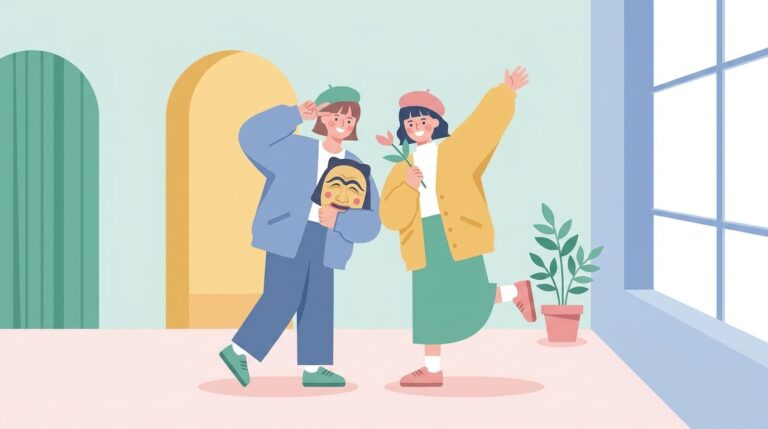
Capture Your Memories: Essential Korean Phrases for Friendship Photos
Phase 1: Empathy & Story Opening
안녕하세요! 매일한글 에디터입니다. (Hello! I am your Daily Hangul editor.)
Imagine walking down the trendy streets of Hongdae or Seongsu with your best friend. You see bright studio lights, colorful photo booths, and laughter echoing from every corner. Taking Ujeong sajin (우정 사진 – friendship photos) is practically a rite of passage in Korea! But the moment you sit on the studio stool in front of a big professional camera and bright studio lights, you freeze. The photographer smiles and says something fast in Korean. You want to ask for pose ideas, request a soft retouching style, or ask for the digital files, but words fail you. Sound familiar?
Don’t worry! Photo studios in Korea are wonderfully accommodating, fun, and warm. By learning just a few simple A2-level Korean expressions, you can turn an awkward, stiff photo session into an unforgettable memory full of laughs and gorgeous snapshots. This guide is crafted from real student experiences and practical tips from local photographers to give you 100% confidence.
Phase 2: Core 3 Expressions Deep-Dive
1. 자연스럽게 찍어 주세요 (Jayeonseureopge jjigeo juseyo)
- Pronunciation: [Ja-yeon-seu-reop-ge jji-geo ju-se-yo] (Think: “Ja-yon-sir-up-gay jjee-guh joo-seh-yo”)
- Meaning: Literal: “Please take it naturally.” / Real Nuance: “Please capture candid, relaxed, and natural moments rather than stiff formal poses.”
- K-Culture Moment: In K-Dramas, when close friends or couples visit a retro black-and-white photo studio, they often laugh and tell the photographer this phrase to get joyful, laughing snapshots.
- Editor’s Insight: The word 자연스럽게 (naturally) comes from 자연 (nature). Using this tells the photographer you prefer soft smiles and relaxed body language over stiff ID-photo posture.
- Situation Spectrum: Casual: ⚠️ (To friends: 자연스럽게 찍어 줘) | Semi-formal: ✅ | Formal: ✅
- 🤔 Think About It: In many Western cultures, photographers direct you quickly with “Say cheese!” In Korea, communicating the desired “vibe” (자연스러운 분위기 – natural vibe) upfront sets the tone for the entire shoot.
2. 포즈 추천해 주세요 (Pojeu chucheonhae juseyo)
- Pronunciation: [Po-jeu chu-cheon-hae ju-se-yo] (Think: “Pose choo-chun-hay joo-seh-yo”)
- Meaning: Literal: “Please recommend a pose.” / Real Nuance: “We are not sure how to pose—could you give us some fun ideas?”
- K-Culture Moment: Seen frequently on Korean variety shows when K-Pop idols visit studio shoots and ask the photographer or stylist for trendy posing concepts.
- Editor’s Insight: Korean photographers know dozens of trendy poses—from the “cheek heart” (볼하트) to cute back-to-back poses. Asking this immediately breaks the ice!
- Situation Spectrum: Casual: ⚠️ (포즈 추천해 줘) | Semi-formal: ✅ | Formal: ✅
- 🤔 Think About It: Why is asking for pose recommendations so welcomed in Korea? Photographers take pride in guiding clients to achieve the best aesthetic harmony (케미 – chemistry).
3. 보정 자연스럽게 해 주세요 (Bojeong jayeonseureopge hae juseyo)
- Pronunciation: [Bo-jeong ja-yeon-seu-reop-ge hae ju-se-yo] (Think: “Boh-jung ja-yon-sir-up-gay hay joo-seh-yo”)
- Meaning: Literal: “Please do the retouching naturally.” / Real Nuance: “Please edit out blemishes and smooth out lighting, but keep our real facial features recognizable!”
- K-Culture Moment: Beauty creators on YouTube often emphasize this phrase when visiting professional profile studios in Gangnam to avoid the “over-photoshopped” look.
- Editor’s Insight: 보정 (bojeong) means photo retouching/editing. Koreans love quick touch-ups for skin tone and symmetry, and telling them 자연스럽게 ensures you look like your best self without looking like a completely different person.
- Situation Spectrum: Casual: ⚠️ (보정 자연스럽게 해 줘) | Semi-formal: ✅ | Formal: ✅
- 🤔 Think About It: How does photo retouching culture differ in your country? In Korea, standard editing is seen as a hospitable customer service rather than deception.
Phase 3: Textbook Korean vs. Real Korean
Situation 1: Explaining why you visited the studio
- 📖 교과서 한국어 (Textbook Korean): 저희는 우정을 기념하는 사진을 촬영하러 왔습니다. (Jeohuineun ujeongeul ginyeomhaneun sajineul chwallyeonghareo watseumnida. – We have come to photograph in commemoration of our friendship.)
- 🗣️ 진짜 한국어 (Real Korean): 저희 친구랑 우정 사진 찍으러 왔어요! (Jeohi chin-gu-rang ujeong sajin jjigeureo wasseoyo! – We came to take friendship photos together!)
- 💡 왜 다를까? (Why is it different?): Textbook phrasing uses heavy sino-korean verbs like 기념하다 (commemorate) and 촬영하다 (shoot). Native speakers use the everyday verb 찍다 (to take/snap) with the warm conversational ending -러 왔어요 (came to do).
Situation 2: Asking for photo prints
- 📖 교과서 한국어 (Textbook Korean): 사진 인화를 몇 장 해 주실 수 있습니까? (Sajin inhwareul myeot jang hae jusil su isseumnikka? – How many sheets of photo printing can you provide?)
- 🗣️ 진짜 한국어 (Real Korean): 한 장씩 인화해 주실 수 있나요? (Han jangssik inhwahae jusil su innayo? – Could we get one print each?)
- 💡 왜 다를까? (Why is it different?): Instead of stiff formal inquiries, adding -씩 (each/per person) is practical and gentle when requesting copies for you and your friend.
Phase 4: K-Culture Deep Dive & Non-verbal Manners
4-1. 눈치 (Nunchi) & Studio Etiquette
- The Mirror Check (거울 확인): Before stepping onto the backdrop, there is always a preparation vanity with hair straighteners, brushes, and mirrors. Take 2–3 minutes to fix your hair and makeup. Rushing straight onto the set while unprepared slows down the photographer.
- Prop Etiquette (소품 매너): Self-photo studios and friendship studios provide fun headbands, sunglasses, and flowers. Choose 1 or 2 props before your session starts so you don’t spend paid studio time browsing the shelves.
- Body Angle: Don’t face the camera completely flat like a passport photo! Turn your shoulders 15 degrees toward your friend to show warmth and connection.
4-2. Cultural Code: The ‘Insaeng-shot’ Phenomenon
In Korea, capturing an 인생샷 (Insaeng-shot – the best photo of your life) with friends is a beloved bonding ritual. Whether at four-cut photo booths (인생네컷) or private rental studios (셀프 사진관), taking matching photos marks milestones—such as birthdays, graduations, trips, or simply celebrating another year of friendship. It’s all about creating physical keepsakes in a digital world.
Phase 5: Real-Life Roleplay Scenario
- Setting: A warm, trendy photo studio in Hongdae with soft background music.
- Characters: You (유저), Your Friend Alex (알렉스), and Photographer Minho (민호 작가님).
- 민호 작가님: 안녕하세요! 오늘 어떤 사진 찍으러 오셨어요?
(Annyeonghaseyo! Oneul eotteon sajin jjigeureo osyeosseoyo?)
“Hello! What kind of photos are you here to take today?”
🎭 (Smiling warmly while adjusting the camera tripod) -
유저: 안녕하세요! 저희 둘이 우정 사진 찍으러 왔어요.
(Annyeonghaseyo! Jeohi duri ujeong sajin jjigeureo wasseoyo.)
“Hello! The two of us came to take friendship photos.”
🎭 (Pointing happily to your friend Alex) -
민호 작가님: 좋습니다! 준비되시면 가운데 의자에 편하게 앉아 보세요.
(Jotseumnida! Junboidoesimyeon gaunde uijae pyeonhage anja boseyo.)
“Great! Once you are ready, please take a comfortable seat on the center chairs.”
🎭 (Gesturing toward two wooden stools under the softbox lights) -
알렉스: 조금 어색해요. 포즈 추천해 주세요!
(Jogeum eosaekhaeyo. Pojeu chucheonhae juseyo!)
“It feels a bit awkward. Please recommend a pose!”
🎭 (Laughing nervously while stiffening arms) -
민호 작가님: 하하, 그럼 서로 마주 보고 활짝 웃어 볼까요? 하나, 둘, 셋!
(Haha, geureom seoro maju bogo hwaljjak useo bolkkayo? Hana, dul, set!)
“Haha, then how about looking at each other with a big smile? One, two, three!”
🎭 (Clicking the shutter as the flash pops) -
유저: 너무 재밌어요! 자연스럽게 많이 찍어 주세요.
(Neomu jaemisseoyo! Jayeonseureopge mani jjigeo juseyo.)
“This is so fun! Please take lots of natural shots.”
🎭 (Relaxing shoulders and leaning toward Alex) -
민호 작가님: 네, 아주 잘하고 계세요! 이제 사진 골라 보실까요?
(Ne, aju jalhago gyeseyo! Ije sajin golla bosilkkayo?)
“Yes, you’re doing great! Shall we pick the photos now?”
🎭 (Showing the preview screen on the computer) -
유저: 네! 인화 두 장 해 주시고, 보정도 자연스럽게 해 주세요.
(Ne! Inhwa du jang hae jusigo, bojeongdo jayeonseureopge hae juseyo.)
“Yes! Please print two copies, and please do the retouching naturally.”
🎭 (Nodding politely with a warm smile)
🔀 Interactive Decision Point
The photographer asks: “원본 파일도 이메일로 보내드릴까요?” (Wonbon paildo imeillo bonaedeurilkkayo? – Shall I send the original unedited image files via email as well?) How do you respond?
- Option A: “네, 원본 파일도 다 받고 싶어요!” (Yes, I’d like to receive all original files too!)
- 👉 Feedback [Best]: Clear and polite! Many studios provide original files for free or a small fee, giving you all the outtakes to keep.
- Option B: “아니요, 사진 버려 주세요.” (No, please throw the photos away.)
- 👉 Feedback [Bad]: Too harsh and unnatural! If you don’t need them, simply say “괜찮아요, 인화된 사진만 받을게요” (No thank you, I will just take the printed ones).
- Option C: “포토샵 진짜 많이 해 줘.” (Photoshopped it real heavy.)
- 👉 Feedback [Risk]: Uses informal speech (반말) to staff and sounds slightly impolite. Always use polite endings like -해 주세요.
Phase 6: 10-Second Emotion Shadowing Drill
Practice saying these with emotion! Match the rhythm breaks marked by /.
[😊 Exciting & Cheerful]
저희 / 우정 사진 / 찍으러 왔어요!
(Jeohi / ujeong sajin / jjigeureo wasseoyo!)-
[🤔 Curious & Friendly]
어떤 포즈가 / 좋을까요? / 추천해 주세요!
(Eotteon pojeuga / joeulkkayo? / Chucheonhae juseyo!) -
[✨ Polite & Hopeful]
보정은 / 너무 세지 않게 / 자연스럽게 해 주세요.
(Bojeongeun / neomu seji anke / jayeonseureopge hae juseyo.)
Phase 7: K-Culture Mini Dictionary
- 인생샷 (Insaeng-syat) | Noun
- Translation: Life-defining photo / Best photo of your life.
- Usage: Used when a photo turns out exceptionally flattering. “오늘 여기서 인생샷 건졌어!” (I got the best shot of my life here today!)
- 소품 (So-pum) | Noun
- Translation: Props / Accessories.
- Usage: Refers to headbands, fake flowers, or vintage glasses in photo studios. “귀여운 소품 쓰고 찍자!” (Let’s wear cute props and shoot!)
- 원본 (Won-bon) | Noun
- Translation: Original / Unedited file.
- Usage: Asking whether the studio sends all digital raw shots. “원본 파일은 무료인가요?” (Are the original files free?)
- 인화 (In-hwa) | Noun/Verb
- Translation: Photo printing / Developing.
- Usage: Used when choosing how many paper copies to print. “이 사진으로 인화해 주세요.” (Please print this photo.)
Phase 8: Traveler’s Survival Kit
Top 3 Survival Phrases
- 여기서 찍으면 되나요? (Yeogiseo jjigeumyeon doenayo?)
- Meaning: Should we take the photo here?
- Pro Tip: Use this when entering the shooting booth to confirm where to stand.
- 소품 써도 돼요? (Sopum sseodo dwaeyo?)
- Meaning: Can we use these props?
- Pro Tip: Polite way to ask before grabbing hairbands or sunglasses from the display shelf.
- 이메일로 보내 주실 수 있나요? (Imeillo bonae jusil su innayo?)
- Meaning: Can you send them by email?
- Pro Tip: Show your email address written in your phone’s memo app when saying this.
Editor’s Travel Note
- Finding Studios: Search for keywords like 우정 스냅 (Friendship snap) or 셀프 사진관 (Self-photo studio) directly on the Naver Map app download to find highly rated local studios with instant booking options.
- Payment & Delivery: Most independent studios accept credit cards and mobile pay. Digital retouched files are usually delivered via email within 1 to 2 hours or same-day.
Phase 9: Deep Dive Thought Question
In many parts of the world, studio portraits are reserved for formal events like weddings or annual family portraits. In contemporary Korean youth culture, however, studio photography is casual, communal, and frequent. It is a tangible way to capture fleeting moments of youth (청춘) and solidify friendships. Taking photos together reinforces social belonging and mutual appreciation.
💬 Your Turn: Have you ever taken studio photos with your close friends? What kind of pose or concept would you want to try in a Korean studio? Share your thoughts below!
Phase 10: FAQ & Avoiding Misunderstandings
Q: What is the difference between 인생네컷 (four-cut booth) and a 셀프 사진관 (self-studio)?
A: 인생네컷 is an automated photo booth with quick timed countdowns (usually under $5 for 2 strips). A 셀프 사진관 is a private studio room where you hold a remote shutter button connected to professional cameras and studio lights (usually $20–$40 for 15–30 minutes), offering higher resolution and retouching services.
Q: Can I request specific edits like skin smoothing or body slimming?
A: Yes! Korean studios often ask about your preference. You can say “피부 보정 위주로 해 주세요” (Please focus on skin retouching) or “턱선 조금만 줄여 주세요” (Please slim the jawline just a tiny bit).
Q: Do I need to book in advance?
A: Automatic four-cut booths are walk-in only (no reservation needed). Professional friendship studios in popular areas like Hongdae, Ikseon-dong, or Seongsu strongly recommend reserving in advance via Naver or Instagram DM.
🚨 Common Mistakes Warning Board
- Mistake: Using 반말 (informal speech) like “사진 찍어” to studio staff.
- Correct Action: Always say “사진 찍어 주세요” (Please take a photo).
- Mistake: Leaving props scattered on the floor after the session.
- Correct Action: Return headbands and glasses to their original shelf immediately after shooting.
- Mistake: Forgetting to write your email address clearly for digital delivery.
- Correct Action: Double-check dot-coms and lowercase letters on the studio’s tablet form.
Phase 11: Action Mission & Community Challenge
- 🥉 Bronze Mission (Solo): Practice saying “자연스럽게 찍어 주세요” 5 times in front of your mirror with a relaxed smile.
- 🥈 Silver Mission (Social): Next time you take a photo with a friend, use the Korean pose 볼하트 (cheek heart) and tag it on social media!
- 🥇 Gold Mission (Real Life): Visit a Korean photo booth or studio and order prints using: “두 장 인화해 주세요!”
- 🎮 K-Culture Mission: Watch any K-Drama or vlog where characters visit a photo booth and see if you can spot the word 소품 or 인생샷!
Phase 12: Interactive Quiz Challenge
Test your knowledge before your studio visit!
1. [Situation Check] You want the photographer to give you ideas on how to stand and look. What should you say?
a) 사진 지워 주세요 (Please delete the photo)
b) 포즈 추천해 주세요 (Please recommend a pose)
c) 소품 사 주세요 (Please buy me props)
👉 Click to reveal Answer & Explanation
Correct Answer: b) 포즈 추천해 주세요
Explanation: 포즈 추천해 주세요 politely asks for pose ideas. Option (a) means delete the photo, and (c) asks someone to buy you props!
2. [Fill in the Blank] 저희 둘이 _______ 사진 찍으러 왔어요! (We came to take friendship photos!)
👉 Click to reveal Answer & Explanation
Correct Answer: 우정 (U-jeong)
Explanation: 우정 means friendship. 우정 사진 translates to friendship photos.
3. [True / False] In Korea, asking for photo retouching (보정) is considered offensive to the photographer.
👉 Click to reveal Answer & Explanation
Correct Answer: False
Explanation: Retouching (보정) is a standard and expected part of Korean studio photography packages. Asking for 자연스러운 보정 (natural retouching) is completely normal and welcomed!







