

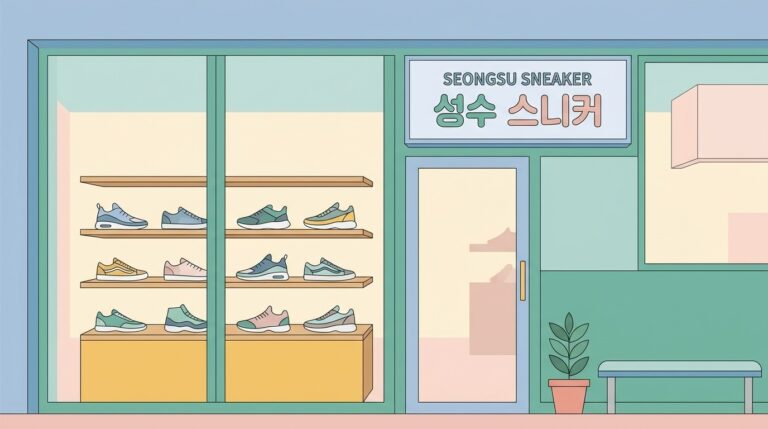
Stop Getting Lost in Korean Shoe Sizes: The Ultimate Millimeter Shopping Guide
Phase 1: Empathy (Immersive Storytelling Opening)
안녕하세요! 매일한글 에디터입니다.
Picture this: You are standing in the middle of a trendy streetwear boutique in Seongsu-dong or bustling Hongdae. You spot that stunning pair of retro sneakers you saw your favorite K-pop idol rock at Incheon Airport. Heart racing, you catch the sales associate’s eye and confidently ask, “Do you have this in a US Men’s 8.5… or maybe a European 42?”
The clerk stares back politely, eyes blinking in sudden panic before scrambling to pull out a smartphone calculator app. You both stand there in awkward silence while they desperately Google conversion charts.
In South Korea, footwear sizing is not categorized by arbitrary unit numbers like 7, 8, 38, or 42. Korea exclusively uses millimeters (mm) representing the exact length of your foot from heel to toe (e.g., 230, 240, 265, 280). If you don’t know your millimeter size—or how to ask if a shoe runs narrow or wide—shopping in Seoul’s fashion hubs can quickly turn from exciting to intimidating.
Based on feedback from hundreds of intermediate learners shopping in Korea, this practical B2 guide breaks down the essential millimeter conversion system, native fashion slang, and polite cultural etiquette so you can shop kicks like a true local.
Phase 2: 3 Core Expressions Deep-Dive
1. 이거 240(이백사십) 사이즈로 신어볼 수 있나요?
- Pronunciation: Igeo ibaek-sasip sa-i-jeu-ro sin-eo-bol su in-na-yo? (Sounds like: Ee-guh ee-baek-sah-sheep sah-ee-jeu-roh shin-uh-bohl soo een-nah-yo?)
- Meaning: Literal: “Can I try wearing this in size 240?” / Nuance: “Could I try this pair on in a 240mm, please?”
- K-Culture Moment: You’ll hear this constantly in K-dramas whenever characters hit up Myeongdong or department store sneaker corners.
- Editor’s Insight: In Korean, the verb for “to wear shoes/socks” is specifically 신다 (sinda), distinct from wearing clothes (입다 – ipda) or hats/glasses (쓰다 – sseuda). Always say 신어보다 (sineoboda – try on shoes) rather than 입어보다.
- Situation Spectrum: Casual (⚠️ 신어봐도 돼요?) | Semi-formal (✅ 신어볼 수 있나요?) | Formal (✅ 신어봐도 되겠습니까?)
- 🤔 Think About It: Notice how Korean uses exact dimensional measurement (mm) rather than standardized arbitrary sizing. How does measuring by exact length reflect Korean society’s appreciation for precision?
2. 볼이 조금 좁게 나온 편인가요?
- Pronunciation: Bor-i jo-geum jop-ge na-on pyeon-in-ga-yo? (Sounds like: Bohl-ee joh-geum johp-geh nah-ohn pyun-een-gah-yo?)
- Meaning: Literal: “Does the ball (width) come out on the narrower side?” / Nuance: “Does this shoe run a bit narrow in the toe box?”
- K-Culture Moment: Streetwear enthusiasts in Seongsu debating shoe silhouettes on YouTube sneaker review channels.
- Editor’s Insight: 발볼 (Balbol) refers to foot width. Korean shoes often cater to wider Asian foot shapes, but imported or designer sneakers can run slim. Using ~편이다 (to tend to / be on the side of) makes your inquiry sound natural and polite.
- Situation Spectrum: Casual (⚠️ 볼 좁게 나왔어?) | Semi-formal (✅ 볼이 좁게 나온 편인가요?) | Formal (✅ 발볼이 좁은 편입니까?)
- 🤔 Think About It: Adding “~편 (side/tendency)” softens statements in Korean conversations, preventing direct or blunt phrasing.
3. 사이즈가 조금 넉넉하게/타이트하게 나왔어요.
- Pronunciation: Sa-i-jeu-ga jo-geum neong-neok-ha-ge / ta-i-teu-ha-ge na-wat-seo-yo.
- Meaning: Literal: “The size came out a bit generously / tightly.” / Nuance: “This model runs a bit roomy / runs a bit small.”
- K-Culture Moment: Sales assistants explaining how a specific sneaker silhouette fits on an episode of a fashion variety show.
- Editor’s Insight: 넉넉하다 (neongneokhada) means roomy, ample, or generous. It is the gold-standard Korean adjective for clothing and shoes that have extra breathing room.
- Situation Spectrum: Casual (⚠️ 사이즈 크게 나왔어) | Semi-formal (✅ 넉넉하게 나왔어요) | Formal (✅ 여유 있게 제작되었습니다)
- 🤔 Think About It: “넉넉하다” is rooted in traditional Korean hospitality and comfort. Why do you think Koreans favor generous space in everyday design?
Phase 3: Textbook Korean vs. Real Korean
Situation 1: Asking for your size
- 📖 교과서 한국어 (Textbook): 이 신발의 240 밀리미터 치수가 매장에 있습니까? (I sinbal-ui ibaeksasip millimiteo chisuga maejange itsseumnikka?)
- 🗣️ 진짜 한국어 (Real Native): 혹시 이거 240(이백사십) 재고 있을까요? (Hoksi igeo ibaeksasip jaego isseulkkayo?)
- 💡 왜 다를까? (Why the difference?): Real shoppers never say “millimeter” out loud—it’s implied! Saying “밀리미터 치수” sounds like a robotics manual. Starting with 혹시 (by any chance) instantly polishes your intermediate natural tone.
Situation 2: Asking if you can size up
- 📖 교과서 한국어 (Textbook): 더 큰 치수로 교환하여 주십시오. (Deo keun chisuro gyohwanhayeo jusipsio.)
- 🗣️ 진짜 한국어 (Real Native): 반 업(Half-up)해서 245로 신어볼게요! (Ban eop-haeseo ibaeksasibo-ro sineobolgeyo!)
- 💡 왜 다를까? (Why the difference?): Modern Korean sneakerheads use loanwords like 반 업 (Ban-eop = half size up) and 반 다운 (Ban-daun = half size down) all the time.
Phase 4: K-Culture Deep Dive & Non-Verbal Manners
4-1. 눈치 (Nunchi) & Shoe Store Etiquette
- The Shoe Horn Courtesy: In most Korean shoe boutiques, you will spot a long plastic or metal shoehorn, called 구두주걱 (gudujugeok) or 헤라 (hera), hanging near the try-on stools. Korean clerks pride themselves on keeping the heel counter pristine. Always reach for the shoehorn rather than crushing the sneaker heel.
- The Test Mat Rule: Never step directly onto the dusty retail tile floor with untied display shoes. Step onto the provided 러그 매트 (rug mat) or mirror platform.
- Two-Handed Return: When handing shoes back if they don’t fit, use both hands with a gentle bow: “죄송하지만 사이즈가 좀 안 맞네요. 감사합니다.”
4-2. Cultural Code: K-Streetwear & ‘Kkwak-kkeun’ (꽉끈)
Korean youth culture has popularized 오버사이징 (oversizing) and 꽉끈 (Gkwak-kkeun – tight lacing). Many Koreans intentionally buy sneakers 5mm to 10mm larger than their actual foot size (일 업 – one full size up) so they can lace the sneakers super tight for a slimmer aesthetic silhouette.
Phase 5: Real-World Roleplay Scenario
- Setting: A high-end sneaker select shop in Seongsu-dong.
- Characters: Minwoo (민우 – Hip Store Staff) & You (B2 Korean Learner).
- 민우: 어서 오세요! 편하게 둘러보시고, 마음에 드는 제품 있으시면 말씀해 주세요. 🎭 친절하게 미소 지으며 다가온다.
(Eoseo oseyo! Pyeonhage dulleobosigo, maeume deuneun jepum isseusimyeon malsseumhae juseyo. – Welcome! Feel free to look around and let me know if you like anything.) - You: 저기요, 혹시 이 스니커즈 260(이백육십) 사이즈 신어볼 수 있을까요? 🎭 진열된 신발을 손으로 공손히 가리키며
(Jeogiyo, hoksi i seunikeojeu ibaekyuksip sa-i-jeu sineobol su isseulkkayo? – Excuse me, could I try this sneaker in a 260 by any chance?) - 민우: 네, 잠시만요! 창고에서 가져다드릴게요. 🎭 창고로 가서 새 박스를 들고 온다.
(Ne, jamsimanyo! Changgo-eseo gajyeodadeurilgeyo. – Sure, one moment! I’ll bring it from our stock room.) - You: 감사합니다! 🎭 구두주걱을 사용해 조심스럽게 착용해 본다.
(Gamsahamnida! – Thank you!) - 민우: 신어보시니까 사이즈감은 어떠세요? 발볼 괜찮으세요? 🎭 피팅 상태를 살피며 물어본다.
(Sineobosinikka sa-i-jeu-gameun eotteoseyo? Balbol gwaenchaneuseyo? – How does the sizing feel as you try them on? Is the foot width okay?) - You: 음, 발볼이 살짝 타이트한 느낌인데, 원래 좁게 나온 편인가요? 🎭 앞코 부분을 살짝 눌러보며
(Eum, balbor-i saljjak ta-i-teuhan neukkim-inde, wonrae jopge naon pyeon-in-ga-yo? – Um, the width feels slightly tight. Does this model usually run narrow?) - 민우: 네, 이 모델이 발볼이 좁게 나와서요. 보통 반 업해서 많이 신으세요. 265로 가져다드릴까요? 🎭 고개를 끄덕이며 265 상자를 가리킨다.
(Ne, i moder-i balbor-i jopge nawaseoyo. Botong ban eop-haeseo mani sineuseyo. Ibaekyuksibo-ro gajyeodadeurilkkayo? – Yes, this model runs narrow. People usually go half a size up. Shall I fetch a 265?) - You: 네, 그럼 반 업해서 265로 한 번 신어볼게요! 🎭 기분 좋게 화답한다.
(Ne, geureom ban eop-haeseo ibaekyuksibo-ro han beon sineobolgeyo! – Yes, then I will size up by half and try the 265!)
🔀 Interactive Decision Point
After trying the 265, they fit like a glove! How do you close the purchase like a native?
- Choice A (Best): “딱 맞네요! 이걸로 계산해 주세요. 새 상품으로 있을까요?” (Perfect fit! I will buy this one. Do you have a fresh/boxed pair?)
- Feedback: Perfect! Asking for 새 상품 (fresh boxed pair) ensures you don’t get the display model that everyone stepped into.
- Choice B (Bad): “이거 8.5 사이즈 박스에 넣어 주세요.” (Put this in size 8.5 box.)
- Feedback: Clunky and mixes US sizing back in. Always stick to mm terminology at the checkout register.
- Choice C (Risk): “신던 거 그냥 신고 나갈게요, 바코드만 찍어줘요!” (I will wear what I’m wearing and walk out, just scan the barcode!)
- Feedback: Grammatically understandable, but dropping honorifics (반말) to a clerk sounds rude unless you add ~주세요.
Phase 6: 10-Second Emotional Shadowing Drill
- Drill 1 [👟 호기심 가득하게 – Inquiring with curiosity]:
혹시 / 이거 240 사이즈 / 재고 있을까요?
(Hok-si / i-geo i-baek-sa-sip sa-i-jeu / jae-go is-seul-kka-yo?) -
Drill 2 [🤔 신중하고 꼼꼼하게 – Deliberating carefully on fit]:
발볼이 / 살짝 타이트한데, / 반 업 해야 할까요?
(Bal-bol-i / sal-jjak ta-i-teu-han-de, / ban eop hae-ya hal-kka-yo?) -
Drill 3 [😄 만족스럽고 확신에 차서 – Confident and happy customer]:
착화감이 / 진짜 편하네요! / 이걸로 할게요.
(Chak-hwa-gam-i / jin-jja pyeon-ha-ne-yo! / I-geol-ro hal-ge-yo.)
Phase 7: K-Culture Mini Dictionary
- 발볼 (Bal-bol) | Noun: Foot Width / Ball of the foot
Essential term for shoes. Combined with 넓다 (wide) or 좁다 (narrow). - 반 업 / 반 다운 (Ban-eop / Ban-da-un) | Noun/Verb: Half size up (+5mm) / Half size down (-5mm)
Everyday sneakerhead and shopping vocabulary used in all modern retail stores. - 착화감 (Chak-hwa-gam) | Noun: Fit feel / In-shoe comfort
Derived from Hanja 착화 (wearing shoes) + 감 (feeling). Used to describe how comfortable soles and uppers feel. - 새 상품 (Sae sang-pum) | Noun: Brand-new boxed product (unopened)
Contrasts with 디스플레이 제품 (display item). Essential phrase when paying.
Phase 8: Traveler’s Survival Kit
Top 3 Survival Phrases
- 발볼이 넓은 편이에요. (Balbor-i neolbeun pyeon-i-e-yo.)
Pro Tip: Tell the clerk upfront so they bring the right silhouette immediately. - 양말 신고 신어봐도 되나요? (Yangmal sin-go sin-eo-bwa-do doe-na-yo?)
Pro Tip: Polite question if you are wearing thick winter socks or stockings. - 새 상품으로 꺼내주실 수 있나요? (Sae sangpum-euro kkeonaejusil su innayo?)
Pro Tip: Ensures you get crisp stock straight from the back warehouse.
Quick Conversion Cheat Sheet (mm ↔ US / EU)
- 230 mm ≈ US Women 6 / EU 36.5
- 240 mm ≈ US Women 7 / US Men 6 / EU 38
- 250 mm ≈ US Women 8 / US Men 7 / EU 39.5
- 260 mm ≈ US Men 8 / EU 41
- 270 mm ≈ US Men 9 / EU 42.5
- 280 mm ≈ US Men 10 / EU 44
Editor’s Travel Note
Before shopping in Korea, search local shoe trends directly through the [무신사 스토어 앱 다운로드 (Musinsa Store App download)] to check millimeter sizing reviews and stock availability in real time.
Phase 9: “A Step Deeper” (Cultural Reflection)
South Korea’s universal millimeter shoe measurement is deeply tied to the country’s rapid post-war modernization and standardization. While imperial systems in the West evolved organically over centuries with inconsistent quarter/half-step conversions, Korea adopted the SI metric system strictly across manufacturing in the late 20th century. This mindset prioritizes absolute clarity: 260 means 260 millimeters of interior foot space, eliminating the ambiguity between US Men’s, US Women’s, and UK sizing.
💬 Your Turn: What shoe sizing system does your home country use, and have you ever experienced a sizing mishap when traveling abroad? Share your story in the comments below!
Phase 10: FAQ & Common Mistakes
Q: Do Korean shoe sizes jump by 5mm or 10mm?
A: Most sneakers and casual lifestyle shoes are released in 5mm increments (e.g., 230, 235, 240). However, some fashion boots, heels, or luxury imports only come in 10mm increments (230, 240, 250). In that case, ask: “10단위로만 나오나요?” (Does this only come in 10mm units?)
Q: How do I pronounce millimeter sizes in Korean?
A: Always use Sino-Korean numbers: 240 = 이백사십 (ibaeksasip), 265 = 이백육십오 (ibaekyuksibo), 280 = 이백팔십 (ibaekpalsip).
Q: Can I return or exchange shoes bought in physical Korean stores?
A: Yes, usually within 7 to 14 days, provided you have the original receipt, undamaged box, and the soles show zero signs of outdoor wear. Say: “사이즈 교환하러 왔어요.” (I came to exchange the size.)
🚨 Common Mistakes Alert
- Mistake: Asking “이 신발 입어봐도 돼요?” -> Fix: Shoes take 신다. Say “신어봐도 돼요?”.
- Mistake: Saying “사이즈 에이트(Size 8) 있어요?” -> Fix: Convert to mm (e.g., 260) before speaking.
- Mistake: Walking onto bare store floors without using the provided fitting mat or stool.
Phase 11: Action Mission & Engagement
- 🥉 Bronze Mission (Solo Drill): Stand in front of your shoe rack and say your exact foot size in Korean 5 times out loud: “제 발 사이즈는 [2XX]예요!”
- 🥈 Silver Mission (Social Share): Check the tag on your favorite pair of sneakers, look for the ‘JP’ or ‘KR’ (mm) label, and comment your mm size below.
- 🥇 Gold Mission (Real Action): Walk into an ABC-MART or sneaker shop in Korea (or an online Korean shopping mall) and type/ask for “반 업한 사이즈”.
- 🎮 K-Culture Mission: Watch a video of your favorite K-pop idols doing a “What’s in My Bag / Closet” and listen for when they mention their shoe size in millimeters!
Phase 12: Interactive Quiz Challenge
Q1. Fill in the blank:
“이 신발 발볼이 좁아서 보통 5mm 크게 신어요. 저 260에서 [______]해서 265로 신어볼게요.”
Q2. True or False:
When trying on shoes in Korea, you should use the verb ‘입어보다’. (T / F)
Q3. Situation:
You are a US Men’s size 9 (approx. 270mm). How do you ask the clerk in polite intermediate Korean if they have your size in stock?
👉 Click here to reveal the answers and explanations!
- A1: 반 업 (Ban-eop). Going up by 5mm (half size) is called 반 업 (Half-up).
- A2: False (F). Clothing is 입어보다, but shoes must use 신어보다.
- A3: “혹시 이 모델 270(이백칠십) 재고 있을까요?” (Using 혹시 and Sino-Korean numbers makes it 100% natural!)







