

Phase 1: Empathy (Storytelling Opening)
안녕하세요! 매일한글 에디터입니다. (Hello! I’m your Daily Hangul editor.)
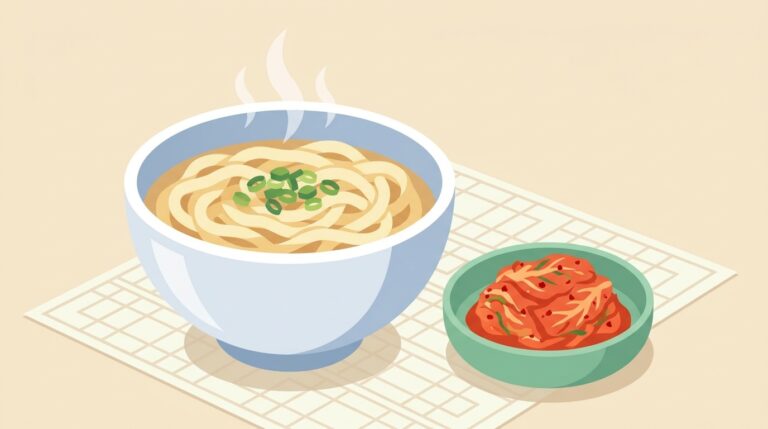
Picture this: It’s a rainy afternoon in Seoul. The temperature drops, mist clings to the alleyways of Euljiro, and your stomach lets out an audible rumble. You step into a steamy, bustling noodle house where the air is thick with rich anchovy and clam broth. You order a steaming bowl of kalguksu (knife-cut noodles). But when your bowl arrives, you notice the table next to you doing something specific: they aren’t reaching for salt or pepper—they are diving aggressively into a fresh, vibrant bowl of geotjeori (freshly tossed kimchi), asking the owner for refills before their bowl is even half-finished.
Many intermediate Korean learners know the word kimchi, but when faced with local noodle joints, they freeze. Is this regular kimchi or something else? How do you ask for more garlic-heavy geotjeori without sounding awkward? Why does everyone insist that kalguksu tastes incomplete without it?
Mastering the culinary interplay between silky, hearty wheat noodles and crunchy, peppery geotjeori isn’t just about ordering lunch—it is your ticket into authentic Korean food culture. Based on feedback from hundreds of our intermediate learners who wanted to bridge the gap between classroom Korean and real street-level foodie fluency, this guide will equip you with natural expressions, cultural instincts, and dining etiquette so you can order, enjoy, and talk like a seasoned Seoulite.
Phase 2: 3 Key Expressions Deep-Dive
1. 칼국수는 겉절이 맛으로 먹죠! (Kalguksu-neun geotjeori maseuro meokjyo!)
- Pronunciation: [Kal-guk-su-neun geot-jeo-ri ma-seu-ro meok-jyo!] (Sounds like: Kal-gook-soo-noon gut-juh-ree mah-soo-roh muck-jyo!)
- Meaning: Literally: “One eats kalguksu for the taste of geotjeori!” | Actual Nuance: “The real soul of a kalguksu spot is definitely its fresh kimchi!”
- K-Culture Moment: Seen in food variety shows like Delicious Guys or Heo Young Man’s Food Travel, where hosts judge a kalguksu restaurant’s true mastery by tasting the geotjeori first before the broth.
- Editor’s Insight: Using “~맛으로 먹다” means the accompanying item is so vital that it defines the entire experience. It shows you understand Korean culinary soul.
- Situation Spectrum: Casual ✅ | Semi-formal ✅ | Formal ⚠️
- 🤔 Think About It: In your culture, is there a side dish or condiment (like fries with special sauce, or roast beef with gravy) that actually makes or breaks the main dish?
2. 여기 겉절이 리필 좀 부탁드려요. (Yeogi geotjeori ripil jom butakdeuryeoyo.)
- Pronunciation: [Yeo-gi geot-jeo-ri ri-pil jom bu-tak-deu-ryeo-yo.] (Sounds like: Yuh-gee gut-juh-ree ree-peel jom boo-tahk-deu-ryuh-yo.)
- Meaning: Literally: “Here, fresh kimchi refill please.” | Actual Nuance: “Excuse me, could we please get a refill on the fresh kimchi?”
- K-Culture Moment: Essential in high-turnover local noodle shops where side dishes are constantly replenished for free.
- Editor’s Insight: Adding jom (a little/please) softens the request instantly, transforming a transactional order into a warm, polite interaction.
- Situation Spectrum: Casual ✅ | Semi-formal ✅ | Formal ✅
- 🤔 Think About It: Why does Korean dining culture embrace free banchan (side dish) refills, and how does this reflect community sharing (jeong)?
3. 국물이 칼칼하고 시원해요. (Gungmuri kalkalhago siwonhaeyo.)
- Pronunciation: [Gung-mu-ri kal-kal-ha-go si-won-hae-yo.] (Sounds like: Goong-moo-ree kahl-kahl-hah-goh shee-won-hae-yo.)
- Meaning: Literally: “The broth is throat-spicy and refreshing/cool.” | Actual Nuance: “The broth has a crisp spicy kick and feels incredibly soothing and revitalizing.”
- K-Culture Moment: Heard in almost every K-Drama hangover or rainy-day scene when characters take that first restorative sip of soup.
- Editor’s Insight: Siwonhada here does not mean cold temperature; it describes the deep, cleansing relief felt in the chest and stomach from hot, savory soup.
- Situation Spectrum: Casual ✅ | Semi-formal ✅ | Formal ✅
- 🤔 Think About It: How does your native language express comforting bodily sensations from food that aren’t strictly taste-based?
Phase 3: Textbook Korean vs. Real Korean
Situation 1: Asking if the kimchi is freshly made today
- 📖 교과서 한국어 (Textbook): 이 김치는 오늘 만든 것입니까? (I gimchineun oneul mandeun geosimnikka? – Is this kimchi made today?)
- 🗣️ 진짜 한국어 (Real-Life): 사장님, 이거 오늘 갓 담그신 겉절이예요? (Sajangnim, igeo oneul gat damgeusin geotjeoriyeyo? – Boss, is this geotjeori freshly tossed today?)
- 💡 Why the difference? Real Koreans use the prefix gat- (갓, “just/freshly”) and culinary verbs like damgeuda (담그다, to ferment/toss kimchi) to sound authentic and respectful.
Situation 2: Praising the combination of noodles and kimchi
- 📖 교과서 한국어 (Textbook): 국수와 김치가 아주 잘 맞습니다. (Guksuwa gimchiga aju jal matseumnida. – The noodles and kimchi match well.)
- 🗣️ 진짜 한국어 (Real-Life): 칼국수랑 겉절이 조합이 완전 미쳤는데요? (Kalguksurang geotjeori johabi wanjeon michyeonneundeyo? – The kalguksu and geotjeori combo is totally insane!)
- 💡 Why the difference? At intermediate (B2) level, conversational Korean uses johap (combination/pairing) and expressive colloquial slang like wanjeon michyeotda (completely crazy/out of this world) to show genuine enthusiasm.
Phase 4: K-Culture Deep Dive & Non-Verbal Manners
4-1. Nunchi & Table Gestures
When entering a specialized kalguksu house, observe the kimchi pot (kimchi hangari) placed on the table.
* The Self-Cut Etiquette: Geotjeori is often served in long, uncut leaves inside an earthenware pot with tongs and kitchen shears. Do not bite into huge uncut cabbage leaves with your teeth! Use the tongs to lift a few leaves into the side plate, snip them into bite-sized 4–5 cm pieces with scissors, and leave the main pot clean for others.
* Broth Respect: Always sip one spoonful of clear broth first to appreciate the chef’s base broth before adding chili paste (dadegi) or geotjeori juices.
4-2. Cultural Code: The Chemistry of Geotjeori & Kalguksu
Unlike fermented winter gimjang kimchi that has matured with sour tang, geotjeori is unfermented, coated with fragrant sesame oil, coarse red pepper flakes (gochugaru), and pungent fresh garlic. Because kalguksu noodles have a starchy, mild broth that coats the palate, the crisp, garlicky snap of geotjeori cuts through the starch, resetting your taste buds after every bite.
Phase 5: Real Roleplay Scenario
Setting: A legendary 40-year-old kalguksu restaurant in Jongno during a busy lunch hour.
Characters: Alex (Intermediate Korean learner) & Imo-nim (Friendly veteran restaurant owner).
- 이모님: 어서 와요! 몇 분이세요? 비도 오는데 얼큰한 칼국수 드려요?
(Eoseo wayo! Myeot bun-iseyo? Bido oneunde eolkeunhan kalguksu deuryeoyo?)
“Welcome! How many? Since it’s raining, should I get you our spicy kalguksu?”
🎭 Wiping down a stainless-steel table with a swift, welcoming smile. -
알렉스: 안녕하세요, 이모님! 두 명이고요, 기본 바지락 칼국수 두 그릇 주세요.
(Annyeonghaseyo, imonim! Du myeong-igoyo, gibon bajirak kalguksu du geureut juseyo.)
“Hello, Imo-nim! Table for two, and we’ll take two bowls of the standard clam kalguksu please.”
🎭 Sitting down and placing chopsticks neatly on napkins for their friend. -
이모님: 네~ 항아리에 있는 겉절이 먹을 만큼만 덜어서 잘라 드세요!
(Ne~ hang-ari-e inneun geotjeori meogeul mankeumman deoreoseo jalla deuseyo!)
“Sure thing~ Take as much geotjeori from the jar as you need and snip it with the scissors!”
🎭 Placing an earthenware kimchi jar and tongs on the table. -
알렉스: 와, 겉절이 양념 빛깔이 장난 아니네요. 매일 직접 담그시나 봐요?
(Wa, geotjeori yangnyeom bitkkari jangnan anineyyo. Maeil jikjeop damgeusina bwayo?)
“Wow, the color of this seasoning is no joke. I guess you make it fresh every single day?”
🎭 Sniffing the fragrant garlic aroma while cutting kimchi into small pieces. -
이모님: 칼국수 집은 겉절이가 생명이지! 오늘 아침에 막 무친 거라 아삭할 거야.
(Kalguksu jibeun geotjeoriga saengmyeong-iji! Oneul achime mak muchin geora asakhal geoya.)
“Kimchi is the lifeblood of a noodle house! Freshly tossed this morning, so it’s extra crunchy.”
🎭 Setting down two steaming, overflowing bowls of clam noodle soup. -
알렉스: 국물이 진짜 칼칼하고 시원해요! 칼국수에 겉절이 얹어 먹으니까 환상이네요.
(Gungmuri jinjja kalkalhago siwonhaeyo! Kalguksue geotjeori eonjeo meogeunikka hwangsang-ineyyo.)
“The broth is so restorative and clean! Topping the noodles with geotjeori is pure perfection.”
🎭 Slurping noodles together with a piece of kimchi resting on top. -
이모님: 아이고, 먹을 줄 아네! 김치 더 필요하면 언제든 말해요.
(Aigo, meogeul jul ane! Gimchi deo piryohamyeon eonjedeun malhaeyo.)
“Oh my, you really know how to eat! Let me know anytime if you need more kimchi.”
🎭 Beaming with proud culinary satisfaction. -
알렉스: 사장님, 겉절이가 너무 맛있어서 한 접시만 더 부탁드려요!
(Sajangnim, geotjeoriga neomu masisseoseo han jeopsiman deo butakdeuryeoyo!)
“Boss, this geotjeori is so delicious, could we get one more plate please?”
🎭 Holding up the empty side dish with both hands politely.
🔀 Interactive Choice Point
You finish all the kimchi in your personal jar. What do you do?
* Option A: Silently stand up, walk into the kitchen with your plate, and grab kimchi from the prep counter yourself.
* Option B: Make gentle eye contact, raise a hand slightly, and say: “사장님, 겉절이 항아리 좀 채워주실 수 있나요?” (Sajangnim, geotjeori hang-ari jom chaewojusil su innayo?)
* Option C: Don’t ask because you fear you will be charged an extra 5,000 KRW for side dishes.
Feedback:
* Option A (Risk): Entering commercial kitchens without invitation breaks sanitary regulations and disrupts bustling staff.
* Option B (Best Choice): Perfect! It is courteous, honors their hospitality, and uses accurate terminology (hang-ari = jar).
* Option C (Bad Choice): In Korea, side dishes like kimchi are freely replenished. Hesitating means missing out on the best part of the meal!
Phase 6: 10-Second Emotion Shadowing Drill
Practice matching native emotional inflections at natural speed. Follow the slashes / for natural pause points:
[🤤 침 고이며 진심 어린 감탄 / Salivating anticipation]
칼국수는 / 뭐니 뭐니 해도 / 겉절이 맛으로 / 먹는 거죠!
(Kalguksu-neun / mwoni mwoni haedo / geotjeori maseuro / meongneun geojyo!)-
[😌 뜨거운 국물 마시고 속 풀리듯 / Deep restorative relief]
캬, / 국물이 칼칼하고 / 속이 쫙 풀릴 정도로 / 시원해요.
(Kya, / gungmuri kalkalhago / sogi jjwak pullil jeongdoro / siwonhaeyo.) -
[😊 예의 바르고 상냥하게 / Bright and polite tone]
이모님! / 겉절이가 너무 맛있어서 그런데 / 조금만 더 / 주실 수 있나요?
(Imonim! / Geotjeoriga neomu masisseoseo geureonde / jogeumman deo / jusil su innayo?)
Phase 7: K-Culture Mini Dictionary
- 겉절이 (Geotjeori): Fresh, unfermented kimchi tossed right before serving. Characterized by raw crispness, heavy minced garlic, and nutty sesame oil aroma.
- 바지락 (Bajirak): Manila clams. The most iconic seafood base for Korean kalguksu, yielding a clean, umami-rich, ocean-sweet broth.
- 다대기 (Dadegi): Korean spicy seasoning paste made of chili powder, minced garlic, soy sauce, and broth. Added into soup to turn clear broth spicy.
- 면치기 (Myeonchigi): The cultural technique of slurping continuous noodle strands without biting them off midway, popularized in Korean foodie broadcasts.
Phase 8: Survival Kit for Travelers
Top 3 On-the-Spot Survival Lines
- 김치 안 맵게 해주실 수 있나요? (Gimchi an maepge haejusil su innayo? – Can the kimchi be made less spicy?)
Pro Tip: Geotjeori is pre-mixed, but you can ask if they have mild cabbage or radish kimchi (baek-kimchi or kkakdugi). - 면 추가 되나요? (Myeon chuga doenayo? – Can I get extra noodles added?)
Pro Tip: Many traditional noodle spots offer noodle additions (sari) for a nominal fee or even for free. - 공깃밥 하나 말아먹게 주세요. (Gonggitbap hana marameokge juseyo? – Please give me a bowl of rice to mix into the soup.)
Pro Tip: Eating kalguksu broth with leftover rice is the ultimate local foodie finale.
Editor’s Travel Note
When hunting down historic noodle alleys like Namdaemun Kalguksu Alley or Myeongdong Kalguksu, avoid relying on global map apps which often lack accurate footpath updates. Download and use the Naver Map application to search for keywords like “손칼국수 맛집” (handmade kalguksu specialty restaurants). Most shops accept international credit cards, but having 1,000 KRW cash notes ready is handy for quaint market stalls.
Phase 9: 한 발 더 깊이 (Think Deeper)
In Western dining, condiments and side garnishes play a supporting role, while the protein or carb commands the spotlight. In Korean culinary philosophy, however, kalguksu and geotjeori are co-protagonists in an symbiotic relationship. The noodle provides comforting warmth and starch, while the pungent, unfermented kimchi delivers texture, spice, and acidity. This dynamic reflects the deep Korean value of eoulrim (어울림)—the art of distinct elements harmonizing to create a unified whole without losing their individual identities.
💬 Your Turn: What food combination in your culture shares this kind of inseparable bond? Have you ever tried fresh geotjeori with hot soup? Share your thoughts below in Korean or English!
Phase 10: FAQ & Common Mistakes
Q: What is the main difference between standard Kimchi and Geotjeori?
A: Standard kimchi undergoes days, weeks, or months of fermentation, producing sour lactic acid and softened cabbage. Geotjeori is unfermented, seasoned fresh daily like an dressed salad, offering maximum crispness and raw garlicky zest.
Q: Is it rude to slurp noodles (면치기) in Korean kalguksu shops?
A: Light slurping is socially acceptable and often viewed as a compliment to the chef indicating you are enjoying the hot meal. However, avoid loud splashing that sprays broth onto fellow diners!
Q: Can I take the tabletop kimchi jar home if I don’t finish it?
A: No. Tabletop kimchi jars are communal resources provided for dining in only. Taking food from side jars into to-go bags is considered inappropriate table manners.
🚨 Common Mistakes Board
- ❌ Mistake 1: Cutting all noodles into tiny bits with scissors before eating.
✔️ Correct Action: Only cut noodles if they are excessively chewy (like cold naengmyeon). Kalguksu is made of soft wheat; enjoy the long strands as they are! - ❌ Mistake 2: Eating directly out of the communal earthenware kimchi jar.
✔️ Correct Action: Always transfer kimchi onto your personal side dish using the dedicated tongs first. - ❌ Mistake 3: Saying “Kimchi salad juseyo.”
✔️ Correct Action: Use the exact term 겉절이 (Geotjeori) so the staff understands you want the freshly tossed batch.
Phase 11: Action Missions
- 🥉 Bronze Mission (Solo Vocal Drill): Practice saying “국물이 칼칼하고 시원해요!” 5 times in front of the mirror with genuine facial relief.
- 🥈 Silver Mission (SNS Sharing): Post a picture of your favorite noodle dish on Instagram or X and caption it: “칼국수에는 역시 겉절이 조합이 최고! #DailyHangul #KoreanFoodie”
- 🥇 Gold Mission (Real-Life Ordering): Visit a local Korean restaurant or market stall, ask for geotjeori by name, and successfully request a refill using “겉절이 리필 좀 부탁드려요.”
- 🎮 K-Culture Media Mission: Watch an episode of a Korean food travel show or K-Drama eating scene. Spot when the actor bites fresh kimchi immediately after slurping soup, and take notes on what expressions they murmur!
Phase 12: Interactive Quiz Challenge
Question 1: Situation Judgment
You are sitting in a kalguksu restaurant and want to praise the chef for the crisp, freshly tossed kimchi. Which sentence sounds most natural and native?
– (A) 이 샐러드가 아주 시큼합니다. (I saelleodeuga aju sikeumhamnida.)
– (B) 사장님, 오늘 갓 버무린 겉절이가 정말 아삭하고 맛있네요! (Sajangnim, oneul gat beomurin geotjeoriga jeongmal asakhago masinneyo!)
– (C) 김치 발효가 아주 오래되었습니다. (Gimchi balhyoga aju oraedoeeotseumnida.)
Question 2: Fill in the Blank
Complete the sentence describing hot, refreshing soup with a mild spicy kick:
“비 오는 날 뜨끈한 칼국수를 먹으니까 국물이 ________ 시원하네요!”
Question 3: True / False
Statement: Geotjeori is aged for at least six months in traditional clay pots to achieve its signature sour taste. (True / False)
👉 Click here to reveal the answers and explanations!
Answers & Explanations:
1. Answer: (B)
Explanation: “갓 버무린” (freshly tossed) and “아삭하다” (crunchy) capture the exact freshness and texture of geotjeori.
2. Answer: 칼칼하고 (kalkalhago)
Explanation: Kalkalhada describes clear, pleasant spiciness in hot soups.
3. Answer: False
Explanation: Geotjeori is unfermented kimchi prepared fresh on the day of consumption, contrasting with aged fermented kimchi (mugeunji or gimjang kimchi).







