

Glamping in Korea: The Ultimate Guide to Luxury Camping and Essential Phrases
Phase 1: Empathy & Story Opening
안녕하세요! 매일한글 에디터입니다. (Hello! This is your Daily Hangul editor.)
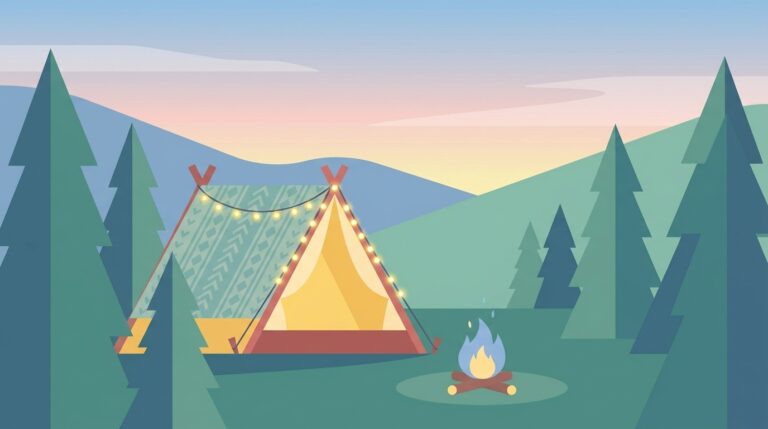
Picture this: You’ve just arrived at a scenic glamping spot nestled among the pine trees of Gapyeong (가평). The sun is setting behind misty peaks, romantic fairy lights flicker across luxury dome tents, and the scent of grilled pork belly fills the crisp mountain air. You want to dive straight into the cozy vibes—roasting marshmallows, lighting a private campfire, and soaking in the tranquil evening. But suddenly, reality hits: How do you ask the campsite manager to start the grill without sounding awkward? What time are quiet hours? And where on earth do you dispose of food waste so you don’t violate campsite rules?
Many intermediate Korean learners know basic survival phrases, but when placed in a nuanced outdoor leisure setting, textbook grammar often falls flat. You might freeze, point nervously at a bag of charcoal, or worry about disrupting campground etiquette. This guide is crafted from real feedback from our global community to give you the confidence, precise B2-level expressions, and cultural savvy you need to enjoy Korean glamping just like a trendy local.
Phase 2: 3 Core Expressions In-Depth Analysis
1. 숯불 좀 피워주실 수 있나요? (한글)
- Pronunciation: Sut-bul jom pi-wo-ju-sil su in-na-yo? (Think: soot-bool jom pee-wo-joo-sheel soo een-nah-yo?)
- Meaning: Literal: “Could you light the charcoal fire?” / Actual Nuance: “Excuse me, could you please come set up our BBQ grill charcoal now?”
- K-Culture Moment: Commonly heard in weekend variety shows like I Live Alone or travel K-dramas when the cast arrives at a glamping site before dusk.
- Editor’s Insight: In Korean glamping, the manager usually lights the specialized charcoal grill for safety. Adding 좀 (jom, “a little / please”) softens the request and turns a command into a polite, respectful inquiry.
- Situation Spectrum: Casual ⚠️ | Semi-formal ✅ | Formal ✅
- 🤔 Think About It: Why does Korean frequently insert softening adverbs like 좀 (jom) even when making completely reasonable service requests?
2. 불멍 세트 추가하고 싶은데요. (한글)
- Pronunciation: Bul-meong se-teu chu-ga-ha-go sip-eun-de-yo. (Sounds like bool-mung seh-teu choo-gah-hah-go sheep-eun-deh-yo)
- Meaning: Literal: “I’d like to add the fire-staring set.” / Actual Nuance: “We’d like to order the campfire kit (firewood + brazier) for relaxing by the fire.”
- K-Culture Moment: Influencers on Instagram posting aesthetic evening reels with the caption #불멍 (#Bulmeong) while watching crackling birch wood.
- Editor’s Insight: 불멍 (Bulmeong) is a beloved portmanteau of 불 (fire) and 멍때리다 (spacing out). Using -고 싶은데요 (-go sipeundeyo) leaves an open-ended conversational trail, gently prompting the host to explain options and pricing.
- Situation Spectrum: Casual ⚠️ | Semi-formal ✅ | Formal 🚫
- 🤔 Think About It: How does the Korean trend of finding mindfulness in “spacing out” (멍때리기) reflect a reaction to the hyper-paced Ppal-li Ppal-li (빨리빨리) society?
3. 분리수거장은 어디에 있어요? (한글)
- Pronunciation: Bun-ri-su-geo-jang-eun eo-di-e iss-eo-yo? (Pronounced smoothly as bool-lee-soo-gaw-jang-eun aw-dee-eh eess-aw-yo?)
- Meaning: Literal: “Where is the separate-collection area?” / Actual Nuance: “Where should we take our recycling and trash bins?”
- K-Culture Moment: Guests cleaning up after midnight snacks before turning in to ensure they follow campground rules.
- Editor’s Insight: Unlike standard hotels, glamping sites in Korea operate on a self-cleanup ethic. Asking this proactively shows high social awareness (nunchi) and earns instant respect from site owners.
- Situation Spectrum: Casual 🚫 | Semi-formal ✅ | Formal ✅
- 🤔 Think About It: How does the civic duty of meticulous waste sorting (분리수거) carry over seamlessly into recreational outdoor culture?
Phase 3: Textbook Korean vs. Real Korean
Situation A: Setting up the BBQ Grill
- 📖 교과서 한국어 (Textbook): 바비큐 그릴에 불을 붙여 주십시오. (Babikyu geuril-e bul-eul buchyeo jusipsio. – “Please ignite the barbecue grill.”)
- 🗣️ 진짜 한국어 (Real Korean): 사장님, 저희 7시에 숯 넣어주실 수 있어요? (Sajangnim, jeohui ilgop-sie sut neo-eojusil su isseoyo? – “Boss, could you put the charcoal in for us around 7 PM?”)
- 💡 왜 다를까?: Native speakers rarely say “ignite the grill.” Instead, they address the manager warmly as 사장님 (Sajangnim) and specify the time to “put the charcoal in” (숯 넣다).
Situation B: Inquiring about Campfire Wood
- 📖 교과서 한국어 (Textbook): 장작을 더 구매할 수 있습니까? (Jangjag-eul deo gumaehal su isseumnikka? – “Can I purchase more firewood?”)
- 🗣️ 진짜 한국어 (Real Korean): 혹시 장작 한 망 더 살 수 있나요? (Hoksi jangjak han mang deo sal su innayo? – “By any chance, can we get one more mesh bag of firewood?”)
- 💡 왜 다를까?: Firewood in Korea is sold in breathable red mesh bags called 망 (mang). Using the unit noun 한 망 (han mang) makes your intermediate Korean sound authentic and natural.
Phase 4: K-Culture Deep Dive & Non-Verbal Manners
4-1. 눈치 (Nunchi) & Quiet Etiquette: The Holy Rule of “Manner Time”
In Korean glamping culture, 매너 타임 (Manner Time) typically begins at 10:00 PM or 11:00 PM. This is not merely a recommendation; it is an unspoken social contract.
* Body Language: After 10:00 PM, lower your vocal pitch, dim high-beam lantern lights, and switch music to low-volume acoustic tracks or turn speakers off completely.
* Eye Contact & Nods: When crossing paths with staff or tent neighbors in the evening, offer a slight, polite bow (15-degree nod) rather than loud greetings.
4-2. The Soul of Korean Glamping: Mukping (먹핑) & Bulmeong (불멍)
Glamping in Korea is synonymous with 먹핑 (Mukping = 먹다 [to eat] + Camping). You don’t just cook sausages—you create courses: thick Samgyeopsal (pork belly) paired with grilled kimchi, followed by hangover cup ramyeon cooked on a portable stove. The finale is Bulmeong (gazing hypnotically into the campfire) accompanied by O-gamja or roasted sweet potatoes (군고구마) wrapped in foil tossed directly into the embers.
Phase 5: Real-World Roleplay Scenario
Setting: Gapyeong Pine Glamping Resort, 6:30 PM. The cool mountain breeze is setting in.
Characters: Alex (Intermediate Korean Learner) & Park Sajangnim (Warm, diligent campsite owner).
- 사장님: 203호 손님 맞으시죠? 체크인 확인되셨고, 글램핑 텐트는 저쪽 끝이에요.
(203-ho sonnim majeosijyo? Chekeu-in hwagindoesyeotgo, geullaemping tenteuneun jeojjok kkeut-ieyo.)
“You’re the guest for Unit 203, right? Check-in confirmed! Your glamping tent is at the far end over there.”
🎭 친절하게 텐트를 손으로 가리키며 열쇠를 건넨다. -
알렉스: 네, 감사합니다! 혹시 저녁 바비큐 숯불은 몇 시까지 부탁드릴 수 있나요?
(Ne, gamsahamnida! Hoksi jeonyeok babikyu sutbureun myeot sikkaji butakdeuril su innayo?)
“Yes, thank you! By any chance, until what time can we request the BBQ charcoal setup for dinner?”
🎭 안내 책자를 보며 정중하게 묻는다. -
사장님: 보통 8시 전에는 말씀해주셔야 피워드려요. 지금 바로 해드릴까요?
(Botong yeodeol-si jeon-eneun malsseumhaejusyeoyaji piwodeuryeoyo. Jigeum baro haedeurilkkayo?)
“Usually, you should let us know before 8:00 PM. Would you like me to light it right now?”
🎭 장갑을 끼며 알렉스의 눈을 쳐다본다. -
알렉스: 아, 저희가 장을 좀 정리하고 먹으려고 해서요. 7시 반쯤에 부탁드려도 될까요?
(A, jeohuiga jang-eul jom jeongrihago meogeuryeogo haeseoyo. Ilgop-si banjjeum-e butakdeuryeodo doelkkayo?)
“Ah, we need to unpack our groceries first. Would around 7:30 PM be okay?”
🎭 미소를 띠며 시간을 조율한다. -
사장님: 네, 그럼 7시 반에 맞춰서 숯 가져갈게요. 참, 불멍 세트도 필요하세요?
(Ne, geureom ilgop-si ban-e matchwoseo sut gajyeogalke-yo. Cham, bulmeong setteudo piryohaseyo?)
“Sure, I’ll bring the charcoal over at 7:30 PM sharp. By the way, do you need the campfire kit too?”
🎭 화롯대와 장작 더미를 가리킨다. -
알렉스: 네! 오로라 가루도 같이 포함되어 있는 거죠? 불멍 세트도 추가해주세요.
(Ne! O-ro-ra garudo gachi pohamdoe-eo inneun geojyo? Bulmeong setteudo chugahaejuseyo.)
“Yes! That includes the rainbow magical flame powder too, right? Please add the campfire kit as well.”
🎭 호기심 가득한 눈빛으로 끄덕인다. -
사장님: 네, 오로라 가루 2포랑 장작 한 망 챙겨드릴게요. 10시부터는 매너 타임이니까 목소리 조금만 낮춰주시는 거 잊지 마시고요!
(Ne, o-ro-ra garu du po-rang jangjak han mang chaenggyeodeurilgeyo. Yeol-sibuteoneun maeneo taim-inikka moksori jogeumman natchwojusineun geo itji masigoyo!)
“Got it, I’ll provide two packets of magic flame powder and a bag of wood. Remember, Manner Time starts at 10 PM, so keep voices low!”
🎭 검지손가락을 살짝 입에 대며 웃는다. -
알렉스: 걱정 마세요! 다 먹고 분리수거도 깔끔하게 해둘게요.
(Geokjeong maseyo! Da meokgo bunrisugeodo kkalkkeumhage haedulgeyo.)
“Don’t worry at all! We’ll make sure to clean up and sort all our recycling when we’re done.”
🎭 두 손으로 가볍게 목례를 한다.
🔀 Interactive Decision Point
After finishing dinner at 9:45 PM, you have leftover firewood, but you also want to listen to music via your portable Bluetooth speaker. What do you do?
- Option A: Turn up the speaker volume so the whole valley can hear your K-pop playlist while building a giant bonfire.
- Feedback: 🚫 Bad Move! This directly violates 매너 타임 (Manner Time). Neighbors will complain, and the host may give you an official warning.
- Option B: Extinguish the fire completely immediately and go to sleep inside the tent with the lights off.
- Feedback: ⚠️ Overly Cautious. You don’t have to go straight to bed! You can enjoy quiet Bulmeong as long as you respect the noise curfew.
- Option C: Lower the speaker to whisper volume or switch it off, enjoy the quiet crackle of the embers with low conversation, and prep your trash for sorting.
- Feedback: ✅ Best Approach! You respect both the serene atmosphere and campground social etiquette like a true local pro.
Phase 6: 10-Second Emotional Shadowing Drill
Practice these natural pacing lines with emotional inflection. Slashes (/) indicate natural breath pauses.
[😊 설레며 신나게 - Excited & Anticipating]
저희 7시 반에 / 숯불 준비해 주실 수 있나요? / 불멍 세트도 같이요!
(Jeohui ilgop-si ban-e / sut-bul junbihae jusil su innayo? / bulmeong setteudo gachiyo!)-
[🪵 나른하고 힐링하며 - Relaxed & Mellow]
장작 타는 소리 들으면서 / 불멍하니까 / 진짜 힐링되네요.
(Jangjak taneun sori deureumyeonseo / bulmeonghanikka / jinjja hilling-doeneyo.) -
[🤝 정중하고 매너 있게 - Polite & Responsible]
음식물 쓰레기랑 캔은 / 어디에 분리수거하면 / 될까요?
(Eumsikmul sseuregigrang kaeneun / eodie bunrisugeohamyeon / doelkkayo?)
Phase 7: K-Culture Mini Dictionary
-
불멍 (Bulmeong)
Literal translation: Fire-spacing out.
Usage: Zoning out while staring deeply into a campfire to de-stress from busy city life. It’s the #1 recreational pastime at Korean glamping sites. -
매너 타임 (Maeneo Taim)
Literal translation: Manner Time (Konglish).
Usage: The designated evening quiet hours (usually 10 PM – 7 AM) enforced at campgrounds across South Korea. -
먹핑 (Meokping)
Literal translation: Eating + Camping.
Usage: A camping trip where the primary focus is nonstop gourmet outdoor cooking (K-BBQ, stews, roasted sweet potatoes, and ramen). -
촌캉스 (Chonkangseu)
Literal translation: Countryside (Chon) + Vacance (Kangseu).
Usage: The popular trend of city dwellers vacationing in rustic, rural areas wearing comfortable country work pants (mompe) and relaxing at traditional or glamping homes.
Phase 8: Traveler’s Survival Kit
Survival Expressions TOP 3
- 등유 난로 켜는 법 좀 알려주세요. (Deung-yu nanro kyeoneun beop jom allyeojuseyo.)
Pro Tip: In autumn and winter glamping, kerosene tent heaters are essential. Use this phrase if you need help operating the heater safety controls. - 추가 이불이나 온수매트 있나요? (Chuga iburin-a onsumae-teu innayo?)
Pro Tip: Mountain glamping gets chilly at night. Ask if extra blankets or heated water-mattress pads are provided. - 퇴실할 때 체크아웃은 어떻게 해요? (Toesilhal ttae chekeu-a-useun eotteoke haeyo?)
Pro Tip: Ask this during morning cleanup so you know whether to leave keys in the door or visit the main office.
Editor’s Travel Note
- Navigation: Google Maps lacks accurate transit updates in rural Korea. Download the [Naver Map Navigation App] for pinpoint glamping routes and local taxi dispatch.
- Booking: While platforms like Airbnb exist, browsing through the [Campfit Korea Campground Reservation Platform] will give you access to hyper-local glamping gems in Gangwon and Gyeonggi provinces.
Phase 9: Think Deeper (한 발 더 깊이)
Korean glamping culture reveals a fascinating paradox in modern Korean society: the pursuit of ultimate solitude achieved through deep communal consideration. While glamping offers an escape from towering Seoul apartment blocks, the campsite itself is a shared micro-community. The strict adherence to Manner Time and meticulous bunri-sugeo (waste sorting) demonstrates that harmony in nature is maintained not by isolating oneself, but through collective mindfulness (눈치 and 배려).
💬 Your Turn: Have you ever tried glamping or camping in your country? How does the outdoor campfire etiquette in your hometown compare to Korea’s “Manner Time”? Share your stories below!
Phase 10: FAQ & Common Mistakes
Q: Can we bring our own meat and ingredients to a Korean glamping site?
A: Yes! Almost all glamping sites allow you to bring your own food. You just pay a small fee (usually 20,000–30,000 KRW) for the charcoal grill setup (숯불 세트).
Q: What is magical “Aurora Powder” (오로라 가루)?
A: It is a small sachet of metal salts that turns normal campfire flames into vibrant emerald, purple, and blue hues. You can purchase it at convenience stores or from the campground manager.
Q: Is heating provided inside glamping tents during winter?
A: Yes, Korean glamping setups are renowned for high comfort. Most feature heated electric floors (ondol), electric mattress pads, and kerosene heaters, making them cozy year-round.
🚨 Common Mistakes Warning Board
| Mistake | Why It Causes Trouble | Correct Action |
|---|---|---|
| Throwing food scrap into regular trash | Attracts wild animals and violates environmental laws. | Separate food waste into dedicated yellow bins (음식물 쓰레기통). |
| Playing music on speakers after 10 PM | Breaches 매너 타임 and prompts immediate manager intervention. | Use earphones or turn off speakers completely at 10 PM. |
| Pouring water directly onto the campfire brazier | Creates excessive ash smoke that covers neighboring tents. | Let the wood burn down naturally or ask staff for a lid/ash bucket. |
Phase 11: Action Missions
- 🥉 Bronze Mission: Practice saying “사장님, 숯불 몇 시에 준비돼요?” out loud 3 times using natural intonation.
- 🥈 Silver Mission: Search the hashtag
#글랭핑on Instagram or YouTube and comment on a Korean creator’s video: “불멍 힐링되네요!” (Bulmeong is so healing!). - 🥇 Gold Mission: Next time you book an outdoor stay or meet a Korean friend, initiate the plan using the term 먹핑 or 촌캉스.
- 🎮 K-Culture Mission: Watch an episode of tvN’s House on Wheels (바퀴 달린 집) or Camping Vibes (감성 캠핑) and identify at least two glamping food items mentioned in this lesson!
Phase 12: Interactive Quiz Challenge
1. Situation Judgment
You have just arrived at a glamping site at 6:00 PM and want the host to set up the fire pit for marshmallow roasting after dinner. Which phrase is best?
* (A) 불 켜라! (Bul kyeora!)
* (B) 저기요, 8시쯤 불멍 세트 부탁드려도 될까요? (Jeogiyo, yeodeol-si-jjeum bulmeong setteu butakdeuryeodo doelkkayo?)
* (C) 바비큐 장작을 강제로 주십시오. (Babikyu jangjag-eul gangjero jusipsio.)
👉 Click to view Answer & Explanation
Correct Answer: (B)
Explanation: (B) uses polite phrasing (부탁드려도 될까요?) while accurately referencing the campfire kit (불멍 세트) and setting a courteous timeframe. (A) is an impolite command, and (C) sounds unnaturally aggressive.
2. Fill-in-the-Blank
Campgrounds in Korea enforce quiet hours after 10:00 PM called [ ].
👉 Click to view Answer & Explanation
Correct Answer: 매너 타임 (Manner Time)
Explanation: 매너 타임 is the standard term used across Korean campsites to designate quiet hours for mutual respect.
3. True / False Cultural Check
T/F: At a Korean glamping site, leaving all trash and unfinished food inside the tent without sorting is customary since cleaning fees are included.
👉 Click to view Answer & Explanation
Correct Answer: False (F)
Explanation: Korean glamping culture emphasizes self-clearing etiquette (분리수거 – waste separation into plastic, food, and general trash) before check-out.







