

Phase 1: 공감 (Story-Driven Opening)
안녕하세요! 매일한글 에디터입니다. (Hello! This is your Daily Hangul editor.)
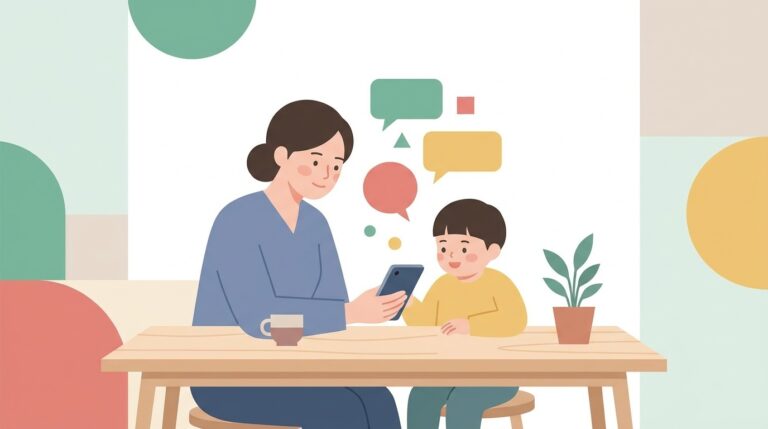
Picture this quintessential Korean parenting dilemma: You are sitting in a cozy café in Mok-dong or Bundang—hubs renowned for their intense educational fervor—surrounded by mothers debating feverishly over iced Americanos. One mother sighs deeply while holding her third-grader’s school schedule: “우리 아이만 반에서 스마트폰이 없어서 단톡방에 못 낀대요.” (My child is the only one in class without a smartphone, so they can’t join the group chat.) Another parent counters with worries about digital addiction and screen time during academy commutes.
Navigating the delicate threshold of buying an elementary schooler their first smartphone in South Korea is not just a technological transaction; it is a profound socio-cultural milestone. It intersects with hyper-connectivity, safety anxieties during the notorious hagwon (cram school) circuit, and complex peer group dynamics known as nunchi. For advanced C2 learners, mastering the lexicon of Korean parenting around digital independence allows you to articulate nuanced debates, understand deep-rooted community concerns in local Mom-cafés, and participate effortlessly in sophisticated socio-cultural dialogues. Let’s delve into the exact phrasing native Korean parents, educators, and psychologists use to negotiate this modern rite of passage.
Phase 2: 핵심 표현 3선 심층 분석 (Top 3 Expressions In-Depth)
1. 스마트폰을 사주자니 중독될까 봐 걱정이고, 안 사주자니 소외될까 봐 조마조마해요.
- Pronunciation: Seumateupon-eul sajujani jungdokdoelkka bwa geokjeong-igo, an sajujani so-oedoelkka bwa jomajomahaeyo. (Think: smar-teu-pon-eul sa-ju-ja-nee… with rhythmic pauses at each clause balance)
- Meaning: Literal: “Buying a smartphone makes me worry about addiction, but not buying one makes me fret they’ll be ostracized.” | Real Nuance: Expresses the quintessential double-bind dilemma modern Korean parents face regarding early smartphone adoption.
- K-Culture Moment: Frequently heard on family counseling shows like My Golden Kids (요즘 육아 금쪽같은 내 새끼) when parents confess their struggle between technological discipline and social peer pressure.
- Editor’s Insight: The dual structure
-자니 ... -자니elegantly balances two conflicting, anxiety-inducing outcomes. 조마조마하다 captures the visceral, heart-fluttering dread of a parent fearing their child might become a target of subtle classroom exclusion.- Situation Spectrum: Casual (⚠️ slightly verbose) | Semi-formal (✅ perfectly natural among parents/colleagues) | Formal (✅ appropriate for PTA meetings or counseling sessions)
- 🤔 Think About It: Does your native culture view smartphone isolation as a collective peer integration issue, or strictly as an individual parenting preference?
2. 시기상조인 것 같아서 키즈폰으로 타협을 봤어요.
- Pronunciation: Sigisangjoin geot gat-aseo kijeupon-euro tahyeop-eul bwasseoyo. (Phonetic glide: she-gee-sang-jo-in got ga-ta-seo…)
- Meaning: Literal: “It felt premature, so we made a compromise with a kids’ phone.” | Real Nuance: Captures a calculated parental strategy—delaying unrestricted web access by opting for location-tracking feature phones or heavily restricted devices.
- K-Culture Moment: Seen in K-Dramas featuring middle-class suburban parents (like Green Mothers’ Club) discussing pragmatic compromises to monitor their child’s safety along the private academy shuttle route.
- Editor’s Insight: 시기상조 (時期尙早) is a sophisticated Sino-Korean idiom indicating that the timing is unripe. Pairing it with 타협을 보다 (to strike a compromise) elevates your conversational register from basic conversational Korean to refined adult discourse.
- Situation Spectrum: Casual (✅) | Semi-formal (✅) | Formal (✅)
- 🤔 Think About It: How does linguistic recourse to formal 4-character idioms like 시기상조 soften parental self-doubt when defending personal parenting choices?
3. 무작정 막기보다는 사용 규칙을 명확히 합의하는 게 우선이에요.
- Pronunciation: Mujakjeong makgibodaneun sayong gwichik-eul myeonghwakhi hab-uihaneun ge useon-ieyo. (Articulate mu-jak-jeong with firm, decisive stress)
- Meaning: Literal: “Rather than blocking blindly, clearly agreeing on usage rules comes first.” | Real Nuance: A mature, authoritative educational philosophy advocating for constructive negotiation and proactive digital literacy over authoritarian prohibition.
- K-Culture Moment: Used by pedagogical experts and child psychologists in educational columns, school orientation lectures, and parenting podcasts.
- Editor’s Insight: 무작정 (without plan or consideration) implies reckless or impulsive reaction. Contending it with 합의 (mutual consensus) highlights democratic parent-child boundary setting.
- Situation Spectrum: Casual (✅) | Semi-formal (✅) | Formal (✅)
- 🤔 Think About It: In many traditional hierarchical family dynamics, rules are mandated unilaterally; how does the modern emphasis on 합의 (consensus) reflect shifting generational parenting philosophies in Korea?
Phase 3: 교과서 한국어 vs 진짜 한국어 (Textbook vs. Native Spoken)
Situation 1: Expressing that all the other kids already have one
- 📖 교과서 한국어: 다른 모든 학생들이 스마트폰을 이미 가지고 있습니다. (Dareun modeun haksaengdeuri seumateuponeul imi gajigo itseumnida.)
- 🗣️ 진짜 한국어: 요새는 초등학교 저학년만 돼도 거의 다 들고 다니더라고요. (Yosaeneun chodeunghakgyo jeohangnyeonman dwaedo geoui da deulgo danideoragoyo.)
- 💡 왜 다를까? Native speakers rarely say 학생들이 가지고 있습니다 in casual conversation; they prefer 들고 다니다 (to carry around) and utilize the retrospective evidential marker -더라고요 to convey personal observational surprise.
Situation 2: Emphasizing the fear of being left out of group chats
- 📖 교과서 한국어: 아이가 메신저 대화방에 참여하지 못해서 따돌림을 당할까 봐 걱정됩니다. (Aiga mesinjeo daehwabang-e cham-yeohaji mothaeseo ttadolim-eul danghalkka bwa geokjeongdoemnida.)
- 🗣️ 진짜 한국어: 반 단톡방에서 자기만 쏙 빠져서 겉돌까 봐 신경 쓰여요. (Ban dantokbang-eseo jagiman ssok ppajyeoseo geotdolkka bwa sin-gyeong sseuyeoyo.)
- 💡 왜 다를까? C2-level spoken Korean favors evocative mimetic/idiomatic expressions like 쏙 빠지다 (to be conspicuously left out) and 겉돌다 (to drift along the perimeter / feel alienated) over heavy, formal terms like 따돌림 (bullying).
Phase 4: K-Culture 딥다이브 & 비언어적 매너 (Cultural Nuances & Manners)
4-1. 눈치 (Nunchi) & Non-Verbal Decorum
When discussing child rearing and tech adoption among Korean parents, emotional modesty and cautious empathy are paramount.
* Lowering the pitch & tilting the head: When expressing doubts about smartphone timing, parents rarely sound overtly dogmatic. A slight head tilt paired with a softened vocal tone (“글쎄요, 저도 참 고민스러운데…”) demonstrates respect for divergent parenting styles without imposing moral superiority.
* Attentive Nodding (맞장구): Active listening expressions like “그렇죠, 남들 다 하는데 우리 애만 안 해줄 수도 없고…” signal shared solidarity in the face of competitive educational pressures.
4-2. Cultural Code: The Academy Ecosystem & “Mom-Café” Discourse
In Korea, an elementary student’s smartphone is primarily purchased as a safety and coordination lifeline. Once children enter primary grades, they transition through a multi-tiered afternoon routine comprising after-school classes (bang-gwa-hu), English academies, Taekwondo, and piano lessons. Parents utilize real-time GPS tracking and instant messenger updates to ensure secure transfers between shuttle buses.
Simultaneously, hyper-local parenting communities known as 맘카페 (Mom-cafés) set implicit community standards. If an entire homeroom establishes an active KakaoTalk group chat for project collaboration and weekend playdates (놀이터 번개), withholding a smartphone risks social disenfranchisement. Hence, buying a phone is viewed not merely as recreational indulgence, but as an entry ticket into collective peer socialization.
Phase 5: 실전 롤플레이 시나리오 (Interactive Roleplay)
Setting: A quiet café near a Daechi-dong academy center. You (Min-jun’s parent) are conferring with Su-jin’s mom (Eun-seo), a seasoned neighborhood parent.
- 은서 (Eun-seo): 민준 어머니, 이번에 민준이 3학년 올라가는데 스마트폰 장만해 주셨어요? 🎭 (커피잔을 내려놓으며 조심스럽게 눈을 맞춘다)
(Minjun eomeoni, ibeone Minjuni samhangnyeon ollaganeunde seumateupon jangmanhae jusyeosseoyo?)
“Min-jun’s mother, now that Min-jun is entering third grade, have you gotten him a smartphone?” -
나 (You): 아직 고민 중이에요. 사주자니 딴짓할까 걱정이고, 안 사주자니 연락이 안 돼서 답답하고요. 🎭 (머뭇거리며 미간을 살짝 찌푸린다)
(Ajik gomin jung-ieyo. Sajujani ttanjithalkka geokjeong-igo, an sajujani yeollagi an dwaeseo dapdaphagoyo.)
“I’m still debating. If I buy it, I worry he’ll get distracted; if I don’t, it’s frustrating being unable to reach him.” -
은서 (Eun-seo): 맞아요. 저희 수진이도 학원 동선 꼬일 때마다 애를 먹어서 결국 지난달에 키즈폰으로 개통해 줬거든요. 🎭 (공감하듯 고개를 크게 끄덕이며)
(Majayo. Jeohui Sujinido hagwon dongseon kko-il ttaemada aereul meogeoseo gyeolguk jinandare kijeupon-euro gaetonghae jwotgeodeunyo.)
“Exactly. Every time Su-jin’s academy routes got tangled up, we had such a hard time, so we finally activated a kids’ phone last month.” -
나 (You): 키즈폰 쓰니까 좀 안심이 되시나요? 기능 제한이 있어서 괜찮은지 궁금해요. 🎭 (몸을 앞으로 기울이며 귀를 기울인다)
(Kijeupon sseunikka jom ansim-i doesinayo? Gineung jehan-i isseoseo gwaenchaneunji gunggeumhaeyo.)
“Do you feel more at ease using a kids’ phone? I wonder if the functional restrictions are working well.” -
은서 (Eun-seo): 위치 추적이나 통화는 완벽한데, 친구들이랑 단톡방에서 게임 링크 공유하는 건 안 되니까 살짝 툴툴대더라고요. 🎭 (쓴웃음을 지으며 턱을 괸다)
(Wichi chujeog-ina tonghwaneun wanbyeokhande, chin-gudeurirang dantokbang-eseo geim ringkeu gong-yuhaneun geon an doenikka saljjak tultuldaedeoragoyo.)
“Location tracking and calls are flawless, but since she can’t share game links in the group chats with friends, she grumbles a bit.” -
나 (You): 결국에는 또래 문화에서 겉돌지 않게 균형을 잡아주는 게 관건이겠네요. 🎭 (진지한 표정으로 고개를 끄덕인다)
(Gyeolgugeneun ttorae munhwa-eseo geotdolji anke gyunhyeong-eul jabajuneun ge gwan-geon-igetneyo.)
“In the end, striking a balance so they don’t drift away from peer culture seems to be the crucial key.” -
은서 (Eun-seo): 바로 그거예요. 그래서 저희는 주말에만 1시간씩 일반 스마트폰으로 패밀리 링크 걸어서 쓰게 합의했어요. 🎭 (휴대폰 화면의 화면시간 제한 앱을 보여주며)
(Baro geugeot-ieyo. Geuraeseo jeohuineun jumareman hansiganssik ilban seumateupon-euro paemilli ringkeu georeoseo sseuge hab-uihaesseoyo.)
“Precisely. So we agreed on a rule where she uses a regular smartphone for one hour on weekends with Family Link controls.” -
나 (You): 무작정 통제하기보다 그렇게 단계별로 적응시키는 방식이 훨씬 현명해 보이네요! 🎭 (감탄 어린 어조로 밝게 미소 짓는다)
(Mujakjeong tongjehagiboda geureoke dangyebyeollo jeogeung-sikineun bangsigi hwolssin hyeonmyeonghae boineyo!)
“Rather than blind restriction, acclimatizing them step-by-step seems infinitely wiser!”
🔀 인터랙티브 분기점 (Interactive Branching Point)
How would you conclude your consultation with Eun-seo?
- Option A: “저도 일단은 위치 확인용 공기계에 알뜰폰 요금제 조합으로 시작해 봐야겠어요.” (I should also start with a spare phone for GPS tracking combined with a budget MVNO SIM plan.)
- Feedback (Best): Demonstrates immaculate practical knowledge of Korean suburban parenting solutions (budget MVNOs / alteul-pon). High socio-cultural resonance.
- Option B: “스마트폰은 고등학교 갈 때까지 절대 안 사주는 게 원칙이에요.” (My strict principle is never buying a smartphone until high school.)
- Feedback (Risk): Culturally discordant with current Korean urban elementary lifestyle; comes across as overly rigid and dismissive of the academy logistic reality.
- Option C: “그냥 최신 아이폰으로 사주고 알아서 쓰라고 하려고요.” (I’ll just buy the latest iPhone and let him manage it himself.)
- Feedback (Bad): Overlooks the intricate communal norms around screen addiction, peer pressure, and parental oversight in elementary education.
Phase 6: 10초 감정 섀도잉 드릴 (10-Second Emotion Shadowing Drill)
Practice intonation and emotional delivery with rhythm pauses (/):
[🥺 고민스럽고 복잡한 심정으로 - Pensive and conflicted]
“사주자니 / 유튜브에 빠질까 겁나고, / 안 사주자니 / 연락 두절될까 봐 / 미치겠어요.”
(Sajujani / yutyubeue ppajilkka geomnago, / an sajujani / yeollak dujeoldoelkka bwa / michigetseoyo.)-
[💡 단호하면서도 타협적인 어조 - Decisive yet conciliatory]
“무조건 안 된다고 자르기보다는 / 하루 30분씩 / 약속을 지키는 연습부터 / 시켜보려고요.”
(Mujogeon an doendago jareugibodaneun / haru samsipbunsik / yaksog-eul jikineun yeonseupbuteo / sikyeoboryeogoyo.) -
[😌 안도하며 공감하는 톤 - Relieved and validating]
“다들 똑같은 고민을 하시는군요. / 우리 아이만 유별난 게 아니어서 / 한결 마음이 놓여요.”
(Dadeul ttokgateun gomin-eul hasineungunyo. / Uri aiman yubyeolnan ge anieoseo / han-gyeol ma-eumi noyeoyo.)
Phase 7: K-Culture 미니 사전 (Mini Dictionary)
- 키즈폰 (Kids-phone / Kijeu-pon): Feature phones or customized Android devices engineered for elementary pupils, offering built-in parent tracking, emergency SOS buttons, and locked web browsers.
- 맘카페 (Mom-café / Mam-kape): Ultra-influential Naver regional parent forums where neighborhood-specific educational trends, after-school academy reviews, and tech adoption guidelines are actively arbitrated.
- 학원 뺑뺑이 (Academy Carousel / Hagwon Ppaeng-ppaeng-i): A colloquial, self-deprecating term referring to children circulating non-stop between multiple tutoring centers after school, necessitating continuous mobile coordination.
- 단톡방 초대 (Group Chat Invite / Dantokbang Chodae): Being invited into the homeroom or social KakaoTalk group; culturally viewed by young Korean students as the primary metric of social belonging.
Phase 8: 여행자 및 주재원을 위한 생존 키트 (Expat & Traveler Kit)
Survival Expressions TOP 3
- 아이 위치 추적 가능한 요금제가 있나요? (Ai wichi chujeok ganeunghan yogeumjega innayo?)
- Pro Tip: Use this at telecom stores (T-World, KT Plaza, LG U+) to inquire about child-specific tracking plans.
- 초등학생 첫 휴대폰으로 어떤 기종을 많이 찾으세요? (Chodeunghaksaeng cheot hyudaepon-euro eotteon gijong-eul mani chajeuseyo?)
- Pro Tip: Ideal when surveying telecom staff regarding market trends for primary schoolers.
- 스마트폰 사용 시간 제어 어플 연동되나요? (Seumateupon sayong sigan je-eo eopeul yeondongdoenayo?)
- Pro Tip: Inquire whether parental control apps (like Google Family Link or carrier-native apps) are pre-installed.
Editor’s Life Note
For families residing in Korea, consider consulting neighborhood threads on 네이버 카페 맘카페 커뮤니티 탐색 to assess exact school-district norms. Also install the native safety monitoring app 안전드림 아동여성청소년지원 for child registry and safety alerts.
Phase 9: “한 발 더 깊이” (Deep Cultural Reflection)
In South Korea, the decision to give a child a smartphone reflects the profound tension between 공동체적 결속 (communal cohesion) and 과열된 조기 경쟁 (hyper-early social competition). In a society where high-density urbanization and digital connectivity dominate every sphere from school notices to after-school playdates, digital exclusion can manifest quickly as social alienation. Korean parents grapple with fostering digital autonomy without compromising their child’s socio-emotional harmony within the peer collective.
💬 Your Turn: How does your home country balance safety, digital literacy, and smartphone access for primary school children? Share your perspectives in the comments below!
Phase 10: FAQ & 오해 방지 (FAQ & Common Mistakes)
Q: Do most Korean elementary school children carry smartphones from 1st grade?
A: While 1st graders commonly carry basic kids’ phones or smartwatches primarily for location tracking and emergency calls during the transition to primary school, the shift to general smartphones equipped with KakaoTalk typically surges between 3rd and 4th grade.
Q: What is the main reason Korean parents purchase phones earlier than parents in some Western countries?
A: Logistics and safety. Because young children routinely commute independently via subway, public buses, or academy vans between multiple educational centers, real-time parental communication and GPS tracking are seen as essential security measures.
Q: How do Korean schools manage smartphones during official school hours?
A: Nearly all Korean elementary and middle schools enforce strict policies where students must submit their smartphones into a designated pouch (수거함) during morning homeroom and retrieve them only after the final bell.
🚨 흔한 실수 (Common Mistakes) Warning Board
- Mistake: Using 왕따 (severe bullying) casually when discussing peer exclusion.
- Correct Action: Use refined terms like 또래 관계에서 소외되다 (to be alienated from peers) or 겉돌다 (to hover on the margins).
- Mistake: Saying 핸드폰을 사주면 애가 나빠져요 (If I buy a phone, the child becomes bad).
- Correct Action: Phrase it as 스마트폰 과의존이나 몰입이 염려돼요 (I am concerned about smartphone overdependence or immersion).
- Mistake: Translating “grounding the phone” literally as 전화를 땅에 묻다.
- Correct Action: Use 휴대폰 압수 (confiscation of mobile phone) or 사용 시간 제한 (screen time restriction).
Phase 11: 액션 미션 & 참여 유도 (Action Missions)
- 🥉 Bronze Mission (Solo Mastery): Recite the
-자니 ... -자니balance drill from Phase 2 out loud 5 times using smooth intonation. - 🥈 Silver Mission (Social Connection): Comment below writing one pros-and-cons sentence about early smartphone usage in advanced Korean.
- 🥇 Gold Mission (Real Application): Ask a Korean friend or tutor: “한국에서는 보통 몇 학년 때 스마트폰을 사주는 분위기인가요?” and analyze their response.
- 🎮 K-Culture Mission: Watch an episode of a Korean parenting or lifestyle variety show (e.g., 금쪽같은 내 새끼) and write down 2 expressions used to describe digital discipline.
Phase 12: 인터랙티브 퀴즈 챌린지 (Interactive Quiz)
1. [상황 판단] Which sentence most naturally articulates a nuanced parental dilemma at a C2 level?
* (A) 스마트폰 사주면 공부 안 해서 아주 나쁩니다.
* (B) 사주자니 스마트폰에 과몰입할까 염려스럽고, 안 사주자니 또래 집단에서 겉돌까 봐 신경 쓰여요.
* (C) 아이에게 스마트폰을 안 주면 경찰에 신고당할 수 있어요.
👉 정답 및 해설 보기 (Click for Answer & Explanation)
- 정답: (B)
- 해설: (B) perfectly balances concerns regarding over-immersion (과몰입) and peer alienation (또래 집단에서 겉돌다) using refined grammatical clauses suitable for advanced discourse.
2. [빈칸 채우기] Fill in the appropriate idiom meaning ‘premature’:
* “아직 저학년이라 스마트폰은 ( )인 것 같아서 키즈폰을 선택했어요.”
👉 정답 및 해설 보기 (Click for Answer & Explanation)
- 정답: 시기상조 (Sigisangjo)
- 해설: 시기상조 (時期尙早) is the four-character idiom expressing that an action is being undertaken before the proper time has arrived.
3. [True / False Cultural Check]
* In South Korea, elementary students are generally free to use their personal smartphones without restriction during official classroom hours. (True / False)
👉 정답 및 해설 보기 (Click for Answer & Explanation)
- 정답: False
- 해설: Most Korean primary schools require students to surrender their devices to homeroom storage bins (휴대폰 수거함) upon arrival to preserve an optimal classroom learning environment.







