

Beyond Trendy Outfits: How to Talk About Fast Fashion and Sustainable Style in Korean
Phase 1: Empathy (Story-Driven Narrative Opening)
안녕하세요! 매일한글 에디터입니다. (Hello! I’m your Daily Hangul editor.)
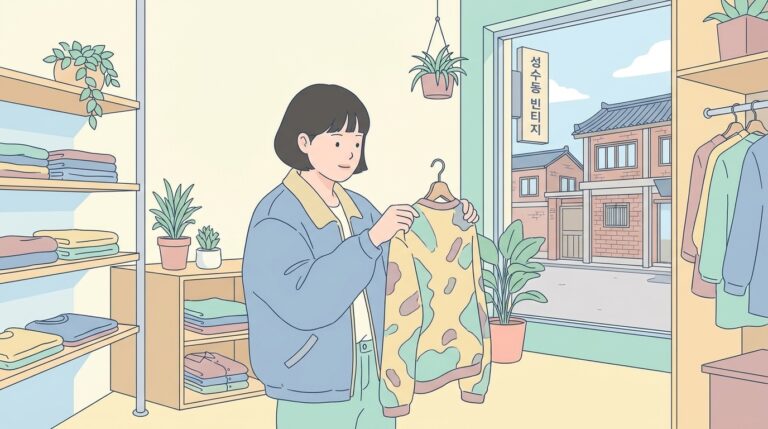
Picture this: You are strolling down the vibrant alleys of Seongsu-dong (성수동) or Hongdae (홍대), surrounded by an overwhelming array of hyper-trendy clothing racks. Bright neon signs announce lightning-fast seasonal changes, and local influencers shoot viral try-on hauls right in front of flagship pop-up stores. But beneath the dazzling allure of K-fashion lies a rising consciousness: What happens to the mountains of discarded garments after the trend fades in three weeks? When you try to discuss topics like “greenwashing,” “ethical manufacturing,” or “zero-waste upcycling” with Korean fashion enthusiasts, textbook phrases like “패션이 환경에 나쁩니다” (Fashion is bad for the environment) make you sound like an elementary school pamphlet rather than the articulate C1 speaker you are.
Over the past decade of coaching advanced Korean learners, I have seen so many learners hit a wall when transitioning from casual daily chat to nuanced socio-cultural discourse. Discussing the dark side of fast fashion (패스트 패션) and sustainable consumption (지속 가능한 소비) requires sophisticated vocabulary, natural rhetorical patterns, and a solid grasp of modern Korea’s value consumption (가치소비) trends. In this guide, tailored specifically for C1 learners, we will elevate your vocabulary so you can hold compelling, high-level discussions in Korean coffee shops, design studios, or university seminars with confidence and authentic nuance.
Phase 2: 3 In-Depth Key Expressions
Here are three advanced, idiomatic expressions essential for discussing fashion sustainability and environmental impact.
1. 한철 입고 버리는 패스트 패션 때문에 환경오염이 심각해요.
- Pronunciation: [Hancheol ipgo beorineun paeseuteu paesyeon ttaemune hwan-gyeong-o-yeom-i simgak-haeyo.] (Sounds like: hahn-cheol eep-goh buh-ree-neun fast fashion ddae-moon-eh hwan-gyung-oh-yum-ee sheem-gahk-hae-yo)
- Meaning: “Environmental pollution is severe because of fast fashion where clothes are worn for just one season and thrown away.”
- K-Culture Moment: Heard on investigative journalism programs like SBS 그것이 알고 싶다 or YouTube documentaries analyzing the textile waste crisis in metropolitan dumpsites.
- Editor’s Insight: The word 한철 (hancheol) literally means “one single season/period.” Combining it with 입고 버리다 (to wear and discard) captures the exact consumer critique of disposable fashion culture.
- Situation Spectrum: Casual ✅ | Semi-formal ✅ | Formal ✅
- 🤔 Think About It: Does your native language distinguish between seasonal clothing items and the philosophical criticism of “single-season disposability” in a single compact compound noun like 한철?
2. 그린워싱에 속지 않으려면 친환경 인증 마크를 꼼꼼히 따져봐야 해요.
- Pronunciation: [Geurinwosing-e sokji aneuryeomyeon chin-hwan-gyeong injeung makeureul kkomkkomhi ttajyeobwayo.] (Sounds like: green-wash-ing-eh sohk-jee ah-neu-ryuh-myun cheen-hwan-gyung een-jeung mah-keu-reul kohm-kohm-hee dda-jyuh-bwah-yo)
- Meaning: “If you don’t want to be deceived by greenwashing, you must carefully scrutinize eco-friendly certification labels.”
- K-Culture Moment: Frequently discussed among MZ-generation beauty & fashion vloggers reviewing “clean beauty” (클린 뷰티) and “vegan leather” (비건 레더) claims.
- Editor’s Insight: 따져보다 (ttajyeoboda) goes far beyond simple “checking” (확인하다). It implies analytical skepticism—scrutinizing ingredients, ethical claims, or supply chains critically.
- Situation Spectrum: Casual ✅ | Semi-formal ✅ | Formal ✅
- 🤔 Think About It: How does your culture address brands that capitalize on eco-friendly buzzwords without genuine sustainable practices?
3. 지속 가능한 패션을 위해 의류 소비를 줄이고 업사이클링을 실천하고 있어요.
- Pronunciation: [Jisok ganeunghan paesyeon-eul wihae uiryu sobireul jurigo eopsaikkeulling-eul silcheonhago isseoyo.] (Sounds like: jee-sohk gah-neung-hahn fashion-eul wee-hae wee-ryu soh-bee-reul joo-ree-goh up-cycling-eul sheel-chun-hah-goh ee-ssuh-yo)
- Meaning: “For sustainable fashion, I am cutting down on clothing consumption and putting upcycling into practice.”
- K-Culture Moment: Found in lifestyle interviews of prominent K-Pop idols or indie designers showcasing patchwork jackets made from reclaimed banner fabrics and surplus denim.
- Editor’s Insight: 실천하다 (silcheonhada) conveys concrete execution and action, contrasting sharply with merely having ideas (생각하다). It gives your statement intellectual weight.
- Situation Spectrum: Casual ⚠️ | Semi-formal ✅ | Formal ✅
- 🤔 Think About It: How does linguistic commitment through words like 실천 (actual practice) shape the personal accountability of ethical consumers in your country?
Phase 3: Textbook Korean vs. Real Korean
Elevate your conversational authenticity by comparing rigid textbook Korean with the natural vernacular used by environmentally conscious Koreans today.
Situation 1: Expressing preference for vintage or secondhand clothes
- 📖 Textbook Korean: “저는 환경 보호를 위해 중고 옷을 구매합니다.” (Jeoneun hwan-gyeong bohoreul wihae junggo oseul gumaehapnida. – I purchase secondhand clothes for environmental protection.)
- 🗣️ Real Native Korean: “요즘은 가치소비 차원에서 구제 샵이나 빈티지로 눈을 돌리게 되더라고요.” (Yojeumeun gachisobi cha-woneseoh guje syabina bintijiro nuneul dollige doedeoragoyo. – Nowadays, for the sake of value consumption, I find myself turning toward thrift shops and vintage pieces.)
- 💡 Why the difference? C1 native speakers use multi-layered discourse markers like ~차원에서 (in terms of / from the perspective of) and natural idioms like 눈을 돌리다 (to turn one’s attention/eyes to) rather than dry, declarative grammar.
Situation 2: Criticizing frequent impulse buying driven by online sales
- 📖 Textbook Korean: “옷을 너무 많이 사면 쓰레기가 생겨서 해롭습니다.” (Oseul neomu mani samyeon sseuregiga saenggyeoseo haeropseumnida. – If you buy too many clothes, trash is generated and it is harmful.)
- 🗣️ Real Native Korean: “세일한다고 무턱대고 쟁여두면 결국엔 다 의류 폐기물 꼴이 나잖아요.” (Se-ilhandago muteokdaego jaeng-yeodumyeon gyeolgugen da uiryu pyegimul kkor-i najanhayo. – If you mindlessly stockpile clothes just because they’re on sale, it all ends up as textile waste anyway, doesn’t it?)
- 💡 Why the difference? Native phrasing employs lively expressive words such as 무턱대고 (thoughtlessly/blindly), 쟁여두다 (to hoard/stockpile), and ~꼴이 나다 (to end up in an unfortunate state).
Phase 4: K-Culture Deep Dive & Non-Verbal Manners
4-1. 눈치 (Nunchi) & Mindful Gestures
When discussing ethical fashion in Korea, balance critical insight with polite respect:
* Tone Modulation: Avoid an overtly condescending or lecturing tone when pointing out fast-fashion drawbacks. Use soft endings such as ~지 않나 싶어요 (“I wonder if it isn’t…”) or ~인 것 같아요 (“It seems like…”) to preserve harmony while delivering a sharp critique.
* Attentive Nodding: In Korean design and green-business discussions, maintain engaged eye contact paired with gentle vertical head nods (고개 끄덕임) to show respect for the other person’s sustainable initiatives.
4-2. Cultural Code Analysis: The Rise of MZ ‘가치소비’ (Value Consumption)
In contemporary South Korea, the concept of 가치소비 (Gachi-sobi – Value-based Consumption) has reshaped the cultural landscape. It is no longer just about owning luxury labels; it is about wearing your worldview (미닝아웃 – Meaning Out).
From the vintage clothing stalls of Dongmyo Flea Market (동묘 벼룩시장) to upcycling cultural hubs like Seoul Upcycling Plaza (서울새활용플라자), young Koreans turn thrift shopping into artistic curation. Even major K-Pop entertainment companies now package albums in eco-friendly FSC-certified soy-ink paper or produce stage outfits from upcycled materials. Showing command of these cultural codes signals that you understand modern Korean social dynamics intimately.
Phase 5: Real-World Roleplay Scenario
Setting: A trendy concept showroom in Seongsu-dong featuring upcycled fashion items. You are talking with Min-ji (민지), an independent Korean sustainable fashion designer.
- Turn 1 (Min-ji): “어머, 재킷 원단 만져보시는 거예요? 그거 버려진 폐페트병에서 추출한 리사이클 원사로 만든 거예요.”
(Eomeo, jaekit wondan manjyeobosineun geoyeyo? Geugeo beoryeojin pyepeteubyeong-eseo chuchulhan risaikkeul wonsaro mandeun geoyeyo.)
🎭 Eyes sparkling with pride as she gently adjusts the hanger.
“Oh, are you feeling the jacket fabric? That was made with recycled yarn extracted from discarded PET bottles.” -
Turn 2 (You): “정말요? 전혀 거칠지 않고 촉감이 부드러워서 놀랐어요. 사실 요즘 패스트 패션 때문에 섬유 폐기물 문제가 심각하잖아요.”
(Jeongmalyo? Jeonhyeo geochilji anko chokgami budeureowoseo nollasseoyo. Sasil yojeum paeseuteu paesyeon ttaemune seomyu pyegimul munjega simgakhajanhayo.)
🎭 Touching the hem carefully and nodding in admiration.
“Really? I’m surprised because it’s not rough at all and the texture is so soft. In fact, textile waste issues caused by fast fashion are so severe these days.” -
Turn 3 (Min-ji): “맞아요. 매주 신상이 쏟아져 나오니까, 유행만 좇다 보면 쉽게 버려지는 옷이 너무 많죠.”
(Majayo. Maeju sinsang-i ssodajyeo naonikka, yuhaengman jotda bomyeon swipge beoryeojineun os-i neomu manjyo.)
🎭 Sighing slightly, folding her arms thoughtfully.
“Exactly. New items flood the market every week, so when people just chase trends, so many clothes get easily discarded.” -
Turn 4 (You): “그렇죠. 저도 예전에는 트렌드만 따라가다가, 요즘엔 환경을 생각해서 가치소비를 하려고 노력 중이에요.”
(Geureochyo. Jeodo yejeoneneun teurendeuman ttaragadaga, yojeumen hwan-gyeong-eul saenggakhaeseo gachisobireul haryeogo noryeok jung-ieyo.)
🎭 Maintaining comfortable eye contact with a sincere smile.
“Right. I used to just follow trends in the past too, but nowadays I’m trying to practice value consumption with the environment in mind.” -
Turn 5 (Min-ji): “멋지시네요! 하지만 가끔 일부 대기업들이 친환경적인 척 마케팅하는 걸 보면 씁쓸하기도 해요.”
(Meotjisineyo! Hajiman gakkeum ilbu daegieopdeuri chinhwan-gyeongjeog-in cheok maketinghaneun geol bomyeon sseupsseulhagido haeyo.)
🎭 Lowering her voice slightly to express genuine creative frustration.
“That’s wonderful! But sometimes it feels bitter seeing some major corporations market themselves pretending to be eco-friendly.” -
Turn 6 (You): “공감해요. 진정한 순환 경제를 구축하기보단 그린워싱에 그치는 경우가 꽤 많더라고요.”
(Gonggamhaeyo. Jinjeonghan sunhwan gyeongjereul guchukhagibodan geurinwosing-e geuchineun gyeong-uga kkwae mandeoragoyo.)
🎭 Nodding firmly with an empathetic expression.
“I completely agree. Rather than establishing a true circular economy, there are quite a few cases where it ends up being mere greenwashing.” -
Turn 7 (Min-ji): “맞아요! 그래서 저희 같은 소규모 독립 브랜드는 생산 전 과정의 투명성을 보여주려고 애쓰고 있어요.”
(Majayo! Geuraeseo jeohui gateun sogyumo dongnip beuraendeuneun saengsan jeon gwajeong-ui tumyeongseong-eul boyeojuryeogo aesseugo isseoyo.)
🎭 Gesturing towards the open atelier workshop behind the showroom.
“Precisely! That’s why small independent brands like us strive to show transparency across the entire production process.” -
Turn 8 (You): “그런 철학이 담긴 옷이라면 오래오래 애착을 갖고 입을 수 있을 것 같아요. 이 재킷 입어봐도 될까요?”
(Geureon cheolhag-i damgin os-iramyeon orae-orae aechag-eul gatgo ibeul su isseul geot gatayo. I jaekit ibeobwado doelkkayo?)
🎭 Gesturing politely towards the fitting room.
“If it’s clothing infused with such a philosophy, I feel I could wear it for a long time with great affection. May I try this jacket on?”
🔀 Interactive Branching Point
If Min-ji asked for your opinion on how young consumers can combat fast fashion fashionably, what would you say?
- Option A: “무조건 옷을 아예 안 사는 게 최고죠. 패션 산업 자체를 규제해야 해요.” (Mujogeon oseul aye an saneun ge choegojyo. Paesyeon saneop jache-reul gyujehaeya haeyo. – Never buying clothes at all is best. The industry itself must be regulated.)
- Feedback [Risk]: Overly absolute and conversational stopper. While environmentally direct, it shuts down dialogue with a fashion designer and disregards realistic sustainable industry alternatives.
- Option B: “유행을 좇기보다는 나만의 클래식한 스타일을 찾고, 리폼이나 빈티지를 믹스매치하는 문화가 더 확산되면 좋겠어요.” (Yuhaeng-eul jotgibodaneun naman-ui keullaesikhan seutair-eul chatgo, ripomina bintijireul mikseumaechihaneun munhwaga deo hwaksandoemyeon jokesseoyo.)
- Feedback [Best ✅]: Cultured, creative, and highly fluent. Synthesizes aesthetic taste with sustainable lifestyle values perfectly at a C1 level.
- Option C: “친환경 옷은 다 비싸서 일반 사람들은 그냥 싼 스파(SPA) 브랜드 살 수밖에 없어요.” (Chinhwan-gyeong oseun da bissaseo ilban saramdeureun geunyang ssan seupa beuraendeu sal subakke eopseoyo.)
- Feedback [Bad]: Overly dismissive and pessimistic. It halts the creative exchange by shifting solely to price barriers without acknowledging emerging ethical efforts.
Phase 6: 10-Second Emotion Shadowing Drill
Practice breathing, pitch, and intonation. Slash marks (/) indicate natural breath pauses.
- [🔥 비판적이고 확신에 찬 어조 – Critical & Confident Tone]
“겉만 번지르르한 그린워싱에 속지 않으려면 / 소비자가 먼저 / 깐깐한 안목을 길러야 해요.”
(Geotman beonjireureuhan geurinwosing-e sokji aneuryeomyeon / sobijaga meonjeo / kkankkanhan anmogeul gilleoyahaeyo.)
“To not get fooled by superficial greenwashing / consumers must first / cultivate a rigorous, discerning eye.” -
[🌱 진정성 있고 성찰하는 목소리 – Sincere & Reflective Tone]
“한철 입고 버려지는 옷더미를 보면서 / 제 소비 습관을 / 깊이 반성하게 되었어요.”
(Hancheol ipgo beoryeojineun otdeomireul bomyeonseo / je sobi seupgwaneul / gipi banseonghage doeeosseoyo.)
“Looking at the piles of clothes discarded after just one season / I ended up deeply reflecting / on my own consumption habits.” -
[✨ 열정적이고 긍정적인 제안 – Enthusiastic & Positive Tone]
“단순한 재활용을 넘어서 / 디자인적 가치를 더하는 업사이클링이야말로 / 패션의 미래라고 생각해요!”
(Dansunhan jaehwalyong-eul neomeoseo / dijainjeok gachireul deohaneun eopsaikkeulling-iyamallo / paesyeon-ui miraerago saenggakhaeyo!)
“Going beyond simple recycling / upcycling that adds aesthetic design value / is truly the future of fashion, I believe!”
Phase 7: K-Culture Mini Dictionary
- 1. 새활용 (Sae-hwalyong / Upcycling): The pure Korean linguistic equivalent for 업사이클링. Combining 새 (new) and 활용 (utilization/application), this word is widely adopted in public campaigns, cultural institutions, and municipal eco-initiatives across Korea.
- 2. 미닝아웃 (Meaning-Out): A Konglish portmanteau of “Meaning” and “Coming Out.” Refers to Gen Z’s cultural practice of actively expressing personal ethical, political, and environmental beliefs through what they buy and wear.
- 3. 가치소비 (Gachi-sobi / Value-driven Consumption): A key socio-economic term describing purchasing behavior prioritized according to individual moral values, environmental sustainability, and ethical production over mere brand status or low prices.
- 4. 제로웨이스트 (Jero-weisuteu / Zero-Waste): Frequently encountered across Korean urban lifestyle spaces (e.g., 제로웨이스트 샵), describing daily routines or product packaging designed to eliminate all trash sent to landfills.
Phase 8: Traveler’s Survival Kit
Top 3 Eco-Conscious Fashion Survival Phrases
- “이 원단 친환경 소재인가요?” (I wondan chinhwan-gyeong sojaeingayo?)
- Meaning: “Is this fabric an eco-friendly material?”
- Pro Tip: Perfect when inquiring about organic linen, recycled polyester, or cactus leather in design boutiques.
- “쇼핑백은 괜찮아요, 제 에코백에 담아 갈게요.” (Syopingbaegeun gwaenchannayo, je ekobaege dama galgeyo.)
- Meaning: “A shopping bag is fine (not needed), I’ll put it in my eco-tote bag.”
- Pro Tip: In Korea, paper and plastic bags cost between 100 to 500 KRW by environmental law; saying this demonstrates natural, eco-friendly local etiquette.
- “수선해서 오래 입을 수 있는 튼튼한 옷을 찾고 있어요.” (Suseonhaeseo orae ibeul su inneun teunteunhan oseul chatgo isseoyo.)
- Meaning: “I’m looking for sturdy clothes that can be tailored/mended and worn for a long time.”
- Pro Tip: Shows sales assistants that you prioritize durability (내구성) over disposable fast fashion.
Editor’s Travel Note: Discovering Sustainable Seoul
If you want to experience Korea’s vintage and upcycling culture firsthand, plan an afternoon exploring the Seoul Upcycling Plaza or navigate the curated vintage alleys of Yeonnam-dong and Seongsu-dong using the Naver Map app. When searching on Korean navigation apps, type keywords like 구제샵 (thrift shop), 빈티지 편집숍 (vintage select shop), or 친환경 라이프스타일 샵 (eco-friendly lifestyle shop) to uncover hidden local treasures.
Phase 9: Go Deeper (Cultural Perspective)
In Korean society, clothing has historically served as a direct reflection of communal etiquette (예의) and respect (격식). However, Korea’s lightning-fast economic development in the late 20th century also gave birth to a hyper-accelerated trend cycle, where fashion trends arrive, peak, and vanish with unmatched speed.
Today’s sustainable fashion movement in Korea is remarkable because it blends traditional respect for material care (아나바다 정신 – the spirit of saving, sharing, swapping, and reusing) with cutting-edge streetwear aesthetics. Sustainable consumption is no longer viewed as an inconvenience, but as the ultimate form of sophisticated modern etiquette toward our collective future.
💬 Your Turn: What is the sustainable fashion scene like in your home country? Have you ever purchased upcycled or vintage clothing in Korea? Share your thoughts in the comments below in Korean using the phrase “저는 가치소비를 위해…”!
Phase 10: FAQ & Common Mistakes
Q: What is the difference between ‘구제’ (Guje) and ‘빈티지’ (Vintage)?
A: While both refer to secondhand clothing, 구제 (Guje) traditionally refers to bulk secondhand garments collected and sold at affordable prices in street markets like Dongmyo. 빈티지 (Vintage) usually refers to curated, high-end, or archival fashion pieces with distinctive aesthetic, historical, or brand value.
Q: Can I use Konglish terms like ‘에코’ (Eco) and ‘업사이클링’ (Upcycling) naturally in Korean?
A: Yes! Terms like 에코백 (eco-bag/tote), 리사이클 (recycle), and 업사이클링 (upcycling) are universally understood and widely used in both everyday lifestyle media and business settings. However, incorporating native equivalents like 새활용 (upcycling) or 지속 가능성 (sustainability) elevates your speech to an authentic C1/C2 level.
Q: How do I express skepticism about a brand’s environmental claims politely?
A: Use cautious, indirect phrasing: “친환경 마케팅인 것 같기는 한데, 실제 생산 공정까지 친환경적인지는 좀 더 지켜봐야 할 것 같아요.” (It seems like eco-friendly marketing, but I feel we should observe a bit more whether their actual production process is genuinely eco-friendly.)
🚨 Common Mistakes Alert (외국인 학습자의 흔한 실수 TOP 3)
- ❌ Mistake: Using “재활용 옷” (Recycled clothes) directly when you mean secondhand or vintage clothes.
- Correct Action: Use 구제 옷 (Thrift/Secondhand clothes) or 빈티지 의류 (Vintage apparel). 재활용 refers strictly to the industrial recycling of raw materials.
- ❌ Mistake: Literal translation of “Fast fashion is trash” as 패스트 패션은 쓰레기입니다.
- Correct Action: Express it as “패스트 패션은 막대한 양의 의류 폐기물을 양산해요” (Fast fashion mass-produces massive amounts of textile waste).
- ❌ Mistake: Saying 환경을 보호하는 옷 (Clothes that protect the environment).
- Correct Action: Say 친환경 의류 (Eco-friendly clothing) or 지속 가능한 패션 (Sustainable fashion).
Phase 11: Action Missions & Community Engagement
- 🥉 Bronze Mission (Self-Drill): Read the Phase 6 shadowing sentences out loud 5 times, focusing on shifting your vocal emotion from critical skepticism to inspiring positivity.
- 🥈 Silver Mission (Social Output): Snap a photo of your favorite long-lasting or secondhand clothing item and post it on Instagram with the Korean caption: “유행보다는 가치소비! 오래 입을수록 더 멋진 나만의 빈티지 아이템 🌱 #지속가능한패션 #가치소비”
- 🥇 Gold Mission (Real-World Execution): Next time you visit a clothing boutique or vintage shop in Korea (or online), ask the staff or comment on a post using the phrase: “혹시 친환경 소재나 업사이클링 제품 라인이 따로 있나요?” (Do you happen to have a separate eco-friendly material or upcycled product line?)
- 🎮 K-Culture Media Mission: Watch a recent interview or vlog by an eco-conscious Korean celebrity (such as actress Gong Hyo-jin or singer Lee Hyo-ri) and spot how many times they use words like 지속 가능, 자연, or 가치.
Phase 12: Interactive Quiz Challenge
Test your mastery of advanced Korean fashion and environmental discourse!
Question 1: Situation Judgment
Your Korean friend mentions they bought five cheap t-shirts on a clearance sale that they will probably throw away after a month. Which response provides a constructive, natural C1-level eco-critique?
* A) “싸니까 잘 샀네요! 다음에도 그렇게 사세요.”
* B) “한철 입고 버리기보다는, 조금 비싸더라도 오래 입을 수 있는 옷을 사는 게 환경에도 좋고 경제적이지 않을까요?”
* C) “환경 오염을 시키다니 정말 나쁜 사람이군요.”
Question 2: Fill-in-the-Blank
“기업들이 겉으로만 친환경을 표방하면서 실질적인 개선을 하지 않는 행위를 ( )(이)라고 부릅니다.”
Question 3: Cultural True or False
In modern Korean consumer culture, ‘미닝아웃’ (Meaning-Out) means hiding one’s personal values and political stance when purchasing products to blend in with others. (True / False)
👉 Click here to reveal the answers and explanations!
Answers & Explanations:
1. Answer: B — Response B uses the nuanced rhetorical suggestion ~지 않을까요? along with the key term 한철 입고 버리다, delivering a polite yet intellectually profound critique.
2. Answer: 그린워싱 (Greenwashing) — Refers to deceptive marketing conveying a false impression of environmental responsibility.
3. Answer: False — 미닝아웃 (Meaning-Out) is the exact opposite: it is the proactive cultural phenomenon where consumers boldly express their personal ethics and social values through conscious purchasing decisions.






