

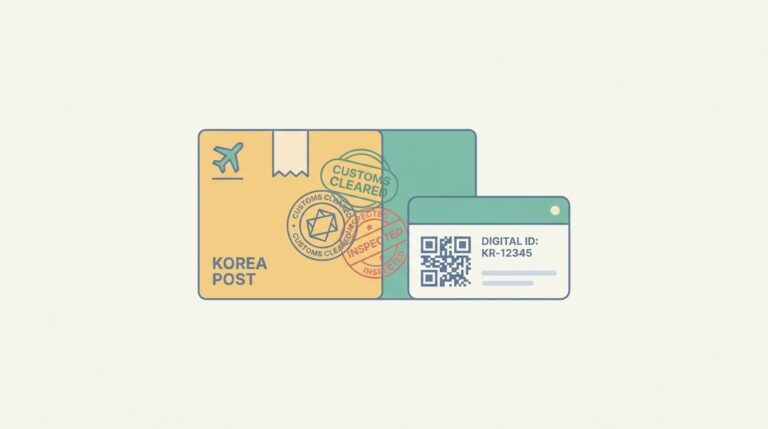
Master Korean Direct Overseas Purchases: The Ultimate Guide to Customs Clearance Codes
안녕하세요! 매일한글 에디터입니다. Have you ever tried ordering limited-edition K-pop merch, niche skincare items, or overseas products directly while staying in Korea, only to hit an intimidating roadblock at checkout asking for your 개인통관고유부호 (Personal Customs Clearance Code)? Many intermediate learners know how to navigate standard Korean e-commerce apps like Coupang or Naver Shopping, but the moment international shipping is involved, a whole new vocabulary of logistics, customs regulations, and tracking jargon appears. Don’t let your package get stranded at Incheon Airport Customs! Today, we’ll turn this confusing administrative process into smooth, natural Korean communication.
Phase 2: 3 Key Expressions Deep Dive
1. 개인통관고유부호 입력해야 돼요? (Gaein tonggwan goyubuhu ipnyeokhaeya dwaeyo?)
- Pronunciation: Gae-in tong-gwan go-yu-bu-ho eep-nyeok-hae-ya dwae-yo? (Sounds like “guy-in tong-gwan go-you-boo-ho eep-nyuk-hae-ya dway-yo”)
- Meaning: Literal: “Do I have to enter the individual customs unique code?” / Real Nuance: “Do I need to submit my Personal Customs Clearance Code (PCCC) for this order?”
- K-Culture Moment: Commonly seen in Korean online shopping chat support when buying overseas items (해외직구).
- Editor’s Insight: Foreign residents in Korea can obtain this code using their Alien Registration Card (ARC) or passport number via the Korea Customs Service website. Asking this beforehand avoids unnecessary delivery holds.
- Situation Spectrum: Casual ⚠️ | Semi-formal ✅ | Formal ✅
- 🤔 Think About It: Why does South Korea require a standardized unique code rather than repeatedly asking for national ID or passport numbers at every e-commerce site?
2. 통관에서 걸렸어요. (Tonggwan-eseo geollyeosseoyo.)
- Pronunciation: Tong-gwan-eh-suh geol-lyuh-ssuh-yo. (Sounds like “tong-gwan-eh-saw gull-lyaw-saw-yo”)
- Meaning: Literal: “It got caught in customs.” / Real Nuance: “My parcel is stuck / being inspected at customs.”
- K-Culture Moment: Often said by vloggers unboxing delayed international parcels on YouTube or K-drama characters complaining about delayed imported luxury goods.
- Editor’s Insight: The verb 걸리다 (geollida) means “to be caught” or “to take time.” Here, it implies an administrative hold, tax assessment, or mismatch in recipient details.
- Situation Spectrum: Casual ✅ | Semi-formal ✅ | Formal ⚠️
- 🤔 Think About It: Notice how Korean uses passive/intransitive phrasing (걸렸어요) rather than blaming an agent (“The customs officer stopped my package”).
3. 배송 조회가 안 돼요. (Baesong johwaega an dwaeyo.)
- Pronunciation: Bae-song jo-hwi-ga an dwae-yo. (Sounds like “bay-song jo-hway-ga ahn dway-yo”)
- Meaning: Literal: “Delivery inquiry does not happen.” / Real Nuance: “The tracking information isn’t updating / I can’t track my shipment.”
- K-Culture Moment: Used when messaging 1:1 customer service bots or logistics help desks.
- Editor’s Insight: 조회 (johwae) refers to searching or looking up data in a database. Pair it with 안 돼요 (an dwaeyo) to express that the tracking number yields no results.
- Situation Spectrum: Casual ⚠️ | Semi-formal ✅ | Formal ✅
- 🤔 Think About It: How does this concise noun + predicate structure reflect the Korean desire for swift, direct digital troubleshooting?
Phase 3: Textbook Korean vs. Real Korean
Situation 1: Asking why international delivery is delayed
- 📖 교과서 한국어: 제 화물이 세관에서 통과되지 못한 이유가 무엇입니까? (Je hwamuri segwandoeseo tonggwadoeji mot-han iyuga mueosimnikka?)
- 🗣️ 진짜 한국어: 혹시 통관 지연 때문에 배송이 늦어지는 건가요? (Hoksi tonggwan jiyeon ttaemune baesongi neujeojineun geon-gayo?)
- 💡 왜 다를까?: Textbook phrasing sounds like an official legal dispute. Real native speakers use soft inquiry adverbs like 혹시 (hoksi) and nominalized question endings (~건가요?) to sound polite yet natural.
Situation 2: Inquiring if extra customs duties apply
- 📖 교과서 한국어: 제가 추가적인 세금을 납부해야 합니까? (Jega chugajeogin segeumeul napbuhaeya hamnikka?)
- 🗣️ 진짜 한국어: 이거 관부가세 따로 나오나요? (Igeo gwanbugase ttaro naonayo?)
- 💡 왜 다를까?: The compound term 관부가세 (gwanbugase – customs & VAT) is the universally preferred term in online shopping over generic “taxes (세금).”
Phase 4: K-Culture Deep Dive & Non-Verbal Manners
4-1. 눈치 (Nunchi) & 1:1 Support Etiquette
When dealing with Korean customer support regarding customs delays, screenshotting your tracking status page beforehand is considered basic digital manners. When initiating a 1:1 KakaoTalk consultation, start with a brief greeting like 안녕하세요, 문의드릴 게 있어서요 (Hello, I have an inquiry), upload the order number and screenshot immediately, and wait. Avoid spamming multiple exclamation marks, as Korean customer agents prioritize concise, documented facts.
4-2. The ‘Jikgu’ Phenomenon and Korea’s Speed Culture
Koreans love 해외직구 (Direct Overseas Buying) for everything from health supplements to fashion. Because Korean domestic shipping is lightning fast (often next-day Rocket Delivery), waiting 7–14 days for overseas parcels triggers severe impatience. This has created a hyper-developed ecosystem of customs-tracking communities and automated clearance alert services via KakaoTalk notification talk (알림톡).
Phase 5: Real-World Roleplay Scenario
Setting: You ordered a collectible item from abroad to your apartment in Seoul, but the courier app shows an alert about recipient information mismatch. You are calling the shipping agency’s customs coordinator (민지 – Minji).
- 민지 (Agent): 🎭 Polite and efficient tone
안녕하세요, 글로벌 로지스틱스 통관지원팀 김민지입니다. (Annyeonghaseyo, geulleobeol rojisitigseu tonggwanjiwontim Kim Minji-imnida.)
“Hello, this is Kim Minji from the Global Logistics Customs Support Team.” - You: 🎭 Calmly explaining the situation
안녕하세요. 제 택배가 통관 보류로 떠서 연락드렸어요. (Annyeonghaseyo. Je taekbaega tonggwan boryuro tteoseo yeollakdeuryeosseoyo.)
“Hello. I’m contacting you because my parcel status shows ‘customs hold.'” - 민지 (Agent): 🎭 Typing on keyboard
네, 운송장 번호나 주문자 성함 말씀해 주시겠어요? (Ne, unsongjang beonhona jumunja seongham malsseumhae jusigesseoyo?)
“Sure, could you tell me your tracking number or buyer name?” - You: 🎭 Providing details
운송장 번호는 123456이고, 이름은 Alex입니다. (Unsongjang beonhoneun il-i-sam-sa-o-yuk-igo, ireumeun Alex-imnida.)
“The tracking number is 123456, and my name is Alex.” - 민지 (Agent): 🎭 Checking system records
확인해 보니 통관부호와 수취인 이름이 불일치한다고 나오네요. (Hwoginhae boni tonggwanbuhowa suchwiin ireumi burilchihandago naoneyo.)
“Checking the system, it indicates that the clearance code and recipient name do not match.” - You: 🎭 Asking for solution
외국인등록증 이름으로 수정해서 다시 제출하면 될까요? (Oeguk-indeungnokjeung ireumeuro sujeonghaeseo dasi jechulhamyeon doelkkayo?)
“Can I correct it to the name on my Alien Registration Card and resubmit?” - 민지 (Agent): 🎭 Reassuring
네, 맞습니다. 등록증 상의 정확한 영문 성함과 통관부호를 문자로 보내주세요. (Ne, matseumnida. Deungnokjeung sang-ui jeonghwak-han yeongmun seonghamgwa tonggwanbuhoreul munjaro bonaejuseyo.)
“Yes, that is correct. Please text us your exact English name as it appears on your registration card along with your clearance code.” - You: 🎭 Polite closing
네, 지금 바로 문자 남기겠습니다. 감사합니다! (Ne, jigeum baro munja namgigesseumnida. Gamsahamnida!)
“Got it, I will send the text right away. Thank you!”
🔀 Interactive Decision Point
If the agent asks you to confirm your clearance number via SMS, what should you text?
* Option A: 제 통관부호는 P123456789012이고 등록증 이름은 ALEX SMITH 입니다. (Best! Clear, exact, matches administrative requirements.)
* Option B: 그냥 여권 사진 찍어서 보내도 되나요? (Risk! Sending full passport photos via standard SMS may violate personal data guidelines; clearance code is preferred.)
* Option C: 왜 이렇게 복잡해요? 그냥 보내주세요. (Bad! Rude and impossible for the agent to bypass national customs law.)
Phase 6: 10-Second Emotion Shadowing Drill
- [😟 Frustrated and anxious]
일주일째 / 통관 조회가 / 안 넘어가요. (Iljuil-jjae / tonggwan johwaega / an neomeogayo.)
“It’s been a week / and the customs status / isn’t moving.” - [💡 Relieved and clarifying]
아, / 통관부호 이름 철자가 / 틀렸었군요! (A, / tonggwanbuho ireum cheoljaga / teullyeosseotgunyo!)
“Ah, / the spelling of the name on my clearance code / was wrong!” - [🙏 Polite and cooperative]
수정 정보 보냈으니 / 확인 한번 / 부탁드립니다. (Sujeong jeongbo bonaesseuni / hwagin hanbeon / butakdeurimnida.)
“I sent the updated info, / so please check it / when you can.”
Phase 7: K-Culture Mini Dictionary
- 직구 (Jikgu – Direct Overseas Purchase): Short for ‘해외직접구매’. Everyday slang for buying from international platforms (Amazon, Taobao, AliExpress) directly to Korea.
- 개인통관고유부호 (Gaein Tonggwan Goyu Buho – PCCC): A 13-digit code issued by the Korea Customs Service starting with ‘P’ to protect private Resident Registration Numbers.
- 배대지 (Baedaeji – Package Forwarding Service): Abbreviation of ‘배송 대행지’. A proxy warehouse address used when an overseas seller doesn’t ship directly to Korea.
- 관부가세 (Gwan-bugase – Customs Duty & VAT): Combined term for customs duties (관세) and value-added tax (부가가치세) incurred when import limits ($150–$200) are exceeded.
Phase 8: Survival Kit for Expats & Travelers
Top 3 Survival Phrases
- 통관 번호 발급받으려면 어떻게 해요? (Tonggwan beonho balgeupbadeuryeomyeon eotteoke haeyo?) — How do I get a customs code issued? [Pro Tip: Do it directly on the Korea Customs Service UNI-PASS mobile portal.]
- 목록통관 대상인가요? (Mongnok-tonggwan daesang-in-gayo?) — Is this eligible for simplified manifest clearance? [Pro Tip: Items under $150 ($200 from the US) for personal use usually clear with simplified paperwork.]
- 배송 주소 변경 가능한가요? (Baesong juso byeong-gyeong ganeunghangayo?) — Can I change the delivery address? [Pro Tip: Address cannot be changed once customs inspection begins.]
Editor’s Travel Note
Make sure to visit the official [관세청 유니패스 모바일 웹페이지 (Korea Customs UNI-PASS Portal)] to issue or verify your clearance code. Keep your registered phone number, Korean name spelling (or official English ARC spelling), and clearance code saved in your notes app.
Phase 9: Think Deeper
South Korea possesses one of the world’s most advanced digital e-government infrastructures. The Personal Customs Clearance Code represents a delicate social balance between 개인정보 보호 (privacy protection) and 신속 통관 (rapid clearance logistics). Rather than sharing sensitive national identification numbers with commercial online shopping vendors, the PCCC acts as a secure firewall. As an intermediate Korean learner, observing how administrative systems reflect cultural values of speed, security, and digital identity helps you understand modern Korean society on a deeper level.
💬 Your Turn: Have you ever had a parcel stuck in customs in Korea or your home country? Share your funniest or most stressful delivery stories in the comments below!
Phase 10: FAQ & Common Mistakes
Q: Can foreigners get a Personal Customs Clearance Code without an Alien Registration Card (ARC)?
A: Yes! Foreign tourists or non-residents can use their passport number for customs clearance when ordering, though having an ARC makes issuing a standard PCCC much simpler online.
Q: Why does my clearance code keep showing an error on shopping sites?
A: The name registered with the Korea Customs Service, the phone number, and the clearance code must match character-for-character. If your ARC has your name as “SMITH JOHN DOE”, entering “John Smith” will cause an immediate automated mismatch.
Q: What is the import tax threshold for direct shopping in Korea?
A: Generally, items for personal use under $150 USD (or under $200 USD if shipping from the United States) are exempt from customs duty and VAT under simplified clearance rules.
🚨 Common Mistakes Warning Board
- ❌ Mistake 1: Writing your Korean nickname or middle name arbitrarily on overseas shipping addresses.
➡️ Correct Action: Always match your exact official ARC English name registered with the customs office. - ❌ Mistake 2: Using a friend’s clearance code while putting your own mobile number.
➡️ Correct Action: The code holder and mobile phone owner’s registered identity must be identical. - ❌ Mistake 3: Confusing domestic tracking with international bill of lading (B/L) tracking.
➡️ Correct Action: Check status on UNI-PASS first before tracking with domestic couriers like CJ Logistics or Post Office.
Phase 11: Action Missions
- 🥉 Bronze Mission: Look up your current PCCC on the UNI-PASS website or save your official name spelling in a memo.
- 🥈 Silver Mission: Write a mock inquiry in the comments: “제 물건이 통관에서 며칠째 멈춰 있어요.” (My item has been stuck in customs for days.)
- 🥇 Gold Mission: Successfully complete a direct overseas purchase on Coupang Rocket Jikgu or AliExpress Korea using your Korean customs phrasebook!
- 🎮 K-Culture Mission: Spot how many times characters in everyday modern K-dramas mention delivery packages (택배) in an episode!
Phase 12: Interactive Quiz Challenge
Q1. When an agent asks for your ‘통관부호’, what are they requesting?
1. Bank Account Number
2. Personal Customs Clearance Code
3. Apartment Door Code
4. Resident Registration Photo
Q2. Fill in the blank:
이름 스펠링이 틀려서 통관에서 ________. (Because my name was misspelled, it got stuck in customs.)
Q3. [True / False] Foreigners cannot register for a PCCC in Korea without permanent residency.
👉 Click here to reveal the answers and explanations!
Answers:
* Q1 Answer: 2 (Personal Customs Clearance Code / 개인통관고유부호)
* Q2 Answer: 걸렸어요 (geollyeosseoyo) or 보류되었어요 (boryudwoeeosseoyo).
* Q3 Answer: False! Anyone with a valid Alien Registration Card (ARC) or passport can obtain or use clearance verification in Korea.







