

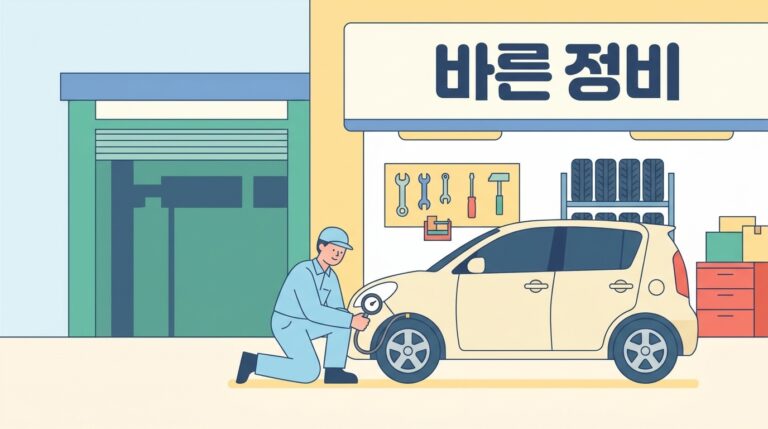
Mastering Car Maintenance in Korea: Tire Pressure and Replacement Guide
Phase 1: Empathy (Story-Driven Opening)
안녕하세요! 매일한글 에디터입니다. (Hello! I’m your Daily Hangul editor.)
Picture this scene straight out of a slice-of-life K-Drama: You finally rented a car to take that scenic weekend drive down to Gangneung for some fresh ocean air and soft tofu. The sun is shining, your favorite K-Indie playlist is playing, and suddenly, a yellow exclamation mark flashes on your dashboard dashboard: TPMS (Tire Pressure Monitoring System) warning! You pull over into a local auto repair shop (카센터 – kacenteo), your heart racing. The mechanic approaches with an apron wiped in motor oil and asks, “어떻게 오셨어요?” (Eotteoke osyeosseoyo? / How can I help you?). Suddenly, all textbook phrases vanish from your mind. Do you ask for ‘air’ or ‘pressure’? What if the tires are completely worn out and need replacement?
Car maintenance in a foreign language feels intimidating because technical jargon can easily lead to costly misunderstandings or safety risks. Based on feedback from hundreds of our intermediate learners living in Korea, navigating car repair shops is one of the biggest real-life hurdles. In this B2-level guide, we will break down natural, practical Korean phrases for checking tire pressure and discussing tire replacement timing with confidence.
Phase 2: Deep Dive into 3 Core Expressions
1. 타이어 공기압 좀 봐주실 수 있나요? (Taieo gong-gi-ap jom bwa-ju-sil su innayo?)
- Pronunciation: Ta-ee-eo gong-gi-ap jom bwa-joo-sheel soo een-na-yo? (Sounds like ‘tah-ee-uh’ followed by ‘gong’ like a brass gong, and ‘ap’ like a sharp pop)
- Meaning: Literal: “Can you take a look at the tire air pressure?” | Real Nuance: “Could you please check my tire pressure?”
- K-Culture Moment: Heard when a protagonist in a road-trip vlog stops by a highway rest stop service center before heading up a steep mountain pass.
- Editor’s Insight: Instead of demanding “공기압 체크해 주세요” (Please check pressure), using “좀 봐주실 수 있나요?” softens the request naturally through the polite auxiliary verb -아/어 보다 (to try/see).
- Situation Spectrum: Casual ⚠️ | Semi-formal ✅ | Formal ✅
- 🤔 Think About It: Notice how Korean speakers prefer asking someone to ‘look at’ (보다) an issue rather than strictly ‘measuring’ (측정하다) it. How does this reflect a relational, trust-based customer culture?
2. 마모가 심해서 교체할 때가 됐나요? (Mamoga simhaeseo gyochaehal ttaega dwaennayo?)
- Pronunciation: Mah-mo-gah seem-hae-seo gyo-chae-hahl ddae-gah dwaen-nah-yo?
- Meaning: Literal: “Because abrasion is severe, has the time for replacement come?” | Real Nuance: “Are the tires worn down enough that they need to be replaced?”
- K-Culture Moment: Used by seasoned drivers negotiating with mechanics during seasonal checkups to avoid unnecessary parts replacement.
- Editor’s Insight: The noun 마모 (mamo – abrasion/wear) combined with the grammar pattern -을 때가 되다 (it’s time to do something) expresses intermediate nuance without sounding aggressive or doubtful.
- Situation Spectrum: Casual ⚠️ | Semi-formal ✅ | Formal ✅
- 🤔 Think About It: In your native language, do you ask about the ‘wear and tear’ or directly ask if the mechanic is trying to sell you new tires?
3. 네 짝 다 갈아야 하나요, 아니면 앞바퀴만 갈면 되나요? (Ne jjak da garaya hanayo, animyeon apbakwiman galmyeon doenayo?)
- Pronunciation: Ne jjak dah gah-rah-yah hah-nah-yo, ah-nee-myeon ap-bah-kwee-mahn gahl-myeon dwen-nah-yo?
- Meaning: Literal: “Do I have to change all four pieces, or is changing only front wheels enough?” | Real Nuance: “Should I replace all four tires, or will just replacing the front ones be sufficient?”
- K-Culture Moment: A pragmatic question asked in consumer defense segments on Korean morning talk shows to help drivers save on maintenance costs.
- Editor’s Insight: 짝 (jjak) is the native Korean counter used for paired items or vehicle tires in spoken auto jargon, while 갈다 (galda) is the colloquial equivalent of 교체하다 (gyochaehada – to replace).
- Situation Spectrum: Casual ✅ | Semi-formal ✅ | Formal ⚠️
- 🤔 Think About It: Why does spoken Korean often substitute Sino-Korean vocabulary (교체) with native action verbs (갈다) in transactional settings?
Phase 3: Textbook Korean vs. Real Korean
Situation 1: Asking to inflate the tires
- 📖 Textbook Korean: 타이어에 공기를 주입해 주십시오. (Taieo-e gong-gi-reul ju-ip-hae ju-sip-si-o. – Please inject air into the tire.)
- 🗣️ Real Korean: 공기압 경고등이 떴는데, 바람 좀 넣어주세요. (Gong-gi-ap gyeong-go-deung-i tteonneunde, baram jom neo-eo-ju-seyeo. – The tire pressure warning light popped up; could you put some air in?)
- 💡 Why is it different? Real drivers say 바람을 넣다 (put wind/air in) rather than the clinical term 공기 주입 (air injection).
Situation 2: Asking about tire tread wear
- 📖 Textbook Korean: 트레드 마모 한계선을 검사해 주시기 바랍니다. (Teuredeu mamo hangyeseoneul geomsa-hae jusigi baramnida. – Please inspect the tread wear limit line.)
- 🗣️ Real Korean: 타이어 홈이 많이 닳았는지 봐주세요. (Taieo hom-i mani daranneunji bwa-juseyo. – Please check if the tire grooves are heavily worn out.)
- 💡 Why is it different? Mechanics and drivers rely on intuitive visual terms like 홈 (groove) and 닳다 (worn down) for immediate clarity.
Phase 4: K-Culture Deep Dive & Non-Verbal Manners
4-1. 눈치 (Nunchi) & Gestures
When pulling into a Korean auto repair shop (카센터 or 타이어 전문점 like Tire Pro or Bluehands):
* The Driver Roll-Down Greeting: Roll down your driver-side window completely before the technician approaches. Bow your head lightly while seated before stepping out.
* Tire Tapping & Squatting: When discussing tire issues, it is customary to squat (쪼그려 앉다) together with the mechanic beside the wheel. Pointing toward the tread with two fingers rather than one shows attentive cooperation.
4-2. Cultural Code: The ‘서비스’ (Service) Culture
In Korea, basic tire pressure checks and air top-ups are often considered a complimentary courtesy (서비스 – seobiseu) if you are visiting for an oil change or minor checkup. However, if you visit solely for air, offering to pay a small fee or buying a canned beverage (like warm canned coffee from the waiting area) displays top-tier Nunchi and manners.
Phase 5: Real-Life Roleplay Scenario
Setting: A tidy AutoOasis auto garage on a chilly morning in Seongnam. Mechanically skilled repair manager Mr. Park (박 사장님) greets you.
- Turn 1 (Manager): 어서 오세요! 차에 무슨 문제 있으신가요? 🎭 Wiping hands with a clean towel and smiling warmly.
(Eoseo oseyo! Cha-e museun munje itsusin-gayo? / Welcome! Is there any problem with your car?) - Turn 2 (You): 안녕하세요. 계기판에 공기압 경고등이 들어와서 들렀어요.
(Annyeonghaseyo. Gyegipane gong-gi-ap gyeonggodeung-i deureowaseo deulleosseoyo. / Hello. I stopped by because the tire pressure warning light turned on.) - Turn 3 (Manager): 날씨가 추워지면 자주 그래요. 제가 네 바퀴 다 확인해 드릴게요. 🎭 Picks up the digital tire pressure gauge and moves to the front left wheel.
(Nalssiga chuwojimyeon jaju geuraeyo. Jega ne bakwi da hwaginhae deurilgeyo. / That happens often when the weather gets cold. I will check all four wheels for you.) - Turn 4 (You): 네, 감사합니다! 혹시 타이어 교체 시기도 같이 봐주실 수 있나요?
(Ne, gamsahamnida! Hoksi taieo gyochae sigido gachi bwa-jusil su innayo? / Yes, thank you! Could you also check if it is time to replace the tires?) - Turn 5 (Manager): 그럼요. 음… 앞 타이어는 홈이 거의 다 닳아서 올겨울 지나기 전에 가시는 게 좋겠어요. 🎭 Pointing a small flashlight into the tire tread groove.
(Geureomyo. Eum… ap taieoneun hom-i geoui da daraseo ol-gyeoul jinagi jeone gasineun ge jokets-eoyo. / Sure. Um… the front tire grooves are almost completely worn down, so it is better to change them before this winter ends.) - Turn 6 (You): 아, 그렇군요. 혹시 앞뒤 위치 교환만으로 조금 더 탈 수는 없나요?
(A, geureokunyo. Hoksi ap-dwi wichi gyohwanman-euro jogeum deo tal suneun eomnayo? / Ah, I see. Could I drive a bit more by just rotating front and rear tires?) - Turn 7 (Manager): 뒤 타이어는 아직 짱짱하니까, 위치 교환 먼저 하셔도 한 6개월은 안전하게 타실 수 있어요! 🎭 Giving a reassuring nod.
(Dwi taieoneun ajik jjangjjang-hanikka, wichi gyohwan meonjeo hasyeodo han yuk-gae-woreun anjeonhage tasil su isseoyo! / The rear tires are still in solid condition, so if you rotate positions first, you can drive safely for about 6 more months!) - Turn 8 (You): 다행이네요! 그럼 오늘은 공기압 맞추고 위치 교환 부탁드릴게요.
(Dahaeng-iney-yo! Geureom oneureun gong-gi-ap matchugo wichi gyohwan butakdeurilgeyo. / What a relief! Then today, please adjust the pressure and do the tire rotation.)
🔀 Interactive Decision Branch
What would you say if the mechanic says your front tires have severe side cracks (옆면 균열)?
* Choice A: “위치 교환만 해주시고 그냥 탈게요.” (Just rotate them and I will keep driving.)
* Choice B: “옆면이 찢어지면 위험하니까 바로 교체해 주세요.” (If the sidewall tears it is dangerous, so please replace it right away.)
* Choice C: “타이어 바람만 최대로 빵빵하게 채워주세요.” (Just fill the tire air to maximum puffiness.)
- Feedback:
- Choice A (Risk): Sidewall cracks risk sudden highway blowouts. Ignoring safety warnings can lead to accidents.
- Choice B (Best ✅): Proactive, safety-conscious, and demonstrates natural B2 expression (위험하니까 바로 교체해 주세요).
- Choice C (Bad): Overinflating cracked tires dramatically increases puncture hazards.
Phase 6: 10-Second Emotion Shadowing Drill
- [😰 Worried and alert]
고속도로 달리다가 / 갑자기 경고등이 떴어요.
(Gosokdoro dallidaga / gapjagi gyeonggodeung-i tteosseoyo.)
“While driving on the highway / the warning light suddenly popped up.” -
[🤔 Curious and seeking advice]
타이어 수명이 / 얼마나 남았는지 / 봐주실 수 있나요?
(Taieo sumyeong-i / eolmana namanneunji / bwa-jusil su innayo?)
“Could you check / how much lifespan / is left on the tires?” -
[😊 Relieved and thankful]
공기압 맞추니까 / 승차감이 훨씬 부드러워졌어요!
(Gong-gi-ap matchunikka / seungchagami hwolssin budeureowojyeosseoyo!)
“Now that the pressure is adjusted / the ride comfort feels much smoother!”
Phase 7: K-Culture Mini Dictionary
- 공기압 (Gong-gi-ap) | Tire Air Pressure | Essential parameter measured in PSI; checked seasonally during spring and winter.
- 마모 한계선 (Mamo Han-gye-seon) | Tread Wear Indicator Bar | The safety ridge inside the groove showing replacement limits.
- 위치 교환 (Wichi Gyohwan) | Tire Rotation | Front-to-back wheel repositioning to ensure even tread longevity.
- 펑크 (Peongkeu) | Flat Tire / Puncture | Konglish term derived from ‘puncture’; used colloquially as “타이어 펑크 났어요” (I got a flat tire).
Phase 8: Survival Kit for Travelers
TOP 3 Survival Phrases
- 공기압 얼마로 맞춰야 해요? (Gong-gi-ap eolmaro matchwoya haeyo?)
Pro Tip: Use when asking the target PSI standard printed on your driver door pillar. - 타이어 펑크 때워주세요. (Taieo peongkeu ddaewo-juseyo.)
Pro Tip: Used when requesting a quick tire patch repair for a nail puncture. - 공임비가 얼마인가요? (Gong-im-biga eolma-in-gayo?)
Pro Tip: Inquires about labor fees (공임비) separately from parts costs.
Editor’s Travel Note
- App Navigation: Download the 네이버 지도 앱 다운로드 to quickly locate nearby authorized service centers by searching
카센터or타이어 교체. - Emergency Roadside Rescue: If rented, check your glovebox for the rental car company’s 24-hour emergency dispatch (긴급출동 서비스).
Phase 9: “One Step Deeper” (Reflective Thought)
In Korea, taking care of a car extends beyond individual property maintenance; it is viewed as a social responsibility to keep collective traffic flow safe and seamless. Regular vehicle inspections are backed by swift infrastructure where local neighborhood garages act as friendly community safety posts. Understanding how Koreans communicate transparently yet respectfully with technicians opens a window into Korea’s harmony-seeking transactional etiquette.
💬 Your Turn: Have you ever experienced a sudden car dashboard light in a foreign country? How did you manage it? Share your story in the comments below!
Phase 10: FAQ & Common Mistakes
Q: Is tire pressure check free at every repair shop in Korea?
A: Many neighborhood shops and gas station self-service corners offer air refills for free or for a nominal fee (around 3,000 to 5,000 KRW). If labor is involved, it is polite to ask beforehand.
Q: How often should I rotate my tires in Korea?
A: Technicians typically recommend tire rotation (위치 교환) every 10,000 km or at least once a year.
Q: What is the fastest phrase if I get a flat tire on the highway?
A: Call roadside assistance and state: “고속도로에서 타이어 펑크 났어요. 견인차 보내주세요.” (I have a flat tire on the highway. Please send a tow truck.)
🚨 Common Mistakes Warning Board
- ❌ Mistake 1: Saying “타이어에 숨을 넣어주세요” (Inject breath into tire) ➔ Correct: “타이어 바람 좀 넣어주세요.”
- ❌ Mistake 2: Saying “타이어를 청소해 주세요” when meaning rotation ➔ Correct: “타이어 위치 교환해 주세요.”
- ❌ Mistake 3: Assuming 카센터 (Car Center) handles body frame painting only ➔ Correct: Neighborhood 카센터 handle basic diagnostics, oil, and tires.
Phase 11: Action Mission & Engagement
- 🥉 Bronze Mission: Practice saying “공기압 좀 봐주실 수 있나요?” aloud 5 times using natural rhythm.
- 🥈 Silver Mission: Open your car door pillar or user manual, find your car’s PSI, and post it in Korean: “제 차 공기압은 36 PSI예요!”
- 🥇 Gold Mission: Next time you visit a garage or gas station in Korea, ask the attendant to inspect your tire tread wear directly in Korean.
- 🎮 K-Culture Mission: Spot a scene in a Korean variety show (like Omniscient Interfering View) where a celebrity visits an auto repair shop and catch the slang they use!
Phase 12: Interactive Quiz Challenge
1. Situational Judgment: Your tire warning light lights up during cold weather. What is the most natural sentence to say to a mechanic?
* A) 타이어 버려주세요.
* B) 공기압 경고등이 떠서 점검받으러 왔어요.
* C) 타이어 세차해 주세요.
2. Fill in the Blank: 타이어 홈의 마모가 심해서 새 타이어로 ______ 때가 됐어요. (교체할 / 공부할 / 세탁할)
3. True or False: In Korean automotive slang, 위치 교환 means changing the car’s parking spot. (True / False)
👉 Click here to reveal Answers & Explanations!
- Answer: B | Explaining the warning light symptom (공기압 경고등이 떠서 점검받으러 왔어요) is standard and polite.
- Answer: 교체할 | 마모가 심해서 새 타이어로 교체할 때가 됐어요 (Wear is severe so it’s time to replace with new tires).
- Answer: False | 위치 교환 refers specifically to rotating front and rear tires for balanced longevity.







