

Navigating the OTC Medicine Debate in Korean Convenience Stores: A C2 Guide to Healthcare Discourse
Phase 1: Empathy & Narrative Opening
안녕하세요! 매일한글 에디터입니다.
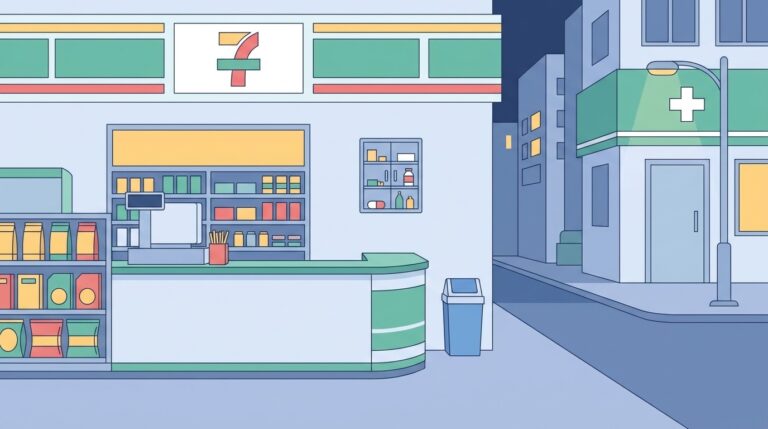
Imagine this scenario: It is 2:00 AM on a freezing winter night in Mapo-gu, Seoul. You feel a sudden fever and acute indigestion setting in. You rush down to the nearest glowing CU or GS25, expecting a mini-pharmacy like you might find in many Western countries or Japan. However, standing in front of the locked glass cabinet, you notice only 13 designated over-the-counter (OTC) products: Tylenol, basic cold syrups, a few digestive aids, and pain patches. You ask the clerk for antacids or emergency burn cream, but they shake their head: “약국 가셔야 해요 (You need to go to a pharmacy).”
For advanced learners, this moment isn’t just an inconvenience—it is the focal point of one of modern South Korea’s most intense socio-legal debates: 안전상비의약품 확대 논의 (The Discussion on Expanding Household Emergency OTC Medicines in Convenience Stores) versus the fierce opposition from the 대한약사회 (Korean Pharmaceutical Association).
At a C2 proficiency level, mastering conversational Korean requires more than just ordering ramen; it demands navigating complex civil discourses where consumer convenience (소비자 접근성), public health safety (의약품 오남용 방지), and professional occupational boundaries (직역 갈등) collide. Drawing from hundreds of discussions with expats, healthcare professionals, and policymakers in Seoul, this guide equips you with elite analytical Korean vocabulary, nuanced rhetorical strategies, and deep sociopolitical context.
Phase 2: 3 Core Expressions (C2 Advanced Discourse)
1. 안전상비의약품 품목 확대 (Anjeon-sangbi-uiyakpum pummok hwakdae)
- Pronunciation: [ahn-jeon-sang-bi-ui-yak-pum poom-mok hwak-dae] (Sounds like “ahn-jun-sahng-bee-wee-yak-poom poom-mohk hwahk-deh”)
- Meaning: Expansion of safety household emergency medicine items.
- K-Culture Moment: Regularly featured on KBS or JTBC nightly news when civic consumer groups lobby the Ministry of Health and Welfare (보건복지부) to add antacids and burn ointments to the 24/7 store inventory.
- Editor’s Insight: This formal compound noun combines 안전 (safety), 상비 (standing/readily kept), and 의약품 (pharmaceuticals). At C2, invoking this specific legal term signals an insider understanding of Korean regulatory frameworks.
- Situation Spectrum: Casual: ⚠️ | Semi-formal: ✅ | Formal: ✅
- 🤔 Think About It: Does your home country treat convenience stores as universal drugstores, or are medication sales strictly protected by licensed professional guilds?
2. 복약지도의 공백과 오남용 우려 (Bogyak-jido-ui gongbaek-gwa onamyong uryeo)
- Pronunciation: [bok-yak-ji-do-ui gong-baek-gwa oh-nam-yong oo-ryeo]
- Meaning: The absence of medication counseling and concerns over drug misuse/abuse.
- K-Culture Moment: The standard argument presented by Korean pharmacists during television debates or strike rallies against deregulation.
- Editor’s Insight: 복약지도 (medication guidance/counseling) is legally mandated for pharmacists in Korea. Opponents of deregulation argue that convenience store staff cannot provide dosage warnings, creating a critical safety gap (공백).
- Situation Spectrum: Casual: 🚫 | Semi-formal: ⚠️ | Formal: ✅
- 🤔 Think About It: How does the linguistic framing of “consumer safety” versus “consumer autonomy” shape public policy debates in different cultures?
3. 공공성과 직역 이익의 상충 (Gonggongseong-gwa jigyeok i-ik-ui sangchung)
- Pronunciation: [gong-gong-seong-gwa jeek-yeok ee-ik-ui sahng-choong]
- Meaning: The conflict between public welfare/convenience and professional guild interests.
- K-Culture Moment: Op-eds in economic daily papers (매일경제, 한국경제) analyzing why the 13-item limit has remained unchanged since 2012 despite high public demand.
- Editor’s Insight: 직역 (occupational boundary/guild domain) is a vital concept in South Korea’s high-stakes regulatory politics (similar to medical strikes or ride-sharing disputes).
- Situation Spectrum: Casual: 🚫 | Semi-formal: ✅ | Formal: ✅
- 🤔 Think About It: In Korean discourse, accusing an association of 직역 이기주의 (guild self-interest) is a strong rhetorical move. How can you address this objectively without sounding aggressive?
Phase 3: Textbook Korean vs. Real-World Discourse
Situation 1: Discussing Late-Night Medicine Accessibility
- 📖 교과서 한국어: 밤에 약을 사기 어려워서 편의점에서 약을 더 많이 팔면 좋겠습니다. (It is hard to buy medicine at night, so it would be good if convenience stores sold more medicine.)
- 🗣️ 진짜 한국어: 심야 의료 공백 해소를 위해 안전상비약 품목을 확대하자는 여론이 우세하지만, 약사회의 반발도 만만치 않죠. (While public opinion favors expanding emergency OTC items to bridge the midnight medical gap, the pharmacist guild’s pushback remains formidable.)
- 💡 왜 다를까?: C2 Korean utilizes socio-analytical vocabulary (심야 의료 공백, 여론이 우세하다, 반발이 만만치 않다) to frame personal inconvenience as a multi-stakeholder social dilemma.
Situation 2: Evaluating the Alternative (Public Late-Night Pharmacies)
- 📖 교과서 한국어: 늦게까지 여는 공공 약국을 만들면 문제가 해결됩니다. (If we build public pharmacies that open late, the problem is solved.)
- 🗣️ 진짜 한국어: 공공심야약국 제도가 대안으로 제시되고는 있지만, 예산 확보와 접근성 측면에서 실효성 논란이 지속되고 있어요. (Though public late-night pharmacies are proposed as an alternative, controversies regarding budget sustainability and actual geographic accessibility persist.)
- 💡 왜 다를까?: Rather than presenting binary solutions, sophisticated speakers acknowledge policy initiatives (공공심야약국) while critically dissecting their operational viability (실효성 논란).
Phase 4: K-Culture Deep Dive & Non-Verbal Manners
4-1. Nunchi & Nuanced Debate Etiquette
When debating healthcare deregulation in Korea, striking an objective balance is paramount. Dismissing pharmacists as merely “greedy” or convenience stores as “dangerous” creates friction. Instead, adopt a reflective posture: slight head nod, thoughtful silence (뜸 들이기), and cautious phrasing like “양측의 입장이 팽팽히 맞서고 있죠 (Both sides stand on firm, competing grounds).” Avoid direct pointing; use open-palm gestures when presenting contrasting data points.
4-2. Cultural Code: The 24/7 Super-Convenience vs. The 2000 Separation of Prescribing & Dispensing (의약분업)
Koreans expect near-instant access to goods 24/7 via 배달 (delivery) and convenience stores. However, the healthcare ecosystem is heavily governed by the historical legacy of the 2000 의약분업 (separation of drug prescribing and dispensing), which granted pharmacists strict legal custody over medication distribution. The reluctance to expand convenience store OTC drugs is not merely bureaucracy—it is an ideological battleground over who holds ultimate custodianship over national drug safety.
Phase 5: Interactive Real-Life Roleplay Scenario
Background: Min-woo (a Korean health policy researcher) and Elena (a foreign bio-policy consultant) are having late-night tea at a café in Yeouido after a parliamentary forum.
- Elena: 민우 씨, 오늘 포럼에서 안전상비약 확대 건으로 토론이 꽤 격렬했죠? (Min-woo, the debate on expanding safety OTC medicine items was quite intense at today’s forum, wasn’t it?)
🎭 [찻잔을 내려놓으며 진지하게 묻는다] - Min-woo: 네, 소비자 편익 증진과 복약 지도 부재에 따른 부작용 우려가 팽팽하게 맞서더군요. (Indeed, the enhancement of consumer benefit and concerns over side effects due to the absence of medication counseling were in sharp contention.)
🎭 [자료집을 넘기며 고개를 끄덕인다] - Elena: 사실 주요 선진국 대비 한국 편의점의 상비약 품목 수가 13개로 제한된 건 접근성 면에서 다소 아쉬워요. (Honestly, compared to other major developed countries, limiting Korea’s convenience store OTC list to 13 items feels somewhat restrictive in terms of accessibility.)
🎭 [통계 수치를 가리킨다] - Min-woo: 맞습니다. 하지만 약사회 측에서는 편의점 아르바이트생의 판매 환경상 오남용 방지 장치가 미흡하다는 점을 강조하죠. (That’s true. However, the Pharmacist Association emphasizes that under convenience store retail conditions, mechanisms to prevent misuse remain inadequate.)
🎭 [양손을 모으며 중립적인 태도를 취한다] - Elena: 그렇다면 공공심야약국의 지원을 늘리는 쪽이 현실적인 절충안이 될 수 있을까요? (In that case, could increasing subsidies for public late-night pharmacies serve as a realistic compromise?)
🎭 [상대방의 의견을 경청하는 눈빛으로] - Min-woo: 지자체 예산 부담과 약사들의 야간 근무 기피 현상을 해결한다면 가장 이상적인 모델이긴 합니다. (If local governments can resolve the budget burden and pharmacists’ reluctance toward night shifts, it would be the most ideal model.)
🎭 [생각에 잠긴 듯 미소를 짓는다] - Elena: 결국 규제 혁신과 국민 보건 안전이라는 두 가치의 균형점을 찾는 것이 핵심이겠네요. (Ultimately, the key lies in striking a balance between regulatory innovation and public health safety.)
🎭 [요점을 정리하며 결론을 맺는다] - Min-woo: 정확합니다. 엘레나 씨의 분석처럼 사회적 대타협이 절실한 시점입니다. (Precisely. As you analyzed, a grand social compromise is urgently needed at this juncture.)
🎭 [동의하며 미소를 보낸다]
🔀 Interactive Choice Point
How would you intervene if someone aggressively claimed: “편의점에서 모든 약을 다 팔게 해야 합니다! (Convenience stores should sell all drugs!)”?
- Option A: 맞아요, 약사들의 밥그릇 챙기기 때문에 국민들만 고통받고 있어요. (Bad: Excessively aggressive, dismisses critical drug safety realities.)
- Option B: 소비자 편익도 중요하지만, 오남용 시 발생할 수 있는 보건학적 리스크와 복약지도의 중요성도 함께 고려해야 하지 않을까요? (Best: Balanced, articulate, and academically rigorous C2 stance.)
- Option C: 상관없어요, 저는 밤에 아프면 그냥 응급실에 갈 거예요. (Risk: Dismissive and counter-productive to analytical discussion.)
Phase 6: 10-Second Emotion Shadowing Drill
[🧐 진지하고 균형 잡힌 정책 전문가 톤]
“소비자의 / 편의성 증진도 / 중요하지만, / 의약품 오남용 방지를 위한 / 안전장치가 / 반드시 / 선행되어야 합니다.”
(Sobija-ui / pyeon-uiseong jeungjin-do / jung-yohan-ji-man, / uiyakpum onamyong bangji-reul wihan / anjeon-jangchi-ga / bandeusi / seonhaeng-doe-eo-ya hamnida.)-
[🤔 깊이 고민하며 화두를 던지는 톤]
“공공심야약국 제도가 / 정착되기 전까지는 / 상비약 품목 조정에 대한 / 사회적 논의를 / 마냥 미룰 수만은 / 없지 않을까요?”
(Gonggong-simya-yakguk jedo-ga / jeongchak-doe-gi jeon-kkaji-neun / sangbiyak pummok jojeong-e daehan / sahoejeok non-ui-reul / manyang mirul-su-man-eun / eopji aneulkkayo?)
Phase 7: K-Culture Mini Dictionary
- 안전상비의약품 (Anjeon-sangbi-uiyakpum): Legally designated household emergency OTC medications authorized for 24-hour retail sale outside licensed pharmacies (currently capped at 13 items including antipyretics and digestive pills).
- 공공심야약국 (Gonggong-simya-yakguk): State-subsidized late-night pharmacies operating until 1:00 AM or 2:00 AM to mitigate midnight medical voids without deregulating store sales.
- 복약지도 (Bogyak-jido): Professional counseling provided by a licensed pharmacist detailing proper dosage, contraindications, and potential side effects.
- 직역 갈등 (Jigyeok galdeung): Friction arising between different professional guilds or regulatory bodies over jurisdictional monopolies and commercial rights.
Phase 8: Survival Kit for Travellers & Expats
-
서바이벌 표현 TOP 3:
- “가장 가까운 공공심야약국이 어디에 있나요?” (Where is the nearest public late-night pharmacy?) — Pro Tip: Essential when 24/7 stores lack the specific medication you need.
- “편의점 상비약 코너에 소화제나 해열제 남아있나요?” (Do you have digestive aids or antipyretics left in the OTC section?) — Pro Tip: Clerk-assisted cabinets are often kept behind the cash counter for safety.
- “이 약은 의사 처방전 없이 구매 가능한 일반의약품인가요?” (Is this an over-the-counter drug available without a doctor’s prescription?) — Pro Tip: Useful inside daytime community pharmacies.
-
Editor’s Travel Note: When you fall ill past midnight, use the 휴일지킴이약국 웹사이트 or search “심야약국” on 네이버 지도 앱 다운로드 to find open dispensing pharmacies nearby.
Phase 9:
Frequently Asked Questions (FAQ)
Q: What does "안전상비의약품 품목 확대 (Anjeon-sangbi-uiyakpum pummok hwakdae)" mean in Korean and how do you pronounce it?
A: In Korean, "안전상비의약품 품목 확대 (Anjeon-sangbi-uiyakpum pummok hwakdae)" is pronounced [ahn-jeon-sang-bi-ui-yak-pum poom-mok hwak-dae] and means: Expansion of safety household emergency medicine items.
Q: What does "복약지도의 공백과 오남용 우려 (Bogyak-jido-ui gongbaek-gwa onamyong uryeo)" mean in Korean and how do you pronounce it?
A: In Korean, "복약지도의 공백과 오남용 우려 (Bogyak-jido-ui gongbaek-gwa onamyong uryeo)" is pronounced [bok-yak-ji-do-ui gong-baek-gwa oh-nam-yong oo-ryeo] and means: The absence of medication counseling and concerns over drug misuse/abuse.
Q: What does "공공성과 직역 이익의 상충 (Gonggongseong-gwa jigyeok i-ik-ui sangchung)" mean in Korean and how do you pronounce it?
A: In Korean, "공공성과 직역 이익의 상충 (Gonggongseong-gwa jigyeok i-ik-ui sangchung)" is pronounced [gong-gong-seong-gwa jeek-yeok ee-ik-ui sahng-choong] and means: The conflict between public welfare/convenience and professional guild interests.







