

Surviving Korean Summer: How to Talk About Humidity Like a True Local
Phase 1: Empathy (Story-Immersive Opening)
안녕하세요! I’m your Daily Hangul editor, your trusted Korean culture and language navigator!
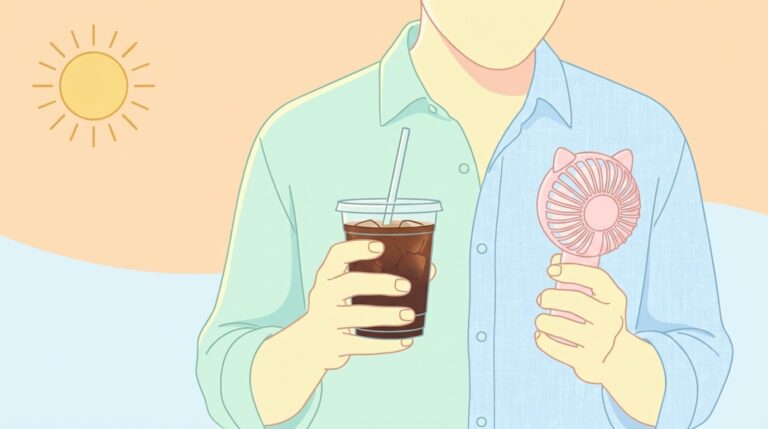
Picture this: You step out of the blissfully air-conditioned subway station at Hongdae in mid-July. Within three seconds, a thick, invisible wall of warm vapor wraps around your entire body. Your linen shirt instantly clings to your back, your forehead gets shiny, and you feel like a warm mandu (dumpling) sitting inside a bamboo steamer. You turn to your Korean friend and want to say something more expressive than just “Nalsiga deowoyo” (날씨가 더워요 – The weather is hot). That simple textbook sentence doesn’t even begin to describe the swampy, sticky misery you are enduring!
Korean summers are famously dominated by the East Asian monsoon (Jangma), meaning the humidity regularly exceeds 85%. In Korea, complaining about this unique, sauna-like moisture is practically an Olympic sport and an essential social bonding ritual. Mastering these expressions won’t just expand your vocabulary—it will immediately turn you from an awkward tourist into an empathetic local who truly “gets” the struggle. Based on hundreds of tutoring sessions with learners who felt trapped in rigid textbook dialogues, here is your definitive B1 guide to surviving and describing Korea’s stickiest season!
Phase 2: 3 Key Expressions Deep Dive
1. 습도가 높아서 너무 끈적거려요 (Seupdoga nop-aseo neomu kkeunjeokgeoryeoyo)
- Pronunciation: [Seup-do-ga nop-ah-seo neo-mu kkeun-jeok-geo-ryeo-yo] (Think of ‘kkuen’ like the snappy ‘k’ sound in ‘skate’ followed by ‘un’, and ‘jeok’ like ‘jug’ without the heavy g)
- Meaning: Literal: “Because the humidity is high, it’s very sticky.” | Real Nuance: “The humidity is awful; my skin feels completely clammy and sticky!”
- K-Culture Moment: Seen in K-dramas when characters walk into a convenience store after a walk, dramatically fanning their collars and grabbing an iced pouch drink.
- Editor’s Insight: 끈적거리다 (kkeunjeokgeorida) is an onomatopoeic/mimetic verb describing physical stickiness—like honey on fingers or sweaty skin touching subway seats.
- Situation Spectrum:
- Casual: ✅ (습도 높아서 완전 끈적거려!)
- Semi-formal: ✅ (습도가 높아서 너무 끈적거려요.)
- Formal: ⚠️ (Better to use 습도가 높아 다소 불쾌합니다 in professional meetings)
- 🤔 Think About It: In English, we often say “It’s muggy” or “It’s humid.” Why do you think Korean uses tactile body-sensation words like 끈적거리다 (sticky) to describe atmospheric conditions?
2. 오늘 날씨 완전 찜통이에요 (Oneul nalssi wanjeon jjimtong-ieyo)
- Pronunciation: [Oh-neul nal-ssi wan-jeon jjim-tong-ee-eyo] (Pronounce ‘jjim’ with tight vocal cords like ‘steam’, and ‘tong’ like ‘tongue’ with a deep o)
- Meaning: Literal: “Today’s weather is completely a food steamer.” | Real Nuance: “It’s like an absolute sauna outside today!”
- K-Culture Moment: Reality variety shows like Running Man during summer outdoor shoots where the cast collapses under parasols shouting this line.
- Editor’s Insight: 찜통 (Jjimtong) refers to the multi-layered metal or bamboo pots used to steam mandu and rice cakes. Comparing the city to a steamer paints an instant, visceral picture of heat mixed with heavy vapor.
- Situation Spectrum:
- Casual: ✅ (완전 찜통이다!)
- Semi-formal: ✅ (오늘 날씨 완전 찜통이에요.)
- Formal: 🚫 (Too colloquial for corporate weather reporting)
- 🤔 Think About It: Does your native culture compare hot weather to kitchen appliances or cooking techniques? What food or vessel best describes your hometown summer?
3. 후텁지근해서 불쾌지수 대박이에요 (Huteopjigeunhaeseo bulkwaejisu daebak-ieyo)
- Pronunciation: [Hoo-teop-jee-geun-hae-seo bool-kwae-jee-soo dae-bak-ee-yo] (Soft ‘hoo’, crisp ‘teop’, rolling smoothly into ‘jee-geun’)
- Meaning: Literal: “Because it’s sultry/stuffy, the discomfort index is awesome/insane.” | Real Nuance: “It’s so heavy and muggy that everyone’s patience is wearing paper-thin!”
- K-Culture Moment: Frequently quoted in morning news broadcasts and daily office banter when commuters arrive exhausted after a packed subway ride.
- Editor’s Insight: 후텁지근하다 (huteopjigeunhada) specifically combines thick warmth with stuffy air. 불쾌지수 (bulkwaejisu – Discomfort Index) is an actual meteorological term that everyday Koreans use casually to explain why they feel cranky.
- Situation Spectrum:
- Casual: ✅ (후텁지근해서 불쾌지수 쩔어.)
- Semi-formal: ✅ (후텁지근해서 불쾌지수 대박이에요.)
- Formal: ⚠️ (후텁지근하여 불쾌지수가 높습니다.)
- 🤔 Think About It: How does tracking a “Discomfort Index” reflect Korean society’s acute awareness of communal mood and interpersonal harmony (Nunchi) during stressful weather?
Phase 3: Textbook Korean vs. Real Korean
Situation 1: Stepping outside into heavy monsoon air
- 📖 교과서 한국어 (Textbook): “오늘 습도가 매우 높습니다.” (Oneul seupdoga maeu nopseumnida. – Today the humidity is very high.)
- 🗣️ 진짜 한국어 (Real Spoken): “와, 밖이 완전 물속 같아. 숨이 턱 막혀요!” (Wa, bakki wanjeon mulsok gata. Sumi teok mak-hyeoyo! – Wow, it feels like underwater outside. I can barely breathe!)
- 💡 왜 다를까? (Why the difference?): Textbooks teach statistical facts, but native speakers emphasize physical sensory overload (숨이 턱 막히다 = one’s breath gets choked up).
Situation 2: Complaining about sweat after walking up a hill
- 📖 교과서 한국어 (Textbook): “땀이 많이 납니다.” (Ttami mani namnida. – I am sweating a lot.)
- 🗣️ 진짜 한국어 (Real Spoken): “땀으로 샤워했어요. 살이 닿으면 찝찝해요.” (Ttam-euro syawohaesseoyo. Sari daeumyeon jjipjiphaeyo. – I practically showered in sweat. It feels gross when skin touches skin.)
- 💡 왜 다를까? (Why the difference?): 찝찝하다 (jjipjiphada) is the ultimate conversational word for that uncomfortable, grimy, sticky sensation. Using it instantly establishes natural fluency.
Phase 4: K-Culture Deep Dive & Non-Verbal Manners
4-1. 눈치 (Nunchi) & Summer Commuting Etiquette
When humidity hits peak levels in Korea’s public transit, Nunchi (social situational awareness) kicks into overdrive. Because everyone’s bare arms are prone to sticking together on crowded buses or subways (지옥철 – Hell subway):
* The Tuck-In Gesture: People consciously pull their arms close to their torso or cross their arms over their bags to avoid accidental skin-to-skin contact (살 부딪힘).
* Hand-fanning (손부채질): Fluttering your hand gently near your collarbone while letting out a soft sigh (휴~) signals fatigue without being overtly aggressive.
4-2. Cultural Code: The Oasis of “Ka-Gong-Jok” & Bingsu Refuges
During the muggy months of July and August, Korean cafes evolve from simple coffee shops into climate shelters. You will encounter 카공족 (Ka-gong-jok – people who study at cafes) escaping un-airconditioned apartments, clustering around mega-sized 팥빙수 (Patbingsu – shaved ice with sweet red beans). Asking a friend, “우리 시원한 데 들어가서 빙수나 먹을까?” (Shall we head somewhere cool and get shaved ice?) is the universal Korean gesture of care on a sweltering afternoon.
Phase 5: Real-Life Roleplay Scenario
Setting: Gangnam Station Exit 11. It’s 2:30 PM in late July, right after a torrential monsoon drizzle. The asphalt is steaming.
Characters:
* Minji (민지): Your Korean classmate who is armed with an umbrella and an electric mini-fan.
* You: A tired traveler melting in the muggy heat.
- Turn 1 (Minji): 🎭 Wiping her forehead and handing you a tissue
“와, 비 오고 나니까 공기가 장난 아니지?”
(Wa, bi ogo nanikka gonggiga jangnan aniji? / Wow, now that the rain stopped, isn’t the air insane?) - Turn 2 (You): 🎭 Fanning your shirt to let air in
“네, 맞아요. 습도가 너무 높아서 온몸이 끈적거려요.”
(Ne, majayo. Seupdoga neomu nop-aseo onmomi kkeunjeokgeoryeoyo. / Yes, exactly. The humidity is so high my whole body is sticky.) - Turn 3 (Minji): 🎭 Turning on her portable handheld fan towards your face
“이거 바람 좀 쐬어봐. 오늘 진짜 찜통더위다, 그치?”
(Igeo baram jom ssoeeobwa. Oneul jinjja jjimtongdeowida, geuchi? / Feel this breeze. Today is a real steamer heat, right?) - Turn 4 (You): 🎭 Sighing with deep relief
“고마워요! 조금만 걸었는데도 땀으로 샤워한 것 같아요.”
(Gomaweoyo! Jogeumman georeonneundedo ttameuro syawohan geot gat-ayo. / Thank you! Even though we barely walked, I feel like I showered in sweat.) - Turn 5 (Minji): 🎭 Looking around at the crowded street
“길에 사람도 많아서 불쾌지수 최고조야. 빨리 어디 들어갈까?”
(Gire saramdo manaseo bulkwaejisu choegojoya. Ppalli eodi deureogalkka? / Lots of people on the street too, so the discomfort index is at its peak. Shall we go inside somewhere quickly?) - Turn 6 (You): 🎭 Pointing at a nearby large cafe
“저기 카페 가서 시원한 에어컨 바람 쐬면서 쉬어요!”
(Jeogi kape gaseo siwonhan eeokeon baram ssoemyeonseo swieoyo! / Let’s go to that cafe over there, enjoy the cool AC, and rest!) - Turn 7 (Minji): 🎭 Smiling widely and nodding
“완전 좋아! 가서 시원한 망고빙수 하나 때리자!”
(Wanjeon joa! Gaseo siwonhan manggobingsu hana ttaerija! / Sounds awesome! Let’s go smash a cold mango shaved ice!) - Turn 8 (You): 🎭 Speed-walking excitedly toward the glass doors
“대찬성이에요! 빨리 뽀송뽀송해지고 싶어요.”
(Daechanseong-ieyo! Ppalli bbosong-bbosonghaejigo sipeoyo. / Totally agreed! I want to get dry and fresh quickly.)
🔀 Interactive Decision Point
How would you respond if Minji asks: “우리 걸어서 15분 거리 맛집 갈래, 아니면 바로 앞 카페 갈래?” (Do you want to walk 15 mins to a famous restaurant, or go straight to the cafe in front of us?)
- Option A: “날씨가 꿉꿉하니까 일단 바로 앞 카페로 피신해요!” (Because it’s damp and sticky, let’s take refuge in the cafe right here first!)
👉 Feedback [BEST]: Natural, pragmatic, uses intermediate slang (피신하다 – take refuge), and matches the mood perfectly. - Option B: “저는 땀이 나지 않아서 15분 걸을 수 있습니다.” (I do not produce sweat, so I can walk 15 minutes.)
👉 Feedback [BAD]: Grammatically stiff and sounds like an emotionless robot while ignoring your friend’s discomfort. - Option C: “짜증 나니까 그냥 집에 갈래요.” (I’m irritated, so I’ll just go home.)
👉 Feedback [RISK]: Overly blunt! While understandable in high humidity, it might unintentionally hurt your companion’s feelings.
Phase 6: 10-Second Emotional Shadowing Drill
Practice these lines out loud, pausing at each / mark and channeling the indicated mood!
[🥵 Exhausted, out of breath, fanning collar]
“으아… / 습도가 너무 높아서 / 온몸이 끈적거려 죽겠어요!”
(Eua… / seupdoga neomu nop-aseo / onmomi kkeunjeokgeoryeo jukgesseoyo!)-
[❄️ Blissful relief upon entering an air-conditioned room]
“와 살았다! / 에어컨 바람 맞으니까 / 완전 뽀송뽀송해졌어.”
(Wa saratda! / eeokeon baram majeunikka / wanjeon bbosong-bbosonghaejyeosseo.) -
[😤 Playfully dramatic complaint to a close friend]
“오늘 불쾌지수 대박이니까 / 나 건드리지 마~ / 장난이야!”
(Oneul bulkwaejisu daebaginikka / na geondeuriji ma~ / jangnaniya!)
Phase 7: K-Culture Mini Dictionary
-
찜통더위 (Jjimtong-deowi)
Literal: Steamer-pot heat.
Usage: Refers specifically to muggy, inescapable heatwaves where the air feels saturated with steam. Used constantly in news headlines and summer casual talk. -
꿉꿉하다 (Kkupkkuphada)
Literal: Damp and clammy.
Usage: Used for semi-dry laundry that smells faintly of moisture, damp bedsheets during monsoon season, or the heavy ambient air before a rainstorm. -
손풍기 (Sonpunggi)
Literal: Hand-fan (Contraction of 휴대용 손선풍기).
Usage: The ubiquitous rechargeable portable mini-fan carried by schoolkids, office workers, and K-pop idols alike during summer. -
뽀송뽀송하다 (Bbosong-bbosonghada)
Literal: Soft, clean, and completely dry.
Usage: The coveted opposite of 끈적거리다. Used for fresh towels, skin after baby powder/deodorant wipes, or walking into dry AC rooms.
Phase 8: Survival Kit for Travelers
Top 3 Survival Phrases
- “혹시 에어컨 온도 조금만 낮춰주실 수 있나요?”
(Hoksi eeokeon ondo jogeumman natchwojusil su innayo?)
Pro Tip: Use this politely in restaurants or taxis when you are visibly sweating and need more cold air. - “쿨링 티슈 / 땀 억제제 어디에 있어요?”
(Kulling tisyu / ttam eokjeje eodie isseoyo?)
Pro Tip: Ask this at Olive Young or convenience stores to buy menthol cooling body wipes—an absolute life-saver! - “실내가 너무 쾌적하고 시원해요!”
(Silnaega neomu kwaejeokhago siwonhaeyo!)
Pro Tip: Compliment a shop owner or host on their delightfully dry, conditioned interior.
Editor’s Travel Note
- Real-Time Weather Verification: Check accurate hourly humidity percentages by visiting the official KMA Weather Portal Forecast (기상청 날씨누리).
- Subway Strategy: Look out for the designated 약냉방차 (Weakly Air-Conditioned Cars), usually cars #4 and #7 on most Seoul Metro lines. If you feel sticky and overheated, avoid these cars and head toward the standard cars instead!
Phase 9: “One Step Deeper” (Cultural Reflection)
In Korean culture, complaining about the humidity isn’t seen as negative whining; rather, it is an act of communal empathy (공감, Gonggam). By acknowledging the sticky discomfort (“오늘 날씨 너무 끈적거리죠?”), you validate the other person’s silent suffering and build an instant bridge of solidarity. Sharing the burden of the climate softens daily interactions in high-density urban environments.
💬 Your Turn: Have you ever experienced a summer so humid your clothes stuck to you instantly? Drop a comment below using the word “끈적거리다” or “찜통” to describe the stickiest weather you’ve ever lived through!
Phase 10: FAQ & Common Mistakes
Q: What is the exact difference between 끈적거리다 and 꿉꿉하다?
A: 끈적거리다 (Kkeunjeokgeorida) focuses on sticky skin, surfaces, or substances adhering to you. 꿉꿉하다 (Kkupkkuphada) refers to damp ambient air, wet laundry, or moist fabric that hasn’t dried properly.
Q: Can I use 찜통 (steamer) to describe dry heat in a desert?
A: No. 찜통 (Jjimtong) implies steam and intense moisture. For scorching, dry, sunny heat, Koreans use 불볕더위 (Bulbyeot-deowi – blazing sun heat) or 가마솥더위 (Gamasot-deowi).
Q: Is 불쾌지수 (Discomfort Index) an offensive phrase to say to someone?
A: Not at all, as long as it’s directed at the environment (“오늘 불쾌지수 높네요”). Just don’t say “당신 때문에 불쾌해요” (You make me uncomfortable), which is a personal criticism.
🚨 Common Mistakes Board
- ❌ Mistake 1: Saying “날씨가 끈적해요” (The weather is sticky).
Correction: Weather itself isn’t sticky; humidity makes you sticky. Say: “습도가 높아서 몸이 끈적거려요.” - ❌ Mistake 2: Using 시원하다 (siwonhada) when you actually mean dry/fresh.
Correction: 시원하다 means cool/refreshing. To specify non-sticky and crisp dryness, use 뽀송뽀송해요 (bbosong-bbosonghaeyo). - ❌ Mistake 3: Saying “습기가 많아요” in casual spoken banter.
Correction: While correct, native speakers more naturally say “습도가 너무 높아요” or “날씨가 너무 꿉꿉해요”.
Phase 11: Action Missions
- 🥉 Bronze Mission (Solo): Look into the mirror and practice the 3 expressions from Phase 2 with hand gestures and realistic sighing.
- 🥈 Silver Mission (Social): Post an Instagram story or message with a summer photo, captioning it: “오늘 날씨 완전 찜통… 습도 대박 🥵”.
- 🥇 Gold Mission (Real Life): Next time you enter an air-conditioned cafe or convenience store in Korea, turn to the clerk or your friend and say: “밖이 너무 끈적거렸는데 여기는 진짜 천국이네요!” (It was so sticky outside, but this place is absolute heaven!)
- 🎮 K-Culture Bonus Quest: Watch a summer episode of any Korean travel vlog on YouTube and tally how many times you hear the words 더워 (deoweo), 습해 (seuphae), or 땀 (sweat)!
Phase 12: Interactive Quiz Challenge
Test your knowledge below! Click each question to reveal the answers.
Question 1 (Situation Judgment): You just washed clothes, but it rained for 3 days and your shirt feels damp and unpleasant. Which word fits best?
- A) 뽀송뽀송하다 (Bbosong-bbosonghada)
- B) 꿉꿉하다 (Kkupkkuphada)
- C) 시원하다 (Siwonhada)
Answer: B) 꿉꿉하다
Explanation: 꿉꿉하다 is the precise intermediate word for damp clothes, humid rooms, and clammy fabrics during rainy seasons!
Question 2 (Fill-in-the-blank): 습도가 높아서 온몸이 _______. (Because humidity is high, my whole body feels sticky.)
- A) 미끌거려요 (mikkeulgeoryeoyo – is slippery)
- B) 끈적거려요 (kkeunjeokgeoryeoyo – is sticky/clammy)
- C) 따뜻해요 (ttatteuthaeyo – is warm)
Answer: B) 끈적거려요
Explanation: 끈적거리다 describes the sticky physical feeling of skin drenched in humid sweat.
Question 3 (True or False Cultural Quiz): In Seoul subways during humid summers, Car #4 and Car #7 are usually colder than other cars.
Answer: False!
Explanation: Cars #4 and #7 are typically designated as 약냉방차 (Weakly Air-Conditioned Cars) for elderly or cold-sensitive passengers. If you want maximum cold to combat the humidity, head to the middle or end regular cars!







