

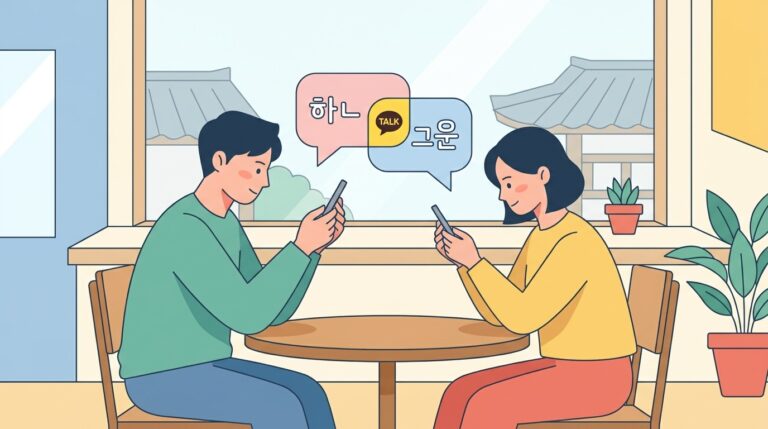
Phase 1: Empathy (Immersive Opening)
안녕하세요! 매일한글 (Daily Hangul) editor here! Have you ever found yourself staring anxiously at your KakaoTalk screen, wondering why the yellow number “1” next to your message hasn’t disappeared for three whole hours? Or maybe your Korean partner seemed suddenly distant and replied with curt, one-syllable texts like “응” (Eung – Yeah) instead of their usual flood of cute heart emojis?
If you’ve watched K-dramas like Yumi’s Cells or Crash Course in Romance, you’ve likely seen couples treat texting not just as communication, but as an emotional lifeline. In Korea, texting frequency—known as 연락 빈도 (Yeollak bindo)—is often treated as a direct barometer of intimacy and care. When communication rhythm stumbles, misunderstandings flare up instantly: “Do they not care about me anymore?” or “Why are they smothering me?”
Drawing from years of coaching intermediate learners and navigating cross-cultural relationships, this B2-level masterclass is designed to help you express your texting expectations smoothly, tactfully, and without starting an emotional battle. Let’s master the art of romantic communication balance!
Phase 2: Core Expressions Deep Dive
1. 연락 좀 자주 해 줘 (Yeollak jom jaju hae jwo)
- Pronunciation: [Yeol-lak jom ja-ju hae jwo] (Sounds like Yull-lahk zhom jah-joo hay jwoh)
- Meaning: Literal: “Do contact a bit often.” | Nuance: “Please text or call me a bit more often (I miss your updates).”
- K-Culture Moment: Seen in romantic comedy dramas when the lead playfully pouts after their partner gets absorbed in gaming or work without checking in all day.
- Editor’s Insight: The tiny word 좀 (Jom – a bit/please) is the secret sauce here. Without “좀”, it sounds like a demanding command; with “좀”, it softens into an affectionate plea.
- Situation Spectrum: Casual ✅ | Semi-formal ⚠️ | Formal 🚫
- 🤔 Think About It: In English, asking someone to “text more” can sometimes sound needy. In Korean couples, is asking for frequent updates seen as clinginess, or as a mutual expression of affection?
2. 바쁜 건 알겠는데 서운해 (Bappeun geon algenneunde seounhae)
- Pronunciation: [Ba-ppeun geon al-gen-neun-de seo-un-hae] (Sounds like Bah-poon gun ahl-ghen-noon-day suh-oon-hay)
- Meaning: Literal: “I understand you are busy, but I feel hurt/disappointed.” | Nuance: “I know you’re tied up, but I can’t help feeling a little neglected.”
- K-Culture Moment: The classic line during a late-night cafe confrontation where a couple clears up pent-up emotional distance without shouting.
- Editor’s Insight: 서운하다 (Seounhada) is one of the most uniquely Korean emotional adjectives. It doesn’t mean explosive anger (화나다); it describes a tender feeling of sadness caused by unfulfilled expectations from someone you cherish.
- Situation Spectrum: Casual ✅ | Semi-formal ⚠️ | Formal 🚫
- 🤔 Think About It: How does acknowledging their busyness (바쁜 건 알겠는데) before sharing your emotional vulnerability change the entire conversation’s dynamic?
3. 틈날 때마다 카톡 남겨줘 (Teumnal ttaemada katok namgyeojwo)
- Pronunciation: [Teum-nal ttae-ma-da ka-tok nam-gyeo-jwo] (Sounds like Toom-nahl tay-mah-dah kah-tok nahm-gyuh-jwo)
- Meaning: Literal: “Whenever a gap arises, leave a KakaoTalk message.” | Nuance: “Just leave a quick text whenever you get a free moment.”
- K-Culture Moment: When one partner starts a grueling corporate internship or preparing for public exams (고시), offering realistic compromise.
- Editor’s Insight: 틈나다 (Teumnada) means “to have a spare moment.” This expression is pragmatic and mature because it demonstrates empathy for their schedule while establishing a baseline expectation.
- Situation Spectrum: Casual ✅ | Semi-formal ⚠️ | Formal 🚫
- 🤔 Think About It: Why is asynchronous texting (“Leave a note when you can”) sometimes healthier than expecting real-time instant chatting?
Phase 3: Textbook Korean vs. Real Korean
Situation 1: Calling out slow replies or unread messages
- 📖 Textbook Korean: 왜 메시지에 답장하지 않았습니까? (Wae mesijie dapjanghaji aneassseumnikka? – Why did you not reply to the message?)
- 🗣️ 진짜 한국어: 왜 이렇게 답장이 뜸해? 읽씹한 거야? (Wae ireoke dapjang-i tteumhae? Ikssip-han geoya? – Why are your replies so sparse? Did you read and ignore me?)
- 💡 왜 다를까? Real couples use vivid slang like 읽씹 (Ikssip – read and ignore) and descriptive adverbs like 뜸하다 (Tteumhada – infrequent/sparse) rather than formal vocabulary like “답장하다”.
Situation 2: Asking for a simple check-in message
- 📖 Textbook Korean: 당신의 상태를 자주 알려주세요. (Dangsin-ui sangtaereul jaju allyeojuseyo. – Please notify me of your status often.)
- 🗣️ 진짜 한국어: 바빠도 생존신고는 좀 해 줘! (Bappado saengjonsingoneun jom hae jwo! – Even if you’re busy, at least send a survival check-in!)
- 💡 왜 다를까? 생존신고 (Saengjonsingo – survival report) is a witty, humorous way Koreans tease their friends or partners when they drop off the radar for hours.
Phase 4: K-Culture Deep Dive & Non-verbal Manners
4-1. Nunchi & KakaoTalk Etiquette
In Korea, texting involves delicate non-verbal cues called 눈치 (Nunchi – situational intuition):
* The Disappearing “1”: KakaoTalk displays the numeral 1 beside unread messages. If the 1 disappears and no reply comes within 30 minutes, it’s called 읽씹 (Ik-ssip – Read & Ghost). If the 1 stays for hours while the person is seen posting on Instagram Stories, it’s called 안읽씹 (An-ik-ssip – Unread & Ghost). Both are considered major relationship triggers!
* Pacing & Reaction: When discussing sensitive topics like texting habits in person, avoid crossing your arms or aggressively checking your phone. Lower your voice tone and lean slightly forward with open hands to convey affection over accusation.
4-2. Cultural Code: The Daily Micro-Report (TMI Sharing)
In Western dating, texting throughout the day without specific plans can sometimes feel overwhelming. However, in Korean relationship culture, sending micro-updates—like snap photos of lunch, “출근 완료!” (Arrived at work!), or “퇴근 중~” (Heading home~)—is considered standard romantic courtesy. It signals: “Even when I’m physically away, you are part of my daily routine.”
Phase 5: Real-Life Roleplay Scenario
Setting: A quiet corner table at a cafe in Yeonnam-dong. Minwoo has been working overtime all week and barely replying to texts, leaving Hana feeling anxious.
- 민우 (Minwoo): 미안해, 오늘 야근하느라 정신이 하나도 없었어. 많이 기다렸지? (Mianhae, oneul yageunhaneura jeongsini hanado eopseosseo. Mani gidaryeotji?)
🎭 Takes off his coat with an exhausted sigh, looking apologetic. - 하나 (Hana): 피곤한 건 아는데… 솔직히 하루 종일 연락이 안 돼서 걱정했잖아. (Pigonhan geon aneunde… soljiki haru jongil yeollagi an dwaeseo geokjeonghaetjana.)
🎭 Looks directly into his eyes, speaking in a calm, subdued tone. - 민우 (Minwoo): 팀장님이 계속 옆에 계셔서 폰을 볼 틈이 없었어. 핑계 대는 건 아니야. (Timjangnimi gyesok yeope gyesyeoseo poneul bol teumi eopseosseo. Pinggye daeneun geon aniya.)
🎭 Holds his hands together on the table, feeling guilty. - 하나 (Hana): 바쁜 상황은 이해해. 그래도 화장실 갈 때 10초만 시간 내서 톡 남겨줄 수 있잖아. (Bappeun sanghwangeun ihaehae. Geuraedo hwajangsil gal ttae sipchoman sigan naeseo tok namgyeojul su itjana.)
🎭 Softens her expression and taps the table gently. - 민우 (Minwoo): 네 말이 맞아. 내가 너무 무심했네. 앞으론 미리 말해줄게. (Ne mari maja. Naega neomu musimhaenne. Apeuron miri malhaejulge.)
🎭 Nods slowly with genuine sincerity. - 하나 (Hana): 응, 큰 걸 바라는 게 아니야. 그냥 생존신고만 해 주면 마음이 편해져. (Eung, keun geol baraneun ge aniya. Geunyang saengjonsingoman hae jumyeon maeumi pyeonhaejyeo.)
🎭 Smiles warmly to ease the tension. - 민우 (Minwoo): 알겠어. 내일부터는 이동할 때마다 꼭 카톡 남길게! 약속! (Algesseo. Naeibuteoneun idonghal ttaemada kkok katok namgilge! Yaksok!)
🎭 Puts out his pinky finger with a relieved smile. - 하나 (Hana): 좋아, 약속 어기면 맛있는 디저트 쏘기다? (Joa, yaksok eogimyeon masinneun dijeoteu ssogida?)
🎭 Hooks her pinky into his, sealing the deal playfully.
🔀 Interactive Decision Branch
What would you say if your partner says: “I was too busy to check my phone today”?
- Choice A: “바쁜 건 알겠는데, 화장실 갈 때 짧게 톡 하나만 남겨줘.” (I know you’re busy, but just leave a short text when you visit the restroom.)
👉 [Best Choice] Balanced, empathetic, and provides a clear, practical solution. - Choice B: “바쁘면 연애는 왜 해? 나한테 관심이 없어진 거지?” (If you’re so busy, why date? You lost interest in me, right?)
👉 [Bad Choice] Overly confrontational and emotionally loaded; leads straight to defensive arguments. - Choice C: “아… 그래? 미안, 내가 너무 귀찮게 했지?” (Oh… really? Sorry, did I bother you too much?)
👉 [Risk Choice] Overly passive-aggressive or excessively self-deprecating; fails to address your genuine emotional need.
Phase 6: 10-Second Emotional Shadowing Drill
Practice reading these out loud, pausing at the / marks while channeling the indicated emotion!
[🥺 서운함과 애정을 담아서]
바쁜 건 알겠는데… / 연락이 너무 뜸하니까 / 조금 서운해.
(Bappeun geon algenneunde… / yeollagi neomu tteumhanikka / jogeum seounhae.)-
[💡 단호하지만 다정하게]
긴 카톡은 안 바래. / 밥 먹을 때 / 틈틈이 생존신고만 해 줘.
(Gin katogeun an barae. / Bap meogeul ttae / teumteumi saengjonsingoman hae jwo.) -
[😊 화해와 신뢰를 담아 밝게]
신경 써줘서 고마워! / 앞으로 우리 / 서로 연락 스타일 맞춰가자.
(Singyeong sseojwoseo gomawo! / Apeuro uri / seoro yeollak seutail matchwogaja.)
Phase 7: K-Culture Mini Dictionary
- 안읽씹 (An-ik-ssip) | Unread Ghosting
Leaving a message unread on purpose so the notification number “1” remains visible. Often seen as subtle passive aggression or avoidance. - 읽씹 (Ik-ssip) | Read and Ghost
Opening and reading the message (1 disappears) but failing to send any reply. - 칼답 (Kal-dap) | Instant Knife-Fast Reply
Replying within seconds of receiving a text (short for 칼같은 답장 – knife-sharp reply). A major green flag during the flirting (썸) stage. - 생존신고 (Saeng-jon-sin-go) | Survival Check-In
A humorous term for sending a brief “I’m alive!” text during a packed schedule to keep people from worrying.
Phase 8: Dating & Survival Travel Kit
Top 3 Survival Expressions
- 도착하면 톡해 줘 (Dochakhamyeon tokhae jwo)
Text me when you get there. (Pro tip: Essential end-of-date phrase showing safety concern!) - 배터리가 없어서 꺼졌었어 (Baeteori-ga eopseoseo kkeojyeosseosseo)
My battery died so the phone was turned off. (The #1 emergency excuse in Korea). - 지금 잠깐 통화 가능해? (Jigeum jamkkan tonghwa ganeunghae?)
Can you talk on the phone for a quick second? (Polite pre-call etiquette).
Editor’s Travel & Tech Note
When dating or traveling in Korea, battery drain is real because of high digital usage. If your phone is dying while out with someone, you can easily rent a portable power bank at any convenience store (CU, GS25, 7-Eleven) using the 충전돼지 (Piggy Cell battery rental service) app. Make sure to download the KakaoTalk Official Messenger beforehand, as almost 98% of all relationship communication in Korea occurs exclusively on this platform.
Phase 9: “한 발 더 깊이” (Deeper Cultural Insight)
In Western individualist traditions, personal space and uninterrupted solitude are treated as basic boundaries. In contrast, Korean dating culture is built on the concept of 정 (Jeong – deep mutual attachment) and collectivism. Continuous texting isn’t meant to micro-manage your partner’s schedule; rather, it is viewed as an ongoing digital embrace. When you tell your partner “I just had lunch,” you are sharing your life’s small fragments with them.
💬 Your Turn: How does texting frequency work in your home culture’s dating scene? Would sending 20+ texts a day feel sweet, or exhausting? Share your story in the comments below!
Phase 10: FAQ & Common Mistakes
Q: What should I do if my Korean partner suddenly starts replying with short syllables like “ㅇㅇ” or “응”?
A: In Korean texting nuance, sudden monosyllabic replies often indicate that they feel upset or emotionally drained. Instead of ignoring it, gently ask: “혹시 무슨 일 있어? 서운한 거 있으면 편하게 말해줘” (Did something happen? If you feel upset about something, please feel free to tell me).
Q: Is it considered rude to call without texting first?
A: Yes! For many Koreans in their 20s and 30s, spontaneous phone calls out of the blue (called 갑통 – sudden call) can feel intrusive. It is customary to send a quick heads-up text: “지금 전화 가능해?” (Can you take a call right now?).
Q: How long is an acceptable response time during work hours?
A: During standard Korean office hours (9 AM – 6 PM), waiting 2 to 4 hours is perfectly normal. However, taking over 6 hours without any brief “생존신고” during lunchtime is often perceived as inattention.
🚨 Common Mistakes Board
- ❌ Mistake 1: Accusing them aggressively with “너 왜 답장 안 해?” (Why don’t you reply?).
✅ Correct Action: Express your feeling instead of blaming: “답장이 늦어서 걱정했잖아~” (I was worried because your reply was late~). - ❌ Mistake 2: Bombarding an unread chatroom with 10 question marks (“????”).
✅ Correct Action: Wait patiently or send one gentle reminder sticker/emoji. - ❌ Mistake 3: Assuming they stopped liking you just because of one busy day.
✅ Correct Action: Propose a constructive rhythm: “바쁠 땐 미리 말만 해 주면 괜찮아!” (As long as you give me a heads-up when busy, it’s totally fine!).
Phase 11: Action Missions
- 🥉 Bronze Mission (Solo): Stand in front of a mirror and practice saying “바쁜 건 알겠는데 서운해” with a gentle, soft pout three times.
- 🥈 Silver Mission (Social): Share your favorite Korean texting slang (칼답 vs 읽씹) on your Instagram story and ask your friends which habit annoys them more.
- 🥇 Gold Mission (Real Life): Next time someone texts you after being busy, reply using: “생존신고 완료! 고생 많았어~” (Survival check-in complete! You worked hard today~).
- 🎮 K-Culture Mission: Watch an episode of a modern K-drama (like Business Proposal or Lovestruck in the City) and count how many times characters check their KakaoTalk notifications.
Phase 12: Interactive Quiz Challenge
Q1. Fill in the blank:
“바쁜 상황은 이해하지만 연락이 너무 안 오면 조금 ( ).”
(I understand you’re busy, but when no texts come, I feel a bit neglected/hurt.)
🔍 Click to Reveal Answer & Explanation
- Answer: 서운해 (Seounhae) or 서운해요 (Seounhaeyo)
- Explanation: 서운하다 is the exact emotional term for feeling sad or disappointed due to a loved one’s perceived lack of attention.
Q2. True or False:
In Korean texting slang, “안읽씹” means reading the message immediately and texting back within 5 seconds.
🔍 Click to Reveal Answer & Explanation
- Answer: False
- Explanation: “안읽씹” means purposely leaving the message unread (the “1” never disappears). Replying within seconds is called 칼답 (Kal-dap)!
Q3. Best Scenario Judgment:
Your date hasn’t texted back in 5 hours during a workday. What is the most culturally graceful B2-level message to send?
* A) 왜 사람을 무시해? (Why are you ignoring me?)
* B) 오늘 일 많지? 틈날 때 생존신고 한 번만 해 줘 파이팅! (Lots of work today, right? Just do one survival check-in when you get a break. Fighting!)
* C) 됐어, 나도 이제 연락 안 해. (Whatever, I won’t text you anymore either.)
🔍 Click to Reveal Answer & Explanation
- Answer: B
- Explanation: Option B demonstrates empathy for their workload while playfully asking for a light check-in using the native idiom 생존신고.







