

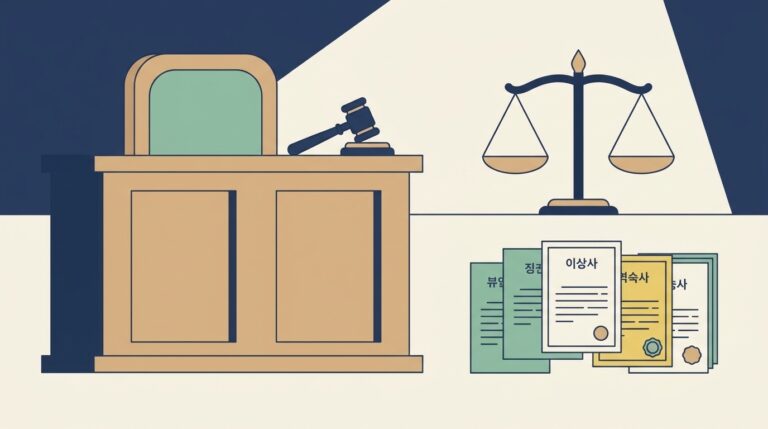
Phase 1: Empathy & Immersion
안녕하세요! 매일한글 (Daily Hangul) editor here! Have you ever watched a gripping K-Drama legal thriller like Extraordinary Attorney Woo (이상한 변호사 우영우) or Vincenzo (빈센조) and felt completely electrified when the lawyer shouts an objection, only to realize the subtitles barely scratch the surface of the intense linguistic duel happening on screen?
Navigating advanced Korean in formal, high-stakes environments like a Korean courtroom (법정) is one of the ultimate tests for C1 learners. When legal battles erupt and critical evidence (증거) is submitted, the language shifts into a sophisticated blend of Sino-Korean terminology, ultra-honorific structures, and rhetorical strategies designed to dismantle opposing claims.
Many advanced learners tell us: “I know everyday honorifics, but in formal debate and legal contexts, I struggle to articulate objections, verify admissibility, and counter arguments without sounding unnatural or clumsy.” Don’t worry! This comprehensive guide is built on real litigation role-play data and feedback from foreign legal professionals and advanced K-Drama enthusiasts in Seoul. Master these phrases, and you’ll decode Korean courtroom debates like a seasoned litigator.
Phase 2: Top 3 Core Legal Expressions in Depth
1. 증거 능력을 인정할 수 없습니다 (Jeung-geo neung-ryeo-geul in-jeong-hal ssu eop-seumnida)
- Pronunciation: Jeung-geo neung-ryeok-eul in-jeong-hal ssu eop-seum-ni-da (Sounds like “jung-guh noong-ryuk-eul in-jung-hal soo up-seum-nee-dah”)
- Meaning: Literal: “We cannot acknowledge the capacity of the evidence.” | Real Nuance: “This evidence is legally inadmissible / lacks evidentiary admissibility.”
- K-Culture Moment: The climatic moment in Law School when Kang Sol or Professor Yang sharply stands up to challenge an illegally obtained recording.
- Editor’s Insight: In Korean jurisprudence, 증거 능력 (admissibility) is distinct from 증명력 (probative value/credibility). You use this phrase to block the opposing counsel before the judge even considers the weight of the evidence.
- Situation Spectrum: Casual 🚫 | Semi-formal ⚠️ | Formal ✅
- 🤔 Think About It: In English, we simply yell “Inadmissible, Your Honor!” Why does Korean combine nominal compounding (증거 능력) with epistemic modality (-할 수 없습니다) to convey institutional authority?
2. 피고 측 주장은 어불성설입니다 (Pi-go cheuk ju-jang-eun eo-bul-seong-seol-imnida)
- Pronunciation: Pee-go cheuk joo-jang-eun uh-bool-sung-seol-im-nee-dah
- Meaning: Literal: “The defendant’s claim does not form words into speech.” | Real Nuance: “The opposing counsel’s argument is utterly preposterous and self-contradictory.”
- K-Culture Moment: The quintessential four-character idiom (사자성어) dropped by elite prosecutors in K-Dramas to crush an alibi with irrefutable surveillance footage.
- Editor’s Insight: 어불성설 (語不成說) conveys high-register intellectual contempt. It elevates a rebuttal from a simple “You’re wrong” to an undeniable logical fallacy.
- Situation Spectrum: Casual ⚠️ (sarcastic among friends) | Semi-formal ✅ (debate/presentation) | Formal ✅
- 🤔 Think About It: How does relying on classical Sino-Korean idioms in modern Korean courts reinforce credibility and rhetorical gravitas?
3. 재판장님, 이의 있습니다! (Jae-pan-jang-nim, i-ui it-seumnida!)
- Pronunciation: Jae-pan-jang-neem, ee-ui eet-seum-nee-dah
- Meaning: Literal: “Chief Judge, there is an objection!” | Real Nuance: “Objection, Your Honor!”
- K-Culture Moment: The iconic dramatic line uttered while slamming hands on the defense table in virtually every Korean legal drama.
- Editor’s Insight: Always address the judge as 재판장님 (Presiding Judge) or 판사님 (Judge), never just 선생님. Notice how Korean states the existence of the objection (“이의가 있습니다”) rather than making “objection” an isolated exclamation.
- Situation Spectrum: Casual 🚫 | Semi-formal 🚫 | Formal ✅
- 🤔 Think About It: Why does Korean protocol require addressing the judge’s title prior to voicing the objection?
Phase 3: Textbook Korean vs. Real Courtroom Korean
- Situation 1: Submitting new physical evidence
📖 교과서 한국어: 새로운 증거를 제출합니다. (Sae-roun jeung-geo-reul je-chul-ham-nida. – “I submit new evidence.”)🗣️ 진짜 한국어: 본 사건의 결정적 증거물인 녹취록을 갑 제3호증으로 제출하고자 합니다. (Bon sa-geon-ui gyeol-jeong-jeok jeung-geo-mulin nok-chwi-ro-geul gap je-sam-ho-jeung-euro je-chul-ha-go-ja ham-nida. – “We respectfully submit the transcript as Plaintiff’s Exhibit No. 3, serving as crucial evidence for this case.”)💡 왜 다를까?: In real Korean civil/criminal trials, evidence submitted by the plaintiff is designated as 갑 호증 (Gap-ho-jeung) and by the defendant as 을 호증 (Eul-ho-jeung), paired with ultra-formal intentional endings like-하고자 합니다.
- Situation 2: Pointing out the witness is lying
📖 교과서 한국어: 저 증인은 거짓말을 하고 있습니다. (Jeo jeung-in-eun geo-jin-mal-eul ha-go it-seumnida. – “That witness is telling a lie.”)🗣️ 진짜 한국어: 증인의 진술은 객관적 정황과 명백히 배치되며 신빙성이 현저히 떨어집니다. (Jeung-in-ui jin-sul-eun gaek-gwan-jeok jeong-hwang-gwa myeong-baek-hi bae-chi-doe-myeo sin-bing-seong-i hyeon-jeo-hi tteol-eo-jim-nida. – “The witness’s statement clearly contradicts objective circumstances and significantly lacks credibility.”)💡 왜 다를까?: In high-level Korean litigation, directly calling someone a “liar” sounds unrefined. Instead, litigators use formal vocabulary like 신빙성 (credibility) and 배치되다 (to run counter to).
Phase 4: K-Culture Deep Dive & Courtroom Non-Verbal Etiquette
4-1. Nunchi & Courtroom Posture
In a Korean court, decorum is paramount. When addressing the bench, litigators maintain a 15-degree respectful bow before speaking, maintain steady yet reverent eye contact with the bench (not the opponent), and avoid dramatic finger-pointing. Keep both hands resting calmly on the podium or table.
4-2. The K-Drama Tropes vs. Real Legal Culture
While K-Dramas like Vincenzo portray flamboyant courtroom theatrics, actual Korean courts operate under rigorous civil law traditions where written briefs (서면) carry immense weight. However, oral arguments (구술 변론) have gained dramatic importance since the introduction of the citizen participation trial system (국민참여재판). Mastering crisp oral delivery can sway judges and citizen jurors alike!
Phase 5: Live Role-Play Scenario
Setting: Seoul Central District Court (서울중앙지방법원), courtroom 402. A high-stakes corporate embezzlement dispute.
Characters:
* Prosecutor Park (검사 박민우): Sharp, relentless, holding the contested USB drive.
* Defense Counsel Alex (변호사 알렉스): Calm, strategic, defending the client.
Dialogue:
1. 검사 박: 🎭 (Holding up a USB drive, addressing the judge) 재판장님, 피고인이 자금을 횡령한 내역이 담긴 디지털 장부를 증거로 신청합니다. (Jae-pan-jang-nim, pi-go-in-i ja-geum-eul hoeng-ryeong-han nae-yeok-i dam-gin di-ji-teol jang-bu-reul jeung-geo-ro sin-cheong-ham-nida. / “Your Honor, we submit the digital ledger containing the defendant’s embezzlement details as evidence.”)
2. 변호사 알렉스: 🎭 (Stands up promptly, clasping hands firmly) 재판장님, 이의 있습니다! (Jae-pan-jang-nim, i-ui it-seumnida! / “Objection, Your Honor!”)
3. 판사 (Judge): 🎭 (Looks up) 변호인, 이의 사유를 밝히세요. (Byeon-ho-in, i-ui sa-yu-reul bal-khi-se-yo. / “Counsel, state the grounds for your objection.”)
4. 변호사 알렉스: 🎭 (Projecting clearly with formal tone) 검찰이 제시한 USB는 압수수색 영장의 범위를 일탈하여 수집된 위법수집증거입니다. (Geom-chal-i je-si-han USB-neun ap-su-su-saek yeong-jang-ui beom-wi-reul il-tal-ha-yeo su-jip-doen wi-beop-su-jip-jeung-geo-im-nida. / “The USB submitted by the prosecution is illegally obtained evidence collected outside the scope of the search warrant.”)
5. 검사 박: 🎭 (Furrowing brow) 이는 피고인의 임의제출 동의하에 확보된 적법한 증거입니다! (I-neun pi-go-in-ui im-ui-je-chul dong-ui-ha-e hwak-bo-doen jeok-beop-han jeung-geo-im-nida! / “This is lawful evidence secured with the defendant’s voluntary submission consent!”)
6. 변호사 알렉스: 🎭 (Unflinching, presenting verification document) 당시 피고인은 심신미약 상태였으며 고지가 누락되었습니다. 따라서 본 증거는 증거 능력이 결여되어 배제되어야 마땅합니다. (Dang-si pi-go-in-eun sim-sin-mi-yak sang-tae-yeoss-eu-myeo go-ji-ga nu-rak-doe-eoss-seum-nida. Tta-ra-seo bon jeung-geo-neun jeung-geo neung-ryeok-i gyeol-yeo-doe-eo bae-je-doe-eo ma-ttang-ham-nida. / “The defendant was in a state of mental vulnerability and proper notification was omitted. Therefore, this evidence lacks admissibility and must be excluded.”)
7. 검사 박: 🎭 (Shifting posture) 피고 측은 단순한 절차적 하자를 빌미로 본질을 흐리고 있습니다. (Pi-go cheuk-eun dan-sun-han jeol-cha-jeok ha-ja-reul bil-mi-ro bon-jil-eul heu-ri-go it-seumnida. / “The defense is obscuring the core issue under the pretext of a mere procedural flaw.”)
8. 판사: 🎭 (Nods solemnly) 양측 주장을 참작하여 다음 기일까지 증거 채택 여부를 결정하겠습니다. (Yang-cheuk ju-jang-eul cham-jak-ha-yeo da-eum gi-il-kka-ji jeung-geo chae-taek yeo-bu-reul gyeol-jeong-ha-get-seumnida. / “Considering both arguments, the court will decide on evidence admissibility by the next hearing date.”)
🔀 Interactive Choice Branch:
Now it’s your turn to rebut Prosecutor Park’s argument that your objection is a “mere procedural flaw”! Which response do you choose?
- Choice A: “야! 절차적 하자가 아니라 엄연한 헌법 위반이야!” (Ya! Jeol-cha-jeok ha-ja-ga a-ni-ra eom-yeon-han heon-beop wi-ban-i-ya!)
- 🚫 Feedback (Bad): Using 반말 (informal speech) in a Korean courtroom will result in immediate contempt of court (감치/법정모독)! Avoid informal colloquialisms completely.
- Choice B: “재판장님, 적법절차의 원칙은 헌법이 보장하는 기본권이며, 이를 단순한 하자로 치부하는 것은 어불성설입니다.” (Jae-pan-jang-nim, jeok-beop-jeol-cha-ui won-chik-eun heon-beop-i bo-jang-ha-neun gi-bon-gwon-i-myeo, i-reul dan-sun-han ha-ja-ro chi-bu-ha-neun geos-eun eo-bul-seong-seol-imnida.)
- ✅ Feedback (Best!): Flawless C1 Korean! Invokes Constitutional due process (적법절차의 원칙) and uses high-tier rhetoric (치부하다, 어불성설).
- Choice C: “그냥 판사님이 알아서 처리해 주세요.” (Geu-nyang pan-sa-nim-i a-ra-seo cheo-ri-hae ju-se-yo.)
- ⚠️ Feedback (Risk): Sounding dismissive relinquishes your client’s defense rights and weakens your persuasive standing before the bench.
Phase 6: 10-Second Emotional Shadowing Drill
Practice matching the exact rhythm, intonation, and intellectual authority of a top defense attorney:
[🔥 단호하고 위엄 있게 / Resolute & Authoritative]
재판장님, / 본 증거는 위법하게 수집되었으므로 / 즉각 기각해 주시기 바랍니다.
(Jae-pan-jang-nim, / bon jeung-geo-neun wi-beop-ha-ge su-jip-doe-eoss-eu-mru-ro / jeuk-gak gi-gak-hae ju-si-gi ba-ram-nida.)-
[🧐 냉철하고 날카롭게 / Calm & Razor-sharp]
상대측 증언은 / 객관적 증거와 명백히 모순되며 / 신빙성을 인정하기 어렵습니다.
(Sang-dae-cheuk jeung-eon-eun / gaek-gwan-jeok jeung-geo-wa myeong-baek-hi mo-sun-doe-myeo / sin-bing-seong-eul in-jeong-ha-gi eo-ryeop-seumnida.)
Phase 7: K-Culture Mini Dictionary
- 위법수집증거배제법칙 (Wi-beop-su-jip-jeung-geo-bae-je-beop-chik) | Exclusionary rule (Fruit of the poisonous tree) | Fundamental doctrine in Korean criminal procedure barring illicitly obtained evidence.
- 소명하다 (So-myeong-ha-da) | To establish a prima facie case / clarify with preliminary proof | Used frequently when requesting injunctions or evidentiary orders.
- 기일 (Gi-il) | Hearing / Trial date | The scheduled court session (e.g., 변론기일 – oral argument hearing).
- 증명책임 (Jeung-myeong-chaek-im) | Burden of proof | Crucial concept when arguing which party bears responsibility for verifying disputed facts.
Phase 8: Traveler & Expat Survival Legal Kit
Even if you aren’t in court, legal emergencies require concise terminology:
- Top Survival Expressions:
- 통역인을 신청하고 싶습니다. (Tong-yeok-in-eul sin-cheong-ha-go sip-seumnida. – “I would like to request an official court interpreter.”) – Pro Tip: Korean law guarantees translation/interpretation rights in legal proceedings.
- 진술거부권을 행사하겠습니다. (Jin-sul-geo-bu-gwon-eul haeng-sa-ha-get-seumnida. – “I will exercise my right to remain silent / Miranda rights.”) – Pro Tip: Must be stated clearly prior to interrogation.
- 국선변호인을 선임해 주세요. (Guk-seon-byeon-ho-in-eul seon-im-hae ju-se-yo. – “Please appoint a court-appointed public defender for me.”)
- Editor’s Travel & Legal Note: For anyone living or doing business in Korea, downloading the 대한민국 법원 대국민서비스 모바일 앱 allows you to track case numbers (사건번호) and court dates seamlessly.
Phase 9: Going Deeper (인문학 에세이)
Korean courtroom Korean reflects the pinnacle of 격식체 (formal register) and systemic hierarchy. Unlike daily conversations where relationships dictate honorifics, court language transcends personal familiarity; even childhood friends serving as opposing lawyers will address each other strictly as “변호인” and use -하십시오체. The linguistic barrier in Korean law ensures that logic and statute govern human disputes, neutralizing emotional outbursts into structured civil discourse.
💬 Your Turn: Have you noticed how legal arguments sound significantly more restrained yet piercing in Korean dramas compared to Western legal series? Share your favorite legal K-Drama scene in the comments below!
Phase 10: FAQ & Common Mistakes
Q: Can I use “판사님” and “재판장님” interchangeably in court?
A: While both are respectful, “재판장님” refers specifically to the Presiding Chief Judge in a panel of three judges (합의부). “판사님” is appropriate for a single judge bench (단독판사) or general references. Addressing the head of the trial as 재판장님 demonstrates refined legal etiquette.
Q: What is the difference between 각하 (Gak-ha) and 기각 (Gi-gak)?
A: 각하 (Dismissal without prejudice / rejection on formal grounds) means the lawsuit or request failed procedural requirements before substantive review. 기각 (Dismissal on the merits) means the court reviewed the substance of the claim and decided against it.
Q: How do I say “I plead not guilty” in Korean?
A: Use “공소사실을 전면 부인합니다” (Gong-so-sa-sil-eul jeon-myeon bu-in-ham-nida – “We completely deny the facts of the indictment”) or “무죄를 주장합니다” (Mu-joe-reul ju-jang-ham-nida).
🚨 Common Mistakes Alert:
- Mistake: Saying “그는 거짓말쟁이입니다” (He is a liar) in legal briefs or oral rebuttals.
- Correct Action: Say “진술의 일관성과 신빙성이 결여되어 있습니다” (The testimony lacks consistency and credibility).
- Mistake: Confusing 증거 (evidence) and 증언 (testimony).
- Correct Action: Use 증거 for physical/documentary proof and 증언 for witness spoken accounts.
- Mistake: Misusing “고소” (filing a criminal complaint as a victim) vs “고발” (reporting a crime as a third party).
- Correct Action: Check whether you are the direct victim before saying 고소.
Phase 11: Action Missions
- 🥉 Bronze Mission: Shadow Phase 6’s two drills 5 times each, focusing on the cadence of
-으므로and-배치되며. - 🥈 Silver Mission: Write a 2-sentence legal objection to an absurd scenario (e.g., your friend claiming pineapple on pizza is illegal) using “어불성설” and post it on your study SNS!
- 🥇 Gold Mission: Watch an episode of a legal K-Drama (e.g., Hyena, Extraordinary Attorney Woo) without English subtitles and transcribe 3 legal arguments using today’s vocabulary.
Phase 12: Interactive Quiz Challenge
1. Fill in the Blank:
검찰 측이 제시한 녹취록은 적법한 절차 없이 녹음되었으므로 [ ]이(가) 없습니다.
2. True / False Cultural Check:
In Korean civil trials, evidence presented by the defense is officially marked as 갑 제O호증 (Gap-je-O-ho-jeung). (True / False)
3. Best Response:
When opposing counsel makes an unfounded accusation against your client, what is the most sophisticated C1 rebuttal?
* (A) 그건 말도 안 되는 소리입니다!
* (B) 상대측의 주장은 아무런 물적 증거가 뒷받침되지 않은 일방적 추측에 불과합니다.
* (C) 진짜 너무하시네요, 판사님!
🔍 Click here for Answers & Explanations
- Answer: 증거 능력 (Evidentiary admissibility) — Illegally wiretapped audio lacks legal capacity/admissibility under Korean law.
- Answer: False — Plaintiff evidence is marked as 갑 호증 (Gap), while Defense evidence is marked as 을 호증 (Eul).
- Answer: (B) — (B) uses sophisticated terminology (물적 증거, 일방적 추측에 불과하다) fitting high-register C1 legal discourse, whereas (A) and (C) are overly informal and emotional.







