

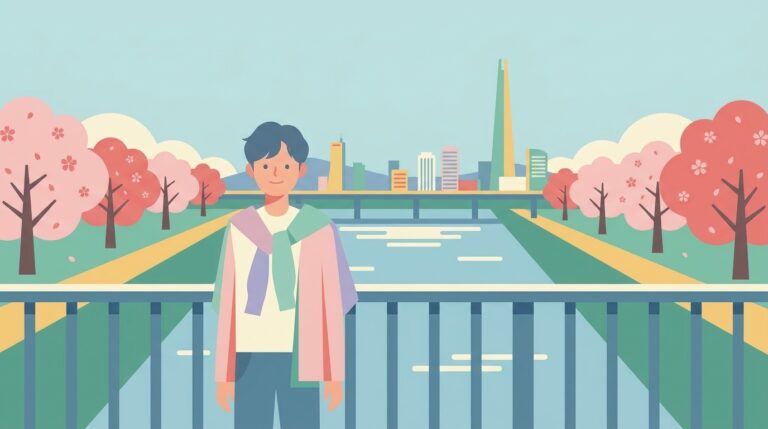
Surviving Korea’s Spring Chill: How to Talk About Weather and Layering Like a Local
Phase 1: Empathy (Story-Driven Opening)
안녕하세요! 매일한글 에디터입니다. (Hello! I’m your Daily Hangul editor.)
Picture this: It’s a gorgeous mid-April morning in Seoul. The sun is beaming over the Yeouido cherry blossoms, and you head out in a stylish T-shirt ready to conquer your Instagram feed. But around 4:30 PM by the Han River, the sun dips, and suddenly a crisp, bone-chilling wind hits you out of nowhere. You’re shivering, your Korean friend pulls a chic knit cardigan out of their tote bag, smiles, and asks, “겉옷 안 챙겨왔어요?” (Did you not bring an outer layer?).
Welcome to Korean spring! While Korean dramas show fluttering flower petals and romantic picnics, real Korean spring comes with a sneaky secret called Ganjeolgi (간절기, in-between seasons) and massive daily temperature swings. Based on feedback from hundreds of intermediate learners who spent their first April freezing in Seoul, mastering how to discuss layered outfits and shifting weather is not just a language goal—it’s genuine survival. By the end of this guide, you will sound like a caring, seasoned Seoulite who knows exactly how to layer up and look effortlessly cool.
Phase 2: Deep Dive into 3 Essential Expressions
1. 겉옷 챙겼어요? (Geot-ot chaeng-gyeosseoyo?)
- Pronunciation: [Geot-ot chaeng-gyeosseoyo?] (Sound analogy: Say “gut-oat” smoothly, then “cheng-gyuh-ssaw-yo” like asking a caring question)
- Meaning: Literal: “Did you pack an outer garment?” | Nuance: “Did you remember to bring a jacket/cardigan just in case it gets cold?”
- K-Culture Moment: Seen in almost every rom-com drama when the considerate male or female lead checks on their date before heading out for a night walk along Namsan Tower.
- Editor’s Insight: 겉옷 (geot-ot) is an umbrella term for cardigans, jackets, and light trench coats. Asking someone if they brought a 겉옷 is one of the quickest ways to show warmth and care (jeong) in Korean friendship.
- Situation Spectrum: Casual: ✅ | Semi-formal: ✅ | Formal: ⚠️ (겉옷 챙기셨습니까?)
- 🤔 Think About It: In English, we often ask “Do you have a jacket?” In Korean, the verb 챙기다 (to pack/take care of) highlights proactive preparation and emotional consideration. Why do you think Korean uses caring action verbs for clothing?
2. 일교차가 커서 쌀쌀해요. (Ilgyochaga keoseo ssalssalhaeyo.)
- Pronunciation: [Il-gyo-cha-ga keo-seo ssal-ssal-hae-yo.] (Sound analogy: “Eel-gyo-cha-ga” followed by a crisp double-S “ssal-ssal-hay-yo”)
- Meaning: Literal: “The daily temperature range is large, so it is chilly.” | Nuance: “It was warm earlier, but the evening drop makes it nippy.”
- K-Culture Moment: The standard opening small-talk line used by weathercasters on morning news and your Korean coworkers during the 2 PM coffee run.
- Editor’s Insight: 쌀쌀하다 (ssalssalhada) specifically captures that deceptive, breezy chill when the air isn’t freezing like winter, but sharp enough to give you goosebumps.
- Situation Spectrum: Casual: ✅ | Semi-formal: ✅ | Formal: ✅
- 🤔 Think About It: Notice how Korean has distinct descriptive words for cold: 춥다 (generally cold) vs. 쌀쌀하다 (nippy/chilly) vs. 선선하다 (pleasantly cool). How does your native language describe subtle temperature drops?
3. 가디건 하나 걸치고 나가세요. (Gadigan hana geolchigo nagaseyo.)
- Pronunciation: [Ga-di-geon ha-na geol-chi-go na-ga-se-yo.] (Sound analogy: “Gah-dee-gun ha-na gul-chee-go na-ga-seh-yo”)
- Meaning: Literal: “Drape one cardigan and go out.” | Nuance: “Throw on a light cardigan before you leave.”
- K-Culture Moment: Mothers in family K-dramas yelling this toward the front door (현관) as their kids rush out the door.
- Editor’s Insight: The verb 걸치다 (geolchida) means to loosely drape or throw something over your shoulders. It carries a much more relaxed, fashionable nuance than the standard verb 입다 (to wear).
- Situation Spectrum: Casual: ✅ (가디건 걸치고 가!) | Semi-formal: ✅ | Formal: ⚠️
- 🤔 Think About It: English uses “throw on” or “slip into” for effortless dressing. How does 걸치다 capture both fashion styling and weather practicality?
Phase 3: Textbook Korean vs. Real Korean
Situation 1: Warning a friend about the cold evening
- 📖 교과서 한국어 (Textbook): “오늘 저녁에는 기온이 낮아지니 따뜻한 옷을 착용하십시오.” (The temperature drops tonight, so wear warm clothes.)
- 🗣️ 진짜 한국어 (Real-life): “밤에 엄청 쌀쌀해지니까 외투 꼭 챙겨!” (It gets super nippy at night, make sure you bring a jacket!)
- 💡 Why is it different? Real conversation ditches formal Sino-Korean nouns like 착용 (wearing) in favor of emotive adverbs like 엄청 (super/very) and the practical verb 챙기다 (to bring/pack).
Situation 2: Telling someone what you’re wearing today
- 📖 교과서 한국어 (Textbook): “저는 오늘 카디건을 입을 계획입니다.” (I plan to wear a cardigan today.)
- 🗣️ 진짜 한국어 (Real-life): “그냥 가디건 하나 툭 걸치고 가려고.” (I’m just going to throw on a cardigan and head out.)
- 💡 Why is it different? Native speakers often use the onomatopoeia 툭 (lightly/effortlessly) combined with 걸치다 to express casual, effortless styling.
Phase 4: K-Culture Deep Dive & Non-Verbal Manners
4-1. Nunchi (눈치) & Gestures
When someone says “조금 쌀쌀하네요” (It’s a bit chilly), giving a subtle shoulder shrug or lightly rubbing your upper arms signals mutual empathy with the weather. If you have an extra cardigan or a picnic blanket (돗자리) at the park, offering it to your friend before they ask demonstrates top-tier 센스 (thoughtful social intuition).
4-2. Cultural Code: The Han River Picnic & ‘Kkot-saem Chu-wi’
In Korea, April is famous for 꽃샘추위 (Kkot-saem chu-wi)—the poetic term meaning “the cold that is jealous of the blooming flowers.” During peak spring picnic season at Han River parks, rental shops do not just rent mats; they rent picnic blankets and light cardigans. Understanding this weather cycle means you never get caught off-guard during outdoor dates or festivals.
Phase 5: Real-World Roleplay Scenario
Setting: 5:00 PM at Yeouido Hangang Park. The sun is setting behind the 63 Building, and a cool river breeze starts blowing.
Characters:
* Min-jun (민준): Your thoughtful Korean college friend.
* You (유저): Enjoying a cup of convenience store ramen on a picnic mat.
- Turn 1 (Min-jun): 바람 부니까 슬슬 쌀쌀해지네. (Baram bunikka seulseul ssalssalhaejine.)
🎭 Shivers slightly and looks at the river breeze.
“The wind is picking up, so it’s getting kind of chilly.” - Turn 2 (You): 맞아요, 낮에는 진짜 따뜻했는데 일교차가 크네요. (Majayo, naje-neun jinjja ttatteut-haenneunde ilgyochaga keuneyo.)
🎭 Rubs hands together lightly.
“Right? It was so warm during the day, but the temperature gap is huge.” - Turn 3 (Min-jun): 혹시 가방에 겉옷 챙겨왔어? (Hoksi gabang-e geot-ot chaeng-gyeowasseo?)
🎭 Points toward your backpack.
“By any chance, did you pack an extra outer layer in your bag?” - Turn 4 (You): 네! 가벼운 가디건 하나 챙겨왔어요. (Ne! Gabyeoun gadigeon hana chaeng-gyeowasseoyo.)
🎭 Unzips backpack proudly.
“Yes! I brought a light cardigan with me.” - Turn 5 (Min-jun): 오, 센스 대박이다! 지금 바로 걸쳐. (O, senseu daebak-ida! Jigeum baro geolchyeo.)
🎭 Gives an approving nod.
“Oh, your sense is amazing! Put it over your shoulders right now.” - Turn 6 (You): 민준 씨는 외투 없어요? 춥지 않아요? (Min-jun ssi-neun oetu eopseoyo? Chupji anayo?)
🎭 Tilts head with concern.
“Don’t you have a jacket, Min-jun? Aren’t you cold?” - Turn 7 (Min-jun): 난 안에 히트텍 입어서 괜찮아! (Nan ane hiteutek ibeoseo gwaenchana!)
🎭 Chuckles and taps his chest.
“I’m wearing thermal wear underneath, so I’m totally fine!” - Turn 8 (You): 역시 준비성이 철저하시네요! (Yeoksi junbiseong-i cheoljeohasineyo!)
🎭 Laughs and drapes the cardigan.
“As expected, your preparation is top-notch!”
🔀 Interactive Decision Point
If Min-jun says he is cold and didn’t bring anything, what is your best response?
* Option A: “가디건 같이 덮을래요?” (Shall we share the cardigan over our laps?)
* Option B: “왜 안 챙겼어요? 바보예요?” (Why didn’t you pack one? Are you a fool?)
* Option C: “저는 따뜻하니까 집에 갈게요.” (I’m warm, so I’m heading home.)
- Feedback:
- Option A (Best): Empathetic, polite, and mirrors the classic K-drama caring vibe.
- Option B (Bad): Far too blunt and rude for an intermediate conversation partner.
- Option C (Risk): Socially awkward and ends the outing abruptly without showing jeong (affection).
Phase 6: 10-Second Emotion Shadowing Drill
Repeat these lines out loud with the designated pitch and pauses (/ indicates micro-pause):
[😊 Cheerful & Prepared]
“낮에는 더워도 / 가디건 하나는 / 꼭 챙겨야 해요!”
(Naje-neun deowodo / gadigeon hana-neun / kkok chaeng-gyeoya haeyo!)-
[🥶 Shivering & Expressive]
“바람이 불어서 / 생각보다 쌀쌀하네요.”
(Baram-i bureoseo / saenggakboda ssalssalhaneyo.) -
[🥰 Caring & Warm]
“감기 걸릴라, / 이 겉옷 어깨에 걸쳐요.”
(Gamgi geollilla, / i geot-ot eokkae-e geolchyeoyo.)
Phase 7: K-Culture Mini Dictionary
- 간절기 (Ganjeolgi): In-between seasons (transition period between winter/spring or summer/autumn). Essential keyword for shopping fashion sales in Korea.
- 꽃샘추위 (Kkot-saem chu-wi): Spring cold snap (“the jealousy of flowers”). Refers to the sudden frosty breeze in March and April.
- 일교차 (Ilgyocha): Diurnal temperature range (difference between daytime high and nighttime low).
- 겉옷 (Geot-ot): Outerwear. Any layer worn over indoor clothes (cardigans, denim jackets, trenches).
Phase 8: Survival Kit for Travelers
TOP 3 Survival Phrases
- 가디건 어디에 있어요? (Gadigan eodi-e isseoyo?) – Where are the cardigans located? (Pro Tip: Use this at SPA brands like SPAO or Musinsa Standard).
- 담요 빌릴 수 있나요? (Damyo billil su innayo?) – Can I borrow a blanket? (Pro Tip: Common at outdoor cafes and Han River stalls).
- 저녁엔 쌀쌀하죠? (Jeonyeog-en ssalssalhajyo?) – It gets chilly in the evening, right? (Pro Tip: Great icebreaker with guesthouse hosts).
Editor’s Travel Note
Always check hourly temperature curves rather than just daily highs. Download the 기상청 날씨알리미 앱 다운로드 to receive instant fine dust (미세먼지) and temperature shift alerts before packing your day bag.
Phase 9: Think Deeper
In Korean culture, caring for someone’s physical warmth is directly tied to emotional intimacy. When friends ask “옷 따뜻하게 입었어?” (Did you dress warmly?), they are expressing love and care rather than criticizing your outfit. Language reflects communal wellness.
💬 Your Turn: In your home country, how do friends show care when the weather suddenly turns bad? Share your cultural equivalent in the comments below!
Phase 10: FAQ & Common Mistakes
Q: What is the difference between ‘입다’ and ‘걸치다’?
A: 입다 (ipda) means wearing clothes properly (arms through sleeves, zipped/buttoned up). 걸치다 (geolchida) means casually draping an item over your shoulders or wearing it loosely open without buttoning.
Q: Can I use ‘추워요’ instead of ‘쌀쌀해요’?
A: Yes, but 추워요 sounds like winter freezing cold. If you use 쌀쌀해요 during spring, Koreans will praise your natural and refined vocabulary sense!
Q: Is ‘카디건’ or ‘가디건’ more natural?
A: While standard orthography prescribes 카디건 (ka-di-geon), over 90% of native Koreans pronounce and spell it as 가디건 (ga-di-geon) in daily life.
🚨 Common Mistakes Alert Board
- ❌ “카디건을 신었어요.” (Used 신다 for shoes)
➡️ Correct: “가디건을 걸쳤어요 / 입었어요.” - ❌ “오늘 날씨가 시원해요.” (Saying 시원하다 [refreshing cool] when you are actually freezing from wind)
➡️ Correct: “바람이 쌀쌀해요.” - ❌ “겉옷을 잡았어요.” (Literal translation of ‘grabbed a jacket’)
➡️ Correct: “겉옷을 챙겼어요.”
Phase 11: Action Missions
- 🥉 Bronze Mission: Look in the mirror with your jacket and practice saying: “가디건 챙겼어요!” 3 times.
- 🥈 Silver Mission: Post your OOTD (Outfit of the Day) on Instagram stories with the hashtag
#간절기코디and caption it: “일교차가 커서 가디건 걸쳤어요.” - 🥇 Gold Mission: Next time you go out with a Korean speaker, ask them before leaving: “오늘 쌀쌀한데 겉옷 챙겼어요?”
- 🎮 K-Culture Mission: Watch an episode of a spring K-drama (like Our Blues or Crash Landing on You) and spot a character draped in a cardigan.
Phase 12: Interactive Quiz Challenge
Q1. Choose the most natural phrase to say when the spring wind makes you shiver in the evening:
1) 날씨가 너무 더워요.
2) 밤이라 쌀쌀하네요.
3) 겨울처럼 눈이 와요.
4) 에어컨을 켜 주세요.
Q2. Fill in the blank:
“일교차가 크니까 가방에 가벼운 겉옷 하나 (______) 가세요.”
(Hint: Verb meaning ‘to pack/take care of’)
Q3. [True / False]
In Korean, ‘걸치다’ means buttoning a heavy down coat tightly up to your chin. (T/F)
👉 Click to view Answers & Explanations
- Q1 Answer: 2) 밤이라 쌀쌀하네요. (Explanation: 쌀쌀하다 is the ideal expression for chilly spring breezes).
- Q2 Answer: 챙겨 (챙겨서 / 챙겨 가지고) (Explanation: 챙기다 is the most natural verb for bringing clothes for temperature changes).
- Q3 Answer: False (Explanation: 걸치다 means lightly draping or loosely throwing a garment over shoulders).







