

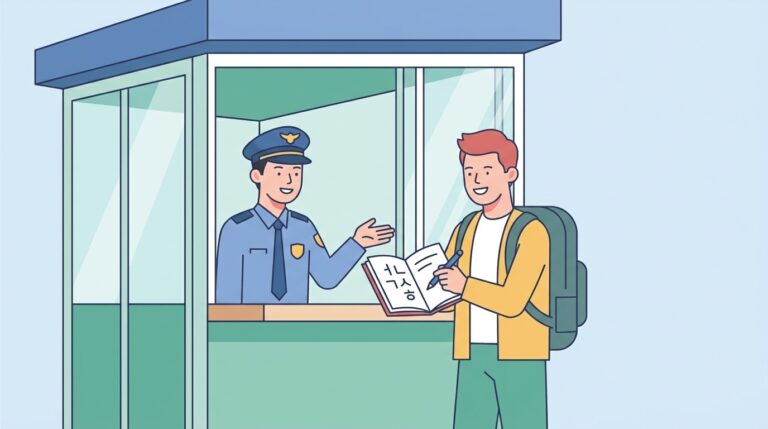
Don’t Panic in Seoul: How to Report Lost Items at a Korean Police Station
Phase 1: Empathy & Immersive Opening
안녕하세요! 매일한글 에디터입니다. Picture this: you just stepped out of a vibrant pojangmacha in Euljiro after an unforgettable night of tteokbokki and somaek. You reach into your coat pocket to order a taxi on your phone, but your fingers grasp empty air. Your smartphone—containing your photos, digital wallet, and transit card—is gone. Your heart sinks. In K-dramas like Live or Beyond Evil, Korean police substations (jigudae) seem bustling and intense, and walking into one speaking textbook Korean feels downright terrifying.
Take a deep breath! Korea has one of the most efficient, safe, and honest lost-and-found ecosystems in the world. However, when adrenaline spikes, standard textbook phrases won’t cut it. To navigate this smoothly at a B2 intermediate level, you need clear descriptive vocabulary, proper nuance, and an understanding of police procedures. This guide is crafted directly from real student experiences and local insights to ensure you turn an emergency into a resolved situation.
Phase 2: Deep Dive into 3 Core Expressions
1. 지갑을 잃어버려서 분실 신고 하러 왔어요.
- Pronunciation: Jigabeul ireobeoryeoseo bunsil singo hareo wasseoyo. (Sounds like: Jee-gahb-eul eer-uh-buh-ryuh-suh boon-sheel sheen-goh hah-ruh wah-ssuh-yo)
- Meaning: Literal: “Because I lost my wallet, I came to make a loss report.” | Nuance: “I misplaced my wallet and need to file an official lost property report.”
- K-Culture Moment: You will hear this frequently in slice-of-life dramas whenever a character visits the local neighborhood substation (파출소/지구대) looking flustered.
- Editor’s Insight: 분실 신고 (bunsil singo) is the formal administrative term. Using 신고 (singo) here does not mean reporting a crime (like theft); it simply registers the item into the national LOST112 database.
- Situation Spectrum: Casual 🚫 | Semi-formal ⚠️ | Formal ✅
- 🤔 Think About It: In English, you might say “I’d like to report a lost item.” Notice how Korean grammar directly chains the reason (-어서) with the arrival purpose (-러 오다).
2. 택시에 두고 내린 것 같아요.
- Pronunciation: Taeksie dugo naerin geot gat-ayo. (Sounds like: Tek-shee-eh doo-goh neh-reen gut gah-tah-yo)
- Meaning: Literal: “It seems like I left it behind and got off the taxi.” | Nuance: “I think I left it in a taxi.”
- K-Culture Moment: A classic trope where the protagonist rushes into a police station after leaving their key prop or diary on the backseat of an orange Seoul sedan.
- Editor’s Insight: At the B2 level, avoid stating facts too bluntly. Using ~것 같아요 (-geot gat-ayo) shows appropriate Korean politeness and softens speculative statements when you aren’t 100% certain.
- Situation Spectrum: Casual ⚠️ | Semi-formal ✅ | Formal ✅
- 🤔 Think About It: Why do Koreans prefer saying “I seem to have left it” instead of “I definitely left it”? It reflects a cultural modesty in avoiding absolute claims without concrete proof.
3. 습득물로 등록되어 있는지 확인해 주실 수 있나요?
- Pronunciation: Seubdeungmullo deungnokdoe-eo inneunji hwaginhae jusil su innayo? (Sounds like: Seub-deung-mool-lo deung-nohk-dweh-uh een-neun-jee hwah-geen-heh joo-sheel soo een-nah-yo?)
- Meaning: Literal: “Can you check if it is registered as a retrieved item?” | Nuance: “Could you check if anyone turned it into the lost and found system?”
- K-Culture Moment: The moment of relief when a desk officer types away on their monitor and shows a matched photo on the screen.
- Editor’s Insight: 습득물 (seubdeungmul) refers specifically to found/turned-in items. Using this precise term immediately signals to the officer that you know how the system operates.
- Situation Spectrum: Casual 🚫 | Semi-formal ⚠️ | Formal ✅
- 🤔 Think About It: Comparing administrative terms across cultures: English uses “Found Property”, whereas Korean distinguishes 분실물 (lost item) and 습득물 (acquired/found item) systematically.
Phase 3: Textbook Korean vs. Real Korean
Situation 1: Explaining what the item looks like
- 📖 Textbook Korean: 제 가방은 검은색 가죽 가방입니다. 크기는 중간입니다. (Je gabang-eun geomeunsaek gajuk gabang-imnida. Keugineun junggan-imnida.)
- 🗣️ Real Korean: 검은색 가죽 크로스백인데요, 앞에 은색 키링이 달려 있어요. (Geomeunsaek gajuk keuroseubaek-indeyo, ape eunsaek kiring-i dallyeo isseoyo.)
- 💡 Why it differs: Native speakers use descriptive compound loanwords (크로스백, 키링) and soften the sentence with -는데요 to encourage the listener to respond or ask follow-up questions.
Situation 2: Asking for contact if found
- 📖 Textbook Korean: 그것을 찾으면 저에게 전화를 해 주십시오. (Geugeoseul chajeumyeon jeoege jeonhwaleul hae jusipsio.)
- 🗣️ Real Korean: 혹시 들어오면 이 번호로 연락 부탁드립니다. (Hoksi deureoomyeon i beonhoro yeollak butakdeurimnida.)
- 💡 Why it differs: 들어오다 (to come in) is naturally used when an item arrives at the station, and 연락 부탁드립니다 is the standard courteous business/polite closing phrase.
Phase 4: K-Culture Deep Dive & Non-Verbal Etiquette
4-1. Nunchi & Physical Manners at the Station
When you enter a 지구대 (neighborhood police box), officers are often juggling dispatched radio calls. Bow respectfully at approximately 15–30 degrees upon entering. When handing over your passport, ARC (Alien Registration Card), or showing photos of your lost item on another device, always use two hands (두 손으로 건네기). Avoid leaning over the partition desk or pointing your finger directly at the screen; keep an open posture showing calm cooperation.
4-2. Cultural Code: The LOST112 Infrastructure & C-Security Culture
South Korea operates a nationwide centralized database called LOST112 (경찰청 유실물 통합포털). Due to extensive CCTV coverage and widespread civic trust, a lost item turned in on a bus or cafe is logged with a barcode and photo within 24 to 48 hours. Expressing patience and trust in this process demonstrates cultural awareness.
Phase 5: Real-world Roleplay Scenario
Setting: Hongdae Police Substation (홍익지구대). Late evening. Officer Park is typing an incident report at the front desk.
- Officer Park: 어서 오세요. 무슨 일로 오셨나요? (Eoseo oseyo. Museun illo osyeonnayo?) 🎭 [Looking up attentively with a calm posture]
- Learner: 안녕하세요, 경관님. 지갑을 분실해서 신고하러 왔어요. (Annyeonghaseyo, gyeonggwannim. Jigabeul bunsilhaeseo singohareo wasseoyo.) 🎭 [Bowing slightly and stepping toward the desk]
- Officer Park: 아, 그러시군요. 언제 어디쯤에서 잃어버리셨는지 기억나세요? (A, geureosigunyo. Eonje eodijjeumeseo ireobeorisyeonneunji gieongnaseyo?) 🎭 [Opening a new lost-report window on screen]
- Learner: 한 시간 전쯤에 홍대입구역 근처 카페에서 두고 나온 것 같아요. (Han sigan jeonjjeume Hongdae-ipguyeok geuncheo kapeeseo dugo naon geot gat-ayo.) 🎭 [Showing location on map app]
- Officer Park: 지갑 형태나 특징을 구체적으로 말씀해 주시겠어요? (Jigap hyeongtaena teukjingeul guchejeogeuro malsseumhae jusigesseoyo?) 🎭 [Hands poised on keyboard]
- Learner: 갈색 가죽 반지갑이고요, 안에 외국인등록증이랑 교통카드가 들어 있어요. (Galsaek gajuk banjigab-igoyo, ane oeguk-indeungnokjeung-irang gyotongkadeuga deureo isseoyo.) 🎭 [Demonstrating wallet size with hands]
- Officer Park: 알겠습니다. 현재 들어온 습득물 중에는 없는데, 분실 접수 바로 해 드릴게요. 연락처 적어주시겠어요? (Algetseumnida. Hyeonjae deureoon seubdeungmul jung-eneun eomneunde, bunsil jeopsu baro hae deurilgeyo. Yeollakcheo jeogeojusigesseoyo?) 🎭 [Handing over a form and pen with both hands]
- Learner: 네, 여기 제 연락처입니다. 혹시 들어오면 꼭 연락 부탁드립니다. (Ne, yeogi je yeollakcheo-imnida. Hoksi deureoomyeon kkok yeollak butakdeurimnida.) 🎭 [Returning the form carefully with both hands]
🔀 Interactive Decision Branch
What should you say next if you paid for a taxi right before losing your wallet?
* Option A: 택시 결제 영수증이 있는데, 차량 번호 조회가 가능할까요? (Best – Proactive and provides the exact vehicle license info)
* Option B: 기사님이 돈을 가져간 것 같아요. 빨리 잡아주세요! (Risk – Accusing without evidence creates tension)
* Option C: 그냥 포기할게요. 안녕히 계세요. (Bad – Premature surrender; the Korean system frequently recovers taxi belongings)
Phase 6: 10-Second Emotion Shadowing Drill
[😰 Anxious & Urgent]
지갑 안에 / 중요한 신분증이 있어서 / 꼭 찾아야 해요.
(Jigap ane / jung-yohan sinbunjeung-i isseoseo / kkok chaj-aya haeyo.)-
[🤝 Polite & Descriptive]
어두운 남색 백팩이고 / 앞주머니에 / 노란색 키링이 달려 있어요.
(Eoduun namsaek baekpaek-igo / apjumeonie / noransaek kiring-i dallyeo isseoyo.) -
[🙏 Hopeful & Grateful]
접수해 주셔서 감사합니다. / 연락 기다리겠습니다.
(Jeopsuhae jusyeoseo gamsahamnida. / Yeollak gidarigetseumnida.)
Phase 7: K-Culture Mini Dictionary
- 지구대 / 파출소 (Jigudae / Pachulso) | Neighborhood Police Substation | The first local stop for minor accidents, noise complaints, and lost property reports before large police stations (경찰서).
- 유실물 (Yusilmul) | Lost Property / Lost Item | Formal legal term used interchangeably with 분실물 in government databases.
- 습득자 (Seubdeukja) | The Finder (person who retrieved the item) | Under Korean law, the finder can choose whether to leave their contact details or claim a legal compensation fee (usually 5–20%).
- 교통카드 번호 (Gyotongkadeu Beonho) | Transit Card Number | The 16-digit number on your T-Money card; if lost on a bus or subway, staff can track the exact transaction history and vehicle.
Phase 8: Traveler’s Survival Kit
Top 3 Survival Phrases
- 분실물 보관소 위치가 어디인가요? (Bunsilmul bogwanso wichiga eodi-ingayo?) | Where is the Lost & Found center?
- Pro Tip: Use this at subway terminal stations (e.g., City Hall, Express Bus Terminal).
- CCTV 확인을 부탁드려도 될까요? (CCTV hwagim-eul butakdeuryeodo doelkkayo?) | May I request to check the security camera?
- Pro Tip: Store owners usually cannot share footage without police presence due to privacy laws.
- 분실 접수증 발급받을 수 있나요? (Bunsil jeopsujeung balgeupbadeul su innayo?) | Can I get an official Loss Report Certificate?
- Pro Tip: Essential if you plan to claim travel insurance reimbursements.
Editor’s Travel Note
Bookmark the official 경찰청 유실물 종합관리시스템 LOST112 웹사이트 immediately. If you took a taxi, call the Kakao T customer hotline or dial 120 Dasan Call Center (offers multi-language assistance) with your receipt details.
Phase 9: A Step Deeper (Reflection)
In many countries, leaving an expensive laptop on a cafe table or losing a smartphone means goodbye forever. In Korea, the deep-rooted collective responsibility and high CCTV density create what locals call the “Safe Zone Culture” (치안 강국). However, this relies heavily on mutual administrative procedures. Filing a polite, accurate report reinforces this community trust.
💬 Your Turn: Have you ever lost an item while traveling in Korea or your home country? What was the outcome? Share your story in the comments below!
Phase 10: Structured FAQ & Common Mistakes
Q: Can I file a lost property report in English at any police station?
A: Most major tourist area substations (Myeongdong, Hongdae, Gangnam) have officers who speak English or use translation devices. However, providing key Korean phrases or having your item description written in Korean significantly speeds up the registration.
Q: What is the difference between a 경찰서 (Gyeongchalseo) and a 지구대 (Jigudae)?
A: 지구대 (or 파출소) are localized neighborhood branches where you initially file the loss report. 경찰서 is the main municipal headquarters where cases are escalated.
Q: How long does LOST112 keep registered lost items?
A: Unclaimed property is kept by the police for 6 months. If unclaimed by the owner, ownership transfers to the finder for 3 months before being auctioned or donated.
🚨 Common Mistakes Checklist
- ❌ Mistake 1: Demanding immediate CCTV footage from private shop owners. (Correct Action: File a police report first; officers must accompany you due to Personal Information Protection Acts).
- ❌ Mistake 2: Using the word 도둑맞았어요 (I was robbed) when you simply misplaced it. (Correct Action: Use *잃어버렸어요 or 분실했어요 to avoid false criminal dispatch).*
- ❌ Mistake 3: Not saving your taxi transaction receipt. (Correct Action: Always pay by card or ride app to retain the taxi license plate number).
Phase 11: Action Mission & Engagement
- 🥉 Bronze Mission: Practice saying “지갑을 분실해서 신고하러 왔어요” three times aloud within 10 seconds.
- 🥈 Silver Mission: Visit the LOST112 website on your browser and search for your favorite Korean souvenir item using Korean keywords.
- 🥇 Gold Mission: Write a 3-sentence description of your personal backpack/wallet in Korean in our comment section below for editor feedback!
🎮 K-Culture Mission: Watch an episode of a police K-drama (like Live) and spot whether the scene is set in a 지구대 or a 경찰서!
Phase 12: Interactive Quiz Challenge
1. Situational Judgment
You left your shopping bag on Line 2 subway 20 minutes ago. What is the most effective immediate action?
A) Wait at the next station hoping it comes back.
B) Check your car number/door number from memory, find the station master office (역무실), and state the exact time and train car.
C) Call emergency number 119.
2. Fill-in-the-Blank
“제 핸드폰을 택시에 ________ 내린 것 같아요.” (I think I left it behind in the taxi.)
(Hint: Root verb is 두다 + 내리다)
3. Cultural True or False
T/F: If an item is found and returned to you via the police, Korean law allows the finder to legally request a reward of 5% to 20% of the item’s value.
👉 Click to reveal Quiz Answers & Explanations!
- Answer: B – Station staff can contact the conductor of that specific train immediately if you know the boarding time and car number (e.g., Car 4-2).
- Answer: 두고 (택시에 두고 내린 것 같아요).
- Answer: True – Under the Lost Articles Act (유실물법 제4조), finders are legally entitled to a 5%–20% reward, though many citizens decline it out of goodwill.







