

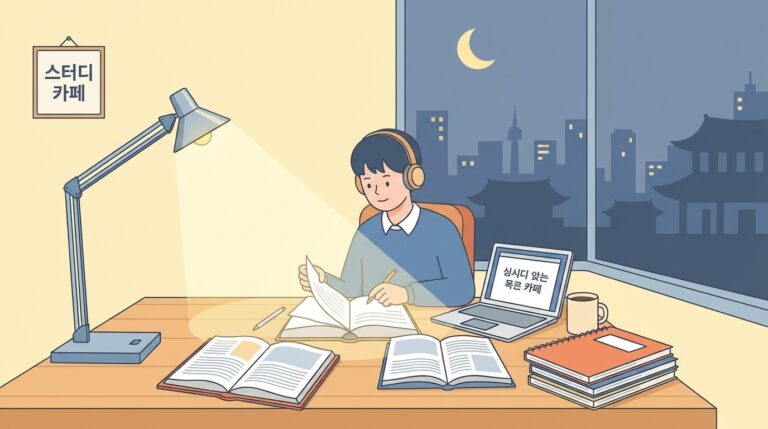
Understanding the Agony of N-susaeng in Korea: A Deep Dive into High-Stakes College Prep
Phase 1: Empathy (Story-Immersive Opening)
안녕하세요! (Annyeonghaseyo!) I’m your Daily Hangul editor. Imagine walking through the bustling alleys of Daechi-dong or Noryangjin around 10:30 PM. The streetlights illuminate an endless sea of exhausted young faces wearing oversized padded parkas and carrying backpacks loaded down with thick mock-exam workbooks. In K-dramas like SKY Castle or Crash Course in Romance, you’ve seen the relentless pressure of Korea’s university entrance ecosystem. But what happens when the results don’t meet expectations? In Korea, taking an extra year to study for the Suneung (CSAT)—becoming a Jaesusaeng (재수생, 2nd-time test taker) or an N-susaeng (N수생, repeat test taker for Nth time)—is not an anomaly; it is an intense, emotionally taxing cultural rite of passage. If you want to connect with Koreans in their 20s on a genuinely profound level, understanding the emotional weight, specialized slang, and social nuance behind this experience is essential. Based on real cultural feedback from advanced learners living in Seoul, this guide will elevate your Korean to a nuanced C1 level while unveiling the quiet resilience of Korea’s testing generation.
Phase 2: Deep Dive into 3 Core Expressions
1. 현타가 오다 (Hyeonta-ga oda)
- Pronunciation: [Hyeon-ta-ga o-da] (Sounds like hyon-tah-gah oh-dah — rhymes with ‘Santa’ with a soft Korean ‘H’)
- Meaning: Literal: ‘A moment of reality hits’ vs Actual Nuance: Experiencing a sudden wave of disillusionment, existential emptiness, or a harsh wake-up call after intense effort.
- K-Culture Moment: Often uttered by repeat test takers when looking at a mock exam score after spending 14 hours a day in a silent study cubicle.
- Editor’s Insight: It is a portmanteau of 현실 타격 (Hyeonsil Tagyeok – reality hit) or 현자 타임 (Hyeonja Time). In college prep culture, it captures that exact moment when you realize your sacrifices still feel insufficient.
- Situation Spectrum: Casual (✅) / Semi-formal (⚠️) / Formal (🚫)
- 🤔 Think About It: In English, we might say “reality check” or “burnout,” but Hyeonta implies a sudden, paralyzing drop in motivation. How does your culture verbalize sudden disillusionment after relentless effort?
2. 멘탈을 잡다 (Mentaleul japda)
- Pronunciation: [Men-ta-reul jap-da] (Sounds like men-tah-reul jahp-dah — ‘mental’ combined with the verb ‘to catch/hold’)
- Meaning: Literal: ‘To hold onto one’s mentality’ vs Actual Nuance: To pull oneself together emotionally, regain composure, and stay mentally disciplined under immense stress.
- K-Culture Moment: A tutor telling a tearful student before the final November exam: “끝까지 멘탈 잡아야 해” (You must keep your head in the game until the very end).
- Editor’s Insight: In Korea’s hyper-competitive testing culture, intellectual preparation is assumed; mental stamina (멘탈 관리) is considered the real deciding factor between passing and failing.
- Situation Spectrum: Casual (✅) / Semi-formal (✅) / Formal (⚠️)
- 🤔 Think About It: Notice how Konglish terms like 멘탈 (mental) evolve into active verbs like ‘hold’ (잡다) or ‘break’ (터지다). What does treating emotional resilience as an active physical action say about high-pressure work ethics?
3. 고생 끝에 낙이 온다 (Gosaeng kkeute nagi onda)
- Pronunciation: [Go-saeng kkeu-te na-gi on-da] (Sounds like go-sang kkeu-teh nah-ghee ohn-dah)
- Meaning: Literal: ‘Pleasure comes at the end of hardship’ vs Actual Nuance: ‘There is light at the end of the tunnel’ / ‘Hard work will eventually pay off.’
- K-Culture Moment: A classic proverb inscribed on sticky notes stuck to study desks, or written by parents inside insulated lunch boxes sent to cram schools.
- Editor’s Insight: Derived from the four-character idiom 고진감래 (苦盡甘來, Gojingamrae), this phrase embodies the Confucian and modern Korean belief in delayed gratification for future security.
- Situation Spectrum: Casual (✅) / Semi-formal (✅) / Formal (✅)
- 🤔 Think About It: Is delayed gratification viewed with the same moral weight in your society, or is the process valued equally with the outcome?
Phase 3: Textbook Korean vs Real Native Korean
- Situation 1: Expressing exhaustion from daily study routines
- 📖 Textbook Korean: 저는 시험공부 때문에 너무 피곤하고 지칩니다. (Jeoneun siheomgongbu ttaemune neomu pigonhago jichimnida. – I am very tired and exhausted because of exam studying.)
- 🗣️ Real Native Korean: 하루 종일 독서실에 박혀 있었더니 진이 다 빠지네. (Haru jong-il dokseosire bakyeo isseotdeoni jini da ppajine. – I’ve been stuck in the study room all day, totally drained of energy.)
- 💡 Why the difference? Advanced native speech uses sensory and figurative verbs like ‘박혀 있다’ (to be crammed/stuck) and ‘진이 빠지다’ (energy completely depleted) rather than simple descriptive adjectives.
- Situation 2: Sympathizing with someone attempting another exam cycle
- 📖 Textbook Korean: 다시 도전하는 것은 매우 어려운 결정입니다. (Dasi dojeonhaneun geoseun maeu eoryeoun gyeoljeong-imnida. – Trying again is a very difficult decision.)
- 🗣️ Real Native Korean: N수를 결심하기까지 마음고생 진짜 심했겠다. (N-sureul gyeolsimhagikkaji maeumgosaeng jinjja simhaetgetda. – You must have suffered such severe emotional agony before deciding to repeat.)
- 💡 Why the difference? Koreans prioritize acknowledging inner emotional struggle (마음고생) rather than evaluating the abstract difficulty of the choice.
Phase 4: K-Culture Deep Dive & Non-Verbal Etiquette
4-1. Nunchi & Non-Verbal Manners around Test Takers
- The Heavy Silence (무언의 배려): When speaking with someone who is currently an N-susaeng or their parents, never ask, “Where did you apply?” or “What went wrong last year?” Wait for them to open up.
- Body Language: Avoid excessive overt enthusiasm (cheering loudly can feel like toxic positivity). Instead, deliver a quiet nod, a warm two-handed gesture offering food or a warm beverage, and a restrained phrase like “밥 잘 챙겨 먹고 힘내” (Eat well and hang in there).
4-2. Cultural Code Analysis: The Hagwon Enclaves of Daechi and Noryangjin
In K-dramas, the academy districts are portrayed as modern battlefields. Noryangjin (historically for civil service and repeat exams) and Daechi-dong (prestigious college prep) are entire ecosystems designed solely around test optimization. Students consume ‘Cup Rice’ (컵밥) in under 8 minutes, attend Dwidamshim (post-lecture counseling), and spend their waking hours in Gisuk Hagwon (boarding cram schools) where cellphones are confiscated and wake-up times are militaristic. Understanding this intense lifestyle is key to appreciating why academic achievements carry such existential status in Korea.
Phase 5: Real-World Roleplay Scenario
Setting: A quiet cafe near Gangnam station. You are meeting Min-woo, a close Korean friend who just announced he is starting his third attempt (삼수, Samsu) for the CSAT.
- Min-woo: 솔직히 다시 시작하려니까 막막하고 현타 와. (Soljikhi dasi sijakharyeonikka mangmakago hyeonta wa.)
🎭 Looking down at his coffee, fidgeting with the cup sleeve anxiously.
“Honestly, starting all over again makes me feel lost and so burned out.” -
You: 작년에 진짜 아깝게 놓쳤잖아. 멘탈 잡는 게 제일 힘들지? (Jangnyeone jinjja akkapge nochyeotjana. Mentaleul jamneun ge jeil himdeulji?)
🎭 Leaning forward, making calm and empathetic eye contact.
“You missed it by such a narrow margin last year. Keeping your mental strength must be the hardest part, right?” -
Min-woo: 맞아. 친구들은 다 대학 가서 축제 즐기는데 나만 멈춰 있는 기분이야. (Maja. Chingudeureun da daehak gaseo chukje jeulgineunde naman meomchwo inneun gibuniya.)
🎭 Sighing deeply with a self-deprecating weak smile.
“Exactly. All my friends are at university enjoying campus festivals, and I feel like I’m the only one stuck in place.” -
You: 비교하지 마. 네가 얼마나 치열하게 살았는지 내가 다 아는데. (Bigyohaji ma. Nega eolmana chiyeolhage saranneunji naega da aneunde.)
🎭 Placing a gentle hand near the table to offer steady reassurance.
“Don’t compare yourself to them. I know how fiercely you’ve worked.” -
Min-woo: 그렇게 말해줘서 고맙다. 올해는 진짜 후회 없이 쏟아부으려고. (Geureoke malhaejwoseo gomapda. Olhaeneun jinjja huhoe eopsi ssodabueuryeogo.)
🎭 Taking a breath, eyes showing renewed focus.
“Thanks for saying that. This year, I really want to pour in everything with no regrets.” -
You: 그래, 고생 끝에 낙이 올 거야. 밥부터 든든하게 먹자. (Geurae, gosaeng kkeute nagi ol geoya. Bapputeo deundeunhage meokja.)
🎭 Smiling encouragingly and picking up the menu.
“Yeah, there’s light at the end of the tunnel. Let’s start by getting a hearty meal.” -
Min-woo: 그래, 맛있는 거 먹고 독서실 들어갈게! (Geurae, masinneun geo meokgo dokseosil deureogalge!)
🎭 Laughing lightly, relieved by the genuine support.
“Alright! I’ll eat well and head right into the study room!” -
You: 응! 언제든 답답하면 연락해. (Eung! Eonjedeun dapdaphamyeon yeollakhae.)
🎭 Giving a firm, supportive nod.
“Sure! Whenever you feel suffocated, reach out anytime.”
🔀 Interactive Choice Point
Min-woo asks: “너 같으면 이 상황에 포기 안 하고 한 번 더 할 수 있겠어?” (Would you be able to not give up and try once more if you were in my shoes?)
- Choice A: “당연히 포기하면 안 되지! 무조건 좋은 대학 가야지.” (Best / Bad / Risk feedback below)
- Choice B: “쉬운 결정은 아니지만, 네 목표가 확고하다면 난 끝까지 네 선택 응원해.”
- Choice C: “그냥 대충 성적 맞춰서 아무 대학이나 가지 그래?”
🔍 Check Choice Feedback
- Choice A [Risk]: Putting emphasis on “must enter a good college” increases social pressure and reinforces test anxiety.
- Choice B [Best!]: Empathetic, acknowledges the immense difficulty of the choice, and validates his autonomy.
- Choice C [Bad]: Insensitive. Suggesting to settle for “any college” dismisses his ambition and the effort already invested.
Phase 6: 10-Second Emotion Shadowing Drill
[🥺 Deep Empathy & Validation]- 마음고생 / 진짜 심했겠다. / 혼자 끙끙 앓지 마. (Maeumgosaeng / jinjja simhaetgetda. / Honja kkeungkkeung alji ma.)
- “You must have suffered so much emotionally. Don’t suffer in silence alone.”
[🔥 Firm Encouragement & Grit]- 결과가 어찌 됐든 / 멘탈 잡고 / 끝까지 완주하자! (Gyeolgwaga eojji dwaetdeun / mental japgo / kkeutkkaji wan-juhaja!)
- “Whatever the outcome, let’s keep our heads clear and finish the race to the end!”
[☀️ Uplifting Reassurance]- 분명히 / 고생 끝에 낙이 올 테니까 / 너무 불안해하지 마. (Bunmyeonghi / gosaeng kkeute nagi ol tenikka / neomu buranhaehaji ma.)
- “Without a doubt, light will follow this hardship, so don’t be too anxious.”
Phase 7: K-Culture Mini Dictionary
- 독서실 / 스터디카페 (Dokseosil / Seuteodi Kape): Silent study room cubicles and automated paid study cafes equipped with white-noise generators, ubiquitous hubs for Korean students.
- 재수학원 (Jaesu Hagwon): Comprehensive cram academies catering exclusively to repeat test takers, operating full-time schedules from 8 AM to 10 PM.
- 모의고사 (Mo-uigosa): Standardized nationwide mock exams held throughout the year to gauge relative percentile ranks before the actual November Suneung.
- 반수생 (Bansusaeng): Half-repeat students who enroll in a university for their freshman year while secretly studying on the side to retake the entrance exam for a top-tier school.
Phase 8: Traveler’s & Resident’s Survival Kit
- Top 3 Survival Expressions:
- 여기 근처에 조용한 스터디카페 있나요? (Yeogi geuncheoe joyonghan seuteodi kapescore inneayo? – Is there a quiet study cafe nearby?)
- 콘센트 있는 자리로 부탁드립니다. (Konsenteu inneun jariro butakdeurimnida. – A seat with a power outlet, please.)
- 시험 준비 중이라 조금만 조용히 해주시겠어요? (Siheom junbi jung-ira jogeumman joyonghi haejusigesseoyo? – I’m studying for an exam, could you please keep it down a bit?)
- Editor’s Note & Digital Guide:
When visiting or studying in Seoul, install the KakaoMap navigation app and search for스터디카페(Study Cafe) in your neighborhood for 24-hour quiet study zones with automated kiosk passes.
Phase 9: A Step Deeper (Reflection Essay)
In many Western cultures, entering university is seen as an individual transition into adulthood where gap years for personal exploration are celebrated. In Korea, however, university admission has historically served as a critical collective milestone determining social mobility, career placement, and family pride. The phenomenon of the N-susaeng highlights both the extreme social strain and the remarkable grit embedded in Korean youth culture. When you speak with an N-susaeng, you are witnessing an individual battling societal expectations and personal aspirations simultaneously.
💬 Your Turn: Have you ever prepared for an exam or life milestone that consumed your entire daily life? How did you maintain your composure (멘탈)? Share your thoughts in the comments below!
Phase 10: FAQ & Common Mistakes
Q: What is the main difference between 재수 (Jaesu) and N수 (N-su)?
A: Jaesu specifically refers to taking the exam a second time (one repeat year). N-su is a generalized umbrella term for anyone attempting it two or more times (삼수 for 3rd, 사수 for 4th, etc.), symbolizing repeated attempts.
Q: Can I use ‘현타 (Hyeonta)’ in formal business settings?
A: No. ‘현타’ is contemporary colloquial slang. In formal or professional contexts, use standard expressions like ‘허탈감을 느끼다’ (to feel empty/disillusioned) or ‘현실을 직시하다’ (to face reality).
Q: Is it rude to ask a Korean friend why they are doing Jaesu?
A: If you are not exceptionally close, yes. It can trigger deep academic trauma or embarrassment. It is much better to let them bring up the topic first.
🚨 Common Mistakes Alert
- Mistake: Saying “다음에 잘하면 되죠” (Just do well next time) carelessly.
- Correct Action: Acknowledge their current pain first: “그동안 고생 많았어요” (You’ve worked so hard all this time).
- Mistake: Confusing 독서실 (Silent Study Cubicle) with a regular 카페 (Cafe) and speaking loudly.
- Correct Action: Keep absolute silence inside study rooms or use the designated laptop lounge.
- Mistake: Using 반말 (informal speech) when encouraging someone older who is an N-susaeng.
- Correct Action: Always maintain polite honorifics: “선배님, 진심으로 응원합니다!” (Senior, I am genuinely rooting for you!).
Phase 11: Action Mission & Engagement
- 🥉 Bronze Mission: Practice recording the 3 shadowing sentences from Phase 6, focusing on natural pauses at the
/marks. - 🥈 Silver Mission: Leave a supportive comment on a Korean study-gram (공스타그램) or video using the phrase: “멘탈 꽉 잡고 끝까지 파이팅!”
- 🥇 Gold Mission: Identify a Korean friend or tandem partner preparing for a certification or exam, and offer genuine encouragement using “고생 끝에 낙이 올 거예요.”
- 🎮 K-Culture Mission: Watch an episode of a K-drama featuring high school or college prep storylines (e.g., SKY Castle, Twenty-Five Twenty-One) and spot how many times characters mention test anxiety or cram academies.
Phase 12: Interactive Quiz Challenge
1. Situational Judgment: Your friend looks totally drained after getting their mock test results. What is the most empathetic C1-level response?
* (A) 그냥 포기하고 딴 거 해. (Just give up and do something else.)
* (B) 모의고사 하나 가지고 뭘 그래? (Why make a fuss over just one mock test?)
* (C) 오늘 하루는 멘탈 좀 추스르고 맛있는 거 먹자. (Let’s recover our mental strength today and eat something delicious.)
2. Fill in the Blank:
“매일 14시간씩 공부하는데 점수가 안 올라서 완전 _________ 왔어.” (I’ve been studying 14 hours every day but my scores aren’t rising, so I got hit with total disillusionment.)
3. True or False: In Korea, Bansusaeng (반수생) refers to someone who dropped out of high school to take the exam early.
🎉 Click to Reveal Answers & Explanations
- Answer: (C)
- Explanation: (C) provides genuine emotional space to rest (멘탈 추스르다) without minimizing their feelings.
- Answer: 현타 (Hyeonta)
- Explanation: 현타가 오다 describes the sudden onset of existential burnout and reality shock.
- Answer: False
- Explanation: A Bansusaeng is a university student who stays enrolled while retaking the college exam to aim for a higher-tier institution.
- Explanation: A Bansusaeng is a university student who stays enrolled while retaking the college exam to aim for a higher-tier institution.







