

Shopping at the National Museum of Korea Gift Shop: The Ultimate B1 Korean Guide
Phase 1: 공감 (Empathy & Cultural Immersion)
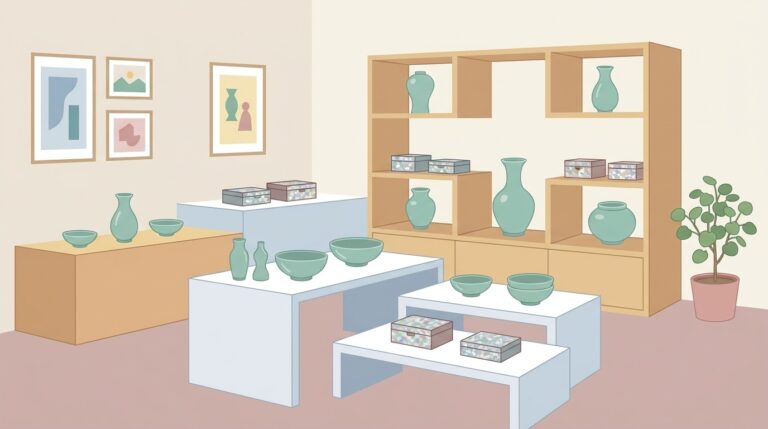
안녕하세요! 매일한글 (Daily Hangul) editor here! Have you ever stepped inside the National Museum of Korea in Yongsan, marveled at the ethereal Pensive Bodhisattva (Banyasayusang), and then wandered straight into the Museum Shop (fondly nicknamed MU:DS by trendy locals)? If you have, you already know it is not your average souvenir store selling tacky fridge magnets. It is an aesthetic wonderland packed with iridescent mother-of-pearl phone cases, miniature Celadon incense burners, and pastel room sprays inspired by Joseon royal gardens.
Here is the real dilemma: you find the most breathtaking Goryeo celadon tumbler or a delicate bookmark, but you cannot spot the price tag, you want to know if fragile items can be bubble-wrapped for your flight, or you are wondering whether that viral miniature statue is actually in stock. Freezing up and relying on awkward gestures can make you miss out on Korea’s coolest cultural merch! Based on feedback from hundreds of our intermediate learners, navigating museum shops requires polite, natural inquiry patterns that go beyond rigid textbook phrases. Master these real-world expressions today, and you will shop for Korean heritage items with total confidence and charm!
Phase 2: 핵심 표현 3선 심층 분석 (Top 3 Core Expressions)
1. 이거 선물용으로 포장 가능한가요? (Igeo seonmulyong-euro pojang ganeunghangayo?)
- Pronunciation: I-geo seon-mul-yong-eu-ro po-jang ga-neung-han-ga-yo? (Sounds like: Ee-guh sun-mool-yong-ew-ro po-jahng gah-neung-hahn-gah-yo)
- Meaning: Literal: “Is wrapping possible for this as a gift?” | Natural: “Could I get this wrapped as a gift?”
- K-Culture Moment: Seen frequently in K-dramas when the main character buys an exquisite traditional craft or silk pouch (Bojagi) before greeting their partner’s family.
- Editor’s Insight: Attaching
-용 (yong)to nouns specifies purpose (e.g.,선물용= gift purpose,소장용= personal collection purpose). It immediately makes your Korean sound refined.- Situation Spectrum: Casual: ⚠️ (이거 선물 포장 돼?) / Semi-formal: ✅ (이거 선물용으로 포장 가능한가요?) / Formal: ✅ (선물용 포장 부탁드립니다)
- 🤔 Think About It: In Korean gift culture, presentation (Pojang) reflects respect and care (Jeong). Why do you think packaging aesthetics matter so much in traditional Korean shopping?
2. 깨지기 쉬운 물건인데 뽁뽁이로 감싸 주실 수 있나요? (Kkaejigi swiun mulgeon-inde ppokppogi-ro gamssa jusil su innayo?)
- Pronunciation: Kkae-ji-gi swi-un mul-geon-in-de ppok-ppo-gi-ro gam-ssa ju-sil su in-na-yo? (Sounds like: Kkeh-jee-gee she-oon mool-gun-een-deh poke-poke-ee-ro gahm-ssah joo-sheel soo een-nah-yo)
- Meaning: Literal: “This is an easily breakable item, so could you wrap it in pop-pop?” | Natural: “This is fragile; could you wrap it in extra bubble wrap?”
- K-Culture Moment: Every Korean pottery shopper and K-pop collector knows
뽁뽁이 (Ppokppogi)—the universally loved onomatopoeic word for bubble wrap simulating the popping sound!- Editor’s Insight: Using
-기 쉬운 (gi swiun)(easy to / prone to) lets you explain conditions gracefully without sounding demanding.- Situation Spectrum: Casual: ⚠️ (뽁뽁이로 싸 줘) / Semi-formal: ✅ (뽁뽁이로 감싸 주실 수 있나요?) / Formal: ✅ (파손 방지 포장 부탁드립니다)
- 🤔 Think About It: Korean uses sensory onomatopoeia like
뽁뽁이even in commercial settings. How does sound-symbolic vocabulary make requests softer?
3. 이 상품 재고 남아 있나요? (I sangpum jaego nama innayo?)
- Pronunciation: I sang-pum jae-go na-ma in-na-yo? (Sounds like: Ee sahng-poom jeh-go nah-mah een-nah-yo)
- Meaning: Literal: “Does stock remain for this product?” | Natural: “Do you have this item in stock?”
- K-Culture Moment: When popular goods (Goodz) sell out instantly in museum collaborations or pop-up stores, fans rush to the counter asking this exact line.
- Editor’s Insight: If an item is on display (Jin-yeol), there might be fresh boxed inventory in the back. Asking for
재고 (jaego)ensures you get a brand-new, unopened box.- Situation Spectrum: Casual: 🚫 (이거 더 있어?) / Semi-formal: ✅ (이 상품 재고 남아 있나요?) / Formal: ✅ (해당 상품 재고가 있습니까?)
- 🤔 Think About It: Notice the passive phrasing
남아 있나요?(does it remain?) rather than “do you have?”. Korean often attributes state rather than personal possession.
Phase 3: 교과서 한국어 vs 진짜 한국어 (Textbook vs. Real Korean)
Situation 1: Asking if you can touch an exhibition craft souvenir
- 📖 교과서 한국어: 이것을 만져도 됩니까? (Igeoseul manjyeodo doebnikka? – May I touch this?)
- 🗣️ 진짜 한국어: 이거 샘플 직접 만져봐도 돼요? (Igeo saemple jikjeop manjyeobwado dwaeyo? – Can I touch this display sample?)
- 💡 왜 다를까? In museum souvenir shops, craft replicas often have dedicated tester/display models. Adding
샘플 (sample)and직접 (in person/myself)clarifies that you respect museum guidelines while testing texture.
Situation 2: Asking for a receipt for duty-free / tax refund
- 📖 교과서 한국어: 영수증을 주십시오. (Yeongsujeungeul jusipsio. – Please give me the receipt.)
- 🗣️ 진짜 한국어: 텍스 리펀 영수증 따로 챙겨 주실 수 있나요? (Tekseu ripeon yeongsujeung ttaro chaenggyeo jusil su innayo? – Could you provide the tax refund receipt separately?)
- 💡 왜 다를까?
챙겨 주다 (chaenggyeo-juda)adds warmth, conveying thoughtful preparation rather than a robotic command.
Phase 4: K-Culture 딥다이브 & 비언어적 매너 (Culture Deep Dive)
4-1. 눈치 (Nunchi) & Polite Gestures in Museum Shops
- Two-Handed Handling: When inspecting lacquerware (Najeonchilgi) or Celadon accessories, pick them up using both hands. Resting your elbows gently on the counter when examining fragile goods signals immense respect to gallery attendants.
- Point with Open Palm: Avoid pointing your index finger directly at delicate cultural relics or high-end craft displays. Gesture using an open hand with fingers together, palm facing slightly upward.
4-2. The MU:DS Craze (뮤즈 열풍)
Traditional museum souvenirs used to be considered old-fashioned. However, modern Korean youth and global K-culture fans transformed museum merchandise into viral collector items. The National Museum of Korea rebranded its souvenir line into MU:DS, collaborating with contemporary designers to turn national treasures—such as the Silla Gold Crown and Joseon folding screens—into trendy stationery, phone cases, and ambient lamps. Knowing how to shop here puts you right at the intersection of classical heritage and ultra-modern Seoul aesthetic culture!
Phase 5: 실전 롤플레이 시나리오 (Roleplay Scenario)
Setting: Inside the main MU:DS gift shop on the 1st floor of the National Museum of Korea.
Characters:
* You (민우 / Minwoo): An enthusiastic culture traveler searching for a unique souvenir.
* Staff (직원 / Jikwon – 수진 / Sujin): A courteous museum curator-store attendant.
- Turn 1 (Minwoo): 저기요, 죄송한데 반가사유상 미니어처 재고 남아 있나요?
(Jeogiyo, joesonghande bangasayusang minieocheo jaego nama innayo?)
🎭 Pointing gently with an open palm toward the display shelf.
“Excuse me, sorry to bother you, but do you have the Pensive Bodhisattva miniature in stock?” -
Turn 2 (Staff): 아, 파스텔 핑크 색상은 품절이고 하늘색이랑 브라운만 남아 있어요!
(A, paseutel pingkeu saeksang-eun pumjeorigo haneulsaek-irang beuraun-man nama isseoyo!)
🎭 Checking inventory tablet while smiling warmly.
“Ah, the pastel pink is sold out, and only sky blue and brown remain!” -
Turn 3 (Minwoo): 하늘색 실물로 한번 봐도 될까요?
(Haneulsaek silmullo hanbeon bwado doelkkayo?)
🎭 Leaning slightly forward with attentive eye contact.
“Could I take a look at the actual sky blue one in person?” -
Turn 4 (Staff): 네! 이쪽에 전시된 샘플 확인해 보시면 됩니다.
(Ne! Ijjoge jeonsidoen saemple hwaginhae bosimyeon doebnida.)
🎭 Guiding hands toward the sample pedestal.
“Yes! You can check the display sample right over here.” -
Turn 5 (Minwoo): 와, 색감이 정말 영롱하네요. 이걸로 하나 주세요!
(Wa, saekgami jeongmal yeong-ronghaneyo. Igeollo hana juseyo!)
🎭 Nodding with an appreciative smile.
“Wow, the color payoff is truly luminous. I will take one of these!” -
Turn 6 (Staff): 좋은 선택이세요! 바로 새 제품으로 준비해 드릴게요.
(Joeun seontaeg-iseyo! Baro sae jepum-euro junbihae deurilgeyo.)
🎭 Bringing a fresh packaged box from underneath the counter.
“Great choice! I will prepare a brand-new one for you right away.” -
Turn 7 (Minwoo): 비행기 타고 가져갈 거라 깨지기 쉬운데 뽁뽁이로 감싸 주실 수 있나요?
(Bihaenggi tago gajyeogal geora kkaejigi swiunde ppokppogi-ro gamssa jusil su innayo?)
🎭 Handing payment card with both hands.
“I will take this on a flight and it is fragile; could you wrap it with bubble wrap?” -
Turn 8 (Staff): 당연하죠! 안전하게 이중 포장해 드릴게요.
(Dang-yeonhajyo! Anjeonhage ijung pojanghae deurilgeyo.)
🎭 Wrapping the souvenir carefully with protective cushioning.
“Of course! I will double-wrap it securely for you.”
🔀 인터랙티브 분기점 (Interactive Choice)
Now the staff asks if you need a shopping bag: “쇼핑백 필요하신가요? (Do you need a shopping bag?)”
- Choice A: “네, 선물용이라 작은 종이백 하나만 같이 챙겨 주세요.” (Yes, it is for a gift, so please include one small paper bag.)
- 👉 Feedback (Best! ⭐): Polite, precise, and explains why you need an extra bag. In Korea, single-use bags carry a 100~200 KRW charge by law, so asking nicely for gift bags is standard etiquette.
- Choice B: “그냥 줘.” (Just give it.)
- 👉 Feedback (Bad! ❌): Extreme informal speech (Banmal). Highly offensive to museum staff!
- Choice C: “봉투 공짜예요?” (Is the bag free?)
- 👉 Feedback (Risk! ⚠️): Grammatically okay, but sounds abrasive. In Korea, eco-regulations mandate paid bags, so asking if it is free feels slightly out-of-touch.
Phase 6: 10초 감정 섀도잉 드릴 (Emotion Shadowing Drill)
[😊 설레고 호기심 가득하게]저기요 / 반가사유상 미니어처 / 재고 남아 있나요?
(Jeogiyo / bangasayusang minieocheo / jaego nama innayo?)[✨ 감탄하며 진심 어린 톤]와 / 자개 디테일이 / 진짜 영롱하네요!
(Wa / jagae diteiri / jinjja yeong-ronghaneyo!)[🙏 공손하고 조심스럽게]비행기 탈 거라서 / 뽁뽁이로 꼼꼼하게 / 감싸 주실 수 있나요?
(Bihaenggi tal georaseo / ppokppogi-ro kkomkkomhage / gamssa jusil su innayo?)
Phase 7: K-Culture 미니 사전 (Mini Dictionary)
- 자개 (Jagae) | Mother-of-pearl / Nacre craft
- Traced back to Goryeo Dynasty lacquerware, iridescent nacre is now used for luxury pop-sockets, coaster sets, and mirrors at MU:DS.
- 굿즈 (Gutjeu) | Merchandise / Collector’s items
- Konglish term for official merch. Koreans say “박물관 굿즈” (Museum merch) to describe high-end creative artifacts.
- 영롱하다 (Yeong-ronghada) | Luminous / Dazzlingly clear
- A poetic adjective frequently used by young Koreans on social media to describe glittering celadon glazes or iridescent nacre.
- 품절 (Pumjeol) | Sold Out
- Often posted next to viral museum items; if you see this label, look for staff to check when restocking (Jae-ipgo) occurs.
Phase 8: 여행자를 위한 생존 키트 (Traveler Survival Kit)
Top 3 Survival Expressions
- 이거 파손 위험 없게 포장해 주세요. (Igeo pason wiheom eopge pojanghae juseyo.)
Pro Tip: Use this for ceramic celadon or glass items to request heavy-duty shockproof packaging. - 해외 카드 결제 가능한가요? (Hae-oe kadeu gyeolje ganeunghangayo?)
Pro Tip: Perfect for checking if international Visa/Mastercard/Amex is accepted at specialty counters. - 택스 리펀 받을 수 있나요? (Taekseu ripeon badeul su innayo?)
Pro Tip: Qualifying purchases over 15,000 KRW can generate immediate tax-free paperwork on-site.
Editor’s Travel Note
- Finding the Best Shops: The National Museum of Korea features two major shops: the Main Cultural Shop on the 1st floor (best for stationary, replicas, and books) and the Special Exhibition Shop. Install the 네이버 지도 앱 다운로드 to easily check open gallery hours and subway connections from Ichon Station (Line 4 / Gyeongui-Jungang Line Exit 2, connected via the “Museum Path” underground walkway).
Phase 9: “한 발 더 깊이” (Cultural Essay & Reflection)
In many Western museum gift shops, souvenirs are viewed primarily as personal mementos. In Korea, however, giving a museum craft is steeped in the cultural virtue of 정성 (Jeongseong – sincere devotion). Selecting a small craft featuring the Joseon symbol of longevity (Shipjangsaeng) or peace (Pensive Bodhisattva) signifies that you wish spiritual well-being upon the recipient. That is why the aesthetics of wrapping (Pojang) and mindful speech during purchase are treated as an extension of the gift itself.
💬 Your Turn: Have you ever bought a traditional souvenir that held deep cultural meaning? Which Korean museum treasure would you love to display on your desk? Let us know in the comments below!
Phase 10: FAQ & 오해 방지 (Structured FAQ)
Q: Can I take photos of merchandise inside the National Museum gift shop?
A: Yes! Unlike private antique shops, the National Museum of Korea’s MU:DS shop fully welcomes photography of souvenirs and display stands. However, avoid using camera flash and do not block narrow pathways.
Q: Is bargaining allowed in museum gift shops in Korea?
A: No. All museum shops have fixed prices (Jeongchalje). Attempting to negotiate discounts is considered impolite in formal retail and cultural institutions.
Q: How do I know if an item is an authentic certified craft?
A: Look for the official seal label marked “국립박물관문화재단” (National Museum Foundation of Korea) on the back of the packaging.
🚨 흔한 실수 (Common Mistakes TOP 3)
- Saying “싸게 해 주세요” (Give me a discount): Museum items are fixed price. Avoid asking for discounts.
- Tapping fragile porcelain with fingernails: Use visual checks or hold items with two hands.
- Forgetting to ask for separate gift bags: If buying multiple items for different friends, specify
선물용 봉투 몇 개 더 챙겨 주실 수 있나요?at checkout.
Phase 11: 액션 미션 (Action Mission)
- 🥉 Bronze Mission: Practice saying
이거 선물용으로 포장 가능한가요?out loud 5 times with smooth natural intonation. - 🥈 Silver Mission: Visit the official online MU:DS store or social media page, choose your favorite artifact good, and write its Korean name in your notes.
- 🥇 Gold Mission: When visiting a Korean museum or boutique craft shop, ask the clerk
뽁뽁이로 감싸 주실 수 있나요?completely in Korean without using English! - 🎮 K-Culture Mission: Spot a traditional Korean craft or motif in a K-drama (like the lacquered jewelry box in historical or modern dramas) and identify if it uses Jagae (mother-of-pearl)!
Phase 12: 인터랙티브 퀴즈 챌린지 (Quiz Challenge)
1. [상황 판단] You found a delicate ceramic cup at the museum shop and want it packed safely for your flight. Which sentence is most natural?
* (A) 이거 그냥 가방에 넣어 줘.
* (B) 비행기 탈 거라 깨지기 쉬운데 뽁뽁이로 감싸 주실 수 있나요?
* (C) 텍스 리펀 지금 당장 주세요.
2. [빈칸 채우기] Fill in the blank:
“이 상품 지금 매진인가요, 아니면 뒤에 ______ 남아 있나요?” (Are there remaining stock in the back?)
* (A) 눈치
* (B) 재고
* (C) 박물관
3. [True / False] In Korean culture, onomatopoeic words like ‘뽁뽁이’ (Ppokppogi) are considered too childish to use in store inquiries.
* (True / False)
🔍 정답 및 해설 확인하기 (Click for Answers & Explanations)
- 정답: (B)
해설: (B) clearly communicates fragility, flight transport, and requests protective bubble wrap politely. (A) is rude banmal, and (C) is an unrelated aggressive command. - 정답: (B) 재고 (Jaego)
해설: ‘재고’ means inventory or stock. ‘눈치’ is social intuition, and ‘박물관’ is museum. - 정답: False
해설: ‘뽁뽁이’ is universally recognized and widely accepted across retail stores in Korea when requesting protective bubble wrap.







