

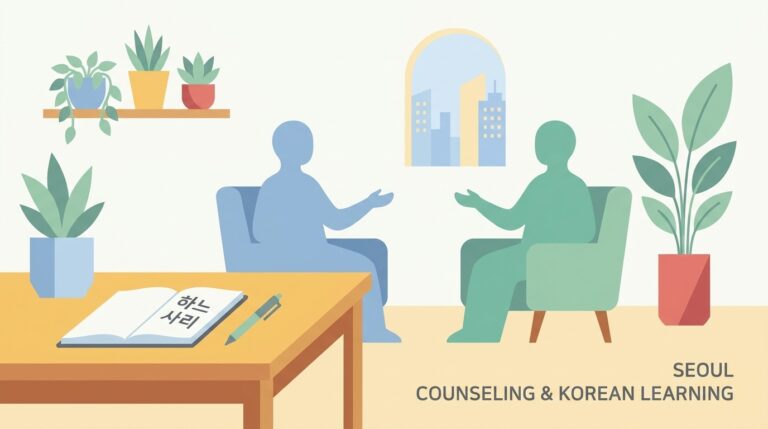
Talking Mental Health in Korea: Breaking Stigmas and Nuanced Conversations on Psychiatric Care
Phase 1: Empathy & Storytelling
안녕하세요! 매일한글 에디터입니다. (Hello! I’m your Daily Hangul editor.)
If you have watched the hit K-drama Daily Dose of Sunshine (정신병동에도 아침이 와요) or listened closely to introspective tracks by artists like BTS’s RM and Agust D, you already know that conversations surrounding mental well-being in South Korea are undergoing a profound paradigm shift. For decades, psychiatric consultation carried heavy social weight, often veiled behind euphemisms like “mind cold” (마음의 감기). Today, young Koreans are actively dismantling historic taboos, seeking clinical help, and openly demystifying antidepressant medication and cognitive therapy.
Yet, navigating these delicate conversations at a C2 mastery level requires profound sociocultural tact. How do you articulate nuanced clinical decisions, discuss dosage adjustments with a psychiatrist without sounding clinical or defensive, or offer authentic, non-patronizing emotional solidarity to a Korean friend? This masterclass goes beyond simple translations to examine the deep cultural lexicon of therapeutic discourse in contemporary Korea.
Phase 2: Core Advanced Expressions
1. 마음의 감기처럼 누구나 겪을 수 있는 일이에요
- Pronunciation: Maeum-ui gamgicheoreom nuguna gyeokkeul su inneun irieyo (Sounds like: mah-eum-ee gahm-ghee-chuh-rum noo-goo-nah gyeok-kuhl soo eeng-neun eel-ee-eh-yo)
- Meaning: Literal: “It’s something anyone can experience, just like a cold of the mind.” / Nuance: “Mental distress is as common and treatable as catching a common cold; there is zero shame in it.”
- K-Culture Moment: Frequently uttered by empathetic counselors in medical dramas when comforting overwhelmed corporate professionals who feel ashamed of taking SSRIs.
- Editor’s Insight: The metaphor of ‘감기’ (cold) serves as a compassionate bridge in Korean society to normalize neurochemical care and disarm institutional stigma.
- Situation Spectrum: Casual: ✅ | Semi-formal: ✅ | Formal: ✅
- 🤔 Think About It: Why does framing clinical depression as an everyday physical ailment reduce stigma in community-centric cultures?
2. 약물 치료에 대한 선입견을 내려놓다
- Pronunciation: Yangmul chiryoe daehan seonipgyeoneul naeryeonota (Sounds like: yahng-mool chee-ryo-eh dae-hahn sun-eep-gyun-eul nae-ryuh-noh-tah)
- Meaning: Literal: “To put down preconceived notions regarding drug therapy.” / Nuance: “To let go of outdated biases and misconceptions about psychiatric medication.”
- K-Culture Moment: Heard in investigative documentaries (such as SBS Special) discussing modern psychopharmacology and neurochemical balancing.
- Editor’s Insight: Using ‘내려놓다’ (to lay down/let go) rather than merely ‘없애다’ (to eliminate) lends poetic agency and psychological maturity to the speaker.
- Situation Spectrum: Casual: ⚠️ | Semi-formal: ✅ | Formal: ✅
- 🤔 Think About It: Notice how Korean uses physical verbs of burden-release (내려놓다) to describe emotional and cognitive shifts.
3. 서서히 용량을 조절하며 경과를 지켜보다
- Pronunciation: Seoseohi yongryangeul jojeolhamyeo gyeonggwareul jikyeoboda (Sounds like: suh-suh-hee yong-ryahng-eul joh-juhl-hah-myuh gyung-gwah-reul jee-kyuh-boh-dah)
- Meaning: Literal: “To adjust the dosage gradually while monitoring the progress.” / Nuance: “To systematically titrate medication under clinical supervision without rushing recovery.”
- K-Culture Moment: Spoken by psychiatrists during consultation sessions to reassure patients worried about dependency or sudden withdrawal symptoms.
- Editor’s Insight: A sophisticated medical expression highlighting patience, clinical protocol, and steady recuperation.
- Situation Spectrum: Casual: ⚠️ | Semi-formal: ✅ | Formal: ✅
- 🤔 Think About It: Contrast the collaborative, observational nuance of ‘지켜보다’ (watch over) against abrupt terms like ‘단약하다’ (suddenly stop meds).
Phase 3: Textbook Korean vs. Real Native Korean
Situation A: Explaining that medication restores brain chemistry rather than altering personality
- 📖 교과서 한국어 (Textbook): 항우울제는 세로토닌 수치를 조절하는 안전한 약입니다. (Antidepressants are safe medicines that regulate serotonin levels.)
- 🗣️ 진짜 한국어 (Native C2): 약을 먹는 건 성격을 바꾸려는 게 아니라 뇌 속 신경전달물질의 균형을 맞추는 과정일 뿐이에요. (Taking medication isn’t about changing your personality; it’s simply a process of rebalancing neurotransmitters in the brain.)
- 💡 왜 다를까? (Cultural Context): Natives frame psychiatric care around biological rebalancing to dispel common fears that medication causes irreversible lethargy or altered identity.
Situation B: Inquiring about tapering off medication naturally
- 📖 교과서 한국어 (Textbook): 언제 약 복용을 중단할 수 있습니까? (When can I stop taking medication?)
- 🗣️ 진짜 한국어 (Native C2): 증상이 호전되면 서서히 테이퍼링(감량)하면서 단약 타이밍을 잡는 게 맞겠죠? (Once symptoms improve, the standard approach is to gradually taper down the dosage before safely stopping, right?)
- 💡 왜 다를까? (Cultural Context): Using professional loanwords like ‘테이퍼링’ alongside native phrasing ‘단약 타이밍을 잡다’ reflects high health literacy and proactive collaborative care.
Phase 4: K-Culture Deep Dive & Non-Verbal Manners
4-1. Nunchi & Gentle Demeanor (눈치와 비언어적 매너)
When discussing psychiatric treatment or personal vulnerability in Korea:
* Averted Gaze with Gentle Nodding: Avoid piercing, direct eye contact when a friend shares their mental health journey. Softly direct your gaze toward the mid-chest or table, nodding with a slight tilt to show empathetic presence without intrusive scrutiny.
* Tone Modulation (나지막한 어조): Drop pitch slightly and soften sentence endings into fluid queries (e.g., “~지 않았을까요?” rather than blunt declaratives) to prevent clinical discussions from feeling confrontational.
4-2. Cultural Dimension: The Transition from ‘화병’ (Hwabyung) to Modern Psychiatry
Historically, emotional repressions in Korea were somatized as Hwabyung (화병, anger syndrome). Modern psychiatric clinics (정신건강의학과) in trendsetting areas like Gangnam and Hongdae are designed like boutique cafes, blending anonymous self-check kiosks with warm wood aesthetics. Media and K-pop idols discussing therapeutic routines have transformed psychiatric visits from a whispered secret into a responsible lifestyle health check.
Phase 5: Interactive Roleplay Scenario
Setting: A peaceful counseling room at an integrative psychiatric clinic in Seoul. Dr. Min-woo Kang (강민우 원장) is discussing treatment continuity with an overseas professional, Alex.
- Turn 1 (Dr. Kang): Alex 씨, 지난 2주간 처방해 드린 SSRI 제제를 복용하시면서 수면 패턴이나 집중력에 변화가 좀 느껴지셨나요?
(Alex, over the past two weeks taking the prescribed SSRIs, did you notice any shift in your sleep patterns or concentration?)
🎭 [차트를 살피며 온화하게 미소 짓는다] -
Turn 2 (Alex): 처음 며칠은 메스꺼움이 있었지만, 다행히 불안감이나 불면증은 눈에 띄게 완화되었어요.
(Cheoeum myeochireun mesekkeoumi isseotjiman, dahaeanghi burangamina bulmyeonjeungeun nune ttuige wanhwadoeeosseoyo. / The nausea persisted for a few days, but thankfully anxiety and insomnia have noticeably eased.)
🎭 [차분하게 호흡을 가다듬으며 고개를 끄덕인다] -
Turn 3 (Dr. Kang): 다행이네요. 초기 소화기계 부작용은 적응기 현상입니다. 그런데 여전히 약에 대한 내성이나 의존성을 염려하시는 눈치더군요.
(That’s a relief. Early digestive side effects are normal adjustment reactions. However, you still seem concerned about tolerance and dependence.)
🎭 [안경을 살짝 매만지며 경청하는 자세를 취한다] -
Turn 4 (Alex): 솔직히 평생 약에 의존하게 될까 봐 임의로 끊고 싶은 유혹이 들 때가 있어요.
(Soljikhi pyeongsaeng yage uijonhage doelkka bwa imuiro kkeunkko sipeun yuhogi deul ttaega isseoyo. / Honestly, fearing lifelong dependency, I sometimes feel tempted to stop taking them on my own.)
🎭 [시선을 솔직하게 마주하며 털어놓는다] -
Turn 5 (Dr. Kang): 많은 분들이 오해하시는 부분입니다. 비의존성 제제라 체내 호르몬 균형이 안정화되면 계획적으로 단약이 가능하니 조급해하실 필요 없습니다.
(That’s a widespread misconception. Since these are non-addictive agents, once neurotransmitters stabilize, we can systematically taper off without urgency.)
🎭 [손바닥을 편안히 펴 보이며 안심시킨다] -
Turn 6 (Alex): 원장님 설명을 듣고 나니 심리적 부담감이 한결 덜어지네요.
(Wonjangnim seolmyeongeul deutgo nani simrijeok budamgami hangyeol deoreojineyo. / Hearing your clinical rationale eases my psychological burden significantly.)
🎭 [어깨의 긴장을 풀며 옅은 미소를 짓는다] -
Turn 7 (Dr. Kang): 좋습니다. 그럼 당분간 현 용량을 유지하면서 3주 뒤에 경과를 다시 점검해 볼까요?
(Excellent. Shall we maintain the current dosage for now and reassess your progress in three weeks?)
🎭 [처방전을 정리하며 일정을 조율한다] -
Turn 8 (Alex): 네, 처방 지침대로 꾸준히 복용하고 다음 진료 때 뵙겠습니다.
(Ne, cheobang jichimdaero kkujeonhi bogyonghago daeum jinryo ttae boepgetseumnida. / Yes, I will consistently adhere to the prescription and see you at the next appointment.)
🎭 [정중하게 가벼운 목례를 건넨다]
🔀 Interactive Decision Branching
What should Alex say if Dr. Kang asks about sudden dosage adjustments?
- Option A (Best): “전문적인 판단 하에 서서히 테이퍼링을 시도하고 싶습니다.” (I’d like to attempt tapering gradually under your professional guidance.)
👉 Feedback: Exceptional. Demonstrates psychiatric literacy and collaborative trust. - Option B (Bad): “그냥 증상 나아졌으니 오늘부터 바로 약 끊을게요.” (Since symptoms improved, I’ll stop cold turkey from today.)
👉 Feedback: Risky and naive. Abrupt cessation invites severe rebound side effects. - Option C (Risk): “영양제나 한약으로 완전히 대체하면 안 되나요?” (Can’t I replace it entirely with supplements or oriental medicine?)
👉 Feedback: While understandable, unilateral substitutions without clinical cross-checking risk relapse.
Phase 6: 10-Second Emotion Shadowing Drill
[🌿 차분하고 이성적인 어조로]
“약물 복용은 / 의지력의 결여가 아니라 / 생물학적 불균형을 바로잡는 과정이에요.”
(Yangmul bogyongeun / uijiryeogui gyeoryeoga anira / saengmulhakjeok bulgyunhyeongeul barojamneun gwajeong-ieyo.)-
[🤝 따뜻하고 깊은 공감을 담아]
“스스로를 다그치지 말고, / 회복의 속도를 온전히 존중해 주는 게 중요해요.”
(Seuseuroreul daguechiji malgo, / hoebok-ui sokdoreul onjeonhi jonjunghae juneun ge jung-yohaeyo.) -
[🩺 전문적이고 신뢰감 있게]
“임의로 용량을 증감하지 않고, / 전문의와 상의하며 완만하게 조절하겠습니다.”
(Imuiro yongryangeul jeunggamhaji anko, / jeonmun-uiwa sang-uihamyeo wanmanhage jojeolhagetseumnida.)
Phase 7: K-Culture Mini Dictionary
-
정신건강의학과 (Jeongsin-geon-gang-ui-hak-gwa)
Translation: Department of Psychiatry and Mental Health
Context: The official medical term replacing the dated label ‘정신과’ to destigmatize clinical care. -
마음 챙김 (Maeum-chaenggim)
Translation: Mindfulness
Context: Ubiquitous in Korean wellness retreats, modern meditation apps, and cognitive behavioral therapy. -
단약 증후군 (Dan-yak Jeunghugun)
Translation: Discontinuation / Withdrawal Syndrome
Context: Used in clinical consultations when discussing the physiological risks of abruptly stopping medication. -
소진 증후군 / 번아웃 (Sojin Jeunghugun / Beon-aut)
Translation: Burnout Syndrome
Context: Frequently cited in workplace discussions concerning chronic exhaustion and mental decompression.
Phase 8: Traveler’s & Expat’s Health Survival Kit
Survival Expressions TOP 3
- “영어로 상담 가능한 정신과 전문의 진료를 예약하고 싶습니다.”
(Yeong-eoro sangdam ganeunghan jeongsingwa jeonmun-ui jinryoreul yeyakhago sipeumnida.)
Pro Tip: Call clinics in international hubs (Itaewon, Gangnam, Mapo) using this exact sentence. - “복용 중인 처방약에 대한 영문 처방전/소견서를 발급해 주실 수 있나요?”
(Bogyong jung-in cheobang-yage daehan yeongmun cheobangjeon/sogyeonseoreul balgeup-hae jusil su innayo?)
Pro Tip: Indispensable for visa renewals or cross-border medical transitions. - “갑작스러운 불안 발작 시 복용할 수 있는 비상약을 함께 처방받고 싶어요.”
(Gapjakseureoun buran baljak si bogyonghal su inneun bisang-yageul hamkke cheobangbatgo sipeoyo.)
Pro Tip: Requests PRN (as-needed) anxiolytics without sounding frantic.
Editor’s Medical Travel Note
- Install the 국립정신건강센터 공식 포털 웹사이트 or 닥터나우 (DoctorNow) 비대면 진료 앱 다운로드 for verified multilingual emergency hotlines and telemedicine consultations in Korea.
Phase 9: Thinking Deeper (한 발 더 깊이)
In traditional Korean communal culture (Jeong, 정), mental fatigue was historically perceived as an internal struggle to be overcome through collective grit (Gangi-gwan, 극기) or shared emotional vent sessions (Suda, 수다). However, contemporary Korea is integrating deep biological science into its communal empathy. Seeking pharmacotherapy is no longer viewed as personal defeat, but rather as an act of courageous civic and individual self-respect. True recovery honors both the neurochemical architecture and relational warmth.
💬 Your Turn: How does your home culture view psychiatric medication versus talk therapy? Share your thoughts below in Korean!
Phase 10: Structured FAQ & Common Mistakes
Q: 항우울제를 복용하면 감정이 무뎌지거나 멍해지나요?
A: 초기 적응 기간 동안 가벼운 졸음이나 멍함이 발생할 수 있으나, 이는 뇌의 세로토닌 및 도파민 수용체가 안정화되는 과정입니다. 전문의와 상의하여 용량을 미세 조정하면 일상생활에 지장 없이 맑은 인지 기능을 유지할 수 있습니다.
Q: 정신과 진료 기록이 남으면 취업이나 보험 가입에 불이익이 있나요?
A: 한국 의료법상 개인 진료 기록은 철저한 비밀 유지가 보장되며, 본인 동의 없이 제3자 열람이 엄격히 금지됩니다. F코드(정신과 질환 코드) 대신 일반 상담 코드(Z코드)로 청구하거나 비급여 처방을 선택하는 방법도 존재합니다.
Q: 증상이 좋아지면 즉시 약 복용을 중단해도 되나요?
A: 임의로 복용을 중단할 경우 신경전달물질의 급격한 변화로 인해 ‘반동성 우울감’이나 ‘금단 증상’이 나타날 수 있습니다. 반드시 전문의와 함께 수개월에 걸쳐 점진적으로 테이퍼링(감량)해야 안전합니다.
🚨 Common Mistakes Alert Board
- ❌ Mistake 1: Calling all psychiatric facilities ‘정신병원’ (Mental Asylum) in casual talk.
✔️ Correct Action: Use ‘정신건강의학과’ (Department of Psychiatry) or ‘마음건강 클리닉’ (Mental Wellness Clinic). - ❌ Mistake 2: Advising an emotionally exhausted friend with “마음 굳게 먹어!” (Just be strong!).
✔️ Correct Action: Say “너의 탓이 아니야, 전문가의 도움을 받으면 금방 나아질 수 있어.” (It’s not your fault; getting professional help makes all the difference). - ❌ Mistake 3: Assuming Korean psychiatrists solely prescribe medication without counseling.
✔️ Correct Action: Ask for “약물 치료와 인지치료 병행 상담” (Combined pharmacotherapy and cognitive therapy).
Phase 11: Action Missions
- 🥉 Bronze Mission (Solo Practice): Read Phase 6 Shadowing Drill out loud twice with correct pause points (
/). - 🥈 Silver Mission (Social Connection): Leave a comment introducing your favorite stress-relief idiom in Korean on Daily Hangul community boards.
- 🥇 Gold Mission (Real Mastery): In your next Korean journaling session, write a 3-sentence reflection about mental well-being using the terms 마음의 감기, 선입견, and 경과를 지켜보다.
- 🎮 K-Culture Challenge: Watch Episode 1 of Daily Dose of Sunshine with Korean subtitles and spot when the term 정신건강의학과 is spoken!
Phase 12: Interactive Quiz Challenge
Question 1 (Situational Nuance):
What is the most respectful and scientifically accurate way to reassure a friend hesitant to start antidepressant medication?
1. 의지력이 부족해서 생기는 문제니까 운동부터 하세요.
2. 세로토닌 불균형을 교정하는 과정이니 자책하지 말고 편하게 복용해 봐요.
3. 정신과 약은 중독되니까 절대 먹지 마세요.
🔍 정답 및 해설 보기 (Click to view answer)
정답: 2번
해설: 2번 표현은 생물학적 불균형을 합리적으로 설명하며 자책감을 덜어주는 가장 공감 어리고 세련된 C2 수준의 조언입니다.
Question 2 (Blank Fill):
증상이 완화되었다고 해서 갑자기 약을 끊지 말고, 주치의와 상의하여 용량을 서서히 (________)하는 과정이 필요합니다.
1. 폭음
2. 테이퍼링(감량)
3. 포기
🔍 정답 및 해설 보기 (Click to view answer)
정답: 2번 (테이퍼링 / 감량)
해설: 약물의 점진적 감소를 뜻하는 의학/일상 융합 어휘는 ‘테이퍼링’ 또는 ‘서서히 감량’입니다.
Question 3 (True/False):
Modern Korean society officially uses the department title ‘정신건강의학과’ rather than the archaic and stigmatized term ‘정신과’. (True / False)
🔍 정답 및 해설 보기 (Click to view answer)
정답: True
해설: 2011년 법 개정 이후 한국에서는 낙인 효과를 줄이고 포괄적 정신 건강 증진을 도모하기 위해 ‘정신건강의학과’로 공식 명칭을 개편하였습니다.







