

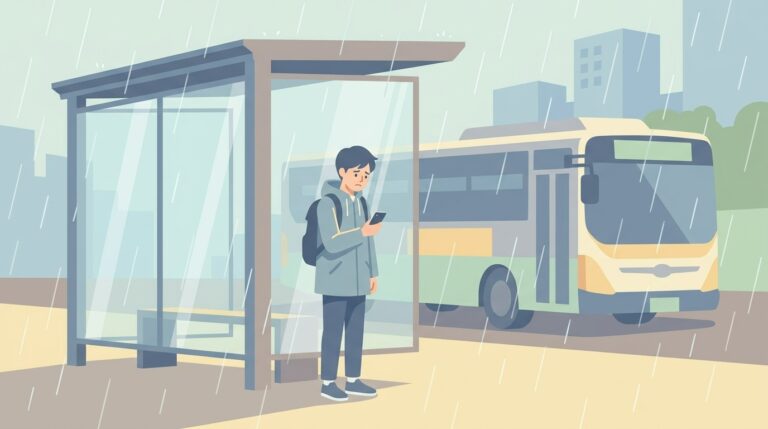
How to Express Annoyance in Korean: The Ultimate Guide to 짜증나요 (Jjajeungnayo)
Phase 1: Empathy (Story-Driven Opening)
안녕하세요! (Annyeonghaseyo!) It is your Daily Hangul editor and Korean best friend here to save your day! Have you ever been watching your favorite K-Drama, like Crash Landing on You or Business Proposal, and seen a character roll their eyes, let out a deep sigh, and grumble a sharp little phrase: “아 진짜 짜증나!” (A jinjja jjajeungna!)?
Maybe you have been in Korea yourself: you rush to the subway platform during morning rush hour in Gangnam, your iced Americano spills on your white sleeve, the subway doors close right in front of your face, and your phone battery drops to 1%. In English, you might mutter, “Ugh, this is so frustrating!” or “I’m so annoyed!” But in Korean, you need the ultimate expressive word: 짜증나요 (Jjajeungnayo).
Negative emotions are universal, yet most beginner textbooks only teach you sunny phrases like “I am happy!” (행복해요 / Haengbokaeyo). Real life isn’t always rainbow sunshine! Learning how to express minor frustration naturally helps you bond with Korean friends, connect deeply with K-Dramas, and vent safely without offending people. Based on hundreds of real Daily Hangul students’ questions, this step-by-step A1 guide will show you how to complain like a local—politely, naturally, and correctly!
Phase 2: Top 3 Essential Expressions Deep Dive
1. 짜증나요 (Jjajeungnayo)
- Pronunciation:
[Jja-jeung-na-yo](Sounds like “Jah-jeung-nah-yo” with a crisp, popping ‘jj’ like the sound of sizzling oil!) - Meaning: Direct: “Annoyance comes out” | Actual Nuance: “I’m annoyed / This is so frustrating!”
- K-Culture Moment: Seen in almost every rom-com drama when the female lead gets assigned overtime by her grumpy boss on a Friday night.
- Editor’s Insight: This word describes mild, nagging irritation caused by external situations or small mishaps. The
-요 (-yo)makes it polite enough to say around acquaintances or coworkers when complaining about a situation (not directly pointing at them!). - Situation Spectrum: Casual: ✅ (짜증나 / Jjajeungna) | Semi-formal: ✅ (짜증나요 / Jjajeungnayo) | Formal/Business: ⚠️ (Too emotional for corporate presentations!)
- 🤔 Think About It: In English, we say “I am annoyed,” putting the feeling on ourselves. In Korean, annoyance literally “comes out” (나다 / nada). Does feeling like the emotion arises naturally change how you express it?
2. 속상해요 (Soksanghaeyo)
- Pronunciation:
[Sok-sang-hae-yo](Sounds like “Soke-sahng-heh-yo”) - Meaning: Direct: “My inside is hurt/spoiled” | Actual Nuance: “I feel hurt / bummed out / deeply upset”
- K-Culture Moment: When your favorite K-Pop group’s concert tickets sell out in 0.1 seconds and you miss out on seeing your ultimate bias.
- Editor’s Insight: While 짜증나요 is prickly and irritated, 속상해요 is softer, sadder, and vulnerable. If someone hurts your feelings or an unfair event ruins your plans, use this to get warm sympathy from Koreans.
- Situation Spectrum: Casual: ✅ (속상해 / Soksanghae) | Semi-formal: ✅ (속상해요 / Soksanghaeyo) | Formal: ⚠️
- 🤔 Think About It: “속 (Sok)” means “inside/stomach” and “상하다 (Sanghada)” means “to go bad/spoil.” Isn’t it poetic that emotional heartache is felt right in the gut?
3. 답답해요 (Dapdabhaeyo)
- Pronunciation:
[Dap-dap-hae-yo](Sounds like “Dahp-dahp-heh-yo”—feel the heavy thump on your lips) - Meaning: Direct: “Suffocating / Stuffy” | Actual Nuance: “I feel so frustrated / suffocated / trapped!”
- K-Culture Moment: When a character in a mystery drama can’t remember crucial clues, or when someone is walking at snail pace blocking the subway stairs.
- Editor’s Insight: Use this when a situation feels physically or mentally cramped, or when someone’s slow response makes you want to pull your hair out.
- Situation Spectrum: Casual: ✅ (답답해 / Dapdaphae) | Semi-formal: ✅ (답답해요 / Dapdabhaeyo) | Formal: ⚠️
- 🤔 Think About It: Korean separates “irritation” (짜증) from “stifling helplessness” (답답). Which emotion do you feel more often in daily life?
Phase 3: Textbook Korean vs. Real Korean
Situation 1: Missing the bus right before work
- 📖 Textbook Korean: 저는 지금 화가 납니다. (Jeoneun jigeum hwaga namnida. – “I am angry now.”)
- 🗣️ Real Korean: 아, 진짜 짜증나요! (A, jinjja jjajeungnayo! – “Ah, seriously so annoying!”)
- 💡 Why is it different? Textbook phrases sound like an official news anchor announcing an emotional state. Real Koreans use filler exclamations like 아 (Ah) and 진짜 (Jinjja – seriously/really) to make it natural and human.
Situation 2: When WiFi suddenly disconnects during a stream
- 📖 Textbook Korean: 인터넷이 작동하지 않아서 슬픕니다. (Inteonesi jakdonghaji anhaseo seulpeumnida. – “I am sad because the internet does not work.”)
- 🗣️ Real Korean: 와, 너무 답답해요. (Wa, neomu dapdabhaeyo. – “Wow, this is so frustratingly stifling.”)
- 💡 Why is it different? Koreans rarely say they are “sad (슬퍼요)” about technical glitches; they describe the stifling bottleneck with 답답해요.
Phase 4: K-Culture Deep Dive & Non-Verbal Manners
4-1. 눈치 (Nunchi) & Body Language
When expressing annoyance in Korea, body language speaks volumes:
* The Chest Tap (가슴 치기 / Gaseum chigi): When feeling 답답해요, Koreans often lightly tap their own chest over their heart with an open palm or light fist. It signals emotional congestion.
* The Soft Sigh (한숨 / Hansum): A slight “하아… (Haa…)” before saying 짜증나요 softens the mood by showing you are tired rather than aggressive.
* Crucial Nunchi Rule: Never say 짜증나요 while making fierce, direct eye contact with someone older or superior! Look at the problem (e.g., your laptop screen or the rain), not the person.
4-2. Cultural Code: The Culture of ‘속’ (Inner Mind & Venting)
Koreans cherish comfortable friendships where you can share 속마음 (Sokma-eum – inner feelings) over hot Tteokbokki (떡볶이) or fried chicken and beer (치맥 / Chimaek). Venting light frustration with 짜증나요 isn’t considered rude among peers; it is actually a bonding ritual called 스트레스 풀기 (Seuteureseu pulgi – untying stress)!
Phase 5: Real-Life Roleplay Scenario
Setting: A trendy cafe in Hongdae on a rainy Saturday afternoon. You and your Korean friend Minji are trying to catch a movie, but the rain is pouring and the ticketing app is freezing.
- Turn 1 (Minji): 비가 너무 많이 와요! (Biga neomu mani wayo!) — [🎭 Looking out the window, wiping wet umbrella]
- Turn 2 (You): 맞아요. 옷이 다 젖었어요. (Majayo. Osi da jeojeosseoyo.) — [🎭 Sighing lightly and brushing off raindrops]
- Turn 3 (Minji): 영화 예매했어요? 앱이 자꾸 멈춰요. (Yeonghwa yemaehaesseoyo? Aebi jakku meomchwoyo.) — [🎭 Showing you her frozen smartphone screen]
- Turn 4 (You): 아, 진짜 답답해요! (A, jinjja dapdabhaeyo!) — [🎭 Tapping your chest playfully with a small frown]
- Turn 5 (Minji): 결국 매진됐어요… 우리 어떻게 해요? (Gyeolguk maejindwaesseoyo… Uri eotteoke haeyo?) — [🎭 Pouting sadly]
- Turn 6 (You): 헐, 너무 속상해요. (Heol, neomu soksanghaeyo.) — [🎭 Expressing empathetic disappointment]
- Turn 7 (Minji): 맛있는 떡볶이나 먹으러 갈까요? (Masinneun tteokbokkina meogeureo galkkayo?) — [🎭 Brightening up and offering an alternative]
- Turn 8 (You): 좋아요! 스트레스 풀어요! (Joayo! Seuteureseu pureoyo!) — [🎭 Smiling and nodding happily]
🔀 Interactive Choice Point
The waiter accidentally brings you hot tea instead of your iced Americano. What do you say?
- Choice A: 저기요, 이거 잘못 나왔어요. 짜증나요! (Jeogiyo, igeo jalmot nawasseoyo. Jjajeungnayo!)
- Choice B: 죄송하지만, 제가 아이스로 주문했어요. (Joesonghajiman, jega aiseuro jumunhaesseoyo.)
- Choice C: 왜 이래요? 진짜 답답해요! (Wae iraeyo? Jinjja dapdabhaeyo!)
Feedback:
* Choice A (Risk / Rude): 🚨 짜증나요 directly to staff will sound confrontational and aggressive in Korean society.
* Choice B (Best): 🏆 Perfect! Polite, calm, and accurate A1 Korean to resolve the mistake with zero friction.
* Choice C (Bad): ❌ Extremely rude! Never accuse service staff with 왜 이래요? unless in extreme conflict.
Phase 6: 10-Second Emotion Shadowing Drill
Repeat after these voice intonation guides. The slashes / mark your breathing pauses!
[😤 Annoyed & Exasperated]- 아… / 진짜 / 짜증나요! (Ah… / jinjja / jjajeungnayo!)
[🥺 Disappointed & Pouting]- 너무 / 속상해요… (Neomu / soksanghaeyo…)
[😮💨 Stifled & Helpless]- 와, / 정말 / 답답해요! (Wa, / jeongmal / dapdabhaeyo!)
Phase 7: K-Culture Mini Dictionary
- 스트레스 (Seuteureseu) | Stress | The go-to loanword in Korea. Used everywhere from offices to classrooms: “스트레스 받아요!” (I’m stressed!).
- 멘붕 (Menbung) | Mental Breakdown / Chaos | Slang combining 멘탈 (Mental) and 붕괴 (Bunggoe – collapse). Used humorously when a situation leaves you stunned.
- 사이다 (Sa-i-da) | Cider (Sprite-like soda) / Instant relief | Used metaphorically when an annoying situation is resolved quickly and refreshingly.
- 고구마 (Goguma) | Sweet Potato / Frustrating blockage | Eating dry sweet potato without water feels choking; used to describe painfully slow or annoying situations before the Saida moment.
Phase 8: Survival Kit for Travelers
Top 3 Survival Expressions for Tricky Moments
- 도와주세요! (Dowajuseyo!) — [Doh-wah-joo-seh-yo] | Pro Tip: Shout this clearly if you are in genuine distress or need urgent help.
- 괜찮아요 (Gwaenchanayo) — [Gwaen-chah-nah-yo] | Pro Tip: Use this to say “It’s okay / No problem” if someone accidentally bumps into you and apologizes.
- 잠시만요 (Jamsimanyo) — [Jahm-see-mahn-yo] | Pro Tip: Say this clearly when squeezing out of packed subways instead of getting annoyed.
Editor’s Travel Note
When traveling in South Korea, transportation delays can trigger unexpected annoyance. Avoid getting lost by downloading the right local navigation apps before arrival! Make sure to complete the Naver Map app download for seamless travel and keep a preloaded T-money card ready to breeze through transit turnstiles effortlessly.
Phase 9: A Step Deeper (Reflection Essay)
In Korean culture, communal harmony (화합 / Hwahap) is prized, meaning open confrontation is discouraged in public spaces. However, suppressing emotions isn’t healthy either! That is why Korean has developed subtle linguistic outlets: expressions like 짜증나요 and 속상해요 allow speakers to release pressure while signaling empathy to their companions.
💬 Your Turn: In your native language, do you complain about situations directly, or do you internalize them? Share your funny travel mishaps in the comments below!
Phase 10: FAQ & Common Pitfalls
Q: Can I say “짜증나요” directly to my Korean teacher or boss when homework is heavy?
A: No! 짜증나요 expresses emotional irritation and is informal in nature. Use polite descriptive expressions like “조금 힘들어요” (Jogeum himdeureoyo – It’s a bit tough) instead.
Q: What is the exact difference between “화나요” and “짜증나요”?
A: 화나요 (Hwanayo) means intense anger or rage (“I am mad!”), whereas 짜증나요 (Jjajeungnayo) refers to smaller, nagging annoyances like slow WiFi or bad weather.
Q: Can I use “짜증나” (without -yo) when talking to myself?
A: Yes! When you are alone and drop your keys, muttering “아 짜증나…” as an internal monologue is 100% natural and common.
🚨 Common Mistakes Alert
- Mistake 1: Pointing at a person and shouting “당신 짜증나요!” (You are annoying!).
- Correct Action: Never attach “당신” (you); keep the annoyance focused on the situation.
- Mistake 2: Using 짜증나요 when someone experiences grief or deep tragedy.
- Correct Action: Use 속상하시겠어요 (Soksanghasigesseoyo) or 위로를 전해요 (I offer condolences).
- Mistake 3: Pronouncing the initial ㅉ like a soft ‘J’.
- Correct Action: Tense your vocal cords and pronounce it with force like a crisp “JJ”!
Phase 11: Action Mission
- 🥉 Bronze Mission: Stand in front of your mirror and practice saying “아 진짜 짜증나요!” with a dramatic K-Drama sigh 3 times.
- 🥈 Silver Mission: Write a comment below describing your biggest pet peeve using 짜증나요 or 답답해요.
- 🎮 K-Culture Mission: Watch one episode of any K-Drama today and spot the exact second a character says 짜증나!.
Phase 12: Interactive Quiz Challenge
1. Situation Quiz: Your bus has been stuck in traffic for 40 minutes and you are feeling trapped and suffocated. What is the most fitting word?
* A) 행복해요 (Haengbokaeyo)
* B) 답답해요 (Dapdabhaeyo)
* C) 반가워요 (Bangawoyo)
2. Fill in the Blank:
“비가 와서 옷이 다 젖었어요. 아, 진짜 ________!”
(It rained and my clothes are all wet. Ah, seriously so annoying!)
3. True or False: Saying “짜증나요” directly to a restaurant owner when food is late is considered polite Korean etiquette.
🔍 Click here to view Answers & Explanations
- Answer: B) 답답해요 (Dapdabhaeyo) — Describes the feeling of stuffiness and traffic blockage perfectly.
- Answer: 짜증나요 (Jjajeungnayo) — The classic phrase for weather-related frustration!
- Answer: False — 짜증나요 sounds too emotional and blunt for customer service interactions. Instead, say “음식이 언제 나오나요?” (When will the food come?).







