

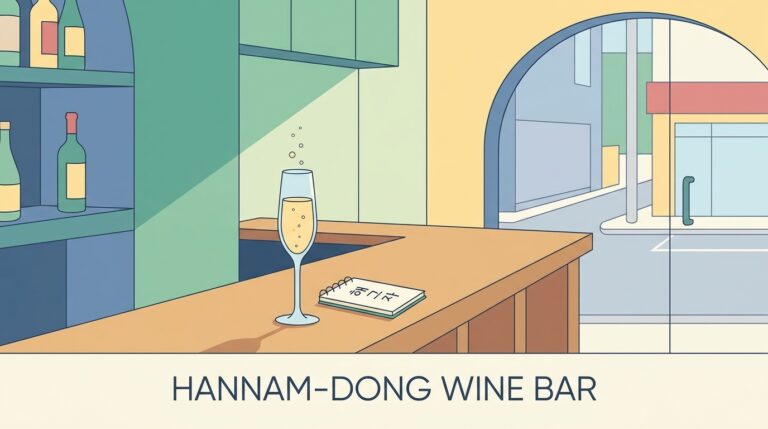
Navigating Korean Wine Bars: Sophisticated Talk on Sparkling Wine & Champagne
Phase 1: Empathy & K-Culture Scene Setting
안녕하세요! (Annyeonghaseyo!) It is your Daily Hangul editor and cultural navigator here. Picture this: you find yourself in a dimly lit, sleek wine bar nestled in the trendy alleys of Seongsu-dong or Hannam-dong—often featured as romantic date backdrops in hit K-dramas. The sommelier approaches, gently presenting an extensive wine list. You want to articulate that you prefer a crisp, high-acidity Blanc de Blancs Champagne over an overly fruity Prosecco, or discuss the nuanced tertiary aromas of traditional method sparkling wines.
However, advanced learners often freeze here. Translating sophisticated wine jargon and flavor profiles into polite, natural C1-level Korean while reading the intricate social vibes (눈치, nunchi) of a Korean upscale dining room can feel overwhelming. Many resort to basic English terms or overly rigid textbook grammar that dampens the refined atmosphere. Based on feedback from our advanced learners navigating Seoul’s burgeoning wine scene, this masterclass guide will empower you to order, savor, and debate terroir, grape varietals, and effervescence with supreme confidence and native-level finesse.
Phase 2: Top 3 Core Expressions (Deep Dive)
1. 산미가 쨍하게 살아있는 브뤼(Brut) 계열로 추천해 주시겠어요? (Sanmi-ga jjaenghage sara-inneun beuryu gye-yeol-lo chucheonhae jusigesseoyo?)
- Pronunciation: sahn-mee-gah jjaeng-hah-geh sah-rah-een-neun beu-ryoo gyeh-yeol-loh choo-chun-heh joo-shee-geht-suh-yoh? (Tip: ‘쨍하게’ (jjaenghage) sounds like the sharp, bright clink of crystal glasses).
- Meaning: “Could you recommend a Brut-style sparkling wine with crisp, vibrant acidity?”
- K-Culture Moment: Seen in sophisticated K-drama dining scenes where a character effortlessly showcases their refined gastronomic palate without sounding snobbish.
- Editor’s Insight: ‘산미’ (sanmi) refers to acidity, and the mimetic adverb ‘쨍하게’ (jjaenghage) vividely captures that razor-sharp, refreshing burst on the palate typical of high-end Champagnes.
- Situation Spectrum: Casual ⚠️ | Semi-formal ✅ | Formal ✅
- 🤔 Think About It: Korean gastronomy uses expressive sensory words like ‘쨍하다’ (jjaenghada) to paint texture and feeling. How does your native language verbally evoke mouthfeel?
2. 기포감이 오밀조밀하고 섬세해서 목넘김이 정말 부드럽네요. (Gipogam-i omiljomiilhago seomsehae-seo mogneomgim-i jeongmal budeureomneyo.)
- Pronunciation: gee-poh-gahm-ee oh-meel-joh-meel-hah-goh sum-seh-heh-suh mohng-num-gim-ee jung-mahl boo-deu-ruhm-neh-yoh.
- Meaning: “The fine, persistent effervescence makes the finish and mouthfeel remarkably smooth.”
- K-Culture Moment: Perfect when giving polite, knowledgeable feedback to a host or sommelier during an upscale business dinner (hoeshik) in Gangnam.
- Editor’s Insight: ‘기포감’ (gipogam) refers to the mousse/effervescence, while ‘목넘김’ (mogneomgim) is a cherished Korean concept describing the physical pleasure of swallowing a drink.
- Situation Spectrum: Casual ✅ | Semi-formal ✅ | Formal ✅
- 🤔 Think About It: Notice how ‘목넘김’ centers the tactile sensation of drinking. Why do you think Korean dining etiquette places so much aesthetic value on the complete swallowing sensation?
3. 이 와인은 효모 숙성 풍미(리스 숙성)가 아주 그윽하게 배어있네요. (I wain-eun hyomo sukseong pungmi(riseu sukseong)-ga aju geueukhage baeeoinneyo.)
- Pronunciation: ee wah-een-eun hyoh-moh sook-sung poong-mee-gah ah-joo geu-euk-hah-geh beh-uh-eet-neh-yoh.
- Meaning: “This wine has deeply infused, nuanced autolytic/lees aging notes (brioche, toasted brioche flavors).”
- K-Culture Moment: Used by seasoned wine collectors during blind tastings or upscale wine club pairings in Yeonhui-dong.
- Editor’s Insight: ‘그윽하다’ (geueukhada) expresses deep, subtle, and elegant depth, elevating your appreciation beyond simple descriptors like ‘맛있다’ (masitda – delicious).
- Situation Spectrum: Casual ✅ | Semi-formal ✅ | Formal ✅
- 🤔 Think About It: Sophisticated Korean wine descriptors blend traditional poetic adjectives with modern oenological terms. How does this fusion elevate social rapport?
Phase 3: Textbook Korean vs. Real Native Korean
Situation 1: Describing sweet sparkling wine vs. dry sparkling wine
- 📖 Textbook Korean: “이 스파클링 와인은 달지 않고 신맛이 강합니다.” (I seupakeulling wain-eun dalji anko sinmas-i ganghamnida. – This sparkling wine is not sweet and has strong sourness.)
- 🗣️ Real Native Korean: “당도는 드라이하게 딱 떨어지고, 산미 밸런스가 깔끔하게 잡혀 있네요.” (Dangdo-neun deurayihage ttak tteoreojigo, sanmi baelleonseu-ga kkalkkeumhage japhyeo inne-yo. – The sweetness is bone-dry and crisp, with a beautifully balanced acidity.)
- 💡 Why Different? Describing wine simply as ‘신맛’ (sourness) sounds unrefined or critical in modern Korean dining. Native speakers use oenological terms like ‘당도’ (sugar level), ‘드라이하다’ (dry), and ‘산미 밸런스’ (acid balance).
Situation 2: Asking if a sparkling wine is made using the traditional Champagne method
- 📖 Textbook Korean: “이 와인은 샴페인 방식으로 만들어졌습니까?” (I wain-eun syampein bangsik-euro mandeureojyeosseumnikka?)
- 🗣️ Real Native Korean: “전통 방식(트래디셔널 방식)으로 2차 병 발효 거친 퀴베인가요?” (Jeontong bangsik-euro icha byeong balhyo geochin kwibe-ingayo?)
- 💡 Why Different? At C1 fluency, using precise vocabulary such as ‘전통 방식’ (méthode traditionnelle) and ‘병 발효’ (bottle fermentation) demonstrates genuine culinary expertise.
Phase 4: K-Culture Deep Dive & Non-Verbal Etiquette
4-1. 눈치 (Nunchi) & Etiquette in Korean Wine Culture
When drinking wine in Korea, traditional etiquette blends seamlessly with Western conventions:
* Two-Handed Glass Holding: When a senior colleague or host pours Champagne for you, place the fingertips of your left hand lightly against your right forearm or lightly cup the base of your stemware with both hands.
* Eye Contact & Clinking: Maintain polite eye contact and offer a warm nod during the toast (geonbae). When clinking flutes or tulip glasses with elders, clink your glass slightly lower than theirs as a gesture of modesty and respect.
4-2. The Natural Wine & Champagne Boom in K-Culture
In Seoul’s trendy districts (Seongsu, Euljiro, Hannam), Champagne and Pet-Nat (natural sparkling wine) culture has evolved from rare luxury consumption into an artistic lifestyle movement. Pairing high-acid Crémant or Champagne with Korean seafood delights like 통영 굴 (Tongyeong oysters), 육회 (beef tartare), or spicy 떡볶이 (tteokbokki) reflects the vibrant, experimental nature of modern Korean gastronomic culture.
Phase 5: Real-World Roleplay Scenario
Setting: An intimate, high-end natural wine bar in Hannam-dong. Sommelier Min-jun approaches your table.
- 소믈리에 민준: “반갑습니다, 손님. 오늘 어떤 스타일의 스파클링을 찾으시나요?”
(Bangapseumnida, sonnim. Oneul eotteon seutail-ui seupakeulling-eul chajeusinayo? / Welcome! What style of sparkling wine are you looking for today?) 🎭 Offers wine menu with a warm, attentive posture. - 학습자 (You): “식전주로 마실 거라, 당도는 낮고 산미가 쨍하게 살아있는 스타일을 선호해요.”
(Sikjeonju-ro masil geora, dangdo-neun natgo sanmi-ga jjaenghage sara-inneun seutail-eul seonhohaeyo. / Since it’s for an aperitif, I prefer a bone-dry style with bright, crisp acidity.) 🎭 Lightly points toward the dry bubbly section. - 소믈리에 민준: “그러시면 상파뉴 지역의 블랑 드 블랑이나 미네랄감이 풍부한 카바(Cava) 계열은 어떠실까요?”
(Geureosimyeon sangpanyu jiyeok-ui beullang deu beullang-ina mineraldgam-i pungbuhan kaba gye-yeol-eun eotteosilkkayo? / In that case, how about a Champagne Blanc de Blancs or a mineral-driven Cava?) - 학습자 (You): “블랑 드 블랑 좋네요! 효모 숙성 뉘앙스도 풍부한 편인가요?”
(Beullang deu beullang jonneyo! Hyomo sukseong nyuangseu-do pungbuhan pyeon-ingayo? / Blanc de Blancs sounds great! Does it also possess rich autolytic lees nuances?) - 소믈리에 민준: “네, 36개월간 리스 숙성을 거쳐 구운 브리오슈 향과 버터리한 풍미가 일품입니다.”
(Ne, samsimyukgaewolgan riseu sukseong-eul geocheo guun beuriosyu hyang-gwa beoteori-han pungmi-ga ilpum-imnida. / Yes, aged on the lees for 36 months, its toasted brioche notes and buttery texture are superb.) 🎭 Presents the chilled bottle with labels facing you. - 학습자 (You): “기포감이 오밀조밀하고 섬세해 보여서 아주 기대되네요. 이걸로 부탁드립니다.”
(Gipogam-i omiljomiilhago seomsehae boyeoseo aju gidaedoeneyo. Igeollo butakdeurimnida. / The effervescence looks remarkably fine and delicate. We’ll take this one, please.) - 소믈리에 민준: “좋은 선택이십니다. 첫 잔 정성껏 서브해 드리겠습니다.”
(Joeun seontaeg-isimnida. Cheot jan jeongseongkkeot seobeuhae deurigesseumnida. / Excellent choice. I will pour your first glass with pleasure.) 🎭 Pours smoothly with bottle bottom held elegantly. - 학습자 (You): “감사합니다. 페어링 안주로는 제철 해산물 플레이트가 잘 어울리겠죠?”
(Gamsahamnida. Peo-ring anju-roneun jecheol haesanmul peulleiteu-ga jal eoulrigetjyo? / Thank you. Seasonal seafood would pair nicely with this, right?)
🔀 Interactive Choice Point
The sommelier asks if you’d like to try an unfiltered Pét-Nat instead:
– Option A: “내추럴 특유의 펑키한 풍미보다는 클래식하고 깔끔한 샴페인 전통 방식을 맛보고 싶어요.” (Best: Articulate, clear, demonstrates deep preference respectfully.)
– Option B: “아무거나 제일 비싸고 유명한 걸로 주세요.” (Bad: Misses the nuance, sounds dismissive.)
– Option C: “탄산음료 같은 건 싫으니까 그냥 와인 주세요.” (Risk: Misunderstands sparkling wine and creates an awkward social friction.)
Phase 6: 10-Second Emotion Shadowing Drill
[🥂 기대감에 차서 / Sophisticated anticipation]
“식전주로 마실 거라, / 산미가 쨍하게 살아있는 / 샴페인으로 부탁드릴게요.”
(Sikjeonju-ro masil geora, / sanmi-ga jjaenghage sara-inneun / syampein-euro butakdeurilgeyo.)-
[✨ 감탄하며 섬세하게 / Subtle admiration]
“기포감이 오밀조밀해서 / 목넘김이 정말 깔끔하네요!”
(Gipogam-i omiljomiilhaeseo / mogneomgim-i jeongmal kkalkkeumhaneyo!) -
[🧐 진지하고 전문적으로 / Discerning & professional]
“과실 향보다는 / 브리오슈 계열의 / 효모 숙성 풍미가 매력적이에요.”
(Gwasil hyang-bodaneun / beuriosyu gye-yeol-ui / hyomo sukseong pungmi-ga maeryeokjeog-ieyo.)
Phase 7: K-Culture Mini Dictionary
- 페어링 (Peo-ring) | Pairing | Matching food and beverage harmoniously. Frequently used across trendy culinary spaces in Korea.
- 산미 (Sanmi) | Acidity / Tartness | Highly valued in modern Korean gourmet criticism; distinct from basic sourness (‘신맛’).
- 콜키지 프리 (Kolkiji Peuri) | Free Corkage | A viral hospitality trend in Korea where diners bring their own premium bottles without extra fees.
- 당도 (Dangdo) | Sugar content / Sweetness level | Crucial terminology used by sommeliers and wine lovers to gauge dry vs. sweet varieties.
Phase 8: Traveler’s Survival Kit
Top 3 Survival Phrases
- “칠링(Chilling) 조금만 더 차갑게 해 주실 수 있나요?” (Could you chill the bottle a bit colder?)
- “샴페인 잔(플루트 잔)으로 교체 부탁드립니다.” (Could we get Champagne flutes instead?)
- “콜키지 비용이 어떻게 되나요?” (What is your corkage fee policy?)
Editor’s Travel Note
When heading to hot spots in Seongsu or Apgujeong Rodeo, explore wine reservations seamlessly on the Catch Table restaurant reservation app. For precise pedestrian navigation through trendy Seoul alleys, rely on the Naver Map navigation app.
Phase 9: A Step Deeper (Reflection)
Korean gastronomic discourse has rapidly shifted from strict hierarchical drinking to sharing aesthetic appreciation. Wine vocabulary in Korean reflects this synthesis: traditional sensory aesthetics (‘목넘김’, ‘그윽하다’) merge with international oenology. Expressing nuanced preferences respectfully demonstrates refinement, high emotional intelligence, and respect for the shared communal table.
💬 Your Turn: What is your go-to sparkling wine profile, and how do you describe its effervescence in your native language? Share your thoughts below!
Phase 10: FAQ & Common Mistakes
Q: Can I call all sparkling wine ‘샴페인’ (Champagne) in Korean dining spots?
A: While casual speakers do so colloquially, knowledgeable wine bars distinguish ‘스파클링 와인’ (sparkling wine), ‘까바’ (Cava), and ‘프로세코’ (Prosecco). Using accurate varietal names gains instant sommelier respect.
Q: What is the most natural way to say “It tastes like green apple and toast”?
A: You can say: “청사과의 산뜻함과 토스트의 고소함이 조화롭네요.” (Cheongsagwa-ui santteutham-gwa toseuteu-ui gosoham-i johwaromneyo.)
Q: How do I politely decline a sweet sparkling wine recommendation?
A: Say: “죄송하지만 단맛이 적고 드라이한 스타일을 선호합니다.” (I am sorry, but I prefer a drier style with minimal residual sugar.)
🚨 Common Mistakes Alert
- ❌ Mistake 1: Saying “이 와인 너무 셔요” (This wine is too sour) -> ✅ Correction: “산미 톤이 꽤 높네요” (The acidity profile is quite pronounced).
- ❌ Mistake 2: Pouring sparkling wine with a rushed single hand in front of elders -> ✅ Correction: Support the bottle base while steadying your forearm with the other hand.
- ❌ Mistake 3: Shouting “원샷!” (One shot!) with vintage Champagne -> ✅ Correction: Enjoy slowly, acknowledging the fine bubbles with “향과 기포를 천천히 즐겨봐요.”
Phase 11: Action Missions
- 🥉 Bronze Mission: Practice saying the Phase 6 Shadowing Drill 5 times while focusing on pronouncing ‘쨍하게’ (sharp & bright).
- 🥈 Silver Mission: Post a picture of your favorite bubbly drink on social media with the Korean caption: #산미가쨍한 #스파클링와인 #DailyHangul.
- 🥇 Gold Mission: Visit a Korean wine bar or restaurant and order your sparkling wine using the exact phrase: “산미가 쨍하게 살아있는 브뤼 계열로 추천해 주시겠어요?”
- 🎮 K-Culture Mission: Watch a recent K-drama dining scene and spot how characters hold wine glasses during toasts with seniors.
Phase 12: Interactive Quiz Challenge
Q1. Which phrase best describes fine, delicate effervescence in Korean?
a) 당도가 너무 높아요
b) 기포감이 오밀조밀해요
c) 알코올 도수가 세요
Q2. Fill in the blank:
“식전주로 단맛 없는 ______ 계열의 산미 쨍한 샴페인을 원해요.” (Hint: Starts with ‘ㅂ’)
Q3. True or False:
In Korean dining etiquette, clinking your glass slightly lower than an elder’s glass shows respect and good manners. (T/F)
🔍 Click to Reveal Answers & Explanations
- Q1 Answer: b) 기포감이 오밀조밀해요 (Captures fine, persistent bubbles perfectly).
- Q2 Answer: 브뤼 (Brut) (Indicates bone-dry sparkling wine).
- Q3 Answer: True (T) (Lowering the rim of your glass slightly is an established non-verbal sign of respect in modern Korean drinking culture).







