

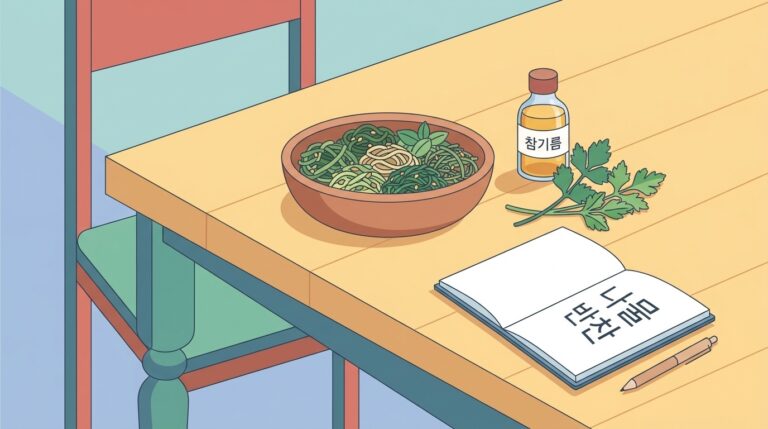
Phase 1: Empathy & Story Opening
안녕하세요! 매일한글 에디터입니다.
Have you ever watched a scene in a K-drama like Little Forest or Reply 1988 where someone brings out a colorful array of seasoned wild greens, tosses them into a giant stainless steel bowl with a spoonful of red pepper paste and a drizzle of fragrant sesame oil, and you find yourself instantly craving a bite? You go to a traditional Korean restaurant expecting simple side dishes, but the moment you taste the namul (나물), you realize it’s anything but ordinary. It is crunchy yet tender, subtly aromatic, and neither completely raw nor mushy.
Many intermediate Korean learners ask us: “Why does Korean have so many specific verbs for cooking vegetables? How do I describe this delicate balance between blanching, seasoning, and texture?” Mastering the vocabulary behind Korean vegetable side dishes opens up the subtle philosophy of Korean culinary art. This guide is crafted from real feedback from our culinary-minded learners to help you talk about namul like a true local foodie.
Phase 2: Core Expressions Deep Dive
1. 살짝 데쳐서 무치다 (Saljjak decheoseo muchida)
- Pronunciation: [Sal-jjak de-cheo-seo mu-chi-da] (Think: Sal-jjak sounds like “sal-jack” with a crisp pop, muchida like “moo-chee-da”)
- Meaning: “To blanch briefly and toss with seasonings by hand.”
- K-Culture Moment: In cooking variety shows like Three Meals a Day (삼시세끼), you frequently hear cast members instruct others to dunk freshly picked spinach into boiling water for just 10 seconds before tossing it.
- Editor’s Insight: Unlike Western sautéing or boiling, Korean muchim requires saljjak dechigi (살짝 데치기) to lock in chlorophyll and crispness without breaking the plant’s cell walls.
- Situation Spectrum:
- Casual: ✅
- Semi-formal: ✅
- Formal: ✅
- 🤔 Think About It: Why does Korean distinguish between tossing salads with utensils versus hand-tossing (muchida)? What does this say about the intimacy of Korean food preparation?
2. 나물 숨을 죽이다 (Namul sum-eul jugida)
- Pronunciation: [Na-mul su-meul ju-gi-da] (Pronounced naturally like soo-meul joo-gee-da)
- Meaning: Literal: “To kill the breath of the greens” / Real Nuance: “To wilt the greens slightly so they lose their stiff raw volume.”
- K-Culture Moment: When a mother in a weekend family drama teaches her daughter-in-law how to salt cabbage or blanch wild greens, she says, “숨만 살짝 죽여야 식감이 살아!” (You should only wilt them slightly so the crunch remains!).
- Editor’s Insight: Korean metaphorically views fresh vegetables as “breathing” (숨). Calming that breath without extinguishing their life entirely is the hallmark of skilled seasoning.
- Situation Spectrum:
- Casual: ✅
- Semi-formal: ✅
- Formal: ⚠️ (Slightly colloquial culinary jargon)
- 🤔 Think About It: In English, we say “wilt” or “shrink”. How does attributing “breath” to plants reflect Korean cultural animism and respect for nature?
3. 손맛으로 버무리다 (Son-maseuro beomurida)
- Pronunciation: [Son-ma-seu-ro beo-mu-ri-da] (Son-mat merges into son-maseuro)
- Meaning: Literal: “To mix together with hand-taste” / Real Nuance: “To gently infuse homemade love and seasoned intuition into the side dish.”
- K-Culture Moment: Food influencers and grandmothers alike stress that tongs or spoons ruin the delicate coating of sesame oil and minced garlic; it must be coated with sonmat.
- Editor’s Insight: Beomurida implies a gentle, multi-directional coating motion that ensures every individual leaf receives an even glaze of oil and salt without being crushed.
- Situation Spectrum:
- Casual: ✅
- Semi-formal: ✅
- Formal: ✅
- 🤔 Think About It: Does your native culture have a concept similar to sonmat, where the cook’s physical touch changes the ultimate flavor?
Phase 3: Textbook Korean vs. Real Korean
Situation 1: Explaining how to prepare seasoned spinach (Sigeumchi-namul)
- 📖 교과서 한국어 (Textbook): “시금치를 끓는 물에 넣고 완전히 익힌 후에 양념과 섞으세요.” (Put the spinach in boiling water, cook it completely, and mix with seasonings.)
- 🗣️ 진짜 한국어 (Real-Life): “시금치는 끓는 물에 10초만 살짝 데쳐내서 찬물에 헹궈야 아삭해요.” (You have to blanch spinach for just 10 seconds and rinse in cold water to keep it crunchy.)
- 💡 Why the difference? Textbook instructions use rigid, generic verbs like ik-hida (to cook through). Real Korean cooks prioritize sik-gam (texture) and speed, highlighting the fleeting blanching technique.
Situation 2: Asking someone to dress the vegetable side dishes
- 📖 교과서 한국어 (Textbook): “나물에 참기름과 소금을 넣고 비벼 주세요.” (Please put sesame oil and salt on the greens and rub them.)
- 🗣️ 진짜 한국어 (Real-Life): “참기름 한 바퀴 쪼르륵 두르고 조물조물 무쳐 줘.” (Drizzle a swirl of sesame oil and toss it gently with your fingertips.)
- 💡 Why the difference? Native speakers use vivid onomatopoeia/mimetic words like jjorreuk (the sound of pouring liquid oil) and jomul-jomul (delicate fingertip massaging) instead of coarse verbs like bibida (stirring vigorously).
Phase 4: K-Culture Deep Dive & Non-Verbal Manners
4-1. Nunchi & Culinary Gestures
When watching a Korean home cook make namul, notice their hands: they don’t use heavy pressure. They use a light, bouncing fingertip motion called jomul-jomul (조물조물). Crushing the greens releases bitter juices and makes the dish soggy. If you are ever in a Korean kitchen or participating in a cooking class, putting on sanitary cooking gloves and tossing vegetables with gentle, rhythmic wrist flicks demonstrates impeccable culinary nunchi (cultural sensibility).
4-2. Cultural Code: The Art of Seasonal Greens (Jecheol Namul)
In Korean food philosophy, namul is not just salad—it is herbal medicine and seasonal harmony (Yak-sik-dong-won, 약식동원). In spring, Koreans consume dallae (wild chives), naengi (shepherd’s purse), and chwinamul to replenish vitality after the cold winter. Wild mountain greens are seasoned differently than garden greens: wild varieties often use toasted perilla oil (deulgireum) and fermented soybean paste (doenjang) to harmonize with their earthy, bitter undertones, whereas leafy greens like spinach use sesame oil (chamgireum) and light soy sauce (guk-ganjang).
Phase 5: Real-Life Roleplay Scenario
Setting: You are learning how to make traditional spring side dishes at the kitchen of a guesthouse in Jeonju with Mrs. Kim (김 이모), a renowned local cook.
- Turn 1 (이모): “자, 봄나물은 불 조절이랑 손놀림이 생명이야. 물 끓으면 바로 넣을 준비해!”
(Ja, bom-namur-eun bul jojeor-irang sonnollim-i saengmyeong-iya. Mul kkeulh-eumyeon baro neoeul junbi-hae! / Now, spring greens are all about heat control and hand movement. Get ready to drop them in the second the water boils!)
🎭 [냄비 뚜껑을 열며 김을 확인한다] -
Turn 2 (You): “이모님, 시금치처럼 숨만 살짝 죽이면 되나요?”
(Imo-nim, sigeumchi-cheoreom sum-man saljjak jugimyeon doenayo? / Auntie, should I just wilt them slightly like spinach?)
🎭 [나물 접시를 들고 타이밍을 기다린다] -
Turn 3 (이모): “그렇지! 15초 넘기면 물러져서 못 써. 자, 지금 퐁당 넣고 바로 건져!”
(Geureochi! Sib-o-cho neomgimyeon mulleojyeoseo mot sseo. Ja, jigeum pongdang neoko baro geonjyeo! / Exactly! If you go over 15 seconds, they’ll turn soggy and ruined. Now, dunk them in and pull them right out!)
🎭 [채반을 들며 빠른 손놀림으로 지시한다] -
Turn 4 (You): “네! 바로 찬물에 헹궈서 열기를 뺄게요.”
(Ne! Baro chanmul-e heng-gwoseo yeolgi-reul ppael-geyo. / Got it! I will immediately rinse them in cold water to remove the residual heat.)
🎭 [얼음물에 담가 색감을 선명하게 유지한다] -
Turn 5 (이모): “아이고 잘하네! 물기는 너무 꽉 짜지 말고, 촉촉할 정도로만 털어내.”
(Aigo jalhane! Mulgi-neun neomu kkwak jjaji malgo, chokchok-hal jeongdo-roman teoreonae. / Wow, well done! Don’t squeeze the water out too hard, just shake it off so it stays moist.)
🎭 [만족스러운 표정으로 양념통을 건넨다] -
Turn 6 (You): “이제 참기름이랑 국간장 넣고 조물조물 무치면 되죠?”
(Ije chamgireum-irang guk-ganjang neoko jomul-jomul muchimyeon doejo? / Now I add sesame oil and soup soy sauce and toss gently with my hands, right?)
🎭 [위생 장갑을 끼며 미소를 짓는다] -
Turn 7 (이모): “이 나물은 쌉싸름하니까 들기름이랑 된장 약간 넣는 게 비법이야. 한번 맛볼래?”
(I namur-eun ssapssareum-hanikka deulgireum-irang doenjang yakgan neonneun ge bibeob-iya. Hanbeon mat-bollae? / Since these wild greens are slightly bitter, using perilla oil and a touch of bean paste is the secret. Want to taste?)
🎭 [나물 한 줄기를 집어서 입에 쏙 넣어준다] -
Turn 8 (You): “와, 진짜 향긋하고 아삭아삭해요! 손맛이 느껴져요.”
(Wa, jinjja hyanggeut-hago asak-asak-haeyo! Son-mas-i neukkyeojyeoyo. / Wow, it’s so fragrant and crispy! I can truly taste the handmade love.)
🎭 [감탄하며 엄지를 척 들어 올린다]
🔀 Interactive Choice Point
After tasting the seasoned greens, Imo asks if you want to prepare the next batch of raw radish strips (mu-saengchae). How do you respond?
- Option A: “이것도 끓는 물에 푹 삶아서 비벼볼게요!” (I will boil these in water thoroughly and rub them!)
👉 Feedback [Bad]: Boiling fresh radish strips for saengchae destroys their crisp raw texture, turning them into soup mush. Imo will take away your apron! - Option B: “무생채는 데치지 않고 소금에 절여서 아삭하게 무쳐볼게요!” (For radish strips, we don’t blanch them; let’s salt them lightly and toss them crisp!)
👉 Feedback [Best]: Spot-on B2 culinary mastery! You clearly distinguish between cooked namul and raw seasoned vegetables (saengchae). - Option C: “그냥 전자레인지에 돌려서 간장 뿌려 먹으면 안 돼요?” (Can’t we just microwave it and pour soy sauce over it?)
👉 Feedback [Risk]: Efficient, but you will receive a 20-minute lecture from Imo about the sanctity of traditional Korean side dishes.
Phase 6: 10-Second Emotion Shadowing Drill
Practice these lines focusing on pause points (/) and dynamic pitch changes:
[🥬 신선하고 자신있게 / Fresh & Confident]
“시금치는 / 끓는 물에 살짝 데쳐야 / 색이랑 식감이 살아요!”
(Sigeumchi-neun / kkeulheun mul-e saljjak dechyeoya / saeg-irang sik-gam-i sarayo!)-
[🤤 감탄하며 군침 돌게 / Mouthwatering Wonder]
“고소한 들기름 냄새 덕분에 / 없던 입맛도 / 싹 돌아요.”
(Gosohan deulgireum naemsae deokbune / eopdeon ipmat-do / ssak dorayo.) -
[👵 다정하게 비법을 전수하듯 / Warm & Caring]
“너무 세게 쥐지 말고 / 손끝으로 살살 / 조물조물 무쳐 보세요.”
(Neomu sege jwiji malgo / son-kkeut-euro salsal / jomul-jomul muchyeo boseyo.)
Phase 7: K-Culture Mini Dictionary
- 데치기 (Dechigi): Blanching vegetables rapidly in boiling water (often 5 to 30 seconds) and shocking them in ice water to maintain vibrant green color and crunchy fiber.
- 조물조물 (Jomul-jomul): A sensory mimetic adverb describing the gentle, rhythmic flexing of fingertips when tossing delicate ingredients with seasonings.
- 제철 나물 (Jecheol Namul): Seasonal wild herbs and edible plants harvested at their nutritional and flavorful peak, celebrated throughout Korean culinary history.
- 들기름 vs 참기름 (Deulgireum vs. Chamgireum): Perilla oil (earthy, nutty, rich in Omega-3, pairs with wild forest greens) versus Sesame oil (fragrant, sweet-nutty, used for delicate garden greens like spinach and bean sprouts).
Phase 8: Traveler’s Survival Kit
Top 3 Survival Phrases
- “이 나물 반찬 리필 되나요?”
[I namul banchan ripil doenayo?]
Pro Tip: Banchan refills in South Korea are almost always complimentary at casual restaurants! Ask politely. - “이 나물은 무슨 나물이에요?”
[I namur-eun museun namul-ieyo?]
Pro Tip: Servers love explaining regional and seasonal specialties when travelers show interest. - “들기름 향이 정말 고소해요.”
[Deulgireum hyang-i jeongmal gosohaeyo.]
Pro Tip: Complimenting the aroma of the oil is the fastest way to win the restaurant owner’s heart.
Editor’s Travel Note
When traveling in Seoul, visit traditional markets like Gwangjang Market or Tongin Market. Search for local bibimbap vendors using the Naver Map App Download and Guide. Traditional market stalls display mountains of freshly seasoned namul every morning—point and ask, “제철 나물로 추천해 주세요” (Please recommend seasonal greens)! Most local stalls accept T-Money transit cards or credit cards, but having 1,000 KRW bills ready makes the interaction extra smooth.
Phase 9: Think Deeper
In Western gastronomy, vegetables are often celebrated in their purely raw state (salads) or caramelized through high-heat roasting and sautéing. Korean namul, however, occupies a philosophical middle ground: preserving the plant’s inherent vitality through gentle heat and honoring its wild earthiness with fermented sauces and cold-pressed oils. It reflects an ecological wisdom that treats eating as an act of harmonizing with the season.
💬 Your Turn: What is the traditional way vegetables are seasoned in your home culture? Do you have dishes that rely on hand-tossing (sonmat)? Share your thoughts in the comments below!
Phase 10: FAQ & Common Mistakes
Q: Why do Koreans squeeze water out of blanched greens before seasoning?
A: If excess water remains in the greens, it dilutes the sesame oil and soy sauce, making the side dish bland and watery within minutes. Squeezing lightly ensures the seasonings adhere directly to the leaves.
Q: Can I use olive oil instead of sesame oil for Korean namul?
A: While olive oil is healthy, its fruity and peppery notes often clash with the earthy profiles of Korean wild greens and garlic. For authentic flavor, stick to toasted sesame oil (chamgireum) or toasted perilla oil (deulgireum).
Q: Is all namul served cold?
A: Most namul banchan are served at cool room temperature or chilled. However, namul-bokkeum (stir-fried dried wild herbs like bracken/gosari) can be served warm, especially during Chuseok or Lunar New Year feasts.
🚨 Common Mistakes Alert
- Overboiling (푹 삶기): Boiling leafy greens for several minutes turns them mushy. Keep blanching between 10–30 seconds.
- Aggressive Kneading (꾹꾹 으깨기): Squeezing or crushing the vegetables while seasoning bruises the fibers. Use gentle fingertip tossing (jomul-jomul).
- Using Regular Western Table Salt Only: Authentic namul relies on soup soy sauce (guk-ganjang) or coarse solar sea salt (cheon-ir-yeom) to bring out deep, umami-rich salinity.
Phase 11: Action Missions
- 🥉 Bronze Mission (Solo Practice): Say “살짝 데쳐서 조물조물 무쳐요” 5 times in front of your mirror with natural rhythm.
- 🥈 Silver Mission (Social Connection): Snap a photo of a vegetable dish you made or ordered and share it on Instagram/X with the caption: “오늘의 제철 나물! 아삭아삭한 식감이 최고예요 🌿 #DailyHangul”
- 🥇 Gold Mission (Real-World Test): Next time you dine at a Korean restaurant, ask the server: “이 나물 반찬 리필 좀 부탁드려요!”
- 🎮 K-Culture Mission: Watch an episode of a Korean variety show featuring market visits (like I Live Alone or Stars’ Top Recipe at Fun-Staurant) and spot when they use the word “데치다” or “무치다”!
Phase 12: Interactive Quiz Challenge
1. Situational Judgment:
You want to season wild chwinamul to highlight its earthy aroma. Which cooking method and seasoning combo is the most authentic?
– A) Boil for 10 minutes with ketchup
– B) Blanch for 20 seconds, rinse in cold water, squeeze gently, and toss with perilla oil and bean paste
– C) Deep fry in canola oil with sugar
🔍 Click to reveal the Answer & Explanation
Correct Answer: B
Explanation: Blanching quickly (dechigi) preserves texture and color, while perilla oil (deulgireum) pairs harmoniously with the slightly bitter, earthy profile of wild mountain herbs.
2. Fill-in-the-Blank:
“나물 요리를 할 때는 너무 세게 주무르지 말고, 손끝으로 (______) 무쳐야 채소의 아삭한 식감이 살아납니다.”
(Hint: The cute mimetic word for gentle fingertip tossing!)
🔍 Click to reveal the Answer & Explanation
Correct Answer: 조물조물 (Jomul-jomul)
Explanation: Jomul-jomul describes light, gentle hand-tossing that coats each leaf without crushing its structure.
3. True or False Cultural Question:
In Korean cooking, chamgireum (sesame oil) and deulgireum (perilla oil) are interchangeable and taste identical. (T / F)
🔍 Click to reveal the Answer & Explanation
Correct Answer: False (F)
Explanation: Sesame oil has a distinct sweet, toasted scent best for leafy vegetables and beef, whereas perilla oil has a deep, rustic, earthy profile prized for wild mountain herbs and dried root banchan.







