

Phase 1: Empathy (스토리 몰입형 오프닝)
안녕하세요! 매일한글 에디터입니다.
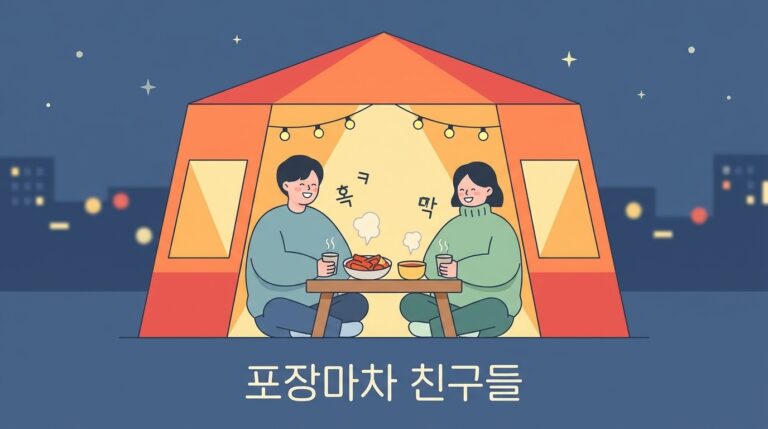
Picture this scene from your favorite K-drama: After a brutal day of dealing with an impossible boss or pulling an all-nighter for exams, the main character doesn’t just go home to sleep. Instead, they drag their best friend to a smoky Pocha (street food tent) for fiery tteokbokki, or they head straight into a dark coin karaoke room to scream their lungs out to classic rock ballads. You’ve probably felt that exact urge after a long week—that overwhelming need to shake off the pressure.
Yet, when you try to talk about it in Korean, do you find yourself stuck saying robotic textbook lines like “저는 오늘 스트레스가 많습니다” (I have a lot of stress today)? It gets the point across, but it completely misses the emotional catharsis and social warmth of how Koreans actually share their burnout.
Stress relief isn’t just a physical act in Korea; it’s a shared social ritual and an essential conversational topic. Through years of tutoring hundreds of learners at Daily Hangul, we noticed that moving from formal textbook statements to colorful, idiomatic expressions of de-stressing is the single biggest turning point for B1 learners. In this guide, you will master authentic phrases to describe your favorite ways to unwind, decode Korean emotional nuances, and connect with native speakers on a whole new level.
Phase 2: Core 3 Expressions (핵심 표현 3선 심층 분석)
1. 스트레스(를) 풀다 (seuteureseu[-reul] pulda)
- Pronunciation: [seuh-teu-reh-seu pool-dah] (Think of untying a tight knot: pulda literally means ‘to untie’ or ‘to solve’).
- Meaning: Literal: “To untie/release stress” | Real Nuance: Actively blowing off steam or decompressing through an enjoyable activity.
- K-Culture Moment: A character slamming their bag onto the table and shouting: “오늘 진짜 스트레스 풀어야 돼!” (I seriously need to blow off some steam today!).
- Editor’s Insight: In Korean thought, stress is something that gets tied up tightly inside your chest (맺히다). Therefore, you must actively “untie” (풀다) it before it suffocates you.
- Situation Spectrum: Casual (✅) | Semi-formal (✅) | Formal (✅)
- 🤔 Think About It: In English, we often say “relieve” or “manage” stress. Why do you think Korean specifically visualizes stress as a physical knot that needs to be untied?
2. 힐링하다 (hilling-hada)
- Pronunciation: [heel-leeng-hah-dah] (Konglish combination of English ‘healing’ + Korean verb ‘hada’).
- Meaning: Literal: “To do healing” | Real Nuance: Engaging in wholesome, relaxing, self-care activities (like taking a forest walk, visiting an aesthetic cafe, or petting a dog).
- K-Culture Moment: Resting in a cozy glamping tent on a weekend trip and saying: “여기 진짜 힐링된다…” (This is so rejuvenating and therapeutic).
- Editor’s Insight: Unlike 스트레스 풀다 (which leans energetic, like screaming in karaoke or eating spicy food), 힐링하다 is gentle, aesthetic, and peaceful.
- Situation Spectrum: Casual (✅) | Semi-formal (✅) | Formal (⚠️ – 휴식을 취하다 is preferred in business reports)
- 🤔 Think About It: What counts as “healing” in your culture compared to the trendy Korean concept of quiet restorative escapes?
3. 기분 전환(을) 하다 (gibun jeonhwan[-eul] hada)
- Pronunciation: [gee-boon jeon-hwan hah-dah] (jeon-hwan rhymes softly with ‘dawn-hwan’).
- Meaning: Literal: “To convert/switch one’s mood” | Real Nuance: Doing something refreshing (getting a haircut, changing your room scent, going for a drive) to break a gloomy mental rut.
- K-Culture Moment: Changing into a fresh outfit after a breakup or tough exam and saying: “기분 전환 겸 머리 하러 왔어.” (I came to get my hair done for a change of pace).
- Editor’s Insight: A very versatile B1-level phrase! Use the particle 겸 (gyeom) to say “기분 전환 겸 쇼핑했어요” (I did some shopping for a change of mood).
- Situation Spectrum: Casual (✅) | Semi-formal (✅) | Formal (✅)
- 🤔 Think About It: When you feel stuck, do you seek a high-energy distraction or an environment shift (기분 전환)?
Phase 3: Textbook Korean vs Real Korean (교과서 vs 진짜 한국어)
Situation 1: Explaining how you deal with a tough day
- 📖 교과서 한국어: 저는 스트레스를 해소하기 위해 음악을 듣습니다. (I listen to music in order to relieve stress.)
- 🗣️ 진짜 한국어: 저는 코인 노래방 가서 소리 지르면서 스트레스 풀어요! (I blow off steam by going to a coin karaoke and screaming my heart out!)
- 💡 왜 다를까?: While 해소하다 (to resolve) is grammatically flawless, native speakers casually use 스트레스(를) 풀다 paired with vivid action verbs (소리 지르다, 땀 빼다).
Situation 2: Expressing a craving for intense comfort food
- 📖 교과서 한국어: 기분이 좋지 않아서 매운 음식을 먹고 싶습니다. (I feel bad, so I want to eat spicy food.)
- 🗣️ 진짜 한국어: 오늘 진짜 멘붕이라 매운 거 완전 땡겨요! (My brain is totally fried today, so I’m seriously craving something super spicy!)
- 💡 왜 다를까?: 멘붕 (mental breakdown/burnout) and 땡기다 (to pull/crave intensely) express emotional urgency far better than plain textbook adjectives.
Phase 4: K-Culture Deep Dive & Non-verbal Manners (문화 딥다이브)
4-1. 눈치(Nunchi) & Gestures
- The Neck Grab (목덜미 잡기): When Koreans playfully exaggerate sudden workplace or academic stress, they gently touch the back of their neck with an exasperated sigh (“아, 혈압 올라!” – Ah, my blood pressure is rising!).
- Exhaling with “하…”: Letting out a brief, measured breath before suggesting a treat conveys you need empathy without turning the mood toxic.
- Pouring / Clinking Glasses: When de-stressing over food or drinks, touching your glass lower than your companion’s (if they are older) or making solid eye contact shows camaraderie.
4-2. Cultural Code Analysis: The Spicy Food & Noraebang Prescription
Why are spicy foods like 엽기떡볶이 (Yeopgi Tteokbokki) and 불닭 (Buldak) synonymous with stress relief in Korea? Dermatologists and food scientists often point out that capsaicin triggers endorphin releases, but culturally, it represents 이열치열 (fighting heat with heat)—conquering emotional burn with physical zest. Combine that with a 30-minute session in a neon-lit 코인노래방 (Coin Noraebang) belt-singing dramatic high notes, and you have the quintessential Korean formula for mental reset.
Phase 5: Real-Life Roleplay Scenario (실전 롤플레이 시나리오)
Setting: 8:30 PM outside a subway exit in Hongdae. You meet your Korean friend Minji (민지) after both of you survived grueling mid-term project deadlines.
- 민지: 민수야, 오늘 하루 괜찮았어? 얼굴 보니까 완전 녹초가 됐네.
(Minsu-ya, oneul haru gwaenchan-asseo? Eolgul bonikka wanjeon nokchoga dwaenne.)
“Minsu, was your day okay? Looking at your face, you look totally exhausted.”
🎭 민지가 가방을 고쳐 메며 걱정스러운 눈빛으로 바라본다. -
학습자: 응… 오늘 팀 프로젝트 발표 때문에 스트레스 엄청 받았어.
(Eung… oneul tim peurojekteu balpyo ttaemune seuteureseu eomcheong badasseo.)
“Yeah… I got so much stress because of our team project presentation today.”
🎭 어깨를 축 늘어뜨리며 한숨을 쉰다. -
민지: 아, 진짜 고생 많았다! 이럴 땐 가만히 있으면 병나. 우리 스트레스 좀 풀자.
(A, jinjja gosaeng manatda! Ireol ttaen gamanhi isseumyeon byeongna. Uri seuteureseu jom pulja.)
“Ah, you went through so much! If you stay still at times like this, you’ll get sick. Let’s blow off some steam.”
🎭 민지가 팔을 툭 치며 웃어 보인다. -
학습자: 맞아. 맛있는 것도 먹고 기분 전환 좀 해야겠어.
(Maja. Masinneun geotdo meokgo gibun jeonhwan jom haeyagesseo.)
“Right. I need to eat something delicious and get a change of pace.”
🎭 고개를 끄덕이며 조금 안도하는 표정을 짓는다. -
민지: 너 보통 스트레스 받으면 뭐 해? 매운 거 먹으러 갈까, 아니면 코인 노래방 갈래?
(Neo botong seuteureseu badeumyeon mwo hae? Maeun geo meogeureo galkka, animyeon koin noraebang gallae?)
“What do you usually do when you get stressed? Shall we get something spicy, or go to a coin karaoke?”
🎭 손가락으로 두 가지 선택지를 가리키며 묻는다. -
학습자: 둘 다 좋은데, 일단 매운 떡볶이 먹고 노래방 가서 소리 지르자!
(Dul da joeunde, ildan maeun tteokbokki meokgo noraebang gaseo sori jireuja!)
“Both sound great, but let’s eat spicy tteokbokki first and then scream at the karaoke!”
🎭 눈을 반짝이며 주먹을 불끈 쥔다. -
민지: 완벽한 코스네! 오늘은 진짜 제대로 힐링하는 날이다. 내가 쏠게, 가자!
(Wanbyeokhan koseune! Oneureun jinjja jedaero hillinghaneun narida. Naega ssolge, gaja!)
“Perfect itinerary! Today is truly a proper healing day. It’s on me, let’s go!”
🎭 신나게 앞장서며 손짓한다. -
학습자: 고마워! 다음엔 내가 꼭 맛있는 거 살게.
(Gomawo! Daeumen naega kkok masinneun geo salge.)
“Thank you! Next time I’ll definitely buy something delicious for you.”
🎭 밝은 미소로 발걸음을 맞춘다.
🔀 인터랙티브 분기점 (Interactive Choice)
When Minji asks what you want to do, how do you reply?
* Option A: “저는 공부를 더 해야 해서 집에 가서 쉴게요.” (I have to study more so I will go home and rest.)
* Feedback: 🚫 Bad / Mood Killer – Grammatically correct, but shuts down your friend’s thoughtful invitation.
* Option B: “매운 닭발 먹으면서 맥주 한잔하고 스트레스 싹 풀자!” (Let’s eat spicy chicken feet, drink a beer, and wash away all the stress!)
* Feedback: ⭐ Best / Super Natural – Uses vivid food choices and the natural phrase 스트레스 싹 풀다 (completely wash away stress).
* Option C: “그냥 아무거나 해라.” (Just do whatever.)
* Feedback: ⚠️ Risk / Too Blunt – Using informal banmal like 해라 without warmth sounds dismissive and irritated.
Phase 6: 10-Second Emotion Shadowing Drill (감정 섀도잉 드릴)
Repeat these aloud with emotional immersion following the pitch marks /:
[😫 지치고 힘든 목소리로]
“오늘 하루 종일 / 너무 시달려서 / 스트레스 만땅이야…”
(Oneul haru jong-il / neomu sidallyeoseo / seuteureseu manttang-iya…)
“I got pushed around all day long / my stress is totally maxed out…”-
[🔥 결의에 찬 신나는 목소리로]
“매운 거 먹고 / 땀 쫙 빼면서 / 스트레스 확 날려버리자!”
(Maeun geo meokgo / ttam jjwag ppaemyeonseo / seuteureseu hwak nallyeobeorija!)
“Let’s eat spicy food / sweat it all out / and blow away this stress completely!” -
[😌 편안하고 나른한 톤으로]
“조용한 카페에서 / 달달한 디저트 먹으니까 / 진짜 힐링된다.”
(Joyonghan kape-eseo / daldalhan dijeoteu meogeunikka / jinjja hillingdoenda.)
“Eating sweet desserts / in a quiet cafe / is truly healing.”
Phase 7: K-Culture Mini Dictionary (핵심 키워드 4선)
- 당 충전 (Dang Chungjeon)
- Translation: Sugar recharge / Glucose boost.
- Usage: When mid-afternoon fatigue hits at school or work: “당 떨어졌다, 초콜릿 먹고 당 충전하자!” (My sugar dropped; let’s eat chocolate for a sugar recharge!).
- 소확행 (Sohwakhaeng)
- Translation: Small but certain happiness (소소하지만 확실한 행복).
- Usage: Buying your favorite scented candle or sipping a seasonal latte after a long commute.
- 불금 (Bulgeum)
- Translation: Fire Friday (TGIF).
- Usage: The universal battle cry for unwinding over the weekend: “오늘 불금인데 치맥 콜?” (It’s Fire Friday, up for chicken and beer?).
- 노래방 18번 (Noraebang Sip-pal-beon)
- Translation: Go-to karaoke signature song.
- Usage: The song you always pull out to scream away your stress: “이 노래가 내 18번이야!” (This song is my absolute signature track!).
Phase 8: Traveler’s Survival Kit (여행자 생존 키트)
TOP 3 Survival Phrases
- “여기서 제일 매운 메뉴가 뭐예요?” (Yeogiseo jeil maeun menyuga mwoyeyo?)
- Meaning: What is the spiciest menu item here?
- Pro Tip: If you want genuine Korean stress-relief spiciness, ask this at tteokbokki or dakgalbi restaurants!
- “코인 노래방 기본 요금이 얼마인가요?” (Koin noraebang gibon yogeumi eolma-ingayo?)
- Meaning: How much is the basic rate for the coin karaoke?
- Pro Tip: Coin noraebangs usually accept 1,000 KRW bills or credit cards at automated kiosks.
- “분위기 좋은 조용한 카페 추천해 주실 수 있나요?” (Bunwigi joeun joyonghan kape chucheonhae jusil su innayo?)
- Meaning: Could you recommend a cozy, quiet cafe with a nice vibe?
Editor’s Travel Note
When looking for local de-stress spots in Seoul (like riverside parks or late-night dessert spots), download the 네이버 지도 앱 다운로드 to search for keywords like “코인노래방” or “한강 힐링스팟”. To ride public bikes or hail a taxi safely after midnight, make sure to set up 카카오T 앱 다운로드 on your smartphone beforehand.
Phase 9: “한 발 더 깊이” (Cultural Essay & Reflection)
In many Western cultures, stress relief is often pursued in solitary personal spaces—through quiet journaling, solo gym workouts, or meditation apps. In Korea, however, stress relief is historically communal. The concept of sharing 정 (Jeong) means gathering around a single boiling pot of spicy stew or packing into a karaoke booth to shout lyrics together until everyone’s voice is hoarse. Admitting that you are stressed is not seen as weakness; it is an invitation to connect, empathize, and conquer exhaustion as a team.
💬 Your Turn: What is your absolute favorite way to de-stress in your daily life? How would you describe it using Korean words like 힐링 or 스트레스 풀다? Let us know in the comments below!
Phase 10: FAQ & Common Mistakes
Q: Is it rude to tell an older coworker or boss that I am stressed?
A: If speaking to superiors, avoid blunt complaints like “스트레스 받아서 일 못하겠어요”. Instead, use polite, constructive phrases like “기분 전환 겸 잠깐 커피 한잔 마시고 오겠습니다” (I will grab a quick cup of coffee for a refreshing change of pace) or “잠시 머리 좀 식히고 오겠습니다” (I’ll step out for a moment to cool my head).
Q: What is the difference between 스트레스를 받다 and 스트레스가 쌓이다?
A: 스트레스를 받다 means “to receive/get stress” (the acute reaction to an event), while 스트레스가 쌓이다 means “stress is piling up / accumulating” (chronic stress over time).
Q: Can I use 힐링 (Healing) for physical recovery from an injury?
A: No! 힐링 is used almost exclusively for mental refreshment, soothing environments, and emotional comfort. For physical wound healing, use 치료 (medical treatment) or 회복 (recovery).
🚨 Common Mistakes Warning Board
- Mistake: Saying “스트레스를 죽이다” (Literal translation of ‘killing stress’).
- Correct Action: Use 스트레스를 풀다 (untie stress) or 스트레스를 날리다 (blow stress away).
- Mistake: Using 기분 전환 for long medical therapies.
- Correct Action: 기분 전환 is for quick routine changes (walks, shopping, hairstyles), not clinical treatment.
- Mistake: Misusing 풀다 as a transitive verb without a stress-related object.
- Correct Action: Always pair it with 스트레스(를) or 피로(를) (fatigue).
Phase 11: Action Missions (액션 미션)
- 🥉 Bronze Level (Solo Practice): Look into a mirror and practice saying Phase 6’s Shadowing Drill sentences 3 times with expressive facial gestures.
- 🥈 Silver Level (Social Share): Post a photo of your comfort food or cup of tea on Instagram with the caption: “오늘의 소확행, 스트레스 풀기 완료!”
- 🥇 Gold Level (Real Life / Speaking): The next time a Korean speaker or tutor asks “주말에 뭐 했어요?”, reply using 기분 전환 겸 ~했어요 or ~하면서 힐링했어요.
- 🎮 K-Culture Mission: Watch an episode of a K-variety show (like I Live Alone or Running Man) and spot when cast members use words like 당 충전 or 스트레스 확 풀린다!
Phase 12: Interactive Quiz Challenge (퀴즈 챌린지)
1. Situational Judgment
Your friend has been sighing heavily because of overtime work all week. Which sentence is the most natural and empathetic suggestion?
* A) 스트레스를 해소하기 위하여 수면을 취하십시오.
* B) 오늘 저녁에 매운 떡볶이 먹으면서 스트레스 확 풀자!
* C) 스트레스를 죽이는 방법을 찾아보세요.
👉 Click to reveal Answer & Explanation
Correct Answer: B
Explanation: B uses the warm, colloquial combination of eating comfort food and the natural phrase 스트레스(를) 확 풀다. Choice A is excessively robotic and formal, while Choice C uses an incorrect Konglish translation (스트레스를 죽이다 is unnatural in Korean).
2. Fill in the Blank
“요즘 너무 바빠서 주말에 제주도 가서 조용하게 _________ 오려고요.” (I’ve been so busy lately, so I’m planning to go to Jeju Island this weekend to quietly recharge and rest.)
* (A) 화내고
* (B) 힐링하고
* (C) 긴장하고
👉 Click to reveal Answer & Explanation
Correct Answer: (B) 힐링하고
Explanation: 힐링하다 fits peaceful, restorative leisure trips perfectly.
3. True or False Cultural Quiz
Statement: In Korean, changing your hairstyle or rearranging your room furniture to refresh your mind can be called 기분 전환.
* [ True / False ]
👉 Click to reveal Answer & Explanation
Correct Answer: True
Explanation: 기분 전환 literally means converting or shifting your mood through a tangible environmental change or fresh activity!







