

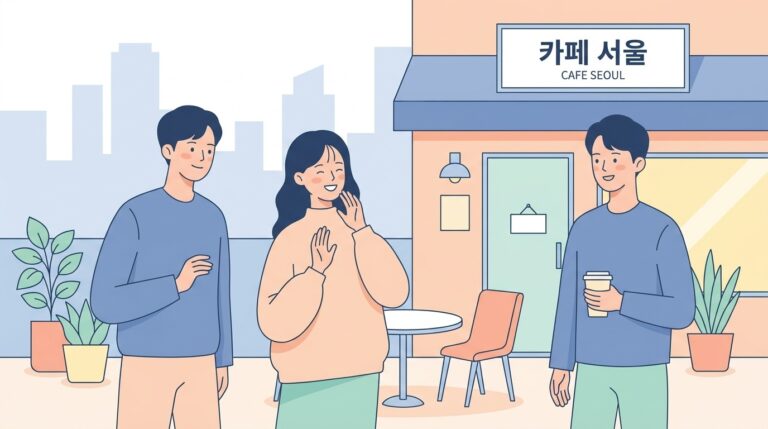
How to Say “No” in Korean Without Sounding Rude: Mastering Declining Plans with “선약이 있어서…”
Phase 1: Empathy & K-Culture Opening
안녕하세요! It is your Daily Hangul editor and Korean culture navigator! Have you ever found yourself in a K-drama-worthy dilemma where your Korean coworker asks, “오늘 퇴근하고 치맥 콜?” (Chimaek after work today?) and your mind freezes? You desperately want to be polite, but blurt out “아니요, 안 돼요!” (No, I can’t!). Suddenly, the room falls dead silent, and you feel the awkward energy instantly freeze the air.
Here is the secret: In Korean culture, saying a flat “No” (아니요) directly to an invitation feels harsh and abrupt. Native speakers rarely decline invitations with a direct negative. Instead, they soften the blow using indirect phrases that express regret and provide a gentle reason—most notably, “선약이 있어서 못 갈 것 같아(요)” (I think I can’t make it because I have a previous engagement).
Over the past ten years of coaching intermediate learners, this exact phrasing issue tops the list of social anxiety triggers. By mastering this nuanced B1-level toolkit, you will protect your Korean relationships, exude high nunchi (social tact), and decline plans effortlessly like a true local.
Phase 2: Top 3 Core Expressions for Declining Plans
1. 선약이 있어서 못 갈 것 같아요 (Seon-yag-i i-sseo-seo mot gal geot ga-ta-yo)
- Pronunciation Guide: sun-yah-gi ee-ssuh-suh mote gal guht gah-tah-yo (Flow the ‘g’ in seonyak directly into i).
- Meaning: Literal: “Because a prior appointment exists, it seems I cannot go.” | Nuance: “I’d love to, but I already have plans.”
- K-Culture Moment: A scene in a workplace romance drama where the protagonist politely avoids an awkward team dinner to meet a secret crush.
- Editor’s Insight: Adding ~같아요 (it seems like) acts as an emotional cushion. In Korean communication, sounding slightly uncertain shows humility and politeness.
- Situation Spectrum: Casual: ✅ | Semi-formal: ✅ | Formal: ✅
- 🤔 Think About It: Why does Korean culture prefer softening definitive facts with expressions meaning “it seems like”?
2. 마음은 굴뚝같은데 이번엔 어려울 것 같아요 (Ma-eum-eun gul-ttuk-ga-teun-de i-beon-en eo-ryeo-ul geot ga-ta-yo)
- Pronunciation Guide: mah-eum-eun gool-ttook-gah-teun-deh ee-buh-nen uh-ryuh-ool guht gah-tah-yo.
- Meaning: Literal: “My heart is like a chimney (smoking fiercely with desire), but this time it seems difficult.” | Nuance: “I wish I could join with all my heart, but I can’t make it this time.”
- K-Culture Moment: When best friends invite you to a trending pop-up store in Seongsu-dong, but you have an exam the next morning.
- Editor’s Insight: 굴뚝같다 is a vivid idiom for intense wanting. It shifts the focus to how much you cherish the person’s offer.
- Situation Spectrum: Casual: ✅ | Semi-formal: ✅ | Formal: ⚠️
- 🤔 Think About It: How does stating your emotional desire first change the way the other person receives rejection?
3. 다음에 꼭 제가 쏠게요! (Daeum-e kkok je-ga ssol-ge-yo!)
- Pronunciation Guide: dah-eum-eh kkok jeh-gah ssol-geh-yo (ssol rhymes with ‘soul’ with a crisp, tense ss).
- Meaning: Literal: “Next time, I will definitely shoot (treat)!” | Nuance: “Rain check! Next round is 100% on me!”
- K-Culture Moment: Wrapping up a declined coffee catch-up with your senior classmate on campus.
- Editor’s Insight: The verb 쏘다 (to shoot) is the go-to slang for buying someone food or drinks. Offering a rain check confirms you still want to hang out.
- Situation Spectrum: Casual: ✅ | Semi-formal: ✅ | Formal: 🚫
- 🤔 Think About It: In your culture, is offering the next treat an expected gesture when declining an invitation?
Phase 3: Textbook Korean vs. Real Korean
Situation 1: Declining a weekend gathering
- 📖 교과서 한국어 (Textbook): 저는 주말에 시간이 없습니다. (Jeo-neun ju-mar-e si-gan-i eop-seum-ni-da. / I do not have time on the weekend.)
- 🗣️ 진짜 한국어 (Real-life): 아, 주말에 미리 잡아둔 약속이 있어가지고요! (Ah, ju-mar-e mi-ri ja-ba-dun yak-so-gi i-sseo-ga-ji-go-yo! / Ah, I already have something lined up for the weekend!
- 💡 Why the difference?: Saying “I have no time” sounds dismissive and cold. Using 미리 잡아둔 약속 (pre-scheduled plan) and conversational connective ~어가지고요 softens the explanation.
Situation 2: Turning down an instant lunch invite
- 📖 교과서 한국어 (Textbook): 점심을 같이 안 먹겠습니다. (Jeom-sim-eul ga-chi an meok-ge-seum-ni-da. / I will not eat lunch together.)
- 🗣️ 진짜 한국어 (Real-life): 어쩌죠? 저 오늘 도시락을 싸와서요! (Eo-jjeo-jyo? Jeo o-neul do-si-rag-eul ssa-wa-seo-yo! / Oh no, what should I do? I packed a lunchbox today!
- 💡 Why the difference?: Starting with 어쩌죠? (What should I do?) displays instant empathy, framing the refusal as an unfortunate circumstance rather than personal rejection.
Phase 4: K-Culture Deep Dive & Non-Verbal Manners
4-1. 눈치 (Nunchi) & Polite Body Language
When delivering a rejection in Korea, non-verbal cues carry 60% of your sincerity:
* The Head Tilt & Hand Rub: Tilt your head slightly (around 15 degrees) with a troubled expression, gently rubbing or clasping your hands together.
* The Hesitation Breath: Start with a small “아…” (Ah…) or “음…” (Eum…) before speaking. Instant, rapid answers look as if you were eager to say no.
* The Slight Bow: Finish your apology with a subtle nod-bow to show deep appreciation for the invitation.
4-2. The “Ssam” Culture of Hospitality
Korean social outings (회식 – Hoeshik or 모임 – Moim) are deeply communal bonding rituals. Rejecting a plan is not merely refusing an activity; it can sometimes feel like rejecting the social bond. That is why giving a clear, face-saving excuse like 선약 (prior engagement) protects group harmony (hwa-hap).
Phase 5: Real-Life Roleplay Scenario
Setting: 6:00 PM at a creative design studio in Hongdae. Your coworker Min-woo approaches your desk with a big smile.
- 민우 (Min-woo):
🎭 가방을 챙기며 기대하는 눈빛으로오늘 프로젝트 끝난 기념으로 다 같이 삼겹살 먹으러 가는데, 같이 갈래요?
(Oneul peurojekteu kkeutnan ginyeomeuro da gachi samgyeopsal meogeureo ganeunde, gachi gallaeyo? / We’re all going for samgyeopsal to celebrate finishing the project, wanna come?) - You:
🎭 아쉬운 표정을 지으며 살짝 머뭇거리며아, 삼겹살이요? 정말 가고 싶은데…
(Ah, samgyeopsariyo? Jeongmal gago sipeunde… / Ah, pork belly? I really want to go, but…) - 민우 (Min-woo):
🎭 고개를 갸웃하며앗, 오늘 바쁜 일 있으세요?
(At, oneul bappeun il isseuseyo? / Oh, do you have something urgent today?) - You:
🎭 손을 살짝 모으며 안타까운 톤으로네, 오늘 가족 모임 선약이 있어서 못 갈 것 같아요.
(Ne, oneul gajok moim seonyagi isseoseo mot gal geot gatayo. / Yes, I have a prior family gathering, so I don’t think I can make it.) - 민우 (Min-woo):
🎭 이해한다는 듯 끄덕이며아쉽네요! 오랜만에 다 모이는 자리였는데.
(Aswipneyo! Orenmane da moineun jariyeotneunde. / That’s a shame! Everyone was gathering after a long time.) - You:
🎭 미소를 띠며 활기차게그러게요, 마음은 굴뚝같은데 이번엔 진짜 아쉬워요.
(Geureogeyo, maeumeun gulttukgateunde ibeonen jinjja aswiwoyo. / I know right, I really wish I could, it’s such a pity this time.) - 민우 (Min-woo):
🎭 웃으며 손을 흔든다괜찮아요! 가족분들이랑 좋은 시간 보내세요!
(Gwaenchanayo! Gajokbundeurirang joeun sigan bonaeseyo! / No worries! Have a wonderful time with your family!) - You:
🎭 가볍게 목례하며감사합니다! 다음엔 꼭 제가 삼겹살 쏠게요!
(Gamsahamnida! Daeumen kkok jega samgyeopsal ssolgeyo! / Thank you! Next time, pork belly is on me for sure!)
🔀 Interactive Branching Decision Point
If Min-woo says: “2차 노래방이라도 잠깐 들를래요?” (Can you at least drop by the 2nd round at the Noraebang?), how do you respond?
* Choice A: “안 돼요. 저 노래방 싫어해요.”
❌ Bad: Bluntly declaring you dislike noraebang shuts down the conversation and hurts the vibe.
* Choice B: “어쩌죠? 가족 모임이 늦게 끝날 것 같아서 오늘은 힘들 것 같아요!”
🏆 Best: Politely maintains the context, expresses regret (어쩌죠), and softens with 힘들 것 같아요.
* Choice C: “네, 갈게요!” (when you secretly cannot make it)
⚠️ Risk: Agreeing out of pressure leads to ghosting or breaking promises later, which is worse for trust.
Phase 6: 10-Second Emotion Shadowing Drill
Practice these pause points / with real emotional immersion!
[🥺 아쉽고 곤란한 표정으로]
아… / 오늘 진짜 가고 싶은데 / 선약이 있어가지고요…
(Ah… / oneul jinjja gago sipeunde / seonyagi isseogajigoyo…)-
[🙏 진심 어린 미안함을 담아]
미리 말씀 못 드려서 죄송해요, / 이번엔 어려울 것 같아요.
(Miri malsseum mot deuryeoseo joesonghaeyo, / ibeonen eoryeoul geot gatayo.) -
[😊 밝고 에너지 넘치게 약속하며]
아쉬우니까 / 다음 주에 / 맛있는 커피 제가 쏠게요!
(Aswiunikka / daeum jue / masinneun keopi jega ssolgeyo!)
Phase 7: K-Culture Mini-Dictionary
- 선약 (Seon-yak): Prior appointment / previous engagement. Composed of Seon (first/prior) + Yak (promise/engagement). The ultimate polite excuse in social and business environments.
- 아쉽다 (A-swip-da): To feel pity, regret, or that something is a missed opportunity. Essential for showing that you value the offer.
- 회식 (Hoe-sik): Company dinner or team get-together. Declining requires polite, face-saving tactics like 선약이 있습니다.
- N차 (N-cha): The N-th round of an outing (1차 dinner, 2차 drinks/noraebang, 3차 cafe/pocha).
Phase 8: Survival Kit for Travelers
Top 3 Survival Phrases
- 죄송하지만 선약이 있어서요. (I am sorry, but I have a prior plan.) — Pro Tip: Use this when shop promoters or event organizers invite you to impromptu sessions.
- 오늘은 일정이 꽉 찼어요. (My schedule is packed today.) — Pro Tip: Perfect when local tour guides suggest extra spontaneous excursions.
- 다음에 기회 되면 꼭 갈게요! (If there’s a chance next time, I’ll definitely go!) — Pro Tip: A friendly farewell that leaves a positive impression.
Editor’s Travel Note
When navigating busy Seoul streets or planning your meetups smoothly, rely on local transport tools rather than standard foreign apps. Make sure to download the Naver Map Navigation App on iOS and Android to calculate subway transit times accurately so you never run late for your 선약!
Phase 9: Going Deeper (한 발 더 깊이)
In Western communication, clarity and directness are often valued as signs of honesty and efficiency. In contrast, Korean interpersonal communication centers around 정 (Jeong – relational warmth) and 체면 (Chaemyeon – social face). When a Korean invites you somewhere, they are extending a thread of connection. A direct “No” snaps that thread. Softening your refusal with 선약 and ~같아요 preserves mutual dignity, showing that while you cannot share time today, you value the relationship itself.
💬 Your Turn: How do people politely decline invitations in your native country? Is making an indirect excuse considered polite or evasive? Share your story in the comments!
Phase 10: FAQ & Avoiding Misunderstandings
Q: Can I use “선약이 있어” with close friends, or is it too formal?
A: You can definitely use it with friends! Simply drop the polite ending: “나 오늘 선약이 있어서 못 가!” For super casual slang, friends also say “나 오늘 이미 약속 있어!”
Q: What if I don’t actually have a specific plan, but just need alone time at home?
A: In Korean etiquette, personal rest is a valid reason, but saying “집에서 쉴래요” (I want to rest at home) can sometimes sound like “I’d rather do nothing than hang out with you.” It is completely acceptable to refer to your personal schedule or recharge time as a “선약” (an appointment with yourself!).
Q: Is “다음에 봐요” a binding promise or just a pleasantry?
A: In 80% of casual situations, “언제 밥 한번 먹자” or “다음에 봐요” functions as an affectionate cultural greeting (인사치레) rather than a confirmed date. If someone follows up with specific days and times, then it becomes a real plan!
🚨 Common Mistakes TOP 3
- ❌ Saying “안 돼요” (It cannot be / You are not allowed) when declining an invitation.
👉 Correct Action: Use “어려울 것 같아요” or “못 갈 것 같아요”. - ❌ Giving a 10-minute ultra-detailed excuse. Over-explaining can make the excuse sound fabricated.
👉 Correct Action: Keep it simple: “미리 잡아둔 선약이 있어서요.” - ❌ Forgetting to say “초대해줘서 고마워요” (Thanks for inviting me).
👉 Correct Action: Always acknowledge the warm gesture before or after declining.
Phase 11: Action Missions
- 🥉 Bronze Mission (Solo Practice): Record a voice memo saying “선약이 있어서 못 갈 것 같아요” with a gentle, apologetic tone in under 5 seconds.
- 🥈 Silver Mission (Social Connection): Leave a comment below answering an imaginary dinner invite using one of our 3 core expressions.
- 🥇 Gold Mission (Real Life): Next time someone invites you to something in Korean (or in your language exchange group), decline gracefully using the rain-check technique (다음에 쏠게요!).
- 🎮 K-Culture Mission: Watch an episode of a modern K-Drama (like Business Proposal or Hospital Playlist) and spot how characters react when declining an after-work gathering.
Phase 12: Interactive Quiz Challenge
Q1. Choose the most polite and natural way to decline a dinner invitation from your Korean boss or senior colleague:
1) 싫어요. 삼겹살 안 먹어요.
2) 오늘 선약이 있어서 참석이 어려울 것 같습니다.
3) 저는 시간이 없습니다.
4) 안 돼요, 바빠요.
👉 Click to reveal Answer & Explanation
Correct Answer: 2)
Explanation: Option 2 uses formal, respectful language (참석이 어려울 것 같습니다 – Attendance seems difficult) and cites a prior engagement (선약), preserving professional politeness without being blunt.
Q2. Fill in the blank:
“정말 가고 싶어서 마음은 ( )같은데, 오늘은 일정이 있네요.”
👉 Click to reveal Answer & Explanation
Correct Answer: 굴뚝
Explanation: The idiom 마음은 굴뚝같다 (my heart is like a chimney) expresses a burning desire to do something even when circumstances prevent it.
Q3. [True or False] In Korean culture, saying “다음에 제가 쏠게요!” means you promise to buy a firearm.
👉 Click to reveal Answer & Explanation
Correct Answer: False
Explanation: The verb 쏘다 literally means “to shoot,” but in everyday conversational Korean, it is universally used as colloquial slang for “to treat / to pay the bill for someone.”







