

Master Ordering Caffeine-Free Tea in Korea Like a Local (B2 Guide)
Phase 1: 공감 (The Evening Tea Dilemma in Seoul)
안녕하세요! 매일한글 에디터입니다.
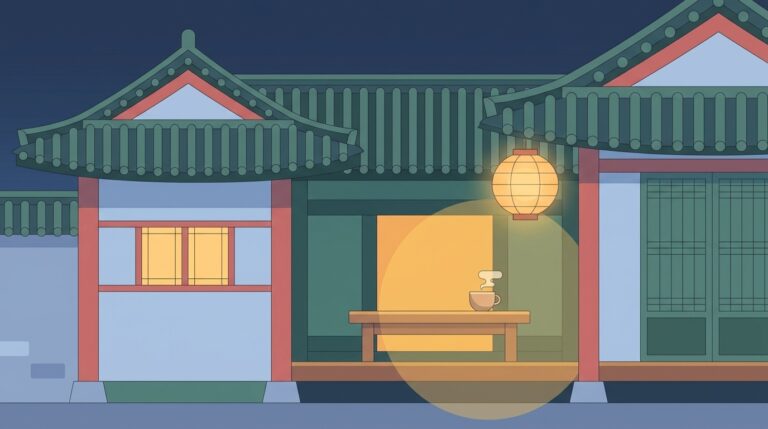
Picture this: It is 8:30 PM on a crisp autumn evening in Ikseon-dong. The wooden eaves of a renovated Hanok teahouse glow under warm amber lanterns, and soft acoustic indie music drifts out into the alleyway. After a long day of sightseeing and chugging mega-sized iced Americanos to survive, your body is begging for something soothing. You step inside, eager to sink into a floor cushion and sip a hot, fragrant cup of Korean tea. But as you open the handcrafted wooden menu, panic sets in. Everything is in stylized Hangeul, and you realize you cannot afford a single milligram of caffeine if you want to wake up for your early morning KTX train to Busan tomorrow!
You cautiously catch the barista’s eye, but your mind goes blank. If you just ask for “디카페인 (decaf),” will they hand you decaf coffee when you specifically wanted herbal tea? Or worse, what if they recommend green tea (Nokcha), not realizing that high-grade Korean green tea packs a serious caffeine punch?
Don’t worry—you’re not alone! Navigating Korea’s rich, aesthetic tea scene without caffeine jitters is one of the most common pain points our intermediate learners face. Today, based on feedback from over 500 Daily Hangul students, we will equip you with nuanced, natural B2-level Korean expressions that guarantee you’ll get the perfect, relaxing caffeine-free brew every single time.
Phase 2: 핵심 표현 3선 심층 분석 (3 Core Expressions)
1. 혹시 카페인 없는 차로 추천해 주실 수 있나요?
- Pronunciation: [Hoksi kape-in eomneun charo chucheonhae jusil su innayo?] (Say “hok-shee kah-peh-in om-neun cha-ro choo-cheon-hae joo-shil soo een-nah-yo”)
- Meaning: “By any chance, could you recommend a caffeine-free tea?”
- K-Culture Moment: Seen frequently in K-Dramas when a lead visits a cozy neighborhood cafe late at night after overtime work.
- Editor’s Insight: Starting with “혹시” (by any chance / politely soften the question) instantly raises your Korean fluency score. It signals respect and gives the barista room to comfortably suggest their signature non-caffeine blends.
- Situation Spectrum: Casual: ⚠️ | Semi-formal: ✅ | Formal: ✅
- 🤔 Think About It: In English, we often ask “What decaf teas do you have?” Directly translating that into Korean can sound slightly transactional. Why does softening with “혹시” make Korean communication feel warmer?
2. 저녁이라 속 편하고 부담 없는 걸로 찾고 있어요.
- Pronunciation: [Jeonyeogira sok pyeonhago budam eomneun geollo chatgo isseoyo.] (Pronounce “sok pyeon-ha-go” like “sohk pyun-ha-go”)
- Meaning: “Since it’s evening, I’m looking for something gentle on the stomach and light/burden-free.”
- K-Culture Moment: Used by wellness-conscious lifestyle vloggers ordering evening beverages at tranquil tea houses in Bukchon.
- Editor’s Insight: The phrase “속 편하다” (easy on the stomach/digestion) and “부담 없다” (unburdensome/light) are deeply rooted Korean cultural concepts representing holistic physical and mental comfort.
- Situation Spectrum: Casual: ✅ | Semi-formal: ✅ | Formal: ⚠️
- 🤔 Think About It: How does expressing physical comfort (속 편한) reveal the traditional Korean view of food and beverage as daily restorative medicine (Yakshik-dongwon, 藥食同源)?
3. 이 메뉴는 디카페인인가요, 아니면 원래 무카페인인가요?
- Pronunciation: [I menyuneun dikape-iningayo, animyeon wonrae mukape-iningayo?] (Sounds like: “Ee meh-nyoo-neun dee-kah-peh-een-een-gah-yo, ah-nee-myeon won-rae moo-kah-peh-een-een-gah-yo?”)
- Meaning: “Is this item decaffeinated, or is it naturally caffeine-free?”
- K-Culture Moment: An essential clarification for wellness lovers and pregnant travelers navigating artisanal Korean grain and herbal blends.
- Editor’s Insight: At the B2 level, distinguishing between “디카페인” (decaf – caffeine removed) and “무카페인 / 논카페인” (naturally caffeine-free) prevents misunderstandings, especially with grain teas vs. processed black/green teas.
- Situation Spectrum: Casual: ⚠️ | Semi-formal: ✅ | Formal: ✅
- 🤔 Think About It: Why is botanical awareness increasingly highlighted in modern Korean third-wave tea houses?
Phase 3: 교과서 한국어 vs 진짜 한국어 (Textbook vs. Real Korean)
Situation A: Asking if a tea contains caffeine
- 📖 교과서 한국어: 이 차에는 카페인이 들어있습니까? (Does this tea contain caffeine?)
- 🗣️ 진짜 한국어: “이거 카페인 아예 안 들어있죠?” (This has zero caffeine in it, right?)
- 💡 왜 다를까? Textbook Korean sounds like a chemist interrogating a laboratory sample. Native speakers use conversational markers like “아예” (at all / completely zero) and ending tags like “~죠?” for smooth confirmation.
Situation B: Asking for a light evening recommendation
- 📖 교과서 한국어: 카페인이 없는 차를 추천하십시오. (Please recommend a caffeine-free tea.)
- 🗣️ 진짜 한국어: “밤에 마셔도 잠 잘 오는 차 있을까요?” (Is there a tea I can drink at night that still lets me sleep well?)
- 💡 왜 다를까? Natural Korean connects the functional goal (getting good sleep) directly to the drink recommendation rather than giving a rigid command.
Phase 4: K-Culture 딥다이브 & 비언어적 매너 (Deep Dive & Nunchi)
4-1. 눈치 (Nunchi) & Gestures at Korean Tea Houses
- The Soft Two-Handed Point: When pointing at a tea menu, hold your right hand out with fingers gently closed and place your left hand lightly beneath your right wrist or forearm. It conveys refined etiquette.
- Reading the Vibe: Traditional tea houses (Chatjip) emphasize Jeok-mak (quiet serenity). Speak with a lowered, mellow register rather than the loud, snappy tone used in busy franchise takeout spots.
4-2. Cultural Code: The Rise of “Bamticha” & Traditional Tisanes
In Korea’s hyper-caffeinated society—where “Iced Americano even if I freeze to death” (Eoljuk-ah) reigns supreme by day—night tea culture (Bamticha) has surged as the ultimate antidote. Koreans love grain-based and fruit-based tisanes such as 둥굴레차 (Solomon’s Seal Tea), 메밀차 (Buckwheat Tea), and 국화차 (Chrysanthemum Tea) because they offer deep earthy flavors (Gusuhan mat) with absolute zero caffeine.
Phase 5: 실전 롤플레이 시나리오 (Interactive Roleplay)
Setting: Cha-Hyang (차향), a tranquil traditional teahouse nestled in a Samcheong-dong alleyway.
Characters:
* Alex (알렉스): An intermediate Korean learner unwinding after a busy day in Seoul.
* Minji (민지): A knowledgeable tea sommelier dressed in modern Hanbok.
- [Turn 1] 알렉스: 안녕하세요! 저 혹시 저녁이라 그런데, 카페인 없는 차 추천해 주실 수 있나요?
(Annyeonghaseyo! Jeo hoksi jeonyeogira geureonde, kape-in eomneun cha chucheonhae jusil su innayo?)
“Hello! Since it’s evening, by any chance could you recommend a caffeine-free tea?”
🎭 Looking warmly at the counter while gently tilting head -
[Turn 2] 민지: 네, 손님! 밤에는 속 편안한 전통차가 제일 좋죠. 달콤한 스타일 좋아하세요, 아니면 구수한 맛 좋아하세요?
(Ne, sonnim! Bameneun sok pyeon-an-han jeontongchaga jeil jotjyo. Dalkomhan seutail joahaseyo, animyeon gusuhan mat joahaseyo?)
“Sure! At night, gentle traditional teas are the best. Do you prefer something sweet, or something nutty and savory?”
🎭 Smiling and gesturing toward the seasonal tea canisters -
[Turn 3] 알렉스: 저는 너무 단 것보다는 구수하고 깔끔한 차가 마시고 싶어요.
(Jeoneun neomu dan geotbodaneun gusuhago kkalkkeumhan chaga masigo sipeoyo.)
“Rather than anything too sweet, I’d like something nutty and clean-tasting.”
🎭 Lightly tapping chin thoughtfully -
[Turn 4] 민지: 그러시면 저희 시그니처인 하동 유기농 호박·팥 블렌딩 티나 볶은 우엉차 어떠세요? 둘 다 100% 무카페인이에요.
(Geureosimyeon jeohui sigeunicheoin Hadong yuginong hobak-pat beullending tina bokkeun ueongcha eotteoseyo? Dul da baek-peosenteu mukape-inieyo.)
“In that case, how about our signature Hadong organic pumpkin-red bean blend, or roasted burdock tea? Both are 100% naturally caffeine-free.”
🎭 Presenting two dry aroma testing cups -
[Turn 5] 알렉스: 오, 우엉차 향이 진짜 고소하네요! 이걸로 따뜻하게 한 잔 부탁드릴게요.
(O, ueongcha hyangi jinjja gosohaneyo! Igeollo ttatteuthage han jan butakdeurilgeyo.)
“Oh, the burdock tea aroma is so wonderfully toasty! I’ll take a warm cup of this, please.”
🎭 Inhaling aroma and nodding in delight -
[Turn 6] 민지: 좋은 선택이세요. 다식(전통 다과)도 같이 조금 내어드릴까요?
(Joeun seontaegiseyo. Dasikdo gachi jogeum naeeodeurilkkayo?)
“Great choice. Would you like a small serving of traditional tea sweets (Dasik) to go with it?”
🎭 Pointing gently to the glass display of mini rice cakes -
[Turn 7] 알렉스: 네, 차랑 잘 어울리는 걸로 같이 주세요. 결제는 카드로 할게요.
(Ne, charang jal eoullineun geollo gachi juseyo. Gyeoljeneun kadeuro halkeyo.)
“Yes, please give me something that pairs well with the tea. I’ll pay by card.”
🎭 Handing payment card with both hands -
[Turn 8] 민지: 네, 정성껏 우려서 자리로 가져다드리겠습니다. 편하게 앉아 계세요!
(Ne, jeongseongkkeot uryeoseo jariro gajyeodadeurigessseumnida. Pyeonhage anja gyeseyo!)
“Wonderful, I will brew it with care and bring it to your table. Please have a seat and relax!”
🎭 Giving a polite 15-degree bow
🔀 인터랙티브 분기점 (Interactive Decision Point)
Imagine the barista asked you: “녹차나 홍차 종류는 어떠세요?” (How about our green or black teas?) How do you reply if you want zero caffeine?
- Option A: “제가 카페인에 엄청 예민해서요, 아예 카페인 없는 곡물차나 허브차로 부탁드려요!”
👉 Feedback [Best]: Clear, polite, and explains your caffeine sensitivity smoothly while directing toward grain/herbal tisanes. - Option B: “녹차는 카페인 없지 않아요? 그거 주세요.”
👉 Feedback [Risk]: High risk! Green tea (Nokcha) contains noticeable caffeine. Stating it doesn’t have caffeine will lead to insomnia tonight. - Option C: “안 마셔요. 디카페인 커피나 주세요.”
👉 Feedback [Bad]: Too blunt and abrasive. Dismisses the teahouse offerings and disrupts the polite atmosphere.
Phase 6: 10초 감정 섀도잉 드릴 (Emotion Shadowing Drill)
Practice reading these out loud at native speed with emotional immersion!
[😊 다정하고 조심스럽게 - Sweet & Inquiring]
“혹시 / 저녁에 마셔도 / 부담 없는 차 / 있을까요?”
(Hoksi / jeonyeoge masyeodo / budam eomneun cha / isseulkkayo?)-
[🤔 꼼꼼하고 호기심 있게 - Curious & Attentive]
“이 메뉴는 / 디카페인 가공된 건가요, / 아니면 원래 무카페인인가요?”
(I menyuneun / dikape-in gagongdoen geongayo, / animyeon wonrae mukape-iningayo?) -
[😌 편안하고 만족스럽게 - Cozy & Relieved]
“구수한 향이 / 너무 좋네요. / 이걸로 따뜻하게 / 부탁드려요!”
(Gusuhan hyangi / neomu jonneyo. / Igeollo ttatteuthage / butakdeuryeoyo!)
Phase 7: K-Culture 미니 사전 (Core Mini Dictionary)
- 무카페인 vs 디카페인 (Mu-kape-in vs Di-kape-in):
Meaning: Zero-Caffeine vs Decaffeinated. Usage: Use Mu-kape-in for botanical grain/fruit teas (Omija, Barley, Rooibos), and Di-kape-in when ordering coffee or treated black tea. - 구수하다 (Gusuhada):
Meaning: Deeply nutty, toasty, and savory. Usage: The highest compliment you can give to Korean roasted teas like Bori-cha, Oksusu-suyeom-cha (corn silk tea), or Gyeolmyeongja-cha. - 속 편하다 (Sok Pyeonhada):
Meaning: Easy on digestion / soothing to body and spirit. Usage: Essential phrase when asking for non-acidic, calming herbal blends. - 오미자차 (Omija-cha):
Meaning: Five-Flavor Berry Tea (Schisandra). Usage: Naturally caffeine-free Korean classic known for harmonizing sweet, sour, bitter, salty, and pungent notes.
Phase 8: 여행자를 위한 생존 키트 (Traveler’s Survival Kit)
Top 3 Survival Phrases
- “카페인 아예 안 든 걸로 주세요.” (Please give me something with zero caffeine.)
- “따뜻하게 / 시원하게 마실 수 있나요?” (Can I have this served hot / iced?)
- “속 편한 차로 추천해 주세요.” (Please recommend a gentle, soothing tea.)
Editor’s Travel Note
- When mapping out traditional teahouses in Insadong or Samcheong-dong, enter Korean terms directly on the 네이버 지도 앱 다운로드 instead of English for accurate opening hours and hidden reviews.
- Search keywords:
전통찻집(Traditional Tea House),한옥카페(Hanok Cafe),디카페인 티룸(Decaf Tea Room). - Tip: Most Korean craft tea houses accept domestic/international credit cards and mobile payments (Apple Pay / Samsung Pay). Table service is common in traditional spots, so pay at your seat or at the front counter on your way out!
Phase 9: “한 발 더 깊이” (Cultural Reflection)
In Western cafe culture, ordering decaf can sometimes feel like an afterthought—a solitary decaf drip pod hidden in the back. But in Korea, non-caffeine tea is not merely the absence of a stimulant; it is an active pursuit of Pyeon-an-ham (inner peace and gastrointestinal balance). When Koreans sit down for tea after a spicy meal or a demanding workday, they treat tea drinking as restorative meditation. By knowing how to ask for tea that “soothes the stomach,” you participate in centuries of mindful Korean wellness.
💬 Your Turn: What is your go-to non-caffeinated comfort drink when you want to relax at night? Have you tried Korean grain teas like Bori-cha or Hobak-cha? Let us know in the comments below!
Phase 10: FAQ & 오해 방지 (FAQ & Common Mistakes)
Q: Is Korean green tea (녹차, Nokcha) caffeine-free?
A: No! Authentic Korean green tea (especially early-harvest Ujeon and Sejak) contains significant caffeine. If you want zero caffeine, ask for herbal (Heobeu-cha), grain (Gokmul-cha), or fruit tisanes (Gwasil-cha).
Q: Does barley tea (보리차) or corn silk tea (옥수수수염차) have caffeine?
A: No, they are 100% naturally caffeine-free grain infusions (무카페인). They are safe for nighttime drinking and hydration.
Q: How do I clarify that I don’t want sugar in traditional Korean tea?
A: Say: “청이나 시럽 안 들어간 깔끔한 차로 부탁드려요” (Please give me a clean tea without added fruit preserve syrup or sugar).
🚨 흔한 실수 (Common Mistakes TOP 3)
- Mistake: Assuming all floral teas are caffeine-free.
Correct Action: Some cafes blend black tea bases into floral tea. Always verify: “홍차 베이스 아니죠?” (This doesn’t have a black tea base, right?) - Mistake: Saying only “디카페인” at a traditional tea house.
Correct Action: Staff might think you want decaf espresso. Specify: “카페인 없는 전통차” (Caffeine-free traditional tea). - Mistake: Assuming Yuja-cha (citron tea) has caffeine.
Correct Action: Yuja-cha is caffeine-free (citrus preserve + hot water), but check for sugar levels if watching carbs!
Phase 11: 액션 미션 & 참여 유도 (Action Missions)
- 🥉 Bronze Mission: Stand in front of the mirror and say: “저녁이라 속 편하고 카페인 없는 차로 추천해 주세요!” with a gentle smile 3 times.
- 🥈 Silver Mission: Save a screenshot of Phase 7’s Mini Dictionary on your phone for your next trip to Seoul.
- 🥇 Gold Mission: Walk into a local Korean cafe or tea house and successfully order an herbal or grain tea without speaking English!
- 🎮 K-Culture Mission: Watch an episode of a slice-of-life K-Drama (like Hospital Playlist or Summer Strike) and spot the characters drinking non-coffee drinks at night.
Phase 12: 인터랙티브 퀴즈 챌린지 (Quiz Challenge)
1. Situational Judgment
You are visiting a tea cafe at 9 PM and want a nutty, savory beverage with zero caffeine. Which drink should you order?
* A) 말차 라떼 (Matcha Latte)
* B) 하동 볶은 우엉차 (Hadong Roasted Burdock Tea)
* C) 얼그레이 티 (Earl Grey Tea)
🔍 정답 및 해설 보기 (Click to view answer)
정답: B) 하동 볶은 우엉차
해설: Burdock tea is a roasted root tisane that is 100% caffeine-free and famous for its savory, nutty (Gusu-han) profile. Matcha and Earl Grey both contain substantial caffeine!
2. Fill in the Blank
Complete the natural Korean request:
“혹시 밤이라 그런데, 속 ________ 카페인 없는 차 있을까요?” (By any chance, since it’s night, is there a caffeine-free tea that is gentle on the stomach?)
* A) 시끄러운
* B) 편하고
* C) 딱딱한
🔍 정답 및 해설 보기 (Click to view answer)
정답: B) 편하고
해설: “속 편하고” (comfortable/easy on the stomach) is the authentic Korean expression for soothing food and drinks.
3. True or False Cultural Quiz
Statement: In Korean, roasted barley tea (보리차) and corn silk tea (옥수수수염차) undergo a chemical decaffeination process to remove caffeine.
🔍 정답 및 해설 보기 (Click to view answer)
정답: False
해설: These are naturally caffeine-free (무카페인) grain tisanes, so no decaffeination process is needed!







