

Phase 1: Empathy & Immersion
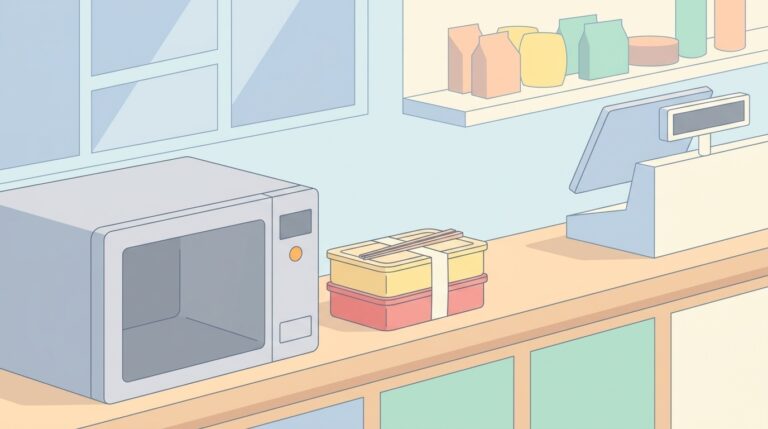
안녕하세요! 매일한글 (Daily Hangul) editor here! Have you ever walked into a brightly lit GS25 or CU in the middle of Seoul at midnight after an exhilarating K-pop concert, stomach rumbling, only to find yourself frozen in front of the refrigerated meal section? You spot a delicious bulgogi lunchbox (도시락 – dosirak) loaded with savoury side dishes. You grab it, walk to the counter, pay, and then suddenly realize: Wait, do I heat this up myself? How long should I microwave it? What do I ask the cashier?
If you have ever felt that quiet panic while staring at a row of industrial microwaves with buttons written entirely in Korean (like 700W vs 1000W), take a deep breath. You are definitely not alone! This exact moment is a classic rite of passage for every traveler and expat in Korea. In fact, many B1 learners tell us that mastering the convenience store microwave counter was their biggest confidence booster in real-life Korean communication. In this guide, grounded in real learner feedback and local daily habits, you will master the exact phrases, cultural nuances, and non-verbal cues needed to heat up and enjoy your Korean convenience store meal like an absolute local.
Phase 2: 3 Essential Expressions for Heating Your Meal
1. 이거 데워 먹어야 돼요? (I-geo de-wo meog-eo-ya dwae-yo?)
- Pronunciation: [I-geo de-wo meog-eo-ya dwae-yo?] (Sounds like: ee-guh day-woh mug-uh-ya dway-yo?)
- Meaning: Literal: “Must I heat this up to eat it?” | Actual Nuance: “Does this need to be microwaved / heated up?”
- K-Culture Moment: Seen frequently in slice-of-life K-Dramas like Work Later, Drink Now, where friends grab quick late-night snacks and double-check how to prep them.
- Editor’s Insight: The verb 데우다 (deuda / de-u-da) specifically means “to warm/reheat prepared food” (distinct from 끓이다 for boiling ramen). Adding -아/어야 돼요 creates a polite inquiry about necessity.
- Situation Spectrum:
- Casual (with friends): 이거 데워 먹어야 돼? (✅)
- Semi-formal (cashier/staff): 이거 데워 먹어야 돼요? (✅)
- Formal (formal workplace): 이것을 데워 먹어야 합니까? (⚠️ – overly stiff for a store)
- 🤔 Think About It: In English, we usually ask “Is this ready to eat?” or “Do I microwave this?” Notice how Korean centers on the combined action of heating (데우다) and eating (먹다) together (데워 먹다).
2. 전자레인지에 몇 분 돌려요? (Jeon-ja-re-in-ji-e myeot bun dol-lyeo-yo?)
- Pronunciation: [Jeon-ja-re-in-ji-e myeot bun dol-lyeo-yo?] (Sounds like: juhn-ja-ray-in-jee-ay myut boon dohl-lyuh-yo?)
- Meaning: Literal: “How many minutes do I spin [this] in the microwave?” | Actual Nuance: “How long should I microwave this for?”
- K-Culture Moment: When solo travelers buy unique convenience store food collabs (like a celebrity-branded lunchbox) and check the prep time with the clerk.
- Editor’s Insight: Koreans use the dynamic verb 돌리다 (dol-li-da, to turn/spin) for running a microwave, washing machine, or printer because the core mechanism rotates. Using 돌리다 instantly makes you sound like a native speaker!
- Situation Spectrum:
- Casual: 전자레인지에 몇 분 돌려? (✅)
- Semi-formal: 전자레인지에 몇 분 돌려요? (✅)
- Formal: 전자레인지에 몇 분간 조리합니까? (🚫 – sounds like a user manual)
- 🤔 Think About It: Why does Korean describe appliance actions with physical motions like “turning/spinning” rather than simply saying “use” or “cook”?
3. 여기서 먹고 갈게요. (Yeo-gi-seo meog-go gal-ge-yo.)
- Pronunciation: [Yeo-gi-seo meog-go gal-ge-yo.] (Sounds like: yuh-gee-suh mug-go gahl-gay-yo.)
- Meaning: Literal: “I will eat here and then leave.” | Actual Nuance: “I’m eating this here / For here, please.”
- K-Culture Moment: When ordering at the counter and letting the cashier know you will use the side bar/seating table inside the store rather than taking a plastic bag.
- Editor’s Insight: By stating your intention politely with ~ㄹ/을게요, you signal whether you need chopsticks or a bag, saving unnecessary plastic use and smooth counter traffic.
- Situation Spectrum:
- Casual: 여기서 먹고 갈게. (✅)
- Semi-formal: 여기서 먹고 갈게요. (✅)
- Formal: 여기서 취식하고 가겠습니다. (🚫 – unnatural)
- 🤔 Think About It: Compare this to “For here or to go?” In Korean convenience stores, stating your destination flow (먹고 가다 – eat and go) is warm, active, and communicative.
Phase 3: Textbook Korean vs. Real Native Korean
Situation 1: Asking the clerk to microwave your food
- 📖 Textbook Korean: “이 도시락을 전자레인지로 가열해 주실 수 있습니까?” (Could you please heat this lunchbox with the microwave oven?)
- 🗣️ Real Native Korean: “이거 좀 데워 주시겠어요?” or “이거 돌려 가도 되나요?”
- 💡 Why is it different? Words like 가열하다 (to heat/apply heat) sound like a science textbook. Real natives use the friendly request form ~어/아 주시겠어요? with 데우다 or 돌리다.
Situation 2: Asking where the microwave is located
- 📖 Textbook Korean: “전자레인지가 어디에 위치해 있습니까?” (In which location does the microwave exist?)
- 🗣️ Real Native Korean: “전자레인지 어디 있어요?”
- 💡 Why is it different? Native everyday conversation values speed and casual clarity; 위치해 있다 is redundant when 어디 있어요? delivers the exact message with natural warmth.
Phase 4: K-Culture Deep Dive & Non-Verbal Etiquette
4-1. Nunchi (눈치) & Microwave Manners
- Separate the Lid & Sauce Packets: Look closely at the packaging. Most Korean convenience store dosirak trays have a clear lid that says “뚜껑을 덮고 돌리세요” (Microwave with lid on) or “뚜껑을 분리하고 돌리세요” (Remove lid before heating). Always pull out internal raw side dishes (like pickled radish or cold salad containers) and sealed sauce pouches before pressing start.
- 700W vs 1000W Check: On the label, you will see two times printed: e.g.,
1000W: 1분 30초 / 700W: 2분. Convenience store commercial microwaves are almost always 1000W or higher. Use the shorter time so your side dishes don’t dry out! - Waiting Nunchi: Korean convenience stores can get busy during lunch (12:00–1:00 PM) and late nights (10:00 PM–midnight). Stand half a step back from the microwave station to give the person ahead of you space to retrieve their hot meal safely.
4-2. Cultural Code: The Evolution of Convenience Store ‘Pyeon-sik’ (편식)
In Korea, eating at convenience stores is no longer just a cheap, rushed substitute; it has transformed into a culinary culture known as 편의점 꿀조합 (convenience store golden recipes). From mixing instant tteokbokki with string cheese and triangle kimbap (samgak-kimbap) to eating premium chef-curated dosirak, the convenience store eating counter (취식대) is a vibrant social crossroad for students, office workers, and travelers alike.
Phase 5: Real-Life Roleplay Scenario
Setting: 11:30 PM at a GS25 store in Hongdae. The store is tidy and humming with city energy.
Characters:
* Alex (B1 Learner): A hungry traveler wanting a hot meal.
* Min-woo (Store Clerk): A quick, polite university student wearing a store vest.
- Turn 1 (Alex): 안녕하세요! 계산해 주세요.
(An-nyeong-ha-se-yo! Gye-san-hae ju-se-yo. / Hello! Please check these out.)
🎭[Places dosirak and a drink on the counter with both hands] -
Turn 2 (Min-woo): 네, 5,200원입니다. 봉투 필요하세요?
(Ne, o-cheon-i-baek-won-im-ni-da. Bong-tu pil-yo-ha-se-yo? / Sure, that is 5,200 won. Do you need a plastic bag?)
🎭[Scans the barcode swiftly] -
Turn 3 (Alex): 아니요, 괜찮아요. 여기서 먹고 갈게요.
(A-ni-yo, gwaen-chan-a-yo. Yeo-gi-seo meog-go gal-ge-yo. / No, I’m okay. I will eat here.)
🎭[Hands payment card politely] -
Turn 4 (Min-woo): 영수증 드릴까요?
(Yeong-su-jeung deu-ril-kka-yo? / Would you like a receipt?)
🎭[Offers receipt and gestures toward the side counter] -
Turn 5 (Alex): 영수증은 버려 주세요. 그런데 이거 몇 분 돌려요?
(Yeong-su-jeung-eun beo-ryeo ju-se-yo. Geu-reon-de i-geo myeot bun dol-lyeo-yo? / Please discard the receipt. By the way, how many minutes should I microwave this?)
🎭[Points at the dosirak label inquisitively] -
Turn 6 (Min-woo): 매장용이라 1분 30초만 돌리시면 돼요. 저기 젓가락 챙겨 가세요!
(Mae-jang-yong-i-ra il-bun sam-sip-cho-man dol-li-si-myeon dwae-yo. Jeo-gi jeot-ga-rak chaeng-gyeo ga-se-yo! / Since it’s a commercial store microwave, 1 minute and 30 seconds is enough. Please grab chopsticks over there!)
🎭[Points to the microwave and utensil holder] -
Turn 7 (Alex): 아, 네! 뚜껑 덮고 돌려도 되나요?
(A, ne! Ttu-kkeong deop-go dol-lyeo-do dwae-na-yo? / Ah, okay! Can I microwave it with the lid on?)
🎭[Double-checks the transparent plastic lid] -
Turn 8 (Min-woo): 네, 그 제품은 뚜껑 닫고 그대로 돌리셔도 안전해요. 맛있게 드세요!
(Ne, geu je-pum-eun ttu-kkeong dat-go geu-dae-ro dol-li-syeo-do an-jeon-hae-yo. Ma-sit-ge deu-se-yo! / Yes, for that product it is safe to heat with the lid closed. Enjoy your meal!)
🎭[Smiles warmly]
🔀 Interactive Decision Branch
What would you say if you finished eating and wanted to throw away the food container properly?
* Option A: “이거 어디에 버려요?” (Where do I throw this away?)
* Option B: “여기 쓰레기 받으세요.” (Take this trash here.)
* Option C: “그냥 두고 갈게요.” (I will just leave it here.)
- Feedback:
- Option A (Best): Perfect! It shows great consideration and respects Korea’s detailed recycling system (bunri-sugeo).
- Option B (Bad): Handing dirty trash directly to counter staff can feel abrupt and impolite.
- Option C (Risk): Leaving uncleaned waste on the table violates convenience store etiquette and will inconvenience other customers.
Phase 6: 10-Second Emotion Shadowing Drill
Practice these lines out loud with the exact emotional pitch and pause points (/)!
[😊 Inquiring & Polite]
“실례지만, / 전자레인지에 / 몇 분 돌려야 돼요?”
(Sil-lye-ji-man, / jeon-ja-re-in-ji-e / myeot bun dol-lyeo-ya dwae-yo?)-
[💡 Casual & Confident]
“봉투는 됐고요, / 여기서 / 얼른 먹고 갈게요!”
(Bong-tu-neun dwaet-go-yo, / yeo-gi-seo / eol-leun meog-go gal-ge-yo!) -
[🙏 Grateful & Refreshing]
“잘 먹었습니다! / 쓰레기는 / 저기 분리수거함에 버릴게요.”
(Jal meog-eot-seum-ni-da! / Sseu-re-gi-neun / jeo-gi bun-ri-su-geo-ham-e beo-ril-ge-yo.)
Phase 7: K-Culture Mini Dictionary
- 도시락 (Dosirak) | Packed Meal / Lunchbox
Usage: In modern Korea, convenience store dosirak ranges from classic pork cutlet sets to high-end nutritional diet boxes. - 전자레인지 (Jeon-ja-re-in-ji) | Microwave Oven
Usage: A staple fixture in every single Korean convenience store, typically located near the hot water dispensers. - 매장용 (Mae-jang-yong) | For Commercial/Store Use (High Wattage: ~1000W)
Usage: Contrasted with 가정용 (ga-jeong-yong, household ~700W). Tells you which heating time bracket to follow. - 분리수거 (Bun-ri-su-geo) | Separate Waste Disposal / Recycling
Usage: Sorting trash into food waste (음식물), plastic (플라스틱), and general waste (일반쓰레기).
Phase 8: Traveler’s Survival Kit
Top 3 Survival Phrases
- 젓가락 하나만 더 주시겠어요? (Jeot-ga-rak ha-na-man deo ju-si-get-eo-yo?)
Pro Tip: Use when you need an extra pair of wooden chopsticks for a friend. - 뚜껑 빼고 돌려요? (Ttu-kkeong bbae-go dol-lyeo-yo?)
Pro Tip: Quick 4-word question to confirm if the plastic lid stays on or off. - 물은 어디서 받아요? (Mul-eun eo-di-seo bad-a-yo?)
Pro Tip: Handy when preparing cup noodles alongside your heated dosirak.
Editor’s Travel Note
- Navigation Tip: To locate 24-hour convenience stores with spacious seating counters nearby, check the Naver Map Application Search.
- Payment Tip: T-Money transit cards, Apple Pay (Hyundai Card), standard Visa/Mastercard, and mobile payment QR codes are accepted at virtually all GS25, CU, 7-Eleven, and Emart24 locations.
Phase 9: A Step Deeper — Cultural Reflection
In South Korea, convenience stores are communal urban living rooms. The act of heating food and cleaning up after yourself is built on high mutual trust and civic responsibility. Unlike in some countries where staff handle every step of food preparation, Korean convenience stores empower customers through a self-serve format paired with intuitive appliances. When you ask “여기서 먹고 갈게요” and clean your tray afterwards, you participate directly in this shared culture of everyday respect.
💬 Your Turn: What is your favorite late-night convenience store snack combination in Korea or your home country? Share your food stories in the comments below!
Phase 10: FAQ & Common Pitfalls
Q: Do cashiers mind if I ask them how long to microwave my food?
A: Not at all! Cashiers are very used to helping customers. Asking “몇 분 돌려요?” is standard and keeps the line moving smoothly.
Q: Can I microwave metal canned drinks or foil-wrapped items?
A: Never put aluminum foil wraps (often found on triangle kimbap or baked items) or metal cans inside the microwave. Look for microwave-safe plastic containers marked “전자레인지용”.
Q: What should I do with leftover soup or sauce from my dosirak?
A: Look for a dedicated bucket or sink labeled 음식물 버리는 곳 (Food Waste disposal) beside the recycling trash bins. Pour liquids out before tossing the plastic container into the plastic bin.
🚨 Common Mistakes Alert
- Mistake 1: Forgetting to remove metal foil or sauce packets before turning on the microwave.
Correct Action: Open the meal container and remove all condiments, mayonnaise packets, and metallic foil wrappers first. - Mistake 2: Setting household time (2 minutes) on a 1000W store microwave, resulting in overcooked food.
Correct Action: Look for the 매장용 (1000W) time printed on the package. - Mistake 3: Leaving used wet wipes and plastic wrappers on the dining counter.
Correct Action: Wipe your table area quickly and deposit trash in the 분리수거 bins.
Phase 11: Action Missions
- 🥉 Bronze Mission (Solo Practice): Stand in front of your home microwave and practice saying: “이거 1분 30초만 돌리면 돼요!” smoothly 3 times.
- 🥈 Silver Mission (Social Sharing): Snap a photo of a Korean food item or dosirak and tag
#DailyHangul #KoreanConvenienceStorewith the phrase “전자레인지에 몇 분 돌려요?” - 🥇 Gold Mission (Real Action): Visit a Korean mart or convenience store, pick an item that needs heating, and successfully use “여기서 먹고 갈게요” at checkout!
- 🎮 K-Culture Hunt: In the next K-Drama you watch, spot a convenience store scene and listen closely for words like 도시락, 전자레인지, or 데우다!
Phase 12: Interactive Quiz Challenge
1. Situation Quiz: You want to ask the clerk if you should heat up this burger. Which phrase is the most natural for a B1 learner?
* A) 이거 가열할 수 있는 대상인가요?
* B) 이거 데워 먹어야 돼요?
* C) 이것을 끓여 주세요.
2. Fill-in-the-Blank: Convenience store commercial microwaves are powerful. How do you say “microwave” in everyday conversational Korean?
* “이거 ________에 1분만 돌리세요.” (Hint: Starts with 전…)
3. True or False: In Korea, convenience store commercial microwaves usually require longer heating times than home microwaves.
* [True / False]
👉 Click here to reveal Answers & Explanations!
-
Answer: B (이거 데워 먹어야 돼요?)
Explanation: “데워 먹다” is the exact, natural expression for warming and eating pre-cooked food. Option A is overly formal/robotic, and Option C means “boil this.” -
Answer: 전자레인지 (Jeon-ja-re-in-ji)
Explanation: The sentence reads: “이거 전자레인지에 1분만 돌리세요.” (Please microwave this for just 1 minute.) -
Answer: False
Explanation: Convenience store microwaves are high wattage (매장용 1000W+), meaning they heat food faster (shorter time) than home microwaves (가정용 700W).







