

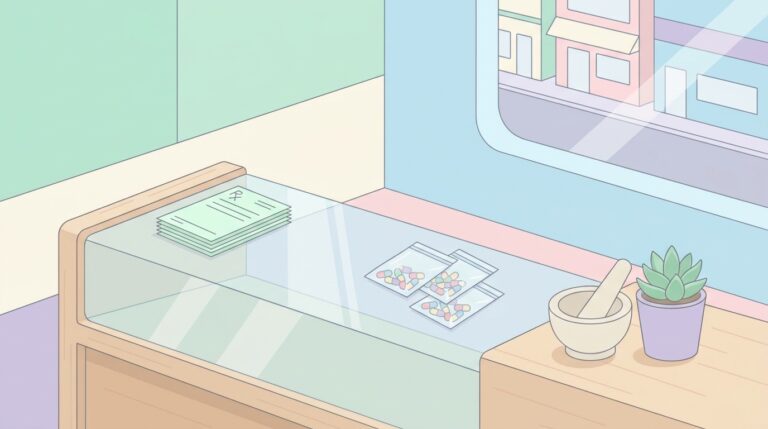
Phase 1: Empathy (Story-Immersive Opening)
안녕하세요! It is your Daily Hangul editor and your personal cultural navigator in Seoul! Have you ever found yourself clutching a thin paper slip outside a bustling Seoul ENT clinic after catching a sudden winter cold, wondering what to do next? In K-dramas, whenever the main lead catches a fever or gets hurt, someone magically hands them individual medicine packets printed with morning, lunch, and dinner times. In real life, stepping into a Korean yakguk (약국, pharmacy) with a hospital prescription paper (cheobangjeon, 처방전) can feel unexpectedly intimidating when you are intermediate in Korean (B1 level).
Many of our learners tell us: “I know how to say hello and ask for pain relievers, but when the pharmacist handed me a slip and spoke really fast about meal times, I froze.” Don’t worry at all! In Korea, pharmacies right next to clinics dispense custom-packaged daily dosage pouches directly linked to your medical record. Mastering these natural expressions will make your pharmacy visit smooth, fast, and completely stress-free. Let’s dive in together!
Phase 2: Top 3 Core Expressions Deep-Dive
1. 처방전 여기 있어요. (Cheobangjeon yeogi isseoyo.)
- Pronunciation: cheo-bang-jeon yeo-gi i-sseo-yo (Sounds like: chuh-bahng-jun yuh-gee ee-ssuh-yo)
- Meaning: “Here is my prescription.” (Direct) / “I’d like to get this prescription filled, please.” (Nuance)
- K-Culture Moment: Seen in medical dramas like Hospital Playlist when patients walk across the street right after outpatient consultations.
- Editor’s Insight: Hand the paper across the counter using both hands or with your right hand supported by your left forearm to instantly show respect.
- Situation Spectrum: Casual 🚫 | Semi-formal ✅ | Formal ✅
- 🤔 Think About It: Notice how Korean uses a simple spatial marker (yeogi, here) instead of heavy verb structures when submitting documents politely. How does your native language handle routine administrative handovers?
2. 식후 30분에 먹으면 되나요? (Sikhu samsipbune meogeumyeon doenayo?)
- Pronunciation: sik-hu sam-sip-bu-ne meo-geu-myeon doe-na-yo (Sounds like: seek-hoo sahm-sheep-boo-neh muh-geum-yuhn dway-nah-yo)
- Meaning: “Should I take this 30 minutes after meals?” (Nuance: Confirming dosage schedule)
- K-Culture Moment: When a pharmacist hands over the white translucent medicine packets (yak-bong-tu), almost every Korean instinctively checks the timing with this phrase.
- Editor’s Insight: Sikhu (식후) means ‘after meal’ and sikjeon (식전) means ‘before meal’. ~myeon doenayo? is the quintessential B1 polite confirmation pattern.
- Situation Spectrum: Casual ⚠️ | Semi-formal ✅ | Formal ✅
- 🤔 Think About It: Why does Korean healthcare emphasize meal-synchronized timing rather than just hourly intervals like “every 8 hours”?
3. 졸린 성분이 들어있나요? (Jollin seongbuni deureo-itnayo?)
- Pronunciation: jol-lin seong-bu-ni deu-reo-in-na-yo (Sounds like: johl-lin sung-boo-nee deu-ruh-een-nah-yo)
- Meaning: “Does this contain drowsy ingredients / will this make me sleepy?”
- K-Culture Moment: Essential when working students or office workers in Seoul get cold medication but need to stay sharp during afternoon meetings.
- Editor’s Insight: Cold medicines (gamgiyak) and allergy meds often contain antihistamines. Asking this helps the pharmacist add a “non-drowsy” warning label or explain daytime vs. nighttime packets.
- Situation Spectrum: Casual ⚠️ | Semi-formal ✅ | Formal ✅
- 🤔 Think About It: In many Western pharmacies, you read the fine print on a factory bottle. In Korea, personalized verbal consultation with the pharmacist is an expected standard.
Phase 3: Textbook Korean vs. Real Korean
Situation 1: Submitting your prescription
- 📖 Textbook Korean: 이 처방전으로 약을 조제해 주십시오. (Please compound medication with this prescription.)
- 🗣️ Real Korean: 처방전 가져왔어요 / 처방전 드릴게요. (I brought my prescription / Here is my prescription.)
- 💡 Why it’s different: Textbook phrases sound like an official legal contract! Real native speakers use straightforward, friendly verbs like deurida (give) or gajyeooda (bring).
Situation 2: Asking how many days of medication you are receiving
- 📖 Textbook Korean: 이 약은 며칠 동안 복용해야 합니까? (For how many days must I ingest this medicine?)
- 🗣️ Real Korean: 이거 며칠 치예요? (How many days’ worth is this?)
- 💡 Why it’s different: The counter suffix ~chi (치 – portion/worth) is the ultimate native shortcut for medication days (e.g., sam-il-chi = 3 days’ worth).
Phase 4: K-Culture Deep-Dive & Non-Verbal Manners
4-1. Nunchi & Physical Gestures
When entering a pharmacy (약국) located directly underneath or next to a clinic building (munjeon yakguk, 문전약국), look for the prescription drop tray on the counter (처방전 접수). Place your paper in the tray or hand it over with two hands. Take a seat in the waiting chairs—do not hover right over the pharmacist while they operate the automated packaging machine. When your name is called, stand up, step to the pickup counter (약 나오는 곳), and maintain attentive eye contact while they circle instructions on your paper bag.
4-2. Cultural Code: The Iconic Korean Medicine Pouch (약봉투)
In Korea, medicine packaging is a design marvel. Individual doses of pills and capsules are sealed in transparent cellophane strips marked with morning (아침), lunch (점심), and dinner (저녁). Furthermore, the outer paper envelope doubles as your detailed receipt, itemized drug encyclopedia, and payment confirmation. Koreans take pride in this fast, ultra-organized system—most prescriptions are filled in under 3 minutes!
Phase 5: Real-Life Roleplay Scenario
Setting: A cozy pharmacy near Gangnam Station on a rainy afternoon.
Characters: Alex (B1 Level Learner) & Pharmacist Kim (Friendly neighborhood pharmacist).
- Alex: 안녕하세요, 처방전 드릴게요. (🎭 Hands over the paper with both hands and smiles slightly.)
(Annyeonghaseyo, cheobangjeon deurilgeyo. / Hello, here is my prescription.) - Pharmacist Kim: 네, 잠시만 앉아서 기다려 주세요~ 금방 해드릴게요.
(Ne, jamsiman anjaseo gidaryeo juseyo~ Geumbang haedeurilgeyo. / Yes, please take a seat for a moment~ It will be ready shortly.) - Alex: 네, 감사합니다.
(Ne, gamsahamnida. / Sure, thank you.) - Pharmacist Kim: 알렉스 님~ 약 나왔습니다! (🎭 Pharmacist rings a soft bell and points to the prescription bag.)
(Alex-nim~ Yak nawasseumnida! / Alex, your medicine is ready!) - Alex: 네! 이거 하루에 몇 번 먹는 거예요?
(Ne! Igeo harue myeot beon meongneun geoyeyo? / Yes! How many times a day do I take this?) - Pharmacist Kim: 아침, 저녁 하루 두 번, 밥 드시고 30분 뒤에 드세요. 점심 약은 없어요.
(Achim, jeonyeok haru du beon, bap deusigo samsipbun dwie deuseyo. Jeomsim yageun eopseoyo. / Twice a day, morning and evening, 30 minutes after meals. No lunch dose.) - Alex: 혹시 이 약 많이 졸린가요? 운전해야 해서요.
(Hoksi i yak mani jollingayo? Unjeonhaeya haeseoyo. / Is this medicine very drowsy? Because I need to drive.) - Pharmacist Kim: 저녁 약에만 졸린 성분이 있으니 아침엔 괜찮으실 거예요. 물 많이 드세요!
(Jeonyeok yageman jollin seongbuni isseuni achimen gwaenchaneusil geoyeyo. Mul mani deuseyo! / Only the evening dose has drowsy ingredients, so morning will be fine. Drink plenty of water!)
🔀 Interactive Decision Point
The pharmacist asks if you have stomach sensitivity: “위가 약하신 편인가요?”
* Option A: “네, 가끔 속이 쓰려요. 위장약도 들어있나요?” (Yes, sometimes I get heartburn. Is stomach protector medicine included?)
* Option B: “몰라요. 그냥 주세요.” (I don’t know. Just give it to me.)
* Option C: “네! 위가 아파서 밥 안 먹었어요.” (Yes! My stomach hurts so I skipped eating completely.)
- Feedback on Options:
- Option A (Best): Polite, descriptive, and lets the pharmacist confirm gastrointestinal additives in your packet.
- Option B (Bad): Disrespectful plain form (banmal) and shuts down necessary medical safety checks.
- Option C (Risk): Taking these medications on an empty stomach might cause nausea; the pharmacist will urge you to eat crackers or porridge first.
Phase 6: 10-Second Emotion Shadowing Drill
Practice reading these with dynamic pitch and natural cadence:
[😊 차분하고 정중하게]처방전 / 여기 드릴게요. / 혹시 얼마나 걸릴까요?
(Cheobangjeon / yeogi deurilgeyo. / Hoksi eolmana geollilkkayo?)[🤔 꼼꼼하게 확인하며]식후 30분 맞죠? / 점심 약은 / 안 먹어도 되나요?
(Sikhu samsipbun matjyo? / Jeomsim yageun / an meogeodo doenayo?)[🥺 걱정스러운 톤으로]감기약 먹으면 / 많이 졸려요? / 일해야 하거든요.
(Gamgiyak meogeumyeon / mani jollyeoyo? / Ilhaeya hageodeunyo.)
Phase 7: K-Culture Mini Dictionary
- 처방전 (Cheobangjeon): Prescription slip issued by licensed medical doctors.
- 식후 30분 (Sikhu Samsipbun): “30 minutes after a meal” — standard golden rule for Korean oral medication absorption.
- 약봉투 (Yak-bong-tu): The multi-purpose pharmacy bag printed with personalized dosage breakdown.
- 며칠 치 (Myeochil-chi): “Days’ portion/worth” (e.g., “3일 치 주세요” = Give me 3 days’ worth).
Phase 8: Traveler’s Survival Kit
Top 3 Survival Phrases
- 한글: 따뜻한 물이랑 같이 먹어야 하나요?
- Romanization: Ttatteutan murirang gachi meogeoya hanayo?
- Pro Tip: Use this if taking powdered medication or cold drink remedies.
- 한글: 카드 결제 되죠?
- Romanization: Kadeu gyeolje doejo?
- Pro Tip: Almost 100% of Korean pharmacies accept international credit cards and mobile payments.
- 한글: 영수증 처방전 봉투에 인쇄되어 있나요?
- Romanization: Yeongsujeung cheobangjeon bongtue inswoedoe-eo itnayo?
- Pro Tip: Needed for travel insurance claims. The envelope itself acts as your legal receipt!
Editor’s Travel Note
Download the KakaoMap app for pharmacy finder and search for “당번약국” (holiday/late-night duty pharmacy) if you fall sick on a weekend or late at night.
Phase 9: Stepping Deeper (Thought Reflection)
In Korean society, the phrase “밥 먹었어?” (Have you eaten?) is the ultimate expression of love and care. This philosophy extends directly to medicine: virtually all medication instructions are anchored around meal timing rather than independent clock times. Food protects the stomach and signals daily routine stability.
💬 Your Turn: In your home country, do medication instructions center around exact clock hours or daily meals? Share your experience in the comments below!
Phase 10: FAQ & Common Pitfalls
Q: Can I take a prescription from one clinic to any pharmacy in Korea?
A: Yes! However, visiting a pharmacy located right in the same building as your clinic (문전약국) ensures they have the exact brand of medication in stock without delays.
Q: What if I lose my paper prescription before handing it in?
A: Prescriptions are valid only for a limited window (typically 3 to 7 days). If lost, you must revisit the clinic to get a re-issued slip.
Q: How do I say I have a drug allergy?
A: Say: “저 특정 약 알레르기가 있어요.” (Jeo teukjeong yak allereugiga isseoyo).
🚨 Common Mistakes Alert
- Mistake: Handing over the prescription with one single finger or tossing it on the counter.
- Correct Action: Place it gently into the reception tray or hold it with both hands.
- Mistake: Confusing Sikjeon (식전, before meal) and Sikhu (식후, after meal).
- Correct Action: Remember Jeon = Prior, Hu = After.
- Mistake: Throwing away the pharmacy bag immediately.
- Correct Action: Keep the bag intact—it contains your complete itemized prescription history for emergencies or travel insurance reimbursement.
Phase 11: Action Missions
- 🥉 Bronze Mission (Solo): Read the 3 shadowing sentences out loud 5 times using natural pauses.
- 🥈 Silver Mission (Social): Write your own sample sentence using
~며칠 치in the comment section below! - 🥇 Gold Mission (Real Life): Next time you visit a Korean pharmacy, hand over your paper saying: “안녕하세요, 처방전 여기 있어요!”
- 🎮 K-Culture Mission: Watch a medical K-drama episode and spot the small white translucent yak-bongtu packets!
Phase 12: Interactive Quiz Challenge
1. What does “식후 30분” mean?
a) 30 minutes before breakfast
b) 30 minutes after eating
c) Take every 30 minutes
2. Fill in the blank:
“감기약에 ______ 성분이 들어있나요? 운전해야 해요.” (Does this cold medicine have drowsy ingredients?)
3. True or False:
In Korea, you should throw away the medicine bag immediately because it has no useful information.
👉 Click here to reveal Answers & Explanations!
- Answer: b) 30 minutes after eating (식 = food/meal, 후 = after, 30분 = 30 minutes).
- Answer: 졸린 (jollin / sleepy, drowsy).
- Answer: False! The pharmacy paper bag (yakbongtu) contains dosage timing, pill images, descriptions, and your official insurance receipt!







