

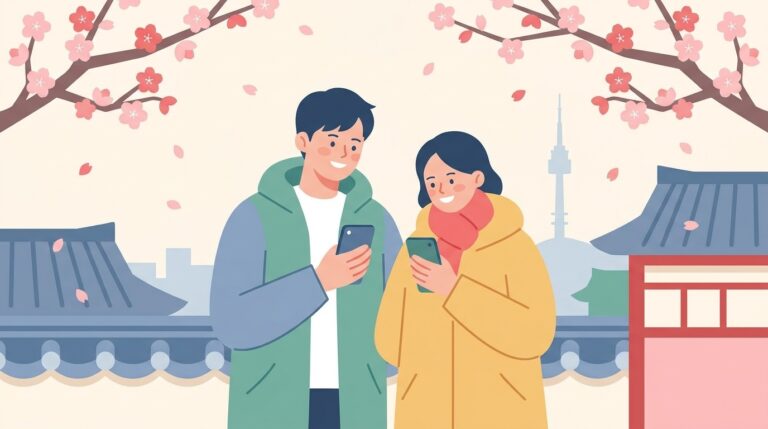
Phase 1: Empathy (스토리 몰입형 오프닝)
안녕하세요! I’m your Daily Hangul editor and long-time Korean culture navigator. Have you ever stared at your phone late at night, watching the KakaoTalk ‘read’ receipt disappear while calculating a 7-hour time difference? You want to convey that you miss them, but simple phrases like “보고 싶어” (I miss you) feel too shallow for the heavy, bittersweet ache in your chest.
In Korean culture, long-distance relationships are affectionately abbreviated as ‘롱디’ (Long-D). Korea is a culture deeply rooted in physical proximity, daily date updates, and shared micro-moments. When physical distance intervenes, Koreans often say, “몸이 멀어지면 마음도 멀어진다” (When bodies grow distant, hearts grow distant). This phrase isn’t just a pessimistic proverb—it’s a realistic hurdle that Korean couples actively fight against.
Mastering advanced (C2) expressions for long-distance relationships allows you to navigate delicate emotional landscapes with grace. Instead of coming across as needy or overly distant, you will learn to express microscopic layers of emotional nuance—such as 애틋함 (bittersweet longing) and 서운함 (gentle emotional disappointment). Based on real feedback from advanced learners and native cultural practice, this guide will equip you with the exact linguistic keys to keep love thriving across oceans.
Phase 2: 핵심 표현 3선 심층 분석
1. 몸이 멀어지면 마음도 멀어진다 (Hangul)
- Pronunciation: [mom-i meol-eo-ji-myeon ma-eum-do meol-eo-jin-da] (Sounds like “Mommy-e-meol-oh-jee-myeon-ma-eum-do-meol-oh-jin-da”)
- Meaning: Direct: When bodies grow distant, hearts grow distant. / Real Nuance: Physical distance inevitably weakens emotional bonds unless conscious effort is made.
- K-Culture Moment: Seen frequently in K-Dramas like Crash Landing on You or Twenty-Five Twenty-One, where characters face inevitable separation due to military service, study abroad, or career moves.
- Editor’s Insight: C2 speakers don’t just quote this literally; they use it to validate their partner’s anxieties preemptively. Saying “몸이 멀어지면 마음도 멀어진다는데, 우리는 서로 더 노력하자” (They say distance creates emotional space, so let me work even harder for us) transforms a pessimistic proverb into a deep commitment.
- Situation Spectrum: Casual ✅ | Semi-formal ✅ | Formal ✅
- 🤔 Think About It: Does your native language view physical distance as a breaker of love, or as something that “makes the heart grow fonder”? How does this proverb shape Korean relationship anxieties?
2. 애틋하다 (Hangul)
- Pronunciation: [ae-teut-ha-da] (Sounds like “At-teut-ha-da”)
- Meaning: Direct: To be pitifully affectionate. / Real Nuance: A tender, bittersweet, and heart-rending love mixed with longing, nostalgia, and vulnerability.
- K-Culture Moment: Used in romantic K-Drama OST lyrics during tearful airport farewells or long-distance call montages.
- Editor’s Insight: There is no single English word for 애틋하다. It is not merely “loving” or “sad.” It describes the precise sensation when your heart hurts because you love someone so intensely across a separation.
- Situation Spectrum: Casual ✅ | Semi-formal ✅ | Formal ✅
- 🤔 Think About It: How does having a single word for “bittersweet affectionate longing” change how you process love and separation?
3. 서운하다 (Hangul)
- Pronunciation: [seo-un-ha-da] (Sounds like “Suh-woon-ha-da”)
- Meaning: Direct: To feel hurt/sad. / Real Nuance: Mild emotional disappointment or sadness felt toward someone close because they didn’t meet your unspoken expectations.
- K-Culture Moment: Sending a late-night KakaoTalk text when your long-distance partner falls asleep without saying goodnight.
- Editor’s Insight: 서운하다 is the ultimate conflict-softener in Korean relationships. Saying “나 화났어” (I’m angry) creates conflict, whereas “나 조금 서운해” (I feel a bit sad/disappointed) invites affection, understanding, and reassurance.
- Situation Spectrum: Casual ✅ | Semi-formal ✅ | Formal ⚠️
- 🤔 Think About It: Why does Korean relationship culture prioritize expressing emotional hurt (서운함) over direct anger (화) during conflicts?
Phase 3: 교과서 한국어 vs 진짜 한국어
Situation 1: Expressing extreme missing across time zones
- 📖 Textbook Korean: “보고 싶어서 슬퍼요. 빨리 만나고 싶습니다.” (I am sad because I want to see you. I want to meet soon.)
- 🗣️ Real Native Korean: “보고 싶어 죽겠어. 이러다 얼굴 잊어버리겠다!” (I miss you to death! At this rate, I’m gonna forget what your face looks like!)
- 💡 Why the Difference? Advanced Korean speakers use exaggerated, playful hyperbole (
~죽겠어,얼굴 잊어버리겠다) to express intense long-distance longing without burdening the partner with heavy grief.
Situation 2: Encouraging each other through the long-distance struggle
- 📖 Textbook Korean: “거리가 멀지만 우리 힘냅시다.” (The distance is far, but let’s exert strength.)
- 🗣️ Real Native Korean: “우리 롱디 잘 버텨보자. 조금만 더 고생하자!” (Let me hold out strong through this Long-D. Let’s endure just a bit more together!)
- 💡 Why the Difference? Modern Korean youth mix the slang loanword 롱디 with the resilient verb 버티다 (to endure/hold out) to create a sense of solidarity and shared hardship.
Phase 4: K-Culture 딥다이브 & 비언어적 매너
4-1. 눈치 (Nunchi) & Non-verbal Communication in Virtual Dating
When dating across screens, non-verbal cues carry double weight. Because physical touch is absent, native Koreans rely heavily on expressive face-to-camera eye contact and active listening cues:
* Direct Lens Eye Contact: Looking at the camera lens rather than the phone screen during crucial emotional statements gives your partner the feeling of eye contact.
* Subtle Sighs & Soft Pouts: Expressing 애틋함 (bittersweet longing) often involves a gentle sigh, leaning slightly toward the screen, or making small finger hearts (손가락 하트).
* Nunchi in Time-Zone Calls: If your partner in Korea looks tired during a late-night call, reading their 눈치 (nunchi) means offering to wrap up early (“피곤할 텐데 먼저 자, 내꿈 꿔!”) rather than clinging to the phone.
4-2. Culture Code: The Digital Infrastructure of Korean ‘롱디’
Korean couples maintain closeness through specialized digital rituals. Beyond simple phone calls, long-distance couples frequently use couple-specific apps like Between or Sumone to share daily emotion logs, synchronized countdown timers to their next reunion, and digital question diaries. Sending small digital gifts via KakaoTalk Gift (like a late-night coffee or dessert voucher) serves as a tactile expression of care when physical presence isn’t possible.
Phase 5: 실전 롤플레이 시나리오
Setting: A midnight KakaoTalk Voice Call between Minjun (in Seoul) and Yujin (in London, studying abroad).
- Turn 1 (Minjun): 유진아, 거기 지금 몇 시야? 또 밤새우고 있는 거 아니지?
(Yujin-ah, geogi ji-geum myeot si-ya? Tto bam-sae-u-go in-neun geo a-ni-ji?)
“Yujin, what time is it over there? You’re not staying up all night again, are you?”
🎭 Behavioral Cue: Tone filled with affection and gentle concern. -
Turn 2 (Yujin): 응, 겨우 과제 끝냈어. 한국은 벌써 아침이지? 목소리 들으니까 좋다.
(Eung, gyeo-u gwa-je kkeut-nae-sseo. Han-guk-eun beol-sseo a-chim-i-ji? Mok-so-ri deu-reu-ni-kka joh-da.)
“Yeah, I barely finished my assignment. It’s already morning in Korea, right? It feels so nice to hear your voice.”
🎭 Behavioral Cue: Soft sigh of relief while rubbing sleepy eyes. -
Turn 3 (Minjun): 나도… 근데 요며칠 연락이 잘 안돼서 솔직히 조금 서운했어.
(Na-do… geun-de yo-myeot-il yeon-rak-i jal an-dwae-seo sol-jik-hi jo-geum seo-un-hae-sseo.)
“Me too… but to be honest, I felt a bit hurt/disappointed because we barely talked the past few days.”
🎭 Behavioral Cue: Hesitant tone, expressing subtle vulnerability. -
Turn 4 (Yujin): 미안해. 시차 적응에 과제까지 겹쳐서 정신이 없었어. 마음 멀어진 거 아니야.
(Mi-an-hae. Si-cha jeok-eung-e gwa-je-kka-ji gyeop-chyeo-seo jeong-sin-i eop-seo-sseo. Ma-eum meol-eo-jin geo a-ni-ya.)
“I’m sorry. With time-zone adjustment and assignments piling up, I lost my mind. My heart hasn’t grown distant, I promise.”
🎭 Behavioral Cue: Earnest expression, looking directly into the screen. -
Turn 5 (Minjun): 알지. 몸이 멀어지니까 괜히 혼자 불안했나 봐.
(Al-ji. Mom-i meol-eo-ji-ni-kka gwaen-hi hon-ja bul-an-hae-nna bwa.)
“I know. I guess because our bodies are far apart, I just got anxious for no reason.”
🎭 Behavioral Cue: Self-deprecating warm smile. -
Turn 6 (Yujin): 그런 소리 마. 우리 롱디 잘 버텨내고 있잖아. 조금만 더 힘내자!
(Geu-reon so-ri ma. U-ri rong-di jal beot-yeo-nae-go in-na-ja. Jo-geum-man deo him-nae-ja!)
“Don’t say that! We’re handling this Long-D so well. Let’s hang in there just a little more!”
🎭 Behavioral Cue: Raising a small fist in playful encouragement. -
Turn 7 (Minjun): 그래, 다음 달 휴가 때 내가 영국으로 갈게. 조금만 기다려!
(Geu-rae, da-eum dal hyu-ga ttae nae-ga yeong-guk-eu-ro gal-ge. Jo-geum-man gi-da-ryeo!)
“Yeah! I’ll fly to the UK during my holiday next month. Just wait a little longer!”
🎭 Behavioral Cue: Bright, excited facial expression. -
Turn 8 (Yujin): 진짜?! 보고 싶어 죽겠는데 빨리 와! 오늘 밤은 단잠 잘 수 있겠다.
(Jinjja?! Bo-go sip-eo juk-gen-neun-de ppal-li wa! O-neul bam-eun dan-jam jal su it-get-da.)
“Really?! I miss you to death, hurry up and come! I can sleep soundly tonight.”
🎭 Behavioral Cue: Clapping hands with joy.
🔀 Interactive Branching Choice (How would you respond to Turn 3?)
- Option A: “과제 때문에 바쁜데 왜 그것도 이해 못해?” (I’m busy with assignments, why can’t you even understand that?)
- Option B: “미안해, 정신이 없었어. 네가 서운했다니 마음이 아프다. 더 신경 쓸게!” (I’m sorry, I was overwhelmed. It breaks my heart that you felt hurt. I’ll pay more attention!)
- Option C: “… 알았어. 그럼 나중에 연락해.” (… Okay. Talk to you later then.)
Feedback:
* Option A (Bad): Extremely defensive. In Korean relationships, dismissing 서운함 (emotional sadness) with harsh logic breaks emotional safety instantly.
* Option B (Best): Perfect C2 emotional intelligence! Validates their partner’s 서운함, reassures affection, and offers actionable effort.
* Option C (Risk): Passive-aggressive silence (침묵 시위). This creates lingering tension, especially dangerous across long distances.
Phase 6: 10초 감정 섀도잉 드릴
Practice these sentence drills emphasizing emotional intonation pauses marked by /.
- [🥺 Bitter-sweet & Longing]
보고 싶어서 / 잠이 안 와… / 우리 언제쯤 / 마음 편히 / 얼굴 볼 수 있을까?
(Bo-go sip-eo-seo / jam-i an wa… / u-ri eon-je-jjeum / ma-eum pyeon-hi / eol-gul bol su it-seul-kka?)
“I miss you so much / I can’t sleep… / When will we / comfortably / be able to see each other’s faces?” -
[💪 Reassuring & Tender]
시차 때문에 / 많이 힘들지? / 몸은 떨어져 있어도 / 내 마음은 / 항상 너 옆에 있어.
(Si-cha ttae-mu-ne / ma-ni him-deul-ji? / Mom-eun tteo-rao-jyeo it-seo-do / nae ma-eum-eun / hang-sang neo yeop-e it-seo.)
“It’s hard with the time difference, right? / Even if our bodies are apart / my heart / is always right beside you.”
Phase 7: K-Culture 미니 사전
- 롱디 (Rong-di) | Abbreviation for Long-Distance Relationship. Used widely among young adults to refer to cross-city or international dating.
- 몸정 마음정 (Mom-jeong Ma-eum-jeong) | Physical affection vs. Emotional affection. Refers to how Korean relationship bonds are divided into physical presence (몸정) and deep emotional camaraderie (마음정).
- 꽃신 신다 (Kkot-sin sin-da) | To wear flower shoes. Originally referring to waiting for a partner completing military service, now broadly used when a long-distance couple successfully overcomes separation and reunites permanently.
- 칼답 (Kal-dap) | Knife-sharp fast response. Instantaneous messaging replies. In long-distance relationships, 칼답 is considered a top-tier indicator of high emotional interest.
Phase 8: 여행자를 위한 생존 키트
Survival Expressions Top 3
- “우리 영상 통화 할까?” [u-ri yeong-sang tong-hwa hal-kka?]
Pro Tip: Used to invite your partner to a video call gently. - “시차 때문에 힘들 텐데 어서 쉬어.” [si-cha ttae-mu-ne him-deul ten-de eo-seo swi-eo.]
Pro Tip: The ultimate empathetic phrase to tell your partner to rest due to time differences. - “몸 건강히 잘 지내고 있어야 해!” [mom geon-gang-hi jal ji-nae-go it-seo-ya hae!]
Pro Tip: Deep caring phrase used before long periods of physical separation.
Editor’s Travel Note
When visiting Korea to see your long-distance partner, seamlessly delivering gifts or arranging romantic dates requires local apps. Utilize [카카오톡 선물하기 기능 활용법] to send surprise coffee or meal coupons directly to their phone, and use [네이버 지도 앱 다운로드] to navigate local couple workshops and scenic view spots around Seoul without getting lost.
Phase 9: “한 발 더 깊이” (생각 질문)
In Western romantic discourse, independence and individual space are heavily emphasized. However, Korean dating culture thrives on ‘정’ (Jeong)—an interconnected emotional warmth formed through frequent physical proximity, shared meals, and micro-communications. When distance threatens 몸정 (physical bond), Korean partners actively compensate by deepening 마음정 (mindful, verbal bond). Understanding this cultural emphasis helps you realize why your Korean partner might seek more frequent digital contact during separation; it isn’t possessiveness, but a deep-seated cultural drive to keep 정 alive.
💬 Your Turn: How does your home culture view daily communication during long-distance relationships? Do you prioritize total independence or frequent check-ins? Share your thoughts in the comments below!
Phase 10: FAQ & 오해 방지
Q: What is the exact nuance difference between ‘서운하다’ and ‘화나다’?
A: 화나다 means you are angry due to an offense or wrongdoing. 서운하다 means you feel emotionally sad or let down because someone you care about didn’t show expected warmth or care. Always use 서운하다 when discussing emotional needs in Korean relationships.
Q: Is using ‘롱디’ acceptable in formal settings?
A: 롱디 is a casual conversational slang term. In formal or polite writing, use the full phrasing 장거리 연애 (Long-distance relationship).
Q: Why do Koreans place so much emphasis on ‘칼답’ (fast replies) in LDRs?
A: Fast messaging in Korean digital culture symbolizes priority. When physical presence is impossible, fast text responses serve as a virtual proxy for physical attention.
🚨 Common Mistakes in Korean Long-Distance Relationships
- Mistake: Saying “나 너한테 화났어” when feeling lonely or neglected.
Correct Action: Use “너랑 연락이 안 돼서 조금 서운했어” to invite empathy rather than defensive argument. - Mistake: Overusing stiff textbook grammar like “당신이 보고 싶습니다”.
Correct Action: Soften phrases with native intimate structures like “보고 싶어 죽겠어” or “얼굴 보고 싶다…” - Mistake: Ignoring time zone polite phrasing (시차).
Correct Action: Always open calls acknowledging their local time: “피곤한 시간인데 전화 받아줘서 고마워.”
Phase 11: 액션 미션 & 참여 유도
Action Mission 3-Steps
- 🥉 Bronze Mission: Record yourself reciting the 10-Second Shadowing Drills with correct emotional pauses.
- 🥈 Silver Mission: Write a 3-sentence KakaoTalk message in Korean to someone you miss using the word 서운하다 or 애틋하다.
- 🥇 Gold Mission: Create a short roleplay audio recording choosing Option B from Phase 5 and post it in your learning journal!
🎮 K-Culture Mission
Watch a romantic K-Drama episode involving distance or military leave (e.g., Crash Landing on You). Listen carefully and spot at least one occurrence of 서운하다 or 보고 싶어 죽겠다!
Phase 12: 인터랙티브 퀴즈 챌린지
Quiz 1. Situation Judgment
Your long-distance partner forgot your 100-day virtual anniversary because of work. You want to express your sadness without starting a huge fight. What should you say?
A) “너 진짜 이기적이다. 어떻게 잊을 수가 있어?”
B) “오늘 기념일인데 바빠서 잊은 거 같아 조금 서운했어.”
C) “됐어. 이제 나도 신경 안 쓸래.”
🔍 Click to view Answer & Explanation
Correct Answer: B
Explanation: Option B correctly uses 서운했어 to express sadness gracefully without attacking the partner, opening the door for an apology and reconciliation.
Quiz 2. Fill in the Blank
Complete the iconic Korean long-distance proverb:
“몸이 멀어지면 ______도 멀어진다.”
🔍 Click to view Answer & Explanation
Correct Answer: 마음 (Heart/Mind)
Explanation: The phrase means “When bodies grow distant, hearts/minds grow distant as well.”
Quiz 3. True or False
In Korean culture, the slang term ‘롱디’ is an acronym derived from ‘Long Distance’. (True / False)
🔍 Click to view Answer & Explanation
Correct Answer: True
Explanation: ‘롱디’ is a popular Korean compound slang made from the English phrase Long Distance.







