

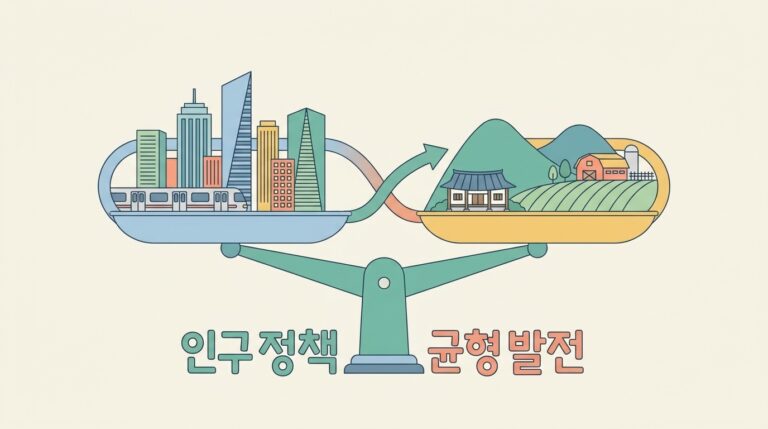
Navigating Korea’s Demographic Pivot: Advanced Vocab for Regional Extinction & Immigration Policies
Phase 1: Empathy (Opening Story)
안녕하세요! 매일한글 에디터입니다. Have you ever watched a Korean current-affairs documentary or tuned into a late-night talk show like Sseoljeon (썰전) and felt completely lost when discussions turned to Korea’s demographic crossroad? You are not alone. While most learners master cafe orders or K-drama romantic banter, advanced learners hitting the C2 threshold encounter a steep wall when trying to analyze real-world socio-economic debates.
Imagine sitting at an academic forum in Seoul or conversing with Korean colleagues over dinner. The discussion shifts from low birth rates to Jibang Somyeol (지방 소멸 — regional extinction) and the radical immigration reforms (pageokjeogin imin jeongchaek) being proposed to save revitalizing rural towns. Without nuanced vocabulary, it is easy to feel sidelined. Mastery over these policy-level expressions doesn’t just expand your lexicon—it transforms you from a foreign observer into an articulate contributor to Korea’s most critical contemporary dialogue. Based on feedback from our C2 alumni working in international relations and journalism in Seoul, this guide equips you with the exact linguistic finesse needed to command these high-stakes conversations.
Phase 2: Deep-Dive Into Top 3 High-Level Expressions
1. 지방 소멸 위험 지수 (Jibang Somyeol Wiheom Jisu)
- Pronunciation: [Jih-bang So-myeol Wee-heom Jee-soo] (Sounds like jee-bang + so-myeol with a rhythmic cadence)
- Meaning: Regional Extinction Risk Index. Literally, “Local/Regional Extinction Danger Index.” It refers to the demographic metric measuring the ratio of young female population to elderly population in a municipality.
- K-Culture Moment: Frequently cited in national news broadcasts (KBS, JTBC) and documentaries exploring deserted rural schools and newly introduced local residency incentives.
- Editor’s Insight: This isn’t just an academic stat; it carries an existential weight in modern Korean political rhetoric. Using this term signals that you understand the geographical divide between the Greater Seoul metropolitan area (수도권) and struggling rural provinces.
- Situation Spectrum: Casual 🚫 | Semi-formal ⚠️ | Formal ✅
- 🤔 Think About It: How does your home country measure regional rural decay, and does the linguistic framing sound as stark as “extinction” (소멸)?
2. 파격적인 이민 정책 (Pageokjeogin Imin Jeongchaek)
- Pronunciation: [Pah-gyeok-jee-geun Ee-min Jeong-chaek] (Pageok rhymes with “break-through” in dramatic cadence)
- Meaning: Unconventional / Radical Immigration Policy. Pageok (파격) implies breaking existing norms or expectations.
- K-Culture Moment: Popular in policy debate shows and economic forums debating E-7-S or regional specialized visa programs (지방특화형 비자).
- Editor’s Insight: Combining pageokjeok with imin jeongchaek highlights measures that defy traditional ethnic-homogeneity biases—such as fast-track permanent residency for foreign talent in rural zones.
- Situation Spectrum: Casual ⚠️ | Semi-formal ✅ | Formal ✅
- 🤔 Think About It: Why is the word pageok (unprecedented/unconventional) necessary when discussing Korea’s immigration policy shifts?
3. 다문화 사회로의 체질 개선 (Damunhwa Sahoero-ui Chejil Gaeseon)
- Pronunciation: [Dah-moon-hwa Sah-hoe-ro-ui Cheh-jeel Gah-eh-seon]
- Meaning: Structural transformation toward a multicultural society. Chejil gaeseon literally means “improving one’s physical constitution/health foundation.”
- K-Culture Moment: Used by sociologists and government officials explaining why public attitude shifts are as important as legislation.
- Editor’s Insight: Using biological metaphors (chejil = physical constitution) shows C2 elegance. It implies that Korean society needs a fundamental structural redesign, not just cosmetic updates.
- Situation Spectrum: Casual 🚫 | Semi-formal ⚠️ | Formal ✅
- 🤔 Think About It: Does your native language use biological metaphors to describe social and systemic reforms?
Phase 3: Textbook Korean vs. Real Native Korean
Scenario 1: Discussing rural population loss
- 📖 교과서 한국어: 시골에 사람이 적어지고 있습니다. (People are decreasing in the countryside.)
- 🗣️ 진짜 한국어: 지방 소멸이 현실화되면서 지자체들이 사활을 걸고 있어요. (As regional extinction becomes a reality, local governments are putting everything on the line.)
- 💡 왜 다를까? C2 natives use idiomatic metaphors like sahwareul geolda (putting life and death on the line) and socio-economic terms like jijache (local autonomous bodies) rather than basic vocabulary like sigol (countryside).
Scenario 2: Expressing opinions on visa policy changes
- 📖 교과서 한국어: 정부가 외국인 비자를 많이 줍니다. (The government gives many visas to foreigners.)
- 🗣️ 진짜 한국어: 인구 절벽에 대응하기 위해 파격적인 이민 카드를 꺼내 들었죠. (To counter the demographic cliff, they pulled out an unprecedented immigration card.)
- 💡 왜 다를까? Media-literate Koreans frame policy moves as dramatic strategic choices using idioms like kaadeureul kkeonae deulda (pulling out a card) and ingu jeolbyeok (demographic cliff).
Phase 4: K-Culture Deep Dive & Non-verbal Manners
4-1. Nunchi & Professional Decorum in Policy Discussions
When discussing sensitive topics like immigration and regional collapse in formal settings (university seminars, panel talks, corporate strategy sessions):
* Tone Control: Keep your pitch steady and calm. Avoid overly aggressive disagreement. Frame counterarguments with softeners such as “말씀하신 취지에는 공감합니다만…” (I empathize with the intent of your point, but…).
* Eye Contact & Hand Gestures: Maintain respectful eye contact without staring aggressively. Keep hands resting neatly on the table or open-palmed when accentuating points.
4-2. Cultural Code Analysis: The “Demographic Cliff” in Korean Media
In K-dramas dealing with public office or legal environments (e.g., Stranger or Law School), you will often notice news clips playing in the background discussing low birthrates (jeochulsan) and rural school shutdowns. Korea’s rapid transformation from an emigration nation to an actively recruiting immigration host creates a fascinating cultural tension. Understanding terms like regional specialized visas helps you decode subtle character motivations in modern office and legal dramas.
Phase 5: Real-World Roleplay Scenario
Setting: A panel forum held at a public policy institute in Seoul.
Characters:
* Dr. Park (박 박사): Senior Research Fellow in Demographic Policy.
* You (C2 Korean Speaker): Visiting Research Associate.
Dialogue
- 박 박사: 최근 지방 소멸 위험 지수가 고조되면서 기존 정책의 한계가 명확해졌습니다. (🎭 Adjusting glasses thoughtfully)
Choegeun jibang somyeol wiheom jisuga gojodoemyeonseo gijon jeongchaek-ui han-gaega myeonghwak-hae-jyeosseumnida.
(As the regional extinction risk index escalates recently, the limits of existing policies have become clear.) - You: 맞습니다. 단순한 재정 지원을 넘어 파격적인 이민 정책이 시급한 시점입니다. (🎭 Noddng with conviction)
Mat-seumnida. Dansunhan jaejeong jiwoneul neomeo pageokjeogin imin jeongchaeki sigeubhan sijeom-imnida.
(Indeed. Beyond simple financial aid, radical immigration policy is urgently needed at this point.) - 박 박사: 하지만 기존 주민들의 수용성과 사회적 합의가 선행되어야 하지 않을까요? (🎭 Raising an eyebrow subtly)
Hajiman gijon jumin-deurui suyongseong-gwa sahoejeok hab-uiga seonhaeng-doe-eoya haji aneul-kkayo?
(However, shouldn’t existing residents’ acceptability and social consensus come first?) - You: 다문화 사회로의 체질 개선 없이 단기적 유입만 꾀한다면 부작용이 크겠지요. (🎭 Gesturing gently with open palms)
Damunhwa sahoero-ui chejil gaeseon eopsi dan-gijeok yu-ipman kkoehandamyeon bujagyong-i keugessjiyo.
(If we only seek short-term inflow without fundamental structural change toward a multicultural society, side effects will be large.) - 박 박사: 그렇다면 토착 주민과 이주민 간의 상생 모델로 무엇을 제시하시겠습니까? (🎭 Leaning forward with interest)
Geureotamyeon tochak jumin-gwa ijumin gan-ui sangsaeng model-ro mueos-eul jesi-hasigess-seumnika?
(Then, what would you propose as a co-existence model between native residents and immigrants?) - You: 지역 특화형 비자를 활용해 정주 여건을 보장하는 방식이 현실적입니다. (🎭 Maintaining calm, assertive eye contact)
Jiyeok teukhwahyeong bijareul hwalyonghae jeongju yeogeoneul bojang-haneun bangsigi hyeon-sil-jeok-imnida.
(Utilizing regional specialized visas to guarantee living conditions is a practical approach.) - 박 박사: 매우 통찰력 있는 시각이군요. 관련 정책 보고서 작성을 함께 논의해 봅시다. (🎭 Smiling warmly)
Mae-u tongchallyeok inneun sigagigunyo. Gwanryeon jeongchaek bogoseo jakseongeul hamkke nonuihae bopsida.
(That is a very insightful perspective. Let’s discuss drafting a policy report together.) - You: 영광입니다. 실효성 있는 대안을 도출할 수 있도록 준비하겠습니다. (🎭 Bowing head slightly)
Yeong-gwang-imnida. Silhyoseong inneun dae-aneul dochulhal su iss-droek junbi-hagess-seumnida.
(I am honored. I will prepare so that we can derive effective alternatives.)
🔀 Interactive Choice Point
During Turn 3, if Dr. Park challenges the public readiness, how do you respond?
* Option A: “무조건 외국인을 많이 받아들이면 됩니다.” (Just accept lots of foreigners unconditionally.)
→ ❌ Bad: Too dismissive, lacks policy depth, grammatically low-level for a panel.
* Option B: “지방 소멸 위험 지수가 높은 지역부터 단계적으로 체질 개선을 도모해야 합니다.” (We must seek structural transformation step-by-step starting from high-risk regions.)
→ ✅ Best: Highly articulate, utilizes C2 vocabulary smoothly.
* Option C: “글쎄요, 그건 정부가 알아서 할 문제입니다.” (Well, that’s for the government to figure out.)
→ ⚠️ Risk: Sounds unengaged and unprofessional in an academic context.
Phase 6: 10-Second Emotion Shadowing Drill
Read aloud using the slash / marks for pauses and internalize the emotional tone:
[😊 진지하고 단호하게 / Earnest & Decisive]
단순한 지원책을 넘어 / 파격적인 이민 정책을 / 검토할 때입니다.
(Dansunhan jiwonchaekeul neomeo / pageokjeogin imin jeongchaekeul / geomtohal ttae-imnida.)-
[🤔 깊이 고민하며 / Thoughtful & Analytical]
지역 특화형 비자가 / 지방 소멸의 / 근본적인 해결책이 될 수 있을까요?
(Jiyeok teukhwahyeong bijaga / jibang somyeol-ui / geunbonjeogin haegyeolchaegi doel su isseul-kkayo?)
Phase 7: K-Culture Mini Dictionary
- 인구 절벽 (Ingu Jeolbyeok) | Demographic Cliff
Usage: Refers to a sudden drop in birth rates leading to an aging society. Used in business news and financial forecasts. - 지자체 (Jijache – 짧은 표현) | Local Autonomous Body (Abbreviation of 지방자치단체)
Usage: Essential term for discussing municipal policies, local budgets, and regional developments. - 정주 여건 (Jeongju Yeogeon) | Residential Infrastructure / Settlement Conditions
Usage: Describes living conditions (housing, healthcare, education) required for long-term residency. - 상생 (Sangsaeng) | Co-existence / Win-win Synergy
Usage: Core phrase in policy and business; emphasizes mutual benefits between old residents and new arrivals.
Phase 8: Traveler & Resident Survival Kit
Top 3 Advanced Survival Phrases
- 지방 소멸 대응 기금은 어떻게 활용되고 있나요?
(How is the Regional Extinction Response Fund being utilized?)
Pro Tip: Use this when inquiring about regional development programs during official visits. - 외국인 우수 인재 정주 지원 프로그램을 안내해 주시겠어요?
(Could you guide me through residency support programs for skilled foreign talent?)
Pro Tip: Ideal for asking municipal officers or university immigration departments. - 지역 사회와의 통합을 위한 선행 과제가 무엇인가요?
(What are the prerequisite tasks for integration with the local community?)
Editor’s Travel Note
When navigating non-metropolitan administrative districts, official regional updates are found via localized portals. To check regional infrastructure programs, explore 행정안전부 공식 누리집 or download regional local government apps to monitor immigration initiatives.
Phase 9: One Step Deeper (Humanities Essay)
Korea’s debate over regional extinction and radical immigration policies reflects a momentous transformation in Korean identity. Historically proud of its homogeneity, modern Korea is actively redefining its social contract under severe demographic pressures. The rapid adoption of phrases like 상생 (co-existence) and 체질 개선 (structural transformation) indicates that language is evolving alongside policy. Understanding this nuance reveals that Korea is not merely reacting to demographic decline—it is pioneering a new model of multicultural adaptation within East Asia.
💬 Your Turn: How does your home country balance regional development with immigration reform? Let’s discuss in Korean in the comments below!
Phase 10: FAQ & Common Mistakes
Q: Can I use “지방 소멸” when talking about small towns casually?
A: Yes, but keep in mind it sounds formal and socio-political. In casual banter, saying “요즘 시골에 사람이 진짜 없더라고요” (There really are no people in the country these days) is more natural.
Q: What is the difference between “이민” and “이주”?
A: 이민 (Immigration/Emigration) specifically deals with cross-border migration for permanent settlement. 이주 (Migration/Relocation) is broader and can include internal domestic moves (e.g., 지방 이주 = relocating to provinces).
Q: Is “파격적” negative or positive?
A: It depends on context! It means surprising, unconventional, or unprecedented. In policy contexts, it usually signals bold, positive decisiveness, but conservative listeners might view it with caution.
🚨 Common Mistakes TOP 3
- **Using “외국인 사람” instead of “외국인” or







