

Phase 1: Empathy (Story-driven Opening)
안녕하세요! I’m your Daily Hangul editor and your Korean culture bestie. Imagine this: You’re wandering through the charming, labyrinth-like alleyways of Ikseon-dong or Seongsu-dong, enjoying the cozy aesthetic cafes and neon-lit storefronts. Suddenly, you look down at your phone: 1% battery. Before you can pin your hotel on the map, the screen goes completely dark.
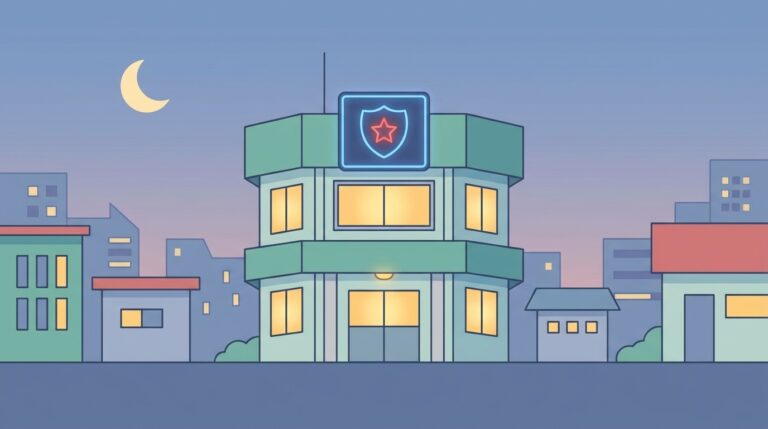
Night is falling, every street corner looks identical, and you realize you have zero idea where you are. panic sets in! But then, a few blocks away, you spot a bright sign with blue and red lights flashing gently: 파출소 (Pachulso – Police Substation).
Walking into a police station in a foreign country sounds intimidating, right? Many foreign travelers freeze up because they worry about language barriers or making a faux pas. But here is the secret: local police boxes in Korea are community-oriented, safe havens designed to help citizens and visitors alike. Based on real feedback from our learners, mastering just three simple B1-level Korean phrases can instantly turn a stressful emergency into a warm, heartwarming interaction. Let’s learn how to ask for help with grace and confidence!
Phase 2: Top 3 Core Expressions
1. 길을 잃어버렸어요 (Gil-eul il-eobheo-ryeoss-eo-yo)
- Pronunciation: [Geel-eul eel-eoh-byeo-ryeoss-eo-yo] (Sounds like ‘Gill’ + ‘Eul’ + ‘Eel-oh-bye-ross-eyo’)
- Meaning: Literal: “I have completely lost the road.” | Nuance: “I’m lost.”
- K-Culture Moment: Seen in almost every K-Drama where the main character gets separated in a crowded market like Namdaemun or at a festival.
- Editor’s Insight: The verb 잃어버리다 implies that something is lost completely by accident, conveying a gentle sense of helplessness that naturally evokes empathy from native speakers.
- Situation Spectrum: Casual: ⚠️ | Semi-formal: ✅ | Formal: ✅
- 🤔 Think About It: In Korean, you “lose the road” (길을 잃다) rather than “get lost” (am lost). How does framing location around the path rather than the self change your perspective?
2. 제 휴대폰 배터리가 나가서 지도를 못 봐요 (Je hyu-dae-pon bae-teo-ri-ga na-ga-seo ji-do-reul mot bwa-yo)
- Pronunciation: [Jeh hyoo-dae-pon bah-toe-ree-gah nah-gah-seo jee-doe-reul mot bwah-yo]
- Meaning: Literal: “My cell phone battery went out, so I cannot see the map.”
- K-Culture Moment: You’ll hear youth use 배터리가 나가다 (battery went out/dead) daily when meeting up in trendy areas like Hongdae.
- Editor’s Insight: Using ~어서/아서 (because/so) shows clear B1 level cause-and-effect grammar, helping the officer instantly understand why you can’t navigate yourself.
- Situation Spectrum: Casual: ⚠️ | Semi-formal: ✅ | Formal: ✅
- 🤔 Think About It: Koreans love efficiency. Stating your reason immediately allows the officer to offer a phone charger right away!
3. 파출소가 어디에 있어요? (Pa-chul-so-ga eo-di-e iss-eo-yo?)
- Pronunciation: [Pah-chool-so-gah uh-dee-eh eess-uh-yo?]
- Meaning: “Where is the police substation/box?”
- K-Culture Moment: Asking locals for direction when your navigation app glitches.
- Editor’s Insight: Note the difference between 경찰서 (Gyeongchalseo – Main Police Station) and 파출소 (Pachulso – Neighborhood Police Box). You’ll usually encounter Pachulso in residential and shopping districts.
- Situation Spectrum: Casual: 🚫 | Semi-formal: ✅ | Formal: ✅
- 🤔 Think About It: Why do you think Korea has small neighborhood police boxes stationed every few kilometers instead of just one main police station per district?
Phase 3: Textbook Korean vs. Real Native Korean
Situation 1: Asking for help
- 📖 Textbook Korean: 도움을 요청하고 싶습니다. (Do-um-eul yo-cheong-ha-go sip-seumni-da. – “I wish to request assistance.”)
- 🗣️ Real Native Korean: 저… 죄송한데 좀 도와주실 수 있으세요? (Jeo… 죄송한데 jom do-wa-ju-sil su is-seu-se-yo? – “Uh… excuse me, but could you please help me out?”)
- 💡 Why the difference? The textbook phrasing sounds like an official police report. Real Koreans use 저… 죄송한데 (Uh… excuse me) to open softly and politely.
Situation 2: Expressing confusion about your location
- 📖 Textbook Korean: 저는 제 현재 위치를 알지 못합니다. (Jeo-neun je hyeon-jae wi-chi-reul al-ji mot-ham-ni-da. – “I do not know my current location.”)
- 🗣️ Real Native Korean: 제가 지금 어디쯤인지 잘 모르겠어요. (Je-ga ji-geum eo-di-jjeum-in-ji jal mo-reu-ges-seo-yo. – “I’m not really sure around where I am right now.”)
- 💡 Why the difference? Adding ~쯤 (around) and 잘 모르겠어요 (I don’t really know) softens the tone, making you sound like a natural B1 speaker.
Phase 4: K-Culture Deep Dive & Non-Verbal Etiquette
4-1. Nunchi (눈치) & Gestures
When entering a 파출소, body language speaks volumes before you say a word:
1. The Gentle Two-Hand Hold: Keep your hands visible in front of you, holding your dead smartphone with both hands when showing it to the officer.
2. The Polite Head Tilt & Slight Bow: Give a slight 15-degree bow when saying 안녕하세요. It sets an instant mood of respect.
3. Eye Contact Balance: Maintain polite, soft eye contact, but avoid intense staring, which can feel aggressive in Korean culture.
4-2. Cultural Code: The Warmth of the Korean Pachulso
In many Western films, police stations are portrayed as cold or intimidating. However, in Korean K-Dramas (like Live or When the Camellia Blooms), the 파출소 serves as the heart of neighborhood safety. It is very common for officers to offer lost tourists a cup of warm green tea or mix coffee (믹스커피), help charge their phone, or even hail a taxi and explain the destination to the driver on your behalf!
Phase 5: Real-Life Roleplay Scenario
Setting: Inside a cozy, well-lit Pachulso in Seoul at night. Officer Kim (김 순경님) is sitting at the desk writing a report when you walk in.
- Turn 1 (You): 안녕하세요… 저, 죄송한데 좀 도와주실 수 있으세요? (An-nyeong-ha-se-yo… jeo, joe-song-han-de jom do-wa-ju-sil su is-seu-se-yo?)
- 🎭 Action: Bow slightly while holding your unlit smartphone with both hands.
- Translation: Hello… Uh, excuse me, but could you please help me?
- Turn 2 (Officer Kim): 네, 어서 오세요! 무슨 일 있으세요? 얼굴이 안 좋아 보이시네요. (Ne, eo-seo o-se-yo! Mu-seun il is-seu-se-yo? Eol-gul-i an jo-a bo-i-si-ne-yo.)
- 🎭 Action: Stands up immediately with a welcoming posture.
- Translation: Yes, welcome! What happened? You look worried.
- Turn 3 (You): 길을 잃어버렸어요. 제 휴대폰 배터리가 나가서 지도를 못 봐요. (Gil-eul il-eobheo-ryeoss-eo-yo. Je hyu-dae-pon bae-teo-ri-ga na-ga-seo ji-do-reul mot bwa-yo.)
- 🎭 Action: Show your black phone screen with a nervous smile.
- Translation: I got lost. My phone battery died, so I can’t look at the map.
- Turn 4 (Officer Kim): 아, 그러셨군요! 걱정 마세요. 여기 잠시 앉으세요. 충전기 드릴까요? (A, geu-reo-syeot-gun-yo! Geok-jeong ma-se-yo. Yeo-gi jam-si an-jeu-se-yo. Chung-jeon-gi deu-ril-kka-yo?)
- 🎭 Action: Points to a chair and pulls out a multi-charging cable.
- Translation: Ah, I see! Don’t worry. Please sit here for a moment. Shall I give you a charger?
- Turn 5 (You): 네, 정말 감사합니다! 혹시 여기서 안국역까지 어떻게 가나요? (Ne, jeong-mal gam-sa-ham-ni-da! Hok-si yeo-gi-seo An-gug-yeok-kka-ji eo-tteoh-ge ga-na-yo?)
- 🎭 Action: Sit down with a big sigh of relief.
- Translation: Yes, thank you so much! By any chance, how do I get to Anguk Station from here?
- Turn 6 (Officer Kim): 여기서 걸어서 10분 거리예요. 직진하시다가 큰 사거리에서 우회전하시면 돼요. (Yeo-gi-seo geol-eo-seo sip-bun geo-ri-ye-yo. Jik-jin-ha-si-da-ga keun sa-geor-i-e-seo u-hoe-jeon-ha-si-myeon dwae-yo.)
- 🎭 Action: Uses hand gestures to show straight and right turn.
- Translation: It’s a 10-minute walk from here. Go straight, then turn right at the big intersection.
- Turn 7 (You): 아, 그렇군요! 종이에 그려주실 수 있으세요? (A, geu-reoh-gun-yo! Jong-i-e geu-ryeo-ju-sil su is-seu-se-yo?)
- 🎭 Action: Tilt your head politely with an expectant look.
- Translation: Ah, I see! Could you draw it on a piece of paper for me?
- Turn 8 (Officer Kim): 그럼요! 약도 그려드릴게요. 날씨 추운데 따뜻한 차 한 잔 드시면서 기다리세요. (Geu-reom-yo! Yag-do geu-ryeo-deu-ril-ge-yo. Nal-ssi chu-un-de tta-tteut-han cha han jan deu-si-myeon-seo gi-da-ri-se-yo.)
- 🎭 Action: Hands you a paper cup with warm barley tea.
- Translation: Of course! I’ll draw a quick map. It’s cold outside, so please drink a cup of warm tea while you wait.
🔀 Interactive Branch Point
Situation: The officer asks where your hotel is located, but you don’t remember the exact hotel name, only the nearby landmark.
* Option A:
Frequently Asked Questions (FAQ)
Q: What does "길을 잃어버렸어요 (Gil-eul il-eobheo-ryeoss-eo-yo)" mean in Korean and how do you pronounce it?
A: In Korean, "길을 잃어버렸어요 (Gil-eul il-eobheo-ryeoss-eo-yo)" is pronounced [Geel-eul eel-eoh-byeo-ryeoss-eo-yo] and means: Literal: "I have completely lost the road." | Nuance: "I'm lost."
Q: What does "제 휴대폰 배터리가 나가서 지도를 못 봐요 (Je hyu-dae-pon bae-teo-ri-ga na-ga-seo ji-do-reul mot bwa-yo)" mean in Korean and how do you pronounce it?
A: In Korean, "제 휴대폰 배터리가 나가서 지도를 못 봐요 (Je hyu-dae-pon bae-teo-ri-ga na-ga-seo ji-do-reul mot bwa-yo)" is pronounced [Jeh hyoo-dae-pon bah-toe-ree-gah nah-gah-seo jee-doe-reul mot bwah-yo] and means: Literal: "My cell phone battery went out, so I cannot see the map."
Q: What does "파출소가 어디에 있어요? (Pa-chul-so-ga eo-di-e iss-eo-yo?)" mean in Korean and how do you pronounce it?
A: In Korean, "파출소가 어디에 있어요? (Pa-chul-so-ga eo-di-e iss-eo-yo?)" is pronounced [Pah-chool-so-gah uh-dee-eh eess-uh-yo?] and means: "Where is the police substation/box?"







