

Phase 1: 공감 (Empathy & Storytelling)
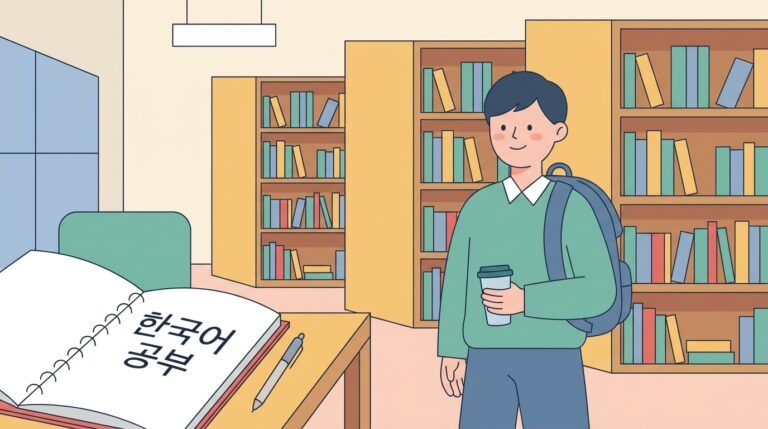
안녕하세요! Hello! I’m your Daily Hangul editor and your personal Korean culture navigator. Have you ever walked into a beautiful Korean public library—like the famous Starfield Library in COEX or the peaceful Namsan Public Library—holding a fresh, iced Americano, only to freeze at the front desk? You spot a sign with red Korean letters, and you wonder: “Can I bring this coffee inside, or will I get yelled at?”
This is one of the most common anxiety spikes for foreign travelers and expats in Korea! Korean libraries are incredibly clean and comfortable, but they have very specific rules regarding snacks and drinks. You don’t want to ruin your cozy study session with an embarrassing misunderstanding. Today, based on real feedback from hundreds of elementary Korean learners, I will guide you through the exact expressions you need to ask about food and beverage policies with confidence. By the end of this lesson, you’ll be able to check drink rules smoothly and sound totally natural!
Phase 2: 핵심 표현 3선 심층 분석 (Deep-Dive into 3 Key Expressions)
1. 여기서 음료수 마셔도 돼요? (Can I drink beverages here?)
- Pronunciation: [Yeo-gi-seo eum-ryo-su ma-syeo-do dwae-yo?]
- Sound Analogy: Think of “Yeo-gi” sounding like “Yogi Bear” dropping in!
- Meaning: Literal: “From here, even if I drink beverage, is it okay?” / Real Nuance: “Is it okay if I drink my beverage in this area?”
- K-Culture Moment: You often hear students asking this at community centers or library study lounges before opening a bottle of tea.
- Editor’s Insight: Using “-아/어도 돼요?” (Is it okay to…?) is the ultimate polite green-light sentence structure in Korean for A2 learners!
- Situation Spectrum: Casual ⚠️ / Semi-formal ✅ / Formal ✅
- 🤔 Think About It: In your country, do public libraries allow open coffee cups, or do they require sealed bottles?
2. 뚜껑 있는 음료는 괜찮아요. (Drinks with lids are okay.)
- Pronunciation: [Ddu-kkeong in-neun eum-ryo-neun gwaen-chan-a-yo.]
- Sound Analogy: “Ddu-kkeong” starts with a hard ‘T/D’ sound like tapping a plastic cap twice: Thump-Thump!
- Meaning: Literal: “Drink having a lid is okay.” / Real Nuance: “Beverages with covered lids or tumblers are allowed.”
- K-Culture Moment: A librarian pointing at your tumbler coffee cup with a warm smile.
- Editor’s Insight: In Korea, “뚜껑” (lid) is the magic keyword! Open paper cups might be banned, but tumblers or capped plastic bottles are usually welcome.
- Situation Spectrum: Casual ⚠️ / Semi-formal ✅ / Formal ✅
- 🤔 Think About It: Notice how Korean culture balances cleanliness with convenience by allowing specific drink containers.
3. 음식물 반입 금지예요. (Food and drinks are prohibited.)
- Pronunciation: [Eum-sing-mul ban-ip geum-ji-ye-yo.]
- Sound Analogy: “Geum-ji” sounds like “Game-G”—think of a referee declaring a hard stop!
- Meaning: Literal: “Food items bringing-in is prohibition.” / Real Nuance: “Bringing in any food or drinks is strictly forbidden.”
- K-Culture Moment: Signboards posted near book archives or computer rooms in national libraries.
- Editor’s Insight: “반입 금지” (Bring-in Prohibited) is a formal sign expression, but speakers add “-예요” to make it a polite spoken notice.
- Situation Spectrum: Casual 🚫 / Semi-formal ✅ / Formal ✅
- 🤔 Think About It: Korean public spaces rely heavily on formal notices to maintain shared public spaces for everyone.
Phase 3: 교과서 한국어 vs 진짜 한국어 (Textbook vs. Real Korean)
Situation 1: Asking if coffee is allowed inside
- 📖 교과서 한국어: “도서관 내부로 커피를 가지고 들어갈 수 있습니까?” (Is it permissible to enter the library interior with coffee?)
- 🗣️ 진짜 한국어: “혹시 커피 가지고 들어와도 돼요?” (By any chance, can I bring coffee in?)
- 💡 왜 다를까?: Native speakers add “혹시” (by any chance) to soften questions and sound much more polite and friendly.
Situation 2: The staff explaining the drink rule
- 📖 교과서 한국어: “음식물 반입이 금지되어 있으니 밖에 두십시오.” (Bringing food is forbidden, so leave it outside.)
- 🗣️ 진짜 한국어: “음료는 뚜껑 닫아서 가방에 넣어 주세요~” (Please close the drink lid and put it in your bag~)
- 💡 왜 다를까?: Korean staff prefer soft instructions using “-어/아 주세요” with a light tone rather than strict commands.
Phase 4: K-Culture 딥다이브 & 비언어적 매너 (Deep-Dive & Non-Verbal Manners)
4-1. Nunchi & Non-Verbal Gestures
When asking library staff about your drink, keep your voice at a lower whisper tone. Hold up your drink container (like your tumbler) slightly with both hands while tilting your head softly. If the staff makes an ‘X’ shape with their index fingers or gently pats their bag, it means you must store your drink inside your backpack!
4-2. Culture Code: Tumblers & Study Cafes
In Korea, eco-friendly tumbler usage is huge! Many modern libraries permit drinks strictly if they are in sealed tumblers (텀블러) to prevent accidental spills on public books. If you want to eat full meals or bakery items, head to the designated resting room called 휴게실 (Hyu-ge-sil) inside the library building!
Phase 5: 실전 롤플레이 시나리오 (Real-Life Roleplay Scenario)
Setting: Entrance desk of a clean, cozy public library in Seoul.
NPC Character: Librarian Min-soo (친절한 민수 씨) – polite, helpful, but firm about book preservation.
- Turn 1 (Me): 안녕하세요! 저… 혹시 커피 가지고 들어갈 수 있어요?
(An-nyeong-ha-se-yo! Jeo… hok-si keo-pi ga-ji-go deul-eo-gal su it-eo-yo?)
🎭 [Holding an iced coffee cup with both hands, tilting head politely]
“Hello! Um… by any chance, can I bring coffee inside?” -
Turn 2 (Min-soo): 아, 안녕하세요! 손에 들고 계신 음료 말씀이시죠?
(A, an-nyeong-ha-se-yo! Son-e deul-go gye-sin eum-ryo mal-ssum-i-si-jo?)
🎭 [Smiling kindly, pointing softly at the coffee cup]
“Ah, hello! You mean the drink in your hand?” -
Turn 3 (Me): 네! 뚜껑이 있는데 괜찮아요?
(Ne! Ddu-kkeong-i in-neun-de gwaen-chan-a-yo?)
🎭 [Pointing gently at the plastic lid on top]
“Yes! It has a lid, so is it okay?” -
Turn 4 (Min-soo): 죄송하지만 플라스틱 컵은 반입 금지예요.
(Joi-song-ha-ji-man pleu-las-tik keob-eun ban-ip geum-ji-ye-yo.)
🎭 [Making a polite slight bow with hand over chest]
“I am sorry, but disposable plastic cups are prohibited.” -
Turn 5 (Me): 아, 그렇군요! 그럼 텀블러는 돼요?
(A, geu-reoh-gun-yo! Geu-reom teom-beul-reo-neun dwae-yo?)
🎭 [Nodding understandingly and showing a personal metal tumbler]
“Ah, I see! Then is a personal tumbler okay?” -
Turn 6 (Min-soo): 네, 밀폐되는 텀블러는 괜찮습니다!
(Ne, mil-pyae-doe-neun teom-beul-reo-neun gwaen-chan-seub-ni-da!)
🎭 [Nodding enthusiastically with an approving gesture]
“Yes, sealed tumblers are completely fine!” -
Turn 7 (Me): 다행이네요! 그럼 이거 가방에 넣고 들어갈게요.
(Da-haeng-i-ne-yo! Geu-reom i-geo ga-bang-e neoh-go deul-eo-gal-ge-yo.)
🎭 [Putting the plastic cup into an outer side pocket or trash bin]
“What a relief! Then I will put this away and enter.” -
Turn 8 (Min-soo): 감사합니다. 편안하게 이용하세요!
(Gam-sa-hab-ni-da. Pyeon-an-ha-ge i-yong-ha-se-yo!)
🎭 [Waving lightly with a welcoming smile]
“Thank you. Enjoy your time here!”
🔀 Interactive Choice Point
What would you say if the librarian tells you food is strictly banned?
- Option A: “에이, 그냥 마시면 안 돼요?” (Ayy, can’t I just drink it?)
- Option B: “아, 몰랐어요. 죄송합니다. 밖에 두고 올게요!” (Ah, I didn’t know. I’m sorry. I’ll leave it outside!)
- Option C: “여기 음식 파는 곳 어디예요?” (Where do you sell food here?)
Feedback:
* Option A (Risk 🚨): Too pushy and informal! Can make staff uncomfortable.
* Option B (Best ✅): Perfect! Polite, shows quick understanding and good Korean manners.
* Option C (Bad 🚫): Doesn’t address the librarian’s rule directly and sounds slightly abrupt.
Phase 6: 10초 감정 섀도잉 드릴 (10-Sec Emotion Shadowing Drill)
Practice reading these out loud with natural rhythm and emotion!
[🥺 Polite & Inquiring]
혹시 / 커피 가지고 / 들어와도 돼요? /
(Hok-si / keo-pi ga-ji-go / deul-eo-wa-do dwae-yo? /)-
[😊 Relieved & Friendly]
아, / 뚜껑 있는 건 / 괜찮군요! / 감사해요! /
(A, / ddu-kkeong in-neun geon / gwaen-chan-gun-yo! / gam-sa-hae-yo! /) -
[🙏 Apologetic & Cooperative]
죄송해요, / 빨리 마시고 / 들어갈게요! /
(Joi-song-hae-yo, / dppal-li ma-si-go / deul-eo-gal-ge-yo! /)
Phase 7: K-Culture 미니 사전 (Mini Dictionary)
- 반입 금지 (Ban-ip Geum-ji) | No Outside Items Allowed
Used on signs at libraries, theaters, and museums prohibiting outside food/drinks. - 텀블러 (Teom-beul-reo) | Reusable Tumbler/Travel Mug
Essential item for Korean students and workers visiting cafes and libraries. - 카공족 (Ka-gong-jok) | Cafe Study Tribe
A popular Korean compound word for people who love studying in coffee shops. - 열람실 (Yeol-lam-sil) | Reading / Study Room
The quiet, main study hall in public libraries where strict silence and no food rules apply.
Phase 8: 여행자를 위한 생존 키트 (Traveler’s Survival Kit)
Survival Expressions TOP 3
- 음식물 반입 돼요? (Eum-sing-mul ban-ip dwae-yo?) – Can I bring food inside?
- Pro Tip: Use this at museum entrances or art galleries too!
- 마시고 들어가야 해요? (Ma-si-go deul-eo-ga-ya hae-yo?) – Do I have to drink it all before entering?
- Pro Tip: Great when you have half a cup of boba or juice left.
- 물은 마셔도 되죠? (Mul-eun ma-syeo-do doe-jo?) – Plain water is okay to drink, right?
- Pro Tip: Water bottles are almost always permitted in libraries!
Editor’s Travel Note
When looking for public libraries with quiet study spaces in Seoul, make sure to download Naver Map application for library locations. It provides accurate real-time opening hours and facility guidelines!
Phase 9: 한 발 더 깊이 (One Step Deeper)
Korean public culture places huge value on Jeong-seok (정석 – doing things by the book) when sharing public facilities. Because public library books belong to everyone, Koreans are very thoughtful about preserving them from food stains or sticky drink residue. Showing respect for these small boundaries shows high cultural intelligence (눈치, Nunchi) and makes locals super happy to help you!
💬 Your Turn: Have you ever had a funny or nervous moment trying to enter a public building with food in Korea? Share your story in the comments below!
Phase 10: FAQ & 흔한 실수 (FAQ & Common Mistakes)
Q: Can I eat small candy or cough drops inside the library reading room?
A: Generally, small mints or candies that don’t make crunching noises or messy crumbs are fine, but avoid noisy snack wrappers!
Q: Are study cafes (스터디카페) subject to the same strict no-food rules?
A: Most modern study cafes have a separate beverage zone with free coffee/tea, but strict silence and no food in the main desk area!
Q: What should I do if I already brought a cup of coffee inside by mistake?
A: Don’t panic! Simply put it inside your backpack or move to the designated rest floor (휴게실) to finish it.
🚨 Common Mistakes TOP 3
- Mistake: Saying “이거 먹어도 돼요?” (Can I eat this?) when holding coffee.
- Correct Action: Use “마셔도 돼요?” (Can I drink this?) for beverages!
- Mistake: Calling staff “아줌마” (Ajumma).
- Correct Action: Address library staff politely as “저기요” (Excuse me) or “직원분” (Staff member).
- Mistake: Leaving plastic cups on library desks when leaving.
- Correct Action: Throw disposable items away in designated recycling bins outside.
Phase 11: 액션 미션 & 참여 유도 (Action Mission)
- 🥉 Bronze Mission: Practice saying “여기서 마셔도 돼요?” out loud 3 times in front of a mirror!
- 🥈 Silver Mission: Post a photo of your favorite study tumbler on social media with the caption: “텀블러는 괜찮아요!”
- 🥇 Gold Mission: Visit a Korean cafe or library and successfully ask about drink policies in Korean!
🎮 K-Culture Mission: Watch a scene from a school/library K-Drama (like Twenty-Five Twenty-One) and spot if characters drink beverages at their desks!
Phase 12: 인터랙티브 퀴즈 챌린지 (Interactive Quiz)
Q1. Situation Quiz
You want to ask if your tumbler with a closed lid is allowed inside the library. Which sentence is best?
A) 이거 버려야 돼요?
B) 뚜껑 있는 텀블러 괜찮아요?
C) 커피 많이 주세요.
Check Answer & Explanation
Answer: B) 뚜껑 있는 텀블러 괜찮아요? (Is a tumbler with a lid okay?)
Explanation: Option A means “Should I throw this away?” and Option C means “Give me lots of coffee.” Option B is polite and precise!
Q2. Fill-in-the-blank
“음식물 ______ 금지예요.” (Food and drinks are prohibited from being brought inside.)
A) 반입
B) 배달
C) 요리
Check Answer & Explanation
Answer: A) 반입 (Bringing in)
Explanation: “반입 금지” is the standard term for prohibiting outside items.
Q3. True or False
In Korean libraries, plain water in a closed bottle is almost always allowed in study rooms.
(True / False)
Check Answer & Explanation
Answer: True!
Explanation: Sealed water bottles are widely allowed in almost all public libraries in Korea.







